
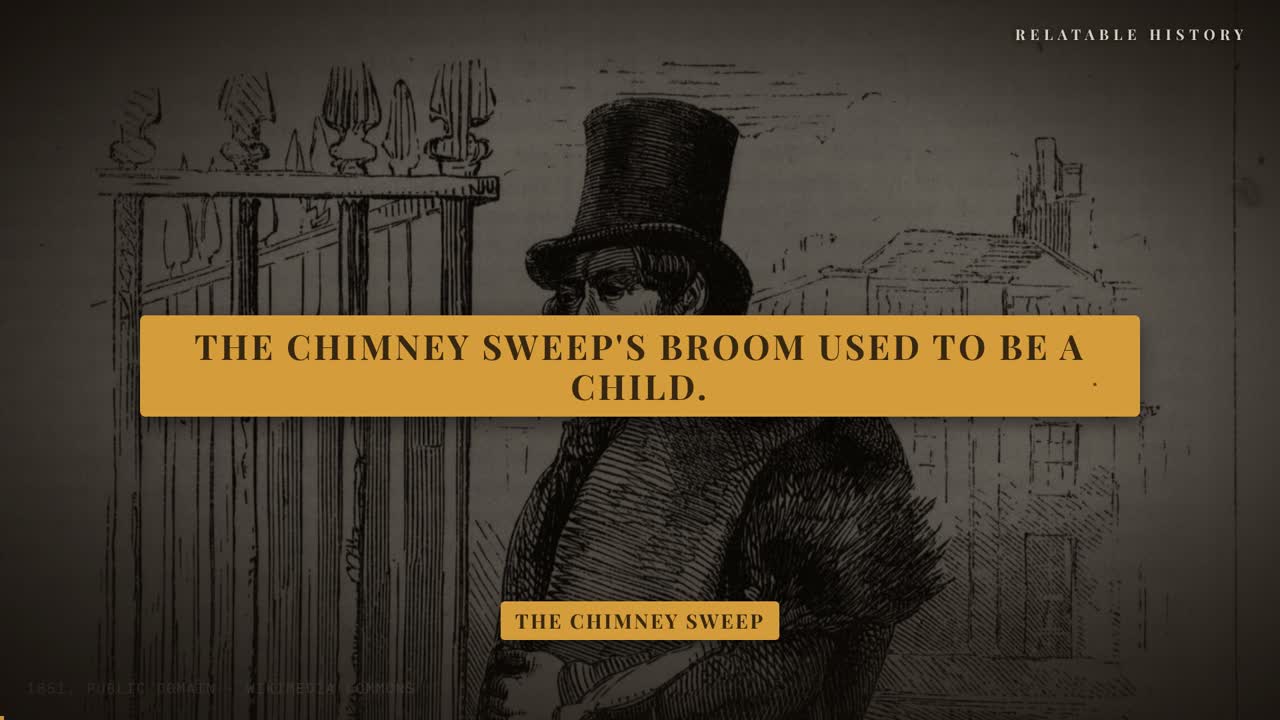
In 1775, a London surgeon named Percivall Pott examined a string of unusual tumors and arrived at a diagnosis nobody had made before: this particular cancer was caused by a job. Every patient he described swept chimneys for a living, and nearly every one of them had started doing it as a child. Pott called the growths by the plain, grim name the trade itself used for them — soot wart.
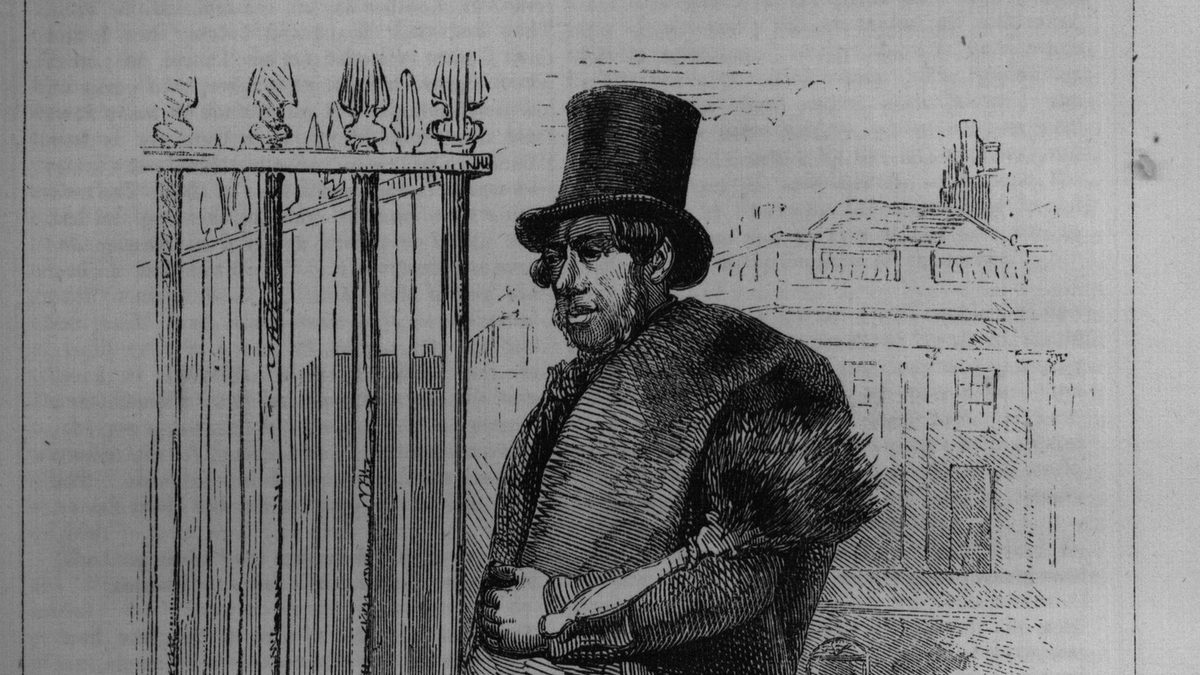
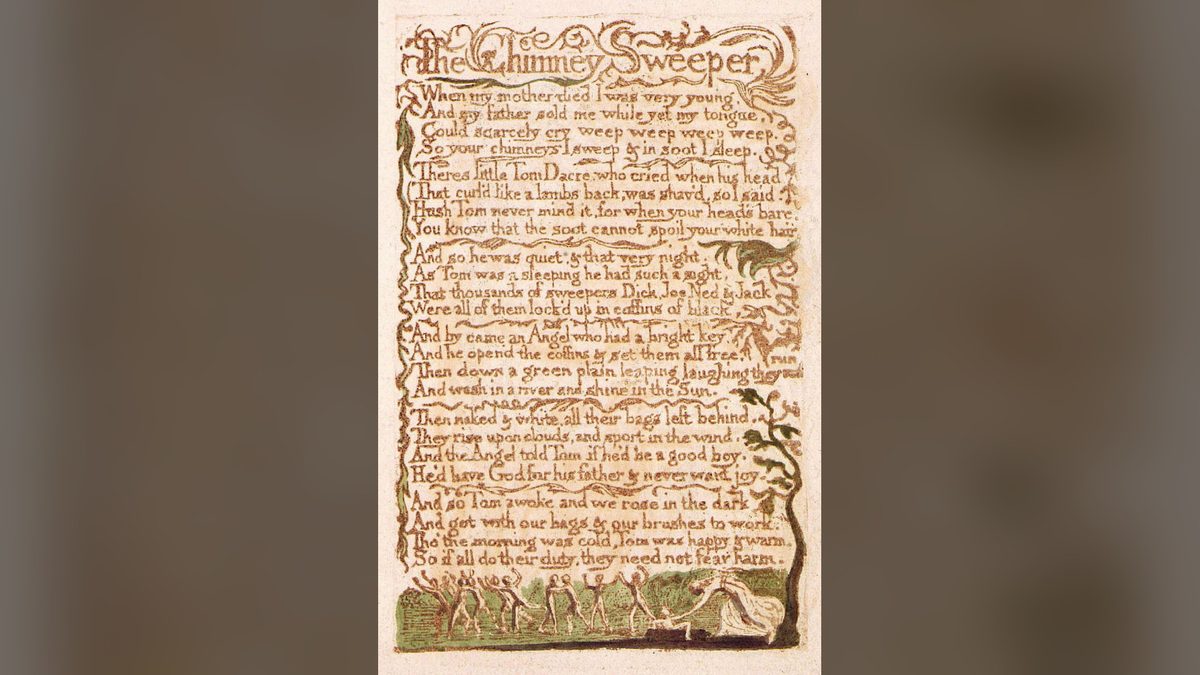
That diagnosis didn’t come out of nowhere. For roughly two hundred years, keeping a coal- or wood-burning house from catching fire from its own chimney meant sending someone small enough to fit inside the flue — in plenty of houses, a gap barely nine inches across — to scrape out the tar-like soot called creosote by hand, in total darkness, bare skin rubbed raw against brick. That someone was overwhelmingly a child, bought or apprenticed into the trade as young as four or five by parents who couldn’t feed him any other way. The trade had a name for these children: climbing boys.
It took three separate acts of Parliament across nearly a century, a surgeon’s discovery that reshaped medicine’s understanding of what causes cancer, a bestselling novel, and finally the very public death of an eleven-year-old boy in a flue three miles from Cambridge to put a real end to the practice. Here is how long that actually took, and why every attempt before the last one failed.
A Narrow Flue Needed a Small Body, Not a Long Brush
Enclosed brick chimneys, and the trade built around cleaning them, date back to roughly the 1500s and 1600s, as houses moved their smoky open hearths into proper flues for the first time. A working flue had to be swept on a schedule, because the soot and creosote lining its walls didn’t just sit there harmlessly — thick enough, it could ignite on its own and send a chimney fire straight into the roof timbers. Builders, meanwhile, kept flues as tight as they could get away with, both to save brick and to keep the draft strong, so a flue twisting up through two or three floors, doubling back on itself around a bend, might narrow to nine inches by nine inches or less at its tightest point.
A brush on a pole, worked from the fireplace below, couldn’t reach around that kind of bend, which is precisely the problem that created the climbing-boy trade in the first place. For most of its history, the only tool reliable enough to scrape every surface of a real, working flue was a small, flexible human body. Using a child to do it wasn’t cruelty for its own sake so much as a genuine architectural dead end that someone had to solve — and solving it with children turned out to be far cheaper than solving it any other way.
Climbing Boys Were Apprenticed as Young as Four
Master sweeps took on boys as young as four or five, sometimes handed over by a parish workhouse, sometimes sold by a desperate parent for a few shillings and a promise of food and lodging that didn’t always materialize. A climbing boy went up bare-skinned on his elbows and knees, bracing against brick while he scraped loose soot down with a small brush and an iron scraper, almost entirely in the dark, sometimes inside a flue still warm from a fire put out only hours before. Some sweeps worked a chimney from the roof first, lowering a weighted brush called a bob on a rope to knock soot loose without anyone climbing at all — but a bob couldn’t scrape around a bend, so a stubborn or especially dirty flue still meant sending a boy down after it.
Some masters, impatient to finish a job, lit a small fire of straw at the bottom of the flue to make a stuck or hesitant boy climb faster — a practice the trade called, bluntly, “hot footing.” Deaths from suffocation, burns, and boys getting permanently wedged partway up a flue were common enough to barely make news, and the children who survived years of the work rarely came out unmarked: knees and elbows scarred raw, lungs full of soot, growth often stunted by years of being kept deliberately small and thin enough to still fit.
Percivall Pott Found the First Cancer Ever Traced to a Job
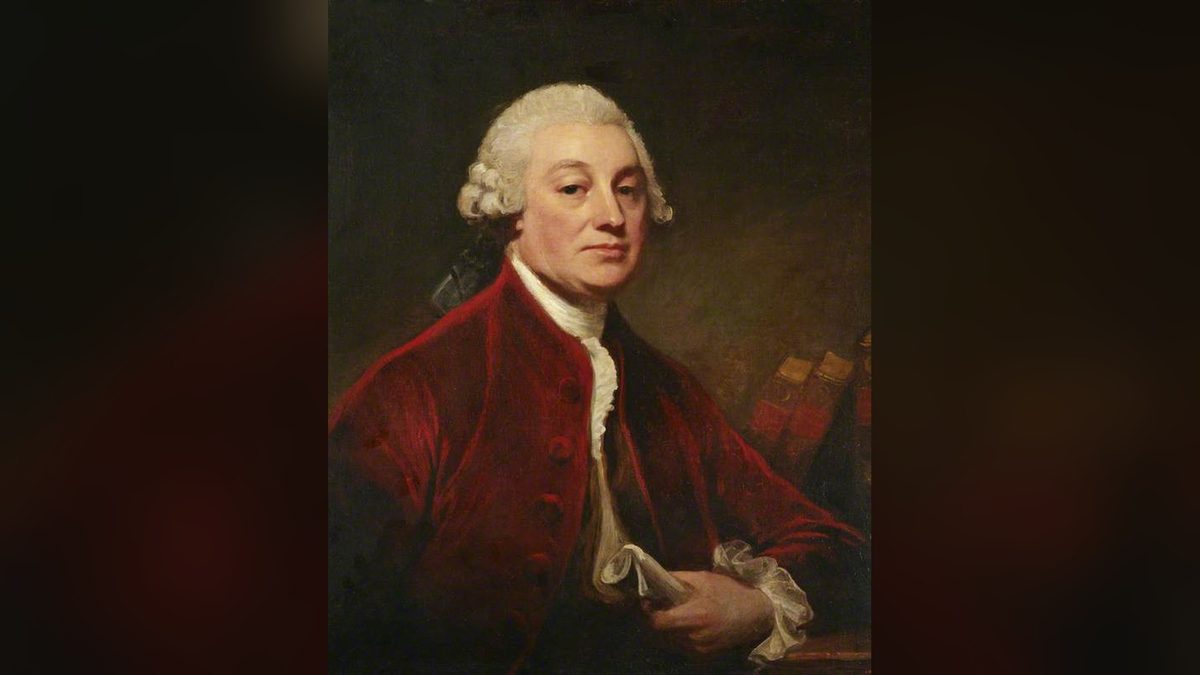
Pott’s 1775 account of soot wart was, by one modern reading of his career, almost an afterthought — a short section inside a larger surgical volume that his publisher had padded out with unrelated material. Short or not, it was the first time anyone had traced a cancer directly to a specific occupation. Pott noticed that the sores appeared almost exclusively in men who had spent years climbing flues as boys, with soot ground into the folds of unwashed skin for decades before symptoms appeared. Surgeons of the time had mostly been treating the sores as venereal disease, with ineffective salves; Pott argued instead for an environmental cause, and advised removing the affected tissue at the very first sign of a sore, since he’d seen the cancer spread to organs it couldn’t be cut back from.
Being right didn’t translate into anyone actually being protected. A later editor of Pott’s collected works, writing in 1819, added further cases and floated the idea that some individual sweeps were simply more susceptible than others — a theory that, whatever its merit, conveniently let employers treat the cancer as bad luck rather than a working condition. The public-health historian Morris Greenberg has argued that this is the real lesson of the case: medical awareness of a cancer risk, on its own, changed almost nothing for the people exposed to it, because poverty and a lack of any enforcement mechanism meant child sweeps kept climbing anyway. Chimney sweeping wouldn’t be brought under a workplace safety law in Britain until the Health and Safety at Work Act of 1974 — just shy of two centuries after Pott first wrote soot wart’s name down.
A Mechanical Alternative Existed by 1828, and Plenty of Sweeps Ignored It
Reformers had seen the obvious fix coming for decades. Building on groundwork the London merchant Jonas Hanway had laid in the 1760s, a group that included William Wilberforce founded the Society for Superseding the Necessity of Climbing Boys at the London Coffee-House on Ludgate Hill in 1803, with one explicit goal: engineer the children out of the job entirely. A timber merchant named George Smart won the Society of Arts’ gold medal in 1805 for a device nicknamed the scandiscope, operable from the fireplace and, by Smart’s own claim, no heavier than a musket. Master sweeps fought back by rigging botched public demonstrations, deliberately misusing the machines to convince customers they didn’t work.
In 1828, a London ironmonger named Joseph Glass improved on the design with a set of cane rods joined by brass screw fittings, flexible enough to bend around a real flue’s turns, with a small wheel on the brush head to stop it jamming. The Society endorsed it as superior to anything before it, and in 1829 the Home Secretary, Robert Peel, ordered it adopted across government offices. Glass later testified to a House of Lords committee in 1834, helping produce that year’s Chimney Sweepers Act. None of it put the climbing-boy trade out of business. A set of rods cost money up front; a boy, once bought, was nearly free, didn’t wear out from one job to the next, and — unlike a brush — could also be sent out begging between chimneys.
Black Sweeps Worked the Trade on Both Sides of the Atlantic
Chimney sweeping in early America was frequently work pushed onto enslaved and free Black tradesmen, in port cities where the job’s danger and low status meant it landed on whoever had the least say over what they did for a living. The surviving record of this is thin but specific: in March 1745, a Boston enslaver named David Snoden placed a runaway advertisement, reprinted in the Boston Gazette, for a man named Peter, about thirty years old, described as speaking good English and “usually employed” as a chimney sweep, still wearing his sweep’s dress when he escaped.
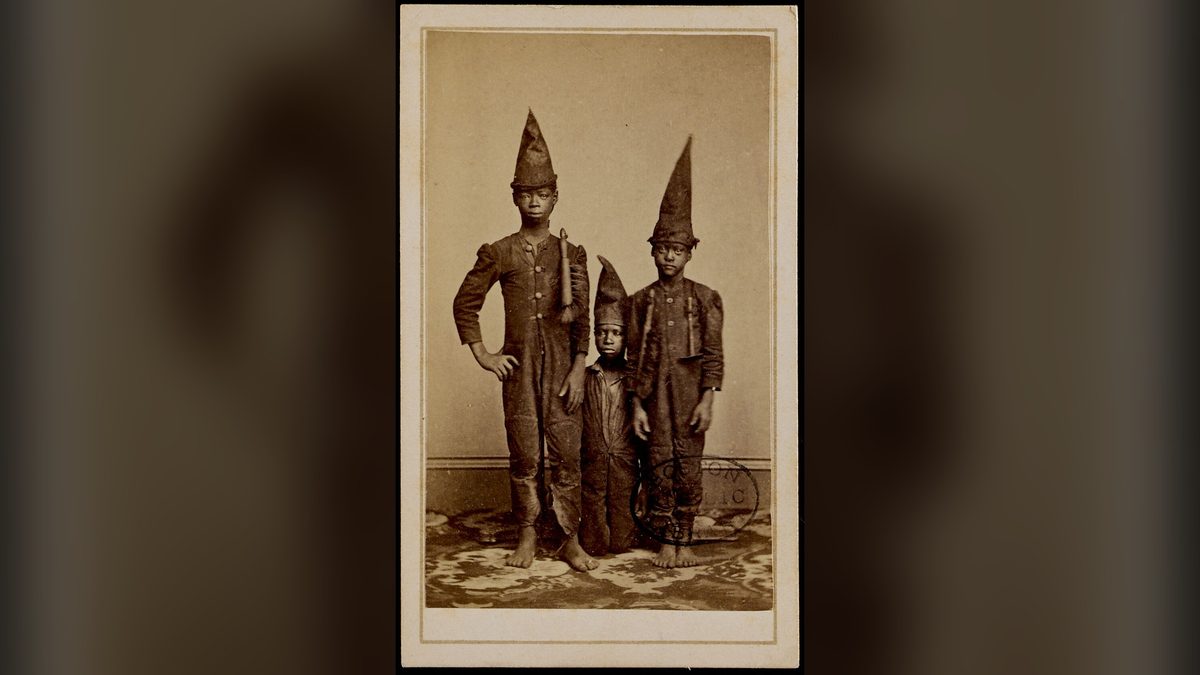
The trade stayed associated with Black labor well past emancipation. At Yale College in New Haven, a long line of campus workers known simply as the “Sweeps” cleaned buildings and chimneys for generations, and by the 1860s that workforce was largely African American. One of them, William Bouchet, had come to New Haven from Charleston, South Carolina, as the enslaved valet of a Yale student; after emancipation he stayed on as a campus sweep, became a trustee of his congregation, and raised a son, Edward Alexander Bouchet, who in 1874 became Yale College’s first African American graduate — a chimney sweep’s household producing one of the university’s most consequential early alumni.
It Took Three Laws and a Dead Eleven-Year-Old to Finally End It
Parliament’s first attempt, in 1788, set a minimum apprenticeship age of eight and required real indenture paperwork; nobody enforced it. An 1834 act banned apprenticing any child under ten and barred anyone under fourteen from actually climbing — partly on the strength of Glass’s testimony about his rods — and fared only slightly better. An 1840 act pushed the apprenticeship age to sixteen and barred anyone under twenty-one from climbing into a flue at all, and children under ten were still found doing it. Public sympathy got a boost in 1863, when Charles Kingsley’s novel The Water-Babies put a suffering climbing-boy hero in front of readers who’d never seen the trade up close; a Chimney Sweepers Regulation Act followed in 1864 and was, like the ones before it, effectively unenforced.
What finally broke the pattern was a death. On 11 February 1875, a master sweep sent a boy named George Brewster up a flue at the County Pauper Lunatic Asylum in Fulbourn, outside Cambridge. He became stuck roughly fifteen minutes in; rescuers tore down an entire wall trying to reach him, and he died shortly after being pulled free. Contemporary newspaper accounts at the time put his age at fourteen or fifteen; modern research for his 2025 memorial plaque — the youngest subject ever honored with one in Britain — fixed it at eleven. The 7th Earl of Shaftesbury, who had already spent thirty-five years pushing for reform, raised Brewster’s case in the House of Lords within days and vowed to finish what the earlier acts hadn’t. Parliament passed the Chimney Sweepers Act that September. Unlike every law before it, this one built in actual enforcement: every working sweep now had to hold an annual certificate issued by the local chief of police, entered in a police register, with working unlicensed made a punishable offence in its own right. It was the registration requirement, not a ban on children as such, that finally ended the practice — no master sweep wanted to be the one caught with an unregistered child on a job police could now actually check.
A Trade Built on Danger Became a Symbol of Good Luck
None of that history stopped a soot-covered sweep from becoming, in the same period, a folk symbol of good fortune across Britain — a superstition London’s own museum of the city still documents today. One widely repeated, entirely unverifiable legend credits King George III, supposedly saved from a runaway horse when a passing chimney sweep grabbed the reins; whatever actually happened, the belief that a sweep crossing your path, or turning up at your wedding, brought luck took hold in the 1800s and never really left. British couples still hire sweeps to arrive in full soot-blackened dress and shake the bride’s hand for exactly that reason today.
Watch the full history
The video version covers the climbing-boy trade, Pott’s discovery, and the law that finally ended it in just under eight minutes.

Related reading
- The Pomander Was Built on Miasma Theory, and Outlived It — another case where a disease theory shaped an everyday object for centuries before anyone proved it wrong.
- The Dangerous History of Face Powder — a second trade that kept poisoning the people who worked it long after the danger was known.
- How Dry Stone Walls Stay Up Without a Drop of Mortar — another skilled, physically brutal trade passed down outside any apprenticeship law.
- How Much Firewood Heated a Farmhouse Through a 19th-Century Winter — the ordinary household fire that made a swept chimney a matter of life and death in the first place.
Adult sweeps, working Glass’s rod-and-brush machine or something close to it, kept cleaning chimneys straight through the twentieth century, through the slow decline of coal heating, and into today, where sweeps still climb onto roofs — never into flues — for anyone with a working wood stove or fireplace. The job survived. It was only ever the children inside it that the law eventually, slowly, got around to protecting. Would you trust a child to climb inside your own chimney to clean it?
Works cited
- Greenberg, Morris. “‘PAH’ Carcinogens: What Nullified Early Warnings.” European Journal of Oncology 14, no. 1 (2009): 5–14. Link.
- “Chimney Sweepers Acts (Case of George Brewster).” HL Deb 16 February 1875. Link.
- Chimney Sweepers Act 1875 (38 & 39 Vict. c. 70), full text. Link.
- Society for Superseding the Necessity of Climbing Boys. Observations on the Cruelty of Employing Climbing-Boys in Sweeping Chimneys. London, 1828. Sir John Soane’s Museum, collection ref. 3323. Link.
- “RSA History: Premiums for Chimney Brushes.” Royal Society of Arts.
- “George Brewster.” Cambridge Past, Present & Future. Link.
- “Peter” [runaway advertisement, Boston Gazette, 19 March 1745]. Black Craftspeople Digital Archive, item MA-CHIM1. Link.
- “Yale ‘Sweeps.’” The Yale and Slavery Research Project, Gilder Lehrman Center for the Study of Slavery, Resistance, and Abolition, Yale University. Link.
- Cullingford, Benita. British Chimney Sweeps: Five Centuries of Chimney Sweeping. Lanham, MD: Rowman & Littlefield, 2001.
- Jackson, Lee. Dirty Old London: The Victorian Fight Against Filth. New Haven: Yale University Press, 2014. p. 218.
- “Chimney Sweeps’ Soot-Stained Past.” London Museum, collections & stories. Link.