
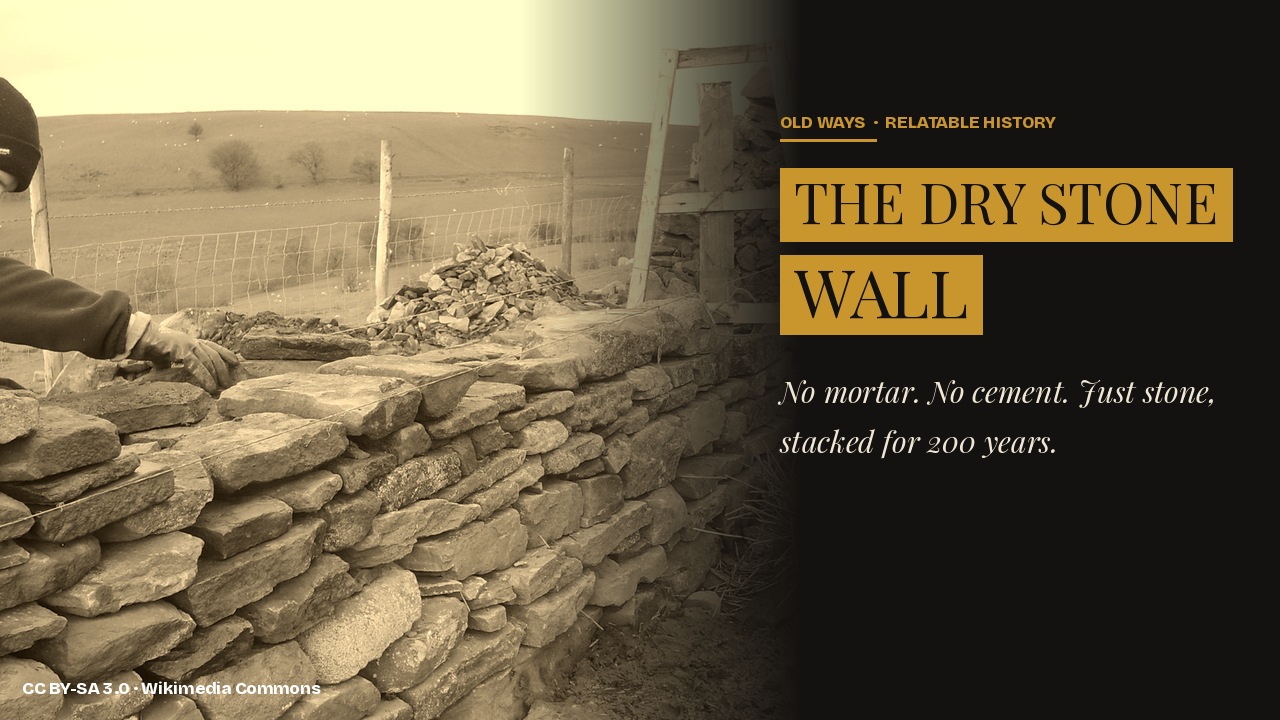
On the limestone plateau of the Burren, in County Clare, Ireland, a network of field walls has been dated not to the Middle Ages, and not to the Bronze Age in the loose way that phrase usually gets thrown around, but to somewhere between roughly 2500 and 1700 BCE — the Chalcolithic and Early Bronze Age. The dating method is almost as interesting as the result: geoarchaeologist Carleton Jones measured how much more the limestone bedrock had dissolved in the open ground beside the walls than in the strip of bedrock the walls themselves had been shielding from rainwater for four thousand years, and read the gap like a clock.
What makes that date startling isn’t just the number. It’s that the walls themselves, examined stone by stone, use a technique a farmer in 1820s Vermont would recognize on sight: stones fitted together by eye, no binding material of any kind, holding their shape through pure weight and friction. A method old enough to predate the pyramids of Giza by centuries is also, right now, being taught in weekend workshops in Vermont and tested for a professional certificate in Yorkshire. Almost nothing else built by hand has that kind of range.
This is the story of how that one technique turns up in so many unrelated places and eras: a Bronze Age farming people in Atlantic Ireland, English and Scottish landowners carrying out Parliamentary enclosure three thousand years later, and New England sheep farmers a few decades after that, all solving the same basic problem the same basic way, usually without ever hearing of each other’s walls.
Most American stone walls are almost embarrassingly new
The stone in a typical New England wall is ancient — fieldstone broken off bedrock and scattered across the region by glaciers during the last ice age, then pushed back toward the surface by frost for ten thousand years after the ice retreated. The walls built from it are not ancient at all. The overwhelming majority went up in a single working lifetime, roughly between the 1770s and the 1840s, as settlers cleared forest for crops and pasture and needed somewhere to put the rock that kept surfacing under the plow.
How much of it is still out there is a genuinely contested number, and that disagreement is itself worth noting rather than papering over. Geologist Robert Thorson, who has spent more of his career on this question than anyone, has given different figures in different places — an oft-cited 240,000 miles in one account, and “once may have been 250,000 miles” in another. Both numbers describe the same basic fact: a wall-building effort large enough that, laid end to end, it would circle the earth close to ten times, built almost entirely with hand tools and ox teams.
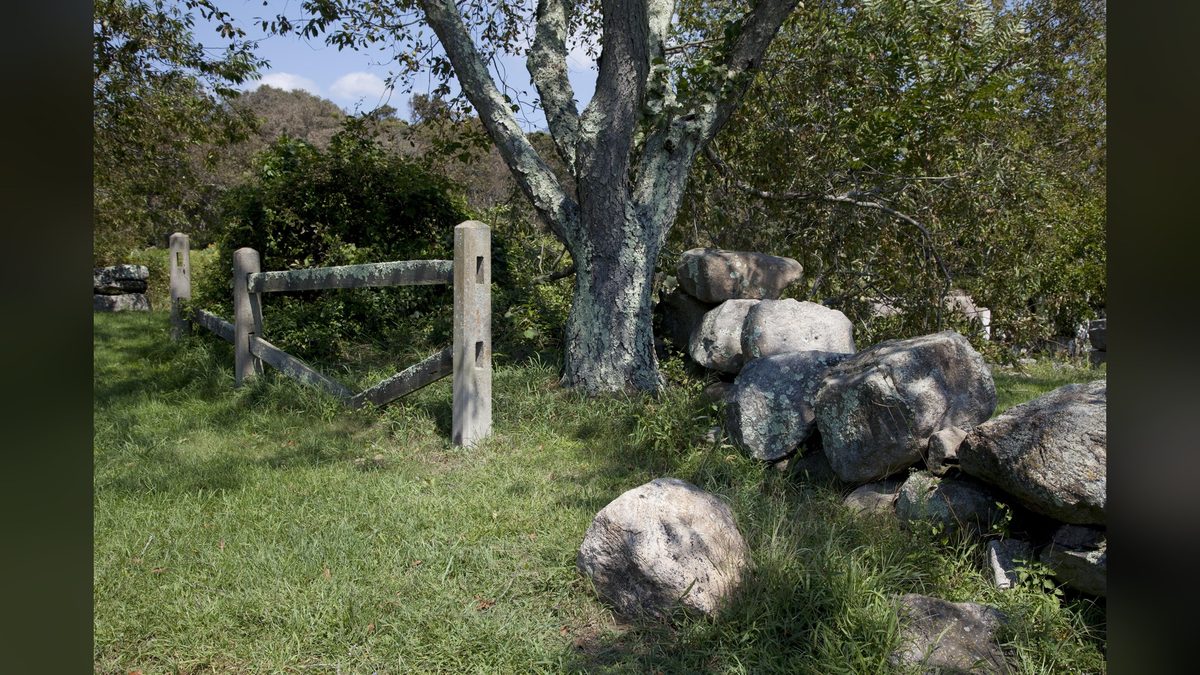
A lot of that total is no longer doing the job it was built for. Walk through dense forest almost anywhere in inland New England and a wall running arrow-straight through the trees is not landscaping — it’s the leftover edge of a field that stopped being a field a century and a half ago, from a farm whose house and barn rotted away long since. The wall is frequently the only part of the farm built to outlast its own usefulness.
The structure is an argument against using any glue at all
A properly built dry stone wall is almost always a double wall: two separate faces of stone, each leaning very slightly inward toward the other, a lean wallers call the batter, typically in a ratio of roughly one unit of inward lean for every six to ten units of height. The gap between the two faces isn’t left empty. It’s packed with hearting — smaller broken stone chosen deliberately to be as few and as large as the gap allows, because hearting that’s too small and loose can shift independently of the faces and destabilize the whole structure from the inside.
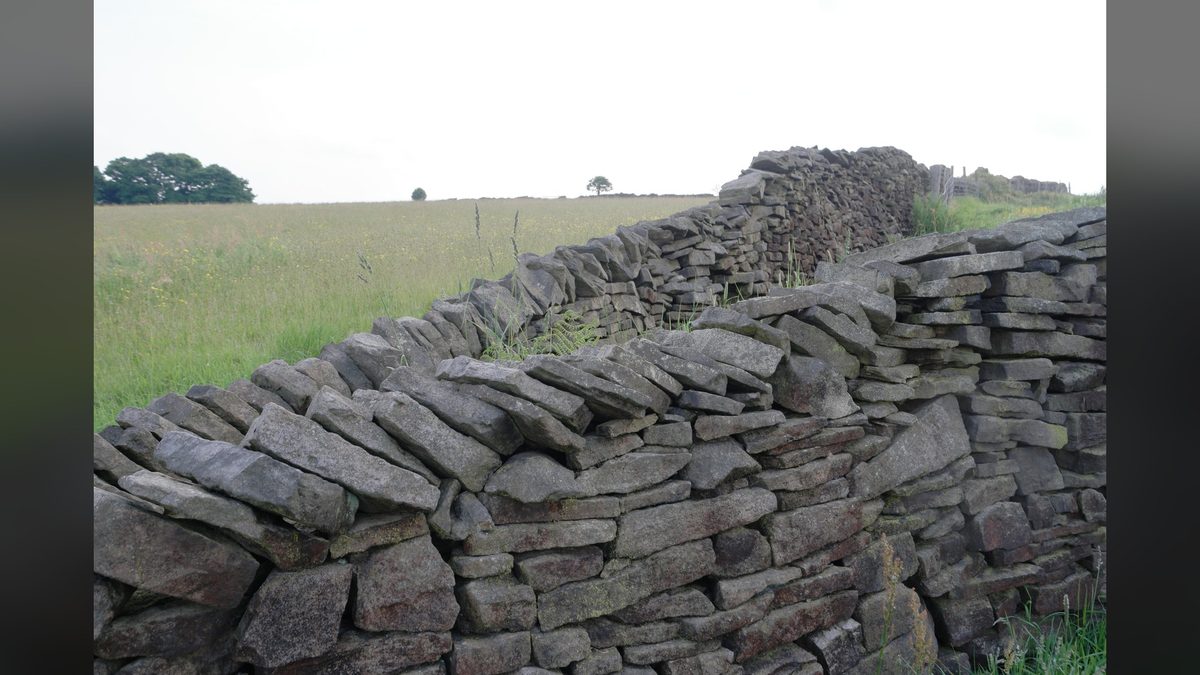
At intervals, a single long stone called a through-stone is laid running the full width of the wall, tying both faces together the way a rivet ties two plates of metal. The top course is finished with coping stones, set upright on edge rather than flat, which sheds rain instead of letting it pool and freeze, and which also makes the wall much harder to climb or push over — a detail that mattered more for keeping livestock in than for keeping people out, since most of these walls were built as stock fences first. Builders also set each stone with its long axis running into the wall rather than along its face, which sounds like a minor choice but is, by most working wallers’ accounts, the single most common reason an amateur-built wall fails within a few years.
Not fighting the ground is the entire engineering trick
None of those individual stones are glued to each other. That absence of mortar is not a limitation the technique works around — it’s the actual mechanism that keeps the wall standing. A dry stone wall is held up by nothing but friction and gravity, and because its stones are never bonded, each one stays free to shift, tilt and settle independently as the ground beneath it heaves and subsides with the seasons, then settle back into place once the movement stops.
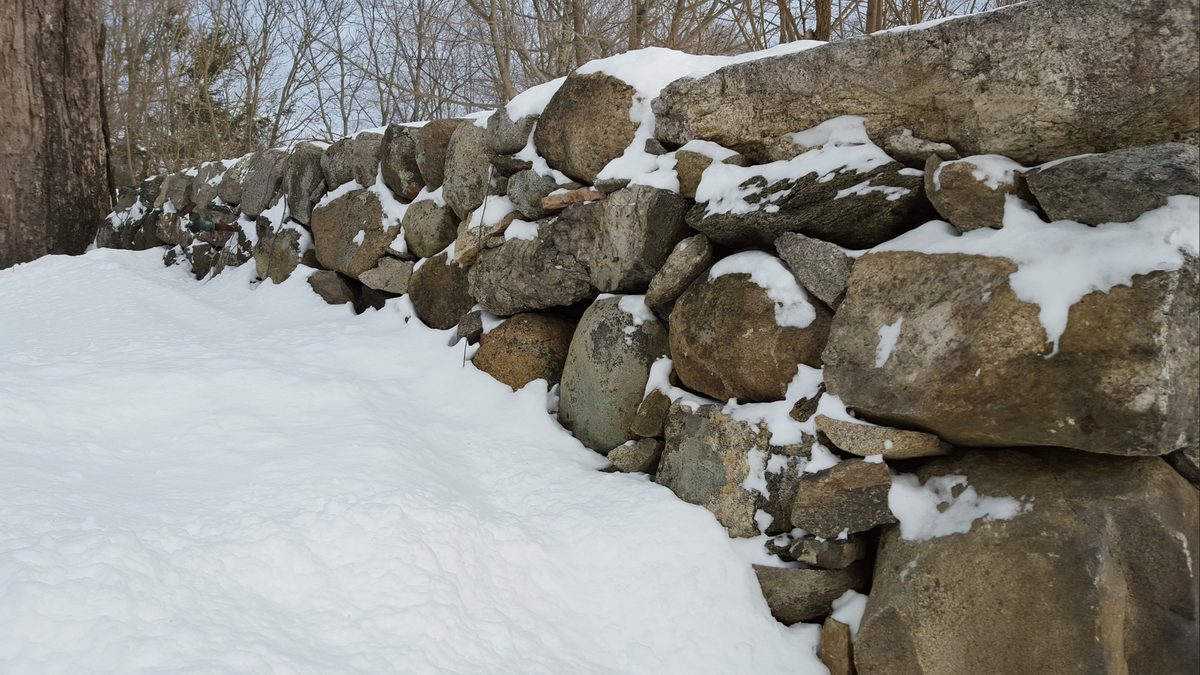
A mortared or concrete wall doesn’t have that option. It resists ground movement rather than yielding to it, and resistance is exactly what fails under repeated freeze-thaw cycling: the structure cracks, water gets into the crack, and the next freeze widens it. Worse, mortar and cement hold moisture against the stone itself, which accelerates decay in a way dry-laid stone, which drains freely through its own joints, simply doesn’t experience. Properly built and never touched again, a dry stone wall can stand for upward of a century and a half; it is the rare case of a structure that lasts longer precisely because nobody tried to make it more rigid.
An import of four thousand sheep turned fencing into an emergency
The sheer speed of New England’s wall-building boom had a very specific cause, and it wasn’t mortar-free engineering theory. In 1810, a merchant named William Jarvis brought roughly 4,000 Spanish merino sheep into Vermont, prized for wool far finer than what ordinary farm sheep produced. American demand for that wool spiked further after the War of 1812, when a boycott of British goods cut off the usual source of fine imported cloth. The result was a land rush in reverse: by 1840 Vermont alone carried an estimated 1.7 million sheep, New Hampshire about 600,000, and roughly three quarters of New Hampshire’s land had been cleared for grazing.
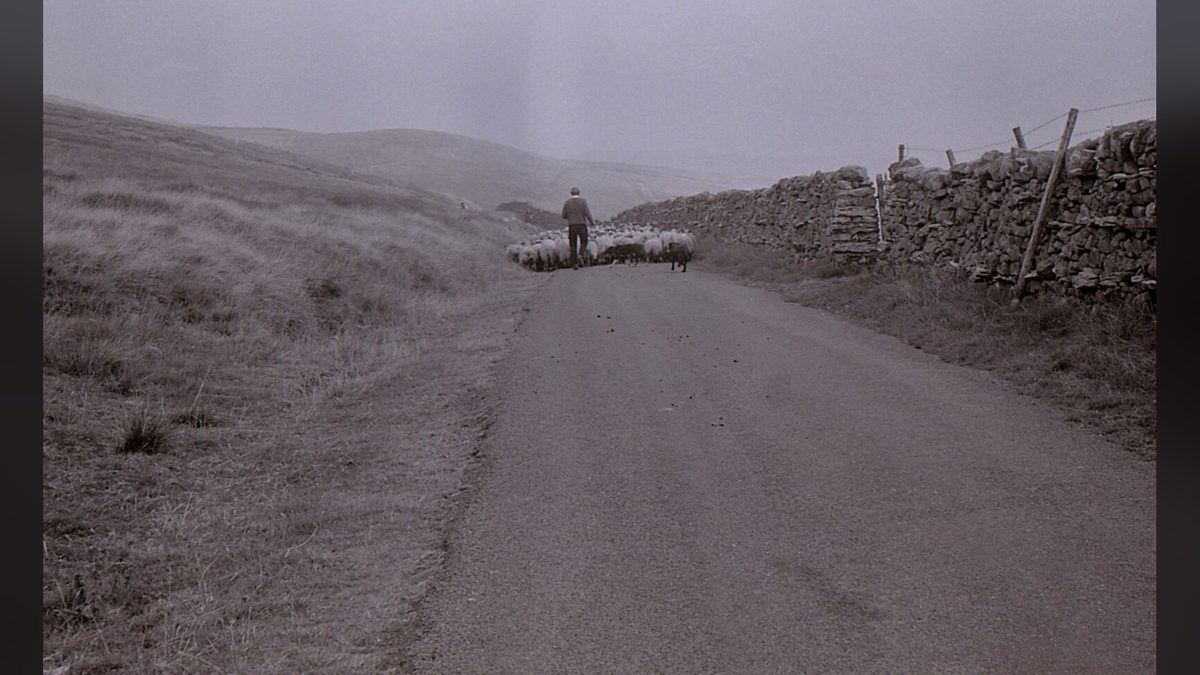
Fencing that many animals across that much newly cleared hill country, fast, with whatever material was already lying in the field, is exactly the condition that produces tens of thousands of miles of stone wall in a few decades rather than a few centuries. The boom didn’t just explain why so much wall exists; it explains why so much of it exists in such a narrow band of years.
The sheep economy collapsed almost as fast as it had inflated
It did not last. Wool prices fell by more than half between 1835 and 1840, and the damage wasn’t limited to price. Grazing that many sheep on thin hill soil for two and a half decades had stripped groundcover faster than it could regenerate, and the resulting erosion brought on flooding and soil loss that made the same land worse at producing anything at all. Cheaper wool from Australian and Argentine flocks, newly reachable by sail, finished the job on price.
Farmers didn’t stay to fight it. Thousands of New England hill farms were abandoned over the following decades, their owners moving west to flatter, deeper soil, and the cleared pastures those farmers had walled so carefully simply grew back into forest around the walls that once bounded them. The wall is the one part of the farm that didn’t need anyone to keep maintaining it in order to survive the farm’s own disappearance.
Britain’s walls run on a slower paper trail, and Ireland’s run deeper still
Britain’s version of this story is less a single boom than a long bureaucratic grind. Walling increased gradually from the fourteenth through eighteenth centuries as small crofts and “intakes” were carved out of open land, then accelerated sharply after about 1780 with privately promoted parliamentary Enclosure Acts, with most of that construction finished by roughly 1820 — the same approximate window as New England’s boom, for almost entirely unrelated reasons. Scotland had already begun enclosing under an Act of 1710, and many of the walls that still define the Lake District date to an 1801 Enclosure Act specific to that region. Older medieval walls, by contrast, tended to have no batter and no through-stones at all — the refined, engineered version of the technique is itself mostly an eighteenth-century development.
One small, specific feature shows how much everyday thought went into these walls beyond pure stacking: a low gap called a cripple hole, sometimes a lamb gap, deliberately left in some Yorkshire walls, sized so a lamb could pass through to find its mother on the far side while a full-grown ewe could not follow. A 1962 photograph of exactly such a feature, in what is now the Leeds Archive of Vernacular Culture, is cataloged simply as “Dry Stone Wall with Cripple Hole” — an ordinary farm detail that nobody thought needed a grander name.
And then there’s the Burren dating from the opening of this article, which puts a genuinely startling floor under how old this technique can be. A field-wall tradition that reaches back to the Chalcolithic on one Irish plateau isn’t a curiosity sitting outside the rest of this story — it’s evidence that dry stone construction isn’t really a single historical event at all. It’s a solution people in rocky, treeless, livestock country keep reinventing independently, because the materials and the problem are the same everywhere this kind of ground exists.
The craft nearly died out, then got turned into an actual test
By the mid-twentieth century, dry stone walling in Britain was mostly being kept alive by aging tradesmen with no one training under them, which is what prompted the 1968 founding of the Dry Stone Walling Association of Great Britain, a charity built specifically to keep the craft’s education and heritage from disappearing along with that generation. It now runs a tiered Craft Certification Scheme — Levels 1 through 3, accredited by Lantra and recognized by Ofqual, topped by an elite Master Craftsman qualification — and reaching Level 2, which requires roughly a year of prior experience, is the threshold for registering as a professional waller at all.
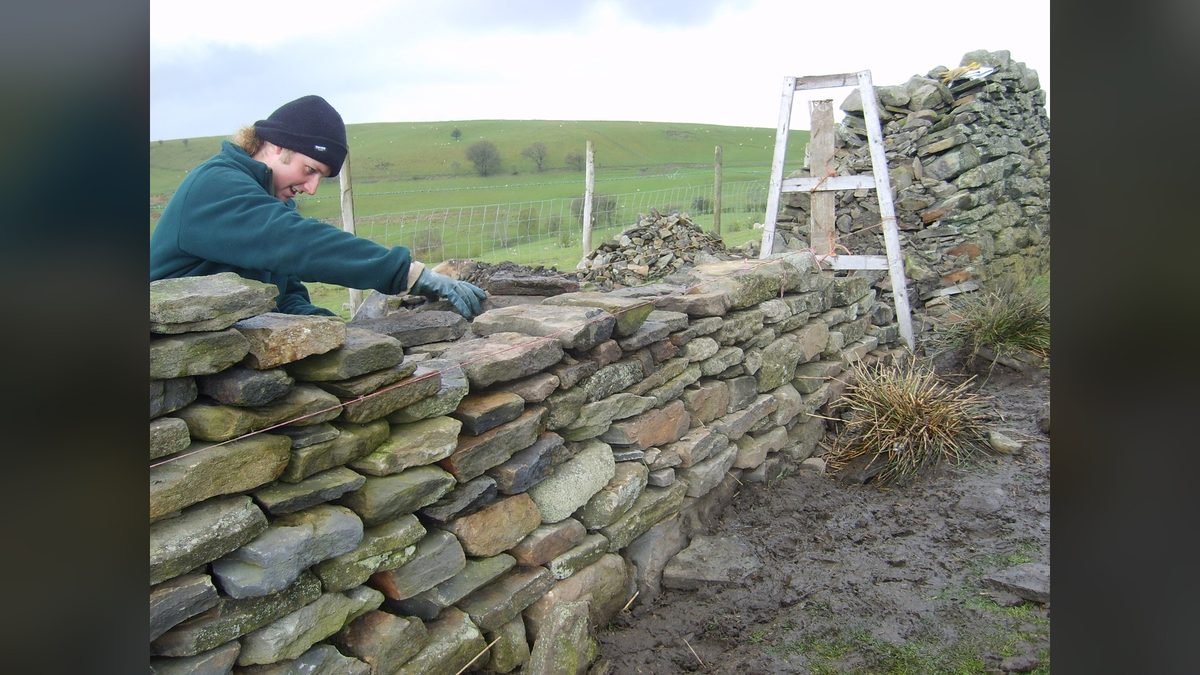
The same revival effort reached the United States more recently, through the nonprofit Stone Trust in Dummerston, Vermont, which runs its own workshops and certification tests modeled on the DSWA’s standards. Part of its stated mission is pushing back against a specific misconception among architects and planners: that dry stone construction is less durable than poured concrete, when a correctly built wall, exactly as described above, can be expected to stand for roughly a century and a half with zero maintenance. The irony of having to certify people in order to convince officials that the oldest building method on the list is also one of the most durable is not lost on the people running the program.
A dry stone wall doesn’t just survive neglect — it quietly turns into something its builders never asked for. The gaps between unmortared stones give wrens (whose scientific name, Troglodytes troglodytes, literally means cave-dweller) a ready-made nesting cavity, and the same voids shelter mice, shrews, voles and the stoats that hunt them. Moss and lichen colonize the exposed faces and quietly capture carbon as they grow, and in open pasture with no trees, the wall itself becomes the only perch a hunting owl or hawk has got. None of that was the point. It’s just what’s left when a structure keeps standing long after the reason it was built has gone.
That may be the real throughline connecting a Bronze Age boundary in County Clare, an abandoned Vermont hill farm, and a Yorkshire waller studying for Level 2: the technique never needed an institution behind it, a patent, or even very much teaching from one generation to the next, because the whole method fits in a sentence. Stack it so it leans in, fill the middle, tie it together, cap it, and let it move. So here’s the same question the video closes on, worth sitting with a little longer than six minutes allows: how would you fence a field with nothing but the rocks already in it?
Watch the full history
The video version covers the same wall from the ground up: how fieldstone gets out of a plowed field and into a boundary, and how a two-hundred-year-old wall gets by without a single repair.

Related reading
- The 2,000-Year History of the Cold Frame
- The 250-Year-Old Box That Kept Flies Off Dinner Without a Fridge
- How Outdoor Bread Ovens Worked, and Where Owning One Was Against the Law
- What Was a Quern Stone? The Hand Mill That Outlasted Empires
Shop
Robert Thorson’s Stone by Stone: The Magnificent History in New England’s Stone Walls is the single deepest dive into this subject in print, covering the geology, the farmers, and the landscape all at once — available on Amazon.
Works cited
- Thorson, Robert M. Stone by Stone: The Magnificent History in New England’s Stone Walls. Walker & Company, 2002.
- Morris, Matt. “History of New England’s Stone Walls.” AMC Outdoors, Appalachian Mountain Club. Link.
- Jones, Carleton. “Dating Ancient Field Walls in Karst Landscapes Using Differential Bedrock Lowering.” Geoarchaeology 31, no. 2 (2016): 77–100. Link.
- Dry Stone Walling Association of Great Britain. “About Us.” Link.
- Dry Stone Walling Association of Great Britain. “Craft Certification Scheme.” Link.
- National Trust. “How to Build a Dry Stone Wall.” Link.
- Teagasc (Irish Agriculture and Food Development Authority). “Dry Stone Wall Building.” Link.
- “Dry Stone Walls — Principles of Structurally Sound Construction.” Masonry Magazine, November 1, 2018. Link.
- Leeds Archive of Vernacular Culture, University of Leeds Library. “Dry Stone Wall with Cripple Hole,” 1962. Link.
- Yorkshire Wildlife Trust. “Preserving the Past, Sustaining Wildlife: The Role of Dry Stone Walls in the Yorkshire Dales.” August 7, 2024. Link.
- Peters, Olga. “Rediscovering Stone.” Commons, June 9, 2010. Link.