
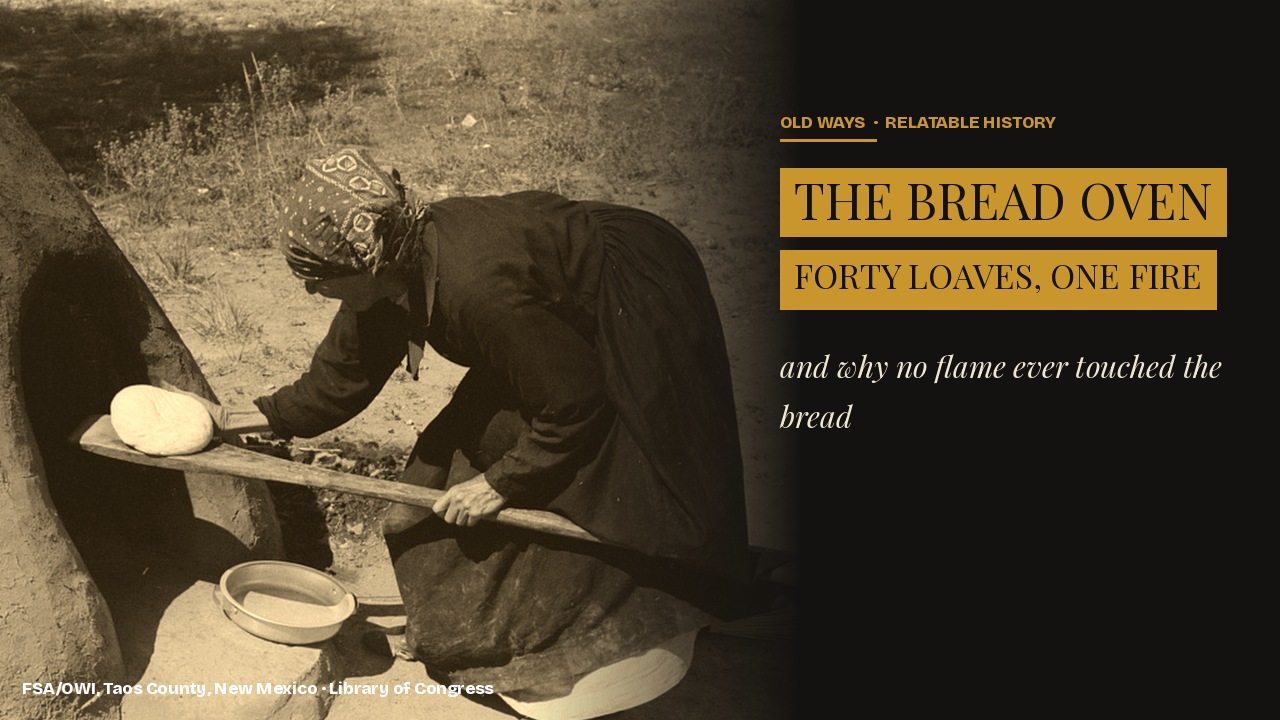
For roughly six centuries across large stretches of rural France, building your own bread oven was against the law. Not impractical, not expensive to a peasant household — illegal. Under a feudal right called the droit de banalité, villagers owed their lord both a fee and their bread-baking loyalty: a private oven was generally forbidden, and everyone fired theirs, in his, run by an oven-master called a fournier, whether they liked the arrangement or not.
Nothing like that monopoly ever crossed the Atlantic. In the English, German, and French-speaking farm communities that settled the eastern seaboard and the Saint Lawrence valley, a bake oven belonged to whoever built it in their own yard, full stop. But building one correctly, judging its heat without a thermometer, and running a household’s or a whole community’s cooking off a single morning’s fire took a body of practical knowledge that never made it into a cookbook.
Here is where that knowledge actually came from: the trade that built the dome, the tests bakers used to read its heat, the legal system that controlled who got to use one in the old country, and the very different weekly economics it ran on New England’s Sabbath versus Pennsylvania’s Friday.
Raising the Dome Was a Specialist’s Job
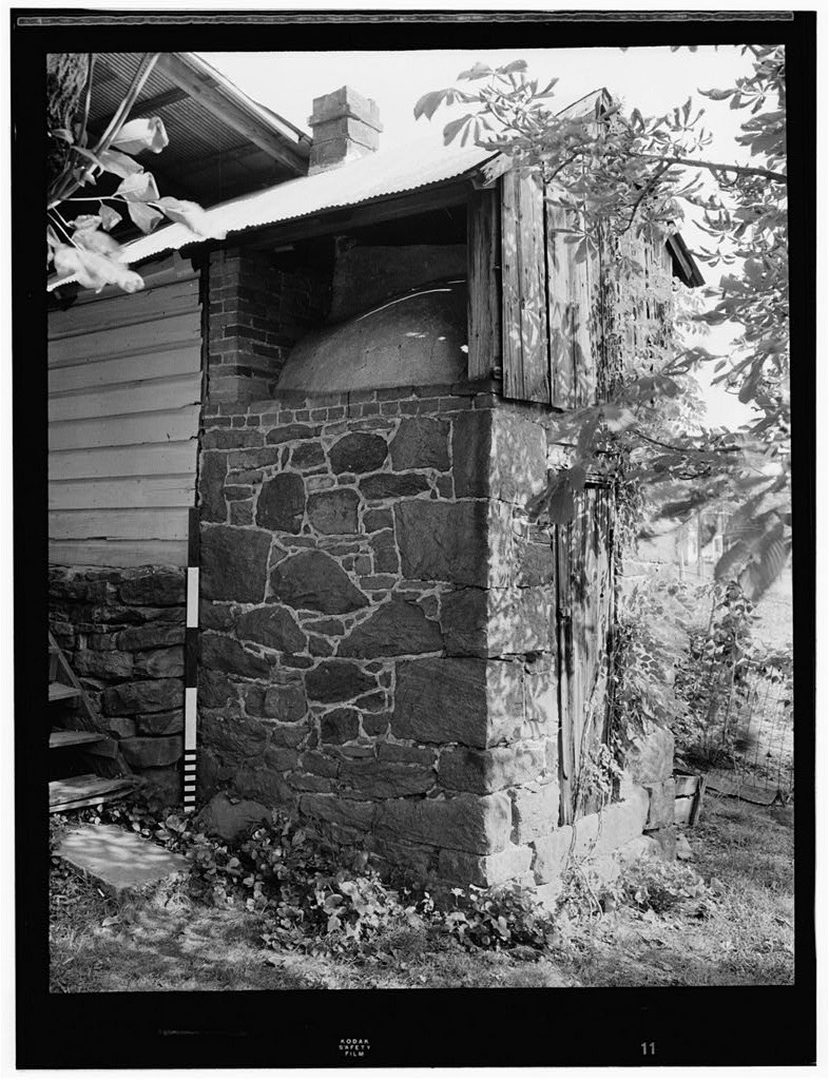
Pennsylvania German farmers who began building outdoor ovens in the early 1700s stacked the dome from brick with no cement at all, bedding each course in lime putty over a temporary wooden form that was knocked out once the structure cured. A typical oven ran five to six feet deep, with a mouth about four feet wide, and once the form came out the whole dome got an exterior coat of clay, lime, and creek sand plaster six to eight inches thick — the real insulating layer, doing the work a modern mind might assign to the brick alone. Some builders added a “squirrel tail,” a curling flue that pulled heat around the dome’s crown more evenly than a straight vent could.
Placement tracked a growing fire-safety education: the earliest ovens often opened straight into the kitchen hearth’s rear wall, but by the mid-1800s builders had mostly moved the mouth around beside the fireplace instead, and roofed the summer-kitchen ovens that housed them in clay tile rather than wood shingle or rye-straw thatch, specifically because a roof fire from the only structure designed to run white-hot was not a risk worth taking twice. A Pennsylvania field survey later found that one surviving oven in Chester County, its original door long since blocked and replaced with a smaller iron one, had eventually been pressed into service as a smokehouse instead — proof that a well-built dome outlasted whatever job it was first built for.
Reading the Heat Without a Thermometer
Different households trusted different signs, and none of them needed a number. Some Pennsylvania German bakers held a chicken feather or a scrap of paper just inside the mouth: a feather that curled, or paper that browned rather than blackened, meant the brick had cooled to bread heat. Others relied on nothing but a bare hand or forearm held at the doorway, counting off however many seconds the heat stayed bearable. The tests varied from farm to farm, which is itself the telling part — this was knowledge passed mother to daughter and neighbor to neighbor, never standardized, because every oven’s mass and mortar ran a little differently than the next one.
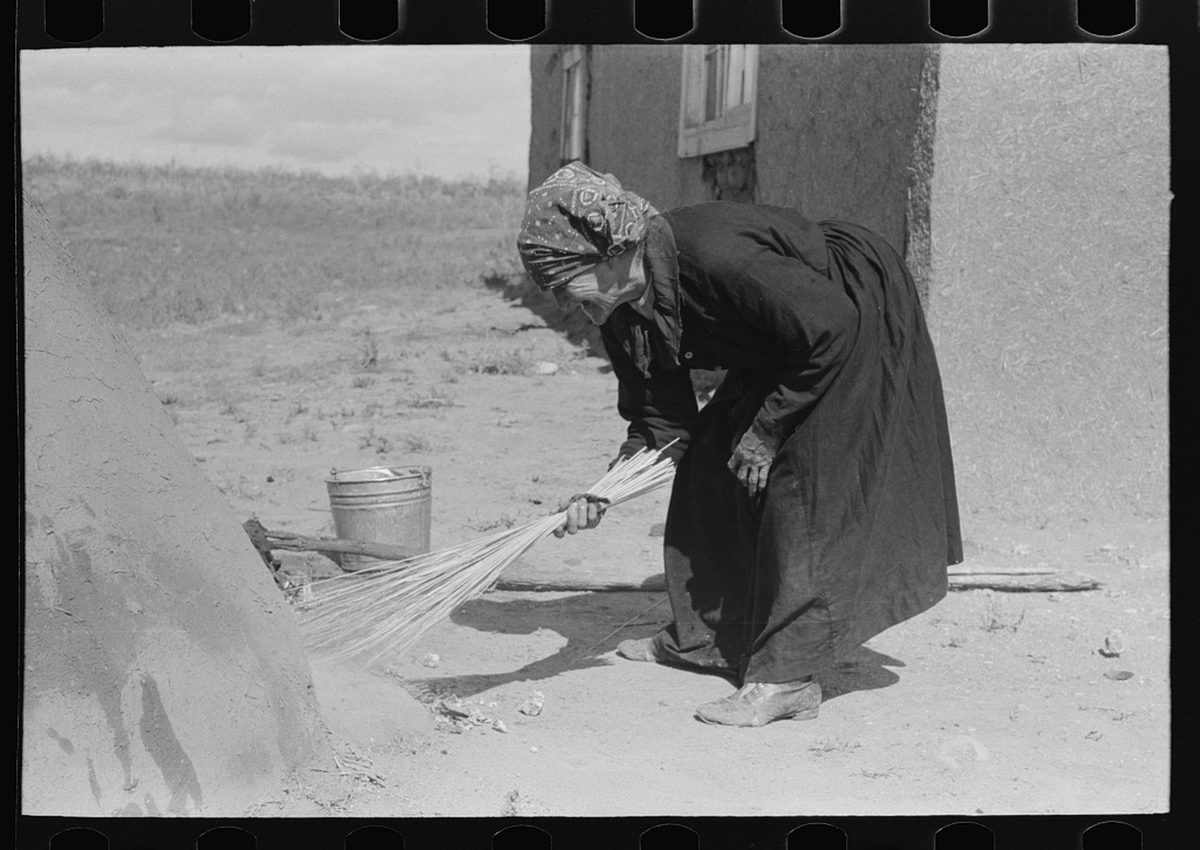
Once the fire had burned down, the floor still needed real clearing before anything else went in: a long-handled iron scraper pulled out the bulk of the coals and ash, and a stick wound with a damp rag — Pennsylvania German households called it a huddlewisch — mopped the stone clean of anything that could scorch a loaf’s crust on contact.
Who Owned the Fire: France’s Mandatory Oven, and the Colony That Refused One
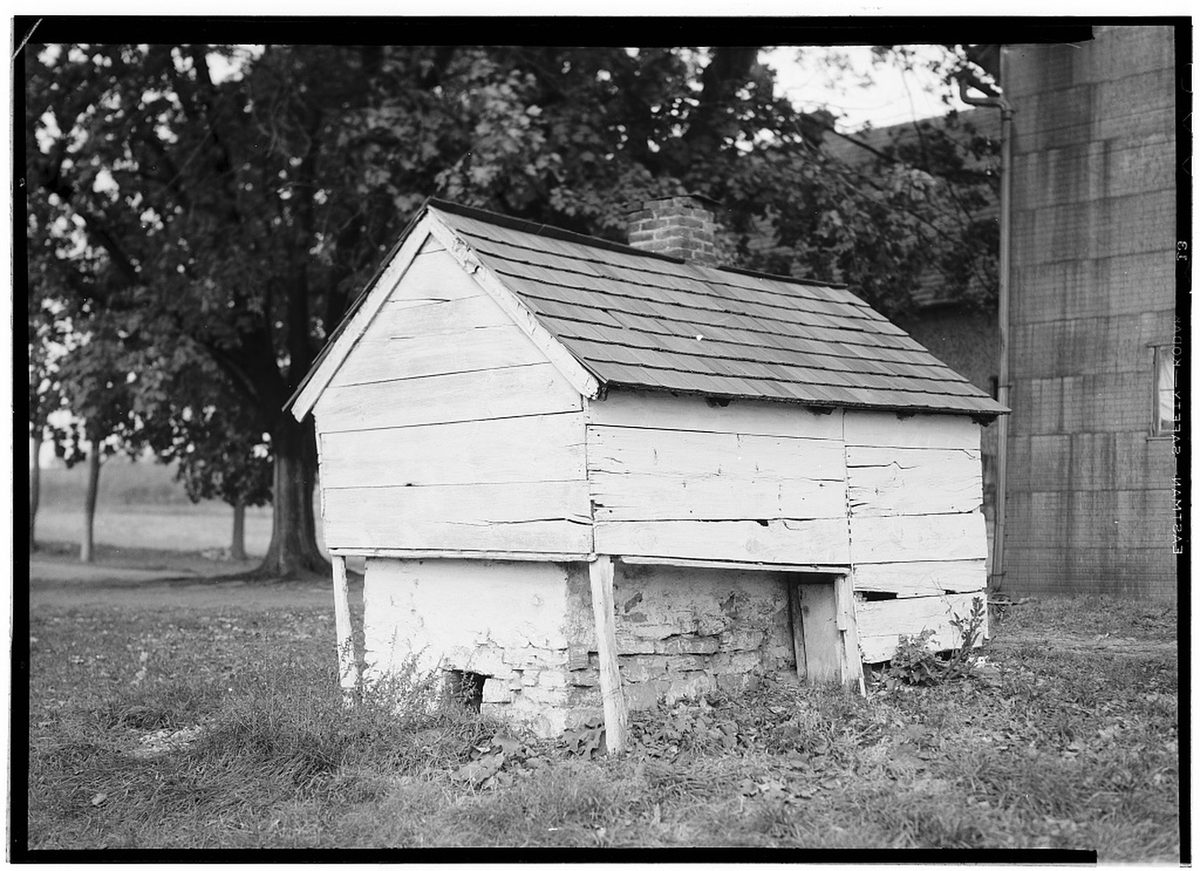
The French banal oven wasn’t only, or even mainly, about revenue. Clustered villages built almost entirely of thatch-roofed, timber-framed cottages could not safely let every household run its own roaring fire; concentrating the week’s most dangerous blaze into one fire-hardened masonry structure, usually standing apart from the rest of the hamlet, was itself a public-safety measure, with the lord’s monopoly riding along as the price of enforcing it. The risk was real: a regional study of one such village, Nan-sous-Thil in Burgundy, records that in 1848 a housewife firing her own hearth oven touched off a blaze that destroyed a quarter of the neighboring hamlet.
The communal ovens themselves came in a couple of standard shapes, built to last generations rather than one family’s lifetime: thick rubble walls laid up in packed earth, a floor of terracotta tile, and a thin brick vault, either concentric rings or an almond profile, with the mouth capped by a single granite lintel. Some stood as a simple domed structure roofed in hollow tile; others were housed inside a small purpose-built fournil, with its own lean-to or two-pitched roof and a proper brick chimney, so the oven-master had somewhere dry to work between firings.
A 2015 inventory of one district alone, the Pays du Vignoble Nantais west of Nantes, found 250 communal ovens recorded across 238 hamlets in 21 villages on the Napoleonic land survey completed between 1808 and 1830. By the time a modern cadastral review reached that district in 2014, only 32 were still standing, and most of those were lit only once a year, if at all, for a harvest festival or similar. After the Revolution swept away the seigneurial system that had required their use, the ovens themselves did not vanish; ownership simply passed from the lord to the hamlet, as collective village property shared out among whichever families still wanted to bake there.
French-speaking settlers in the Saint Lawrence valley took the oven’s basic design with them and left the legal monopoly behind entirely. According to the ethnologist Jean-Claude Dupont, Quebec households never had a four banal at all; each family built its own, typically of clay mixed with sand and long green grass stalks, the vault raised over a temporary basket woven from hazel branches and knocked loose once the clay had dried. The finished shape, Dupont notes, was commonly said to resemble a beaver lying down.
One Weekly Fire, Two Different Household Calendars
All of that dough started as flour, usually ground locally at a water-powered grist mill rather than bought in a sack, which is one more reason a week’s worth of bread got baked in a single firing instead of a little at a time.
Pennsylvania German households ran their baking week toward Friday. Hops flowers went into water Wednesday night; by Thursday that hops liquid went into a yeast sponge, and the dough it started rose overnight in a covered wooden tray. Friday morning, the shaped loaves proofed in baskets lined with rye straw specifically because mice would not chew through rye the way they would wheat straw, before a long wooden peel carried them into an oven that could hold a dozen or more at once — a week’s supply for most farm families, taking its place on the calendar alongside the farm’s other fixed labor days, like autumn’s hog killing day.
New England’s household calendar pointed at Saturday for a different reason: a dish that could go into an oven’s dying heat on Saturday and sit untouched, finishing itself, until it was eaten on Sunday meant no real cooking had to happen on the Sabbath. That dish, baked beans, traces to an English bean-and-bacon pottage, and the archaeologist Charles Cheek has argued the habit itself is a transplant rather than a Puritan invention: early Massachusetts Bay settlers disproportionately came from eastern England, where baking was already the region’s dominant cooking method, and digs around Massachusetts Bay turn up far more ceramic baking dishes than contemporary sites in the Chesapeake. Molasses, and the association most people now expect, entered the recipe later still, arriving with Boston’s deepening role in the triangular trade by the mid-1700s; by the time Fannie Farmer’s cookbook codified “Boston Baked Beans” late in the following century, molasses, mustard, and salt pork were treated as fixed, traditional ingredients rather than a recent addition.
When the Household Oven Wasn’t the Whole Story
Not every oven fed one family. At the Ephrata Cloister, the celibate Protestant community that the German immigrant Conrad Beissel led in Lancaster County from the early 1730s until the last of its Brothers and Sisters died in 1813, baking served a communal household that, at its height, filled eight five-story dormitory buildings across a town of roughly 250 acres. The community’s own Bake House used the same squirrel-tail flue Pennsylvania German farm households favored, scaled up for dozens of people instead of one family — proof the design traveled as easily to an institution as to a farmhouse yard.
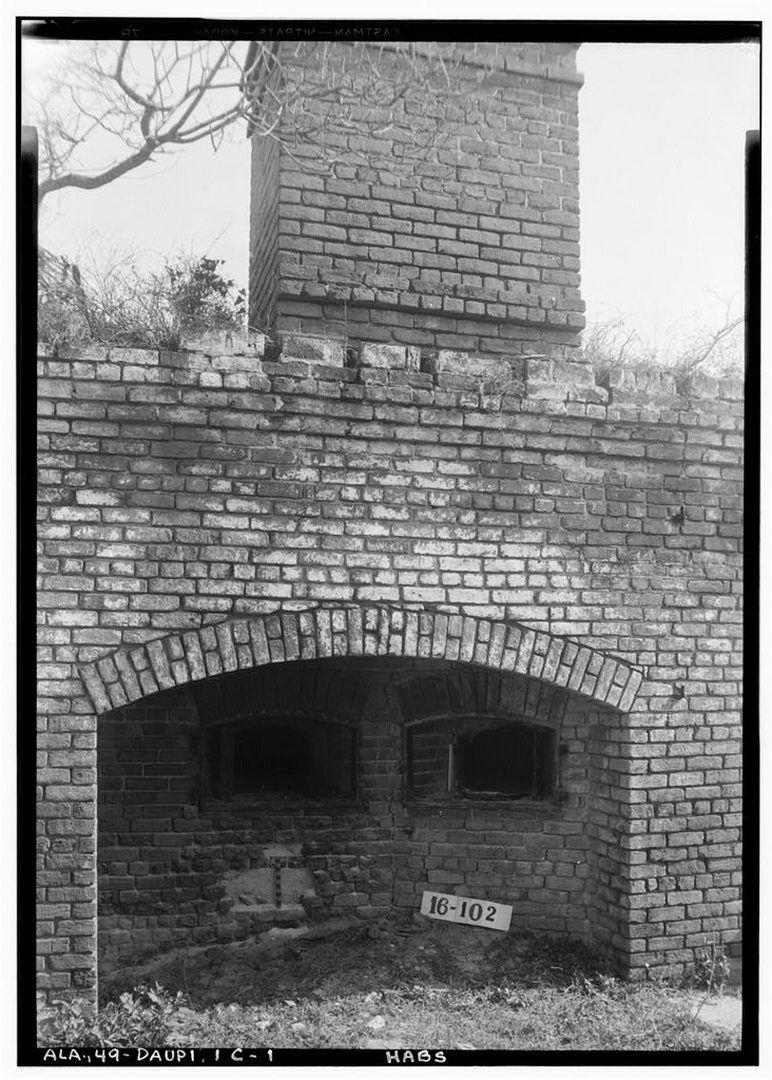
Military garrisons scaled the same idea further still. Fort Gaines, the masonry coastal fort that helped guard the approach to Mobile Bay before the battle fought there in 1864, was built with a bakehouse holding two full ovens side by side rather than one, because a garrison’s bread ration multiplied the single-family math by hundreds of mouths at once.
None of this was new technology, even by colonial standards. Archaeologists documenting Pompeii’s excavated bakeries have traced leavened loaves baking in domed household ovens there as early as the first century B.C., before the city’s domestic bakeries closed up and larger commercial ones took over the trade in the following century. The same basic shape — a masonry dome, charged with one fire and then baked from its own stored heat — was still warming Pennsylvania farmhouse yards some eighteen centuries after Pompeii’s bakers walked away from theirs.
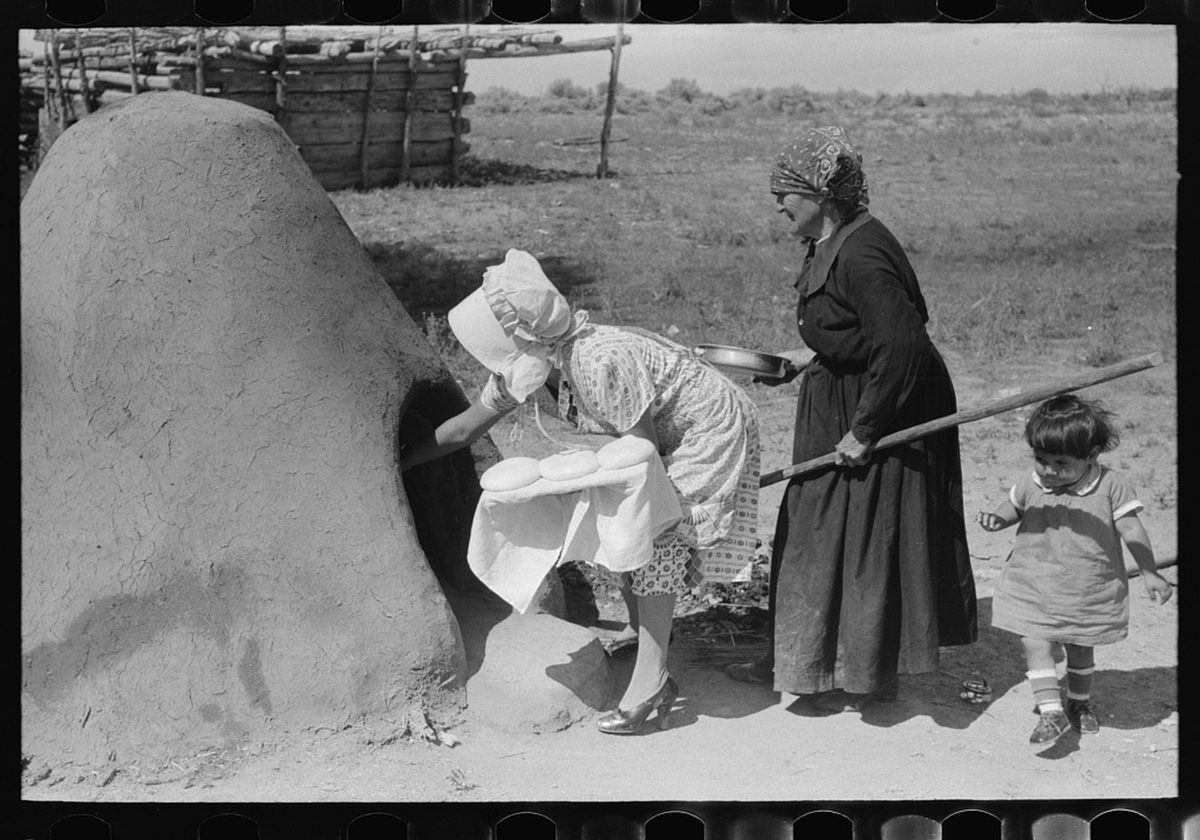
None of this changed in any fundamental way for roughly two thousand years, and what finally ended it was not a better oven. The Pays du Vignoble Nantais went from 250 communal ovens to 32 not because masonry baking stopped working, but because railways and professional village bakers made a weekly household fire pointless to maintain. American farms went cold for the same underlying reason once the cast-iron range offered daily baking for a fraction of the wood and the labor needed by a wood cookstove: the oven lost to logistics, not to a rival design.
What stayed constant across all of it, from a lord’s fournil to a Pennsylvania farmyard to a Quebec clay dome shaped like a resting beaver, was the one piece of engineering nobody ever improved on: charge the mass, clear the floor, and let stored heat alone finish the job. The only real variable, it turns out, was who got to light the fire in the first place.
Watch the full history
The video companion walks through what one of these ovens looked like inside and how a single firing carried a household’s cooking from bread heat down to beans.

Related reading
- How a Water-Powered Grist Mill Turned Wheat Into Flour, No Cash Involved
- How the Wood Cookstove Ran the American Kitchen for a Century
- How Hog Killing Day Worked on the American Farm
- What Was a Quern Stone? The Hand Mill That Outlasted Empires
- Who Really Worked in America’s Summer Kitchens
If you want to try building or firing one
The modern reference most people reach for:
Works cited
- Bowman, Sue. “Friday Was Bake Day.” Lancaster Farming, May 4, 2018. Link.
- Pennsylvania Historical and Museum Commission. “Bake Oven.” Agriculture Field Guide. Link.
- Orillard, Marion. “Fours communs.” Dossier IA44005622. Inventaire général du patrimoine culturel, Région des Pays de la Loire, in partnership with the Syndicat Mixte du SCoT et du Pays du Vignoble Nantais, 2015. Link.
- Dupont, Jean-Claude. “Les fours à pain.” Cap-aux-Diamants: la revue d’histoire du Québec, no. 78 (Summer 2004): 34.
- Cheek, Charles D. “Massachusetts Bay Foodways: Regional and Class Influences.” Historical Archaeology 32, no. 3 (1998): 153–172. Link.
- Stavely, Keith, and Kathleen Fitzgerald. America’s Founding Food: The Story of New England Cooking. Chapel Hill: University of North Carolina Press, 2004.
- “Boston Baked Beans: A Case Study in Culinary Tradition.” Paul Revere House. Link.
- “Digging Deeper into Pompeii’s Past.” Archaeology, Archaeological Institute of America, July/August 2019. Link.
- “Into the Mystic: The Ephrata Cloister by the Numbers.” Lancaster County Magazine. Link.