
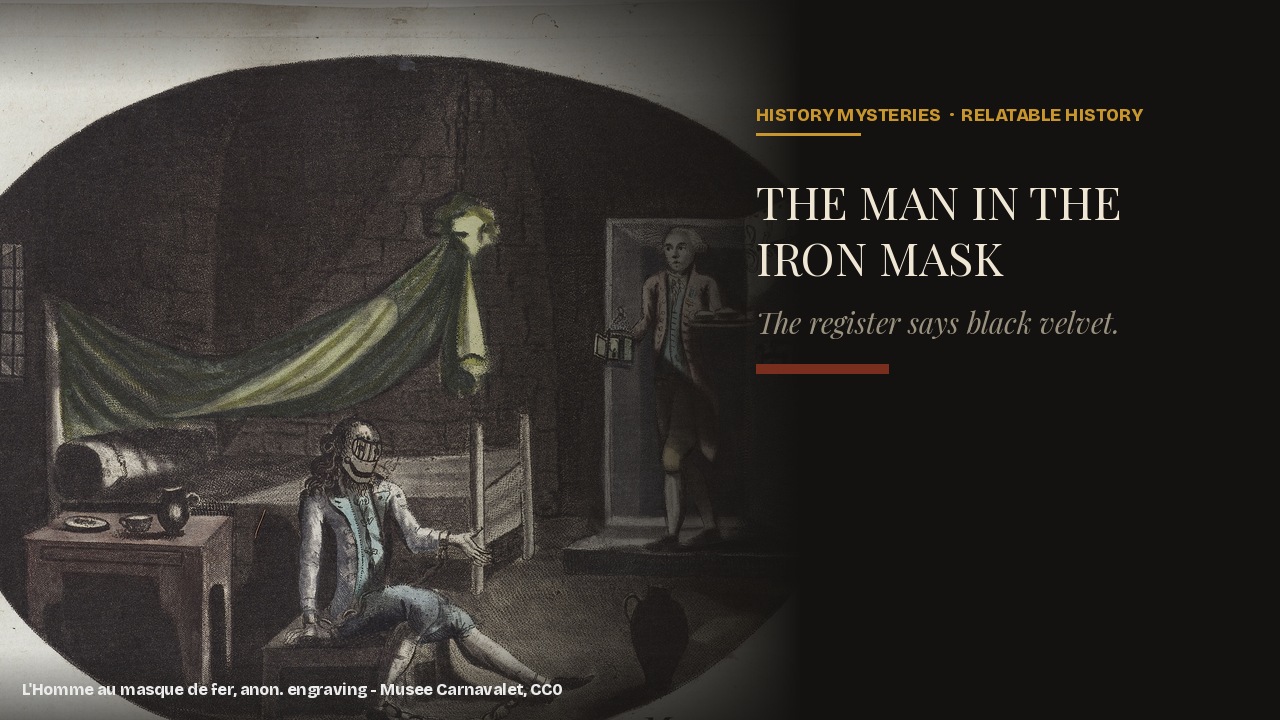
Nobody who had custody of the Man in the Iron Mask ever wrote down why he was masked. Not the minister who signed his arrest order. Not the jailer who carried him through four different prisons across thirty-four years. Not the Bastille officer who logged the night he arrived. Across every surviving letter and register touching this case, the single detail that made him famous is also the one detail nobody with firsthand knowledge ever explained.
That silence is the actual story. The version most people know — a kidnapped prince, a king’s secret twin, a face too dangerous to show — was assembled decades after the prisoner was already in the ground, by writers working from rumor, and in at least one case from little more than a guess dressed up as memory. What the surviving seventeenth-century paperwork actually supports is narrower and stranger: one register entry describing the mask, one arrest order that never explains itself, a chain of custody that can be traced jailer by jailer and prison by prison, and two named candidates whose own paper trails line up against the dates well enough to be taken seriously.
This is not the legend. It is what the documents, read in order, actually hold — and where every later embellishment came from.
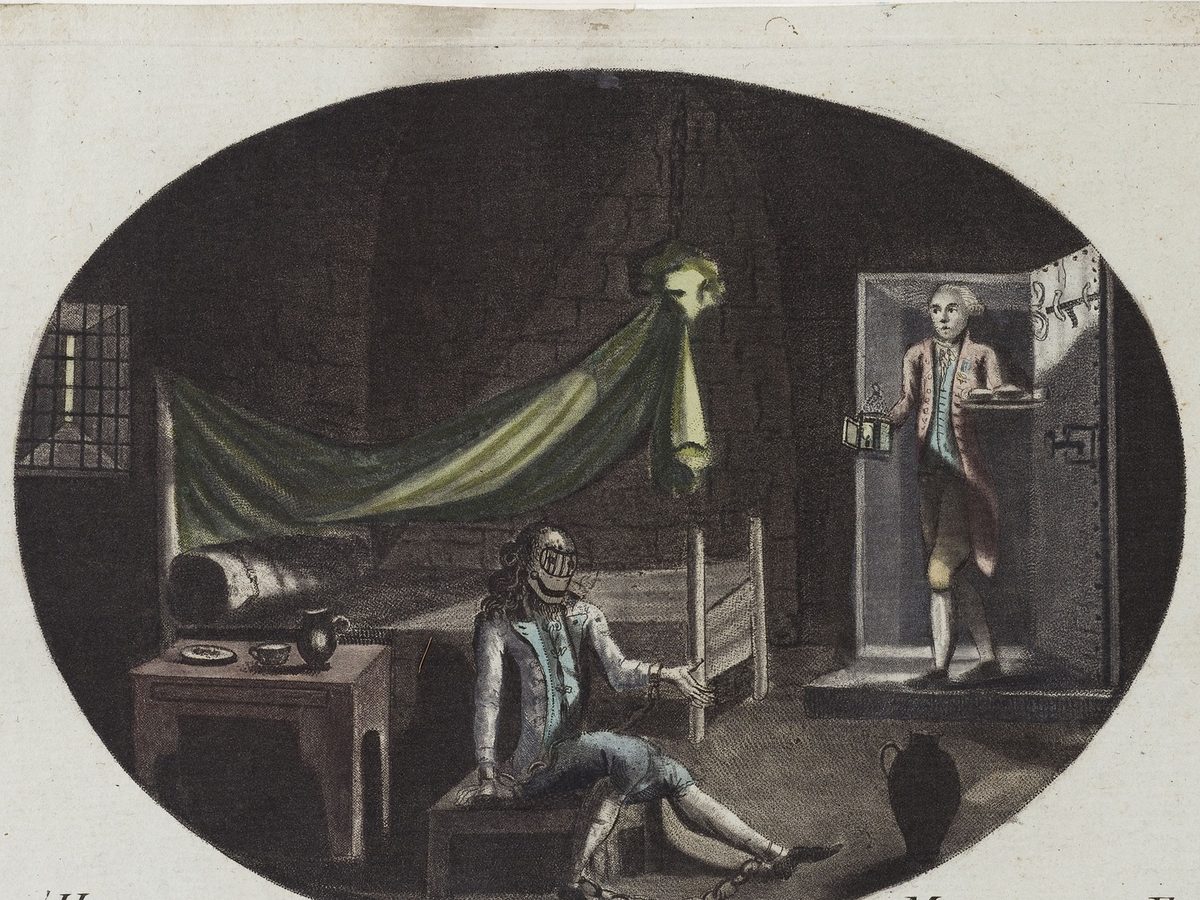
The mask itself comes down to a single line in a single register
The entirety of what anyone can document about the mask’s material rests on one entry. Étienne du Junca, the Bastille’s king’s lieutenant and the man responsible for its day-to-day paperwork, logged a new arrival for Thursday, 18 September 1698, at three in the afternoon. The prison’s new governor, Bénigne Dauvergne de Saint-Mars, had just transferred in from the island fortress off Cannes, and he brought a prisoner of his own in the litter with him — one, du Junca wrote, whom he keeps always masked, and whose name is not spoken.
Du Junca’s register survives today in the Bibliothèque de l’Arsenal in Paris, and the word it uses for the mask is velvet, not iron or steel. This is not a modern correction of an old mistake. Scholars were already making the point within a century of the prisoner’s death: introducing Frantz Funck-Brentano’s 1898 study of the Bastille’s own archive, the playwright Victorien Sardou paused to note, almost as an aside, that the famous mask “was, by the way, of velvet” — treating it less as news than as a correction everyone ought already to have absorbed.
Masks like this were not exotic. A black velvet face covering, held on with cloth bands, was ordinary travel wear across seventeenth-century Europe — the kind of thing worn against sun, dust or simple anonymity on the road, not a piece of specialized prison equipment.
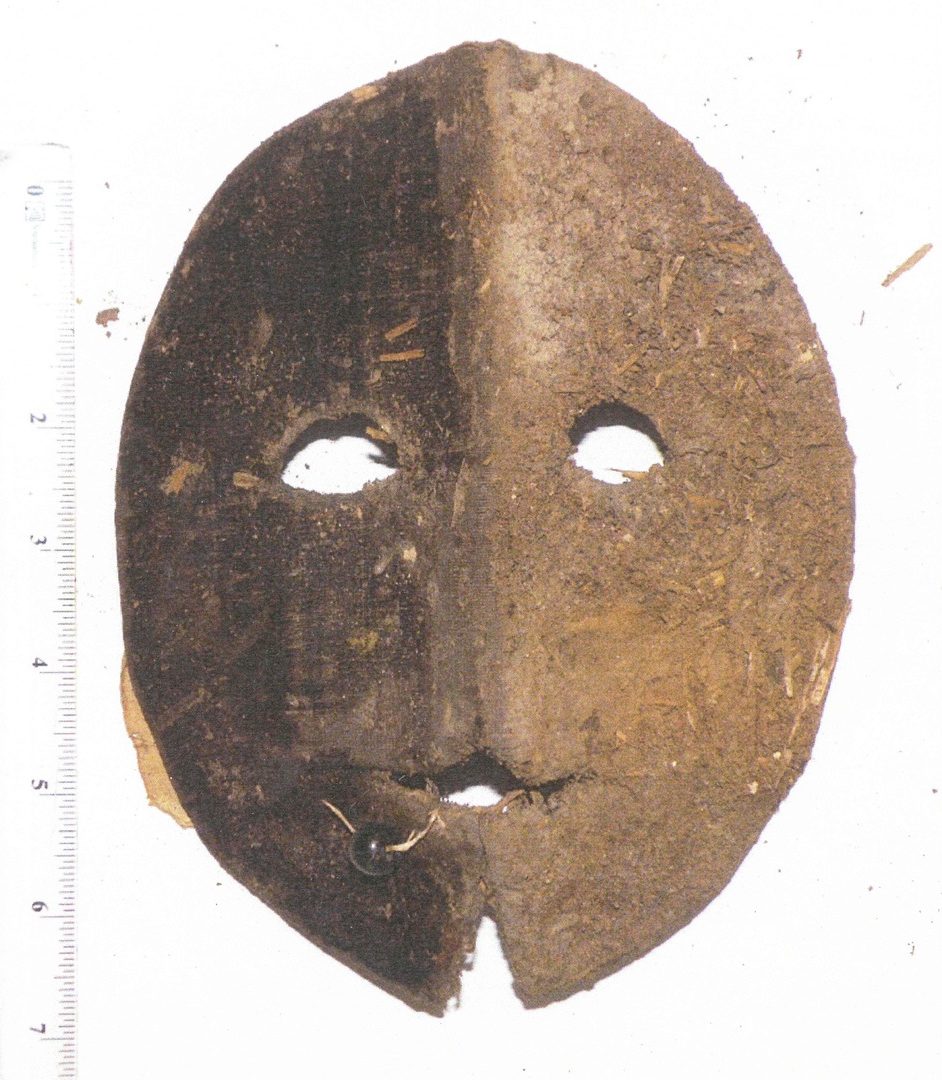
What du Junca’s entry withholds matters just as much as what it records. No name. No charge. And no copy of any order that actually authorizes a mask at all — a gap that turns out not to be an accident of this one register, because nobody else’s surviving paperwork supplies that order either.
The arrest order survives, and it never explains itself
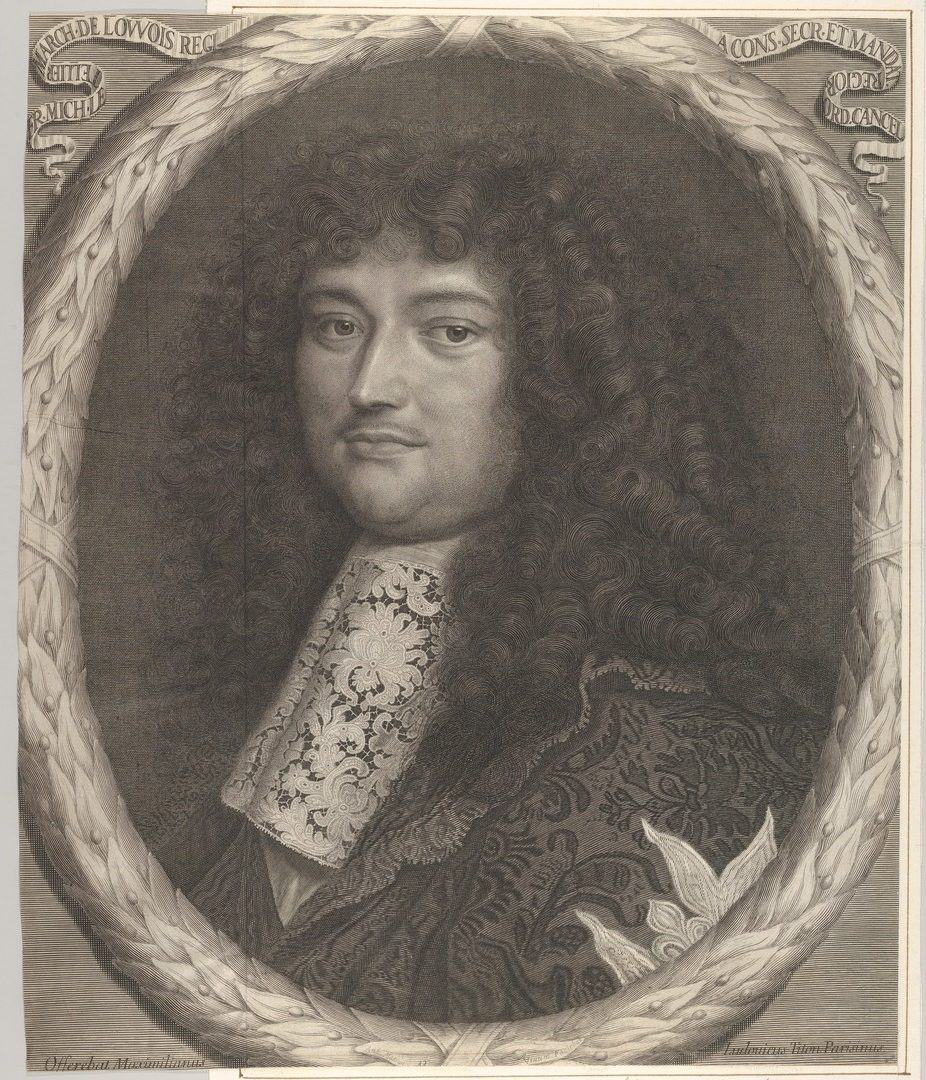
The documented history starts twenty-nine years earlier, with a letter. On 19 July 1669, François-Michel Le Tellier, Marquis de Louvois — Louis XIV’s secretary of state for war — wrote to Saint-Mars, then governor of the fortress at Pignerol in Piedmont, to say a prisoner was coming. Prepare a cell, the letter instructed, with windows that looked out on nothing anyone could reach. Saint-Mars was to carry the man whatever he needed in person, once a day, and to threaten him with death if he spoke of anything beyond the bare necessities of his life — not his name, not his past, not anything at all.
The prisoner’s name in that letter is given as Eustache Dauger, and his arrest, per Encyclopædia Britannica’s account of the case, took place near Dunkirk that same summer, on Louvois’s orders. But the letter also contains the phrase that has driven two centuries of argument: Louvois describes the prisoner as merely a valet, someone who “will need nothing of any significance.” Historians have generally read that line at face value, as background information about a low-status captive. An independent study of the letter by researcher Sarah Madry argues it is doing something stranger — that the wording plays on the French card-deck Valet, on a name close enough to “Dauger” and “Hogier” to work as a private joke aimed at a rival of Louvois’s at court. If Madry is right, Louvois’s “valet” was never a biography. It was a pun — which would mean the minister who wrote the arrest order may not have known who he was actually describing.
Whichever reading is correct, the practical result is the same: the earliest surviving document in this case gives an order, a threat and a name, but not a reason.
One jailer carried him through four prisons for thirty-four years
What makes the case unusually easy to track, compared with most seventeenth-century prison records, is that one man’s career maps the whole of it. Saint-Mars had been posted to Pignerol four years before Dauger arrived, for a single purpose: guarding Nicolas Fouquet, Louis XIV’s disgraced former finance minister, then the most closely watched prisoner in France. Dauger joined that household at Pignerol as a second prisoner, eventually confined alongside Fouquet’s own valet, a man the records call La Rivière.
Every time Saint-Mars was promoted afterward, the masked prisoner moved with him. Pignerol held them until 1681; then Saint-Mars and his prisoners transferred to the fort at Exilles; then, in 1687, to the island fortress of Sainte-Marguerite off Cannes, where the masked man was held for eleven years inside a cell built specifically for him.
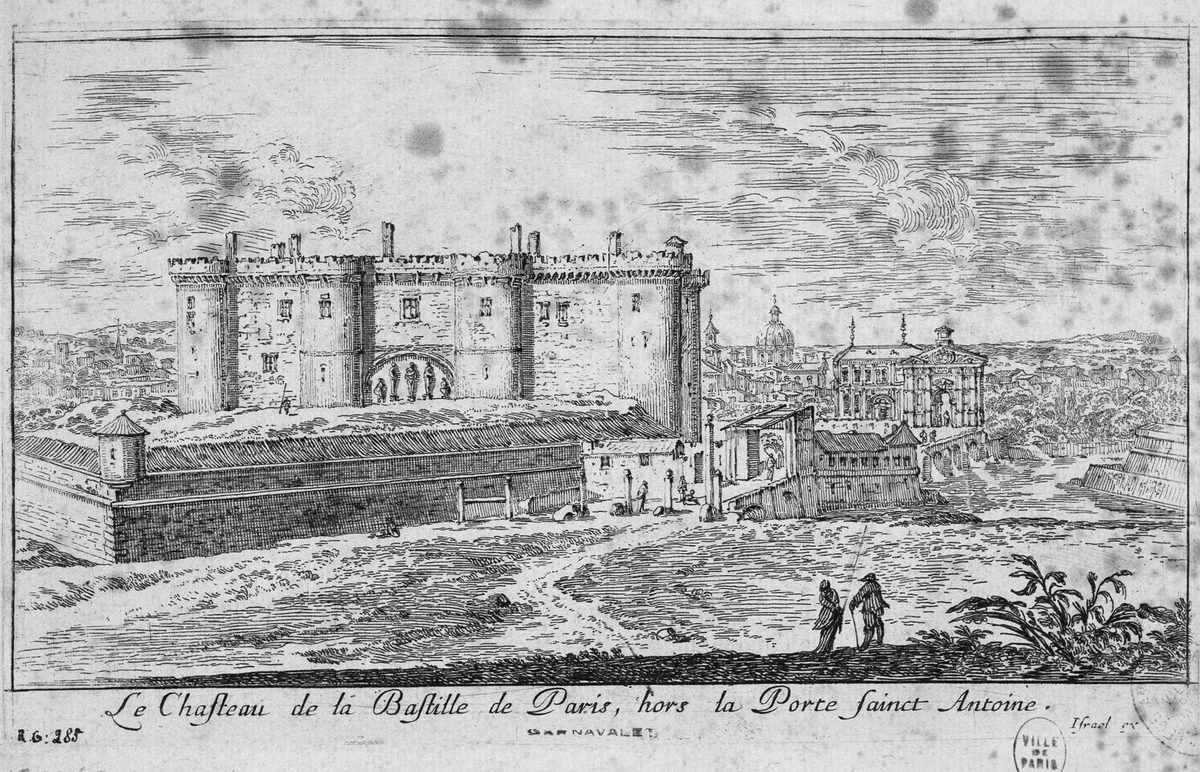
When Saint-Mars was finally made governor of the Bastille in 1698, he brought his “old prisoner” with him one last time — the arrival du Junca logged that September evening. One jailer, four postings, and a single prisoner who outlasted every transfer: it is this continuity, more than any single document, that lets historians say with confidence that the man who died in the Bastille in 1703 was the same man arrested near Dunkirk in 1669.
Two valets went into Exilles; the record can only infer which one came out
After Fouquet died in 1680, Dauger and La Rivière were kept together and then, by 1681, moved on together to Exilles, a pair Louvois’s own correspondence described as too sensitive for ordinary hands. In January 1687, one of the two men died there, of dropsy. The surviving correspondence does not name him outright, which is itself revealing: a record that spends twenty-nine years insisting the first prisoner’s identity be hidden has, by this point, made hiding so routine that even his death goes unnamed.
Historians working from Funck-Brentano’s and Paul Lair’s readings of the same material — most fully Andrew Lang, whose 1903 study remains one of the most thorough treatments of the paper trail — conclude it was almost certainly La Rivière who died, since the chronically unwell valet matches the dropsy description, and because the prisoner who left Exilles for Sainte-Marguerite later that year is treated in every subsequent document as the same long-held captive Saint-Mars had guarded since Pignerol. Lang does not overstate the certainty: “we really do not know which with absolute certainty,” he writes — a rare moment of a nineteenth-century historian flagging the limit of his own sources rather than smoothing over it.
A documentary record this thin, built around a decision nobody explained in writing, is not unique to Versailles. The location of Genghis Khan’s tomb was hidden from history by deliberate design rather than lost by accident, and there too the absence of a written reason has done more to fuel speculation than any surviving fact.
Who the Man in the Iron Mask actually was: two suspects survive the dates
Strip away the legend and exactly two named candidates hold up against the documented timeline. The first is Dauger himself, and the most specific theory about who he actually was comes from Lang: that Dauger was an alias for a man the surviving correspondence elsewhere calls “Martin,” valet to Roux de Marsilly, a Huguenot agent who had been negotiating with England against Louis XIV and who was tortured to death in Paris in June 1669 — the same month Louvois’s arrest order went out. On this reading, Dauger was imprisoned not for who he was but for what his master might have told him, which would also explain why Louvois, writing a month later, seemed to know only a name and nothing else.
The second candidate is Ercole Antonio Mattioli, a minister to the Duke of Mantua who sold Louis XIV the strategically valuable citadel of Casale and then secretly betrayed the sale to four rival powers. Mattioli was lured into French territory and imprisoned at Pignerol in 1679, which puts him in the right prison system at the right period, and his case has a motive the Dauger theory lacks: an actual, documented crime against the crown. It fails, however, on the detail that matters most — the calendar. Mattioli is generally recorded as having died on Sainte-Marguerite in April 1694, nine years before the masked prisoner’s death in the Bastille in 1703. Closing that gap means assuming an undocumented error in his death record, the same kind of evidentiary stretch that keeps other paper-trail mysteries, like the Beale ciphers’ buried fortune, unresolved after more than a century of effort.
No surviving document supports the two theories that made the story famous — a secret royal twin, or a disgraced nobleman punished with anonymity for his rank. Both were invented after the prisoner’s death, by writers who never saw the Bastille’s own files.
How a masked valet became a kidnapped prince
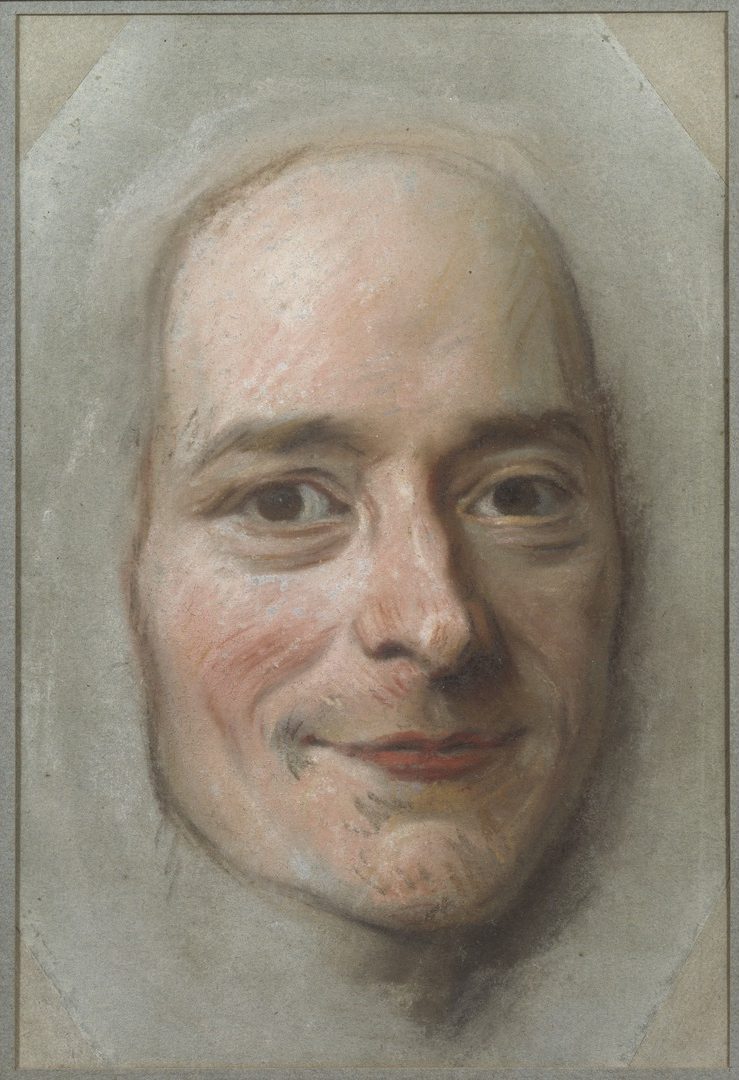
The transformation happened in two steps, both well after the facts were buried in an archive nobody was reading. The first was Voltaire, who was himself imprisoned in the Bastille in 1717 and later wrote that he had heard the story from the oldest inmates there. His account added two things no seventeenth-century document contains: a claim that the mask had “steel springs” in the chin, letting its wearer eat without removing it, and the assertion that the prisoner was a brother of Louis XIV.
The second step was Alexandre Dumas, who built Voltaire’s version into a secondary character for The Vicomte of Bragelonne, serialized between 1847 and 1850 as the final volume of the saga that began with The Three Musketeers. Dumas took Voltaire’s unnamed royal brother and gave him a name, Philippe, and a specific grievance: an identical twin, born first, locked away for life because his existence threatened the throne. That invention, not any document, is the version now sold in English under the title The Man in the Iron Mask. Even Victor Hugo, writing before Dumas, had already called the prisoner “a living mystery, shadow, enigma, problem” — a description that fit the documentary silence far better than the specific stories that eventually filled it.
What is left, once the embellishments are set aside, is a smaller and more interesting shape than the legend. A man was arrested, probably near Dunkirk, in the summer of 1669. He was handed to one jailer who kept him, through four postings and thirty-four years, under an order severe enough that even a fellow prisoner’s death went unrecorded by name. He died in the Bastille in 1703 and was buried the next day under a name — Marchioly — that nobody present seems to have actually recognized.
No document ever explains why any of it was necessary. That absence has outlasted every institution that might have explained it: the ministry that gave the order, the Bastille that held the file, and the monarchy itself. Three hundred years on, it has outlasted most of the theories too — which is very possibly the only part of this story the original jailers would still recognize as accurate.
Watch the full history
The long-form video walks through the register entry, the arrest order and the custody chain in just over nine minutes.

Related reading
- Sealing Wax and Signet Rings: The Secret History
- The Truth Behind the Mrs. O’Leary Cow Myth
- Rohonc Codex Deciphered? Inside a 450-Page Mystery
- Why the 1787 Constitutional Convention Met Entirely in Secret
Works cited
- “The Man in the Iron Mask.” Encyclopaedia Britannica. Encyclopaedia Britannica, Inc. Accessed October 2026.
- Funck-Brentano, Frantz. Legends of the Bastille. Preface by Victorien Sardou, translated by George Maidment. Downey & Co., 1899. Link.
- Madry, Sarah. “The Valet: The Marquis de Louvois’s Invited Guest in the Mystery of the Man in the Iron Mask.” Independent scholarship hosted by Early Modern France (earlymodernfrance.org). Link.
- Lang, Andrew. The Valet’s Tragedy, and Other Studies. Longmans, Green, 1903. Link.
- “Musée du Masque de Fer et du Fort Royal.” City of Cannes. Accessed October 2026.
- “Fort Royal de l’Île Sainte-Marguerite.” Criminocorpus, citing the Archives municipales de Cannes. Accessed October 2026.
- Blanco Fernández, Carlos. “Who Was the Real Man in the Iron Mask?” National Geographic History, October 3, 2017. Link.
- Voltaire. The Philosophical Dictionary. Translated by H. I. Woolf. Knopf, 1924. Entry: “Man in the Iron Mask.” Link.