
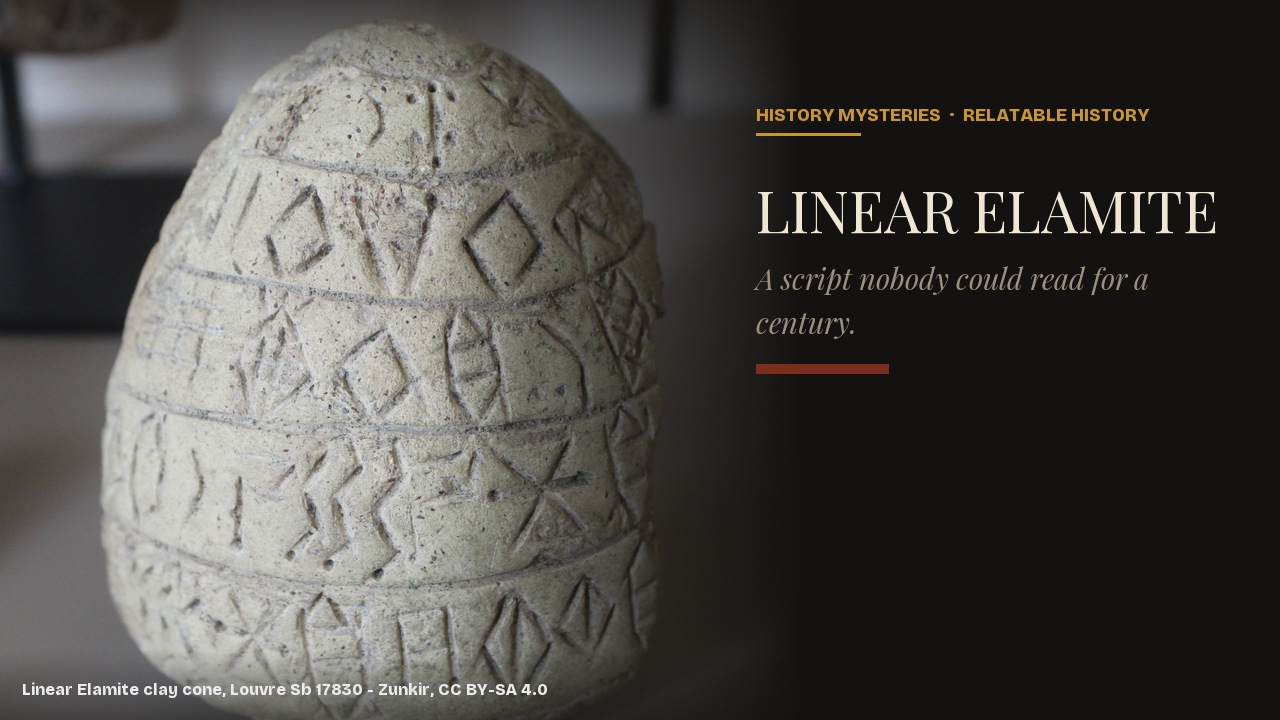
The case for having deciphered Linear Elamite rests, in large part, on eight silver vessels that have never been excavated. Seven of them sat for decades in a London safe-deposit box, owned by a family whose patriarch was convicted of staging a burglary of his own antiquities collection for the insurance money. The eighth sat in a Norwegian collection until police seized it in a raid that had nothing to do with Elamite studies at all. None of that proves the vessels are forgeries, and none of it settles whether the signs on them have really been read. It is, however, the part of the story that tends to disappear once a headline announces a four-thousand-year-old script has finally been solved.
Normally, when a decipherment is announced, colleagues ask a boring question first: where did the object come from, what layer was it in, who dug it up and when. For most of the known Linear Elamite inscriptions, that question has a clean answer, recorded by the French excavators who found them. For the vessels that made the 2022 decipherment claim possible, the honest answer is closer to a family’s word for it, backed up decades later by a chemical test that can confirm the metal is old without confirming anything about where it has been since.
What follows is not an attempt to settle whether the proposed sign readings are correct — that argument, and the rival case against it, is its own story, and the video above covers it. This is the paper trail behind the objects themselves: who has owned them, how they surfaced, and why two separate legal proceedings, one in New York and one in Oslo, now sit quietly inside the footnotes of an ancient-language debate.
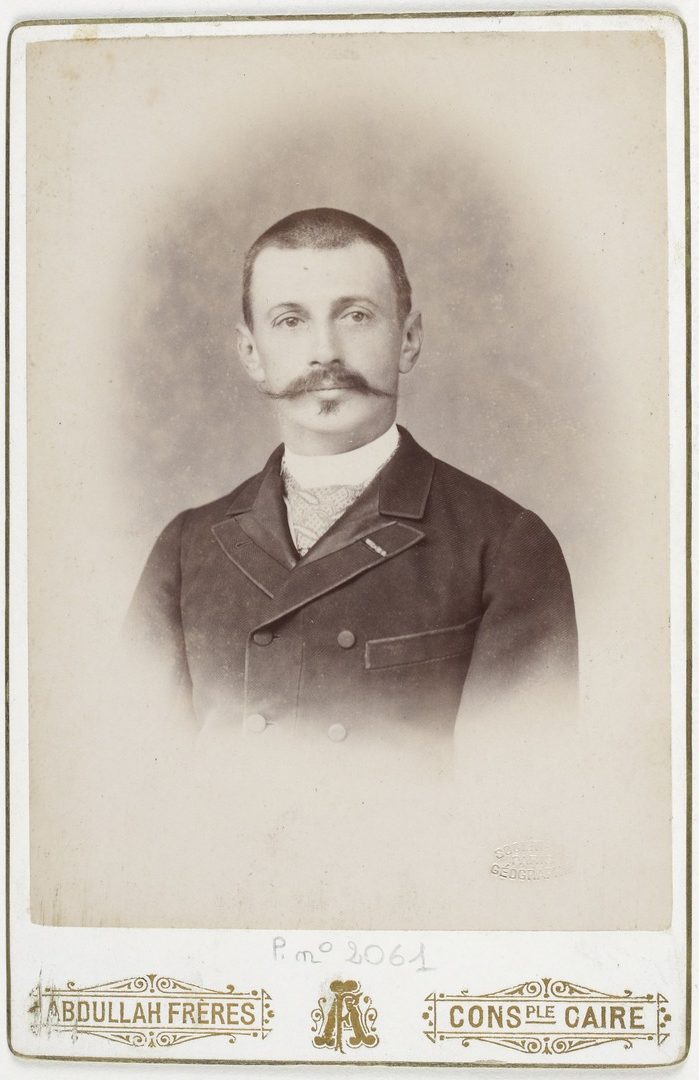
Most of the script has a findspot. The decisive objects do not
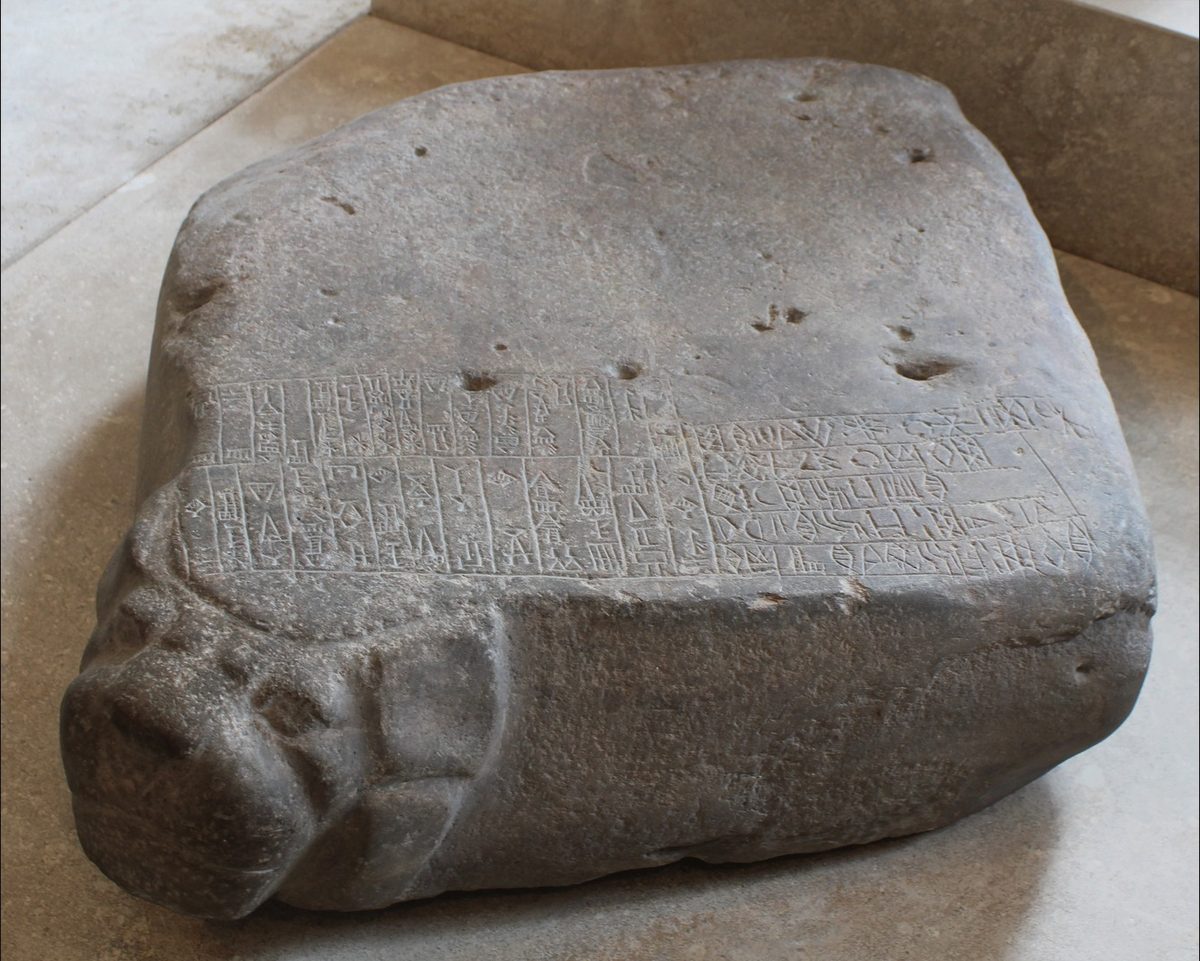
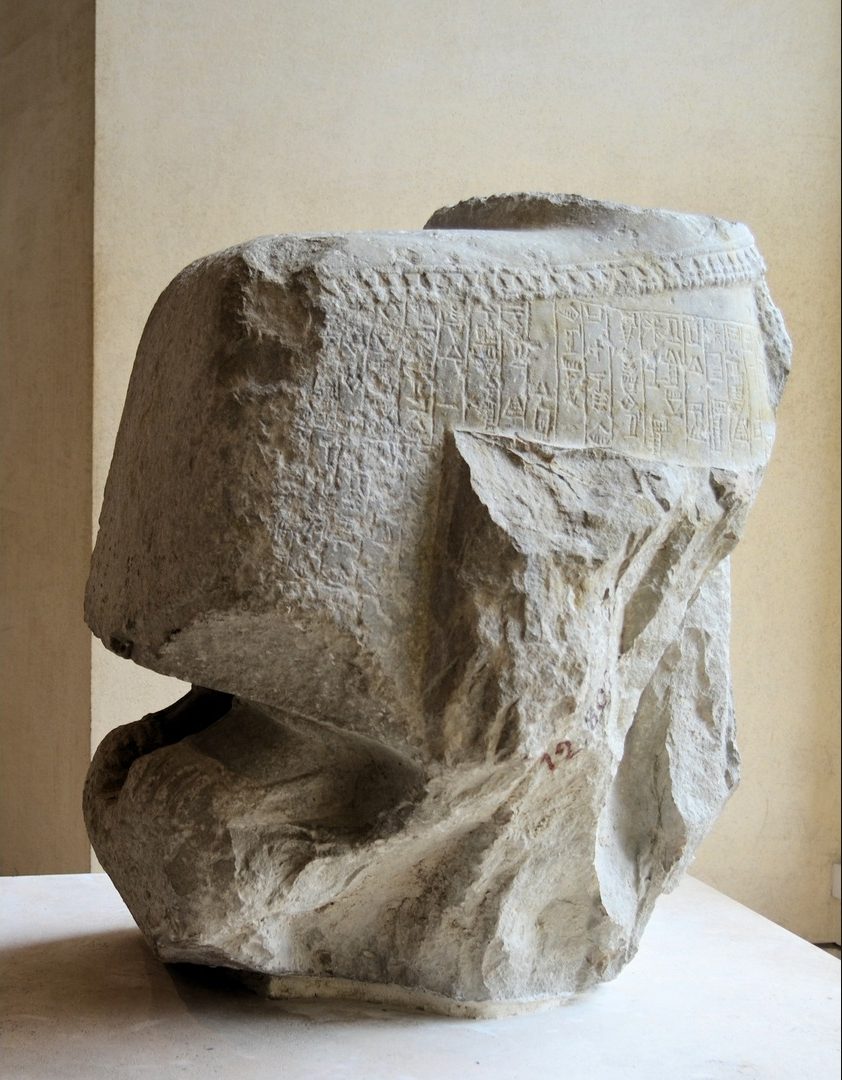
The Linear Elamite corpus splits cleanly into two halves, and only one of them comes with paperwork. The older half was excavated: stone and clay pieces from the acropolis mound at Susa, recorded by the French archaeological mission and now almost all in the Louvre. These include the monuments naming Puzur-Inshushinak, the Susa ruler whose reign produced the script’s best-known texts, and they carry exactly what an excavated object should: a site, a context, a chain of custody running back to the dig itself.
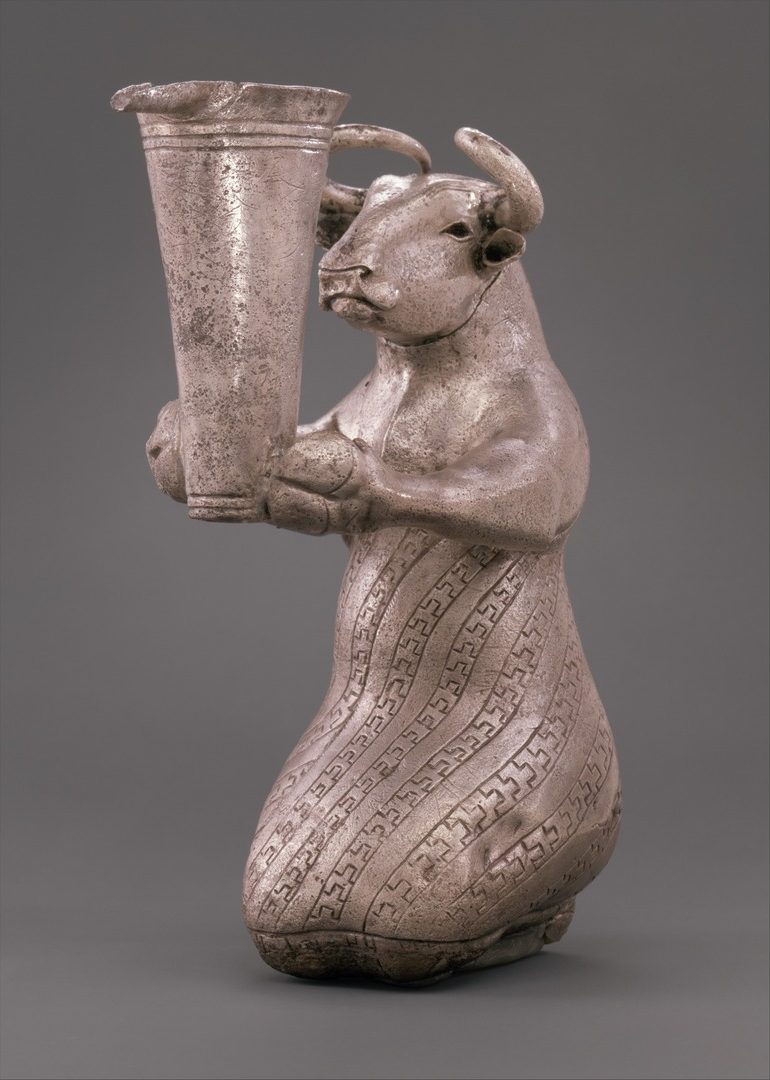
The second half is a set of silver drinking vessels, and this is where the 2022 decipherment actually happened — the royal names that unlocked the signary came off these vessels, not off the Louvre stone. None of them were excavated by an archaeological team. They surfaced through the antiquities trade, and the publicly available record of where, specifically, any given one was pulled out of the ground runs out almost immediately.
Seven of the eight sat in a London safe-deposit box
Seven of the silver vessels belong to the Mahboubian family, and their account is that the current owner’s grandfather, Benjamin Mahboubian, recovered them during commercial digging concessions in Fars province in the nineteen-twenties and thirties, probably near the Kamfiruz district, with a second possible findspot named as Beyza. “Commercial excavation” is a polite way of describing a dig with no site report, no stratigraphy, and no record beyond what the family chooses to say. Reporters who later tried to check the claim found that a modern town now covers part of Kamfiruz and the whole of Beyza, which is not proof of anything either way, but it does mean nobody can walk the original ground and look.
The vessels themselves were kept out of public view for decades and surfaced only as photographs, in 2004, each one showing a single side. That half-view is what kept scholars away from the material for years: more than one specialist assumed, reasonably, that objects known only from partial photographs of a private collection were modern fakes. A 2011 conference talk in Cambridge changed that: John Curtis, then of the British Museum, offered an introduction to the family on the strength of it. It still took roughly four more years before the family allowed anyone to examine the vessels directly, in that London safe-deposit box, rather than through a photograph.
Seeing the objects in hand rather than in a single snapshot mattered enormously: the inscriptions run the full way around each vessel, so a photograph of one face was always going to be missing most of the text. It is also, on its own terms, a strange way for the evidence behind a major decipherment to have reached a researcher — by personal introduction, after a decade of suspicion, into a bank vault.
The family that owns most of the vessels has a court record
Houshang Mahboubian, who holds seven of the eight vessels, has a documented criminal history involving his own antiquities collection — a different one, assembled separately, but relevant to how much weight an outside reader should put on an undocumented family account. In 1987 he and an associate, Nedjatollah Sakhai, were convicted of attempted grand larceny in New York over a staged burglary: Mahboubian had insured a separate collection of Persian antiquities for $18.5 million and arranged for it to be stored at a Manhattan art-storage warehouse, marked with his own initials, while Sakhai supplied hired thieves with a floor diagram of where the crates sat. One of the recruited burglars was secretly working as a police informant, and warehouse guards arrested the crew as they began pulling pieces from the crates. The case reached the New York Court of Appeals, which took it up in 1989.
None of this is evidence that the Linear Elamite vessels are fakes, and it is a separate collection and a separate scheme. But it is a documented instance of the same family treating an antiquities collection as a financial instrument to be managed rather than a historical record to be preserved — which is exactly the concern scholars raise about taking an undocumented “found by my grandfather” account at face value for a second, unrelated set of objects.
The eighth vessel was seized by police, for unrelated reasons
The last of the eight silver inscriptions belongs to the Schoyen Collection in Norway, and its path into the decipherment is even stranger. On 24 August 2021, Norwegian police impounded hundreds of objects from the collection, the Linear Elamite piece among them, as part of a long-running investigation into looted material from Iraq that had nothing specifically to do with Elam. A March 2022 report from Oslo’s Museum of Cultural History concluded that the collection had failed to provide documentation of the piece’s legal removal from Iran and recommended consulting Iranian authorities about its return.
The Schoyen Collection rejected the finding outright. Its lawyer, Cato Schiøtz, said he had never seen a report “as embarrassingly weak as this,” and a spokesperson argued the object had been “wrongly seized” and ought to come back. Worth noticing on its own: the collection’s account places this vessel’s origin at Susa, in the lowlands — not the Fars highlands near Kamfiruz that the other seven are said to share. If both family stories are taken at face value, the decipherment’s central corpus of silver vessels does not even agree with itself on which region it came from.
Forgery is a live concern in this part of the record, not a stray worry
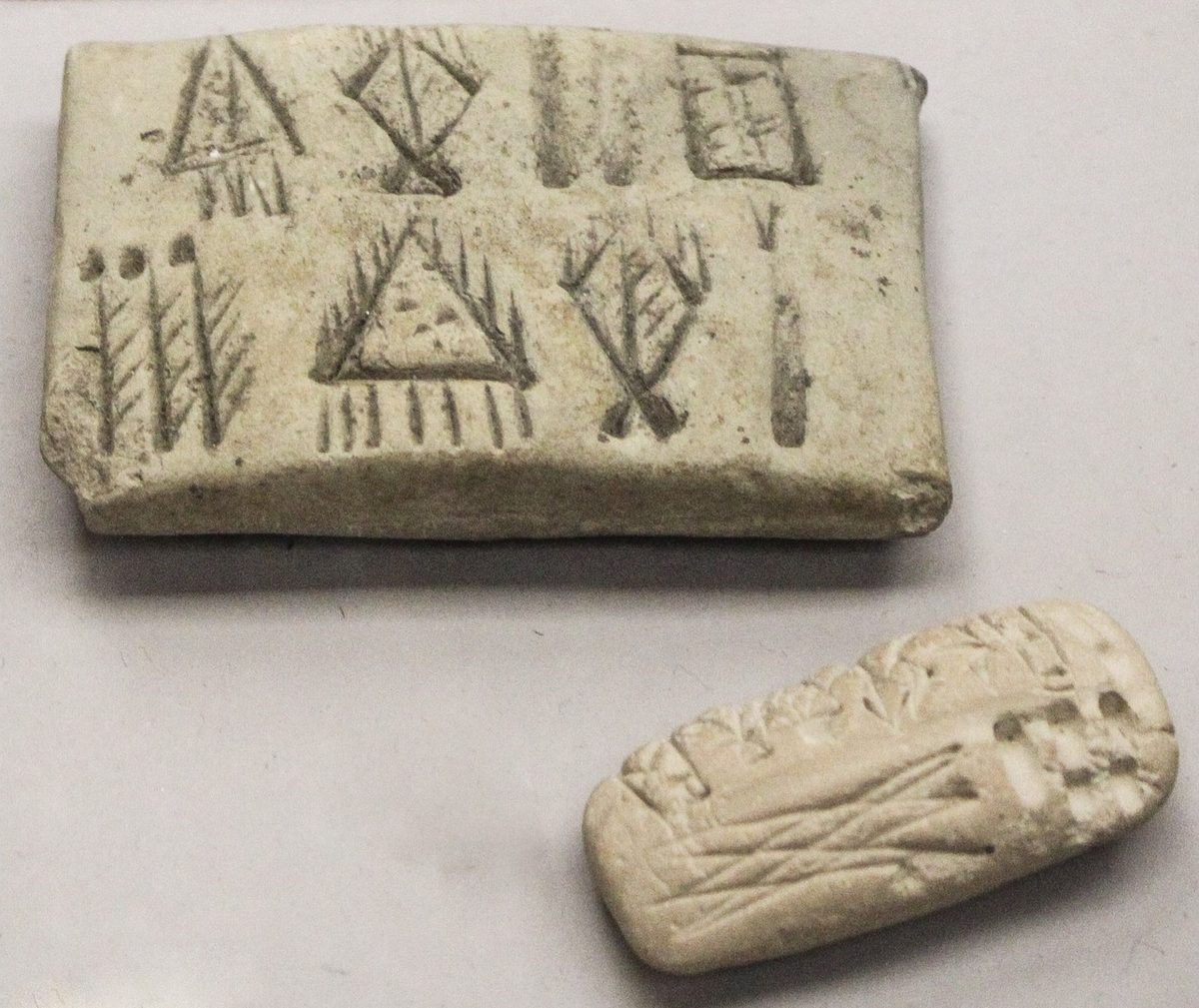
The broader market this material moves through has a known fake problem. Floods in southern Iran after 2001 drove a wave of looting at sites such as Konar Sandal, pushing thousands of inscribed objects into private hands years before any archaeologist saw them, and specialists cannot now fully separate what came out of controlled digs from what came out of that illicit pipeline. Jacob Dahl, one of the decipherment’s sharpest critics, has specifically flagged some Konar Sandal-linked tablets used in the wider argument as carrying “suspicious features” that may point to modern manufacture, though those particular pieces are not among the eight vessels central to the 2022 claim.
The Mahboubian vessels themselves fared better under direct testing: a metallurgical and chemical analysis carried out before the 2022 publication found the patina and manufacture consistent with ancient objects rather than modern copies. That is a genuinely reassuring result, and it is also, necessarily, a test of manufacture rather than of findspot — it can show a cup is old, not where it spent the last four thousand years or who has had access to it in the meantime.
A full edition is coming, which should let outsiders check the originals
Right now, almost everyone arguing about Linear Elamite is arguing from the same team’s photographs and transcriptions, not from independent access to the vessels themselves. That is about to change, at least partly: the decipherment team has announced a three-volume edition of the full corpus, Linear Elamite Inscriptions and Related Cuneiform Texts, to appear in the OrientLab Series Maior at the University of Bologna. A full scholarly edition, with line drawings and photographs of every known inscription, is what would let scholars outside the original team check the readings sign by sign rather than take the 2022 paper’s word for them — and, for the unprovenanced vessels, it is the closest thing to an excavation report this material is ever going to get.
Whatever the final verdict on the sign values — and the field has not reached one — Linear Elamite is an unusual case in the history of decipherment. Most famous scripts were cracked from material that had sat, excavated and catalogued, in a museum store for a century before anyone found the key. This one was cracked, in significant part, from objects that spent that same century changing private hands, with a court case attached to one owner and a police raid attached to another. That does not mean the readings are wrong. It means the sourcing deserves the same scrutiny the signs themselves are getting, and for now it has mostly been getting a family’s word and a safe-deposit box.
Watch the full history
The video covers the decipherment argument itself — the 2017 breakthrough, the 2022 paper’s claims, and the rebuttals from Oxford and Bern — in about nine minutes.

Related reading
- Why Linear A Still Can’t Be Read
- Why No One Has Ever Deciphered the Indus Valley Script
- Why No One Can Read the Phaistos Disc — or Agree That It’s Real
- The Copper Scroll Treasure Map: What Sixty-Four Lost Hoards Say
Works cited
- Dahl, Jacob L. “Proto-Elamite and Linear Elamite, a Misunderstood Relationship?” Akkadica 144, no. 2 (2023): 107–126. Link.
- Desset, François, Kambiz Tabibzadeh, Matthieu Kervran, Gian Pietro Basello, and Gianni Marchesi. “The Decipherment of Linear Elamite Writing.” Zeitschrift für Assyriologie und Vorderasiatische Archäologie 112 (2022): 11–60. DOI 10.1515/za-2022-0003.
- Desset, François, Kambiz Tabibzadeh, Matthieu Kervran, Gian Pietro Basello, and Gianni Marchesi. “Breaking the Code: Ancient Iran’s Linear Elamite Script Deciphered.” The Ancient Near East Today 10, no. 9 (September 2022). Link.
- Salvini, Mirjo. “Elam iv. Linear Elamite.” Encyclopaedia Iranica, Vol. VIII, Fasc. 3 (1998): 330–332. Link.
- Jarus, Owen. “Cryptic 4,000-year-old writing system may finally be deciphered.” Live Science, August 30, 2022. Link.
- Stevenson, Tom. “Beyond Mesopotamia.” London Review of Books 47, no. 4 (6 March 2025). Link.
- People v. Mahboubian, 74 N.Y.2d 174, 543 N.E.2d 34 (N.Y. 1989).
- Mäder, Michael. “Proto- und Linear-Elamisch.” Center for the Decipherment of Unknown Scripts, 2020. Link.
- Hinz, Walther. “Zur Entzifferung der elamischen Strichinschrift.” Iranica Antiqua 2 (1962): 1–21.