
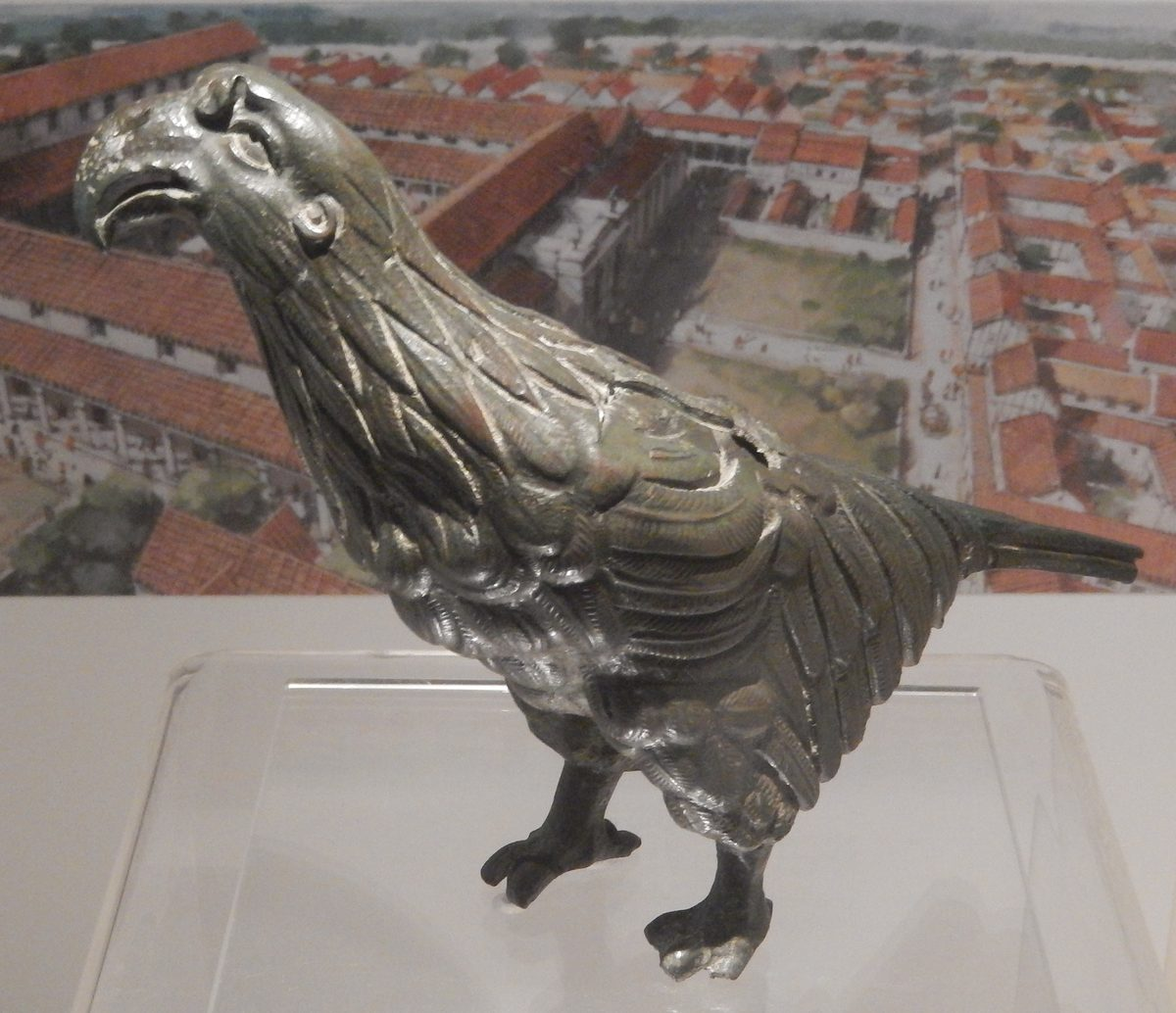
The bronze eagle at the center of the legend was never a military standard. It is a battered, wingless casting dug out of a Roman town eighty miles from the fortress the “lost” legion actually called home, and the archaeologist who found it in 1866 could not even say for certain what it had been attached to — the shape of its claws suggests it once gripped a globe, probably in the hand of a statue of Jupiter, not a legionary eagle at all. Rosemary Sutcliff needed something more dramatic than a piece of scrap bronze for her 1954 novel The Eagle of the Ninth, so she gave the legion a standard worth losing and sent five thousand men marching into the Scottish mist to lose it. The 2011 film kept the mist. Neither the eagle nor the mist is in the historical record.
What is in the record is slower and stranger. The Ninth Legion Hispana can be traced in real documentary detail for roughly a hundred and fifty years — through two civil wars, one near-total destruction that a historian wrote down in full, the founding of a city, and a night battle in the Scottish Highlands that it survived. Then, without a single surviving sentence from antiquity explaining why, it is no longer there. No ancient author records its end. No battlefield has ever produced its equipment. The actual mystery is not how the Ninth died — it is whether anyone can prove it died in one event at all.
Strip the legend away and the physical case comes down to three things: a stone gateway in York with the legion’s own name cut into it, some roof tiles fired three hundred miles away in the Netherlands, and a handful of Roman officers’ careers that simply stop mentioning the unit. That is everything solid historians have to work with. It is worth walking through slowly, because the gaps in it turn out to be more interesting than the story that filled them in.
A Hundred and Fifty Years a Soldier Before It Ever Reached Britain
The Ninth was already an old unit when Julius Caesar inherited it in 58 BC as one of four legions stationed in Cisalpine Gaul. It fought for him through the civil war against Pompey, at Dyrrhachium and then at Pharsalus in 48 BC, and Caesar disbanded it afterward, settling its veterans on land in Italy. That should have been the end of it. Instead Octavian called the same veterans back into service to fight Sextus Pompeius, and the reconstituted Ninth was present at Actium in 31 BC, the battle that made Octavian the first emperor.
It earned the name it carried for the rest of its existence, Hispana — “the Spanish” — while garrisoning Spain during the Cantabrian Wars of the 20s BC, Rome’s long and brutal campaign to subdue the mountain tribes of the Iberian northwest. After the catastrophe at Teutoburg Forest in AD 9, when three legions under Varus were annihilated in Germany, the Ninth was moved east to Pannonia on the Danube frontier, presumably to backfill the gap those destroyed legions left in Rome’s order of battle.
By the time the Ninth crossed to Britain — almost certainly with the invasion force of AD 43 — it had already outlived two civil wars, one disbandment, and nearly a century of continuous service on three different frontiers. That longevity matters for what comes later: this is not a green unit that vanished early. It is one of the most durable formations in the Roman army, which is exactly why its eventual disappearance is so hard to explain with an ordinary battlefield defeat.
Destroyed Once Already, and Written Down in Detail
Britain did not go easily. By around AD 50 the Ninth was fighting the forces of the British resistance leader Caratacus, and it built a legionary fortress at Lincoln, then suppressed a rising among the Brigantes tribe in the north during the 50s. For a unit later remembered as mysteriously doomed, it spent its first two decades in Britain doing ordinary, grinding frontier work.
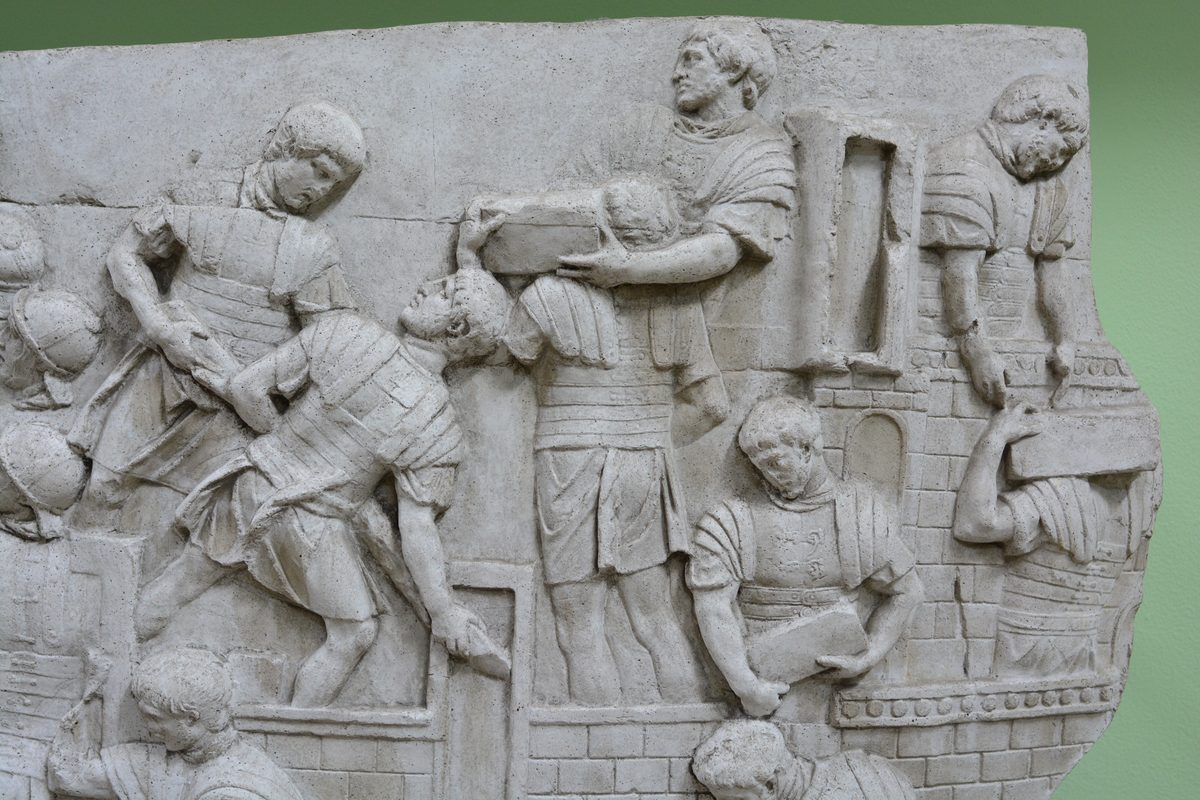
Then, in AD 61, it very nearly ended for real. When the British queen Boudica’s revolt broke out, the Ninth’s commander, Quintus Petillius Cerialis, marched south to relieve the besieged colony at Camulodunum (modern Colchester) and marched his infantry straight into a slaughter. The Roman historian Tacitus records that the legion’s foot soldiers were wiped out; Cerialis himself escaped with his cavalry and barricaded himself inside a fort until help arrived. Rome had to rebuild the Ninth almost from scratch, pulling in reinforcement drafts from legions stationed in the German provinces.
This episode matters enormously for how historians argue about the Ninth’s later disappearance, because it establishes the pattern against which the silence is measured. The Ninth Legion had already been destroyed once — in detail, on the record, by a named contemporary historian who had no trouble describing exactly what happened, where, and to whom. When Rome lost a legion in the first century, somebody wrote it down. That is precisely what never happens the second time.
The Night in Caledonia It Almost Ended Again
The Ninth recovered. In AD 71 the same Cerialis returned to Britain, this time as the province’s governor, and took the rebuilt Ninth north against the Brigantes again. Around that year the legion began building a new fortress on the River Ouse at a site the Romans called Eboracum — the settlement that became York. Roof tiles stamped with the legion’s name, recovered from the site, confirm it was garrisoned there.
A decade later, under the governor Agricola, the Ninth took part in the push into Caledonia, and in the campaigning season of AD 82 or 83 it supplied the episode most responsible for seeding the later legend. The legion was camped in hostile territory when a Caledonian force attacked at night, broke into the camp, and fought hand to hand inside it. Tacitus — who happened to be Agricola’s son-in-law, and was writing to praise him, not to report neutrally — says the Ninth was saved only because Agricola arrived with relief troops at first light. The legion went on afterward to fight in the decisive battle of Mons Graupius.
So there really was a night in Scotland when the Ninth Legion nearly came to an end. It is simply not the night the legend describes, and the legion marched away from it rather than into a mist that swallowed it. Mons Graupius was fought and won after this near-disaster, not in place of it.
The Last Thing Anyone Can Prove Is a Gate
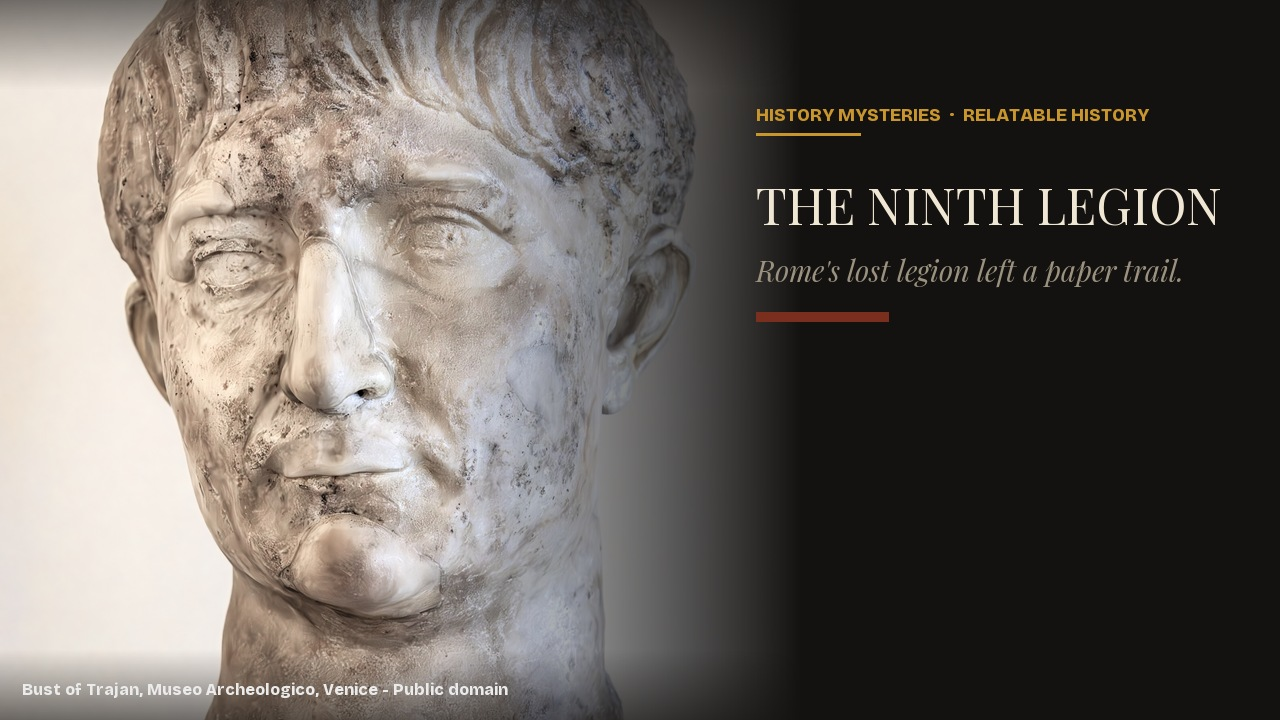
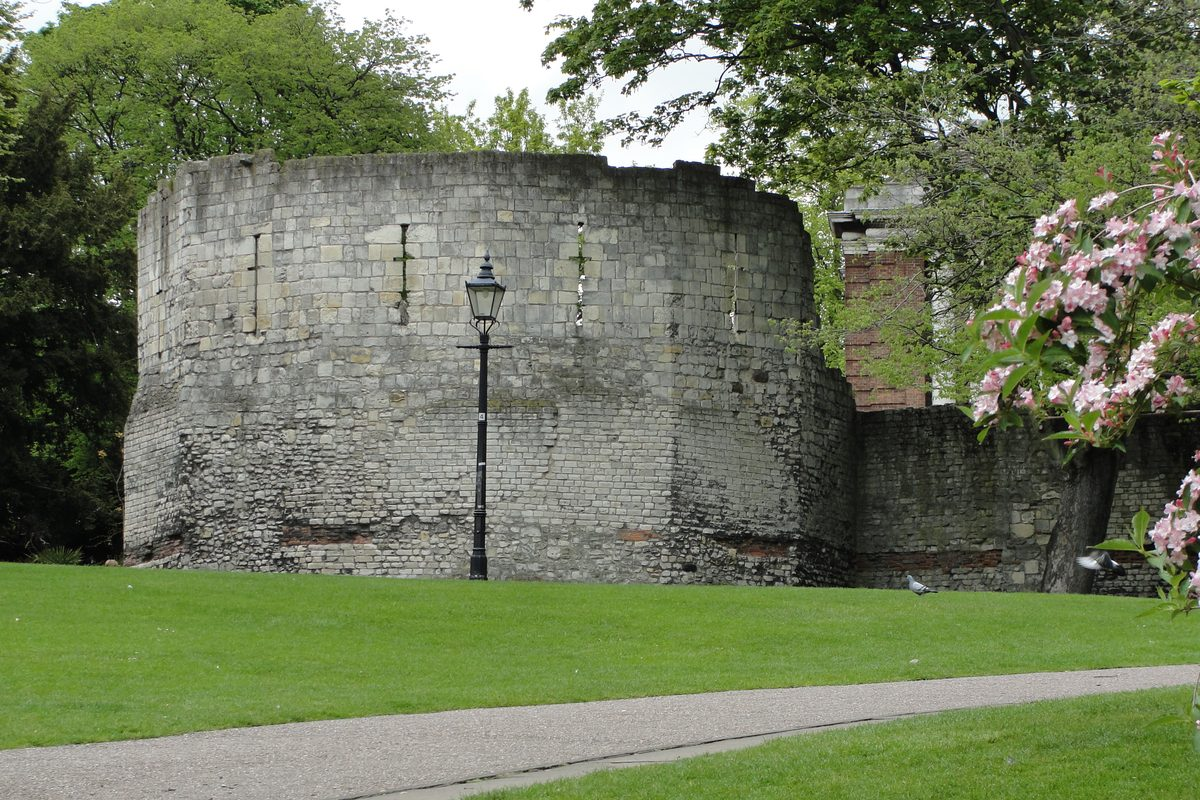
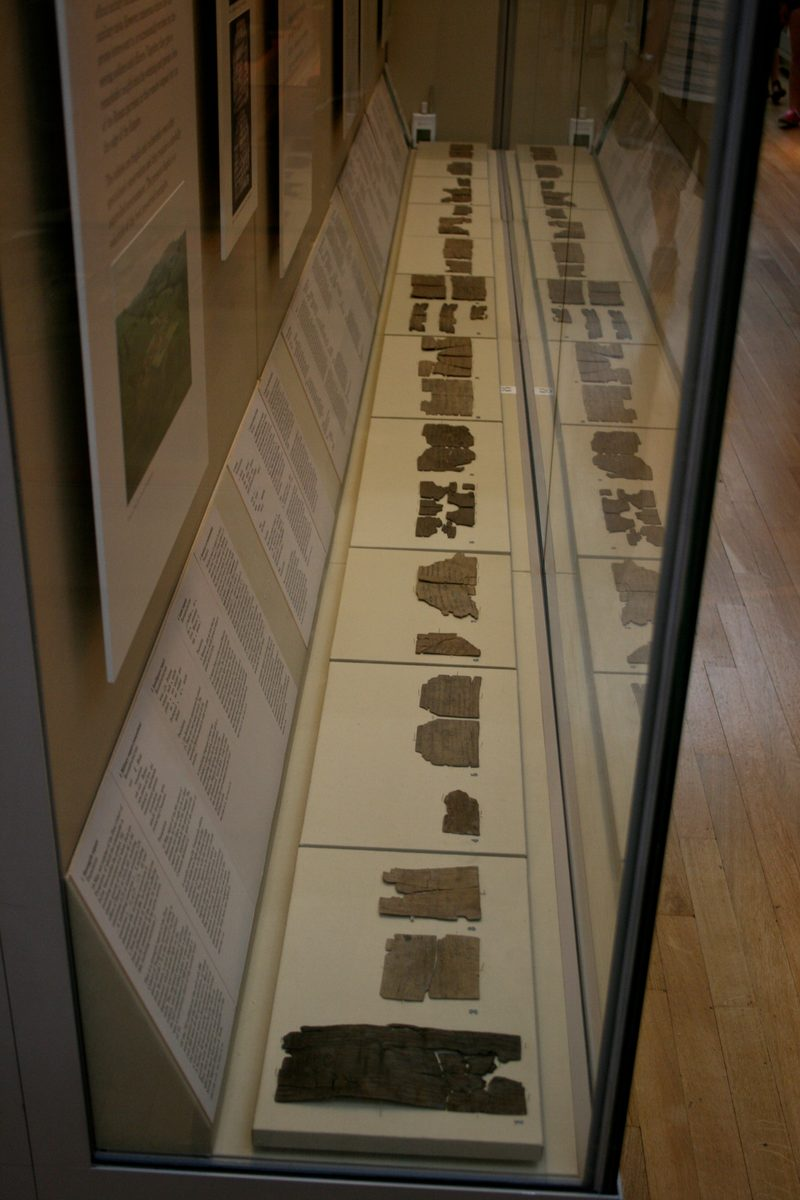
The last securely dated thing the Ninth Legion is known to have done in Britain is entirely unglamorous: it rebuilt a gate. In AD 107 or 108, in the twelfth year of Trajan’s tribunician power, the legion reconstructed the south-eastern gateway of the York fortress in stone and set a dedicatory inscription above it. Part of that slab survived, was dug up in York’s King’s Square in 1854, and sits today in the Yorkshire Museum. Translated, it credits the emperor Trajan — conqueror of Germany, conqueror of Dacia, five times consul — with building the gate “by the agency of the Ninth Legion Hispana.” After that inscription, in Britain, there is nothing.
It is worth being precise about what that absence actually means, because it is the hinge the whole argument turns on. It does not mean the legion ceased to exist in AD 108. It means the surviving stones stop. Roman military history is reconstructed almost entirely from inscriptions, stamped tiles, and the career summaries officers had carved on their own tombs and dedications — and that kind of evidence is thin and accidental by nature. A legion could remain stationed somewhere for twenty uneventful years and leave nothing legible behind for an archaeologist to find eighteen centuries later. Absence of evidence is not evidence of absence here, and that single methodological fact is why this argument has run, essentially unresolved, for a century and a half.
A Trail That Runs Out in Britain Picks Up, Maybe, in Holland
The Ninth does resurface — on the wrong side of the North Sea, and on uncertain ground. At the site of Roman Noviomagus, modern Nijmegen in the Netherlands, archaeologists have recovered roof tiles stamped with the Ninth’s name, a silver-plated bronze military plaque inscribed for the legion, and an altar dedicated to the god Apollo by one of its senior officers, a man named Lucius Latinius Macer. The fortress at Nijmegen became available around AD 104, when the Tenth Legion Gemina was transferred to the Danube frontier, and the straightforward reading is that some or all of the Ninth moved in to replace it before the Thirtieth Legion Ulpia Victrix took the base over in turn around AD 120.
The trouble is that the dating is genuinely contested. Some specialists place the Nijmegen tile stamps as early as the 80s rather than after AD 104, and nobody can say with confidence whether the finds represent the entire legion or only a detachment sent on temporary assignment while the rest of the unit stayed in Britain. Adding to the puzzle, several Roman officers record service with the Ninth on inscriptions dated into the 120s, and at least one career runs later still. If the legion had already been wiped out in northern Britain by AD 120, those career inscriptions become awkward to explain. By the mid-to-late second century, in any case, standard accounts of Rome’s legionary order of battle no longer include the Ninth. Somewhere in the decades after the York gate, it stopped existing, and no surviving ancient source says how.
Four Competing Theories, Each With a Hole In It
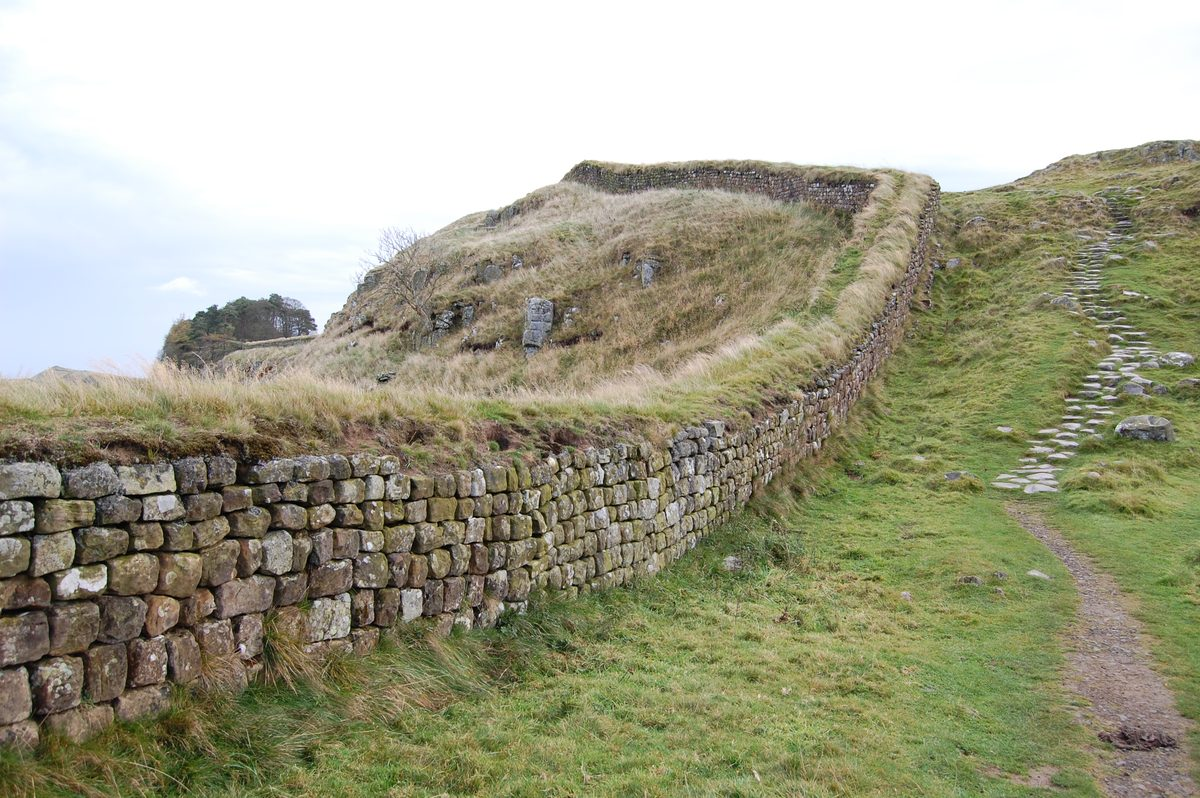
The oldest explanation is destruction in Britain, argued by the nineteenth-century historian Theodor Mommsen and still taken seriously by specialists today. The circumstantial case has real weight: a later biography of the emperor Hadrian records that the Britons could not be kept under Roman control at the start of his reign, and the orator Fronto, writing decades afterward to the emperor Marcus Aurelius, reminds him how many soldiers were killed by the Britons under Hadrian’s rule. Hadrian himself traveled to Britain around AD 122 and began construction of his famous Wall soon after, and a fresh legion, the Sixth Victrix, arrived to take over the fortress at York. Something clearly went wrong in Britain in those years. The weakness is that nothing in the surviving evidence ties any of it specifically to the Ninth, and in nearly two centuries of archaeology, no battlefield, mass grave, or destruction layer has ever turned up to anchor the theory to a place.
The second theory moves the disaster to Judaea, during the Bar Kokhba revolt of AD 132 to 136, a war that cost Rome heavily. The problem is that no evidence places the Ninth in the eastern empire at all, while a different legion, the Twenty-Second Deiotariana, disappears at almost exactly the same time and is far better documented in that specific war. Losing two entire legions in a single revolt would have been Rome’s worst military disaster since Teutoburg, and no surviving source describes anything of that scale.
The third theory points to a defeat in Armenia in AD 161, where the historian Cassius Dio records a Roman legion surrounded and annihilated near Elegeia, its commander taking his own life rather than face the aftermath. The objection here is sharper still: Dio never names the destroyed legion, the two legions actually garrisoned in that frontier province are both independently attested decades later, and it strains belief that the Ninth could have survived forty more years in active service after supposedly vanishing in Britain, leaving no further trace at all.
The fourth and least dramatic theory is that the Ninth was simply withdrawn — for Trajan’s war against Parthia, or to reinforce the Rhine frontier — and then quietly wound down through ordinary administrative process. Rome disbanded legions for mutiny, for disgrace, or for being surplus to a frontier’s needs, redistributing the men and never reissuing the number. That process leaves no battlefield for archaeologists to search for, because there was never a battle to find. It is also the theory most current specialists now find the strongest.
The Best Current Case Is a Cover-Up, Not a Battle
A 2025 paper in the peer-reviewed journal Britannia, by the Roman-frontiers specialist Erik Graafstal, makes the most detailed version of that fourth argument yet. Graafstal proposes that a set of events usually treated as separate — Hadrian’s tour of the north-western provinces in AD 121 to 123, a documented military expedition to Britain known from officers’ career inscriptions as the expeditio Britannica, a serious fire that struck Roman London under Hadrian, and the abrupt halt of construction work at several sites along Hadrian’s Wall — actually belong to a single security crisis. He argues further that the Roman state had every incentive to keep an embarrassing military failure, one that happened on the new emperor’s own watch, out of its official histories.
That is a hypothesis, built from inscriptions, coin evidence, and excavation chronology rather than from a single decisive document, and Graafstal is careful to present it as such. But it is a hypothesis being argued with primary evidence in a peer-reviewed academic journal, by a specialist whose career is built on reading Hadrian’s Wall stone by stone — not a plot device in a children’s novel. The gap between those two kinds of claim is, in the end, the entire subject of this article.
So: of a legion that spent a century and a half at the center of Roman military history, what actually survives is a gateway in York with its name cut into the stone, some fired clay roof tiles in Dutch soil, and a short list of officers whose careers simply trail off mid-sentence. Five thousand men, and the last thing anyone can prove any of them did was masonry. Where do you think the Ninth Legion actually ended up?
Watch the full history
The nine-minute video walks through the Caledonian night attack and all four competing theories in sequence, with the actual inscriptions and finds shown on screen.

Related reading
- Why No One Can Read the Phaistos Disc — or Agree That It’s Real
- What Were Roman Dodecahedra Actually Used For?
- What Actually Happened to the Ark of the Covenant?
- What Caused the Bronze Age Collapse?
Shop
The book behind this video’s research: The Fate of the Ninth, Duncan B. Campbell — a short, well-sourced walk through every surviving scrap of evidence.
Works cited
- Graafstal, Erik P. “What Happened Next? Hadrian’s Wall, the expeditio Britannica and the Fate of the Ninth Legion.” Britannia 56 (2025): 25–55. Link.
- Hodgson, Nick. “The End of the Ninth Legion, War in Britain and the Building of Hadrian’s Wall.” Britannia 52 (2021): 97–118. Link.
- Campbell, Duncan B. The Fate of the Ninth: The Curious Disappearance of One of Rome’s Legions. Bocca della Verità, 2018.
- Keppie, Lawrence. The Making of the Roman Army: From Republic to Empire. Batsford, 1984.
- Willems, Willem J. H., and Harry van Enckevort. Ulpia Noviomagus: Roman Nijmegen, the Batavian Capital at the Imperial Frontier. Journal of Roman Archaeology Supplementary Series 73, 2009.
- Frere, Sheppard S. Britannia: A History of Roman Britain. 3rd ed. Routledge & Kegan Paul, 1987.
- Roman Inscriptions of Britain. “RIB 665. Building Inscription of Trajan.” Link.
- Reading Museum. “The History of the Silchester Eagle.” Link.
- Tacitus. Agricola, ch. 26, on the night attack on the Ninth Legion’s camp in Caledonia. Perseus Digital Library. Link.
- Tacitus. Annals, Book XIV, ch. 32, on the destruction of the Ninth Legion’s infantry during Boudica’s revolt. Perseus Digital Library. Link.
- Cassius Dio. Roman History, Epitome of Book 71, on the Roman defeat at Elegeia. LacusCurtius. Link.