
A 1897 U.S. patent describes a defect in pie-baking that has nothing to do with steam escaping. It’s about what happens after the oven: as the trapped air inside a sealed pie cools, it contracts, and if nothing lets outside air back in, the resulting vacuum pulls the filling’s own juice up and out through whatever opening exists in the crust, leaving a sticky ring baked onto the plate instead of in the pie. The Englishman who patented a fix for this, Rowland Hill Rowland, called his invention a “pie-crust support.” Most people now know the object he was describing by the shape it eventually grew: a small ceramic bird.
That bird is one of the most recognizable kitchen collectibles in America, turning up in cookie jars, antique malls, and Sears catalog pages from the 1940s and ’50s. But the bird is the costume, not the invention. Underneath it is a plain hollow ceramic cone that British bakers were already using in the 1880s, decades before anyone gave it feathers — and the actual engineering problem it solved was settled by two competing patents, filed six years apart on opposite sides of the Atlantic, years before the object even had a settled name.
What follows is the fuller version: the Victorian steam vent, the dueling American and English patents and what each actually claims to fix, the English pottery decorator who turned the vent into a government-registered blackbird in 1935, the three American potteries that mass-produced the idea into dime-store ubiquity, and the test any home baker can run today to see whether any of it ever mattered.
A sealed double crust creates a problem no amount of good baking can prevent
Double-crust pies — pastry both under and over the filling — have a structural flaw built in. Once the top crust seals the filling off from the oven’s open air, moisture in the filling converts to steam as it heats, and that steam has nowhere to go. Pressure builds under a dome of pastry with no exit. One of two things happens: the crust splits along whatever seam is weakest, usually unevenly, or the steam holds the crust up like a tent until the filling finishes cooking and settles underneath it, leaving a hollow gap between crust and fruit.
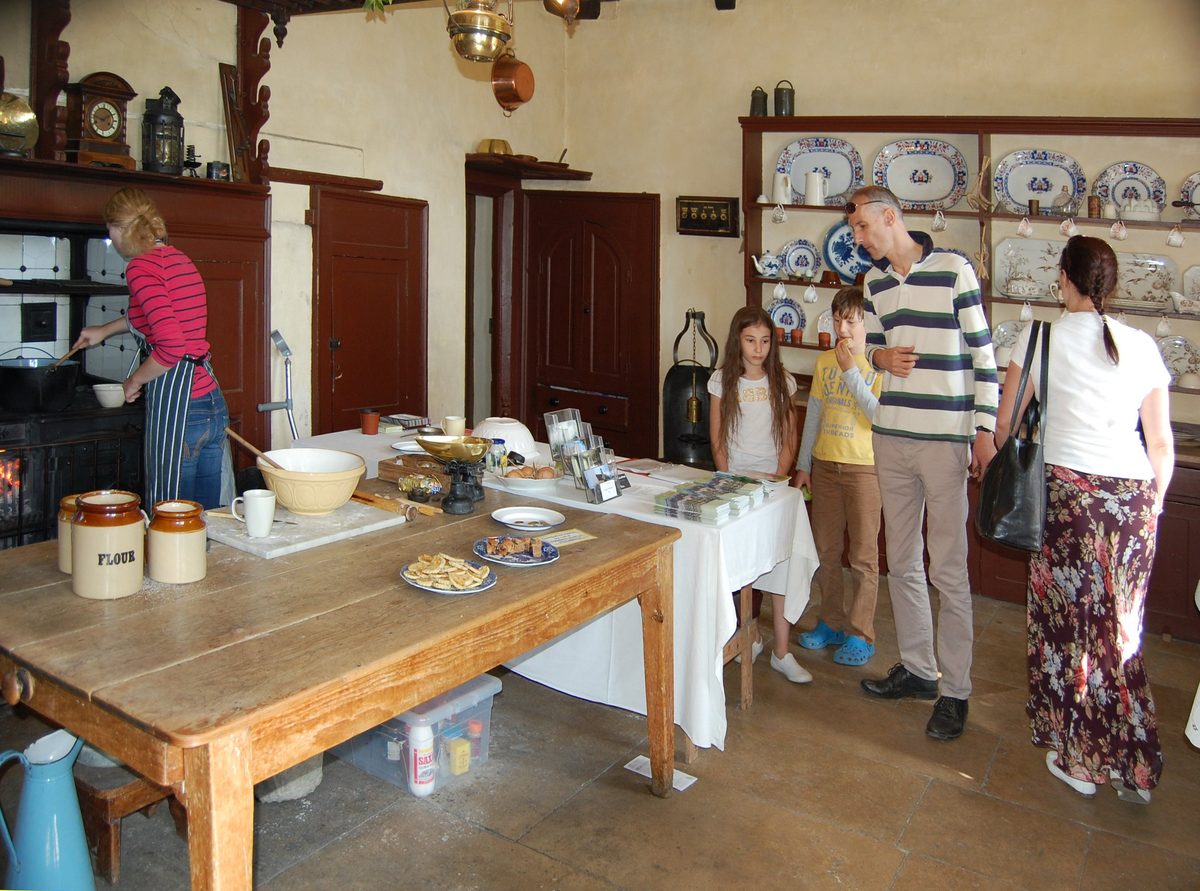
British home bakers in the 1880s solved this the way people usually solve a plumbing problem: they built a vent. A plain hollow ceramic cone, pushed stem-down into a hole cut in the center of the top crust, gave the steam a deliberate chimney, via small arched openings cut around its base where it touched the filling. It did a second job at the same time, which is why historians and collectors use the word “crustholder” almost as often as “pie funnel”: propped from the inside, the crust didn’t need the steam cushion to avoid collapsing, because the ceramic cone was doing that job directly.
Nobody at the time thought the object deserved a write-up. The documentation that survives comes from an unlikely place: not cookbooks, but patent offices, which is where a plain kitchen gadget gets its specifications recorded whether or not a housekeeping guide considers it worth a paragraph — much the way the meat safe, another humble Victorian kitchen fixture, went largely undescribed in the era’s own household manuals even as it sat in daily use.
The patent record settles the mechanism, and it isn’t just about steam
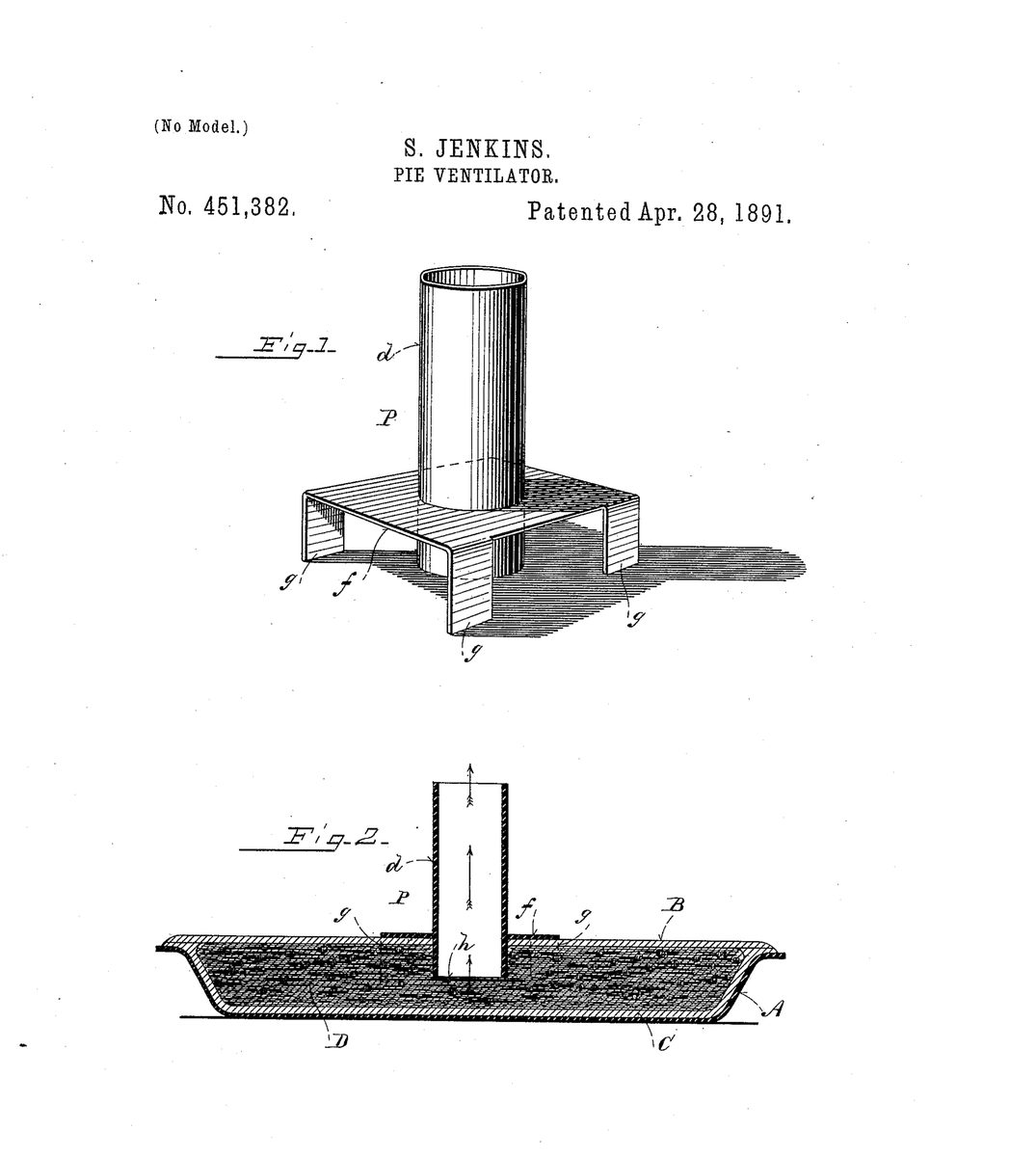
The earliest patent on record is American, and almost defiantly plain. Samuel Jenkins of Auburn, Maine filed for a “Pie-Ventilator” on February 16, 1891, granted that April 28 as U.S. Patent No. 451,382. The specification describes exactly the chimney-and-prop function already in informal use in Britain: a perforated hollow cone that lets steam escape and keeps the crust from sagging. There is no ornament in the drawing. It is pure plumbing.
Six years later, an Englishman filed a version of the same idea with the U.S. Patent Office — itself a small clue about how seriously inventors on both sides of the Atlantic took the American market for kitchenware. Rowland Hill Rowland, of The Thoroughfare in Woodbridge, Suffolk, filed for a “Pie-Crust Support” on January 4, 1897, granted that April 6 as U.S. Patent No. 580,094. His specification goes further than Jenkins’s and names a second failure mode that a plain knife slit does nothing about: as a baked pie cools, the trapped air contracts, and without a passage letting outside air back in, the resulting vacuum draws the pie’s juice up and out of whatever opening exists — ruining the pie’s appearance even when the crust never cracked. Rowland’s support is explicitly an inverted cup with a funnel-shaped cap on top, a hole, and passages built to let air move both ways, not just let steam leave in one direction. It is the more sophisticated of the two patents, and the direct ancestor of the “crustholder” function collectors still discuss.
Between Jenkins’s filing and Rowland’s, and for years after, the object had no catchy name and no obvious champion pushing it as a must-have product. Several English housewares businesses printed their own branding onto plain ceramic funnels and gave them away as a goodwill gift with a purchase — a habit that spread the object into ordinary kitchens as advertising, long before it had a shape worth marketing on its own merits.
In 1935, an English pottery decorator turned a plumbing fixture into a protected design
The bird arrived relatively late, and when it did, it arrived with paperwork. Clarice Cliff — already one of Britain’s best-known ceramic designers for her bold, hand-painted “Bizarre” tableware for A. J. Wilkinson Ltd. — registered a blackbird-shaped pie funnel design in the latter part of 1935, under design registration number 809138. By most accounts it was her only pie-vent design, made as outright whimsy rather than a planned flagship, and it was sold in trade boxes of 144 at a time, decorated in the factory’s yellow-and-black underglaze by paintresses who had joined the Newport Pottery workforce the year before. Several of those decorators are known by name from the factory’s own records — Doris Johnson, Edna Cheetham, Mollie Browne, and May Booth among them — a level of individual credit most mass-produced kitchenware of the period never gets.
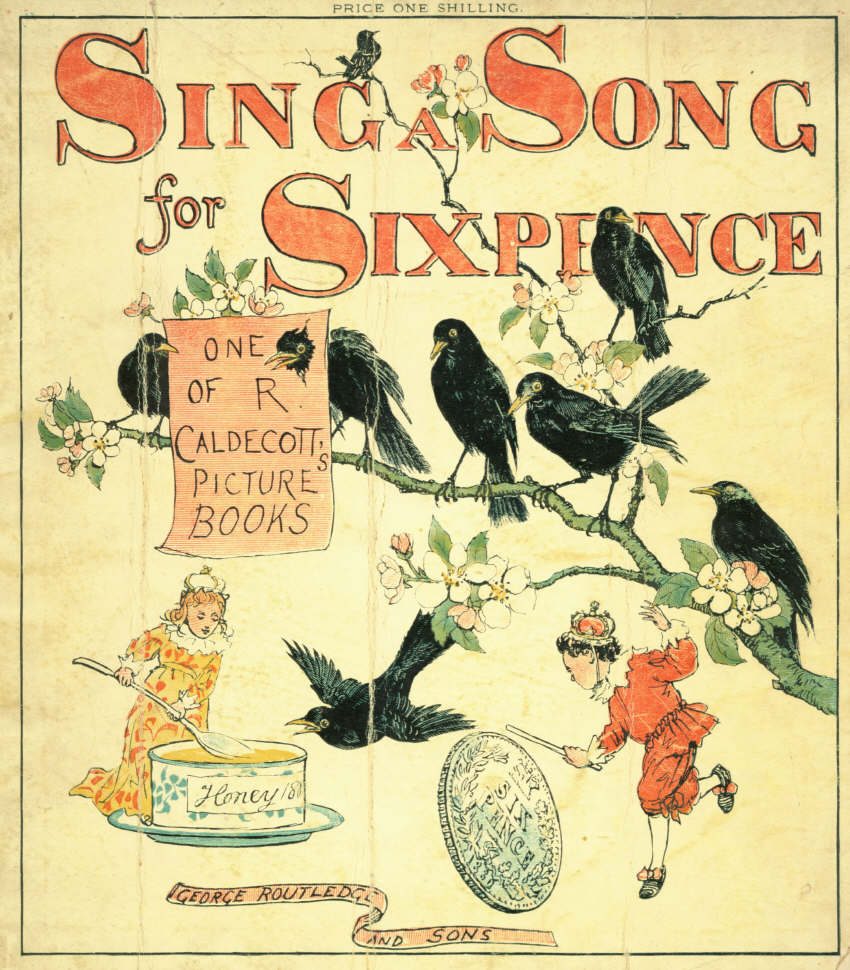
The shape was almost certainly a nod to “Sing a Song of Sixpence,” the nursery rhyme about four-and-twenty blackbirds baked into a pie. The rhyme is centuries older than the funnel: its oldest surviving printed text appears in the chapbook Tommy Thumb’s Pretty Song Book, dated to around 1744, nearly two hundred years before Cliff put a beak on a kitchen vent. Once a decorated bird was selling in a market that had only known plain clay cones, the rest of the trade drew the obvious conclusion — a figure that looked like it was doing something sold better than a tube merely described as doing something. Plain, undecorated funnels kept selling alongside the birds in British kitchens for decades afterward, well into the 1970s, so the bird never fully replaced the plumbing fixture it dressed up, much as a nutcracker shaped like a king never fully displaced the plainer kind.
Cliff wasn’t working in isolation on the idea of a decorative ceramic animal, either. On the other side of the world, the English-born Sydney potter Grace Seccombe — who had also worked in the Staffordshire potteries before emigrating to Australia in 1902 — spent the 1930s and 1940s building a career on brightly painted, hand-modeled native birds and animals, sold to tourists through Sydney jewelers and the Taronga Zoo gift shop. The two traditions aren’t known to be connected, but they tell the same story from two directions: ceramic decorators steeped in the English pottery trade were independently discovering, at almost exactly the same moment, that a figurine sold better than a plain shape.
Cliff’s design outlived her direct involvement with it. After her husband, Colley Shorter, died in December 1963, she sold the pottery, and the blackbird funnel’s rights passed to Midwinter, which kept producing it under licence until 1968, after which the design fell out of licence entirely — opening the door to unlicensed copies, including pieces marked simply “Portugal,” that still circulate in the antiques trade today.
American potteries turned a British habit into dime-store merchandise
The shape crossed the Atlantic in earnest in the 1940s, and three companies did most of the work of making it a fixture of the American kitchen. Morton Pottery Company, founded in 1922 out of the remains of two earlier potteries in Morton, Illinois, added pie birds to its regular stoneware kitchenware line and became one of the most commonly found names on surviving pieces today. Shawnee Potteries, based in Zanesville, Ohio, took a different route to market: rather than sell its pie birds directly, it produced them as a promotional premium tied to Pillsbury flour, putting a free ceramic bird into a customer’s hands as a reward for brand loyalty rather than a standalone purchase.
The most unlikely of the three started in a garage. In 1941, Betty Cleminson — trained as a ceramics apprentice in Los Angeles and given a kiln as a Christmas present the year before — began making pottery in her Monterey Park garage. Her husband George, a math teacher, ran the business side so Betty could focus on design, and the operation, renamed The California Cleminsons in 1943, grew into a factory in El Monte employing more than 150 full-time workers. Their pie birds were the company’s first bestseller, marketed under names the Cleminsons hadn’t chosen themselves, including “Ralphie Roosters” and “Patrick Pie Birds,” with a hang-tag motto reading “It’s something to crow about!” Early runs were decorated as piecework by local homemakers who painted unglazed greenware at home before it went back for firing — a cottage-industry supply chain hiding inside what looked, on a Sears catalog page, like a standard mass-market product.
Cheap imports ended the American boom in 1963, but English makers kept going
The same postwar trade conditions that built the American pie-bird market eventually dismantled it. Once wartime import restrictions eased, overseas manufacturers — chiefly in Japan — could copy popular American ceramic designs and sell them for less than it cost a domestic pottery to make the originals. The California Cleminsons tried modernist lines by outside designers in the late 1950s to stay competitive, but by the company’s own later account the results, however contemporary, simply weren’t “Cleminsons” anymore. In 1963, Betty and George let the kilns go cold for good. Shawnee Potteries also closed in the 1960s, part of the same wave that hit small American ceramics makers across the board once cheaper imported goods became the default on dime-store shelves.
England’s pie-funnel trade took a different path, because it had never depended on being the cheapest option. Babbacombe Potteries, in Devon, began producing its own pie vents in the early 1950s, after the Cliff design was already well established, and smaller firms kept the category alive with increasingly novelty-driven shapes — Nutbrown’s 1930s-and-’40s pagoda- and elephant-shaped funnels are now among the pricier pieces in the category, commonly fetching $100 to $150 from collectors. Contemporary English studio potters, among them Stuart Bass, still make and sell pie funnels as deliberate originals rather than vintage reproductions.
Collectors tell a working vent from a decorative copy by looking at its feet
Because the pie bird’s visual appeal always outran its mechanical necessity — the same mismatch that explains why a waffle iron’s grid pattern outlasted its original purpose — the market today has to deal with two kinds of fakery: honest decorative pieces never meant to vent anything, and dishonest reproductions sold as if they were 1940s originals. The tell collectors rely on most is the depth of the arched openings cut into the base. A genuinely functional vintage piece, designed to actually pass steam and relieve pressure, cuts those arches deep, because the maker needed the airflow to work. A purely decorative reproduction, where the shape only ever had to look right on a shelf, often shrinks those openings down to barely more than a suggestion.
Prices track that distinction. A genuine 1940s or 1950s Morton or Cleminson pie bird in good condition typically sells for $20 to $75 today, with rarer early patterns commanding more; new decorative pieces made purely as novelties can start as low as $10. That gap matters because a seller’s “vintage” label isn’t reliable on its own — pieces advertised as genuine 1940s originals have turned out, on closer inspection, to be worth a fraction of the price. Unlicensed copies of Clarice Cliff’s own blackbird, some stamped simply “Portugal,” add to a secondary market where provenance is worth more than appearance.
Watch the full history
The video version covers the same Victorian origin and the Clarice Cliff and American pottery story in just over five minutes.

So does the bird actually do what Rowland Hill Rowland’s 1897 patent claimed — vent steam and relieve the vacuum that pulls juice out of a cooling pie? Functionally, yes, in the same basic sense that any deliberate opening in a sealed crust does. What the patent record and a century of kitchen practice agree on is that the opening never had to be a bird, or a funnel, or any particular shape at all. A few slashes with a paring knife move exactly as much air, and bakers who have tried both side by side report no meaningful difference in the finished pie.
What the bird did that a knife slit couldn’t was never about airflow. It was the thing Clarice Cliff’s factory understood perfectly when it registered a blackbird design in 1935, and the thing Betty Cleminson’s sales representatives understood when they renamed a ceramic vent “Patrick Pie Bird”: a figure standing in a pie, crust fanned out around its little ceramic feet, looks like something is happening in there. For a device whose actual job could always be done with a knife, that illusion turned out to be the one feature that mattered commercially.
That’s really the quieter story a pie bird tells: an object can carry a real, patented engineering function and still owe almost all of its popularity to the fact that it’s charming. Would you still put one in your pie just for the look?
Related reading
- What Really Happened to the Florentine Diamond
- How to Store Root Vegetables All Winter Without a Cellar
- Drying Apples Before Refrigeration: How Farm Families Did It
- Why Corn Was Soaked in Lye Before It Became Breakfast
Shop the items in this history
Works cited
- Jenkins, Samuel. “Pie-Ventilator.” U.S. Patent No. 451,382, filed Feb. 16, 1891, granted Apr. 28, 1891. Link.
- Rowland, Rowland Hill. “Pie-Crust Support.” U.S. Patent No. 580,094, filed Jan. 4, 1897, granted Apr. 6, 1897. Link.
- McCormick, David. “Flights of Fancy: Pie Birds Are Functional, Whimsical Collectibles.” Antique Trader, June 21, 2023. Link.
- McDonald, Lisa. “Clay Culture: Sing a Song of Pie Birds.” Ceramics Monthly, The American Ceramic Society, November 2023. Link.
- Mann, Doreen. “Clarice Cliff’s Blackbird Pie Funnel.” ClariceCliff.com Feature Articles, July 2016. Link.
- “Grace Seccombe.” Art Gallery of South Australia, artist/creator catalogue entry. Link.
- “Page from Tommy Thumb’s Pretty Song Book, c.1744.” MyLearning (UK museums & archives learning resource). Link.
- Harbster, Jennifer. “Pie•ology: A Full Filling Story.” Inside Adams, Library of Congress, Nov. 18, 2011. Link.