
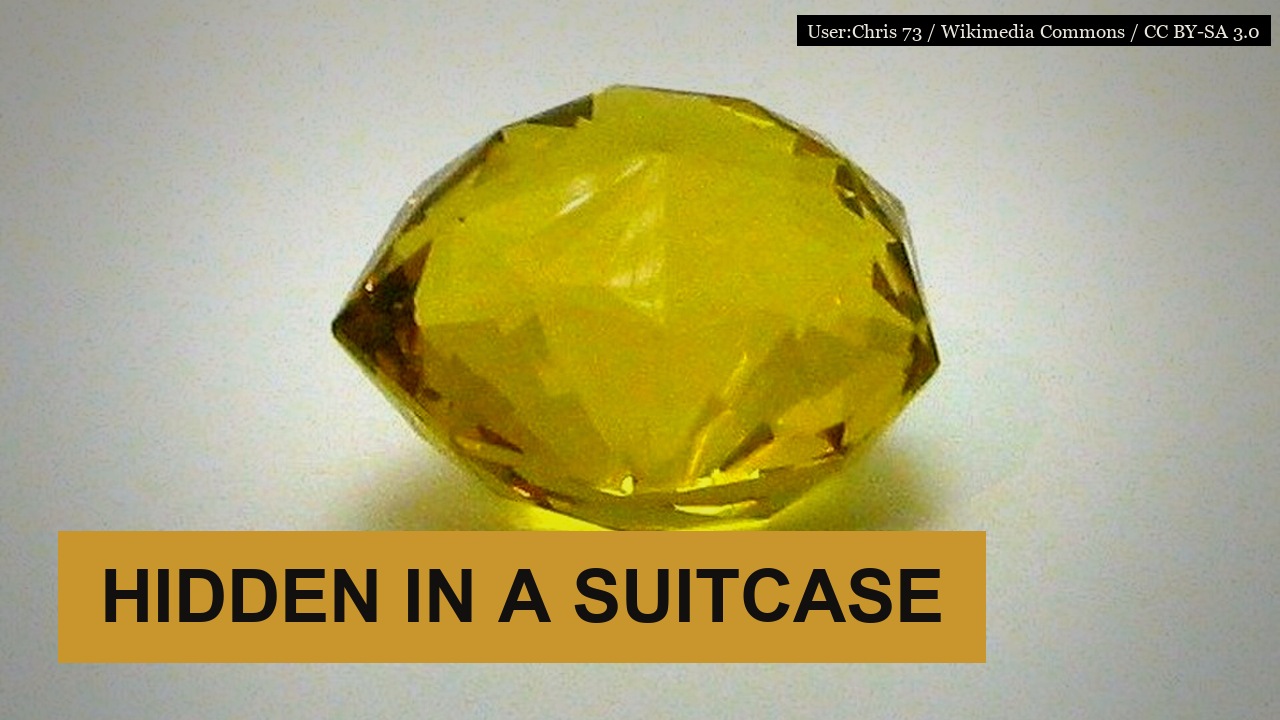
In November 1918, as the Austro-Hungarian empire came apart, the last Habsburg emperor’s chamberlain emptied a display case in the Hofburg treasury in Vienna and had its contents driven out of the country in a stack of suitcases. Thirty-eight pieces of jewelry left that day. The largest was a diamond: light yellow, 137.27 carats, cut into an irregular nine-sided rose with 126 facets. For the next hundred and seven years, almost nobody outside one family could say where it was.
Gem historians listed it among the world’s great lost stones. The theory that stuck for most of the twentieth century was that the Habsburgs had quietly sold it and had it cut down into smaller, unrecognizable pieces — the only sensible way to turn a stone that famous into cash without being caught. In November 2025, three of Emperor Charles I’s grandsons opened a battered case in a Canadian bank vault, unwrapped a parcel of yellowed paper, and found the diamond exactly as it had left Vienna.
This is not, in the end, a story about a missing diamond. The diamond was never missing. It is a story about a documented purchase and two incompatible legends about where the stone came from before that purchase; about a woman who made one specific promise and kept it for the rest of her life; and about an Austrian government panel — named, formally, after this exact diamond — that is still arguing over who owns it.
The cut has a name, and the people who saw it wrote it down
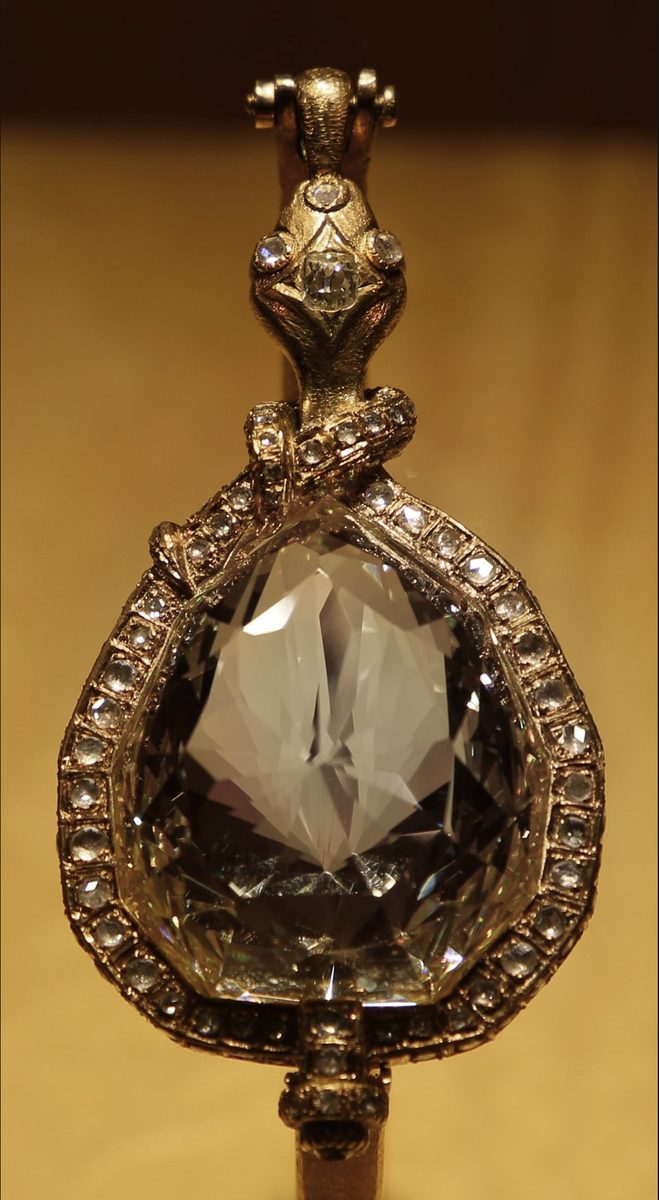
The Florentine Diamond weighs 137.27 carats (about 27.45 grams) and is cut as an irregular, nine-sided double rose with 126 facets — faceted on the underside as well as the crown, so it throws light back out through the base and not only the top. That is an unusual amount of extra work: an ordinary rose cut leaves the back flat. Historically it sat in a serpentine gold mount ringed with 182 smaller diamonds. Its color is a light yellow with a faint greenish cast, sometimes called canary in older catalogues.
The earliest eyewitness account anyone can actually verify comes from 1657, when the French gem merchant Jean-Baptiste Tavernier — who handled more great Indian diamonds than anyone else alive — examined the stone among the possessions of Ferdinando II de’ Medici and wrote it down: “clear, of good form, cut on all sides into facettes and tending somewhat to a citron color.” Tavernier used it as a worked example in his own method for pricing large diamonds, putting its value at roughly $950,000 in the terms a 1929 Field Museum study later used to translate the figure.
Before Florence, two biographies attach to this stone, and they don’t agree
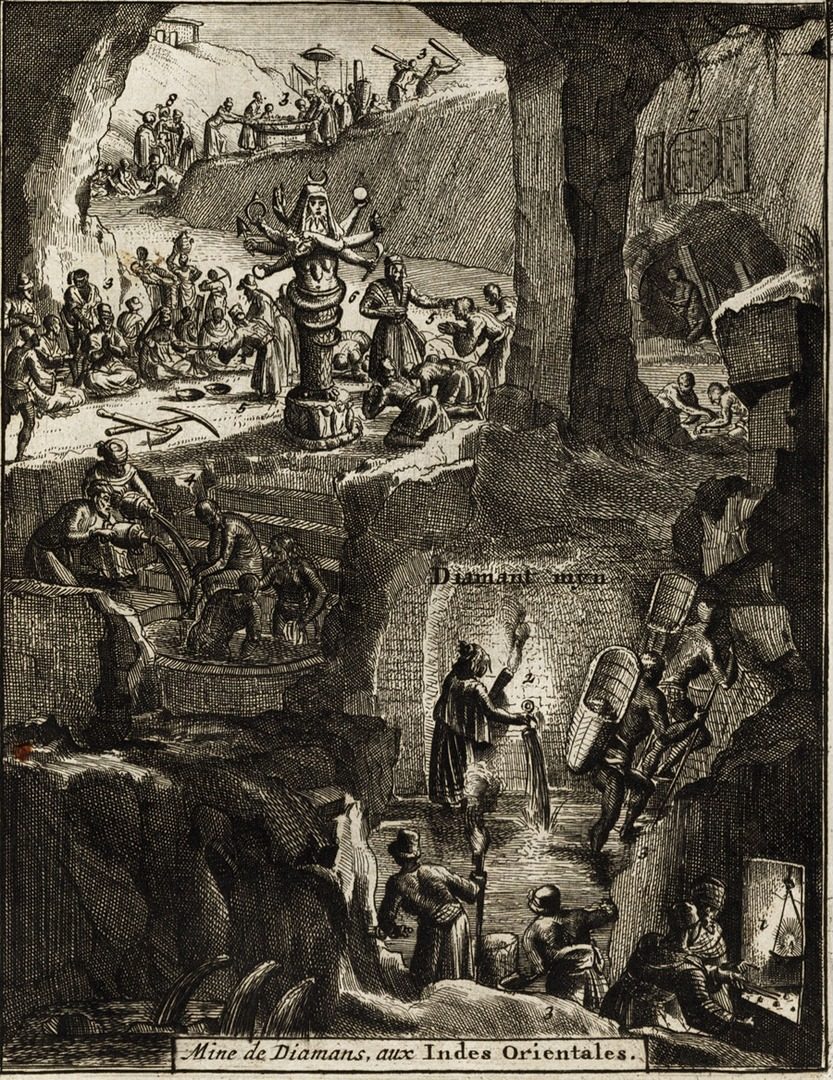
The documented chain starts with a purchase. A deed reportedly dated 12 October 1601, held in the Archivio di Stato di Firenze, records Ferdinando I de’ Medici buying the rough stone from the Castro-Noranha family for 35,000 Portuguese scudi. That family’s own claim to the diamond traced back further still: the rough stone was said to have been bought from the king of Vijayanagar, the last great Hindu empire of southern India, by a Portuguese nobleman, Ludovico Castro, Count of Montesanto, and from him it passed through the Society of Jesus in Rome before reaching the Castro-Noranhas.
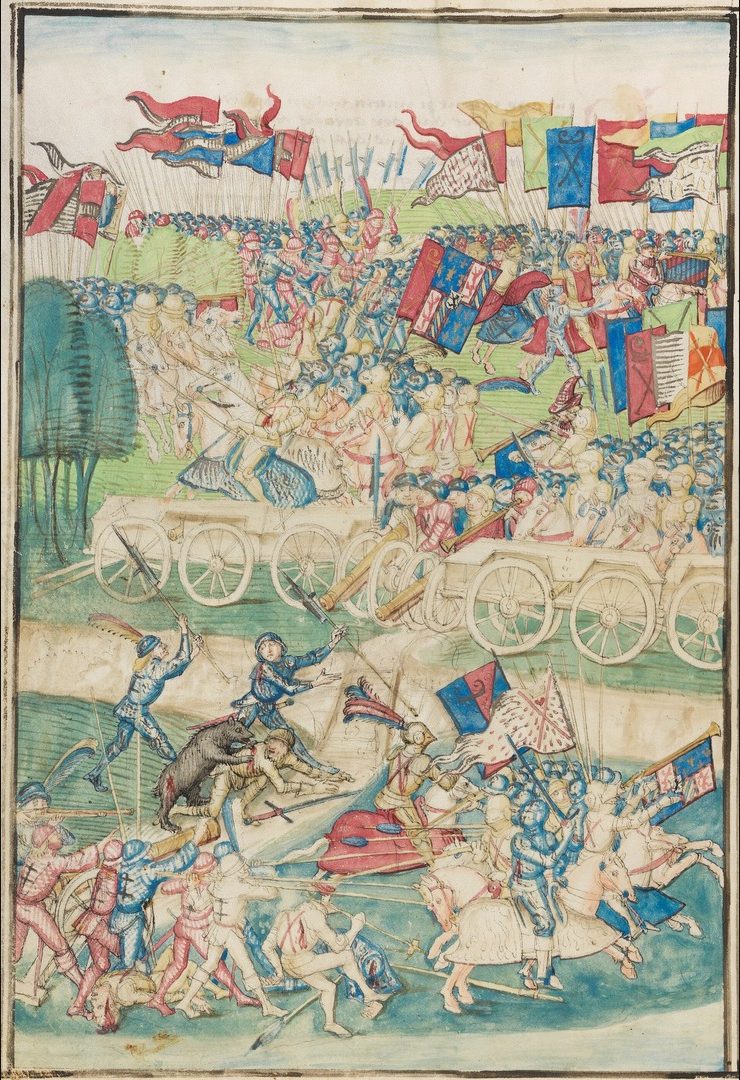
A second, entirely incompatible story also attaches to the same stone: that it was cut in Bruges in the mid-fifteenth century by Lodewyk van Bercken and lost on the battlefield when Charles the Bold, the last reigning Duke of Burgundy, died at the Battle of Nancy on 5 January 1477 — picked up off his body, the legend says, by a soldier who sold it for next to nothing, not recognizing what he was holding.
Both stories name real people and real institutions. Neither is corroborated by a document written at the time it is supposed to have happened — the earliest hard paper, the 1601 Medici purchase deed, postdates either legend’s setting by fifty to more than a hundred years. Oliver Farrington, writing for the Field Museum in 1929, split the difference rather than pick a winner: the stone “without doubt” originated in India and was fashioned by Indian cutters, he concluded, but exactly how it reached Tuscany “is unknown.”
The Medici commissioned the exact cut still on the stone
Cosimo II de’ Medici, Ferdinando’s son, handed the rough diamond to Pompeo Studentoli, a Venetian gem-cutter who had settled in Florence, for faceting. Studentoli delivered the finished stone in October 1615 — fourteen years after the purchase, which gives some sense of how long shaping a stone this size took with seventeenth-century tools and no powered equipment. Cosimo gave the finished diamond to his wife, Maria Maddalena of Austria, who is said to have worn it as a pendant in a portrait painted around 1623.
By 1657 it belonged to Ferdinando II de’ Medici, Cosimo’s son — the collection Tavernier examined that year. An inventory taken on the death of a later grand duke, Cosimo III, again confirms the same stone, by then set with a band of smaller diamonds, exactly the kind of unbroken paper trail that the stone’s pre-Florentine history conspicuously lacks.
It went to Vienna, breaking a rule the Medici had just written
In 1737 the last Medici grand duke died without an heir, and the Grand Duchy of Tuscany passed, under treaty, to Francis Stephen of Lorraine, who had married the Habsburg heir Maria Theresa the year before. The diamond went with the succession. A family pact signed that same year by the departing Medici and the incoming Lorraine dynasty had specifically stipulated that the historic Medici possessions were not to leave Florence. The diamond left anyway, folded into the new grand duke’s personal holdings rather than the state collection it had belonged to — the exact clause Italy would try to invoke two centuries later.
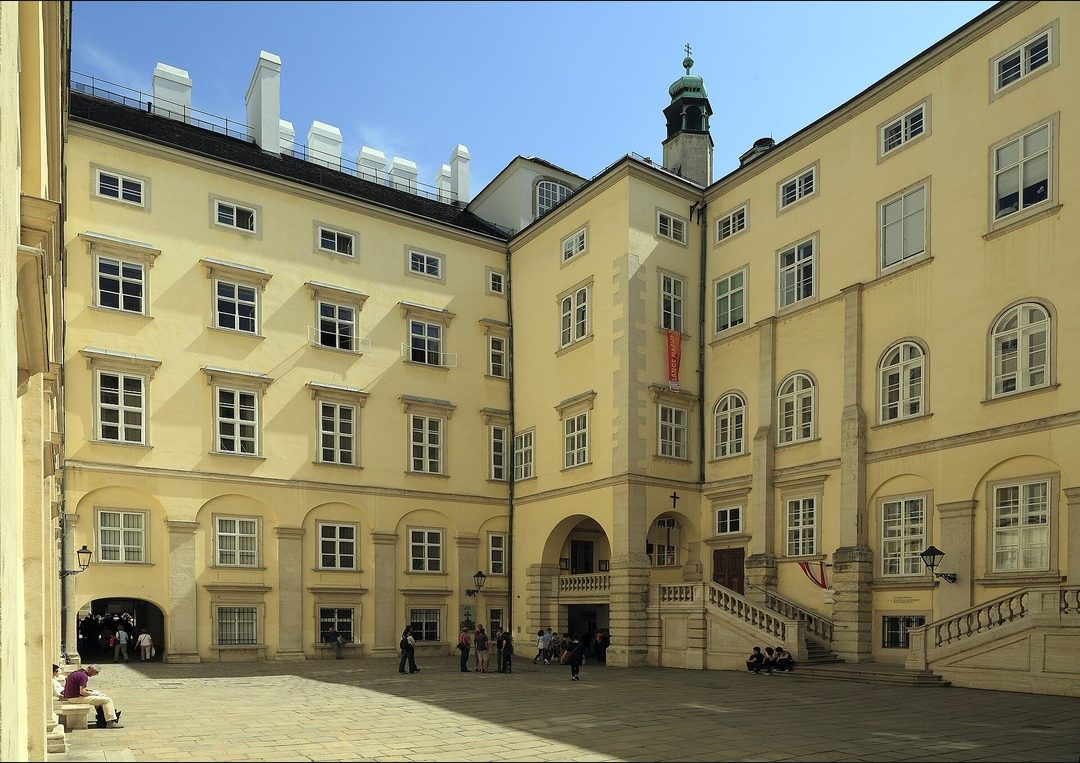
In Vienna, increasingly referred to as the Austrian Yellow, it entered the imperial treasury’s catalogue and was eventually displayed in case thirteen of the Hofburg’s Schatzkammer, among the crown’s most valuable loose stones.
November 1918: thirty-eight pieces leave, and the wrong theory took hold
A hundred and seven years before its recovery, in November 1918, the emperor’s Lord Chamberlain, acting for Charles I, removed the contents of two display cases at the Hofburg and had them driven out of the country in a set of suitcases — thirty-eight pieces of jewelry in total, the diamond among them. Charles had himself signed a wartime law banning the export of gold, silver and gems from Austria; the family’s position today, voiced by his grandson Karl, is that a sovereign can grant himself exceptions to his own law.
In April 1919 the new Austrian republic passed the Habsburg Law, exiling the family and seizing imperial assets — but excluding private property, and by the law’s effective date the jewels were already out of the country. Italy pressed a competing claim of its own: in 1923, citing the Medici connection and the broken 1737 pact, it formally demanded the diamond’s return. Austria refused. The historian Oliver Rathkolb has since noted that Italy’s reasoning could, in principle, extend to pieces well beyond the Florentine alone.
Charles died in exile on the Portuguese island of Madeira on 1 April 1922, not yet thirty-five. After his death, reporting on the scattered Habsburg holdings increasingly described the Florentine specifically as lost, and the explanation that held for the rest of the century was that the family had quietly sold it and had it recut into unrecognizable pieces. It turned out to be wrong about this particular stone.
What actually happened: a case, a vow, and sixty years of silence
Zita fled the German advance in 1940 and reached Quebec City that October with her children. Accounts of the jewels’ container disagree in a way worth keeping rather than smoothing over: newspaper reporting on the 2025 discovery describes “a small cardboard suitcase,” while the museum now holding the actual object catalogues it as a crocodile-and-kidskin leather case roughly 43 by 20 by 10 centimeters. Either way, the diamond traveled inside it the entire distance from Vienna’s orbit to a bank vault in Quebec.
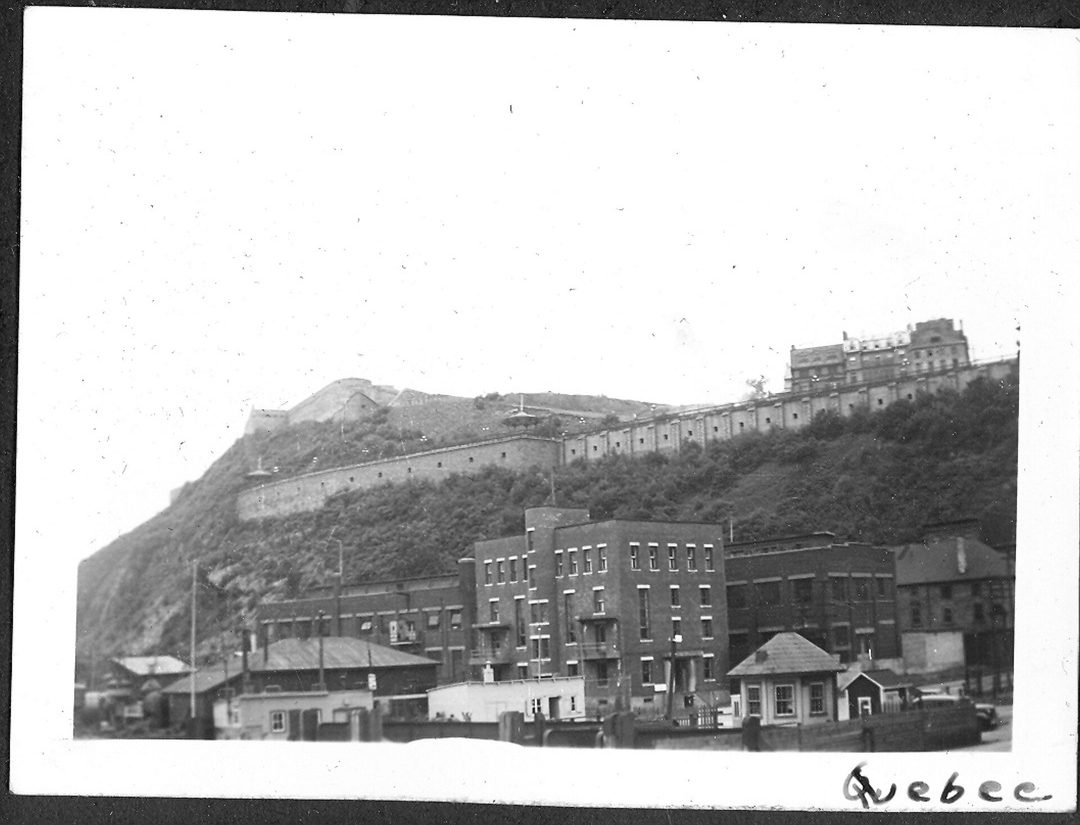
There, under what records call the Saint-Joseph Trust, Zita deposited fifteen pieces, the Florentine among them, and told only two of her sons, Robert and Rodolphe, where they were — along with an instruction that nothing be said until a hundred years after her husband’s death, 1 April 2022. Each son told one of his own sons in turn. The blackout held: Karl von Habsburg-Lothringen, a grandson of Charles and Zita, told the New York Times he “was not even aware of the existence of the diamond until recently.”
In November 2025 three cousins — Karl, Lorenz and Simeon von Habsburg-Lothringen — opened the vault with a Times reporter present, along with Christoph Köchert of the Vienna court jewelry house A.E. Köchert, who authenticated the stone by comparing its cut and weight against the historical record. Fifteen pieces came out, each wrapped in yellowed paper, exactly where the family had left them.
On display in Quebec, and the two things still unresolved
Since 4 September 2026, the fifteen pieces have been on public exhibit at the Musée national des beaux-arts du Québec, in “Hidden Treasure: A Century of Mystery.” The museum displays the case itself alongside the jewels, and a second heirloom that traveled with them: a pocket watch said to have belonged to Marie Antoinette, made by Jean-Antoine Lépine before 1770, with a lock of hair sealed into its back that the museum’s own description says “perhaps” belonged to Empress Maria Theresa.
Two things the exhibit cannot settle. First: thirty-eight pieces left Vienna in 1918, and fifteen surfaced in Quebec. Some of the difference was reportedly sold off during the family’s exile; not all of it can currently be traced. Among the pieces nobody can place is a diamond crown that belonged to Empress Elisabeth. Asked directly what happened to it, Karl von Habsburg-Lothringen’s answer, on the record, was: “I don’t know.”
Second, and larger: whose jewelry is this? In December 2025, Austria’s culture minister and vice chancellor, Andreas Babler, set up a panel informally called the Florentine Commission, chaired by Wolfgang Peschorn, head of the Finanzprokuratur, Austria’s state legal office, to determine whether the Republic has an enforceable claim on the 1918 holdings the Habsburg-Lothringen family now calls private property. A report was originally due in autumn 2026. On 20 October 2026, the commission announced it would miss that deadline; Peschorn said the volume of court files, correspondence, legal opinions and inventories relevant to tracing ownership was greater than anyone had anticipated, and pushed the report into 2027. Historians assisting the inquiry, including Ilse Reiter-Zatloukal, have noted that some Habsburg jewelry genuinely was sold off in the years right after the exile — which settles nothing about whether any specific piece, the Florentine included, belongs in that category.
Watch the full history
The video version of this story covers the Florentine’s full timeline, from the Hofburg treasury to the Quebec vault, in about eight and a half minutes.

Related reading
- How to Store Root Vegetables All Winter Without a Cellar
- Why Corn Was Soaked in Lye Before It Became Breakfast
- Why Margarine Was Illegal in America for Almost a Century
- The Kecksburg NASA Files Nobody Can Find
Works cited
- Farrington, Oliver C. Famous Diamonds. Geology Leaflet 10. Field Museum of Natural History, Chicago, 1929. Link.
- Bandelloni, Antonietta. “Il Fiorentino: il gran diamante di Toscana.” Michelangelo Buonarroti è tornato, 5 February 2022. Link.
- “The Florentine Diamond.” The Court Jeweller, 16 May 2020. Link.
- “The Best Royal Jewels of 2025, #2: The Florentine Diamond Found in Canada.” The Court Jeweller, 31 December 2025. Link.
- Brinkhof, Tim. “How the Fabled Florentine Diamond Vanished—and Why It’s Just Resurfaced.” Artnet News, updated 7 November 2025. Link.
- “This Florentine Diamond Was Thought to Be Lost to History. It’s Actually Been Safely Tucked Away in a Canadian Bank Vault All Along.” Smithsonian Magazine, November 2025, reporting on Robin Pogrebin’s coverage for The New York Times. Link.
- “Habsburg Family’s Florentine Diamond Found in Bank Vault After a Century.” Euronews, 6 November 2025.
- Foradini, Flavia. “The Florentine Diamond Belongs to Italy? A Mystery Dense with Jewellery and the Crown of the Habsburgs.” Il Sole 24 Ore, 13 November 2025. Link.
- Musée national des beaux-arts du Québec. “Hidden Treasure: A Century of Mystery.” Exhibition page. Link.
- “Bericht zu Habsburg-Juwelen verzögert sich” [Report on Habsburg jewels delayed]. ORF.at, 20 October 2026. Link.