
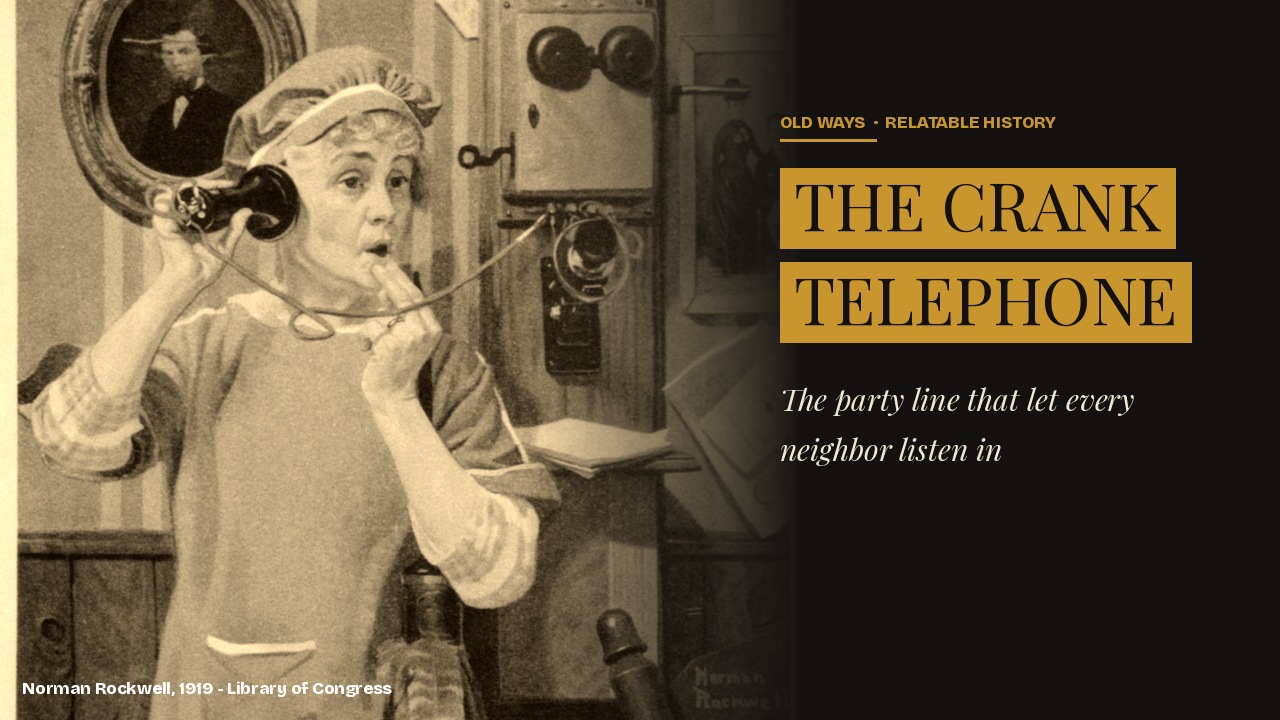
In 1927, the United States Census Bureau counted nearly six thousand separate telephone companies serving rural America — and almost none of them belonged to the Bell System. They belonged to the farmers who used them. A subscriber in Kansas or the Dakotas didn’t just rent a line from a distant corporation; more often than not, he had signed a bylaw, paid dues, taken a turn climbing a pole after a storm, and voted at an annual meeting on what the exchange should charge next year.
That is the part of the crank-telephone story the object itself can’t show you. A wall-mounted box with a hand crank looks the same whether it hung in a house served by a Bell affiliate or one served by eleven neighbors who’d incorporated themselves into a telephone company the previous spring. The difference was entirely in the paperwork, the financing, and the sheer improvised scale of what rural Americans built for themselves — a shadow telephone industry that, at its peak, dwarfed the one everybody has heard of.
By 1927, Farmers Had Built Nearly Six Thousand Telephone Companies
The numbers are worth sitting with. A 1912 count put more than 3,200 rural telephone systems already operating across the country — independent exchanges, farmer mutuals, small-town companies, cooperative associations. By 1927, that figure had grown to nearly 6,000, according to the trade history kept by the National Telephone Cooperative Association and corroborated by researchers at the University of Wisconsin Center for Cooperatives. For a few decades, more telephone companies existed outside the Bell System than inside it.
It didn’t last, and it didn’t last for reasons that had nothing to do with the technology. Record-keeping was often informal to the point of chaos; unpaid dues and deferred maintenance caught up with thousands of small operators, and by 1940 — remarkably — fewer American farms had telephone service than had it twenty years earlier, a contraction both the NTCA’s and the Wisconsin cooperative researchers’ accounts attribute in part to that first generation of exchanges simply failing faster than new ones could replace them.
Historians don’t entirely agree on how to read that boom and bust. Company-sponsored histories written from inside the Bell System tended to treat the independent and mutual exchanges as a cautionary tale — amateur operations whose service was so unreliable that it practically justified a single national network taking over. Later social historians pushed back hard on that framing. Claude Fischer’s America Calling and Ronald Kline’s Consumers in the Country — a book devoted specifically to how rural Americans adapted new technology on their own terms rather than simply receiving it — both argue that farmers were the active engineers of their own service, not its passive, failing customers. A farmers’ cooperative that could write a working bylaw on who climbs the next pole after a storm was not, by most definitions, amateur.
The Switchboard Mechanism Most Rural Customers Actually Needed
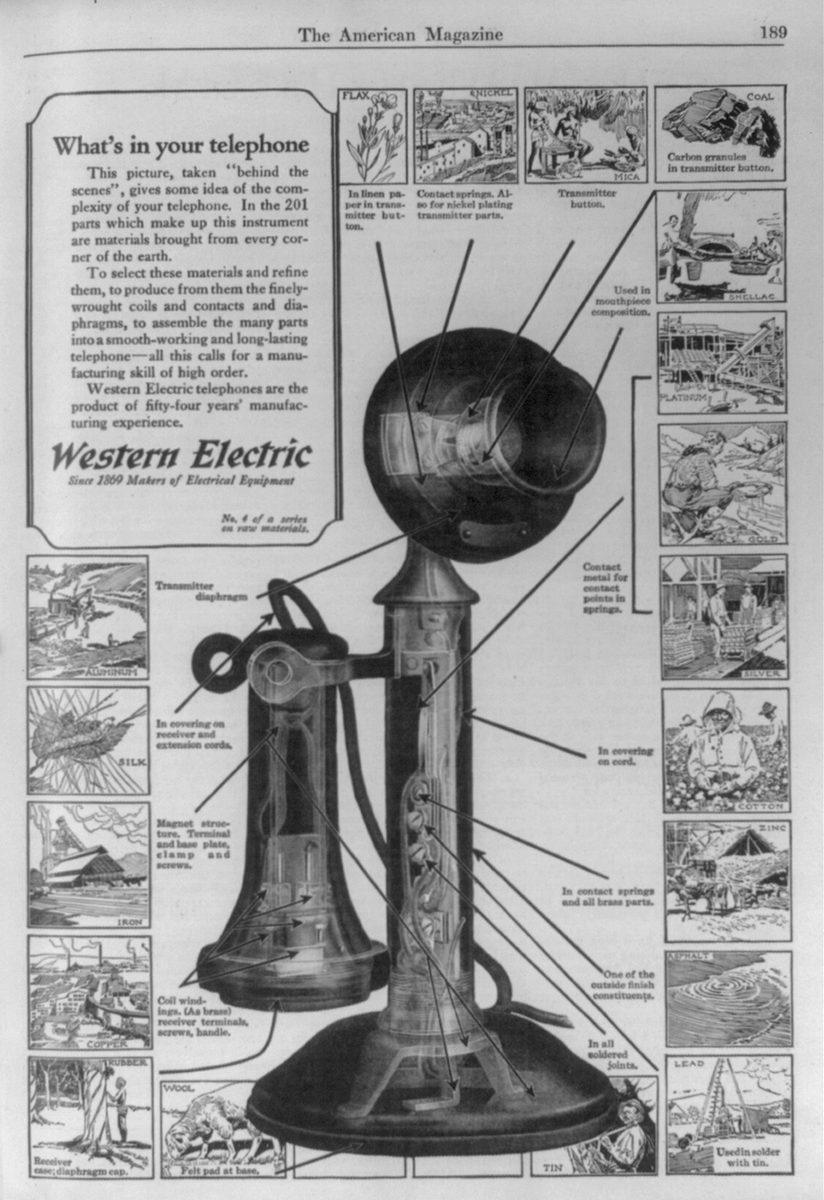
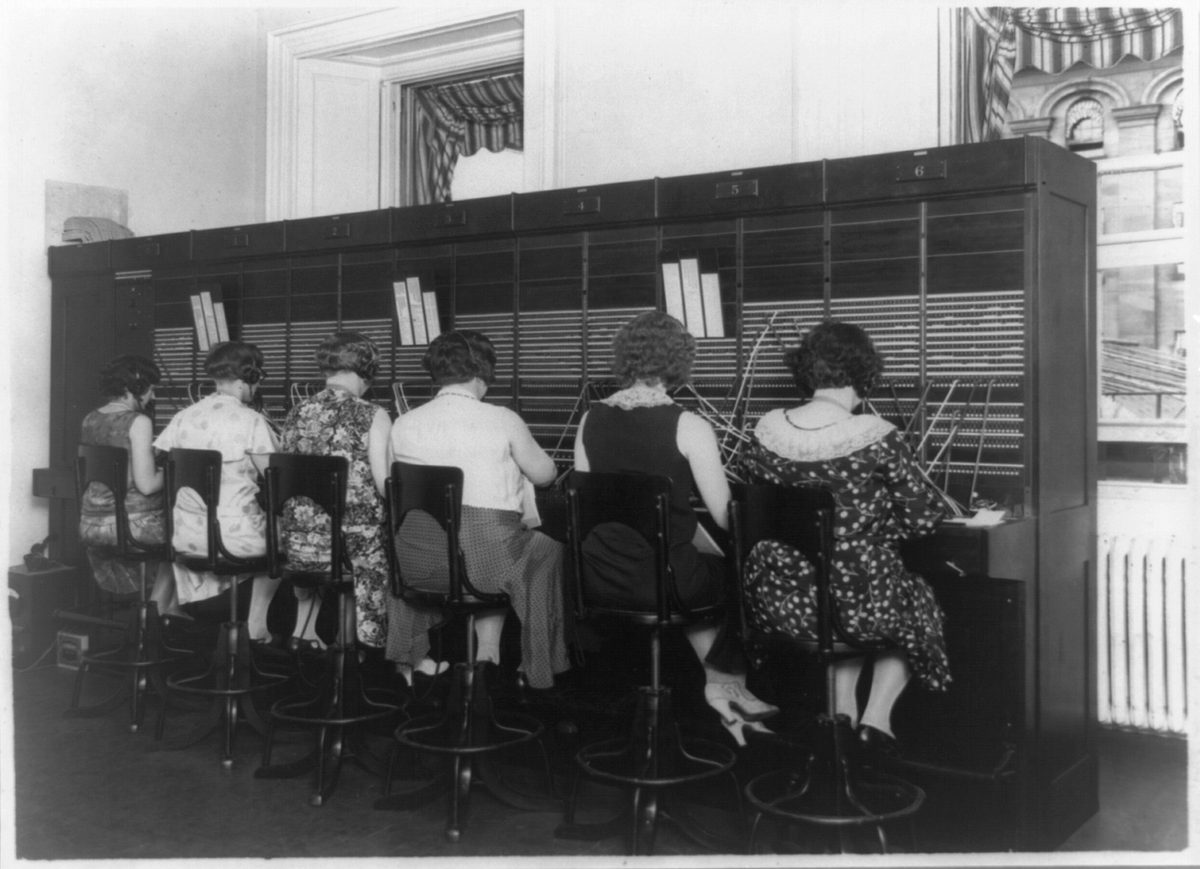
Not every party line was a bare fence wire strung between farmhouses. Plenty of rural subscribers, including most members of an incorporated cooperative, were wired instead to a real local exchange — a switchboard, staffed by a human operator, housed in a spare room or a dedicated little building in the nearest town. Understanding what that operator actually did explains why the crank on the wall mattered as much as it did.
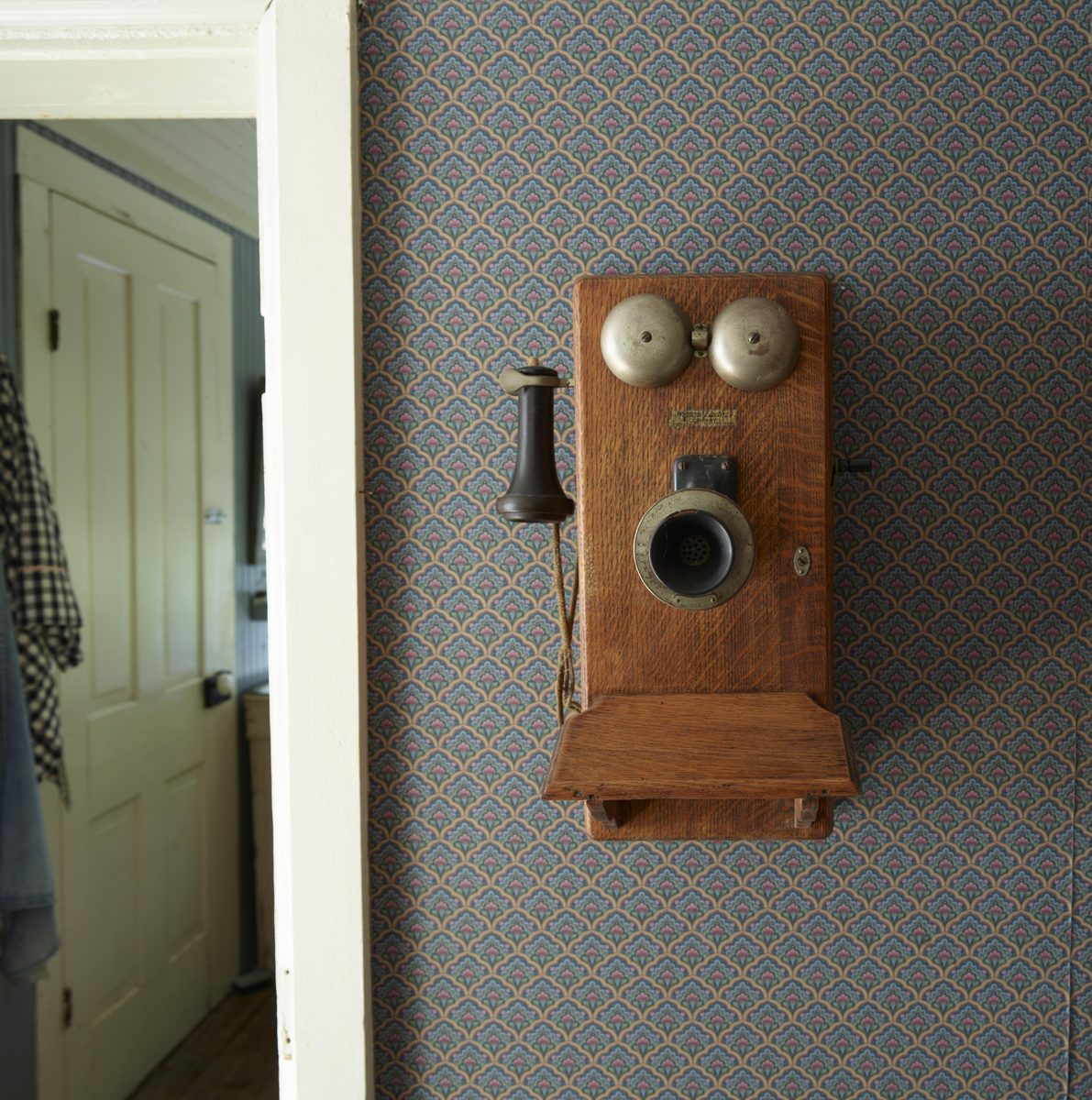
Turning the crank on a local-battery set didn’t complete a call by itself. It spun a magneto generator that sent a burst of ringing current down the line to the switchboard, where a lamp lit up in front of an operator seated at a wall of jacks and cords. She — and on most boards it was reliably a she — answered verbally, asked who the caller wanted, and physically plugged a patch cord between the caller’s jack and the destination’s jack to close the circuit. The subscriber’s own dry-cell batteries, not the exchange, supplied the power that actually carried the caller’s voice; that division of labor is what telephone engineers called a local-battery system, and it is the arrangement almost every small rural exchange ran on for decades after city systems had already converted to centrally powered ‘common battery’ boards.
The same signaling logic — a coded pulse down a shared wire, read and acted on by whoever was listening — shows up in other nineteenth- and twentieth-century systems built for places that couldn’t afford anything fancier, including the coded street fire-alarm boxes that let a single pull-lever report a specific location on a shared circuit. A magneto crank and a fire box didn’t do the same job, but they solved the same underlying problem: how to get a specific, identifiable signal down a wire that many other people were also using.
Washington Finally Noticed the Rural Telephone Problem in 1949
For a long stretch, the federal government treated rural telephone service as somebody else’s problem. The Communications Act of 1934 created the FCC and declared universal phone service a national policy goal, but it did nothing specific to fund the thousands of threadbare farmer cooperatives trying to deliver on that goal with secondhand equipment and volunteer linemen. A Senate bill floated in late 1944 proposed a dedicated Rural Telephone Administration, modeled on the Rural Electrification Administration that was already running wire to farms for electric light. It didn’t pass.
What did pass, in 1949, was simpler: Congress amended the Rural Electrification Act itself to let the REA extend the same kind of long-term, low-interest loans it had been making for power lines to rural telephone systems instead. That single legislative change is what let hundreds of aging mutuals finally replace fence wire and worn-out switchboards with real insulated cable and modern equipment — the financing step that made the difference between a cooperative that modernized and one that simply dissolved.
The cooperatives organized politically, too. On June 1, 1954, eight rural telephone systems from seven states incorporated the National Telephone Cooperative Association to represent their shared interests in Washington; membership passed roughly 100 systems by the 1960s and approached 300 by the end of the 1970s. In 1971, Congress went a step further and created the Rural Telephone Bank, signed into law by President Nixon on May 7 of that year, to supplement the REA’s direct lending with a bank jointly owned by the federal government and the telephone companies themselves — member-owned financing for member-owned exchanges, not unlike the installment plans that put a sewing machine in every farmhouse a generation earlier, scaled up to an entire industry.
Why Everyone on the Line Got Called a ‘Rubberneck’
Long before telephones, rural communities relayed news by whatever carried it fastest — a rider, a church bell, in wartime even a trained carrier pigeon. The party line replaced all of that with something faster and far more promiscuous: a wire that carried not just your call, but everyone else’s too, the instant you picked up.
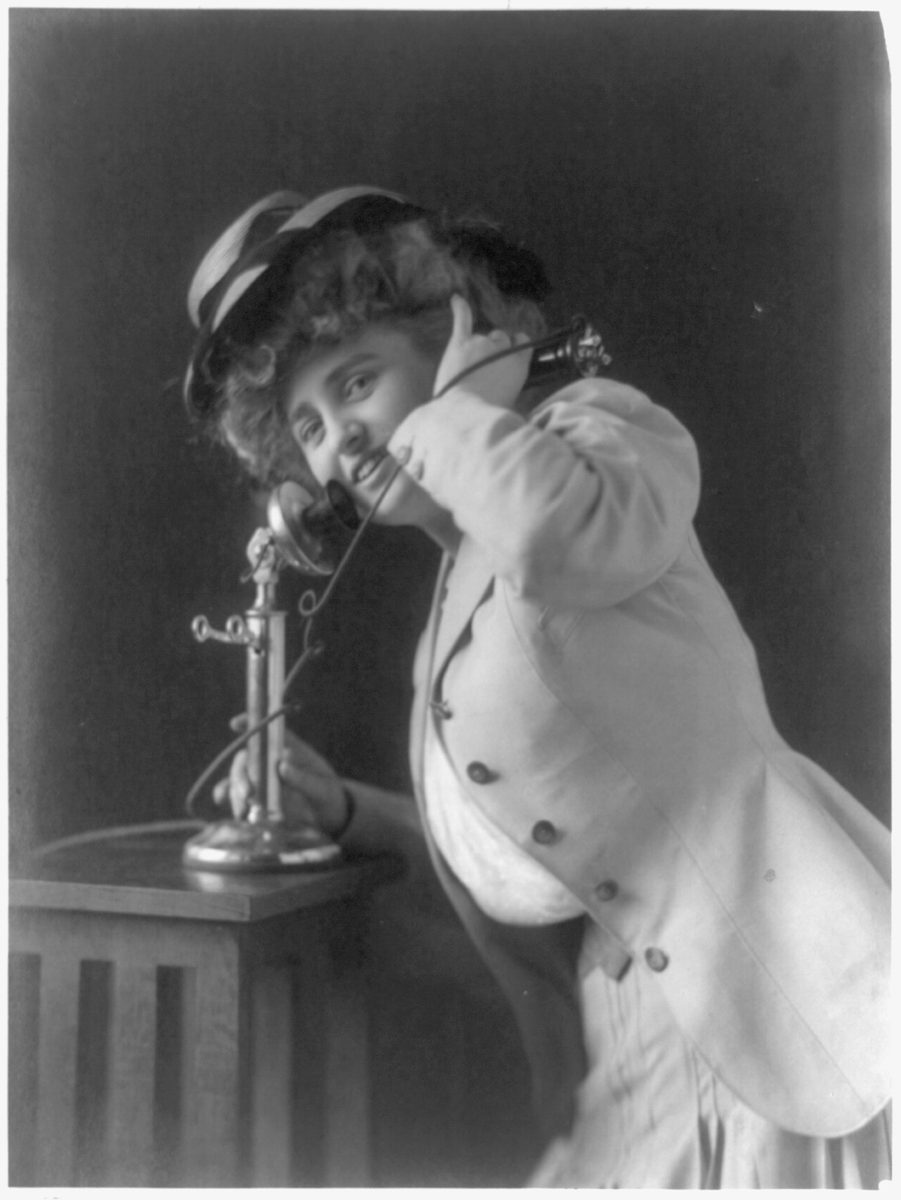
That habit of quietly lifting the receiver to listen in on a call that wasn’t yours earned a specific insult, one documented in an unlikely place: a 1982 essay in the linguistics journal Word Ways. Its author, Giles Zimmer, recalled picking up a shared line as a child and being greeted with a taunt — ‘rubberneck, rubberneck’ — the moment the other parties realized a third receiver had quietly joined the circuit. He traced the word to its older sense, a person who cranes or stretches their neck to gawk at something, repurposed by party-line culture for a specifically aural kind of gawking: craning in on a conversation with your ears instead of your eyes. The word outlived the technology that made it useful by decades.
The Living-Room Switchboard That Ran Until 1983
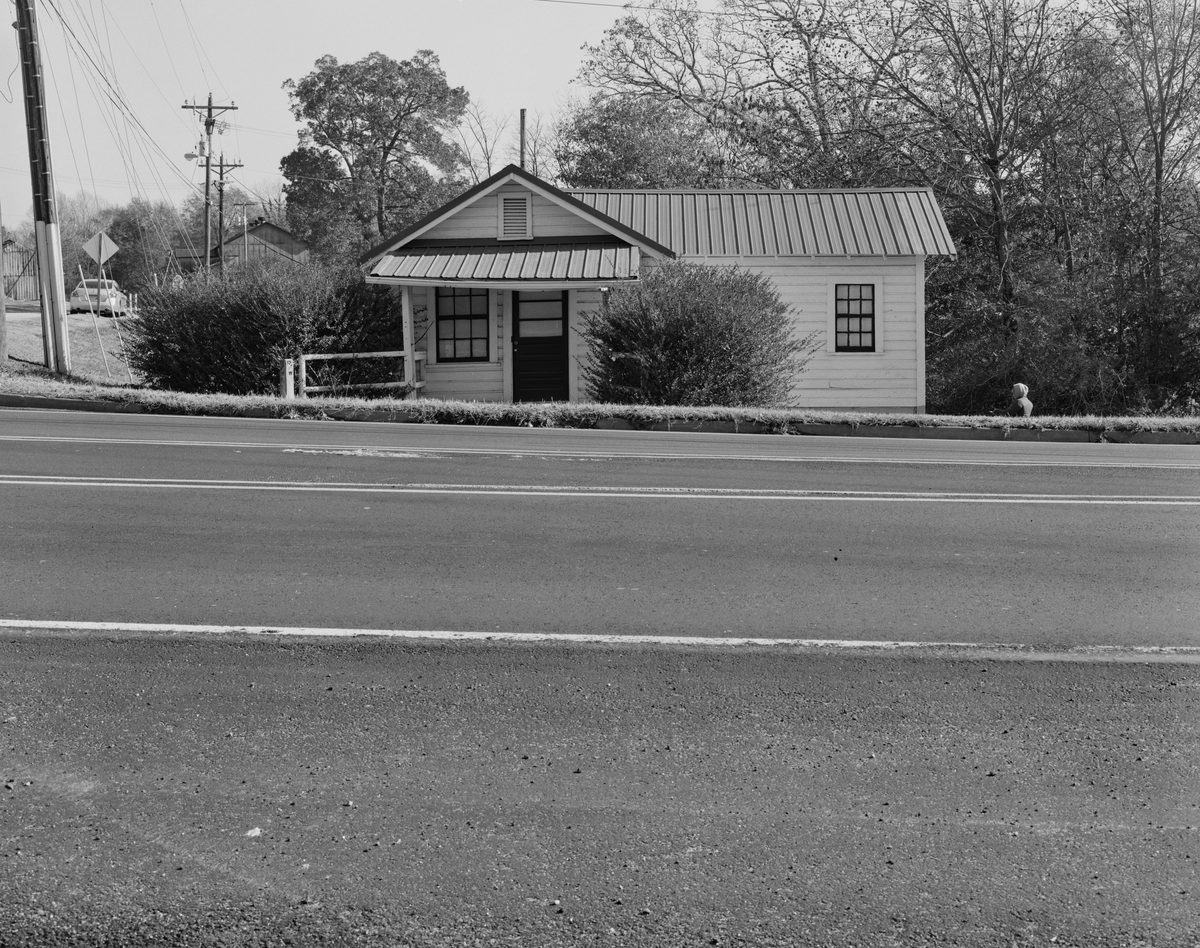
The single best-documented farmer-adjacent exchange in the country sat in Bryant Pond, Maine, and it is worth dwelling on in detail, because the records survive in a way most small cooperatives’ don’t. Elden and Barbara Hathaway bought the Bryant Pond Telephone Company in 1951 from Mr. and Mrs. G. Howard Judkins and ran its switchboard out of their own living room for roughly the next three decades. Robert McKeen handled the boards and the books; Mrs. John Hathaway and Mrs. Carroll Farnum worked as part-time operators, with Tom Thurston assisting.
Their ring codes were specific enough to survive in print: subscriber 22-11 was reached with one long ring and one short, 22-13 with one long and three short. Party lines were capped at six subscribers, eight at the outside limit, and roughly a third of the customers sharing a multi-party line were summer residents rather than year-round neighbors. About half the lines in the system, by contrast, were already private. The board itself went unattended overnight, from 11:30 p.m. to 5 a.m., with an emergency alarm wired straight into the Hathaways’ bedroom in case a genuine crisis call came through while the village slept. For long-distance calls, Bryant Pond’s board connected to New England Telephone’s switchboard in Norway, seventeen miles away.
The Hathaways sold the business in 1981, citing rising equipment and labor costs along with newer residents who simply wanted private lines. The crank system itself wasn’t switched off until October 11, 1983, when roughly two hundred villagers gathered to watch the last hand-crank call go through. Reporting at the time called it the last hand-crank telephone system in the nation — a claim worth qualifying rather than repeating outright, since plenty of ordinary party lines, dialed rather than cranked and routed through automated equipment with no living operator at all, kept running for years afterward elsewhere in the country. What actually ended at Bryant Pond in 1983 was something narrower and, in its way, rarer: the last American exchange where reaching anyone at all still required a human switchboard operator and a hand-cranked generator working in the same living room.
The physical switchboard didn’t go to a landfill. It’s now held in the collection of the Maine State Museum, normally displayed alongside a rotary phone, a smartphone, and a telegraph set as a hands-on comparison of how a single idea — reaching someone who isn’t in the room — kept getting re-engineered. (The museum itself is closed for renovation through October 2026, so the display isn’t visitable at the moment this was written, but the object survives.)
Whether any of this was worth it — the dues, the pole duty, the overnight alarm wired into somebody’s bedroom, the guaranteed lack of privacy — was a trade every one of those subscribers made for themselves, line by line, bylaw by bylaw, company by company, six thousand times over. Most of them left no more record of the decision than a name in a ledger and a ring code nobody remembers now. Bryant Pond is simply the one place where enough of the paperwork, and enough of the people, stuck around long enough to be asked.
Watch the full history
The video version covers the barbed-wire exchanges, the ring codes, and the decades-long decline of the American party line in about nine minutes.

Related reading
- Why New England’s Stone Walls Run 240,000 Miles
- How Fire Alarm Telegraph Boxes Worked
- Drift Bottle Science: How Sealed Notes Helped Map the World’s Oceans
- How the Sewing Machine Installment Plan Put One in Every Farmhouse
- How Carrier Pigeons Carried Messages Through Two World Wars
Shop the crank telephone
Shop the book behind this history:
Works cited
- Fischer, Claude S. America Calling: A Social History of the Telephone to 1940. University of California Press, 1992.
- Kline, Ronald R. Consumers in the Country: Technology and Social Change in Rural America. Johns Hopkins University Press, 2000.
- National Telephone Cooperative Association (now NTCA–The Rural Broadband Association). “History of Rural Telecommunications.” Link.
- University of Wisconsin Center for Cooperatives. “Rural Telephone Cooperatives.” Research on the Economic Impact of Cooperatives. Link.
- Farley, Tom. “Tom Farley’s Landline Telephone History, Part 11.” Telephone World. Link.
- Richmond, Glenn. “Maine’s Last Hand-Crank Telephone Company.” Down East, April 1972.
- Maine State Museum. “Bryant Pond Switchboard.” Lunder Education Center. Link.
- Zimmer, Giles. “Rubberneck: An Overlooked Word.” Word Ways 15, no. 2 (1982). Link.