

In 1938 a museum laboratory director in Baghdad looked at a broken clay jar and asked, in print, whether it might be a battery. He put a question mark in the title of his own paper. That question mark is the entire origin of one of the most repeated claims in pseudo-archaeology: that a two-thousand-year-old jar from Mesopotamia proves the ancients had electricity.
So, was the Baghdad Battery real — a genuine ancient electrochemical cell? The short answer, on the evidence actually in hand, is no. But the object is real, the jar is real, and the reason the question survives eighty-odd years of testing is more interesting than the myth it replaced.
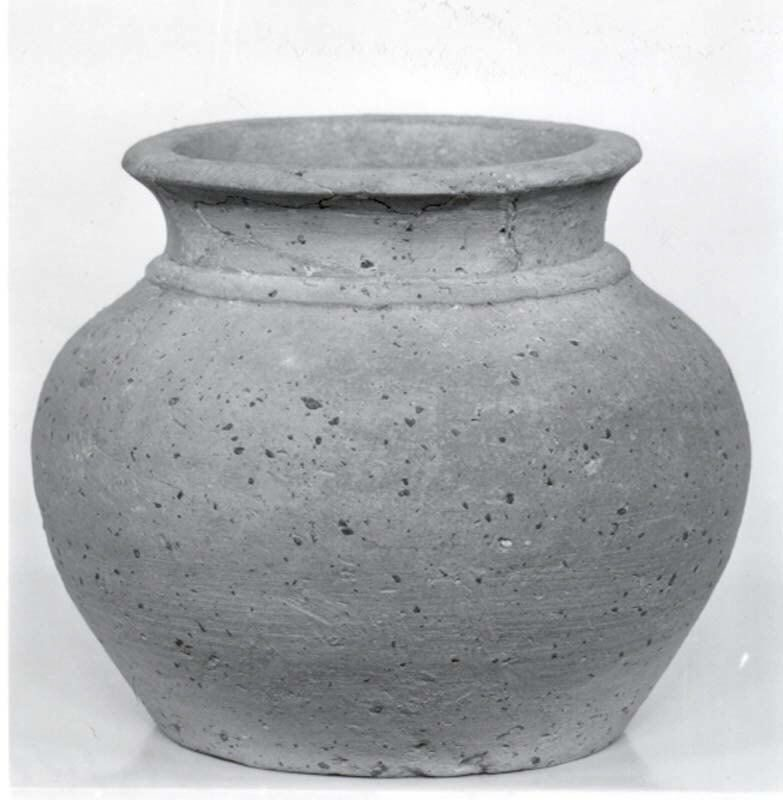
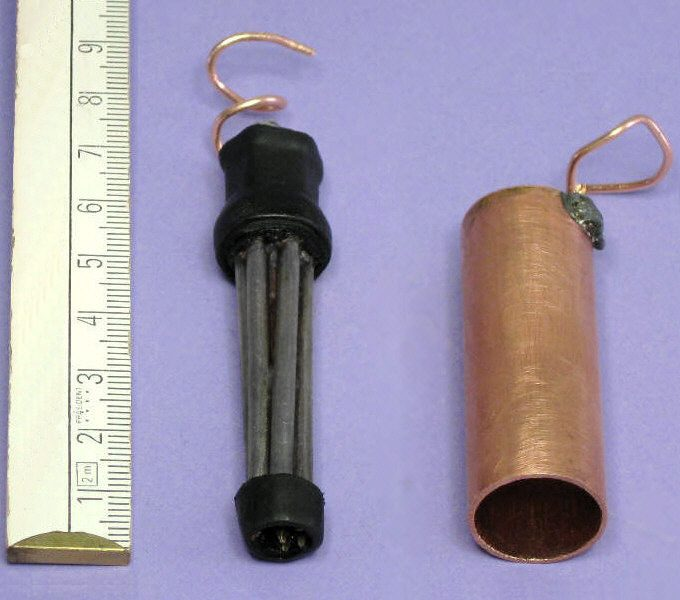
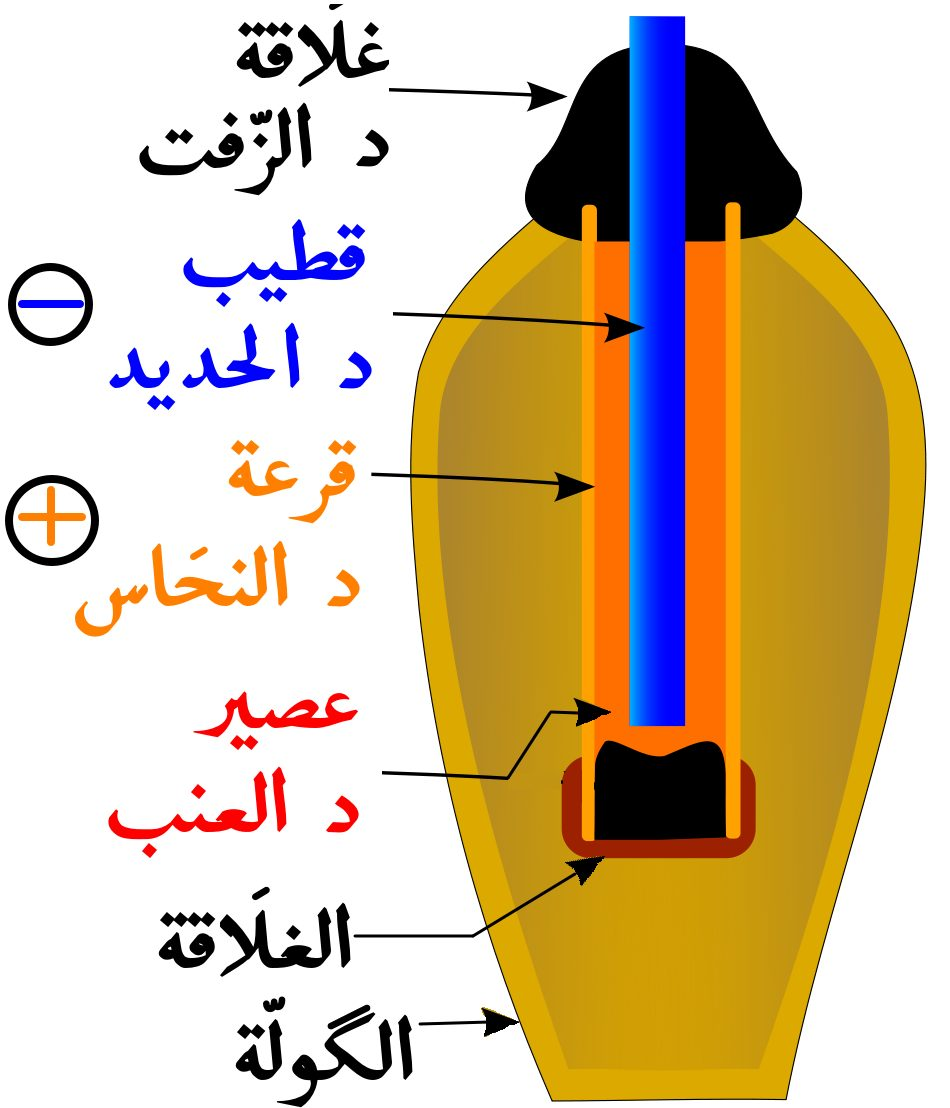
The jar came out of the ground in 1936 at Khujut Rabbou’a, a couple of miles northeast of Baghdad near the ruins of Ctesiphon, in a dig led by Sherif Yousif and Jawad al-Saffar. It is about fourteen centimetres tall, its neck broken away. Wedged inside is a tube rolled from copper sheet, nine centimetres long, held in place with asphalt. Inside that tube sits a rod of iron, rusted completely through.
The claim has had unusual staying power for something built on such thin evidence. It shows up in ancient-astronaut documentaries, in lists of supposed out-of-place artefacts, and in the occasional pop-science listicle that treats the 1938 question mark as a settled discovery. None of that repetition has added a single new fact to the case. What has accumulated instead, over decades of actual testing, is a fairly detailed picture of why the battery reading does not work — and a much better-supported alternative sitting in plain sight.
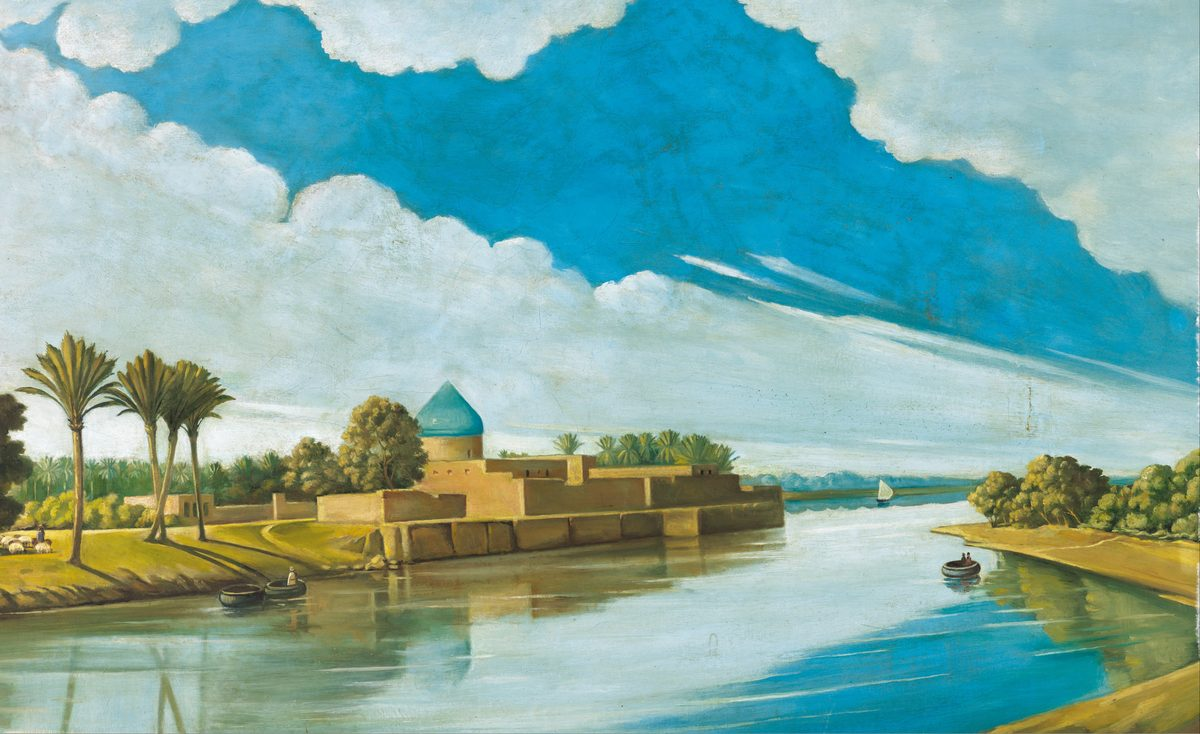
A pulp magazine turned a question mark into a legend
Wilhelm König ran the laboratory at the National Museum of Iraq in the 1930s. He had been puzzling over a set of fine old silver objects plated with very thin gold and could not work out how the plating had been done. Then he saw the jar: copper, iron, a sealed vessel. In 1938 he published a short paper asking whether it might be a galvanic cell left over from the Parthian period.
That would likely have stayed a footnote in a German trade journal were it not for Astounding Science-Fiction, which ran a popular account of the find in its March 1939 issue. An electrical engineer named Willard F. M. Gray, working at the General Electric plant in Pittsfield, Massachusetts, read it and built a replica. He filled it with copper sulphate solution and reported that it “worked quite well for a short time.”
That is the whole chain: a tentative question from a museum chemist, a science-fiction magazine, and one replica on an American lab bench. Every popular version of the Baghdad Battery since traces back to those three steps, not to any further archaeological confirmation.
The chemistry does not hold up under testing
Later researchers tried to replicate the cell under conditions that actually match the archaeology, rather than an idealised version of it, and the results were consistently discouraging for the battery theory. Emmerich Paszthory found that oxygen availability limited the reaction, and that sealing the copper cylinder the way the real jars are sealed — asphalt plug and all — stopped current production almost immediately. He also found that an iron rod used as an electrode corrodes at the neck in a distinctive way; the actual iron rod’s shape does not match that wear pattern.
A 2002 review in the trade journal Plating & Surface Finishing by D. E. Von Handorf worked through what electroplating with this setup should leave behind: substantial copper salts in the ceramic and copper deposits on the iron parts, plus, somewhere, a second cell to actually apply the plating. None of that has ever turned up. And there is a simpler physical problem that gets less attention than it should: the iron rod projects slightly above the asphalt plug, but the copper tube does not. There is no way to attach a second wire to complete a circuit, and no wire — of any material — has ever been found with this jar or any of the others like it.
The gilding that started the whole line of reasoning turned out to have a mundane explanation too. Paul Craddock, the British Museum’s longtime authority on ancient metallurgy, has said plainly that the silver objects from this region and era are conventional gold plating and mercury fire-gilding — a technique already well attested in the ancient Near East. Gerhard Eggert later showed that the specific method König watched Baghdadi silversmiths use in 1938 was nearly identical to a gilding process patented in Birmingham in 1839. No electroplated object has ever been recovered from Sasanian Iraq, and no electroplating cell has been found there either.
Not every specialist reads the physics the same way, and it is worth saying where the disagreement actually sits. Paul T. Keyser, writing in the Journal of Near Eastern Studies in 1993, accepted that the jar could function as a weak galvanic cell given an acidic filling such as vinegar, but he rejected electroplating as its purpose on the same grounds as everyone else — the current would have been too feeble. His alternative was that the assembly, if it was ever used electrically at all, produced a mild shock for a form of pain relief, a kind of ancient electroacupuncture. That is a narrower and stranger claim than “ancient battery,” and it still requires accepting that the object generated current in the first place, which most of the specialists above dispute. The honest state of the field is: a fringe reading that a weak cell is possible in principle, against a much larger body of testing that finds the specific jar, as excavated and sealed, could not have sustained one.
Nine jars like it turned up nearby, and most still held their contents
The Khujut Rabbou’a jar was never an isolated find, which is easy to forget from how the popular story usually tells it. In 1930, Leroy Waterman’s University of Michigan expedition at Seleucia, roughly twenty miles south, excavated four almost identical vessels. All four were common unglazed ceramic sealed with bitumen stoppers, between six and eight inches tall. Three lay on their sides, pinned in place by metal rods, each holding a bronze cylinder sealed at both ends. Crucially, those cylinders still had their contents: one decayed to flakes, one a tightly wound core, and one still recognisably a papyrus roll folded over at the ends.
The following year, a German-American expedition led by Ernst Kühnel found six more at neighbouring Ctesiphon — bronze wrappers around badly decomposed plant fibre, lead plates, and iron nails still carrying traces of whatever had been wrapped around them. Kühnel’s own 1932 description of these finds called them containers for “conjurations, blessings and the like, written perhaps on papyrus.”
Set the group side by side and a pattern appears that the isolated battery story hides completely: of roughly ten related vessels, the ones whose contents survived held rolled organic material, almost certainly writing. The Khujut Rabbou’a jar is the one example in the group whose interior had already rotted away to nothing by the time anyone examined it closely. The famous jar is the empty one in a set where the full ones were opened first.
The neighbourhood points to magic, not electricity
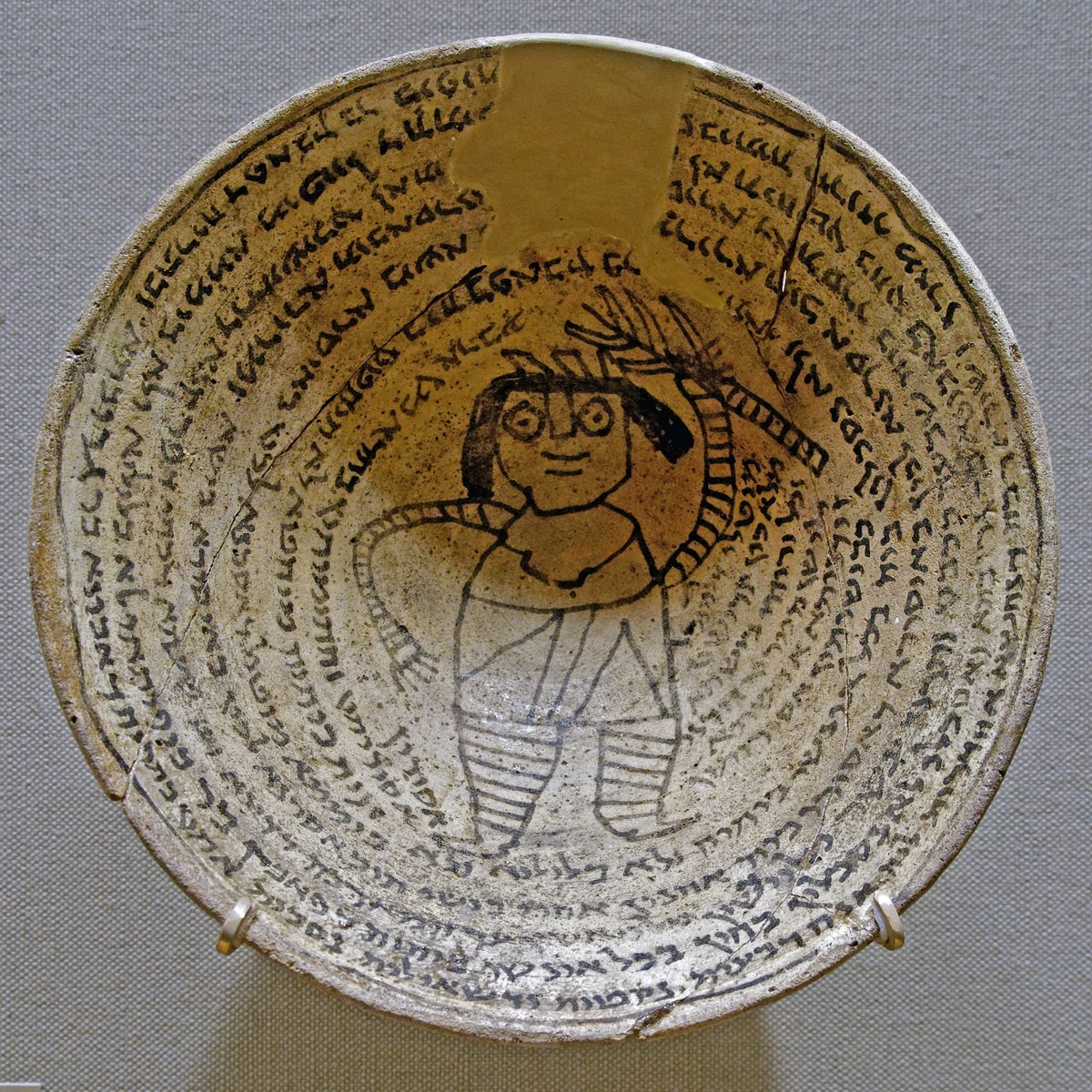
Context matters as much as contents. The Khujut Rabbou’a jar was found in the same ground as Aramaic incantation bowls — shallow ceramic vessels inscribed in spiralling text and buried upside down to trap demons, one of the most common small ritual objects recovered anywhere in Sasanian-era Mesopotamia. The Seleucia jars turned up beside incantation bowls too, two of them stacked together over an inscribed eggshell.
Every material in the jar has a documented ritual use in the period. Copper was widely used for protective purposes. Iron nails were used to symbolically pin a spell or a threat shut — archaeologists have recovered large numbers of them for exactly this purpose. A sealed vessel holding a rolled written text, buried in the ground, fits a known genre of the region’s magical practice far more comfortably than it fits any known electrical one.
Elizabeth Stone of Stony Brook University, an archaeologist who has excavated in Iraq for decades, put it flatly in a March 2012 radio interview after returning from the first archaeological expedition to the country in twenty years: she did not know a single archaeologist in the field who thought the jar was a battery, and said the people arguing for it were, in her view, generally not scientists.
What is still genuinely unresolved
None of this closes every question. The 1936 excavation was poorly recorded even by the standards of the time, so its date is softer than it looks in most retellings. König guessed the Parthian period, roughly 250 BC to AD 224; the pottery style instead points to the Sasanian period that followed, and St John Simpson of the British Museum has said the evidence for the earlier Parthian range is very weak. The truth is a jar whose precise century is still argued over, even though its function is not.
And it cannot be re-examined, which is the detail that keeps this story alive more than any of the physics. The jar was already the one vessel in its group whose organic contents had rotted away before anyone thought to look closely. It has not been accounted for since the National Museum of Iraq was looted during the 2003 invasion. The one object at the centre of eighty years of argument is also the one nobody alive has been able to put back on a lab bench.
Even the earliest published follow-up came from Iraq itself, not from the Western replication literature that now dominates the story. Albert Al-Haik discussed the find in the Iraqi archaeology journal Sumer in 1964, decades before Paszthory’s and Von Handorf’s laboratory tests, at a point when the object was still in the National Museum’s own keeping and could be examined directly rather than reconstructed from König’s 1938 description. That local, early scholarship rarely makes it into the popular English-language retellings, which tend to jump straight from the 1939 science-fiction article to the twenty-first-century debunkings.
Watch the full history
The video version walks through the excavation, the replica experiments, and the incantation bowls in under four minutes.

Related reading
- Who Really Invented the Telegraph Key (It Wasn’t Samuel Morse)
- What the Records Actually Show About the Shag Harbour UFO
- How Farmers Harvested Wheat With a Grain Cradle
- What Were Roman Dodecahedra Actually Used For?
Works cited
- König, Wilhelm. “Ein Galvanisches Element aus der Partherzeit?” Forschungen und Fortschritte 14 (1938): 8–9.
- Keyser, Paul T. “The Purpose of the Parthian Galvanic Cells: A First-Century A.D. Electric Battery Used for Analgesia.” Journal of Near Eastern Studies 52, no. 2 (1993): 81–98. Link.
- Waterman, Leroy. Preliminary Report upon the Excavations at Tel Umar, Iraq. Ann Arbor: University of Michigan Press, 1931, pp. 61–62 and Plate XII. Link.
- Von Handorf, D. E. “The Baghdad Battery—Myth or Reality?” Plating & Surface Finishing (May 2002): 84–87. Link.
- Eggert, Gerhard. “The Enigmatic ‘Battery of Baghdad.’” Skeptical Inquirer (May/June 1996): 31–34. Link.
- Eggert, Gerhard. “On the Origin of a Gilding Method of the Baghdad Silversmiths.” Gold Bulletin 28, no. 1 (1995): 12–16. Link.
- Paszthory, Emmerich. “Electricity Generation or Magic? The Analysis of an Unusual Group of Finds from Mesopotamia.” In History of Technology: The Role of Metals, edited by Stuart J. Fleming and Helen R. Schenck, 31–38. Philadelphia: MASCA, University of Pennsylvania Museum, 1989. Link.
- Scott, David A. Copper and Bronze in Art: Corrosion, Colorants, Conservation. Los Angeles: Getty Publications, 2002, pp. 16–18. Link.
- Al-Haik, Albert. “The Rabbou’a Galvanic Cell.” Sumer 20 (1964): 103–104.
- Stone, Elizabeth. Interview by Ira Flatow. “Archaeologists Revisit Iraq.” Science Friday, March 23, 2012. Link.
- Frood, Arran. “Riddle of ‘Baghdad’s Batteries.’” BBC News, February 27, 2003. Link.