
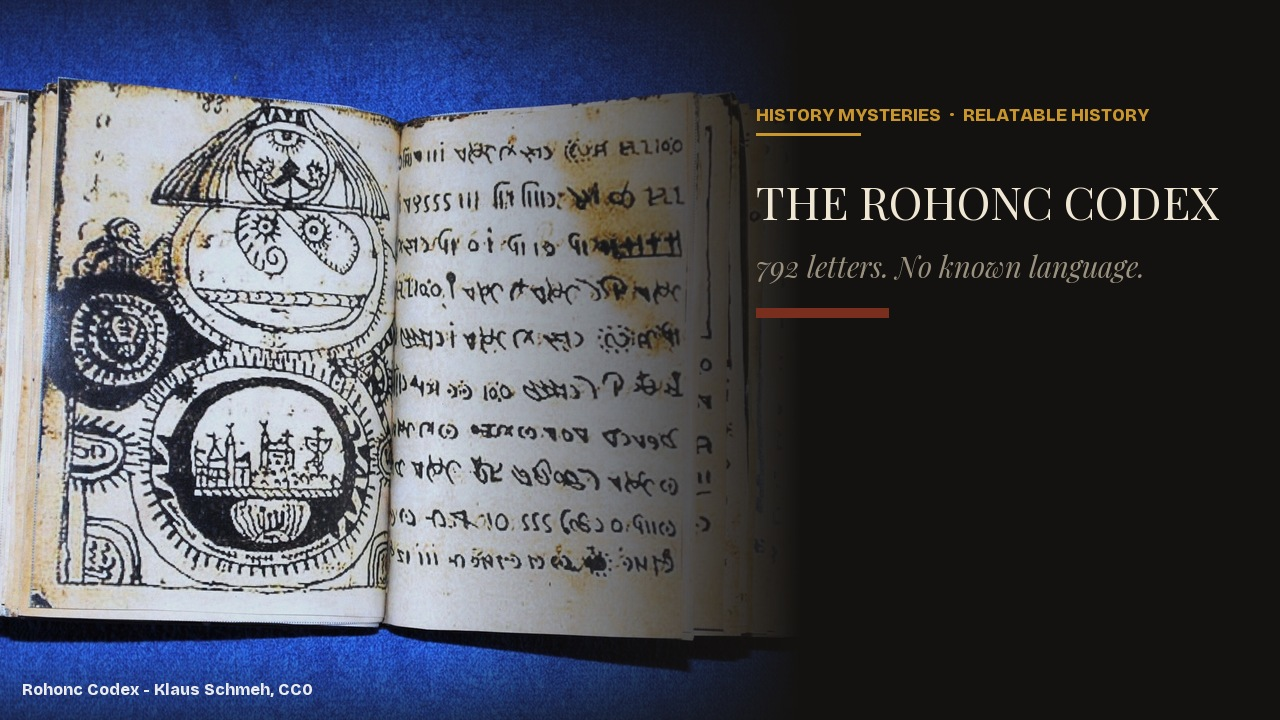
A four-hundred-and-forty-eight-page manuscript has sat in a library in Budapest since 1838, and for most of that time nobody could say with any confidence what it was. It isn’t written in any alphabet anyone recognises. Its roughly eighty-seven illustrations mix crosses, crescent moons and sun symbols on the same pages. Ask a Hungarian scholar in 1950 whether the Rohonc Codex would ever be deciphered, and the honest answer was no — not because nobody had tried, but because the manuscript was filed, officially, as a fake not worth the effort.
That position held until two researchers, working mostly alone through the 2010s and then jointly, published a paper in the journal Cryptologia in 2018 arguing the opposite: that the book is not a hoax, not a known script in disguise, and not solvable the way an ordinary substitution cipher is solvable. It is, they argued, a code — a self-contained system in which roughly eight hundred invented signs stand in for whole words, built around a private codebook whose key has been lost since whenever the book was written.
What came out of that code, read against the pictures and against scraps of recognisable Bible text used as a crib, looks like an ordinary Catholic prayer book. What didn’t come out is the author’s name, the place it was written, or the spoken language the code was hiding. A decipherment that reveals a text’s content while leaving its language a total blank is a strange kind of victory, and it is exactly the position this manuscript is in today.
A Small Book Nobody Was Allowed to Read
The physical object is modest for the fuss it has caused. It measures about twelve by ten centimetres — pocket-sized — and runs to 448 paper pages, each carrying nine to fourteen rows of handwritten symbols. There is no title page and no colophon naming an author. The book has no documented history at all before 1838, when Count Gusztáv Batthyány (1803–1883) donated his family’s entire library to the Hungarian Academy of Sciences in Budapest. That library had been kept at the Batthyány seat of Rohonc, in western Hungary — the town is now Rechnitz, just across the border in Austria — which is where the manuscript gets its name.
Before 1838, the trail goes cold except for one maybe. A 1743 catalogue of the Batthyány library lists a single duodecimo volume of “Hungarian prayers.” The size fits a book this small, and the assumed genre fits what researchers now think the codex actually is, but nothing in that one-line entry can be matched conclusively to this specific book. The lead is tantalising precisely because it can never quite be closed.
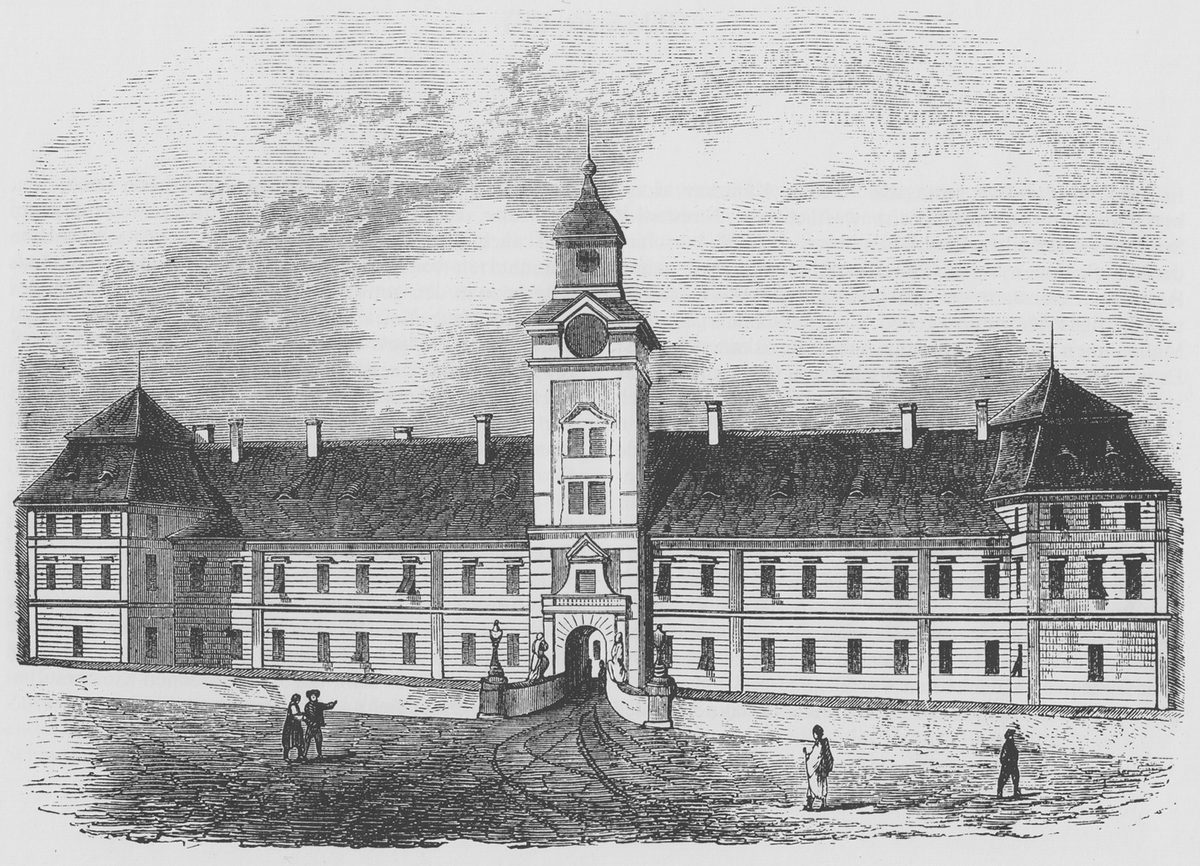
Today the manuscript is catalogued at the Academy’s library as K 114, and seeing it is not casual. Researchers must apply for permission, and the copy most scholars actually worked from for decades was a microfilm reel. The University of Hamburg produced higher-resolution scans in 2015 and released eight pages publicly; a fuller digital copy now sits in the Academy’s own repository. None of that explains what the book is for — but it does establish a chain of custody solid enough that nobody seriously argues the physical object itself is a modern fake. The paper, the binding and the ink are all real and old. The argument that ran for 150 years was about something else: whether the writing on that real, old paper means anything at all.
The Paper Says the 1530s; a Note Inside Says 1593
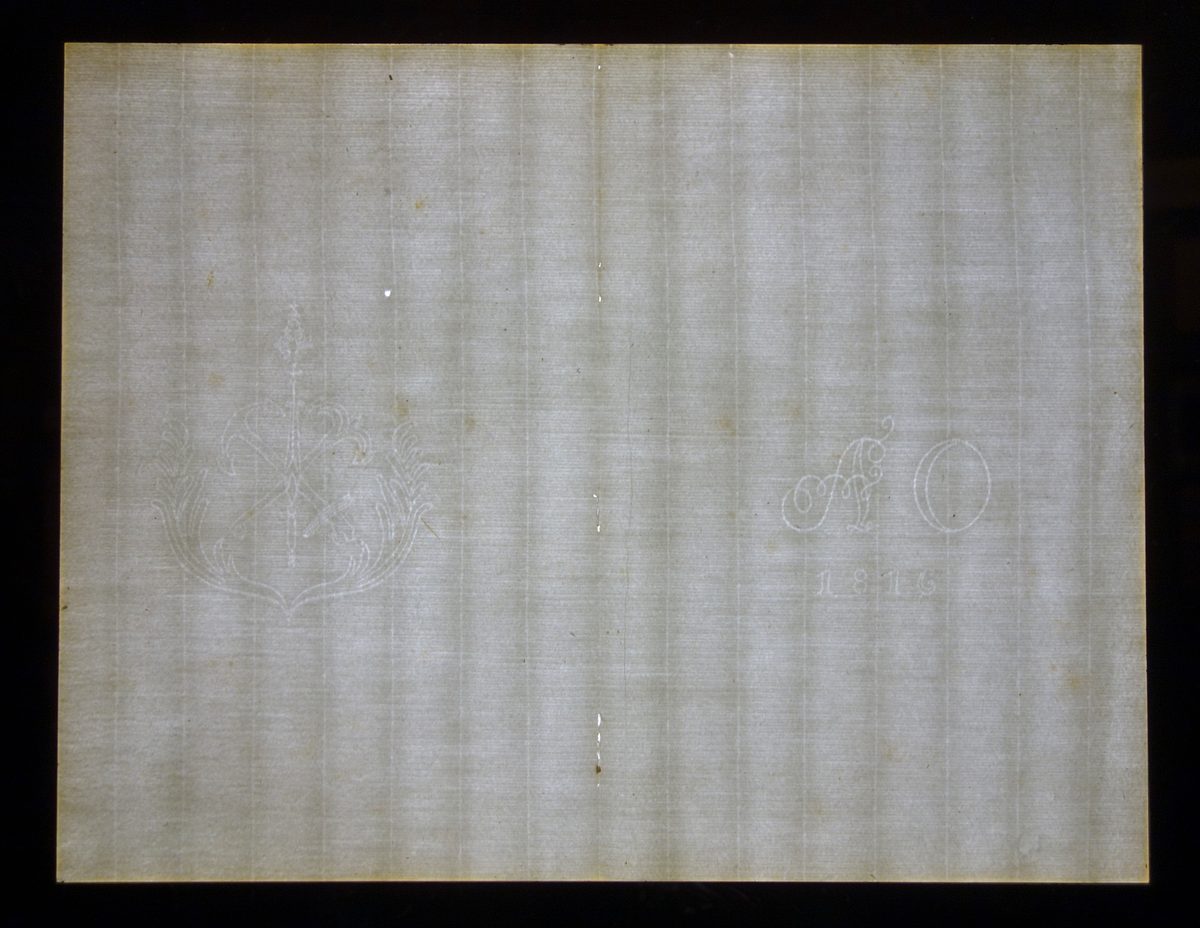
The strongest physical evidence in the whole file is the paper itself. It is Venetian or north Italian stock, and its watermark is a catalogued pattern that places its manufacture in the 1530s. Separately, a colophon-like note inside the manuscript — on folio 223v, according to the historian Levente Zoltán Király’s 2023 reading — gives a date reckoned as “1,560 years after Jesus’s ascension,” which converts to 1593.
Those two figures don’t describe the same moment, and the sixty-year gap between them isn’t really a contradiction. Paper was manufactured in batches, stored, traded and used for decades after it left the mill; a scribe working in the 1590s could easily have been writing on 1530s stock that had simply sat in a stationer’s shop. The watermark fixes the earliest the book could have been made, not the date it actually was.
The direction of the writing is its own small puzzle, and it was solved earlier than almost anything else about the codex. The text runs right to left, with the right-hand margin justified — meaning the scribe began each line from the right and squared it off there, the mirror image of how a Latin-alphabet page is set. In 1970 the engineer and amateur cryptologist Ottó Gyürk carried out the manuscript’s first systematic study of its symbols and worked out that the pages themselves are also ordered right to left, so reading the book correctly means starting from what looks, to Western eyes, like the back cover. Benedek Láng, whose own research is the fullest modern account of the codex, independently dates the manuscript — on the style of its illustrations — to the sixteenth or seventeenth century, a range that comfortably straddles both the watermark and the note. It is one of the only points in the codex’s entire file where three separate lines of evidence land in roughly the same place.
Eight Hundred Signs Is Too Many for Any Alphabet
Counting the symbols turns out to be more informative than trying to read them. Láng’s research puts the figure at roughly 792 distinct signs used across the manuscript — not 792 characters total, but 792 different shapes the scribe drew. That is something like ten times the size of any alphabet actually in use anywhere in the world. English gets by on 26 letters. Even a large syllabary, like Japanese hiragana and katakana combined, stays well under two hundred symbols.
An inventory that size rules out a whole category of explanation before anyone reads a single word. A straightforward substitution cipher — swap each letter of a known alphabet for a symbol — cannot produce 792 distinct signs, because no underlying alphabet has that many letters to substitute for. Whatever is happening on these pages, it isn’t that.
What a sign inventory that large does suggest is a system where each mark stands for something bigger than a single sound: a whole syllable, or a whole word. That distinction matters more than it sounds like it should, because a system built that way can be read, in a mechanical sense, by people with no idea what language it encodes. Arabic numerals work exactly this way across unrelated languages — the digit “7” means the same quantity whether the reader says seven, sieben or hét, and the written mark carries no information about which word the reader will say aloud. A code built from word-sized units can, in principle, be opened up without anyone ever recovering the spoken language underneath it. That turns out to be close to the position researchers eventually reached with this book.
Hungarian Scholars Blamed a Forger Who Left No Fingerprints
The forgery theory that dominated Hungarian scholarship for a century and a half has a precise birthdate: 1866, when the historian Károly Szabó proposed a name. His suspect was Sámuel Literáti Nemes, a Transylvanian antiquarian who had died in 1842 and who was, by any measure, a credible culprit for forging something. Nemes manufactured a long list of fake historical documents through the 1830s, fooled respected scholars with several of them, and was prominent enough in antiquarian circles to help found what is now the National Széchényi Library — the kind of insider access that makes forgery easier to pull off and harder to catch.
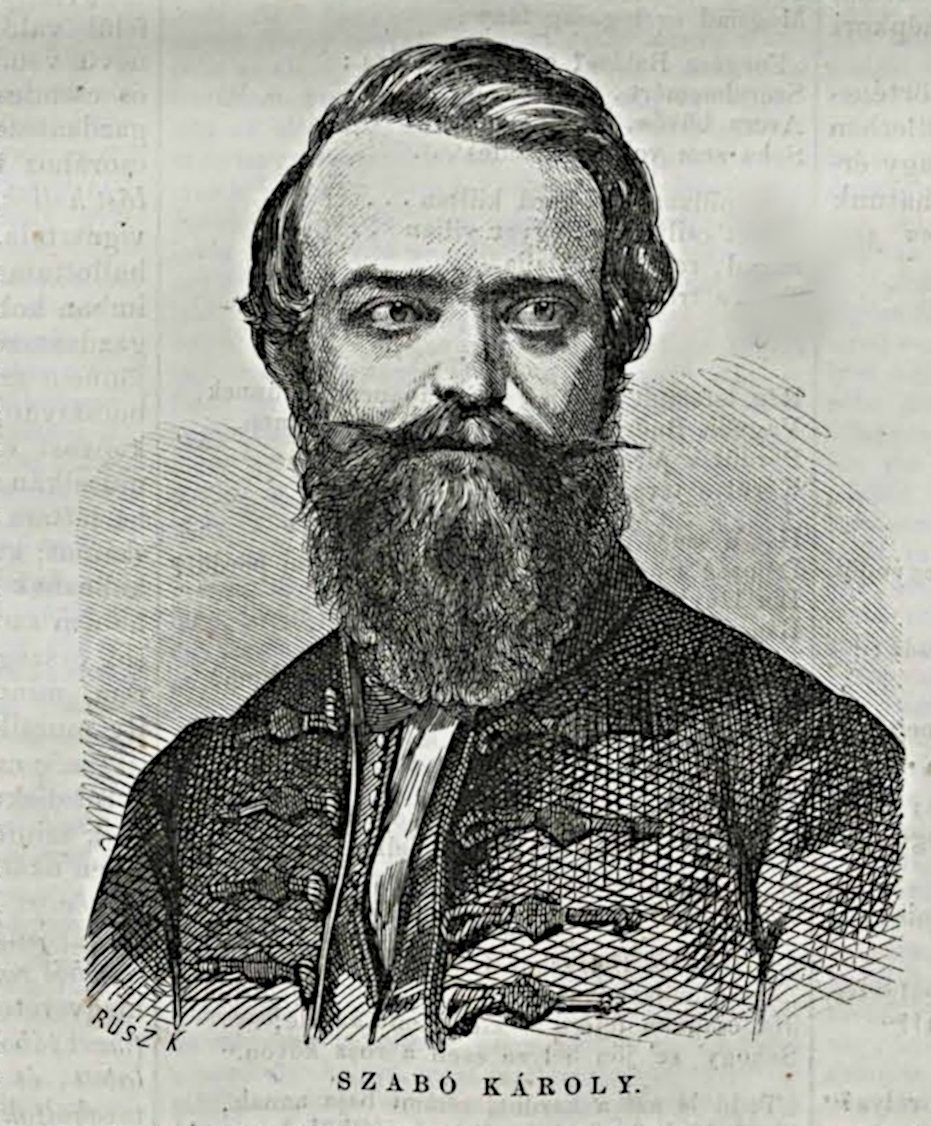
The case against him has one serious hole: no document, letter or receipt ties Nemes to this specific manuscript. Szabó’s 1866 attribution was, by all appearances, an informed guess about a known forger working in the right period and the right country — and it hardened into consensus simply because nobody offered a better name. If the 1743 Batthyány catalogue entry really is this book, the problem gets worse: that catalogue predates Nemes’s birth by roughly half a century, which would make him physically unable to have forged it. Láng’s research concludes flatly that the codex is “definitely not” a nineteenth-century Hungarian hoax of the kind Nemes specialised in — the length, the internal consistency of the symbol system and the chronology all argue against it. The forgery theory survived as long as it did less because the evidence supported it than because, for a long time, nobody checked.
Three Decoders Broke the Same Rule Before Anyone Learned From It
Once the book was treated as worth reading rather than dismissed as fake, three separate “solutions” arrived in quick succession, and all three collapsed for a version of the same reason. In 1996 the Hungarian writer Attila Nyíri turned two pages of the codex upside down, identified one shape as a Sumerian cuneiform ligature, and matched the remaining symbols to Latin letters by visual resemblance, drawing on the fringe claim that Hungarian descends from Sumerian. Ottó Gyürk’s rebuttal was immediate: Nyíri assigned different letters to the same symbol depending on what sentence he needed, and different symbols to the same letter. A method with that much flexibility can be made to produce almost any text a researcher wants to find.
In 2002 the Romanian philologist Viorica Enăchiuc published a full translation arguing the codex is an eleventh- or twelfth-century Dacian dialect of vulgar Latin, read right to left and bottom to top, recounting a war between Vlachs, Hungarians and Pechenegs. Her transliteration ran into the identical problem as Nyíri’s: the same symbol received different values in different passages, and the theory had to explain away illustrations that are devotional rather than martial, an odd choice of artwork for a war chronicle. In 2004 the researcher Mahesh Kumar Singh, working with László Bárdi, proposed the opposite reading direction — left to right, top to bottom — in an undocumented variant of the Brahmi script, and read the text as an apocryphal infancy gospel. Critics including Géza and Csaba Varga raised, in print, the same objection a third time: the symbol-to-sound mapping wasn’t stable. Three attempts, three proposed languages, three incompatible reading directions — and one shared, disqualifying flaw. A decipherment that lets the same sign mean different things whenever the story needs it to isn’t a decipherment.
How the Rohonc Codex Was Finally Partly Deciphered
The work that actually held up started quieter and ran slower. In the mid-1990s the computer scientist Miklós Locsmándi ran a statistical analysis of the symbol sequences and found real structure: a recurring sign that behaves like sentence-ending punctuation and may double as the number eleven, and no pattern resembling Hungarian grammatical case endings — evidence against the book being disguised Hungarian. He couldn’t prove the text wasn’t an elaborate hoax, but he could rule out meaningless scribble, which was itself progress nobody had managed before.
Benedek Láng picked the project up in earnest after 2006, by his own account abandoning an unrelated research specialty to chase it, and running enough nightly statistical tests that the characters began, in his words, to swim before his eyes. Rather than propose a translation outright, his 2010 Cryptologia article tested the manuscript against real historical examples of ciphers, shorthand systems and invented languages, and argued against the hoax theory on structural grounds.
The actual break came from two researchers working the problem from different angles. From around 2010, the art historian Gábor Tokai used the illustrations’ style to date and interpret passages, and identified codes standing for the four evangelists, each a name-symbol followed by a number; he realised the four-digit numbers scattered through the text were years, counted on an unusual calendar reckoned from the biblical Creation rather than Christ’s birth. Working independently, Levente Zoltán Király found a method for locating where sentences begin and end, identified a seven-page run of numbered headings functioning as a table of contents, and noticed the chapter structure disappears entirely across the book’s first quarter — because that whole stretch is one continuous telling of the Passion. Published together in Cryptologia in 2018, their conclusion was specific: not a substitution cipher, not an unknown alphabet, but a code in which entire words were replaced with invented signs from the author’s own private codebook, anchored by words drawn into the illustrations and by passages paraphrasing identifiable Bible verses — Tokai matched one stretch to Matthew 7:17–18.
What’s Still Missing, and Who’s Chasing It Now
The 2018 paper did not produce a cover-to-cover translation, and its authors don’t expect one. Because the code substitutes whole words rather than sounds, large stretches can be shown to paraphrase recognisable material — mostly New Testament text, especially the Gospels, plus extra-biblical material such as the legend of Seth returning to the gate of Paradise, and prayers to the Virgin Mary — without anyone recovering the actual language the scribe was writing in. The author, the place of writing, and why anyone would hand-encode a devotional text already available in print all remain open questions.
Reception has been respectful but not uncritical. The cryptology historian Klaus Schmeh, who covered the 2018 paper closely, noted it passed Cryptologia‘s peer review and carries Láng’s endorsement, but relayed readers’ objections too — chiefly that the text has no word spacing to test against, and that a document assumed to paraphrase the Bible will tend to produce Bible-like output under almost any flexible code. One specialist rejected the 2018 solution outright in 2019. Enăchiuc’s earlier claimed solution, by contrast, is considered discredited by essentially the entire field.
Work continues on the narrower, harder question of who wrote it. Király’s 2023 study reads the theology itself for fingerprints: strong Marian devotion, a prominent role for the prophet Elijah, indulgence language, and parallels to Jacobus de Voragine’s Golden Legend, pointing to ordinary late medieval Catholic piety rather than anything heterodox. An 1844 theory reading the illustrations’ crescent-topped towers as Eastern Orthodox hasn’t held up — only about a third actually carry a crescent. Current opinion favours Central Europe, sixteenth or seventeenth century: close to home, and still anonymous.
Watch the full history
The nine-minute long-form video walks through the manuscript, the forgery theory and the 2018 decoding; this article fills in the names, the dates and the parts of the argument that wouldn’t fit.

Related reading
- Why Nobody Can Read the Voynich Manuscript
- Why No One Has Ever Deciphered the Indus Valley Script
- Why Linear A Still Can’t Be Read
- The Mystery of the Beale Ciphers, Explained
Shop the history
- The Rohonc Code: Tracing a Historical Riddle, by Benedek Láng — his own full account of the research behind this article.
Works cited
- Láng, Benedek. The Rohonc Code: Tracing a Historical Riddle. University Park: Pennsylvania State University Press, 2021. Link.
- Láng, Benedek. “Why Don’t We Decipher an Outdated Cipher System? The Codex of Rohonc.” Cryptologia 34, no. 2 (2010): 115–144.
- Király, Levente Zoltán, and Gábor Tokai. “Cracking the Code of the Rohonc Codex.” Cryptologia 42, no. 4 (2018): 285–315.
- Király, Levente Zoltán. “A Rohonci kódex teológiai karaktere” [The Theological Character of the Rohonc Codex]. In Hagyomány, Identitás, Történelem 2022, edited by Réka Kiss and Gábor Lányi, 363–376. Budapest: KRE HTK Egyháztörténeti Kutatóintézet, 2023. Link.
- Láng, Benedek. Introduction to The Rohonc Code: Tracing a Historical Riddle. University Park: Pennsylvania State University Press (sample chapter). Link.
- Centre for the Study of Manuscript Cultures, Universität Hamburg. “Rohonc Codex.” Manuscript of the Month. Link.
- Pelling, Nick. “Review: Benedek Láng’s ‘The Rohonc Code.’” Cipher Mysteries, May 22, 2021. Link.
- Schmeh, Klaus. “The Rohonc Codex: Top Ten Unsolved Crypto Mysteries (Part 1 of 2).” Klausis Krypto Kolumne, June 3, 2018. Link.
- Schmeh, Klaus. “The Rohonc Codex: Top Ten Unsolved Crypto Mysteries, Solved? (Part 2 of 2).” Klausis Krypto Kolumne, June 5, 2018. Link.