
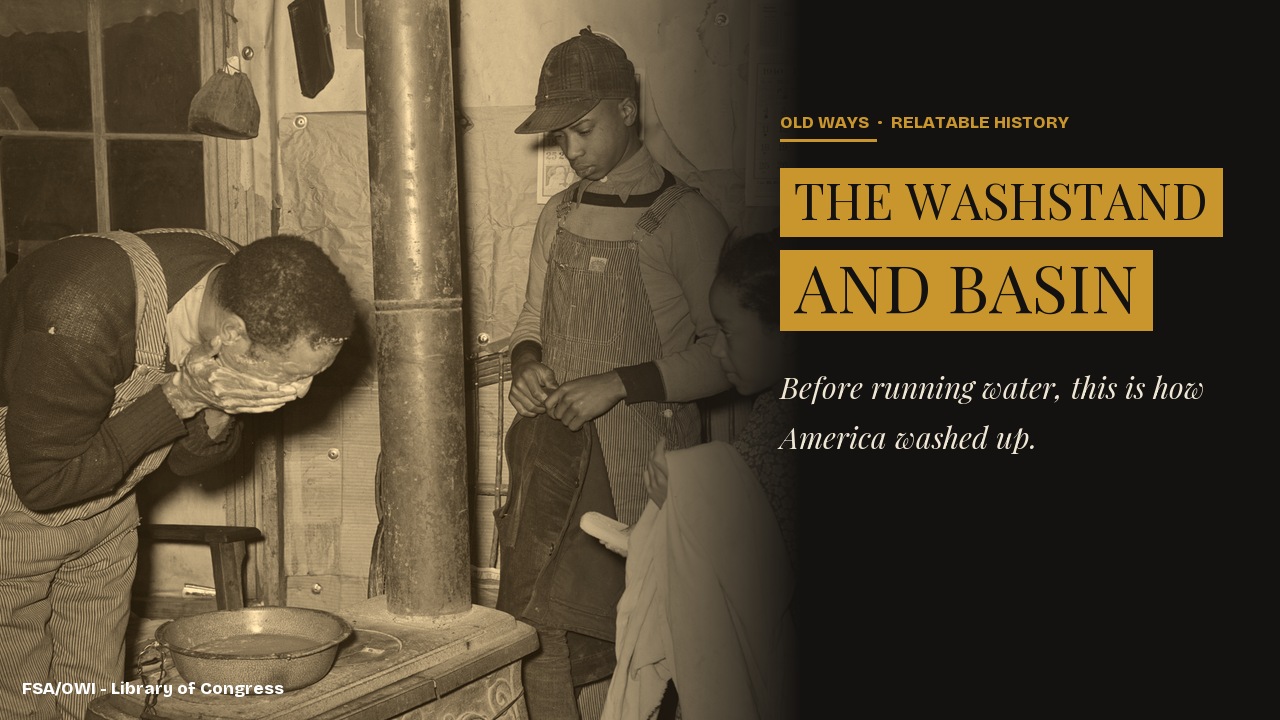
In 1940, the U.S. Census Bureau counted 15,852,098 American households — 45.3 percent of the country’s occupied homes — without a complete bathroom under their own roof: no flush toilet, no bathtub or shower, and no piped hot and cold water. Ten years later the share had fallen to 35.5 percent, but the actual number of homes still missing a complete bathroom, 15,772,717, had barely moved; the country was finishing new, fully plumbed houses faster than it was retrofitting old ones, so the national percentage improved while the lived reality for millions of families stayed exactly the same. Not until the 1960 count, when the figure finally dropped to 16.8 percent, did going without running water become a true minority experience rather than something close to a coin flip.
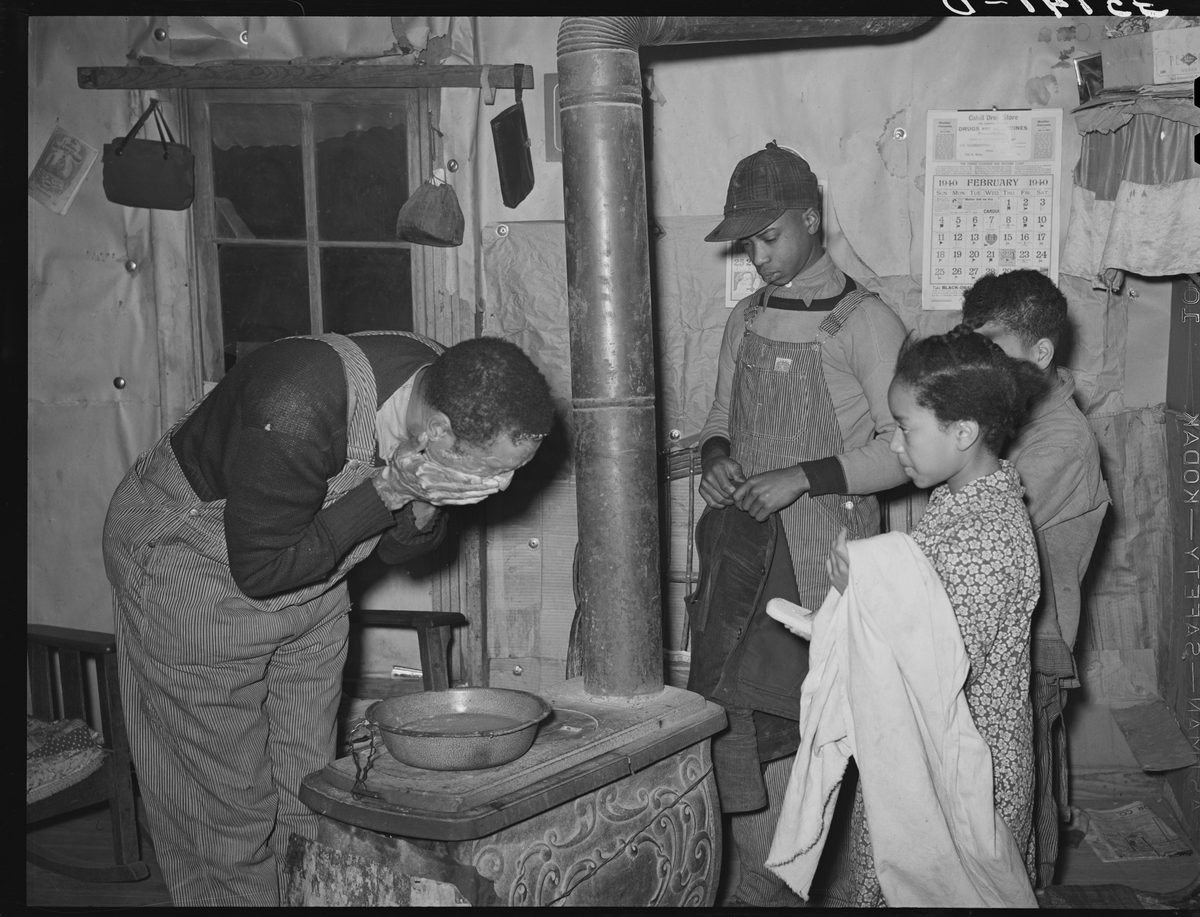
Behind each of those households was a specific, repeatable, physical task. Washing before indoor plumbing arrived meant getting clean with water that someone had already carried into the room, in a vessel, by hand. It is tempting to treat that as a footnote to the headline story about plumbing’s eventual arrival. It was not a footnote to the people living it — it was the first and last chore of every day, assigned to a particular person in the household, performed with specific, evolving furniture, and patented, re-patented, and marketed for well over a century before the tap finally made it unnecessary.
This piece goes past the furniture itself to the mechanics, the labor, and the small, losing arms race of inventors who tried to beat the plumber at his own game — starting, oddly enough, a very long time before anyone owned a washstand at all.
A Private Wash Is Older Than the Washstand Itself
Formal arrangements for washing at a fixed basin go back much further than the eighteenth-century furniture usually credited with starting the tradition. The Greek engineer Philo of Byzantium, writing around the third century BCE, described an almost toy-like washing mechanism: a counterweighted spoon, automatically refilled from a small reservoir, that tipped over on its own and dropped a dose of powdered pumice into a basin below for the user to work into a lather. It is one of the earliest documented pieces of self-operating machinery anywhere, built for a job as mundane as washing one’s hands.
The washstand’s more direct ancestor, though, is the monastic lavabo: a fixed stone, lead, or marble basin, usually set into a cloister wall and fed by its own small cistern, where medieval monks washed before meals and services on a set schedule. Castles and palaces built similar fixed washing points into their own walls. What changed, centuries later, was portability: by the 1720s and 1730s, furniture makers in Britain were building free-standing basin frames — typically a three-legged stand with a round cutout for the bowl and smaller holes for a soap dish and a water bottle — meant to be carried from room to room rather than built into one. Thomas Chippendale designed both plain and extravagantly rococo versions; a few decades later, Thomas Sheraton folded the washstand into so-called “harlequin” furniture that combined a wash basin, a dressing table, a mirror, and writing space into a single multi-purpose cabinet.
What Sat on Top: Marble, Mahogany, and a Cupboard With a Secret
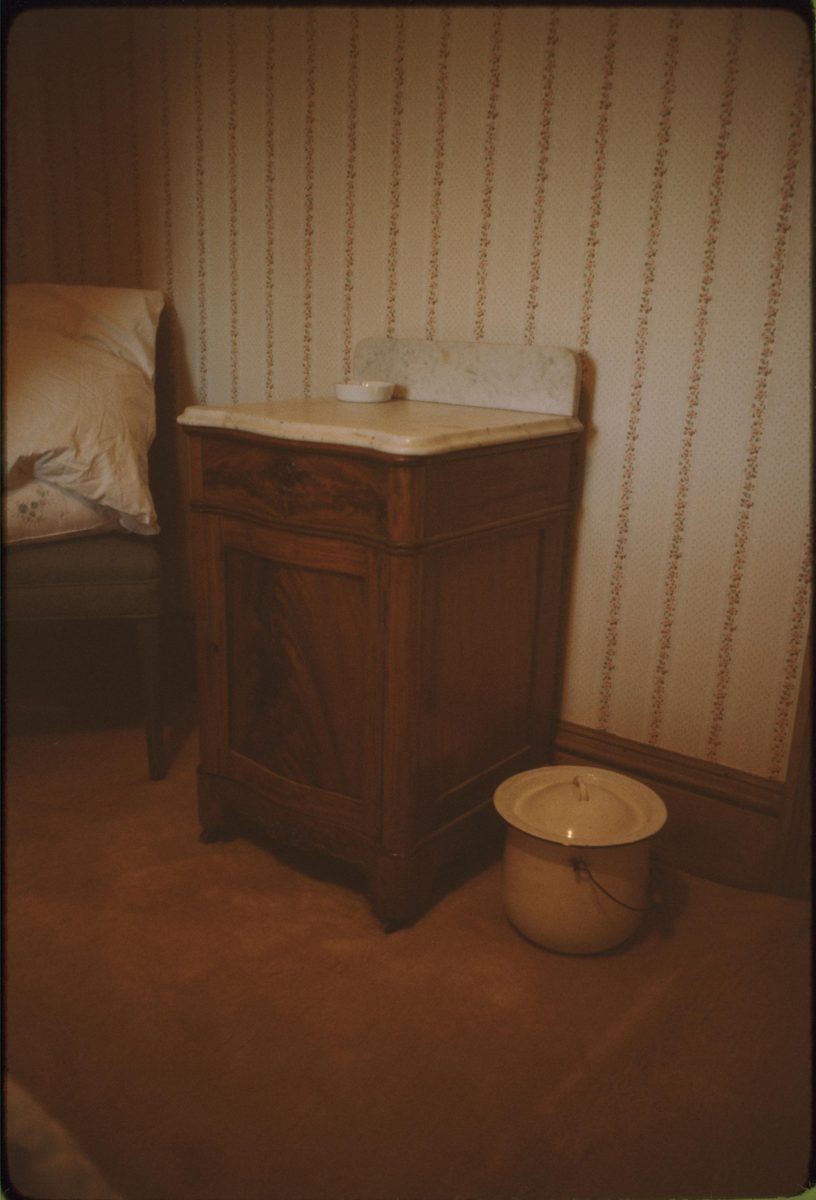
By the early 1800s the washstand had settled into something close to the form that lasted the next century and a half: a waist-high table, usually of pine, mahogany, or walnut, holding a heavy ceramic basin and its matching pitcher. The materials mattered more than they might seem. Standing water and strong soap ruin an unsealed wood finish within a season, so the better-made pieces dropped wood from the top surface altogether and used marble or tile instead. One French stone in particular, known in the trade as Sainte-Anne marble, was prized specifically because it resisted the staining that the alkali in ordinary soap left on most other kinds of stone.
A surviving example at The Henry Ford museum, dated to between 1825 and 1845 and attributed to a maker in New York or New England, shows the decorative end of the form: brass fittings over pine and rosewood, finished with gold and black stencilling, built for a household with money to spend on bedroom furniture meant to be looked at as much as used.
The business end of the washstand, though, was usually hidden. Many models concealed a small cupboard behind a hinged door at the base, and that cupboard held the chamber pot — the household’s own nighttime toilet, kept there so that a cold January trip out to the privy could be put off until morning rather than made at 2 a.m. in a nightshirt. A well-off household bought the basin, the pitcher, the soap dish, and the toothbrush cup together, in matching patterns, as a single purchase known in the trade as a toilet set — porcelain sold as a theme rather than piece by piece.
The Person Who Carried the Water
None of that furniture did anything on its own. Every basin of water a washstand ever held had first been carried there, usually up a flight of stairs, by a specific person: a daughter, a wife, a hired servant, a soldier’s orderly — whichever member of the household had the least say in the matter. A full two-gallon pail of water weighs close to seventeen pounds, and a thorough wash for a family of five or six could mean several such trips before anyone had eaten breakfast, with the same number of trips required afterward to carry the dirtied water back out and empty it, along with whatever the chamber pot had collected overnight.
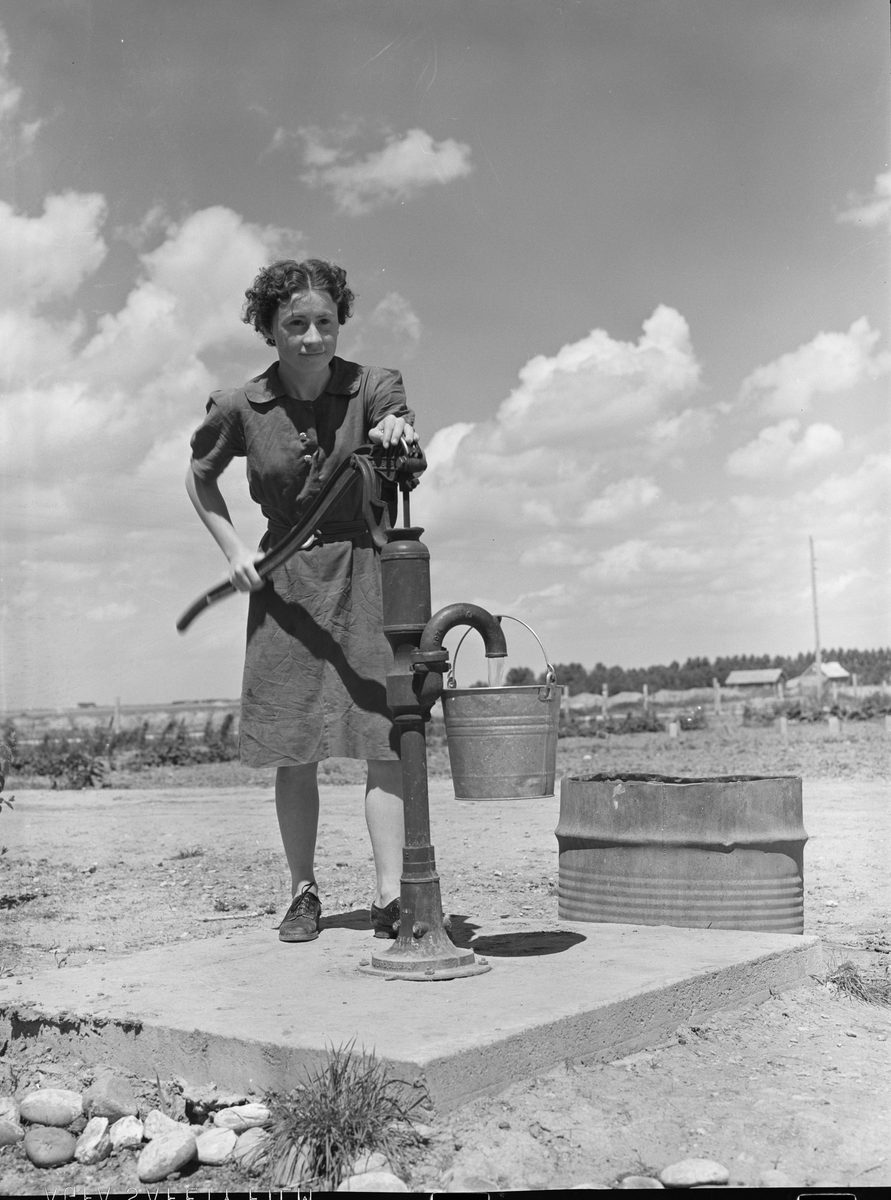
The historian Maureen Ogle, whose research into nineteenth-century American household plumbing remains the standard account, argues that the push toward piped water in American homes was driven less by germ theory or medical alarm than by a middle-class culture of domestic convenience and reform — people wanted the labor gone, and were willing to pay to make it disappear, well before science had fully explained why dirty water was dangerous in the first place. A household drawing its water from a hand-operated well pump rather than a kitchen boiler added a cold walk to an outdoor pump ahead of every one of those trips, in every season, a detail easy to lose once the water simply arrives when the tap is turned.
A Rush of Patents to Beat the Plumber
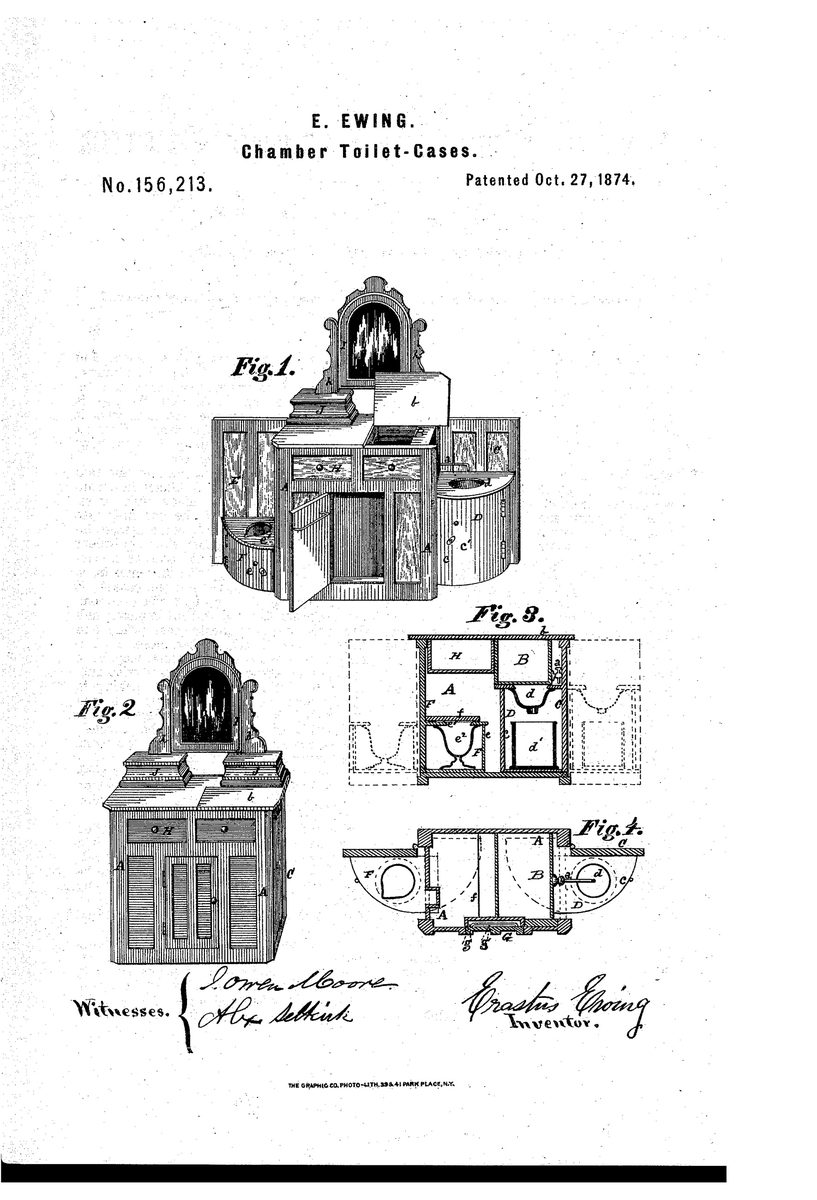
By the middle of the 1870s, a specific and fairly narrow category of American inventor had set itself a specific and fairly narrow problem: how to give a bedroom washstand some of the convenience of plumbing without actually plumbing the house. On October 27, 1874, the U.S. Patent Office granted Erastus Ewing, of Albany, New York, patent No. 156,213 for a “chamber toilet-case” — a single cabinet combining a commode, a wash-basin, a towel rack, and a built-in water tank with its own hinged, jointed faucet — built specifically to remove the daily trip someone otherwise had to make up the stairs with a full pail.
Ewing was not working alone, and not even working first in that particular season. Seven weeks after his patent was granted, on December 15, 1874, William Schwarz of New York City patented a washstand built to be mistaken for an ordinary bureau: a basin, water tank, slop pail, and even a boot-blacking stand, all folded away inside its front doors and lid, closing up to look like any other piece of bedroom furniture when not in use. Seventeen years later, in 1891, Joseph Penney of Grand Rapids, Michigan, patented a self-tilting supply tank for ordinary washstands that poured water into the basin on its own, without a single valve, simply by rocking on its own pivot.
None of these devices caught on widely enough to put a dent in the plumber’s business, and all three still required the same manual refilling a plain pitcher did, just with extra engineering in between. But the sheer density of the patents — three independent inventors, chasing the same unsolved problem, seventeen years apart — makes a point the finished washstand itself never could: there was real, sustained market demand for something the plumber alone would eventually deliver far better and far cheaper than any cabinetmaker ever managed.
The Washstand That Folded Into a Trunk
Not every version of this furniture stayed in one bedroom. Nineteenth-century army officers and the wealthier class of long-distance traveler needed a washstand that could survive a ship’s hold and a baggage wagon, and furniture makers built one for them: the folding campaign washstand, a compact case, often teak with brass fittings, that opened out into a full basin stand and collapsed flat again for the next move. According to furniture historian Nicholas Brawer’s study of the form, British makers had worked out brass screw-fitted columns that let the shelves separate and reassemble without tools by the early 1800s, and by the second half of the century, established outfitters including Hill & Millard and the Army & Navy Co-operative Society were selling washstands built on exactly that system as standard officers’ kit.
A campaign washstand usually packed into its own oval tub, which doubled as the stand’s travel case going out and as an extra basin coming back, its lid sometimes folding out into a small travel table. It was, in effect, the same two-part problem every washstand solved — a basin, and something to carry the water to and from it — reduced to parts small enough to survive a sea crossing, for the one class of traveler who could not simply wait for a hotel’s washstand to be waiting in the room.
Why Washing Before Indoor Plumbing Took So Long to End
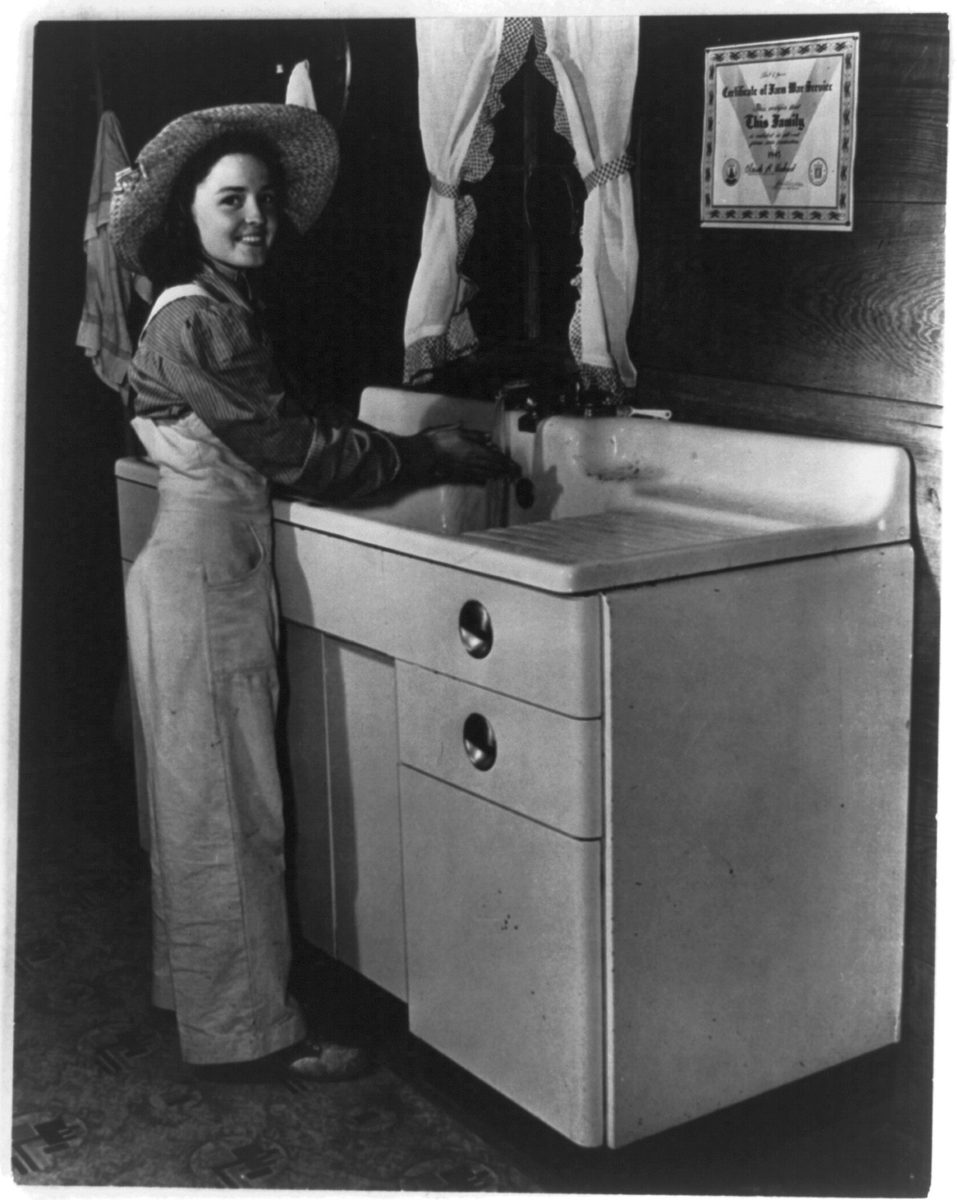
The slow disappearance of the washstand tracks almost exactly onto the slow arrival of rural electricity and rural plumbing, and the two were tangled together, if not identical. In 1935, by one widely cited estimate, roughly ninety percent of rural American homes still had no electricity at all, which is why the federal government created the Rural Electrification Administration that year to fund farmer-owned power cooperatives with low-cost loans. Growth was fast once it started: more than four hundred co-ops existed within four years, roughly a quarter of American farms had power by 1939, and the Second World War then slowed new line construction even as it accelerated almost everything else about American industry, leaving plenty of farms waiting into the 1950s.
Running water followed a similar, separately fought curve rather than arriving automatically alongside the wiring. Rural electrification workers in the 1930s described the farm households they visited as running without electricity and without running water, as a single combined condition rather than two separate ones — an electric pump could lift well water to a tap, but only once a county had both a pump wired for power and pipe in the ground to carry the water, two separate infrastructure projects a cash-poor rural area might not finish at the same time. Elsewhere on this site we’ve covered the federal government’s parallel 1930s campaign to replace outdoor privies with sanitary ones across the rural South — one piece of just how much basic household infrastructure was being rebuilt on the same slow, county-by-county timeline.
The washstand itself never had a single retirement date. It simply ran out of jobs, house by house, as a municipal main, a drilled well, or a wired pump finally reached that particular address across the 1940s, ’50s, and ’60s. The pitcher and basin did not vanish from American homes even then — they turned into porch decoration, flowerpot holders, and, eventually, the kind of antique worth considerably more today to a collector than it was ever worth to the household that filled it by hand every morning.
Watch the full history
The video companion to this piece follows one washstand from a 1940s farm bedroom through to the tap that finally replaced it.

Related reading
- How a Hand Pump Worked: Lifting Well Water With Nothing but Air Pressure — the device that usually supplied the water a washstand’s basin was filled with
- The 2,600-Year History of the Chamber Pot, From Athens to the Sewer — the washstand’s usual cupboard companion
- The WPA Sanitary Privy Program That Built Two Million Outhouses — the government’s parallel 1930s push to modernize rural sanitation
- Clothes Wringer History: From Courtship Gift to ‘Wringer Arm’ — another chore that ran on hand-hauled water, decades after the washstand
Shop this history
The book behind this video: Flushed: How the Plumber Saved Civilization, W. Hodding Carter’s history of plumbing and the slow, uneven fight to get running water into every American home.
Works cited
- Ogle, Maureen. All the Modern Conveniences: American Household Plumbing, 1840–1890. Johns Hopkins University Press, 2000.
- U.S. Patent No. 156,213. Erastus Ewing, “Chamber Toilet-Cases.” United States Patent Office, issued October 27, 1874. Link.
- U.S. Patent No. 157,874. William Schwarz, “Improvement in Wash-Stands.” United States Patent Office, issued December 15, 1874. Link.
- U.S. Patent No. 464,105. Joseph Penney, “Supply-Tank for Wash-Stands.” United States Patent Office, issued December 1, 1891. Link.
- U.S. Census Bureau. “Historical Census of Housing Tables: Plumbing Facilities.” Link.
- Lewis, Michael. “Theoretical Hydraulics, Automata, and Water Clocks.” In Örjan Wikander, ed., Handbook of Ancient Water Technology, vol. 2. Brill, 2000, pp. 343–369.
- “Washstand.” Encyclopædia Britannica, online ed.
- The Henry Ford. “Washstand, 1825–1845.” Object ID 00.260.9, Catalog No. THF82193. Link.
- Brawer, Nicholas A. British Campaign Furniture: Elegance Under Canvas, 1740–1914. Harry N. Abrams, 2001.
- Blakemore, Erin. “How the New Deal Brought Electricity to Rural America.” History.com, A&E Television Networks, March 29, 2018 (updated 2025). Link.
So the next time hot water reaches your bathroom tap in under a second: that same ordinary wash would have cost two or three generations of your own family a trip to the well and back, every single morning, and it is worth asking whose arms would have paid for it.