
In December 1945, a man walked into a police station in Mejiro, Tokyo, and handed over fourteen swords. One of them was, by the reckoning of the specialists who rank such things, the single finest blade Japan had ever produced: seven hundred years old, ranked at the very top of a catalogue of the nation’s most celebrated weapons, and a physical emblem of the Tokugawa shogunate for two and a half centuries. Six weeks later it was gone. The only surviving document describing where it went names a man who appears in no other record the Allied occupation ever kept.
That is the Honjo Masamune disappearance, and it is worth being precise about what kind of mystery it actually is. This is not a legend with no documentary footing, the way some famous “lost” treasures are. The sword was catalogued under Japan’s 1929 cultural property law, valued by name in an eighteenth-century ranking of swords, and traceable through a chain of owners stretching back to the sixteenth century. What vanished was not a rumor. It was an object with a paper trail, and the paper trail simply stops.
Other blades attributed to the same swordsmith survived the same war with their provenance intact, which is part of what makes this case so legible. There is a documented standard to compare it against — and documented reasons, grounded in real records rather than speculation, for why this one particular sword fell through the cracks of an occupying army’s paperwork.
Masamune was a documented craftsman, not a legend
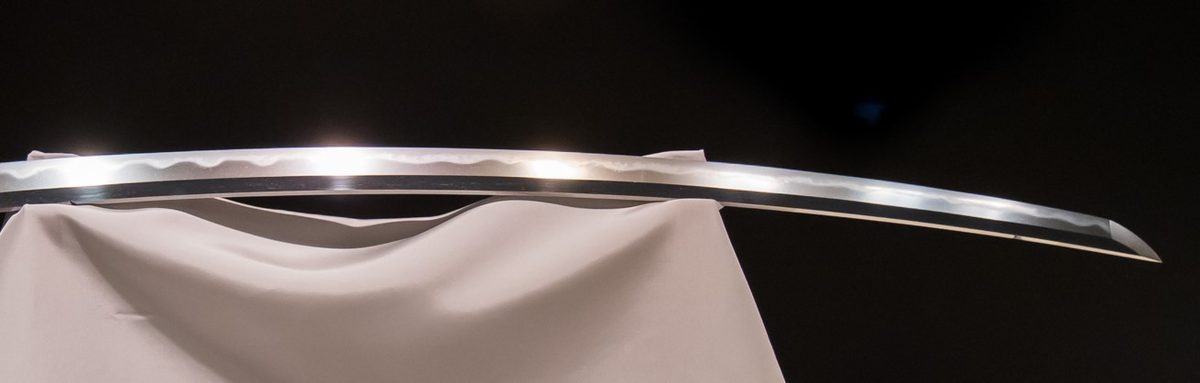
Masamune is usually placed at roughly 1264 to 1343, though the dates carry a question mark in even careful reference works, and he is recorded as having been appointed chief swordsmith to the emperor Fushimi in 1287. He worked in Sagami province and is credited with founding the Soshu school of swordmaking, whose innovation was forging a blade made entirely of steel and hardened all the way through — a metallurgical advance that reference sources describe as significantly ahead of the technical level reached anywhere else in Europe or Asia at the time.
He also, by the consistent account of sword scholars, almost never signed his work. That single fact is why attributing a blade to Masamune became a specialist discipline in its own right rather than a matter of reading a name off the tang, and why disputes over individual attributions — including, as it turns out, over the Honjo Masamune itself — are normal rather than scandalous. Compiled sword references note that two of the specialists who examined the Honjo Masamune directly, Imamura Chôga in 1880 and Honami Kôsan in 1943, were not persuaded of its artistic merit and that the ink rubbing recorded of its shape is not considered especially accurate. A famous name attached to an unsigned blade is never quite the same thing as a verified one.
Other Masamune blades survived the war with their paperwork intact
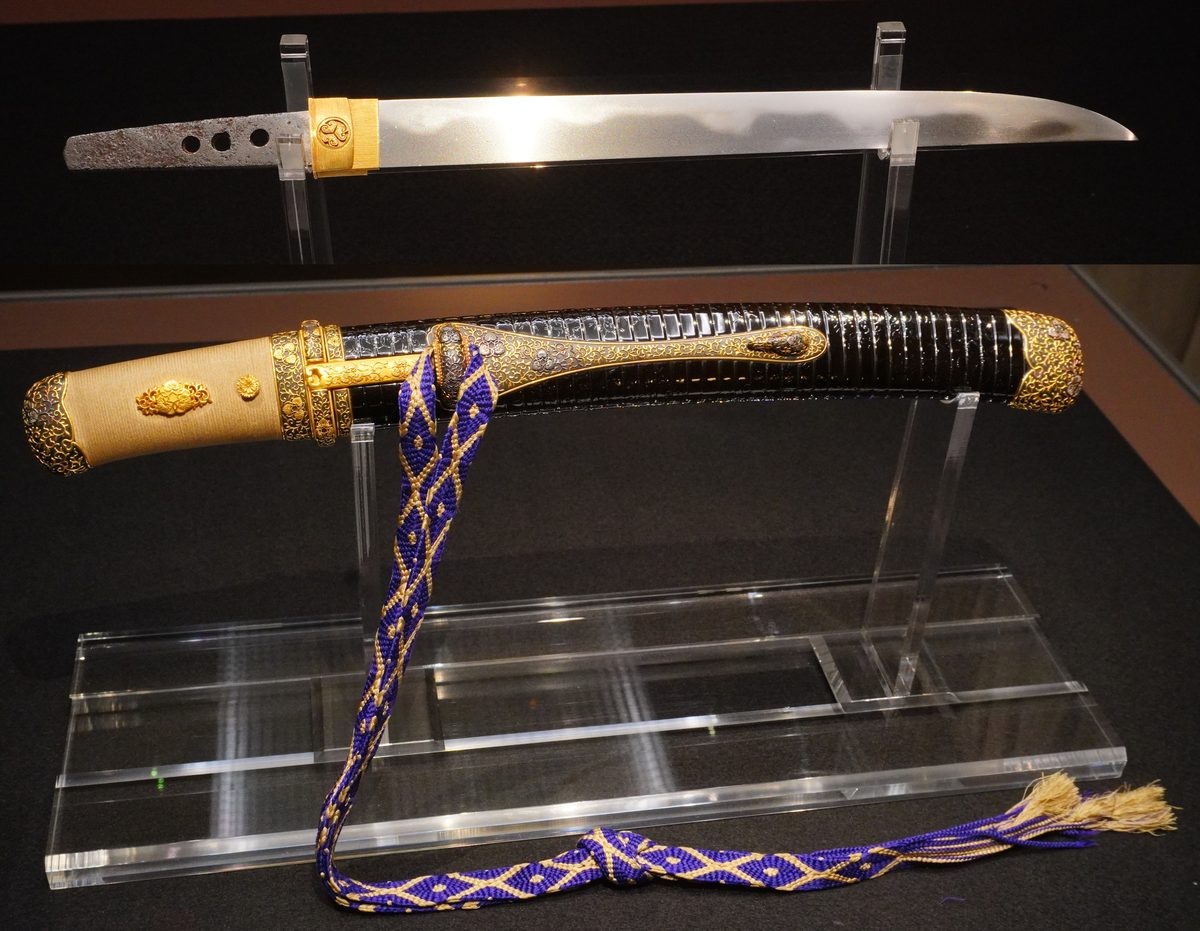
The clearest way to see what the Honjo Masamune lost is to look at blades that kept it. The Hyuga Masamune, an unsigned tanto named for an earlier owner, was designated an Important Cultural Property in July 1941 and a National Treasure in November 1952; it is held today by the Mitsui Memorial Museum in Tokyo, owned by the Mitsui Bunko Foundation, its designation dates a matter of public government record. A second blade, the Nakatsukasa Masamune — a katana carrying a gold-inlaid attribution and once held by the Honda family — carries its own entry in the same national database. Neither required a mystery to survive. They required an unbroken chain of custody.
A third case shows that a Masamune can go missing and still come back. The Shimazu Masamune, a katana recorded in the same early eighteenth-century ranking that lists the Honjo Masamune, had been untraceable since the nineteenth century, when the shogun Tokugawa Iesada’s household passed it toward the imperial family. In 2013 an anonymous owner brought a blade to the Kyoto National Museum for appraisal. The museum’s historian Taeko Watanabe spent months studying it before concluding it was, unmistakably, Masamune’s work — the first new attribution to the smith confirmed in roughly a hundred and fifty years. It went on public display in an October 2014 exhibition, a century after it had last been seen.
That precedent cuts both ways. It means a sword with the Honjo Masamune’s documentation could, in principle, surface the same way. It also means that “lost” is not a permanent category for an object this well recorded — which makes seven and a half decades of silence on this particular blade harder to explain away as simple bad luck.
The sword had an eventful life before any of this
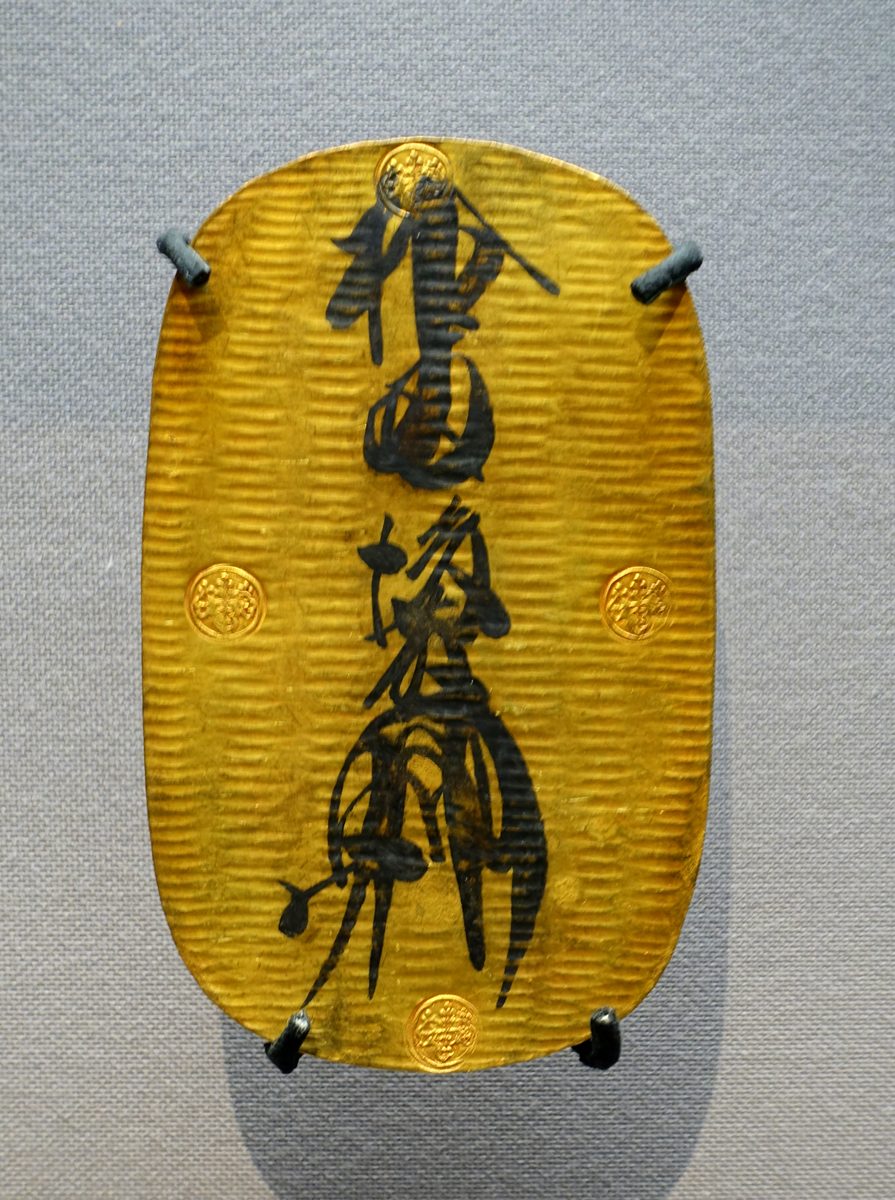
The blade takes its name from Honjo Shigenaga, a general who held it after a 1561 duel in which an attacker split his helmet with it and was killed before anyone recorded how he had come to carry it. The chips the helmet put in its edge were noted at the time and stayed part of its description for the rest of its documented life. Decades later, short of money while posted to Fushimi Castle, Shigenaga sold it for thirteen oban — the large, hand-inscribed gold coins of the period — to Toyotomi Hidetsugu. A later ranking of famous swords, the Kyoho Meibutsucho, valued it at a thousand mai, a figure meant as a statement of rank within that catalogue rather than a convertible price.
From Hidetsugu the sword passed to Toyotomi Hideyoshi, to Shimazu Yoshihiro, back to Hideyoshi, and then to Tokugawa Ieyasu, where it stayed. It descended through the Tokugawa line for the entire Edo period, functioning as something close to a physical emblem of the shogunate itself, and was designated a national treasure by the Japanese government in 1939 under the cultural property law then in force. Its last recorded owner, at the end of the Second World War, was Tokugawa Iemasa, head of the main line of the family.
Why it is not, today, legally a National Treasure
There is a quiet administrative wrinkle that matters to this story. Japan replaced its 1929 cultural property law with a new one in 1950, and under the revised system, objects designated national treasures before the war had to be resubmitted and re-registered to carry that status forward. A sword that had vanished before 1950 was never resubmitted, for the obvious reason that nobody had it to submit. Compiled sword scholarship accordingly lists the Honjo Masamune’s prewar designation as void under current law — not because any authority stripped it of the honor, but because there has been nothing to re-designate. It is a loss recorded twice: once as an object, and once as a line item in a law that simply has nothing left to point to.
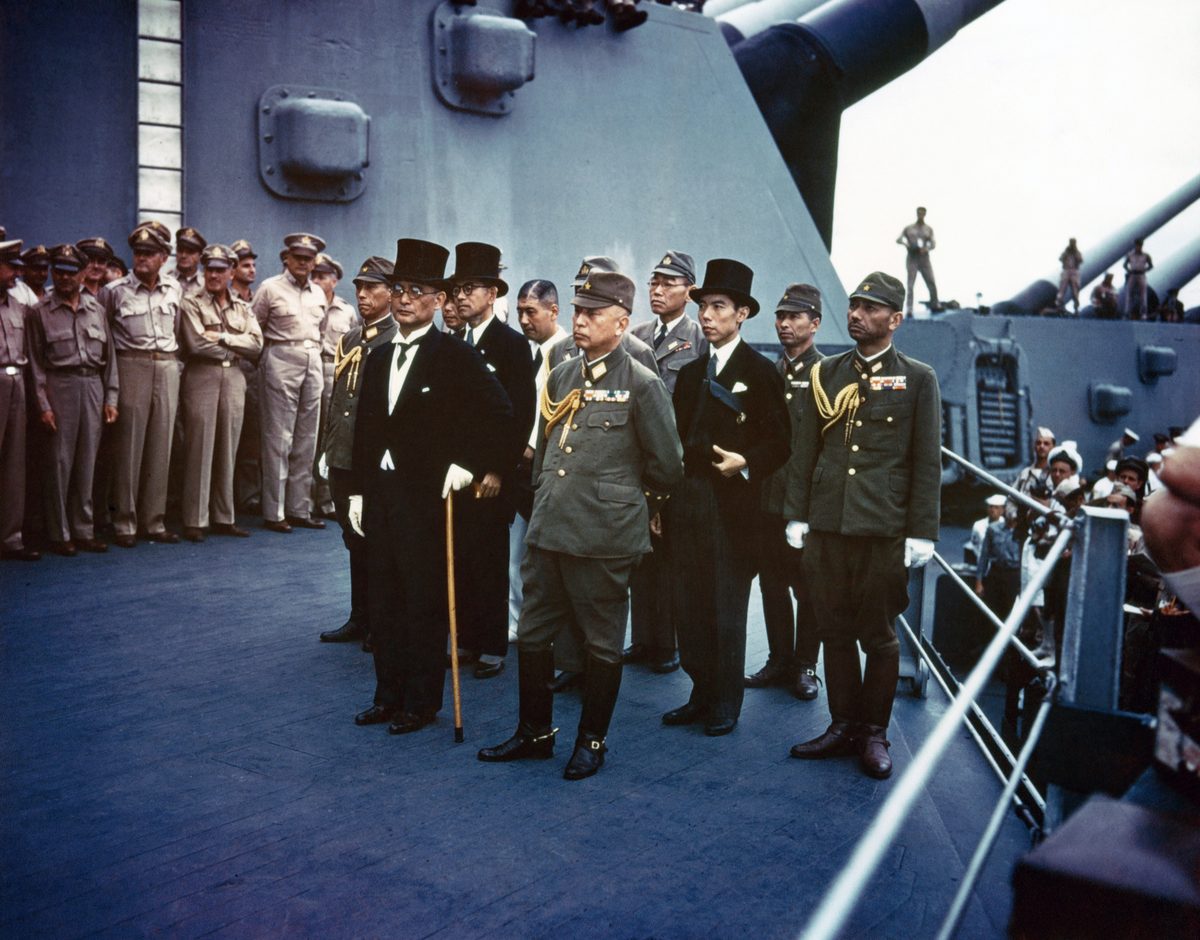
The surrender that began the Honjo Masamune disappearance
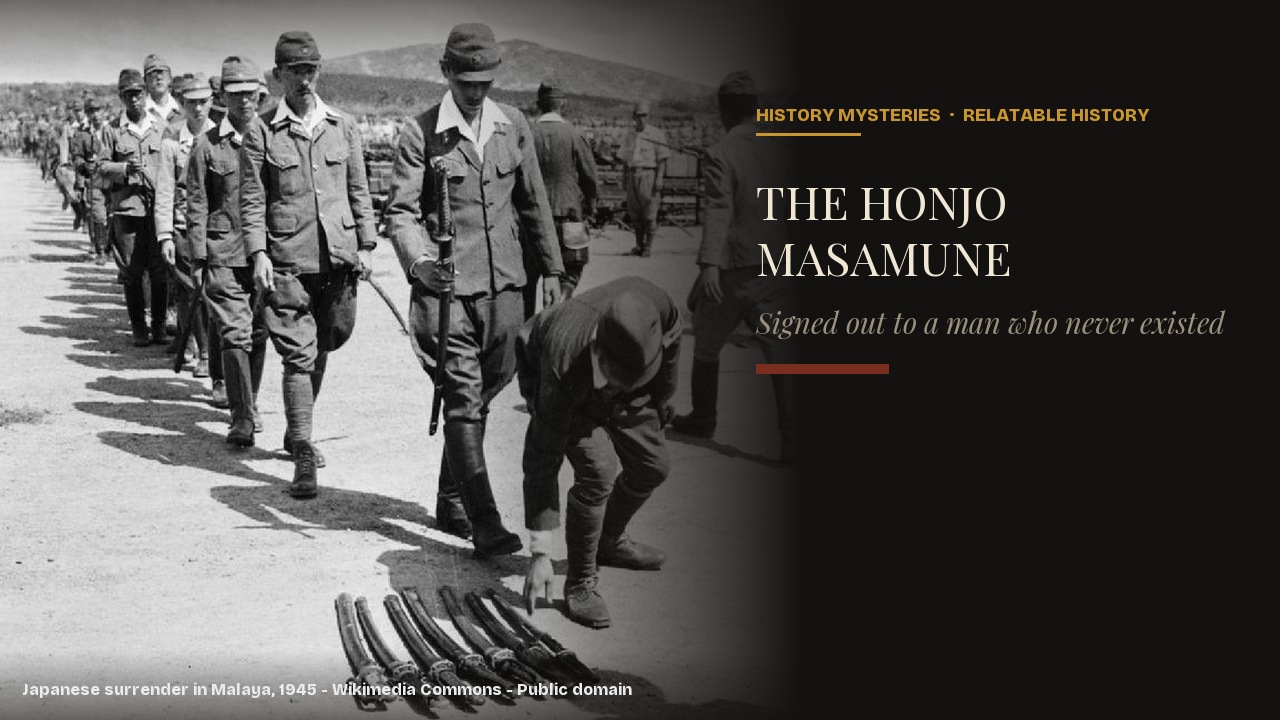
After Japan’s formal surrender aboard USS Missouri on September 2, 1945, occupation authorities ordered Japanese officers, and eventually civilians, to give up their swords. In Tokyo, confiscated blades were funneled to the Akabane Armory; a man who worked there at the time described the resulting stockpile as a stack roughly six feet high and three hundred feet long, with period photographs putting the pile at somewhere around forty thousand swords. American soldiers stationed nearby could, and did, walk in and take one as a souvenir; collectors later estimated that by the early 1950s there were probably more Japanese swords in the United States than remained in Japan.
A handful of Japanese scholars argued, against real pressure to simply destroy everything, that swords of genuine artistic and historical merit should be spared. Dr. Honma Junji made that case directly to the occupation’s weapons authorities, and the argument won: the swords were reclassified as art objects rather than weapons, and in February 1948 Honma and a colleague formally founded what is today the Society for the Preservation of Japanese Art Swords, working at first out of borrowed space in the basement of the National Museum, to build a system for rescuing what could be rescued from the stockpiles.
Tokugawa Iemasa surrendered his family’s fourteen swords, the Honjo Masamune among them, at the Mejiro police station that December, ahead of this process. In January 1946 the station handed all fourteen onward. The surviving transfer record names the recipient as Sergeant Coldy Bimore of the Foreign Liquidations Commission. No one of that name is attached to that organization, or to any unit, in any Allied personnel record anyone has located. The most economical explanation is that a real sergeant’s name passed through a language barrier in both directions and came out as something nobody can now reverse — which would mean a genuine person is standing behind the garble, just not a locatable one. What the record does not contain, whoever he was, is any description of the sword, any stated destination, or any further trace.
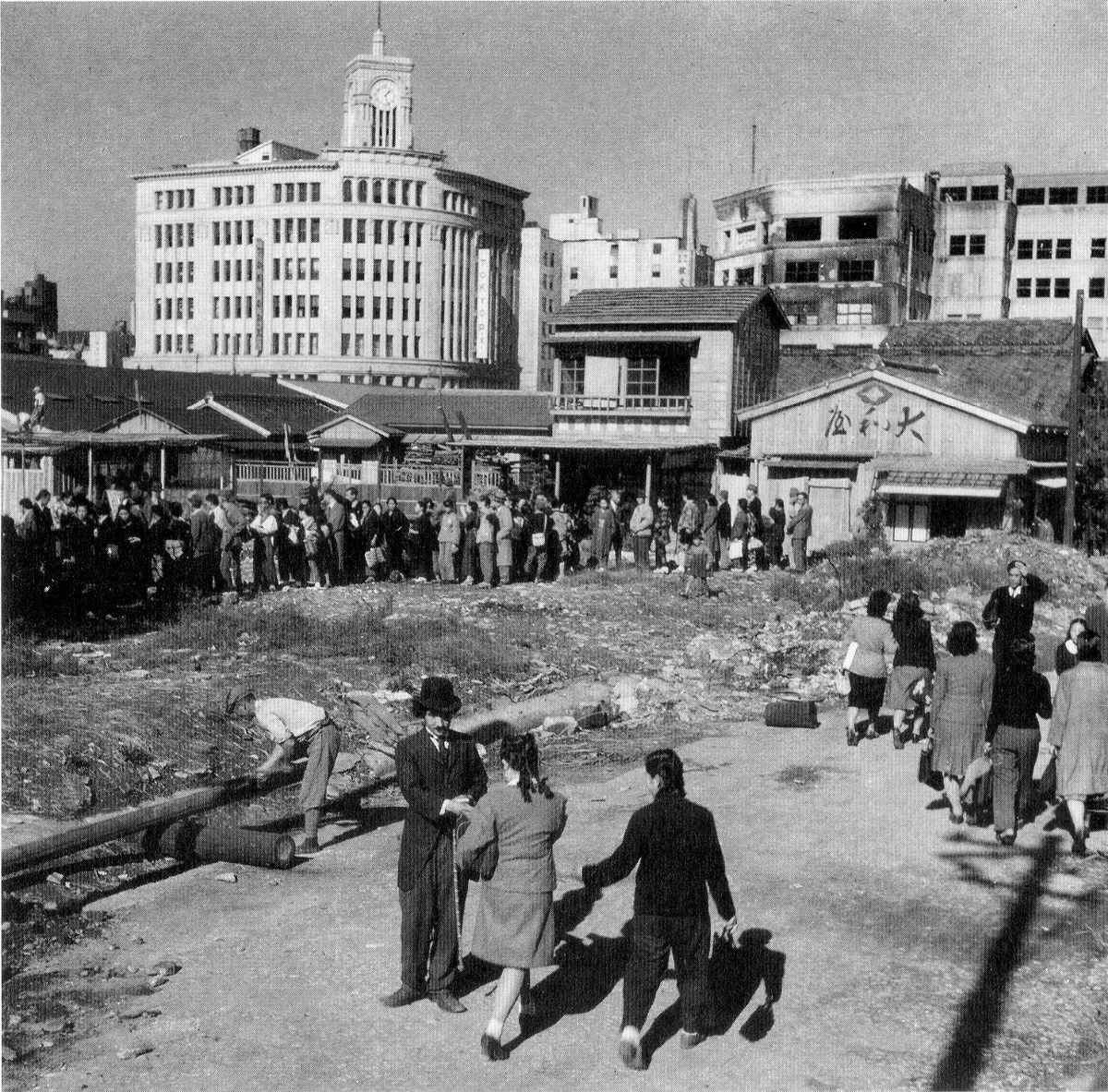
Three explanations, and the evidence behind each one
The least dramatic explanation is also the best supported. Most of what came through the surrender sweep was destroyed, melted down, or simply discarded as scrap by soldiers and officials with no way to distinguish an unsigned masterwork from an ordinary army sword. To an untrained eye, both look exactly like a sword. A 2018 construction project at an elementary school in Nishitokyo, on the edge of Tokyo, turned up roughly three thousand pieces of wartime military equipment buried on the grounds, including about twelve hundred swords — a find Japanese officials said had likely been put in the ground during or just after the war. Caches like that are not hypothetical; they keep surfacing, more than seven decades later, which is exactly the kind of quiet, undocumented end this sword may have met.
The second explanation is that it left in a soldier’s bag, which was common enough to be an established pattern rather than a conspiracy — the Akabane depot’s souvenir traffic is independently documented, and it is the same traffic that likely accounts for the sword later linked to President Truman, discussed below.
The third is that it never left Japan, and that the loss happened somewhere in the handoff itself — a bad translation, an unlabeled bundle, a clerk working through a stack of weapons who had no reason to treat this one differently from the other thirteen. That version requires no villain and no ocean crossing. It requires only a few feet of counter and an unremarkable week in a station processing surrendered weapons by the thousand.
A different “Masamune” in an American president’s library
One detail that regularly gets folded into this story, usually without the distinction being made clearly, involves Harry Truman. On March 4, 1946, General Walter Krueger presented Truman with a Japanese sword he had received from a Japanese family while serving with the occupation’s Eighth Army. The Truman Library’s own catalogue record describes it simply as “a 650-year-old Japanese sword” and tags it, in its keywords only, as a “Masamune Sword” — without making or substantiating any formal attribution in the object description itself.
That sword is not the Honjo Masamune. Its documented path runs through Krueger and an unnamed family, not through Tokugawa Iemasa and the Mejiro police station, and nothing in the library’s own record claims otherwise. What it illustrates instead is how loosely the name traveled in 1945 and 1946: a seven-hundred-year-old sword worth a king’s ransom and an old family blade given as a wartime courtesy could both end up carrying the same famous name, one with paperwork to support it and one without, and from a distance of eighty years the difference is easy to blur.
Watch the full history
The video version covers the sword’s chain of ownership and the 1946 handoff in just over nine minutes.

Related reading
- What Actually Happened to the Amber Room — another WWII-era treasure that vanished through occupying hands and institutional chaos.
- What Happened to Rome’s Lost Ninth Legion? — a much older case of a documented military unit disappearing without a clean paper trail.
- The Theories Behind Cambyses’ Lost Army — the ancient-world version of the same problem: a large, recorded force that simply stops appearing in the record.
- The Mystery of the Beale Ciphers, Explained — a different kind of vanished-treasure mystery that hinges entirely on a single unreliable document.
Works cited
- “Masamune.” Encyclopaedia Britannica, accessed 2026-10-26, giving Masamune’s working dates as circa 1264–1343 and his appointment as chief swordsmith to Emperor Fushimi in 1287.
- Nihon Bijutsu Token Hozon Kyokai (NBTHK). “About Us.” touken.or.jp, on the Society’s February 1948 founding to save swords from destruction by the Occupation authorities. Link.
- Haynes, Robert. “The N-B-T-H-K: A Short History.” Shibui Swords, on Dr. Honma’s intervention with the occupation authorities to classify swords as art rather than weapons. Link.
- Kapp, Leon. “Japanese War Swords, Part II.” BLADE Magazine, February 15, 2022, on the Akabane Armory stockpile and the scale of the postwar sword collection.
- Agency for Cultural Affairs, Government of Japan. National Cultural Properties Database, record for the tanto known as the Hyuga Masamune (designated Important Cultural Property 1941, National Treasure 1952). Link.
- Agency for Cultural Affairs, Government of Japan. National Cultural Properties Database, record for the katana known as the Nakatsukasa Masamune. Link.
- Nihonto Message Board. “Honjo [Masamune].” Compiled sword reference citing the Kyoho Meibutsucho (1719) and the assessments of Imamura Chôga (1880) and Honami Kôsan (1943).
- Baseel, Casey. “Scholars Confirm First Discovery of Japanese Sword From Master Bladesmith Masamune in 150 Years.” Japan Today, September 13, 2014, on the authentication of the Shimazu Masamune.
- Kyoto National Museum. “Hideyoshi’s Favorite Swordsmiths: Yoshimitsu, Masamune, and Yoshihiro,” exhibition record, October–November 2014. Link.
- McNearney, Allison. “Is This Famous Samurai Sword Missing in America?” The Daily Beast, July 30, 2016. Link.
- Harry S. Truman Library & Museum. Photograph and object record 64-131, a sword presented to President Truman by General Walter Krueger, March 4, 1946. Link.
- Agence France-Presse. “Thousands of Guns, Swords, Bullets Found Buried at Tokyo School.” Malay Mail, August 6, 2018. Link.