
Two accounts are written on the same single sheet of paper, in two different hands, eleven months apart. In the first, dated 28 May 1847, Lieutenant Graham Gore of HMS Erebus filled out a standard Admiralty form and wrote, in the space left for remarks, two words: “All well.” In the second, squeezed into the margins of that same form in April 1848, two other officers reported that the ships had been abandoned, that twenty-four men were already dead, and that the rest were setting out on foot across the ice. One of the dead, by then, was the expedition’s own commander.
What killed the Franklin Expedition crew — all 129 of them, eventually — has been argued over for more than 170 years, using evidence that has turned up in a grave on Beechey Island, in Inuit testimony two British gentlemen refused to believe, in bones scattered down a gravel beach on King William Island, and finally, in 2014 and 2016, in two intact wooden wrecks sitting on the floor of the Arctic Ocean. None of it adds up to one single culprit. That is itself the real finding: a disaster usually told as one story — ships lost, explorers frozen — was actually several overlapping catastrophes, and specialists still disagree about which one did the most damage.
A single piece of paper carries two completely different stories
The document is formally called the Victory Point Record, after the spot on King William Island where it was found, sealed inside a stone cairn, by Lieutenant William Hobson of Francis Leopold McClintock’s search expedition on 6 May 1859 — almost fourteen years after Franklin’s ships had sailed. It began life as a printed Admiralty form, the kind every Royal Navy polar expedition carried by the dozen, pre-translated into French, Dutch, Danish and German so that whoever found it, anywhere in the world, would know to forward it to the nearest consulate. Gore and his companion, Mate Charles Des Voeux, filled in the blanks on 28 May 1847: ship names, position, date, and a note that Erebus and Terror had wintered in the ice and that a sledging party of two officers and six men had left the ships three days earlier. Then they built the cairn, left the paper inside, and went back.
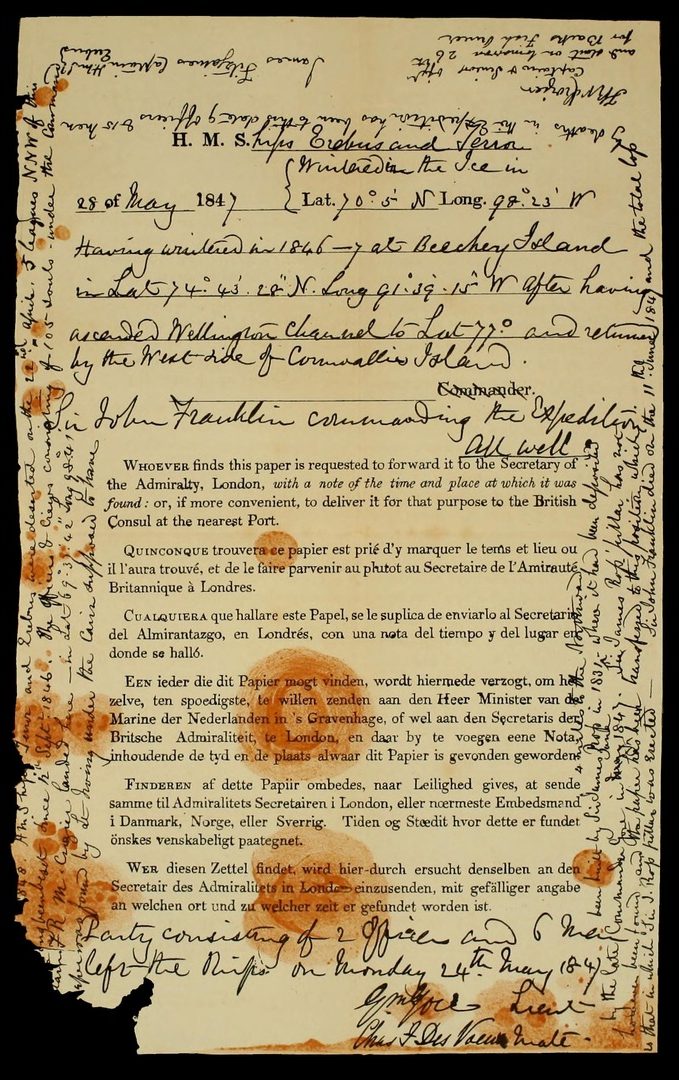
Eleven months later, someone retrieved that same sheet and reused it. Captain James Fitzjames of Erebus and Captain Francis Crozier, now senior officer, filled every remaining margin with a second, far grimmer report dated 25 April 1848: the ships had been beset in ice since 12 September 1846, abandoned on 22 April, and Sir John Franklin was dead, along with eight other officers and fifteen men — twenty-four in total. The 105 survivors, under Crozier, had made camp near the note’s location and intended to set out the next day for Back’s Fish River, on the Canadian mainland, across open ice and tundra. No one is known to have completed that walk, and no further written record from the expedition has ever been found.
A navy expedition built to winter in the ice, not die in it
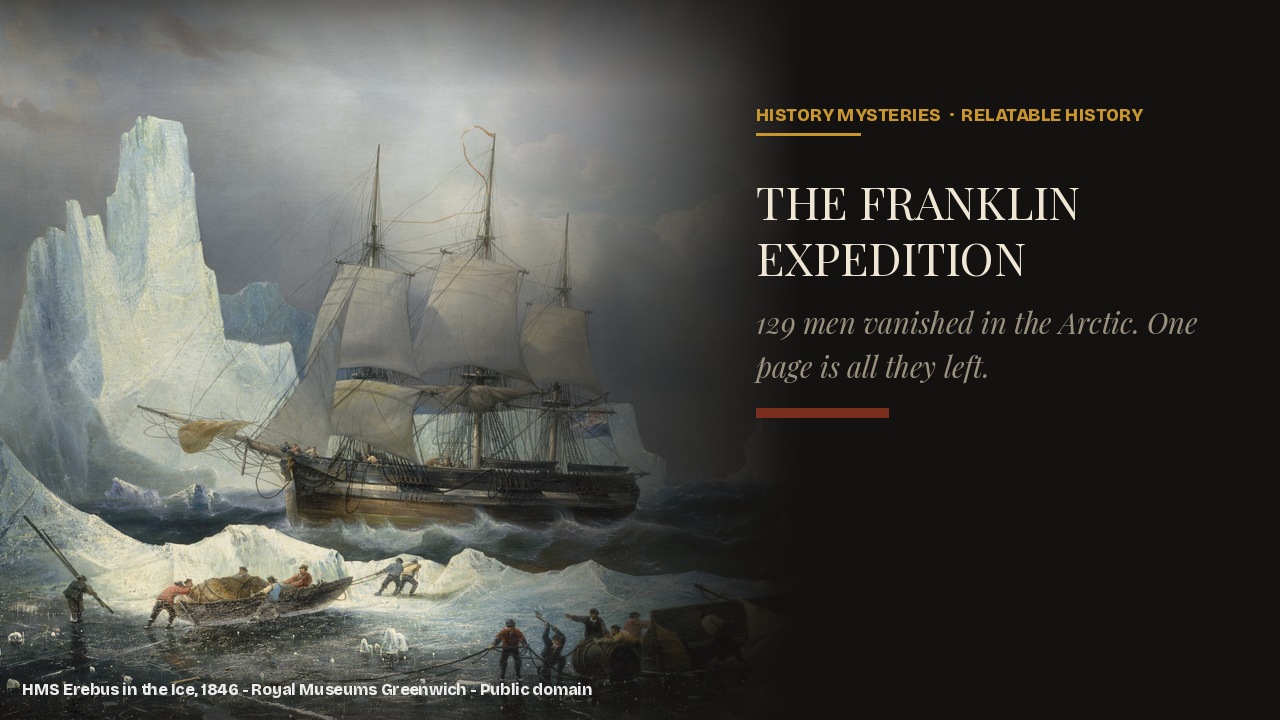
Erebus and Terror left Greenhithe on 19 May 1845 with 134 officers and men aboard, bound for a crossing of the Northwest Passage that Britain had been chasing, on and off, for three centuries. They were not expected to vanish. Both ships were former bomb vessels, built with unusually heavy internal framing to absorb mortar recoil, which also happened to make them better suited than ordinary ships to withstand pack ice. Before an earlier polar voyage, shipwrights had added iron plating to their bows; for this one, both were fitted with salvaged railway locomotive engines, stripped of their wheels and lowered into the hold to drive a screw propeller that could be winched up out of the water to protect it from ice damage. Franklin’s orders were to use the engines sparingly — the ships carried only a limited supply of coal.
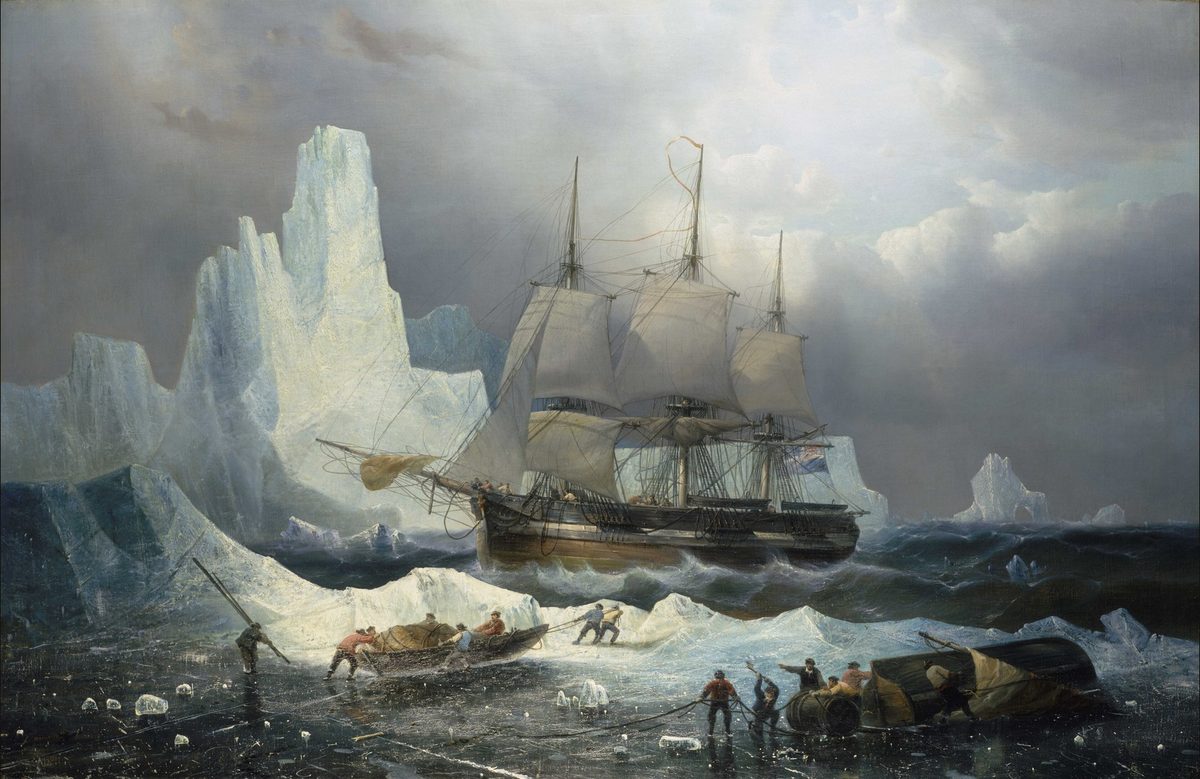
At Whalefish Islands in Greenland that July, the transport ship Barretto Junior peeled off from the expedition carrying letters home and a handful of men judged too unwell to continue, taking the party from 134 down to the 129 who actually crossed Davis Strait. What remained was provisioned for three full years: Plymouth’s Victualling Yard alone packed nearly 35,000 pounds of biscuit, and Franklin’s suppliers delivered 3,000 gallons of over-proof rum for daily grog on top of separate stocks of port and brandy reserved for the sick. Each ship carried stoves rigged to melt snow for fresh water and a patented system that piped heat to the crew’s quarters. On paper, this was the best-equipped polar expedition the Royal Navy had ever sent out. On the ice, equipment could not substitute for the thing that actually ran out: time.
The first winter left bodies the permafrost preserved almost perfectly
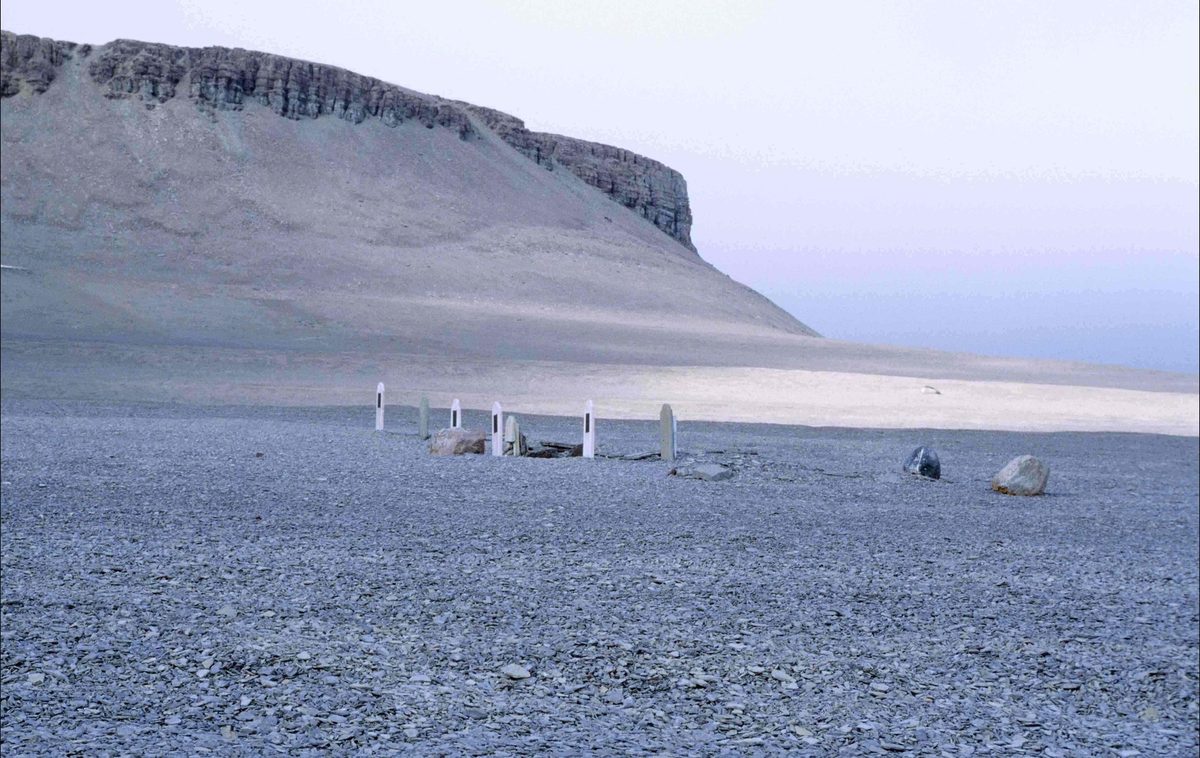
Erebus and Terror wintered at Beechey Island in 1845 to 1846, and it was there, not on the retreat two years later, that the expedition suffered its first confirmed deaths. Three men — John Torrington, a twenty-year-old stoker; John Hartnell, an able seaman; and William Braine, a Royal Marine private — died that winter and were buried in individually dug graves in the gravel, each marked with a wooden headboard. Later search parties found the graves in 1850, the first physical trace of the expedition anyone had come across in five years of searching, and they are still visible on Beechey Island today.
In August 1984, a forensic team led by anthropologist Owen Beattie exhumed Torrington’s body, which the Arctic permafrost had preserved well enough that photographs of his face were published in newspapers around the world. The autopsy found a man severely underweight, with lung scarring consistent with earlier tuberculosis and signs of a final, fatal pneumonia — and hair and bone samples carrying lead levels far above what would be normal even for a Victorian Briton. Beattie’s working theory, developed with writer John Geiger, was that the thousands of tins of preserved meat and vegetables supplied for the voyage, closed with lead solder, had slowly poisoned the men who ate from them, compounding whatever else was already killing them.
The lead theory convinced almost everyone, then it didn’t
For roughly two decades after Beattie and Geiger published their findings, lead poisoning from the expedition’s tinned food was treated as close to a solved mystery — the single explanation for a crew that search accounts described as behaving erratically and dying faster than starvation or scurvy alone could explain. More recent research has pulled that explanation apart without quite discarding it. The historian William Battersby argued the lead was more likely leaching from the ships’ own fresh-water distillation systems than from the cans. A separate study by Keith Millar, Adrian Bowman and Battersby pointed out that elevated lead was simply normal for mid-nineteenth-century Britons — lead pipes, lead-glazed pottery and lead-based paint were everywhere — so a high reading in an exhumed sailor does not by itself prove the tins were the source, or that lead was what actually killed him.
The specialists do not agree on how to weigh what is left once lead is demoted from sole cause to contributing factor. The historian Andrew Lambert has pointed to Torrington’s tuberculosis as evidence that the disease may have been more widespread through the crew than previously assumed, for which there was no effective treatment in 1846. And the Arctic historian Russell Potter has noted a detail that complicates the tinned-food theory on its own terms: lead levels measured in the three Beechey Island burials varied enormously, high in Torrington and much lower in Hartnell and Braine, even though all three had eaten from the same stores. Cold exposure after the ships were abandoned, inadequate winter clothing, and plain starvation are now treated as running alongside lead and tuberculosis rather than behind them.
Inuit testimony described the ending, and was rejected for a century
In 1854, the Hudson’s Bay Company surveyor John Rae was mapping the Boothia Peninsula when local Inuit told him what had happened to a large party of qallunaat — white men — seen struggling south several years earlier, dragging a boat, their ranks already thinning from what the Inuit understood to be starvation. Other Inuit showed Rae relics they had traded for or recovered, identifiable as belonging to Franklin’s officers, and told him the survivors had ultimately been driven to what Rae’s report to the Admiralty called “the last resource” — eating the bodies of their own dead.
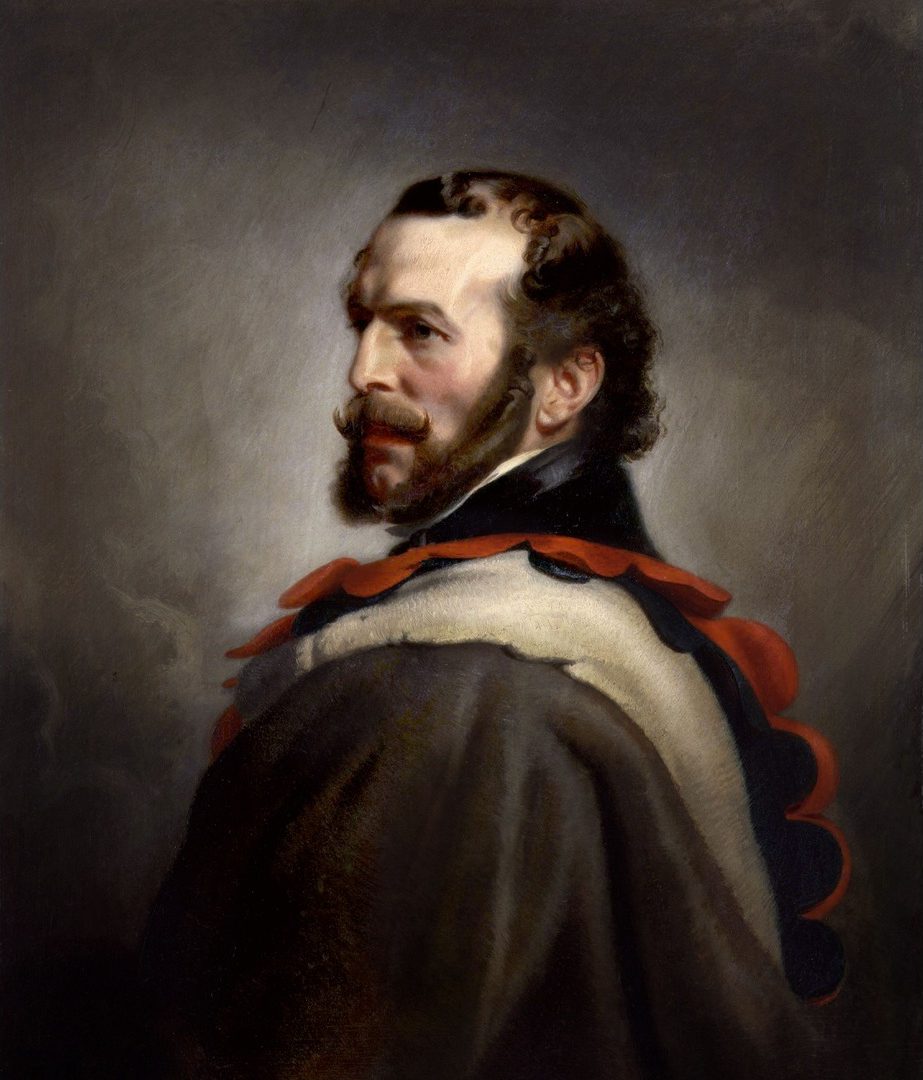
Rae’s report was leaked to the press before he could deliver it privately, and the reaction in Britain was furious. Lady Jane Franklin and Charles Dickens led a public campaign against him, Dickens arguing in print that Rae had taken the word of untrustworthy “savages” over the honour of British officers. Lady Franklin withheld the £10,000 reward Rae had been promised for establishing the expedition’s fate until 1856. It took until 1997 for a forensic study by Anne Keenleyside, Margaret Bertulli and Henry Fricke, examining human bone fragments recovered from a site on King William Island, to report cut marks on roughly a quarter of them — consistent, the authors concluded, with defleshing rather than animal scavenging, and with exactly what the Inuit had told Rae 143 years earlier.
What the retreat south actually left scattered across the ice
When McClintock’s search party reached Erebus Bay on King William Island in May 1859, they found one of the expedition’s lifeboats, roughly twenty-eight feet long, mounted on a heavy sledge and loaded for a difficult journey: two skeletons, two loaded shotguns, a large quantity of abandoned personal possessions, and five or six books, all but one of them devotional. The exception was a pocket edition of Oliver Goldsmith’s The Vicar of Wakefield. What makes the find genuinely strange is the boat’s orientation: it was pointed back toward the ships the men had already abandoned, not forward toward the Back River the Victory Point note said they were heading for. Whether that means a group turned back, split off, or simply could haul the sledge no further in that direction is a question the physical evidence cannot answer by itself.
It took until the 21st century to find the ships themselves
Searches for the two ships continued, on and off, for more than 150 years, guided in part by Inuit oral traditions that consistently placed a wreck somewhere in the waters south of King William Island — traditions British and Canadian searchers had largely dismissed or ignored for a century. In September 2014, Parks Canada’s Victoria Strait Expedition located a wreck in Queen Maud Gulf, off the western coast of the Adelaide Peninsula; underwater archaeologists confirmed through sonar imaging, photography and artifact review that it was HMS Erebus, and Prime Minister Stephen Harper announced the identification on 1 October 2014. The location matched what Inuit oral tradition had been saying for generations.
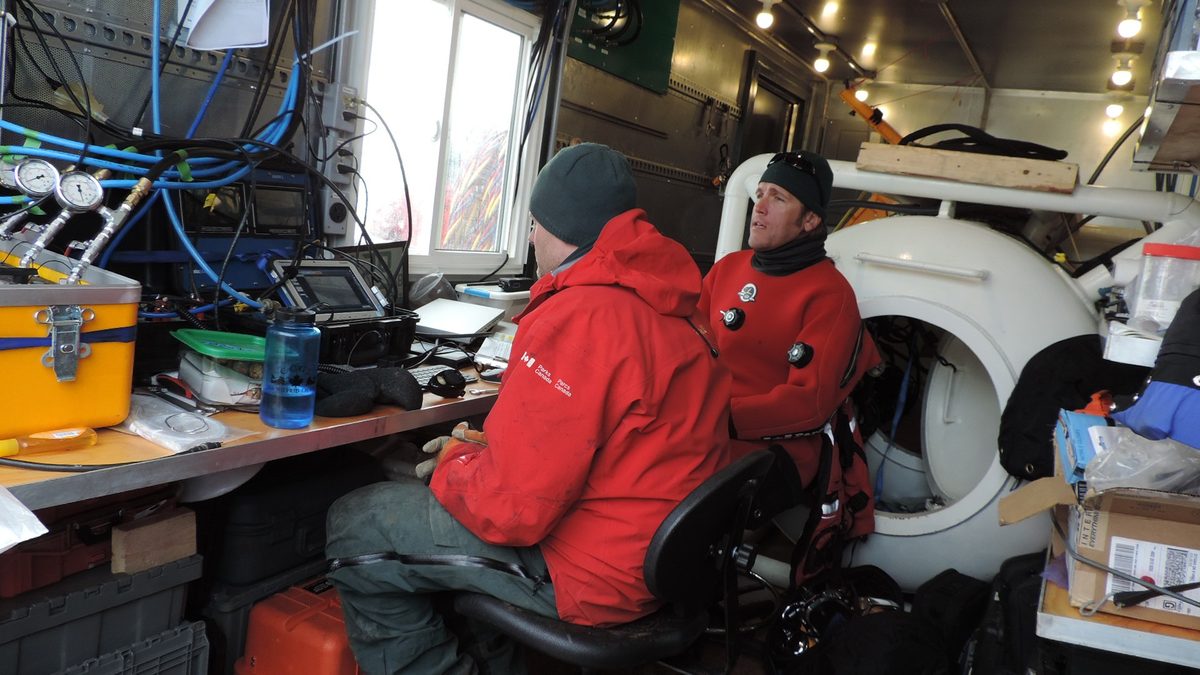
HMS Terror followed two years later, found farther north in September 2016 after local Inuit knowledge again led searchers directly to it. Both wrecks were found remarkably intact, and Parks Canada archaeologists have been diving them in short field seasons ever since, recovering shipboard artifacts — from a ship’s bell to officers’ effects — that are still being catalogued and are gradually adding detail to a story that, for a century and a half, could only be read from its edges.
Watch the full history
The video version covers the Victory Point note, the search for the ships, and the century and a half of argument over what actually happened in a little under nine minutes.

No single verdict has closed this case, and that is probably honest. Lead, tuberculosis, scurvy, starvation and cold each plausibly killed some of the 129 men who sailed in 1845, and probably several of those at once killed most of them. What has actually changed over 170 years is not the cause so much as whose evidence counts: a British inquiry that spent a decade refusing to believe Inuit witnesses eventually had to be corrected by forensic pathology, and the wrecks that proved the Inuit right were found using the same oral testimony that got John Rae’s reward withheld in 1854.
What is still missing is anything close to a full accounting of who died where, and in what order, after the note was written. The men in the boat at Erebus Bay were never identified. Most of the 129 were never found at all. Every few years another excavation or DNA match narrows that gap a little further, which is the real reason this is still an active case rather than a closed one.
Related reading
- The Tomb of Genghis Khan: A Decision Not a Mystery — another expedition-era mystery where deliberate secrecy, not accident, explains the missing evidence.
- What Happened to the Lost Colony of Roanoke? — a vanished English colony pieced together from exactly the same mix of physical clues and oral testimony.
- The Theories Behind Cambyses’ Lost Army — a different military expedition swallowed by hostile terrain, and the competing theories for how.
- The True Story Behind the Flannan Isles Lighthouse Mystery — three men who disappeared from a remote outpost, and the evidence that finally explained it.
- How a Sextant Works, From Tall Ships to Apollo 13 — the navigation instrument the expedition’s own officers would have used on deck.
Shop
Erebus: One Ship, Two Epic Voyages, and the Greatest Naval Mystery of All Time by Michael Palin — available on Amazon.
Franklin’s Lost Ship: The Historic Discovery of HMS Erebus by John Geiger and Alanna Mitchell — available on Amazon.
Works cited
- “Last Record of Sir John Franklin’s Expedition, 1847–1848.” National Maritime Museum (Royal Museums Greenwich), Object ID PAF0263, as reproduced in Canadian Mysteries: The Franklin Mystery, University of Saskatchewan. Link.
- M’Clintock, Francis Leopold. The Voyage of the ‘Fox’ in the Arctic Seas: A Narrative of the Discovery of the Fate of Sir John Franklin and His Companions. London: John Murray, 1859.
- “Franklin’s 1845 Expedition.” Parks Canada, Government of Canada. Link.
- “The Vessels.” Parks Canada, Government of Canada. Link.
- “How Do You Prepare for an Arctic Expedition?” Royal Museums Greenwich. Link.
- “Empty Soup Tin.” Royal Museums Greenwich Collections, object RMGC-OBJECT-2033. Link.
- Keenleyside, Anne, Margaret Bertulli, and Henry C. Fricke. “The Final Days of the Franklin Expedition: New Skeletal Evidence.” Arctic 50, no. 1 (1997): 36–46. Link.
- “Summary of the Lead Poisoning Debate Among Franklin Expedition Specialists [1987–2014].” Canadian Mysteries: The Franklin Mystery, University of Saskatchewan, 2014. Link.
- Neatby, Leslie H., and Daniel Panneton. “John Rae.” The Canadian Encyclopedia, Historica Canada. Link.
- “The Wrecks of HMS Erebus and HMS Terror.” Backgrounder, Parks Canada, Government of Canada, 1 September 2017.
- “Parks Canada Identifies Franklin Wreck as HMS Erebus.” Nunatsiaq News, 1 October 2014.
- “The Vicar of Wakefield.” Royal Museums Greenwich Collections, object RMGC-OBJECT-2153. Link.