
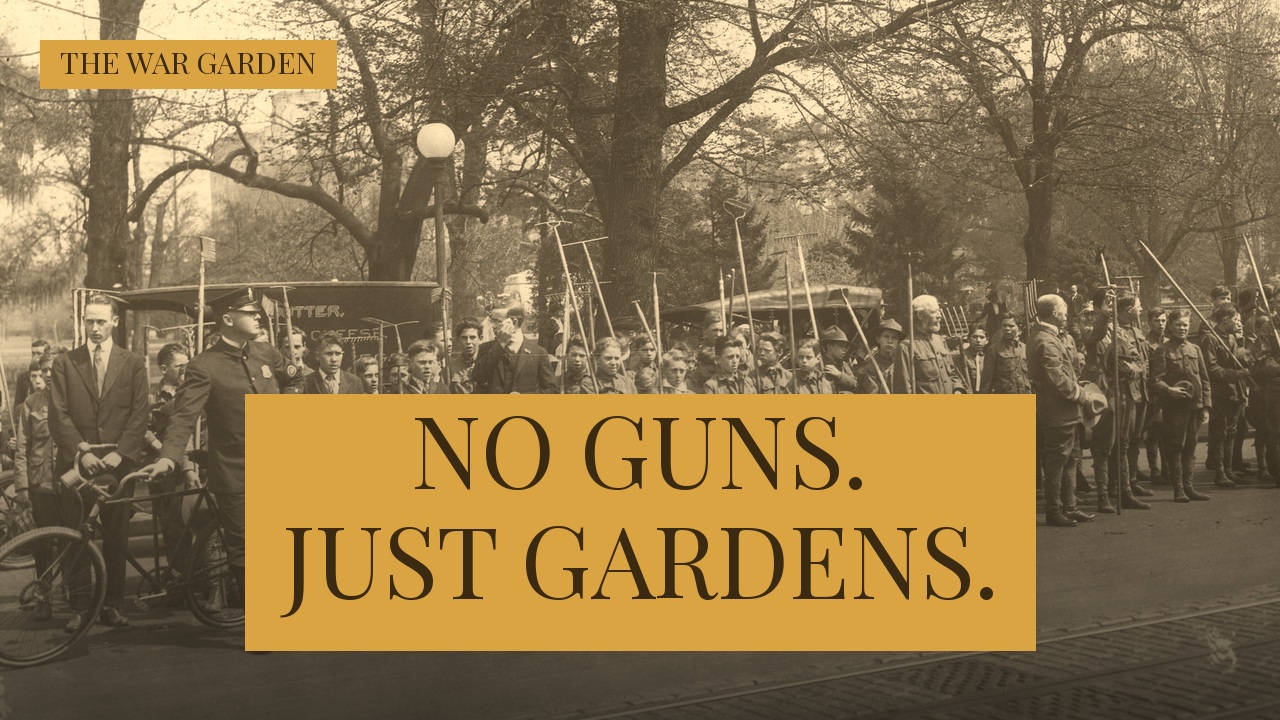
By the time the guns on the Western Front went quiet in November 1918, the campaign that had turned American yards into vegetable plots could point to more than five million of them under cultivation nationwide — a figure its own organizers published, reached in barely a year and a half, financed with no federal appropriation and backed by no law that could compel a single person to pick up a spade.
The shortfall behind it was a shipping problem before it was ever a farming one. Every ocean-going vessel the United States could spare in 1917 was needed to move troops, horses, artillery shells and flour to France, which left no cargo space to also carry vegetables American farms were already growing at full capacity for the domestic market. Growing more food on land already under cultivation did nothing to solve that. The extra food had to come from land nobody was farming at all, worked by people who, in most cases, had never grown a vegetable in their lives.
What was a war garden, in practice? The simplest answer is any patch of ground — a backyard, a vacant lot, a stretch of unused schoolyard — turned over to vegetables for the length of the war. The harder answer is everything built underneath that simple definition: a private citizen with no government authority who built a national propaganda operation almost overnight, nine-year-olds enrolled in something run like a small army, and most of the headline numbers that made the campaign famous — the five million plots, the $350 million harvest, the “six million strong” children’s army — turning out, on inspection, to be figures somebody had a strong incentive to want believed.
So what was a war garden, exactly?
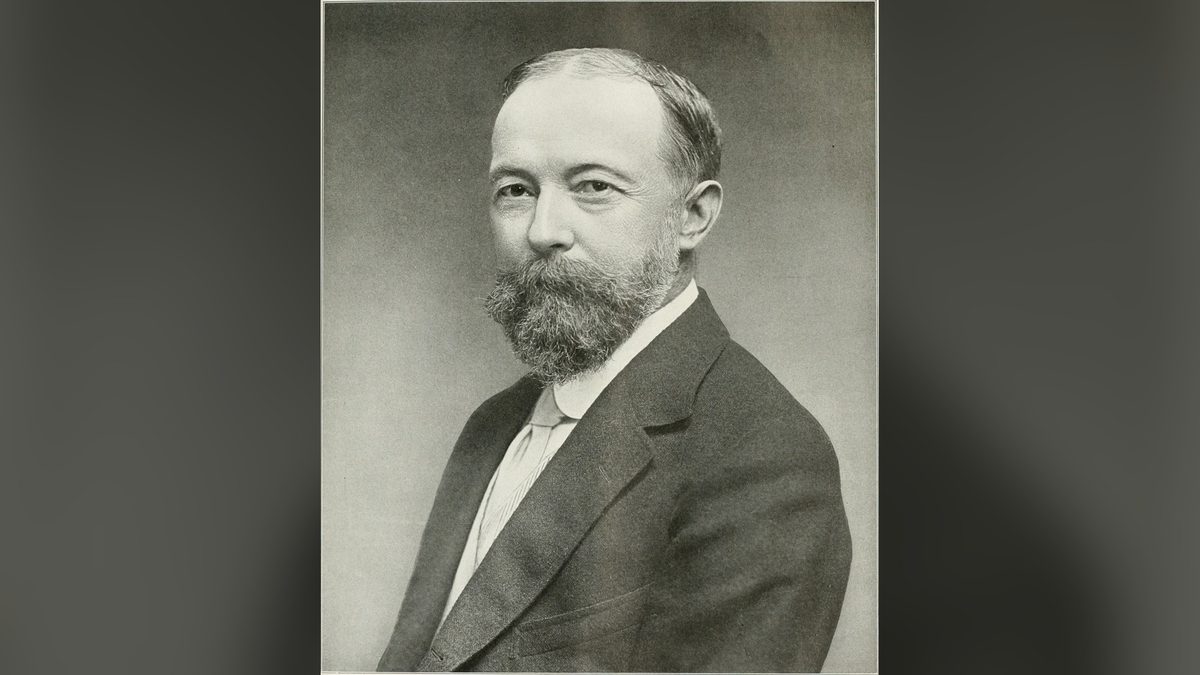
The man behind the campaign was Charles Lathrop Pack, born in 1857 into a family already three generations deep in the timber business. By the time war broke out in Europe, Pack had expanded that fortune into banking and real estate and was, by contemporary reckoning, counted among the five wealthiest men in the United States. He had also built a side career in public instruction, writing forestry manuals and funding conservation education well before 1917 gave him a wartime cause to attach his name to.
In March 1917 — a full month before Congress declared war on Germany, and five months before the federal government stood up its own food agency — Pack organized the National War Garden Commission out of a Washington office, serving as its president with no government funding and no legal standing to order anyone to plant anything. His pitch had to work on persuasion alone: American farms were already feeding American civilians at capacity, so any food for soldiers and starving allies abroad would have to come from land currently growing nothing but grass.
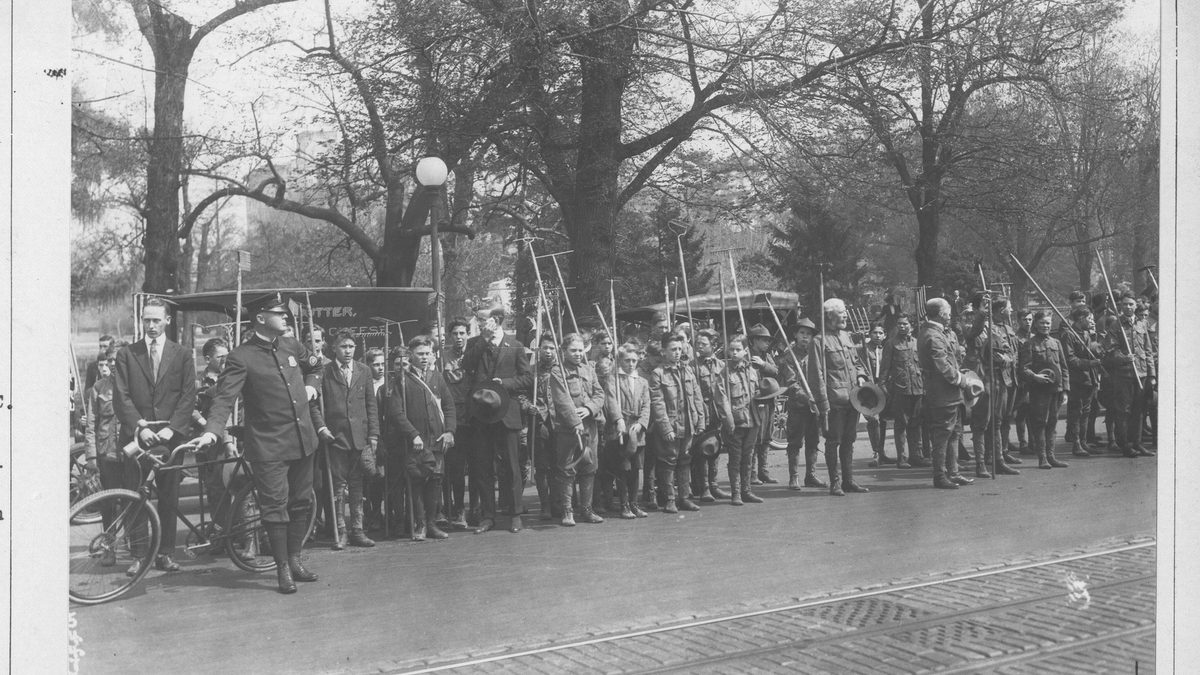
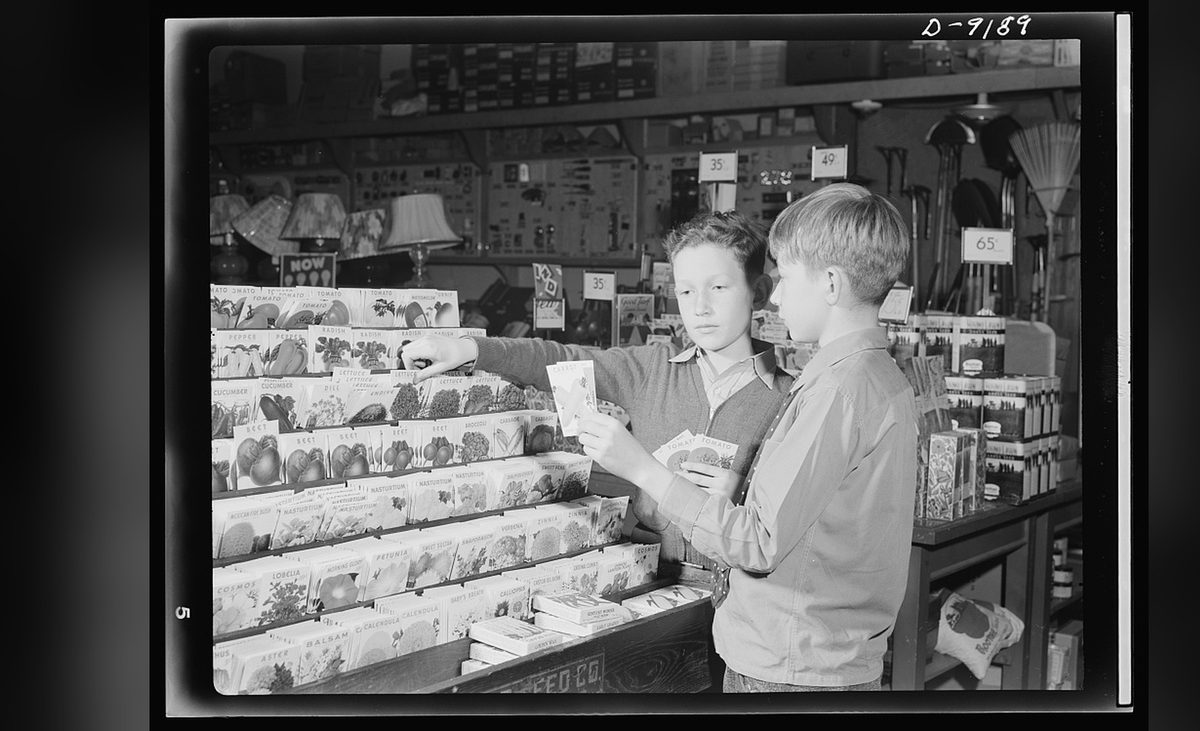
The commission never grew a vegetable itself. It printed things: planting guides mailed free to anyone who wrote in, posters for streetcars and shop windows, instructions that walked a total beginner through turning a strip of lawn into rows of beans, carrots and potatoes with nothing more than a hoe, a seed packet, and increasingly a backyard cold frame to get seedlings started before the last frost. Cities donated vacant lots for the campaign’s duration, and some railroads let families plant vegetables along their own rights-of-way. None of it required Pack to ask anyone’s permission, because nobody in the federal government had given him any authority to ask for in the first place.
The federal system that made the posters stick
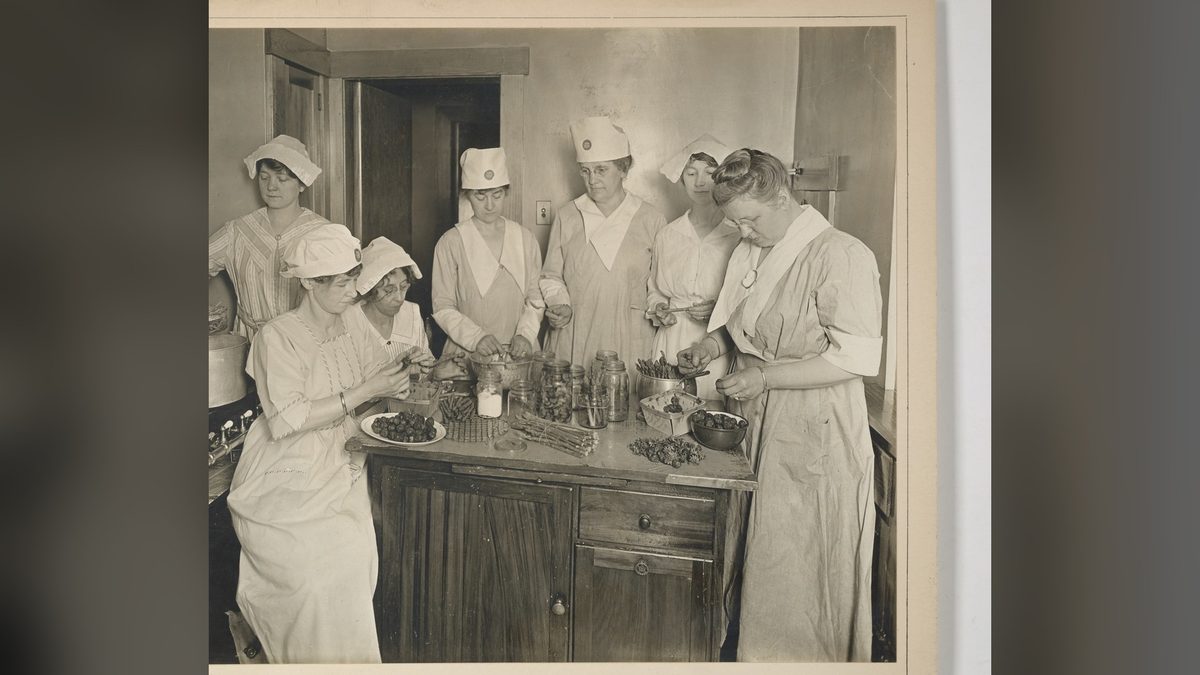
Pack’s commission got real traction only because it could plug into machinery the government had already built for an entirely different purpose. In 1914, three years before the war, Congress had passed the Smith-Lever Act, creating the Cooperative Extension Service and, through it, a paid home demonstration agent in county after county, tasked with teaching rural households better farming and home-economy practices. That peacetime network was already measurable before the war touched it: one 1914 tally counted 33,173 young people enrolled in local canning clubs, with 7,793 of them actually putting up produce — more than nine million pounds of tomatoes and other vegetables, packed into nearly two million jars and cans.
When the United States Food Administration arrived that August, run by the mining-engineer-turned-relief-administrator Herbert Hoover, it didn’t need to invent an extension system. It needed to redirect one that already existed, and to add an enormous amount of guilt. Hoover’s administration asked households to sign pledge cards promising to cut consumption of meat, wheat, sugar and fats — a commitment the newspapers nicknamed “Hooverizing” — while home demonstration agents fanned out to teach the canning skills that would let a family’s own garden surplus replace the food it had just pledged to stop buying. Posters carried the same message dressed as civic duty, and occasionally as outright threat: “Win the Next War Now,” one read in 1918; another, blunter still, urged Americans to “Can Vegetables, Fruit and the Kaiser Too.”
Nine-year-old “soldiers of the soil,” and a number nobody can verify
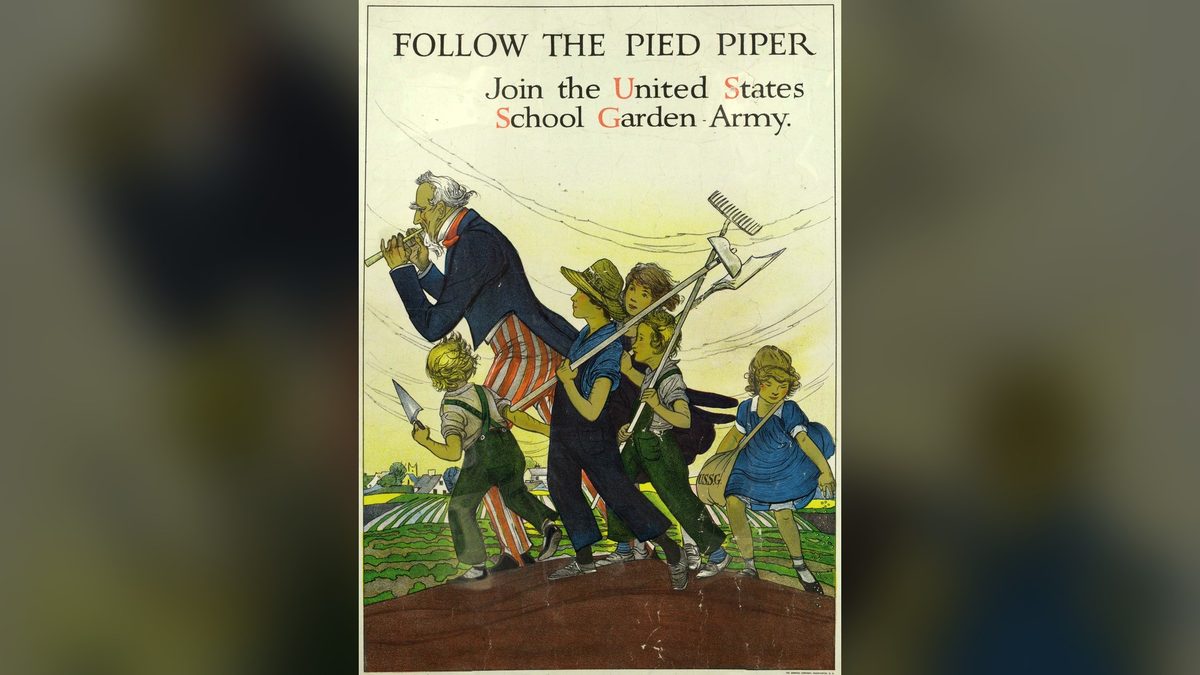
The following year, the government’s own Bureau of Education formalized the idea for children specifically, launching the United States School Garden Army with funding from the War Department and President Wilson’s personal blessing. Its motto was blunt: “A garden for every child, every child in a garden.” Members, enrolled between the ages of nine and fifteen, recited a pledge to “consecrate my head, heart, hand and health through food production” — language the organization’s own manuals framed in explicitly military terms, with companies, enlistment quotas, and officers holding rank, run on the logic that a gardener who kept tools clean was, in the program’s own words, simply behaving like a soldier who kept his equipment clean.
How large the program actually grew is where the record gets shaky. A May 1918 article in The Independent carried the headline “The School Garden Army 6,000,000 Strong” — a figure that has been repeated ever since with no independent verification behind it. No surviving enrollment ledger backs the number up; it reads much more like the Army’s own press office talking to a sympathetic magazine, at a moment when every wartime program in Washington had an incentive to sound as large as possible.
What the harvest numbers actually show, and what they hide
The adult campaign’s own flagship statistic was similarly self-reported: more than five million war garden plots under cultivation by 1918, with that year’s combined harvest valued, by the commission’s own estimate, at upwards of $350 million. Nobody disputes that millions of American families genuinely dug up lawns and vacant lots that had never grown food before — the photographic record, including whole demonstration gardens built at Army camps like Camp Dix, New Jersey, to train soldiers in the same techniques, makes that much undeniable. What’s harder to verify is the dollar figure attached to it, which came from the one organization in the country with every reason to publish an impressive number.
Historians who have gone back over the campaign tend to land somewhere more modest than the posters claimed. Rose Hayden-Smith, whose research is the closest thing the subject has to a definitive academic account, and the writer Madeleine Compagnon, summarizing that research for JSTOR Daily in 2020, both argue that the real payoff wasn’t measured cleanly in bushels at all: gardening let an increasingly urban, consumer-driven country reconnect, however briefly, with a producer past most of its city-dwelling participants had never actually lived. That is a much harder thing to put a dollar value on than a harvest, which may be exactly why the commission preferred to talk in dollars.
Armistice didn’t end it. It just changed the sign.
When the fighting stopped on November 11, 1918 — the same November that would eventually give the English-speaking world its two minutes of silence and its red poppies — the war garden’s one job looked finished. But four years of trench warfare had wrecked European farmland in a way no single season could repair, and American food was still desperately needed to carry the continent through an uncertain peace. Rather than close up shop, Pack’s commission simply relabeled the campaign: the “war garden” became the “victory garden,” a term coined in 1919 specifically to mark an armistice rather than fight a war. The renamed program wound down gradually over the next two years as European harvests recovered, and might have stayed a historical footnote if a second world war had not arrived two decades later.
It came back in December 1941, when a National Garden Conference in Washington laid out a revived program within weeks of Pearl Harbor. In 1943, First Lady Eleanor Roosevelt planted a victory garden on the White House’s South Lawn, reportedly over her own Agriculture Department’s objection that it would look like the country was running short on food; Diana Hopkins, the young daughter of presidential adviser Harry Hopkins, helped tend it. The gesture had the opposite effect from the one the department feared. Even the revived campaign’s own numbers don’t fully agree with each other: the National Park Service puts the 1943 total at some 20 million victory gardens, while a Smithsonian accounting counts 18.5 million gardeners the following year; both sources agree the gardens supplied roughly 40 percent of the vegetables Americans ate by 1944, and that American families put up somewhere between eight and ten million tons of food by the war’s end.
A third life, with the urgency stripped out
The phrase outlived both wars it was built for. In 1975, PBS premiered a gardening program simply called Crockett’s Victory Garden, hosted by the horticulturist James Underwood Crockett and later by Bob Thomson — a show with no rationing, no shipping crisis, and no government behind it at all, that nonetheless kept the wartime name because by then “victory garden” had become shorthand for any garden a household grew for itself rather than bought at a store. Its descendant program still airs today. Nearly a century after Pack first mailed out free planting guides, a pandemic-era boom in home gardening in 2020 drew the same comparisons historians had been making about the original movement all along: that digging a vegetable bed has always done at least as much for the people doing the digging as it has for whatever eventually gets harvested.
Watch the full history
The video version covers the same ground in about seven minutes, with the photographic record of the campaign’s posters, demonstration gardens and the children who dug alongside the adults.

Related reading
- Why We Wear Poppies for Remembrance, and Who Built the Tradition — the symbol that grew out of the same Armistice this garden answered to.
- Who Invented the Two-Minute Silence? — another wartime ritual born in the same November.
- The 2,000-Year History of the Cold Frame — the low-tech season-extender that made early backyard vegetable growing possible at all.
- How Hog Killing Day Worked on the American Farm — the older, harder home food-production tradition the war garden briefly revived.
None of this would have been necessary if the war had gone the way anyone expected in 1914. It took three more years of attrition before the two biggest armies on Earth were counting potatoes, and the five million lawns that got dug up in response were never going to decide a single battle on their own. What they did was turn an abstract shipping crisis into something a nine-year-old with a trowel could understand and actually do something about, which may be the clearest use any home-front campaign of that war ever found for itself. What would you grow if your own backyard had to help feed a war?
Works cited
- Hayden-Smith, Rose. Sowing the Seeds of Victory: American Gardening Programs of World War I. McFarland, 2014.
- Hayden-Smith, Rose. “‘Soldiers of the Soil’: Wartime Gardening Programs of World War I.” Pennsylvania Legacies, Historical Society of Pennsylvania, 2017.
- Pack, Charles Lathrop. The War Garden Victorious. J.B. Lippincott Company, 1919. Link.
- “The School Garden Army in the First World War.” Inside Adams, Library of Congress, January 2017. Link.
- Schwartz, Thomas F. “The Original Meatless Monday.” Hoover Heads, Herbert Hoover Presidential Library and Museum, National Archives, October 9, 2019. Link.
- “Victory Gardens in World War I.” National WWI Museum and Memorial. Link.
- “Victory Garden.” Smithsonian Gardens fact sheet. Link.
- “Victory Gardens on the World War II Home Front.” National Park Service. Link.
- Compagnon, Madeleine. “The Surprising Backstory of Victory Gardens.” JSTOR Daily, May 15, 2020. Link.
- “World War I.” Wartime Canning exhibit, National Agricultural Library, U.S. Department of Agriculture. Link.
- “1975: Premiere of The Victory Garden on PBS.” Smithsonian Gardens.