

In the first century CE, the Roman emperor Tiberius had a craving he refused to go without, even in the dead of winter. His gardeners grew what the ancient sources call cucumbers — eaten the way we would eat a cucumber today, though it was likely closer to a long, pale melon — on beds built onto wheeled carts. On a clear day the beds were rolled out into full sun; on a cold or wet one, they were covered with frames glazed in sheets of mica. It worked, every day, on demand. The history of the cold frame, as a piece of technology, starts there: not with a farmer trying to feed a family, but with an emperor who would not wait for summer.
Two thousand years later, the same basic machine — a shallow box, a transparent lid, nothing else — was keeping a homesteading family alive through a New Mexico winter during the Great Depression. In between, it filled the royal kitchen gardens of Louis XIV, covered thousands of acres of Parisian market gardens in glass, and sat propped open every clear morning on tens of thousands of ordinary American farms. No electricity, no moving parts beyond a hinge. Just trapped sunlight, and sometimes a pit of rotting manure underneath it.
What makes the cold frame worth a closer look is not its simplicity — plenty of farm objects are simple — but its persistence. It is one of the few pieces of agricultural technology that worked exactly the same way, for the same reason, across almost every social class and continent it touched, for roughly two thousand years, before it was finally made nearly obsolete not by a better frame but by a truck.
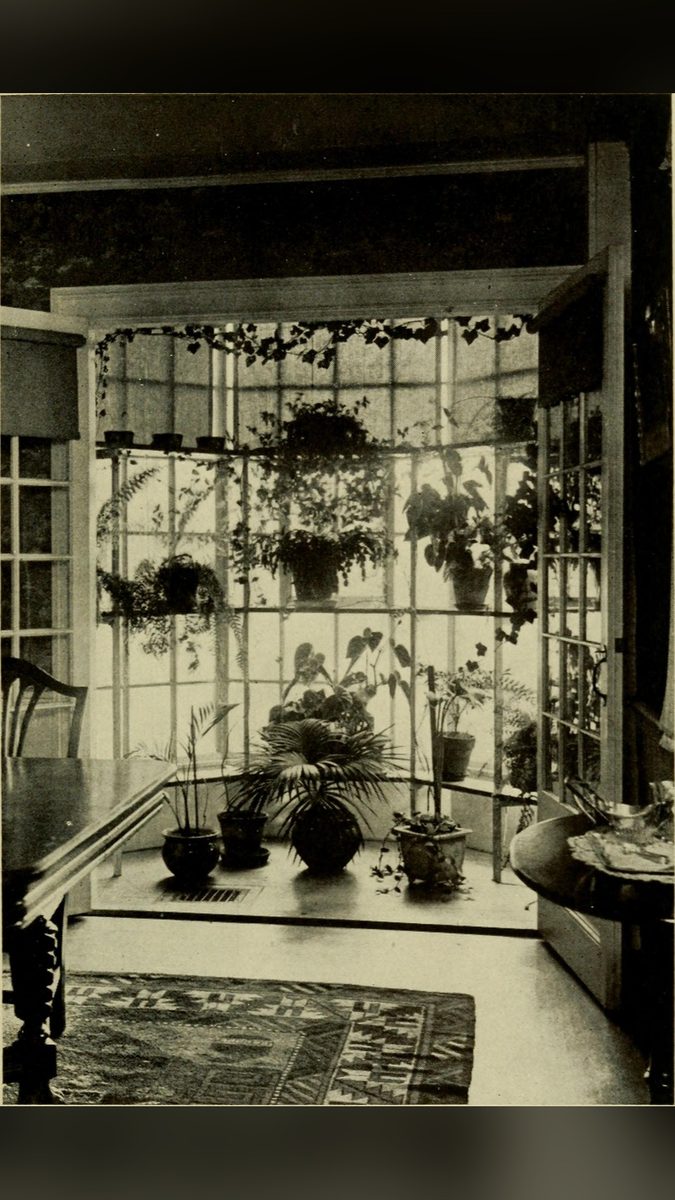
Why the history of the cold frame begins in Rome, not England
Two Roman writers describe Tiberius’s arrangement: Columella, a first-century agricultural writer, and Pliny the Elder, in Book XIX of his Natural History. Both record gardeners growing cucumbers on frames that could be wheeled into the sun and, in bad weather, covered with specularia — coverings glazed with lapis specularis, a flaky, translucent mineral the Romans could split into thin, window-sized sheets long before glass was cheap or clear enough to do the same job. The word specularia is the root of the English word ‘spectacles.’
There is no record of who first thought of it. What matters for the object’s later history is that the core idea was already complete: trap daylight behind something transparent, and a warm-season plant can be grown through a cold one. Everything that followed — French glass bells, English garden lights, a hinged box behind a New Mexico dugout — is an engineering variation on exactly that principle, not a new idea.
It would be well over a thousand years before the trick reappears in the historical record at any scale, and when it does, it turns up in walled kitchen gardens rather than imperial ones.
The physics is almost insultingly simple
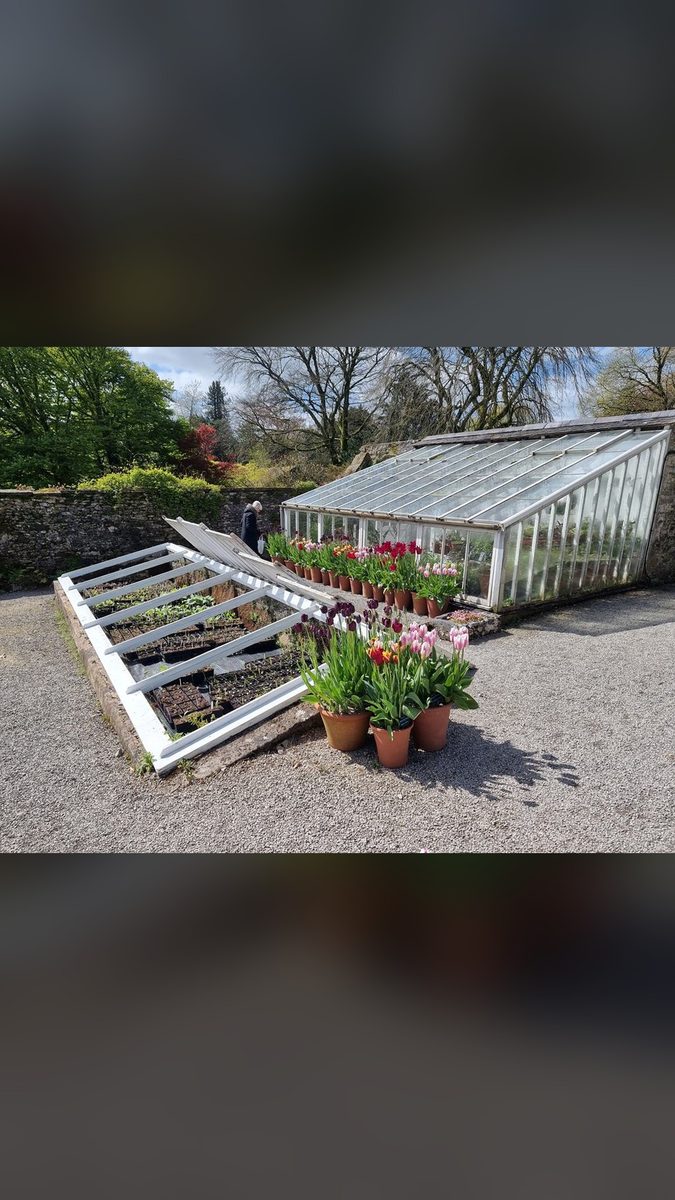
A cold frame, stripped to its essentials, is a bottomless box set on the ground with a transparent lid propped at an angle. The glazing does two things at once: it lets short-wave sunlight in, and it is much worse at letting the longer-wave heat that sunlight turns into escape back out — the same mismatch that makes a parked car unbearable on a sunny day. Sloping the lid toward the winter sun both maximizes the light it catches and lets rain and snow run off rather than pool.
A cold frame on its own only amplifies whatever heat the sun happens to provide that day, and a heavily overcast week can undo a week of progress. The fix growers worked out early was not to rely on the sun alone. A hotbed is a cold frame dug into a pit of fresh manure, which gives off steady heat of its own as it decomposes. French market gardeners who built their livelihoods around hotbeds in the 1800s measured fresh manure running as hot as 140 to 160 degrees Fahrenheit before they even built a bed on it, mixing it with older, cooler manure to bring the temperature down to something a seedling could survive. At one well-documented Maryland tidewater farm a century later, American gardeners worked to much the same clock without ever having read a French manual: manure was hauled and turned by hand through January, beds were filled to within a few inches of the glass by the middle of February, and the frames themselves were set nearly flush with the ground so that no more warmth than necessary leaked out around the edges.
None of this ran itself. Every account of cold frame use, from the seventeenth century to the twentieth, describes the same daily chore: prop the glass open on any clear morning, or the trapped heat will cook the plants by noon, and close it again before the temperature drops at night, or the cold will undo whatever the glass just gained. A cold frame asks for exactly one thing from the person tending it, every day it is in use, and that thing could not be automated away. It is a large part of why the device stayed in use only as long as someone was reliably there to open and shut it.
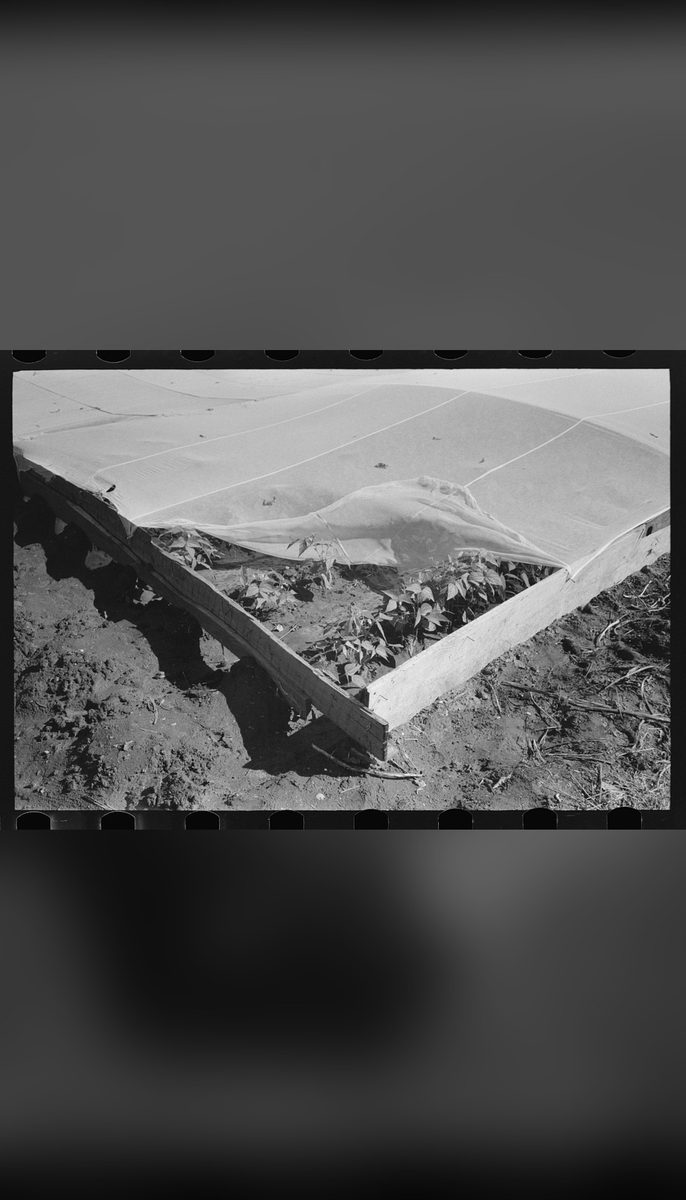
French market gardeners turned it into an industrial-scale business
By the early seventeenth century, French gardeners had turned the Roman idea into hardware anyone could buy. Bell-shaped glass covers called cloches — the word simply means ‘bell’ — had been in use in French gardens since around 1623, reportedly brought over from Italy, and the best of them came from the glassworks of Lorraine: roughly 17 inches across, weighing about five and a half pounds, tinted faintly blue to cut the glare of direct sun. French growers used cloches and cold frames together, choosing one or the other crop by crop.
Two royal gardeners get the credit for pushing the method toward its most ambitious form. Claude Mollet, working in the late sixteenth and early seventeenth centuries, and Jean-Baptiste de La Quintinye, who ran the kitchen gardens at Versailles for Louis XIV in the 1670s and 1680s, both used frames and hotbeds to put fresh vegetables on a royal table well before their natural season.
What had been a royal indulgence became, within two centuries, an entire regional economy. By 1844, the market gardens ringing Paris — worked by growers known as maraîchers — covered roughly 1,500 acres of this kind of intensive, glass-protected cultivation, farmed by about 1,125 growers. By the time an English horticulturist toured the trade and wrote it up in 1909, the numbers had roughly doubled again: some 1,300 growers working close to 3,000 acres, using an estimated 460,000 glazed frame lights and five to six million individual cloches. The beds themselves were kept narrow by design, so that water from the wet manure packed into the paths between them could reach the centre of each bed by capillary action alone, without anyone carrying a watering can.
None of this depended on any new scientific understanding of heat or light. It depended entirely on labor, glass, and horse manure, applied at a scale that nineteenth-century Paris happened to have all three of in abundance. When any one of those three became scarce or expensive, the model stopped working — which is roughly what eventually happened to it, elsewhere, a few decades later.
The same box, built by people who had never heard of Versailles
The idea crossed to North America long before anyone wrote a scholarly history of it. Costumed interpreters at Colonial Michilimackinac, a reconstructed eighteenth-century fur-trading post on the Great Lakes, now garden with a cold frame built to the period’s own specifications: a wooden box topped with two glazed ‘lights,’ set over a brick-lined pit packed with animal dung. As the dung rotted, it warmed the frame enough to keep lettuce and spinach going through much of the winter — the same mechanism running, at the same moment, in the walled gardens of Versailles, with nobody involved aware of the coincidence.
By the early twentieth century, American agricultural institutions were formalizing what farm families had been doing by instinct for a generation. A 1915 University of Illinois bulletin on hotbeds and coldframes, a 1934 Colorado Agricultural Experiment Station bulletin of nearly the same title, and a 1939 New Mexico Cooperative Extension circular on “Hot Beds, Cold Frames and Frame Gardens” all cover essentially the same ground: how deep to dig the pit, how to build the frame, how to fill it with manure, and how to manage the bed once it was growing.
What these bulletins describe, in very similar terms across three different states and two decades, is a piece of farm infrastructure that had become entirely unremarkable: not an innovation anyone needed to be sold on, but a standard tool extension agents assumed every farm family already used, or needed only to be reminded how to use correctly. Several frames grouped together and run as a small production unit — a ‘frame garden’ — had become common enough on commercial truck farms to earn its own name in the agricultural literature of the period.
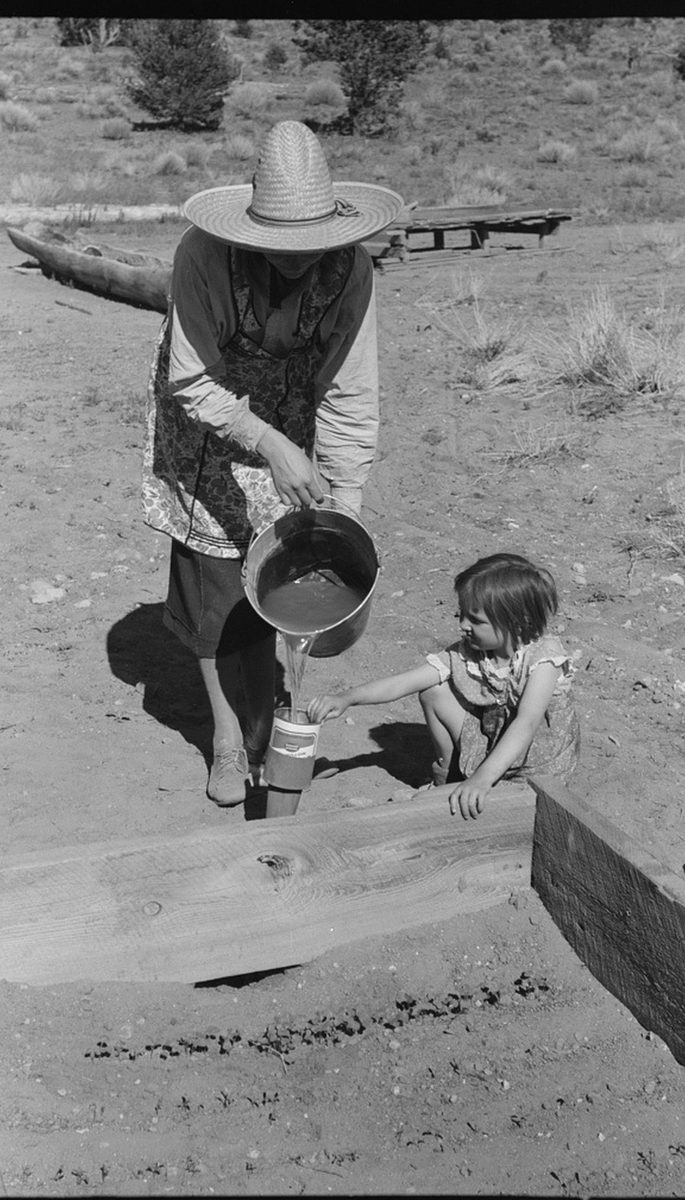
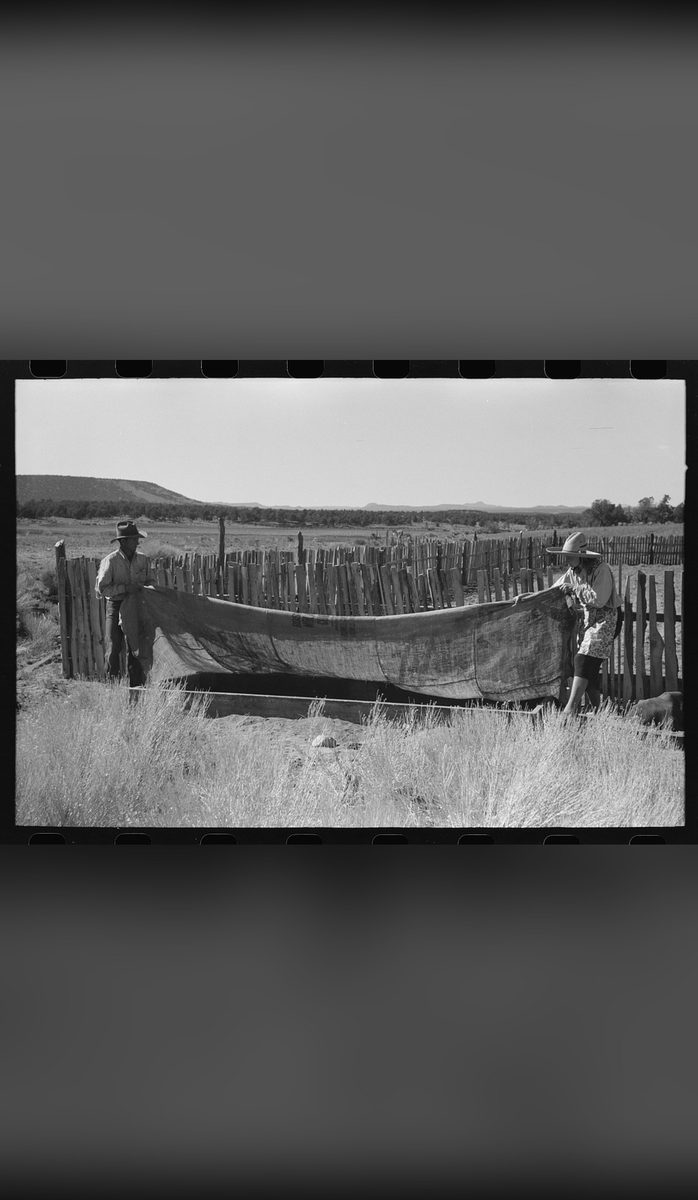
By the Great Depression, a frame garden could mean the difference between a winter with food and one without
The most vivid surviving record of the cold frame in ordinary use comes from an unlikely source: a federal photography project meant to document rural poverty, not gardening technique. In 1940, the Farm Security Administration sent photographer Russell Lee to Pie Town, a settlement of Dust Bowl refugees on the high desert of western New Mexico, to document how families who had lost everything in Oklahoma and Texas were trying to build new homesteads from nothing. Lee’s photographs of Faro and Doris Caudill and their young daughter, Josie, are now among the most reproduced images to come out of that entire federal project.
Several of those photographs show the Caudills at their frame garden: watering it, examining the seedlings inside it, closing the glazed lid over it at dusk. It is not a decorative detail. A family homesteading on marginal high-desert land, with no guaranteed income and a short growing season even in a good year, needed every extra week a glass lid could buy them, at both ends of the frost calendar. The same federal project photographed nearly identical frame gardens on commercial truck farms near San Angelo, Texas, that same year — proof that the technique was running, simultaneously, at subsistence scale and at commercial scale, a few hundred miles apart, using an essentially identical design.
It did not save the Caudills’ homestead in the end. Drought in the years that followed wore down the corn and bean harvests that Pie Town’s farmers depended on, and the family left the area roughly two years after Lee photographed them, their original homesteading dream largely unrealized. The frame garden was never going to be enough on its own to make marginal land productive through a sustained drought; it was only ever good for what it had always been good for, which was buying a few extra weeks of food at either end of a short season. In a hard year, a few extra weeks was still worth a federal photographer’s attention, and worth building the thing for.
What finally made the box unnecessary
The cold frame did not lose to a better cold frame. It lost to infrastructure. Starting in the 1880s, cities including Boston and Philadelphia built entire acres of coal-heated greenhouses, with steam pipes run through the growing beds, producing winter lettuce for wealthy customers on a schedule no cold frame could match. That was the first blow: a more capital-intensive technology doing the same job better, for people who could afford it.
The second blow arrived from the opposite direction. Commercial lettuce growing moved west to California in the early twentieth century, then concentrated further in the Salinas Valley, where the climate alone did much of what a greenhouse or a cold frame had to work to achieve elsewhere. Rail shipments of California lettuce rose roughly fifteen-fold between 1917 and 1926, and once mechanical refrigeration made it possible to ship produce for days without it rotting or freezing in transit, a cold-climate grower had very little reason left to keep running frame gardens through the winter for market. A head of lettuce grown in a mild valley hundreds of miles away, and kept cold the whole way, beat a glazed box in January.
What survived was the home-garden version, which had never depended on winning a cost argument against California. A backyard cold frame was never competing with a refrigerated truck; it was only extending one family’s season a few weeks either way, for the price of some lumber and an old window, exactly as it had for two thousand years before anyone involved had heard of mechanical refrigeration at all.
Watch the full history
The video version covers how the angle of the glass did the work a furnace would otherwise have to do, how a hotbed used fresh manure for extra heat, and how long this everyday piece of homestead technology stayed in ordinary use.

What the cold frame’s two-thousand-year run actually demonstrates is how rarely a genuinely good idea needs improving. The device Tiberius’s gardeners built to satisfy an emperor’s craving for an out-of-season fruit is, mechanically, the same device the Caudills built out of scavenged lumber and an old window in 1940: a transparent lid, angled toward the sun, over nothing more complicated than dirt. Everything that happened in between — Versailles, the industrial-scale maraîchers of Paris, three American extension bulletins — was refinement of scale and management, not a change to the underlying principle.
Technologies rarely die of old age. They die when something else becomes cheaper, and the cold frame’s decline traces almost exactly the arrival of two bigger systems: the heated greenhouse industry that could out-produce it, and the refrigerated truck that made local winter production beside the point for anyone selling at scale. Neither replaced the cold frame’s actual mechanism; they just made running one commercially not worth the trouble, which is a different thing from the idea stopping working.
It still works, for anyone who builds one. How many extra weeks of growing season do you think one sheet of glass could buy you?
Related reading
- How to Tell Real Berlin Wall Pieces From the Fakes
- The Diya: How a 5,000-Year-Old Lamp Became Diwali’s Icon
- The 250-Year-Old Box That Kept Flies Off Dinner Without a Fridge
- How Outdoor Bread Ovens Worked, and Where Owning One Was Against the Law
Shop
For a modern take on the same idea: Eliot Coleman’s Four-Season Harvest is the standard guide to season-extension gardening today — available on Amazon.
Works cited
- Pliny the Elder. The Natural History of Pliny, Vol. IV. Translated by John Bostock and H.T. Riley. London: Henry G. Bohn, 1855. Book XIX, on growing cucumbers for Tiberius under frames glazed with mica (lapis specularis). Link.
- Weathers, John. French Market-Gardening: Including Practical Details of “Intensive Cultivation” for English Growers. London: John Murray, 1909. Link.
- Binkley, A. M., and Richard V. Lott. Hotbeds and Coldframes. Colorado Agricultural Experiment Station Bulletin 328. Fort Collins: Colorado Experiment Station, 1934.
- Whitley, F. F., and A. B. Fite. Hot Beds, Cold Frames and Frame Gardens. Extension Circular No. 164. State College: New Mexico College of Agriculture and Mechanic Arts, Cooperative Extension Service, 1939. Link.
- Dacy, Arthur L. The Use of Hot Beds and Cold Frames on the Farm. Urbana: University of Illinois, 1915. Digitized by HathiTrust.
- Historic Hancock’s Resolution. “Hotbeds.” Pasadena, Maryland: Anne Arundel County Office of Agricultural Preservation. Link.
- Miller, Dominick. “Using Cold Frames at Michilimackinac.” Mackinac State Historic Parks, July 9, 2021. Link.
- Library of Congress, Prints and Photographs Division. “Bound for Glory: America in Color.” Exhibition, FSA/OWI Collection. Link.