
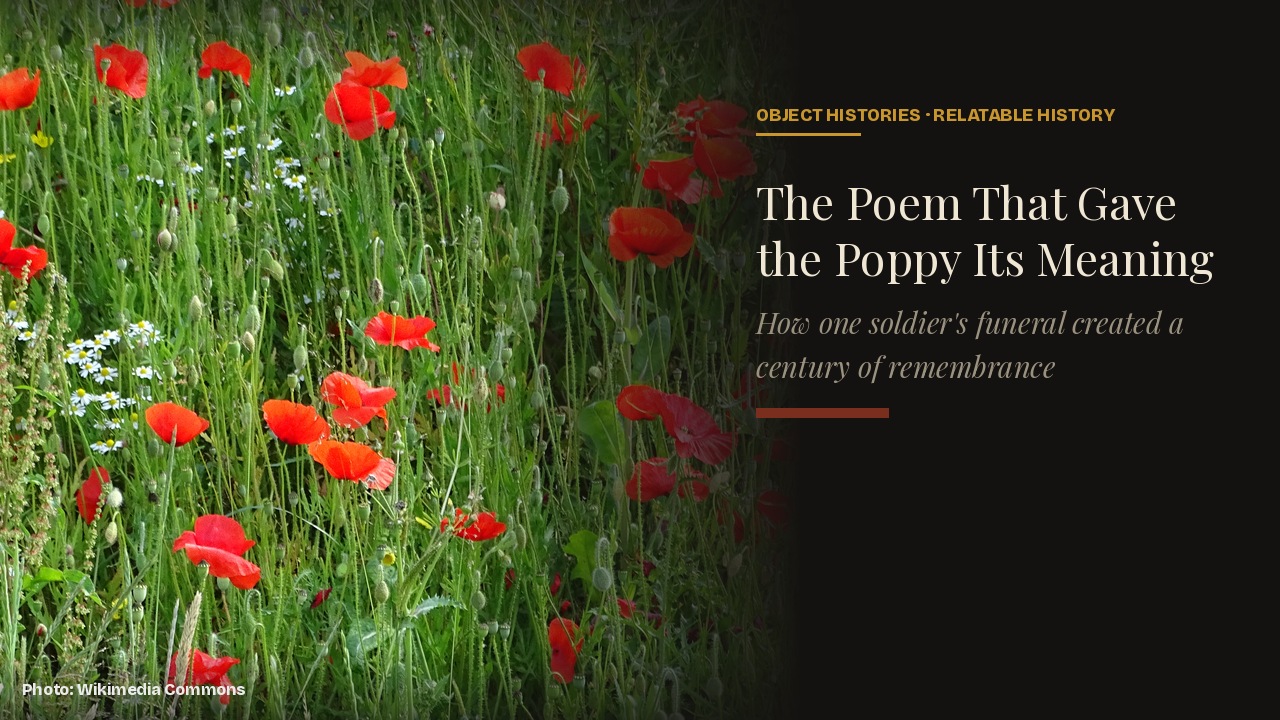
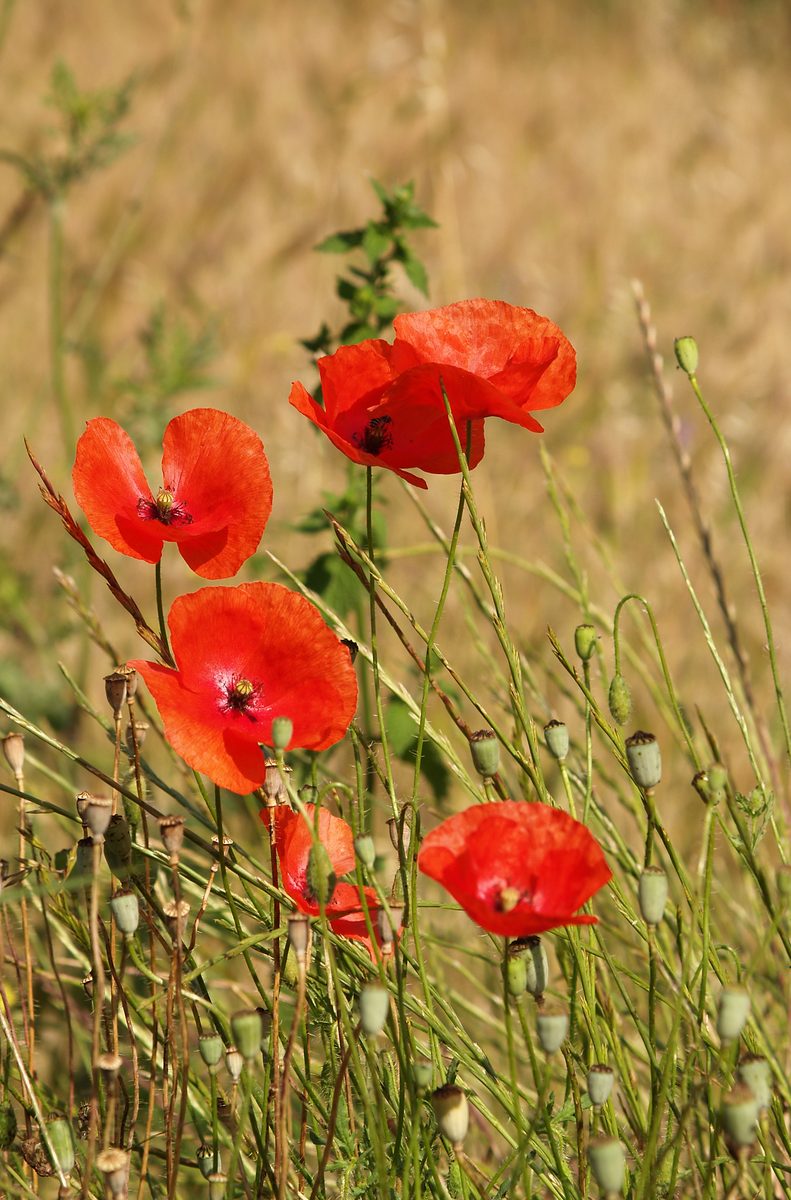
On the 2nd of May, 1915, a German shell killed Lieutenant Alexis Helmer, a 22-year-old Canadian gunner, outside Ypres. His friend, an army doctor named John McCrae, read the burial service over him the next day. There was no time to mourn properly and no ground left undisturbed to mourn in; the soil around the graves had already been churned by shelling, and wild poppies, the kind that colonise broken earth, were coming up through it in the thousands.
That is the one fact almost everyone who wears a poppy each November already half-knows. What gets lost is everything after it: the specific, documented, sometimes contested chain of people who turned one doctor’s grief into an object sold by the hundred million every year, manufactured for a century by the very men it was meant to honour. Here is why we wear poppies for remembrance, told through the five people and one building that actually built the habit.
A doctor’s seventeen lines almost didn’t survive their own author
McCrae was no amateur with verse — he had been publishing poetry since his student years at the University of Toronto, and had already served as an artillery officer in the Boer War before retraining as a physician — but accounts differ on exactly how “In Flanders Fields” got written. One version has him composing it that evening in the back of a field ambulance. Another, from a sergeant-major who claims to have watched him do it, says it took about twenty minutes during a lull between surgeries the following day. What both versions agree on is that McCrae nearly threw the page away afterward, and that a fellow officer talked him out of it.
The poem’s first readers were unimpressed. The Spectator rejected it outright. Punch finally printed it on the 8th of December, 1915, without naming the author, buried among that week’s other verse. Even so, it travelled fast: within two years it was being used to help sell Canadian war bonds, and reportedly played some part in the country’s bitter 1917 conscription debate. McCrae did not live to see most of that. In January 1918, weakened by lung damage from an earlier gas exposure, he was named consulting physician to the First British Army — the first Canadian to hold the post — and learned the news while already sick with pneumonia. He died seven days later, on the 28th, at a hospital in Wimereux, France, at 45, and was buried there with full military honours. Helmer’s own grave was lost to later shelling; his name is listed instead on the Menin Gate, a few miles from the field where the poem was written.
An American teacher bought twenty-five poppies with other people’s money
The poem reached Moina Michael on the morning of the 9th of November, 1918, two days before the Armistice, while she was working a desk job at a YMCA headquarters at Columbia University in New York — a posting she had taken after the YMCA turned her down for overseas war work on account of her age. Reading the poem’s closing lines in a copy of the Ladies’ Home Journal, by her own account she was transfixed, and wrote a reply poem, “We Shall Keep the Faith,” before the morning was out.
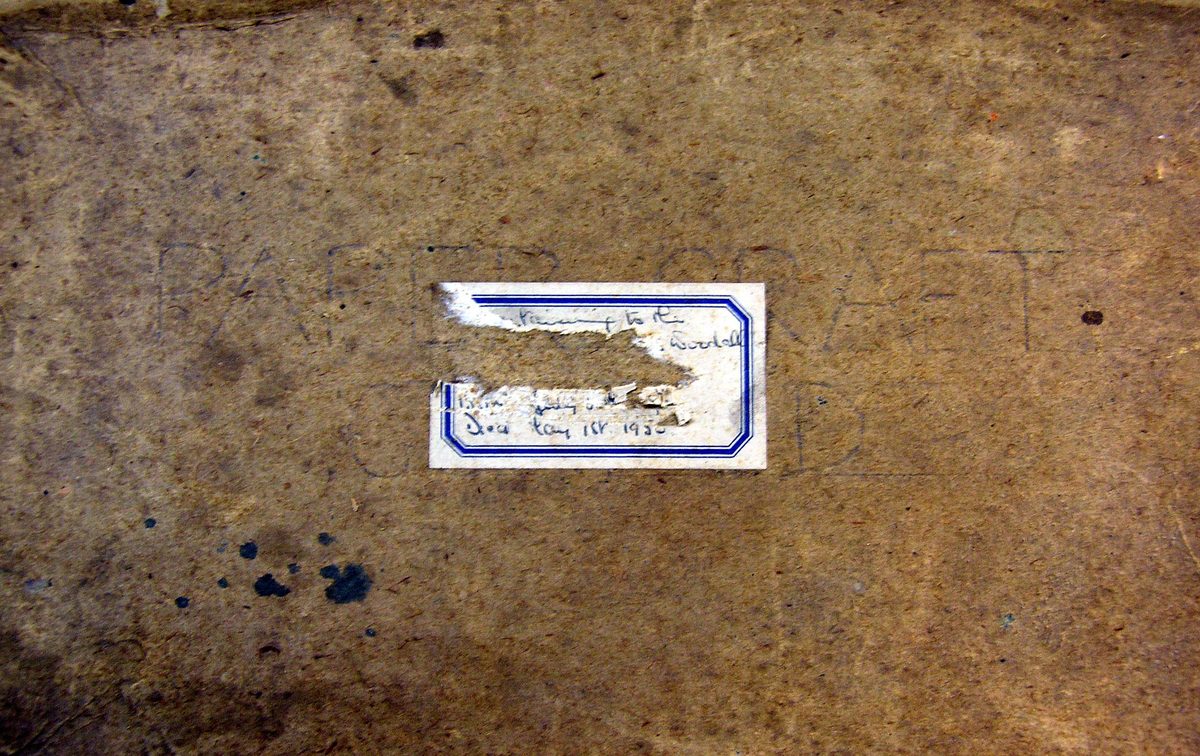
Delegates attending a YMCA secretaries’ conference in the same building gave her ten dollars to decorate the headquarters with flowers. She spent it on twenty-five artificial red silk poppies instead, pinned one to her own coat, and handed out the rest that evening to delegates who asked for one. She later called this the first sale of the remembrance poppy, which, strictly, it was not — nobody paid her for them — but it was the moment the idea took physical form. A patented “Victory Emblem” she designed the following spring, combining a torch with a poppy, went nowhere; the plain poppy did not need the help. She spent the next two years lobbying veterans’ groups, mostly at her own expense, until the national American Legion adopted it as the official U.S. emblem of remembrance in 1920.
A Frenchwoman turned a gesture into an international supply chain
Michael’s campaign stayed American until Anna Guérin, a Frenchwoman already organising poppy sales at home to fund the rebuilding of villages flattened in the war, heard about it and adapted it for export. She brought “Inter-Allied Poppy Day” to the American Legion’s convention, helped persuade Canada to adopt the flower, and then carried the same pitch to Britain, where she found a useful ally in Field Marshal Earl Haig, the former wartime commander who by then led the newly formed British Legion.
For the Legion’s first appeal, in November 1921, Haig ordered nine million silk poppies from Guérin’s French workshops, made largely by French war orphans and widows. They sold out, raising more than £106,000 — a very large sum for a four-year-old charity with no prior fundraising record. Haig was satisfied with the money but not with the source. He wanted the poppies made in Britain, by British veterans, which meant the Legion needed its own factory and, more urgently, someone willing to run one.
The factory was built around the men it hired, not the other way around
That someone was Major George Howson, a 29-year-old who had already spent two years campaigning for disabled veterans after winning the Military Cross in combat. In May 1922 the Legion gave him £2,000 and two borrowed rooms near Old Kent Road in south London. The order waiting for him was for thirty million poppies. He filled it with forty-one disabled men.
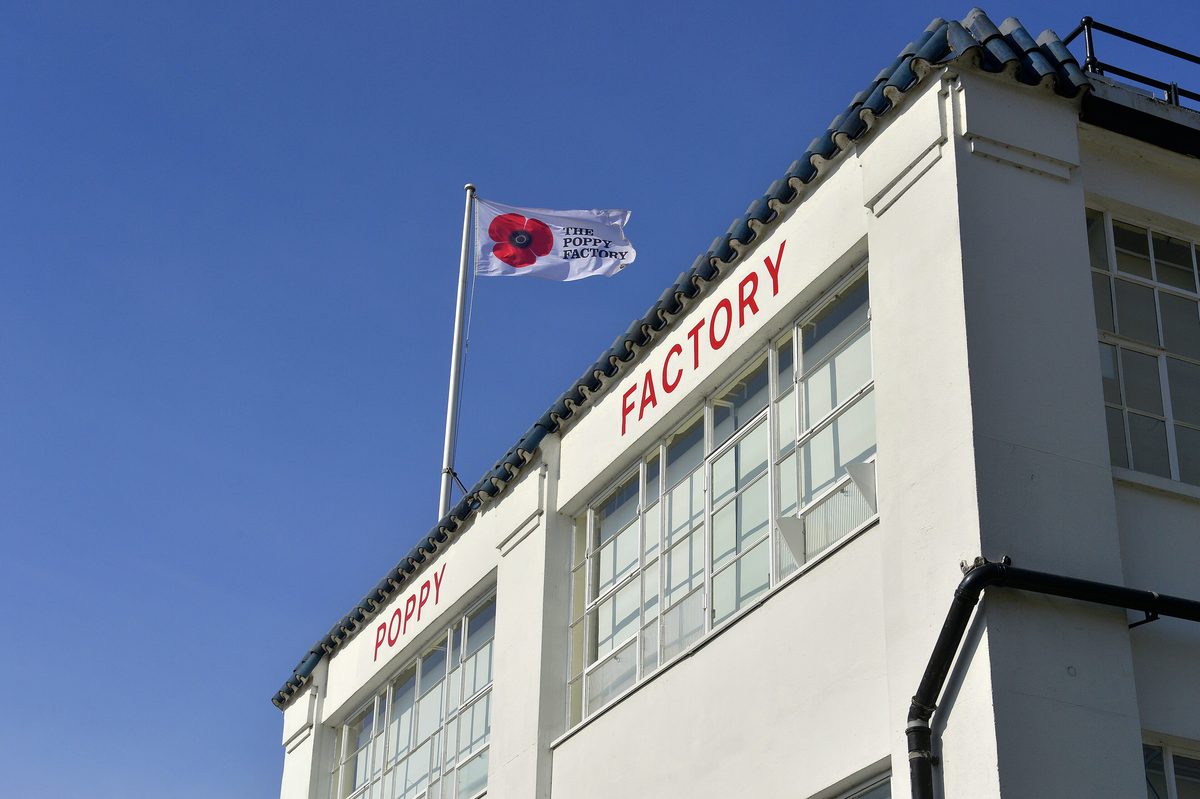
The operation outgrew those rooms within four years. In 1926, Howson bought an old brewery site in Richmond, upriver from London, partly because its position by the Thames and Richmond Park was thought to aid veterans recovering from injury. He built more than a factory there: flats went up beside it so workers could live with their families next to the job, along with a social club that ran darts and gardening competitions. By the outbreak of the Second World War the workforce had grown to 365, turning out tens of millions of poppies a year, almost entirely by hand.
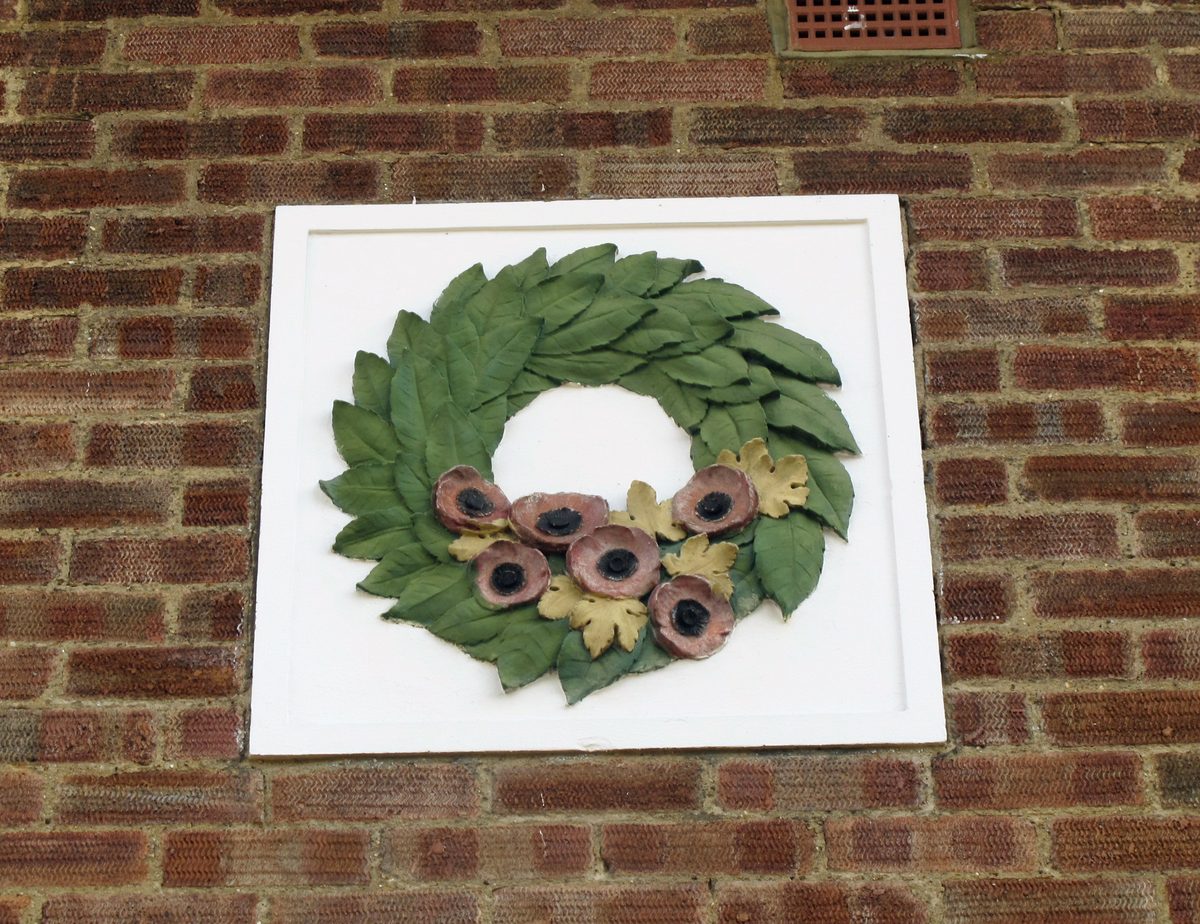
The war reached the site directly. On the 29th of November, 1940, a German bomb struck an air-raid shelter there, killing eight people across four families who lived in the Richmond flats. Howson did not see any of this: he had died of cancer in 1936, at 50, four years before the bombing. The factory he built outlived him by decades. Polish veterans who had served alongside British forces joined the workforce in 1952; the first women joined in 1959. Its Art Deco building, finished in 1933, is the same one still standing in Richmond today, where a small team still hand-assembles ceremonial wreaths and the crepe-paper petals used at the annual Festival of Remembrance, including the wreaths laid each year by the British royal family. The organisation’s own mission has shifted alongside its product: by its own account, helping veterans with health conditions find civilian work now makes up around ninety per cent of what it does, poppy-making having become the smaller job.
Why we wear poppies for remembrance still splits three ways
The red poppy’s meaning has never gone entirely unchallenged. In 1933, the Co-operative Women’s Guild — a group made up largely of women who had lost husbands, sons, and brothers in the war — introduced a white poppy. Its general secretary, Eleanor Barton, framed it as a renewed commitment to the “Never Again” spirit of 1918, worn to mourn every war’s dead without endorsing the next one. The British Legion refused the Guild’s request to make white poppies alongside the red ones, or to print “No More War” at a red poppy’s centre. The Peace Pledge Union, which distributes white poppies today, still fields the argument that buying one diverts money from wounded veterans, and still answers that wearing a white poppy and donating to veterans’ charities are not in competition with each other.
A third version exists for a different constituency entirely. In 2006, the charity Animal Aid introduced a purple poppy to mark the animals used and killed in wartime service — an estimated eight million horses, mules, and donkeys, roughly a million dogs, and an uncounted number of messenger pigeons in the First World War alone. None of the three poppies has displaced either of the others. All three are sold, worn, and argued about every autumn, which is itself a kind of answer to what the flower is actually for.
Watch the full history
The video version covers McCrae’s death, Moina Michael’s twenty-five poppies, and the bombing of the Richmond factory in just over six minutes.

McCrae’s own afterlife turned out almost as strange as the object his poem created. His birthplace in Guelph, Ontario, is now a museum and a national historic site; an excerpt of the poem sat on the Canadian ten-dollar bill from 2001 to 2013; and in 2015, a century after Helmer’s death, a statue of McCrae went up in Ottawa, with a twin cast for Guelph. None of it was his intention. He wrote seventeen lines to get through one terrible week outside Ypres, and the chain of people who read, sold, manufactured, and argued over what followed is the actual reason thousands of strangers still pin on a paper flower every autumn.
Howson’s own hope for his workshop, recorded in his own words at the time, was more modest than any of that: he wanted it to become, he wrote, “the start of an industry to employ one hundred and fifty men.” It outran that target inside its first decade, and it is still running. When the two minutes come this year, who will you be thinking of?
Related reading
- Who Invented the Two-Minute Silence?
- The 4,000-Year History of the Parasol, From Royal Throne to Street Weapon
- The 2,000-Year History of the Cold Frame
- Were the Ulfberht Swords Really Made With Crucible Steel?
Shop
If you want to go deeper:
Works cited
- Saunders, Nicholas J. The Poppy: A History of Conflict, Loss, Remembrance, and Redemption. Oneworld Publications, 2014.
- “John McCrae.” The Canadian Encyclopedia. Link.
- “The Life of a Poet-Surgeon.” CBC News Interactives. Link.
- “In Flanders Fields: The Life and Death of War Poet John McCrae.” Commonwealth War Graves Commission.
- “The Story of The Poppy Factory.” The Royal British Legion. Link.
- “100 Years.” The Poppy Factory.
- “Moina Michael: The Poppy Lady.” American Legion Auxiliary. Link.
- “White Poppies: Frequently Asked Questions.” Peace Pledge Union. Link.
- Pruitt, Sarah. “How the Poppy Became a Symbol of WWI Remembrance.” History.com, A&E Television Networks. Link.
- “Why Are Purple Poppies Worn?” Countryfile. Link.