
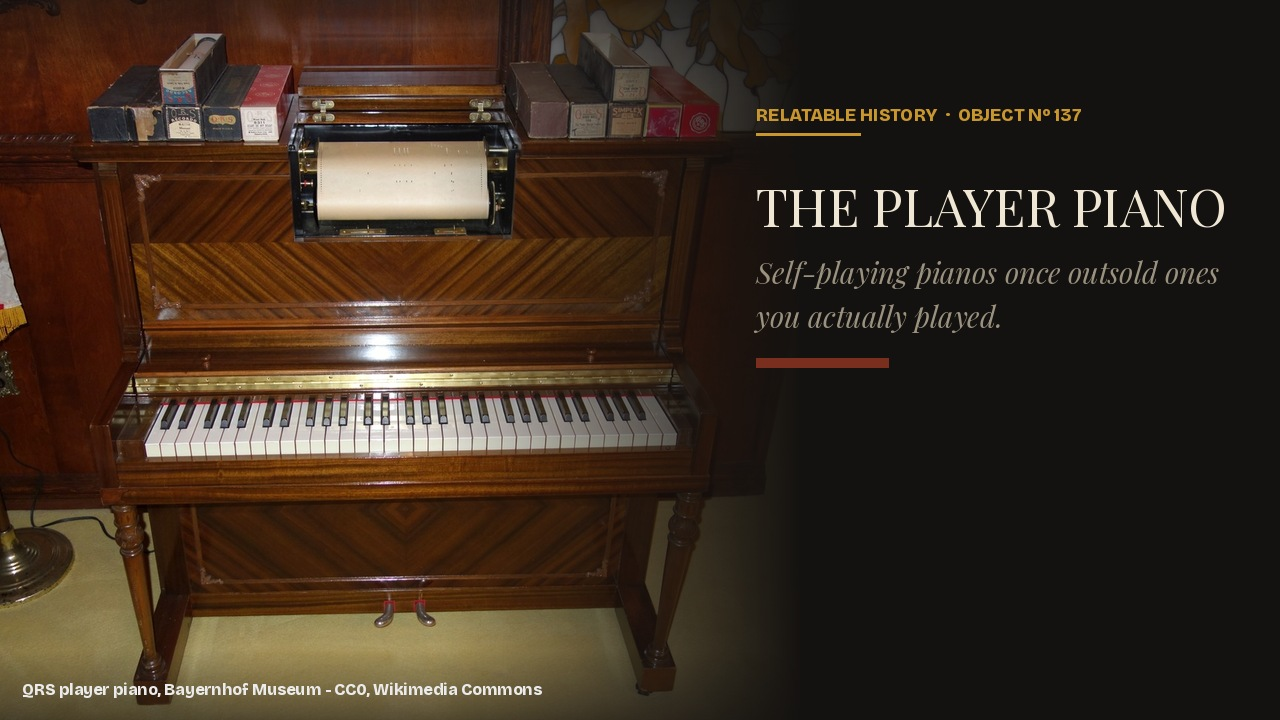
Why player pianos outsold real pianos in 1924 really comes down to one blunt fact: for a few remarkable decades, a machine that required no musical skill at all out-competed an instrument that demanded years of practice, and more Americans bought the machine. It’s one of the strangest commercial victories in the history of music, and it lasted barely longer than it took radio and the stock market to take it back.
A Piano Anyone Could “Play”
Edwin Votey, an inventor working out of a home workshop on Forest Avenue West in Detroit, built the first fully working version of what he called the Pianola sometime around 1895, following it with further prototypes in 1896 and 1897 before production began in earnest in 1898. The mechanism ran on suction: a paper roll, perforated with a pattern of holes, passed over a tracker bar connected to a system of pneumatic bellows, and foot pedals pumped by the player supplied the air pressure that drove the whole thing. Each perforation triggered exactly one note, in exactly the order and timing it had been punched, which meant anyone with two working feet and no musical training whatsoever could produce a note-perfect performance. Votey didn’t actually secure a patent until he applied in November 1899, and it wasn’t granted until July 1904, years after the instrument itself was already on the market — and even that patent covered a later, intermediate design rather than his original 1895 machine. The Aeolian Company bought Votey’s firm in 1898 and built a dedicated factory for it in Garwood, New Jersey, by 1900, with Votey himself staying on as the company’s technical director.
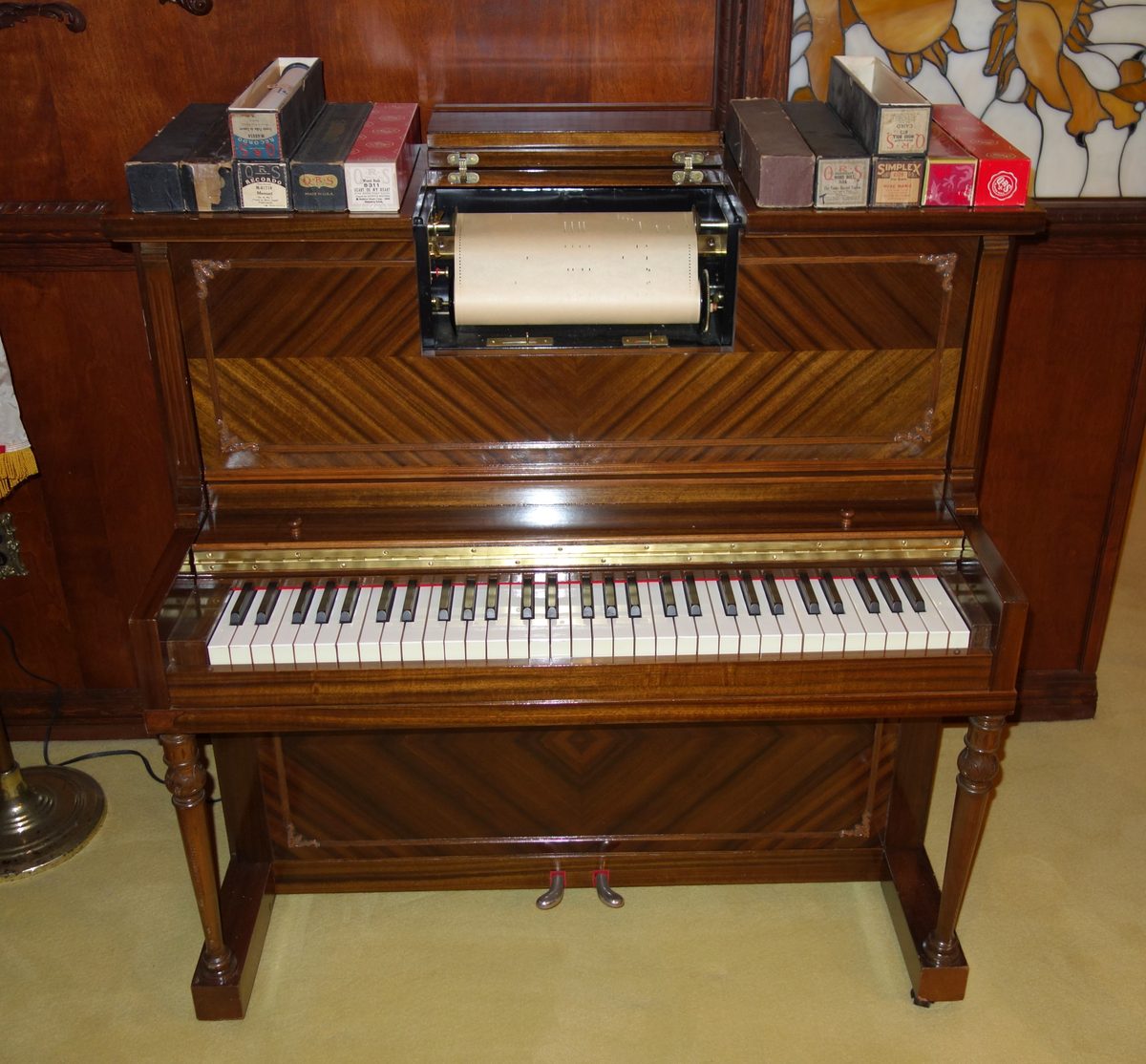
The pneumatic logic underneath all of this was genuinely elegant once you follow it through. Air sucked through the wind-box created a vacuum inside the instrument’s bellows system; a perforation passing over the tracker bar let outside air into one specific channel, and that small pressure change flexed a diaphragm, which raised a pneumatic, which struck the corresponding piano key, all within a fraction of a second and entirely without electricity. Every part of the chain existed purely to translate a hole in a piece of paper into the mechanical equivalent of a finger pressing a key at a specific instant, and the faster or slower the player worked the foot pedals, the faster or slower the music played, giving even an untrained operator some crude control over tempo.
One Roll, Any Piano
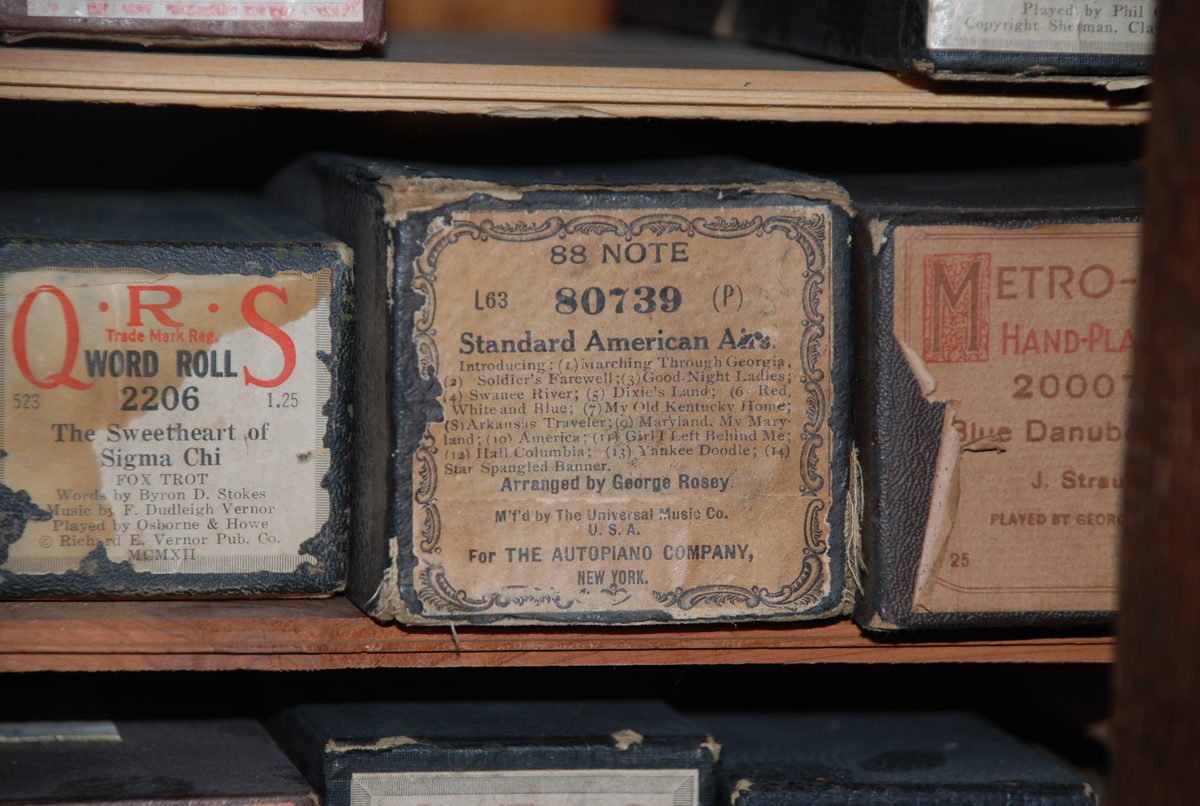
Early player pianos from competing manufacturers used incompatible roll formats, which meant a roll bought for one brand’s machine might not fit another’s at all. That changed at a trade meeting in Buffalo, New York, on December 10, 1908, when most of the country’s largest player piano makers agreed on a shared specification: an 11.25-inch roll width, with 88-note rolls punched at nine holes per inch. Once manufacturers actually adopted it, a customer could buy any compliant piano from any maker and pick up 88-note rolls at any music shop in the country, no longer locked into whatever rolls their specific instrument’s manufacturer happened to sell. The agreement held well enough that period roll boxes still turn up today stamped plainly with “88 NOTE” as a selling point, proof the standard wasn’t just a paper agreement. A smaller 65-note format, punched at a coarser six holes per inch, had been common on earlier instruments, and some manufacturers kept producing it alongside the new standard for buyers with older machines, but 88-note quickly became the one format everyone actually meant whenever they said “a player piano roll” at all.
Pianos That Remembered How Famous Pianists Actually Played
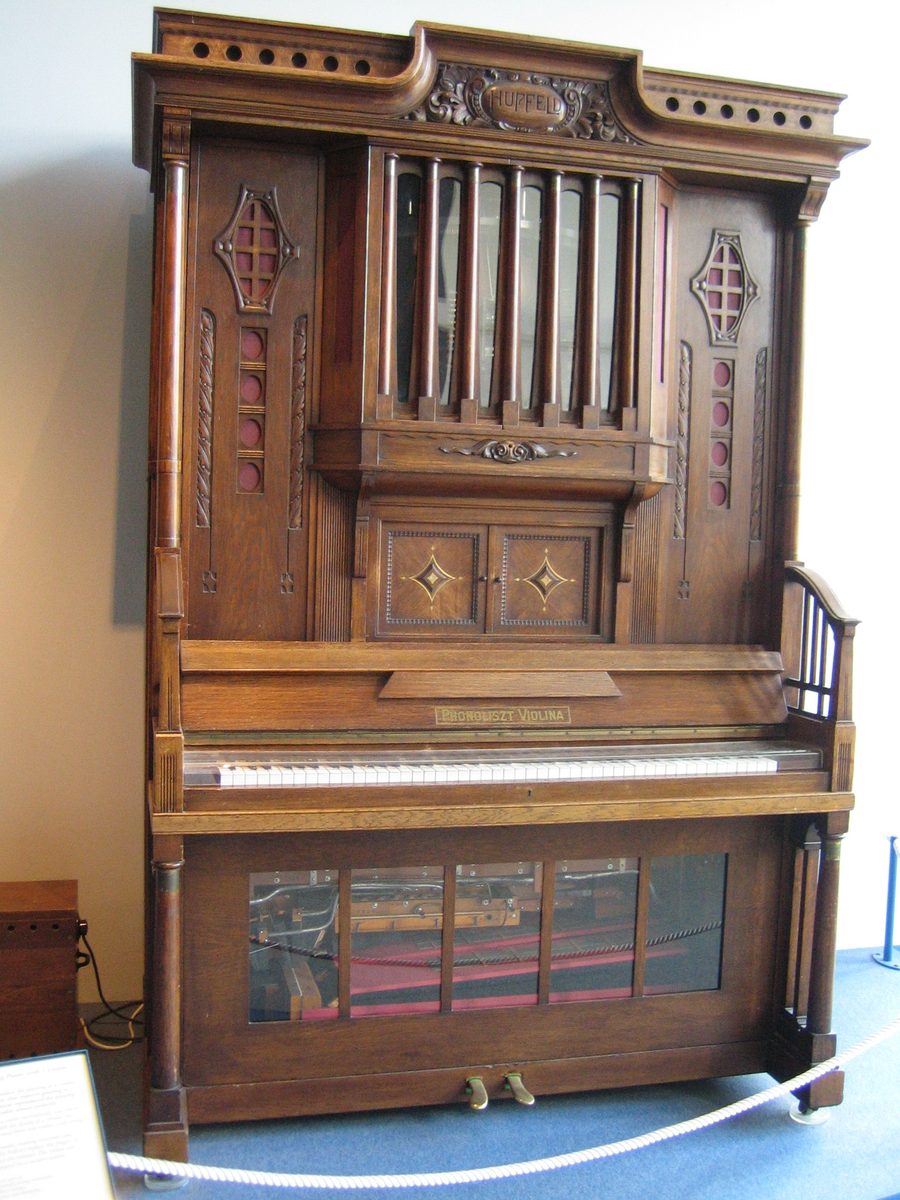
The technology didn’t stop at playing a fixed tune correctly. A German firm, M. Welte & Söhne of Freiburg, unveiled the Welte-Mignon in 1905, generally considered the first true “reproducing” piano, meaning it captured and replayed not just which notes a pianist struck but their exact tempo, phrasing, dynamics, and pedaling as well. Welte recorded over thirty pianists born before 1860, including Camille Saint-Saëns and the eighty-year-old Carl Reinecke, and its catalogue eventually held more than 3,000 recordings made across roughly twenty-five years, including sessions with Ignacy Jan Paderewski in 1906 and a young Vladimir Horowitz in 1926. Aeolian built its own competing reproducing system, the Duo-Art, which preserved performances by Paderewski, George Gershwin, and Percy Grainger among others. Not every maker stopped at piano alone, either: in 1912 the German firm Hupfeld unveiled the Phonoliszt-Violina, a single elaborate cabinet that combined a reproducing piano mechanism with three actual violins, mechanically bowed, an attempt to automate an entire small ensemble rather than just a keyboard.
The recording process behind the Welte-Mignon rolls was its own small marvel. Mercury contacts fitted under each key registered the exact instant a pianist struck it, while a second set of contacts near the hammers caught the instant each note actually began to sound, letting the system distinguish a key press from the note itself. Separate pneumatic devices captured dynamics across the bass and treble registers, with a registering pneumatic tracing the rise and fall of loudness directly onto a master roll. That master was then copied and hand-punched into the production rolls that actually shipped to customers, which means a roll bought in a shop in 1910 wasn’t a crude approximation of a performance; it was, as faithfully as the technology could manage, a direct physical record of how a specific pianist pressed a specific key at a specific moment, decades before magnetic tape or digital recording existed.
1924: Why Player Pianos Outsold Real Pianos
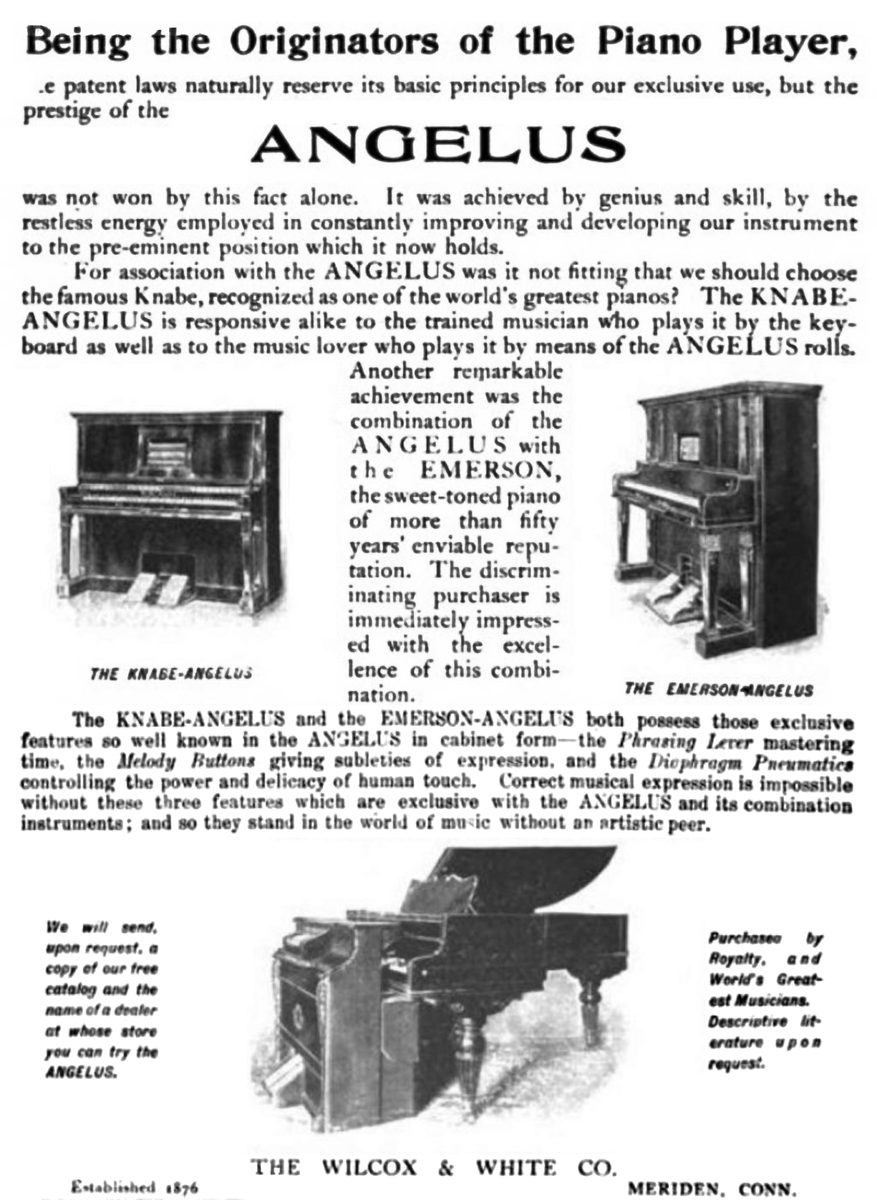
By the 1910s and into the 1920s, the player piano had become, by the trade’s own description, “the instrument to own,” and manufacturers advertised accordingly, Wilcox & White’s Angelus line boasting it had been “purchased by royalty and world’s greatest musicians.” The roll-publishing side of the business boomed right alongside the hardware: QRS, founded in 1900 by Melville Clark, hit its own production peak in 1927, selling roughly 10 million piano rolls in a single year. According to the National Association of Music Merchants’ own industry history, player piano sales in the United States peaked in 1924, the year more player pianos were sold than pianos meant to be played conventionally by hand. The business behind it had real scale: Melville Clark is credited with helping establish an early industry standard for roll construction itself, and by the time QRS hit its own production peak, the company was turning out rolls fast enough to supply a genuinely national market, not a niche hobby. A player piano in the parlor wasn’t just a novelty purchase, either; it functioned as the household’s entire music system, the one piece of furniture that could reliably produce dance music, hymns, and popular songs on demand for a family that, in most cases, included nobody who could actually read sheet music. Sheet music publishers noticed the shift too: popular songs increasingly got released with a piano-roll edition alongside the printed score, since a hit tune could reach a buyer who had never taken a lesson in their life just as easily as one who had, and the roll, unlike the sheet music, guaranteed the song would actually sound right coming out of the instrument.
Radio, Records, and the Crash That Finished It
The reversal, once it came, was fast. The phonograph and then commercial radio gave American households recorded and broadcast music on demand, without anyone needing to pump a pedal or load a roll at all, and player piano sales fell sharply through the back half of the 1920s as a result. The stock market crash of 1929 delivered the final blow: by the trade’s own later account, the player piano had nearly gone extinct in the United States that same year, its remaining market wiped out by the Depression just as thoroughly as it had been undercut by newer technology. The irony is specific: the player piano had won its market in the first place by delivering music to people without requiring any skill from them, and radio and the phonograph then beat it at exactly that same game, delivering music that required even less effort, not even a foot pedal, and delivering an actual recorded human performance rather than a mechanical reproduction of one. A machine built to out-compete trained musicians lost, in the end, to a machine that required even less from the person operating it.
What Survived
The instrument never fully vanished. A revival of interest in player piano rolls began in the 1950s, and a real market for both the machines and their rolls persisted for the rest of the century, with QRS itself still making rolls continuously since 1900, eventually adapting the same basic idea to digital retrofit kits and smartphone-connected mechanisms decades later. What started as a way for anyone to “play” a piano without lessons ended up, for one brief and genuinely strange stretch of the 1920s, outselling the real thing outright.
Watch the short

Related reading
- Charles Babbage and the Organ Grinders He Hated
- Why Music Boxes Disappeared: Rise and Fall of an Industry