
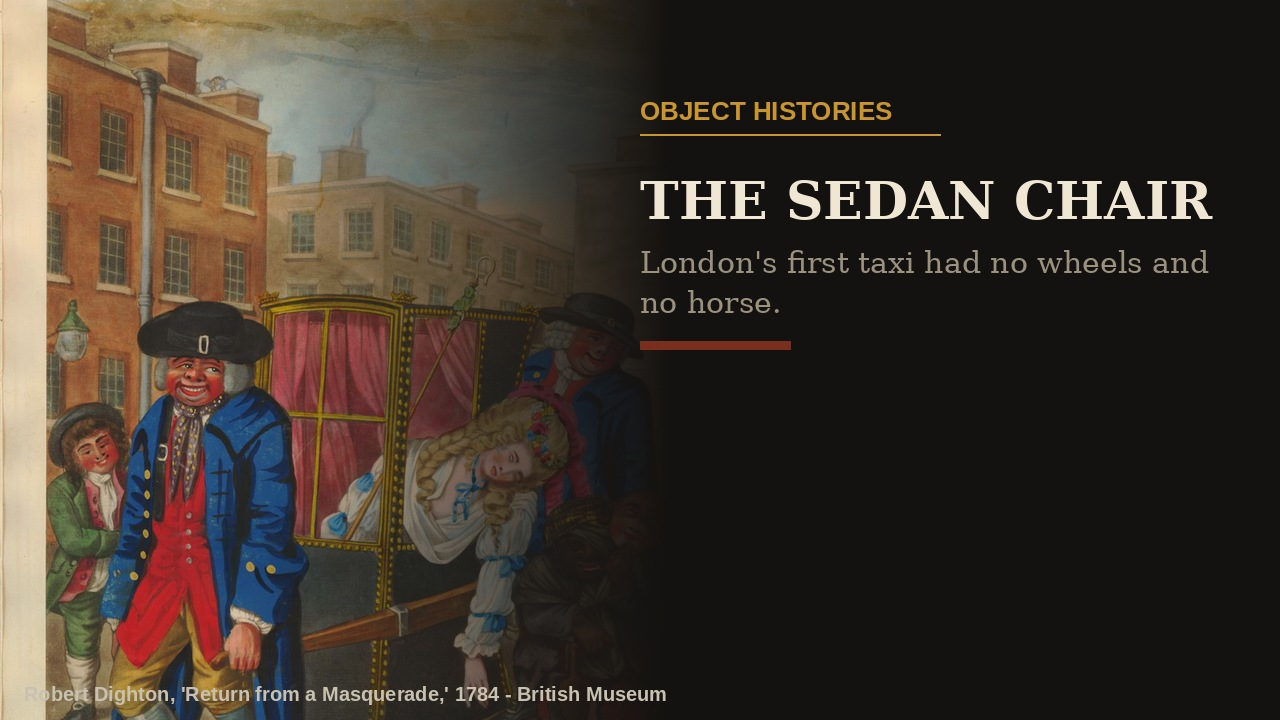
A sedan chair was, mechanically, almost nothing: a wooden box on two poles, carried by two men who never set foot inside a coach-house or bought a horse. That simplicity is exactly why it caused a public scandal the moment it arrived in England. The complaint against the first fashionable owner of one was not that the thing was uncomfortable or slow. It was that the arithmetic was wrong: a coach ran on a horse, and this ran on two Englishmen.
What follows is the mechanism behind that arithmetic — how the box was actually built, who was licensed to carry it, what the trade paid and cost, and how two hundred years of the most literal kind of human-powered transport ended, within a single generation, against a piece of paving stone and a two-wheeled cab.
The chair that got a duke accused of owning slaves
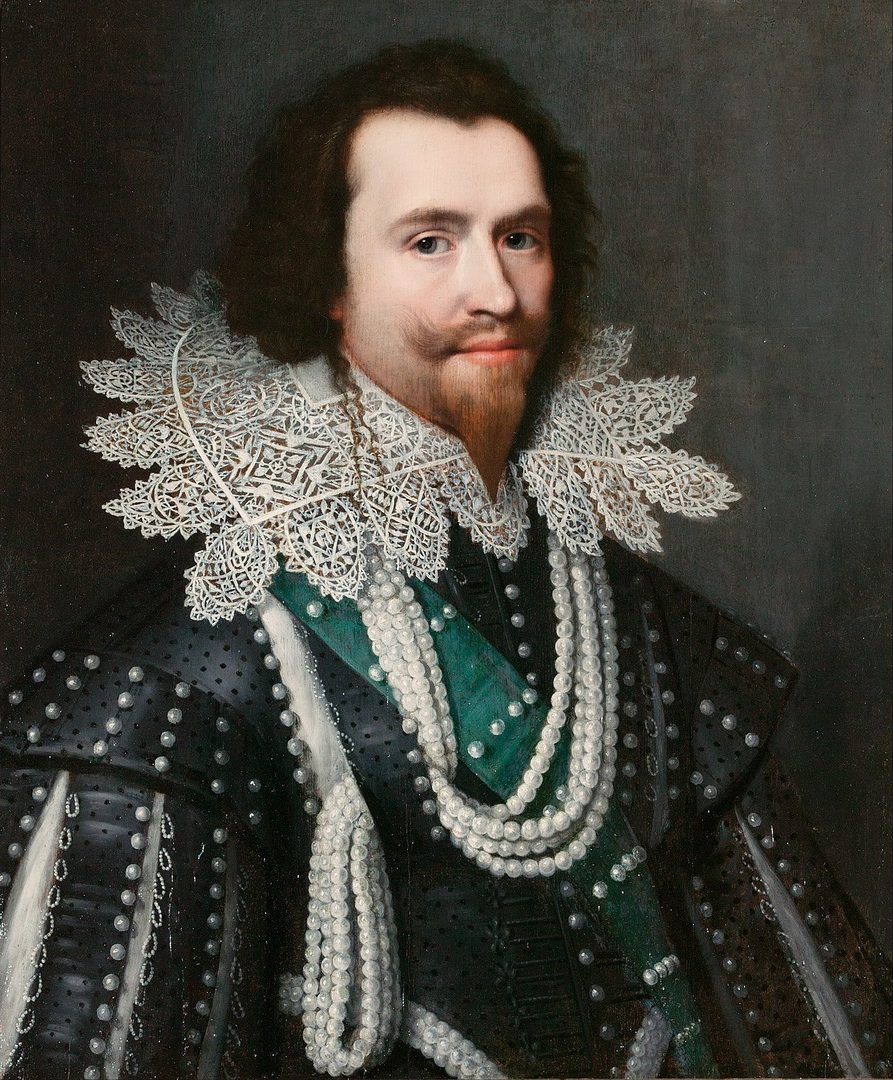
The English row began with a gift. In 1623 the future Charles I travelled to Madrid to court a Spanish princess, and came home with, among other presents from the Spanish court, a set of enclosed carrying-chairs. He passed at least two of them to his favourite, George Villiers, Duke of Buckingham, who had himself carried through London streets inside one. London had never seen the object before, and it reacted badly.
The objection, recorded at the time, was that Buckingham was reducing free-born Englishmen to the condition of beasts of burden. It is a strange complaint by modern standards — nobody minded a horse pulling a coach — but it lands more clearly once you see what a sedan chair actually removes. A coach distributes its load across four wheels, a suspension and an animal bred for exactly this work. A chair puts the entire load, plus its own considerable weight, onto two human shoulders, on foot, for however long the journey takes. Buckingham’s critics were not wrong about the mechanics. They were objecting to a machine that ran on people instead of horsepower, at a moment when doing that to a fellow Englishman still read as an insult to the whole class of free men.
That objection did not stop the chair. It just delayed its commercial life by eleven years.
The licence that made it legal was a monopoly, and it was tiny
In 1634 a courtier named Sir Sanders Duncombe petitioned Charles I for the right to let out covered chairs for hire on London’s streets, and the king granted him a patent: a fourteen-year monopoly on the business. Duncombe is credited with having brought the design over from Naples, where enclosed carrying-chairs were already an established way to move through narrow streets. He started with somewhere between forty and fifty chairs on the road.
That number is worth sitting with. A royal monopoly on public transport for the largest city in the country began with roughly the fleet size of a single modern taxi rank. The pitch to the crown was explicitly about street space: London and Westminster were already choked with hackney coaches, and a chair took up a fraction of the room a coach needed. The patent was sold, in other words, as congestion relief.
The monopoly did not last as a monopoly. By 1711, Parliament had stepped in directly: an Act of the tenth year of Queen Anne licensed a substantial additional number of hackney chairs in London, on top of the coaches already regulated under a separate 1694 scheme, and a further Act two years later clarified how the licensing was meant to work. The same Hackney Coach Commissioners who set coach fares now set chair fares too, numbered the chairs, and fined operators who ignored the tariff. What had begun as one man’s fourteen-year monopoly ended as an ordinary regulated trade, with several hundred licences in circulation at any time.
The one thing a coach could never do
The commercial case for the chair over the coach was not comfort. A coach on wheels, riding London’s rutted, unpaved streets before the 1760s, was a genuinely rough experience, and a chair carried directly on two men’s shoulders was not much smoother. The case was access. A coach needed a street wide enough for its wheels and turning circle. A chair needed a gap two men could walk through, which meant it could use alleys, courtyards and stairs a coach could never enter.
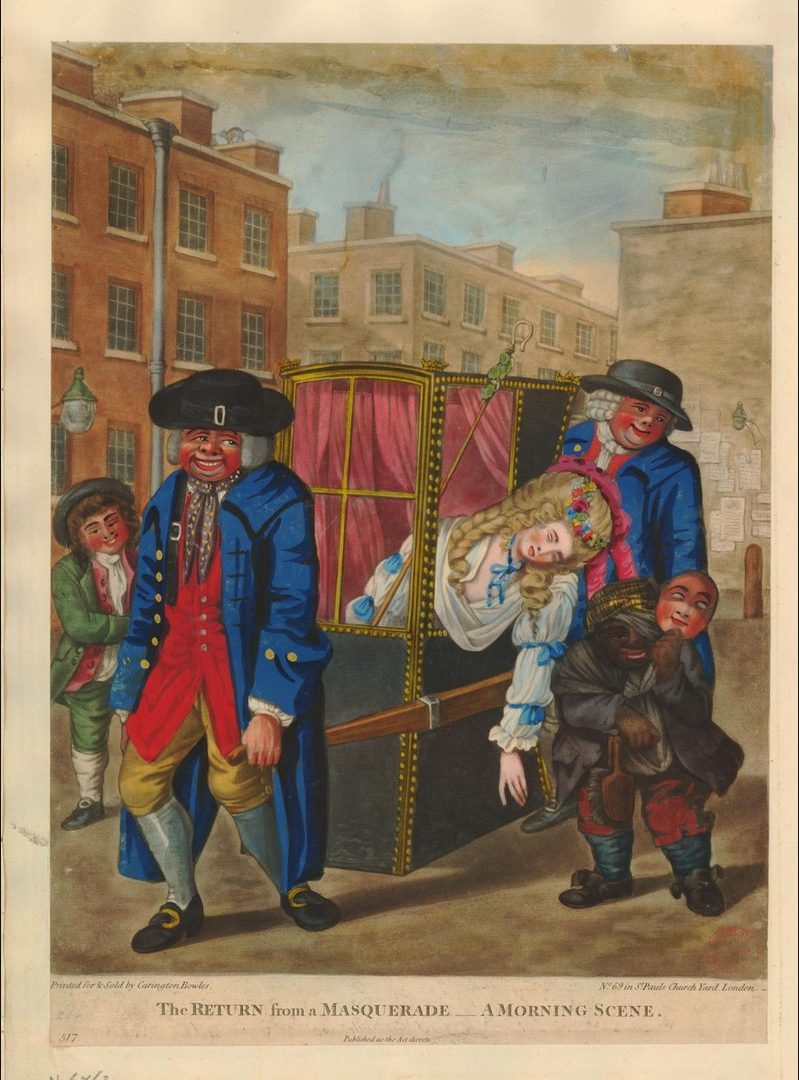
That access had one specific, remarkable consequence: the sedan chair could come indoors. Chairmen carried their passenger’s entire vehicle into a house’s front hall, set it down on the flagstones, and only then opened the door and let the passenger step directly onto dry, swept flooring. A woman in silk shoes and a hooped skirt could travel from her own front hall to a ballroom’s front hall without her feet ever touching a London street — which, given that those streets were an open sewer for household waste well into the eighteenth century, was not a vanity. It was the period’s version of climate control. No wheeled vehicle before or since has routinely done this as a matter of course.
The box itself was built for exactly that trick: a panelled wooden shell, usually painted or occasionally gilded for private owners, with a glazed front window and small side windows, two carrying poles slotted through brackets on the flanks, and a hinged roof. The hinge was not decorative. The 1770s were the high point of the extravagant female coiffure — towers of hair, wire and feathers that could stand a clear foot above the wearer’s head — and a chair with a fixed roof simply could not carry a fashionable woman of the decade. Contemporary caricatures show exactly this: a chair’s lid propped open with a plume rising well clear of it, the whole point of the hinge visible in a single image.
Bath ran an entire economy on the chair, and Beau Nash regulated it
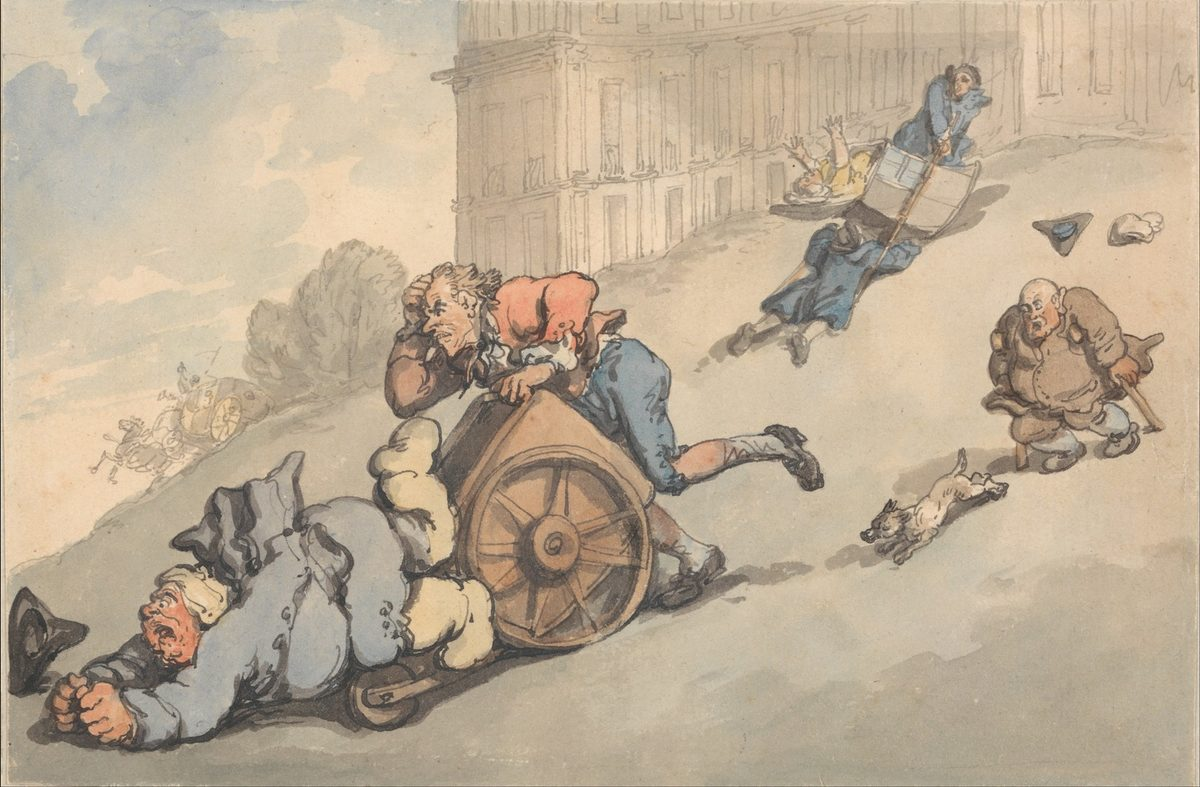
No English city depended on the sedan chair more than Bath. The city’s streets climb steeply from the river, its season packed thousands of visitors into a small area every year, and a large share of those visitors had come specifically because they could not walk far: gout and rheumatism were the advertised cures the waters promised, which meant the clientele was disproportionately unable to reach the Pump Room and the King’s Bath on foot. Chairs waited outside every lodging house and carried invalids directly from their beds to the water and back.
Richard “Beau” Nash, Bath’s self-appointed Master of Ceremonies from the early 1700s, treated the chair trade as infrastructure worth controlling rather than leaving to chaos. Among the civic improvements historians credit him with pushing through the Corporation were better-paved and better-lit streets and a formal licensing and fare system for the city’s chairmen, the same basic toolkit London had applied to its own trade a generation earlier. It did not fully work. Guidebooks warned visitors for a century that Bath’s chairmen would set the poles down mid-journey to renegotiate a fare they considered too low, a habit regulation never quite killed.
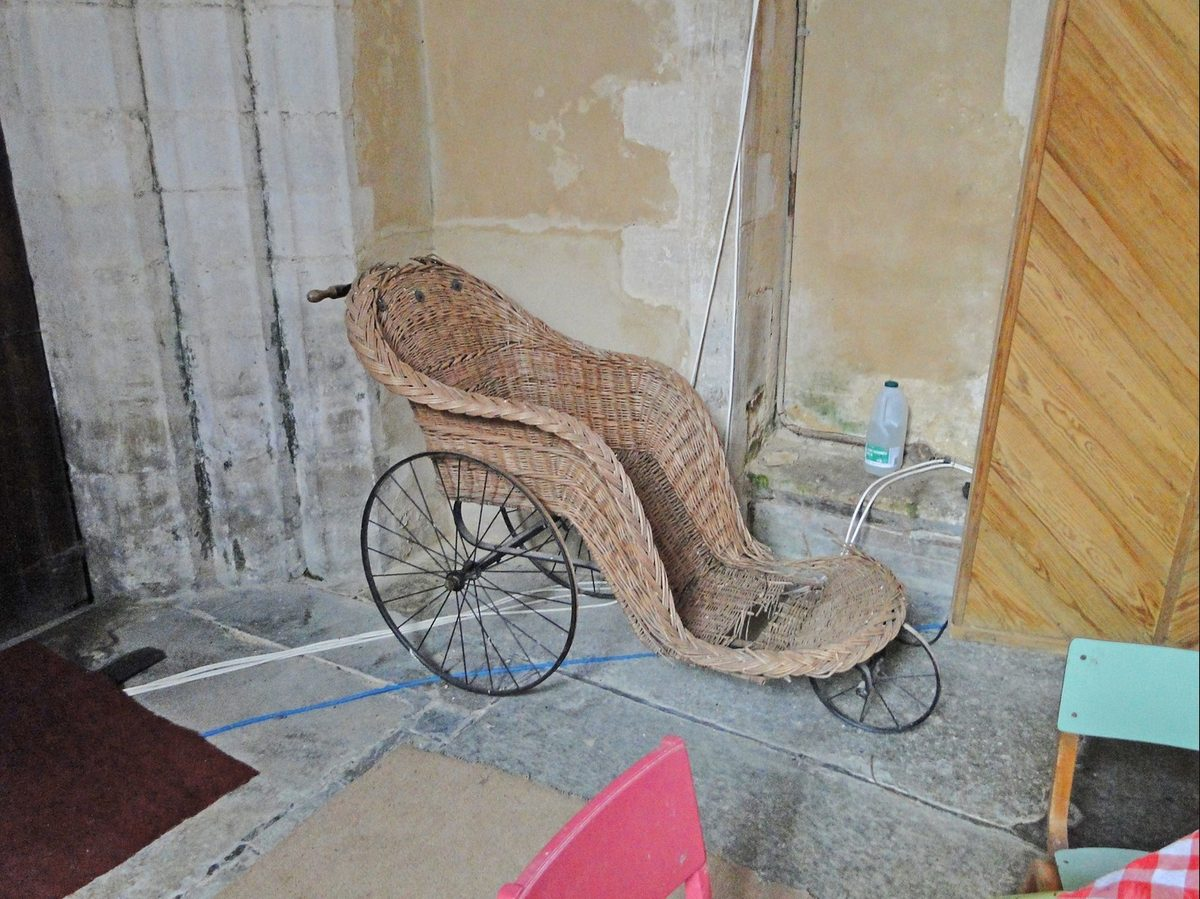
Bath also produced the chair’s most consequential rival. Around 1750, a Bath maker named James Heath built a lighter chair mounted on three wheels, steered by the occupant with a bar at the front and pushed by a single attendant from behind rather than carried by two. It became known simply as the Bath chair, and it needed half the labour force of the vehicle it was built to replace. For the next three-quarters of a century the two designs competed directly for the same invalid trade, and the wheeled version gradually won: it is the direct mechanical ancestor of the modern wheelchair, in a line unbroken enough that the resemblance needs no explaining.
The trade itself was rough, seasonal and largely staffed by outsiders
Carrying a chair for a living was hard, low-status, physically punishing work, and the men who did it in London were disproportionately Irish immigrants, while in Edinburgh the trade was dominated by Highlanders who had come south or into the city for work. Research into surviving household account books shows chairmen appearing regularly as a distinct paid category of eighteenth-century domestic and casual service, hired by the trip rather than salaried by great households the way a coachman might be, which left the trade vulnerable to exactly the kind of fare disputes that got chairmen their reputation for haggling mid-journey. The hours ran late, because the fashionable evenings that generated the most fares in London and Bath alike ran late, and a chairman’s income depended on being available exactly when respectable people wanted a coach instead of walking home through an unlit street.
At the opposite end of the same trade sat a very different object: the private chair built for a single aristocratic household rather than let out for hire. These were gilded, carved, lined in silk and painted with mythological scenes, finished to match a family’s own coach livery, and museums preserve them today as pieces of cabinetmaking as much as vehicles. A private chair required no licence and paid no fare, but it still required two permanently employed men to move it anywhere at all, which made it one of the purest status objects of the century: transport whose entire value lay in visibly needing human beings to operate.
What actually killed it was not competition. It was pavement.
The sedan chair’s advantage over a coach depended on London’s streets staying bad: rutted, muddy, and too narrow in places for wheels. From 1762 onward, a series of Westminster Paving Acts took the responsibility for street surfaces away from individual householders and gave it to a central paving commission, which laid proper stone, raised the footways above the roadway, and moved the open drainage channel from the street’s centre to gutters at its edge. The mud that had made a chair worth its fare over a coach simply drained away, street by street.
Once London’s roads could take a light, fast wheeled vehicle everywhere a chair could go, the chair’s remaining advantage — narrow-street access — stopped mattering as much, and its cost disadvantage — paying two men rather than feeding one horse — started to matter a great deal. In 1834 an architect named Joseph Hansom patented a low, two-wheeled cab with the driver’s seat raised behind the passenger compartment, designed specifically for speed and stability on exactly the kind of paved, crowded streets Westminster had just finished building. It needed one horse and no chairmen at all, and it undercut the chair on cost, speed and capacity simultaneously.
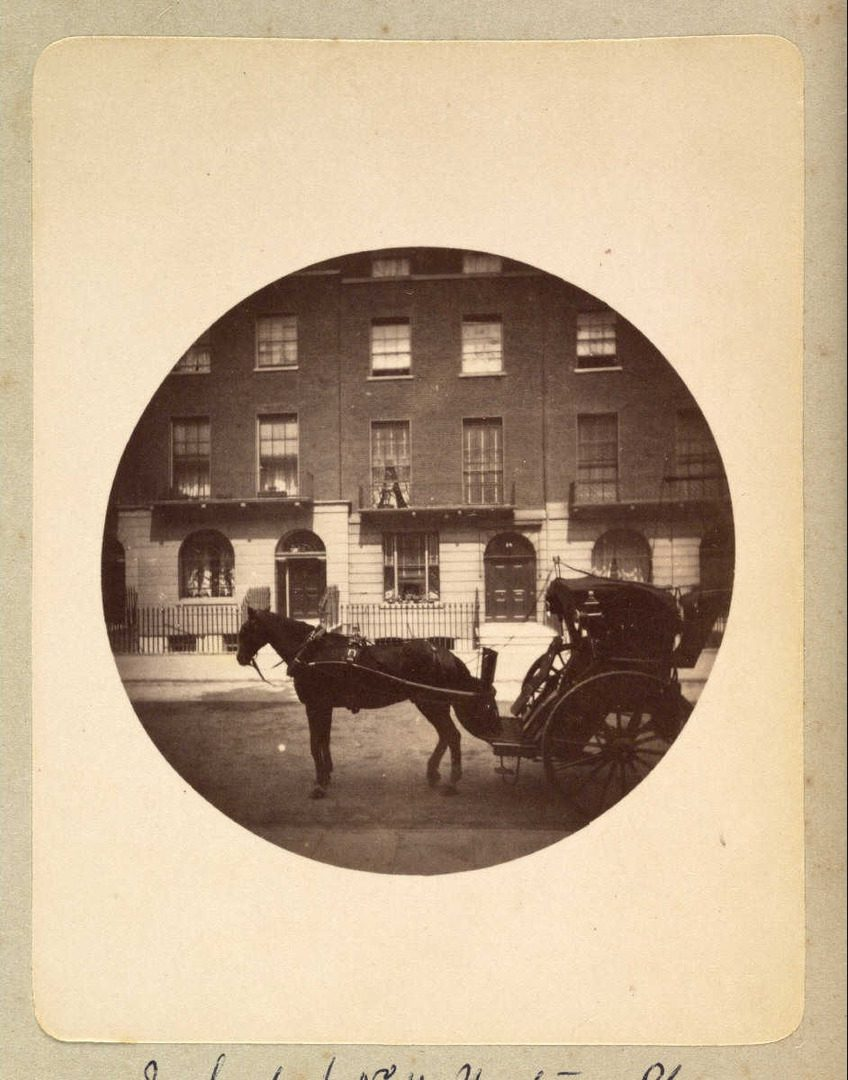
London’s chairs became a curiosity within a decade of the Hansom cab’s arrival. Bath held out considerably longer, because its hills and its invalid trade kept a real advantage alive after London’s had disappeared, and Bath chairmen were reportedly still working into the second half of the nineteenth century. After that, the surviving chairs went where most retired transport goes: into grand houses’ front halls as furniture, and eventually into museum collections, which is where the object survives today, catalogued as decorative art rather than as a vehicle anyone expects to use.
The word did more travelling than the object
The sedan chair’s name outlived its working life by nearly a century, and it did so twice. First through Heath’s wheeled successor, which carried the association with invalid transport straight into the emerging language of medical mobility aids. Then, in 1912, American car manufacturers needed a name for a new body style: a fully enclosed automobile with a fixed roof and seating for an entire family, as opposed to the open tourers and roadsters that still dominated the market. Studebaker’s Four and Six models that year were the first cars marketed under the term, reaching back roughly two hundred and eighty years to the object Sanders Duncombe had first put on London’s streets under royal patent. Neither the 1912 Studebaker nor most sedans built since carries a single engineering feature borrowed from the sedan chair. What survived was purely the idea the word had always described: an enclosed box, on its own dedicated means of locomotion, built to carry one household in privacy from one indoor space to another.
Watch the full history
The video version covers the same two centuries in under six minutes, built around the object rather than the trade that carried it.

Related reading
- How Quill Pens Were Actually Made, and Why Steel Killed Them
- How Sod Houses Were Built on the Nebraska Prairie: The Construction, the Homestead Act, and the Life Inside
- How One Farmer’s Patent Rebuilt the American Barn
- The Contested History Behind Blue Monday Washday
Works cited
- Garry, Mary Anne. “Sedan Chairmen in Eighteenth-Century London.” Journal of Transport History, 2016.
- Victoria and Albert Museum. “Sedan Chair.” Collections object O109491. Link.
- London Museum. “Road vehicle, sedan chair.” Collections object 119458. Link.
- Smithsonian National Museum of American History. “Hansom Cab, 1900.” Object record.
- Science Museum Group Collection. “Hansom cab, late 19th century.” Object co25602. Link.
- “An Act for Explaining the Acts for Licensing Hackney-Chairs,” 1712 (11 Anne). Folger Shakespeare Library catalog record 786288.
- “Bath chair.” Encyclopaedia Britannica.
- Digitens: Digital Encyclopedia of European 18th Century. “Beau Nash.” Link.
- Kimes, Beverly Rae, and Henry Austin Clark Jr. Standard Catalog of American Cars, 1805-1942. 3rd ed. Krause Publications, 1996.