
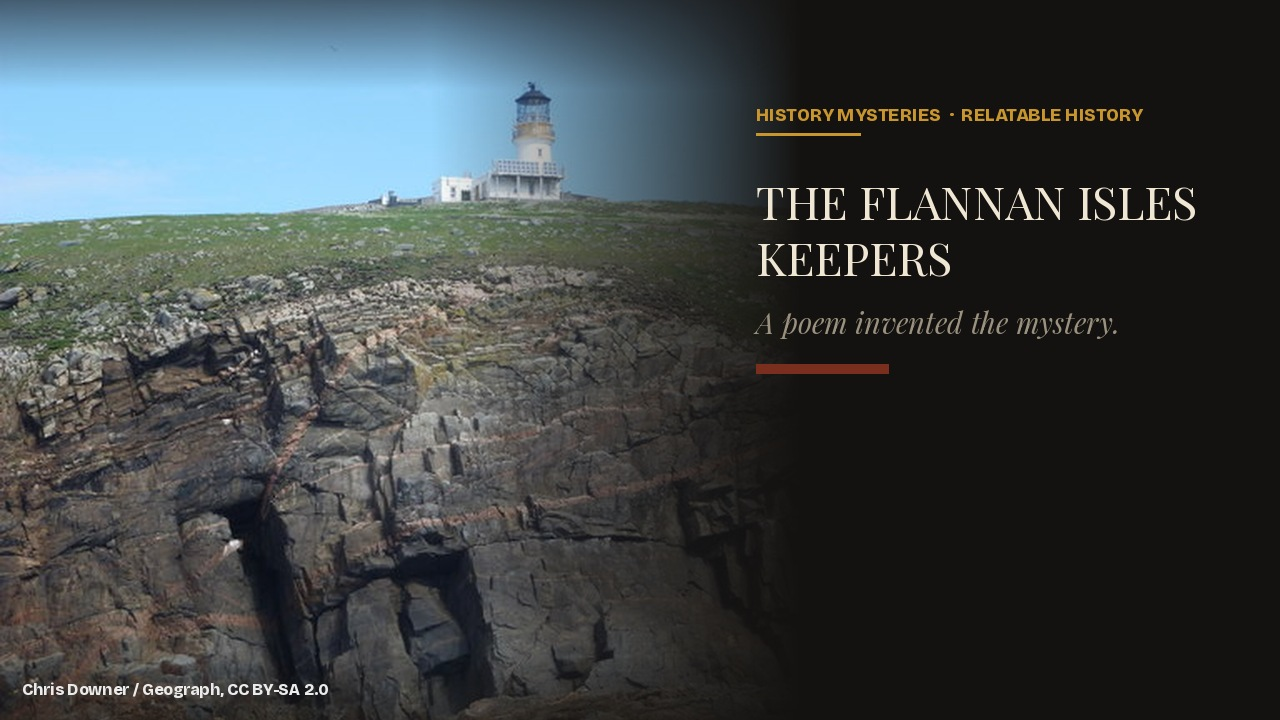
The report that settled the Flannan Isles case has been sitting in a public archive since 8 January 1901, and it is not a document anyone had to dig for. Robert Muirhead, the Northern Lighthouse Board superintendent who investigated the disappearance of three keepers, wrote it up in careful, unglamorous detail within two weeks of reaching the island. It describes wrecked ironwork, a moved rock, and a missing coat. It does not describe a fallen chair, an abandoned dinner, or a log entry about praying, because none of those things were ever in it.
Those details come from somewhere else entirely: a poem, published twelve years after the fact, and a magazine hoax that followed a further seventeen years after that. Between them they buried Muirhead’s actual findings so completely that most retellings of the story today are, in effect, retellings of the fiction rather than the case file.
A lighthouse built for a rock nobody could reach
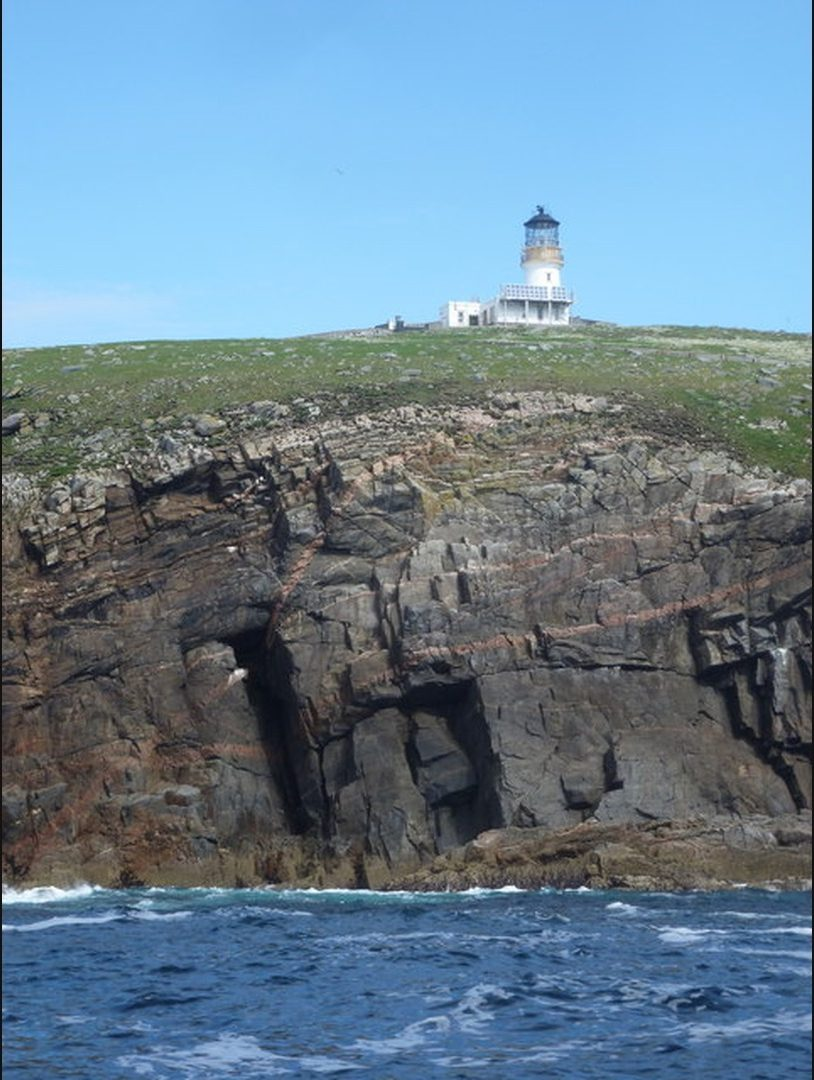
The Board of Trade approved a lighthouse for Eilean Mòr, the largest of the Flannan Isles, in 1896. George Lawson of Rutherglen spent three years, from 1896 to 1899, constructing not just the tower but the landing stages, the stairs cut into the rock, and a shore station at Breasclete on Lewis to house the keepers’ families. Every stone, girder and pane of glass for the tower itself had to be hauled up a cliff roughly 45 metres high directly from a supply boat, because there was nowhere flat enough on the island to land anything larger.
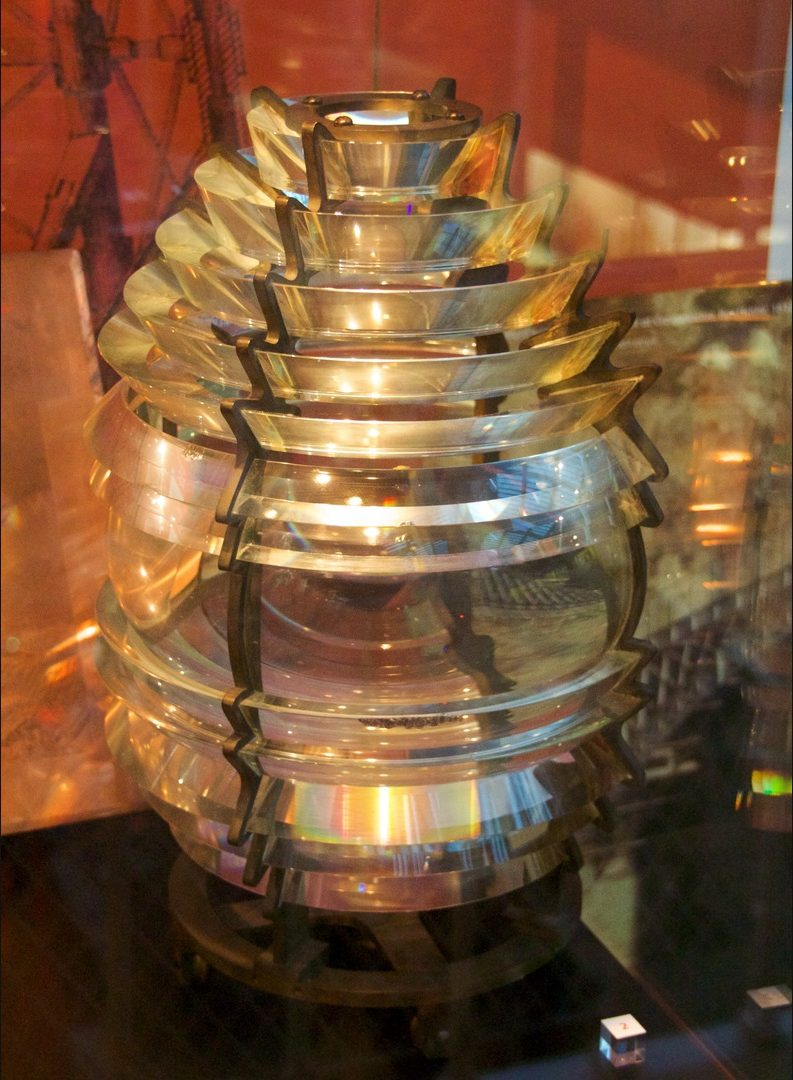
The finished station cost £1,899 for the lighthouse, landings, stairs and a cable-hauled tramway—a little over £200,000 in today’s money—plus another £3,526 for the shore station. The tramway split partway across the island at a junction the keepers nicknamed Clapham Junction, after the London railway interchange, with one branch running to the east landing and the other to the west. A small steam engine hauled supply wagons up from whichever landing was usable in the day’s weather; in a real blow, neither one was. The light itself, first lit on 7 December 1899, ran on a third-order Fresnel optic burning about twenty barrels of paraffin a year, visible some 20 nautical miles out.
Three men on the rock, one man ashore, and a fortnight between visits
Flannan Isles kept a complement of four keepers rather than the usual three, because the posting was considered too isolated and too physically hard to staff any other way. At any given time three men worked the light while the fourth took his turn ashore at Breasclete. The Northern Lighthouse Board’s own record of the station describes fortnightly reliefs carried out by the tender Hesperus, weather permitting, right up until the disaster of December 1900. The relief scheduled for 20 December could not sail at all; bad weather held the ship at Breasclete for six days, and she did not reach the island until noon on the 26th.
The three men on duty that December were James Ducat, the principal keeper, twenty-two years into the service and only recently promoted from assistant; Thomas Marshall, the second assistant, a former seaman who had joined four years earlier; and Donald McArthur, an occasional keeper covering for William Ross, the first assistant, who was ashore on sick leave. Joseph Moore, the third assistant, was the man due to rotate ashore, which is the only reason he was not on the rock when whatever happened, happened.
What Joseph Moore actually reported finding
On 15 December, a passing steamer, the Archtor, logged that the light was dark in poor weather. That report did not reach the Lighthouse Board for days, and even the shore-based lookout kept by a Lewis gamekeeper failed to raise the alarm sooner: the tower itself was not visible from the mainland lookout point between 7 and 29 December, and missing the light for four or five nights running was not, on its own, considered unusual.
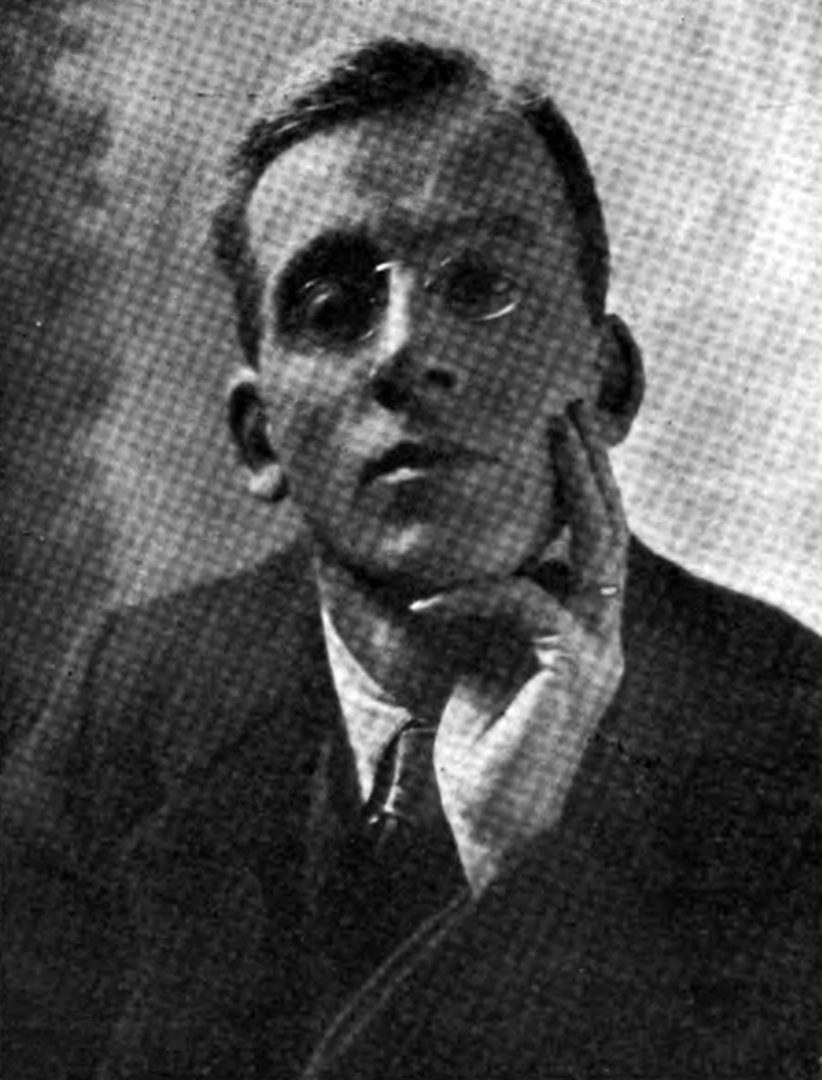
When Hesperus finally arrived on 26 December, there was no flag flying and no boxes waiting at the landing for restocking. Captain Harvie sounded the ship’s horn, then fired a signal rocket. Nothing answered. Moore was put ashore alone and climbed to the station. In his own letter to the Board, written two days later, he described a closed gate, a closed outer door, an open kitchen door, a cold fireplace and empty, unmade beds. He did not describe a meal on the table or a chair on the floor, because there was no meal and no fallen chair to describe. Upstairs, the lamp itself had already been trimmed, filled and cleaned, ready for lighting that evening. Whoever left the light unattended had done so only after finishing the day’s work.
Moore’s letter is specific about clothing, because clothing is what let Muirhead reconstruct the men’s last movements. Marshall’s sea boots and oilskins were missing; Ducat’s boots and an old waterproof, which he wore instead of oilskins, were also gone. McArthur’s coat, the only one he ever wore, was still hanging on its hook. Moore’s letter says plainly that this meant McArthur had left the station in his shirtsleeves—not a small detail on an island with no shelter, in December, in a gale.
The wreckage Muirhead actually measured
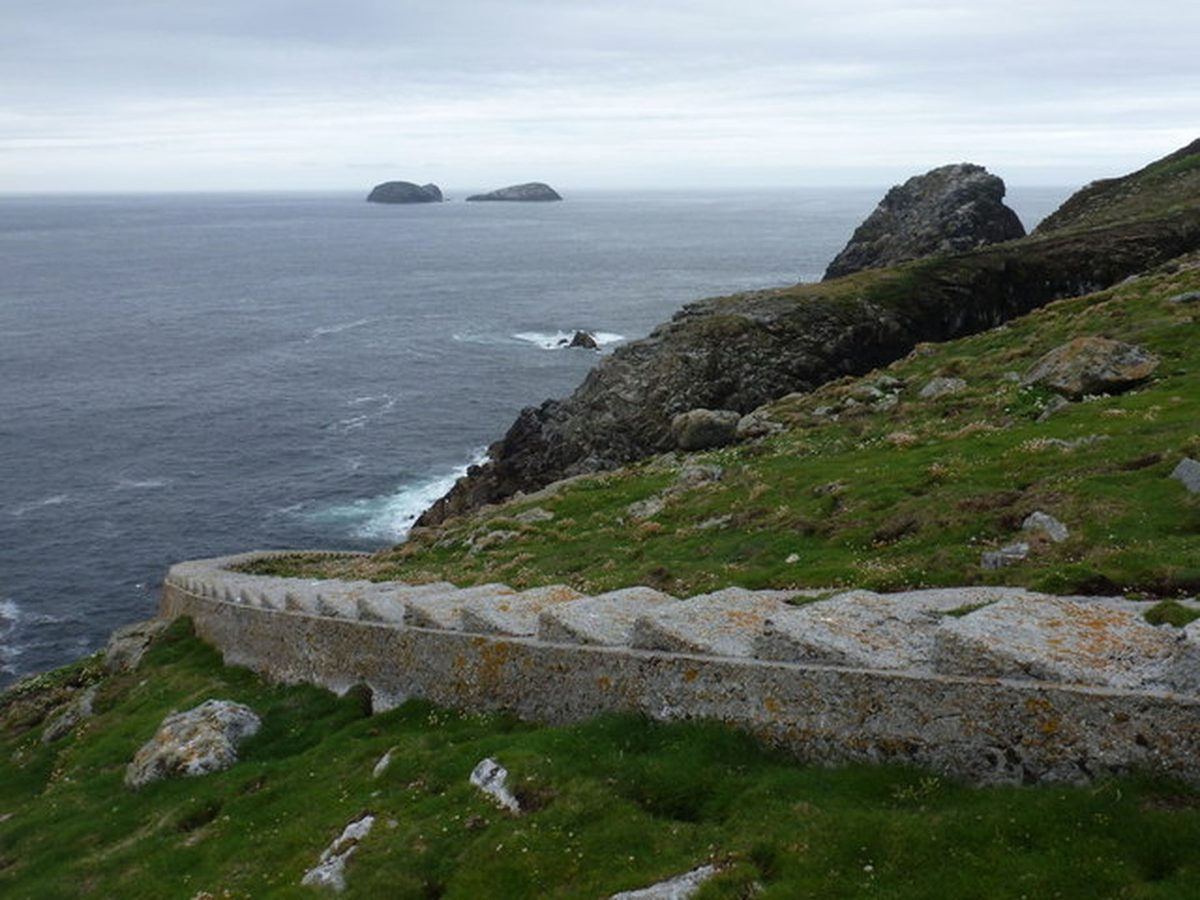
Muirhead landed on 29 December and spent several days examining the station and the two landing places with Moore and two other keepers sent to relieve them. The east landing, he found, was completely undisturbed: ropes coiled from the last relief on 7 December were still exactly where they had been left. The west landing told a different story. A wooden box holding the mooring ropes, secured in a rock crevice 110 feet above sea level, had been torn loose and its contents scattered and tangled among the legs of the landing crane. Iron railings along the tramway and around the crane platform were bent flat or ripped from their concrete footings. A block of stone weighing more than a ton—twenty hundredweight, in Muirhead’s own figure—had been dislodged from higher up the cliff and carried down onto the concrete path. A life buoy lashed to the railings, meant for exactly this kind of emergency, had been torn away by the sea; canvas fibres still clinging to its mounting rope showed it had not simply been taken down and used.
Muirhead’s conclusion, filed on 8 January 1901, was that Ducat and Marshall had gone down toward the west landing that Saturday afternoon to secure the gear against the weather, that an unexpectedly large wave had come up over them, and that McArthur had gone out after them, in his shirtsleeves, and been taken the same way. He weighed and rejected the possibility that the men had simply been blown off the island by wind; the wind that day was westerly, which would have pushed them further onto the island rather than off it, and he judged that experienced keepers would have thrown themselves flat rather than be blown over a cliff edge.
How a wave gets a ton of rock 110 feet up a cliff
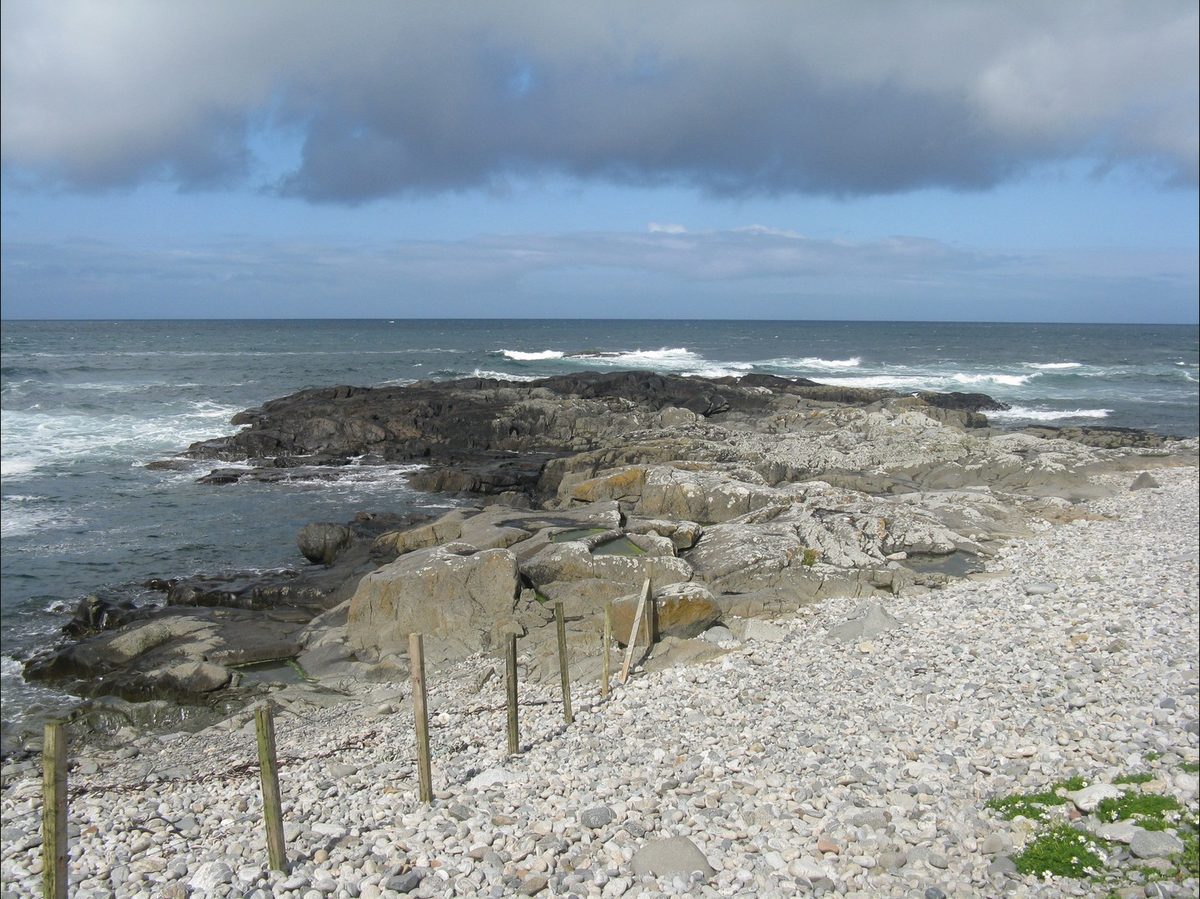
The physics behind Muirhead’s theory is not exotic, even if the scale of it is hard to picture. The west landing sits inside a narrow gully, the kind the Hebrides call a geo, that funnels and compresses incoming swell the way a nozzle speeds up water from a hose. A storm sea entering a geo like that does not simply rise; it can be driven upward with far more force than the same wave would carry on open coastline, throwing spray and solid water dozens of metres above its normal reach. Walter Aldebert, who served as principal keeper at Flannan Isles decades later, documented exactly this: he photographed spray reaching the lamphouse itself, roughly 100 metres above the sea, and once nearly lost his footing in water that had rolled clean over the top of the island, 77 metres up, before draining back off the rock. Against a sea capable of that, moving a ton of stone up a stairway is well within its means.
There is also a mundane, human reason the men may have taken the risk at all. Lighthouse keepers who let landing gear wash away without at least trying to secure it faced fines from the Board; going down to check on ropes and a mooring box in worsening weather was not reckless by the standards of the job, it was the job. Whatever pulled McArthur out after his colleagues, in his shirt and without his coat, happened fast enough that he did not stop to dress for it.
How a 1912 poem replaced the investigation
For over a decade after 1901, what the public knew about Flannan Isles was, roughly, what Muirhead’s report said. That changed in 1912, when the poet Wilfrid Wilson Gibson published “Flannan Isle” in his collection Fires. Gibson had never been to the island and was not working from Moore’s letter; he was writing a ballad, and ballads want a scene. His version gives the search party a table still laid for dinner, untouched, and a chair “tumbled on the floor” as if the men had been interrupted mid-meal. Structurally it is a good poem. Factually, none of it happened. Moore’s own account states the opposite: the kitchen utensils were clean, which he took as a sign the men had finished eating some time before whatever occurred.
The poem’s images were vivid enough that later writers folded them into the “true” story rather than treating them as invention, and the case picked up a second layer of fiction in 1965, when the American paranormal writer Vincent Gaddis published Invisible Horizons. Gaddis quoted dramatic logbook entries supposedly written by Marshall in the days before the men vanished—lines about Ducat going quiet, McArthur crying, all three men praying through the storm, and a final entry on 15 December reading “storm ended, sea calm, God is over all.” Gaddis attributed the text to a 1929 magazine piece credited to one Ernest Fallon.
The historian Mike Dash spent years tracing that logbook back to its source for a 1998 study in Fortean Studies, and later for Fortean Times. What he found was that no such log survives; the courts appear to have lost it during the 1901 inquest. More importantly, Moore’s own report says the log was in Ducat’s handwriting, as the principal keeper’s always was, not Marshall’s, and its last entry was dated the 13th, not the 15th. A subordinate keeper writing that his superior was irritable or weeping, in a log his superior would read, was never how the system worked. Dash eventually traced “Ernest Fallon” to a likely pseudonym for John L. Spivak, a writer for a magazine called True Strange Stories that needed dramatic copy and an author who needed the payment. The praying, weeping keepers are his invention, laundered through Gaddis into six decades of retellings that still circulate as fact.
What the Board actually did with the wreckage, and what came after
None of the three men’s bodies was ever recovered, which is part of why the case still gets filed under mystery rather than closed accident. But an unrecovered body is not the same as an unexplained one: Ducat’s and Marshall’s entries in the Board’s own lightkeeper registers carry a note in red ink, “disappeared on or about 15 December 1900,” and all three men are recorded in the register of deaths for the district of Carloway with the cause given as probable drowning. Ducat left a wife and four children; McArthur a wife and two; Marshall was unmarried. Muirhead, who had personally recruited both Ducat and Marshall and had shaken their hands at the previous relief only eight days before they vanished, called on both widows himself before he had even finished writing up his findings.
Moore relit the lamp that same night and stayed on as a keeper. The station he worked went on operating with a full-time crew for another seventy years. Flannan Isles was automated in 1971, one of the earlier stations in Scotland to get a remote monitoring link, reporting back to a station at the Butt of Lewis rather than to a person standing watch on the rock. Today the light still flashes twice every thirty seconds, unattended, and the only people who regularly go out to Eilean Mòr are Board maintenance crews and the occasional researcher checking the same 1901 report against whatever new film or article has just retold the story with the chair and the untouched dinner back in it.
Three men went out to secure some rope in bad weather and did not come back, and the paperwork that would have told their families more than that was never written, because nobody who could have written it survived. Everything added after that—the furniture, the tears, the prayer—was supplied by people who were never on the island at all.
Watch the full history
The video companion covers the same wreckage and the same poem in just under four minutes.

Related reading
- How a Water-Powered Grist Mill Turned Wheat Into Flour, No Cash Involved
- Who Really Invented the Telegraph Key (It Wasn’t Samuel Morse)
- What the Records Actually Show About the Shag Harbour UFO
- How Farmers Harvested Wheat With a Grain Cradle
Works cited
- Muirhead, Robert. “Report submitted by Robert Muirhead, Superintendent, on the 8 January 1901.” Northern Lighthouse Board.
- Moore, Joseph. Letter to the Secretary, Northern Lighthouse Board, 28 December 1900. Reproduced by the Northern Lighthouse Board.
- National Records of Scotland. “Flannan Isles Lighthouse Keepers: The Disappearance.” Open Book, 12 December 2023.
- Dunning, Brian. “The Keepers of Flannan Light.” Skeptoid podcast, episode 610, 13 February 2018. Link.
- Dash, Mike. “True Strange Stories?” Fortean Times, issue 352 (April 2017), 40–44.
- Dash, Mike, and Steuart Moore. “The Vanishing Lighthousemen of Eilean Mór.” Fortean Studies, vol. 4 (1998).
- Gaddis, Vincent. Invisible Horizons: True Mysteries of the Sea. Chilton, 1965.
- Gibson, Wilfrid Wilson. “Flannan Isle.” In Fires, 47–51. Macmillan, 1912.
- Northern Lighthouse Board. “Automation.”