
In the summer of 1485, people across England started dying of something nobody had a name for. It began with a wave of cold dread, then violent shivering, then a headache and an ache in the neck and limbs so severe that sufferers could barely move. Within a few hours the shivering gave way to a drenching sweat, a racing pulse and a thirst nothing could satisfy. By the end of a single day, the patient was usually either recovering or dead.
Physicians called it the sweating sickness, or in the Latin of the period, sudor anglicus — the English sweat. It broke out five times over sixty-six years, killed in the thousands, frightened Henry VIII into abandoning his own palaces, and then, after 1551, never came back. More than four centuries of physicians and historians have tried to identify it. None has managed to close the file, because the one thing every proposed answer needs — a surviving sample of the pathogen — does not exist.
What follows is not a solution. It is the evidence, and the case for and against each of the diagnoses that have been made against it.
The clinical picture comes from one witness who saw it twice
Nearly everything known about the disease’s symptoms comes from a single reliable source: John Caius, a Cambridge physician who lived through the fourth epidemic as a young man and then treated patients during the fifth, in Shrewsbury in 1551. The following year he published A Boke or Counseill Against the Disease Commonly Called the Sweate, the first medical account of a single disease ever written in English rather than Latin, specifically so that a record would exist.
Caius described a cold stage lasting between half an hour and three hours — shivering, dizziness, headache, and pain in the neck, shoulders and limbs — followed abruptly by the sweat itself: heat, delirium, palpitations, chest pain and an overwhelming thirst, with no rash at any stage. He believed the final, fatal danger was an urge to sleep that overtook patients near the end, and he warned against giving in to it. A separate witness to the first outbreak, the physician Thomas Forestier, emphasized something Caius did not stress as heavily: breathlessness in the disease’s last hours, which he attributed to “loathsome vapours” settling around the heart and lungs. Modern readers of Forestier tend to read that detail as a description of a lung disease.
The standard treatment, recorded in Grafton’s Chronicle, was almost entirely passive: go to bed the moment the shivering starts, lie still for a full twenty-four hours, eat nothing solid, drink sparingly. Survival past that first day generally meant recovery — but surviving one bout conferred no immunity. Some people caught it two or three times across their lives before it finally killed them.
Its epidemiology doesn’t match any other disease of the period
Plague, the era’s other great killer, was an urban disease that lingered in a city for months. The sweat did the opposite. Wherever it struck — city or countryside alike — it peaked and burned out within roughly a fortnight, then vanished from that place entirely. It spared infants and the very old almost completely, and it killed hardest among men in their thirties and forties, especially wealthy and well-fed ones. Londoners nicknamed it “Stoop Gallant” for the way it humbled the proud and prosperous while sparing servants and the poor.
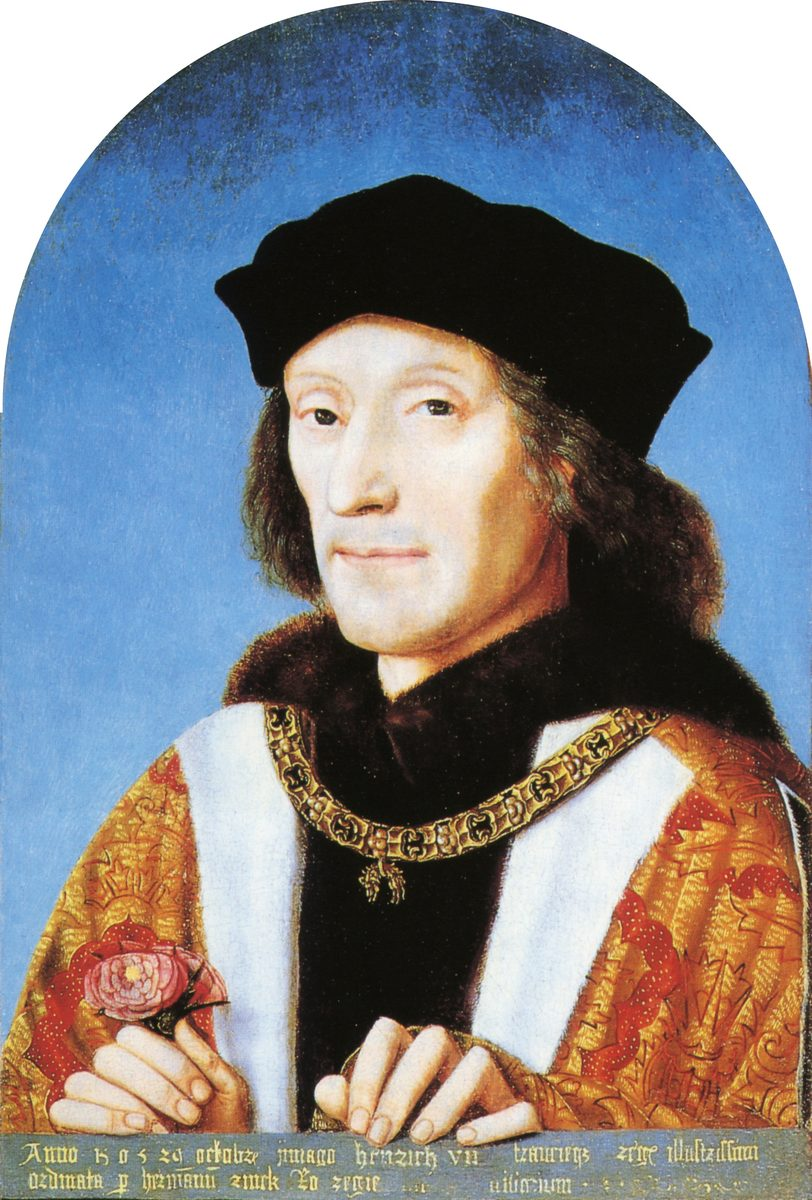
The first confirmed outbreak followed Henry Tudor’s landing at Milford Haven and his victory over Richard III at Bosworth that August. There is no direct evidence the disease travelled with Henry’s army, though contemporaries blamed his French mercenaries; what is on record is that Thomas Stanley told Richard he could not join him before the battle because of the sweat, and that some unspecified plague was already noted in York that June. Henry reached London on 28 August; the sweat broke out in the city three weeks later and, by late October, had killed several thousand people, including two lord mayors, six aldermen and three sheriffs.
It crossed to Ireland but rarely touched foreigners in England
The disease reached Ireland in 1492: the Annals of Ulster record the death of James Fleming, Baron of Slane, of the pláigh allais — the perspiring plague, newly arrived in Ireland — and a separate Irish chronicle, the Annals of the Four Masters, describes an unusual plague in County Meath that also ran its course in about twenty-four hours. Some historians have argued this Irish outbreak may have been a different disease entirely, given how little detail survives, but the timing and the name used for it both point toward the same epidemic.
A stranger pattern appeared during the third epidemic, in 1517. The Venetian ambassador in London noticed, and recorded, that foreign residents were barely falling ill at all while English natives died around them. The same asymmetry showed up eleven years later in Calais, then still an English possession: the sweat took hold inside the town’s English population and simply did not cross into neighbouring France. Nobody at the time could explain why a disease would discriminate by nationality, and nobody fully can today — though it is consistent with a locally circulating agent that longtime residents had already been exposed to in a milder form.
The 1528 epidemic reached the king’s own bedroom
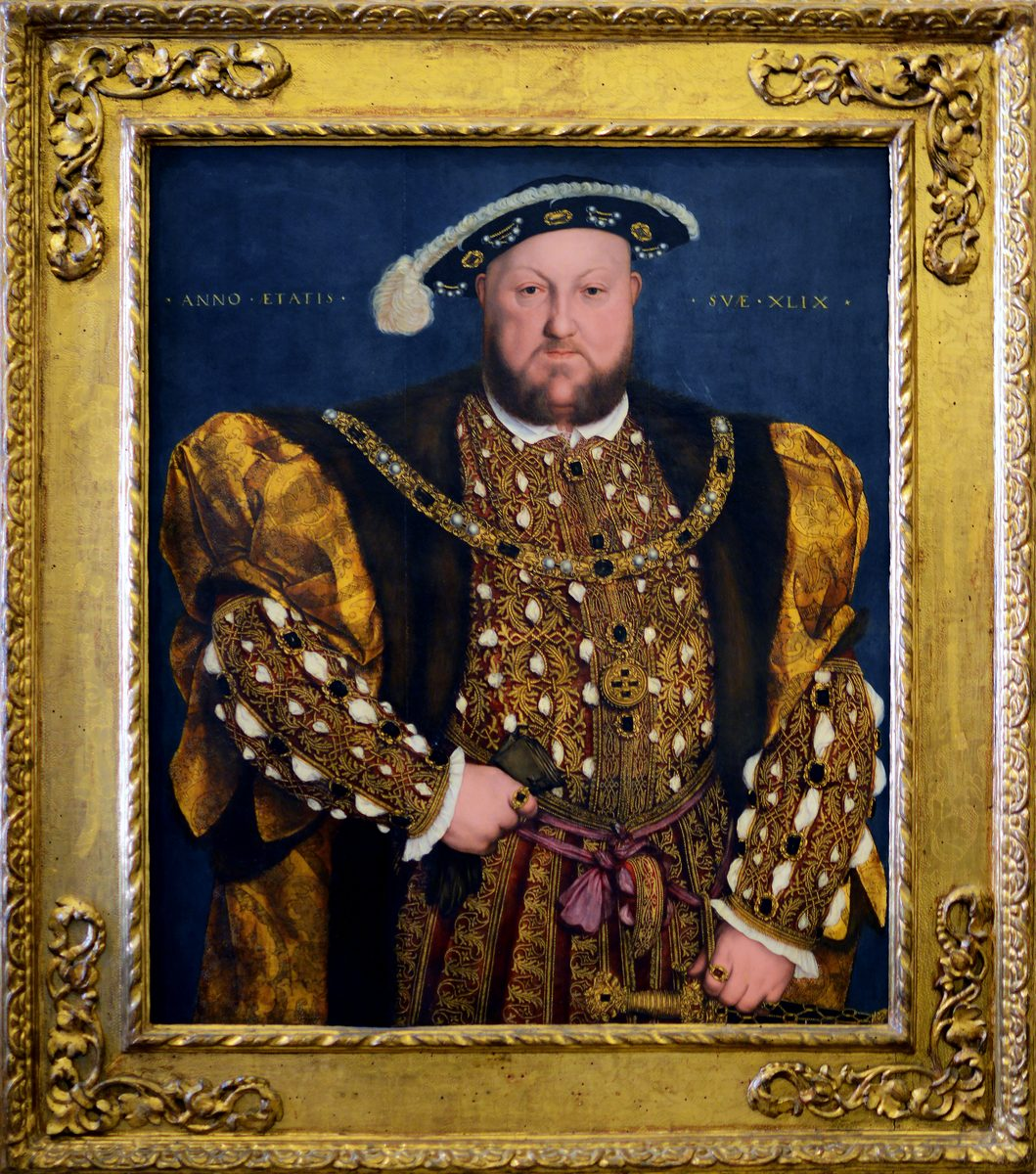
The fourth outbreak, in 1528, was the worst yet. It spread across nearly all of England, skipped Scotland entirely, and crossed to Ireland, where the Lord Chancellor died of it that August. In London, Henry VIII broke up his court and moved between houses for months to avoid it. Cardinal Wolsey caught the disease and survived. Anne Boleyn also fell ill; Henry’s own letters show his physicians feared for her, and he sent his second-best doctor to attend her rather than risk his own household further. She recovered. Thomas Cromwell was not so fortunate: in 1529 he lost his wife and both of his daughters to it within weeks of one another.
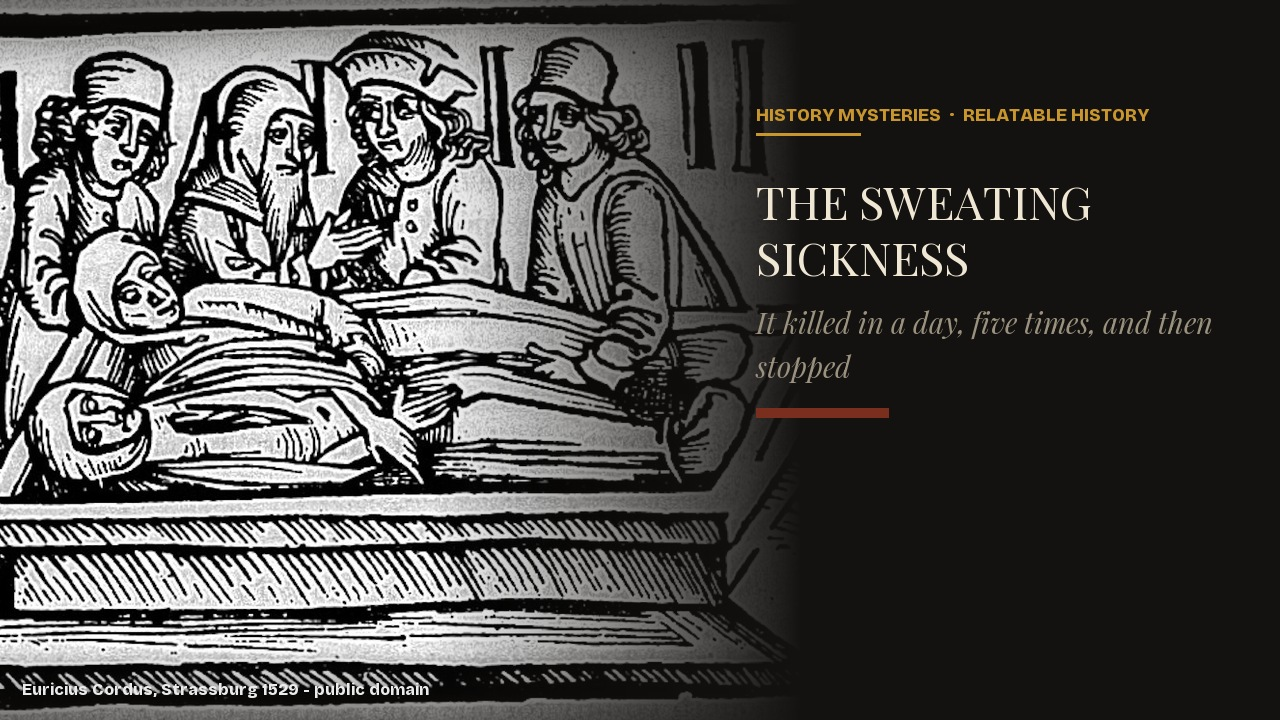
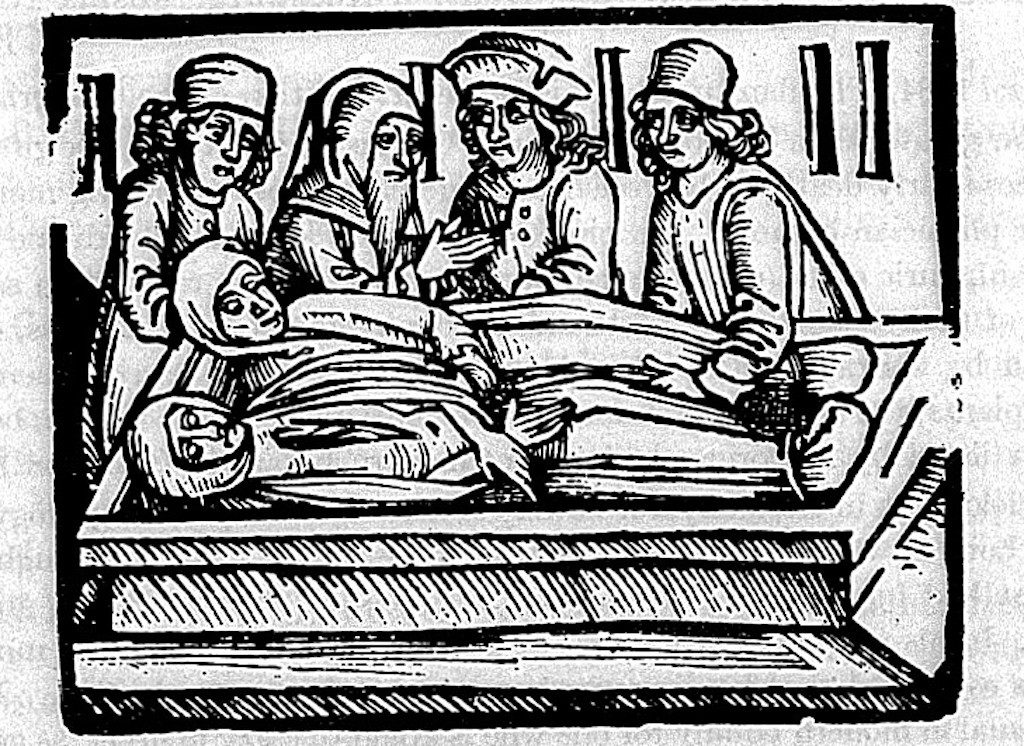
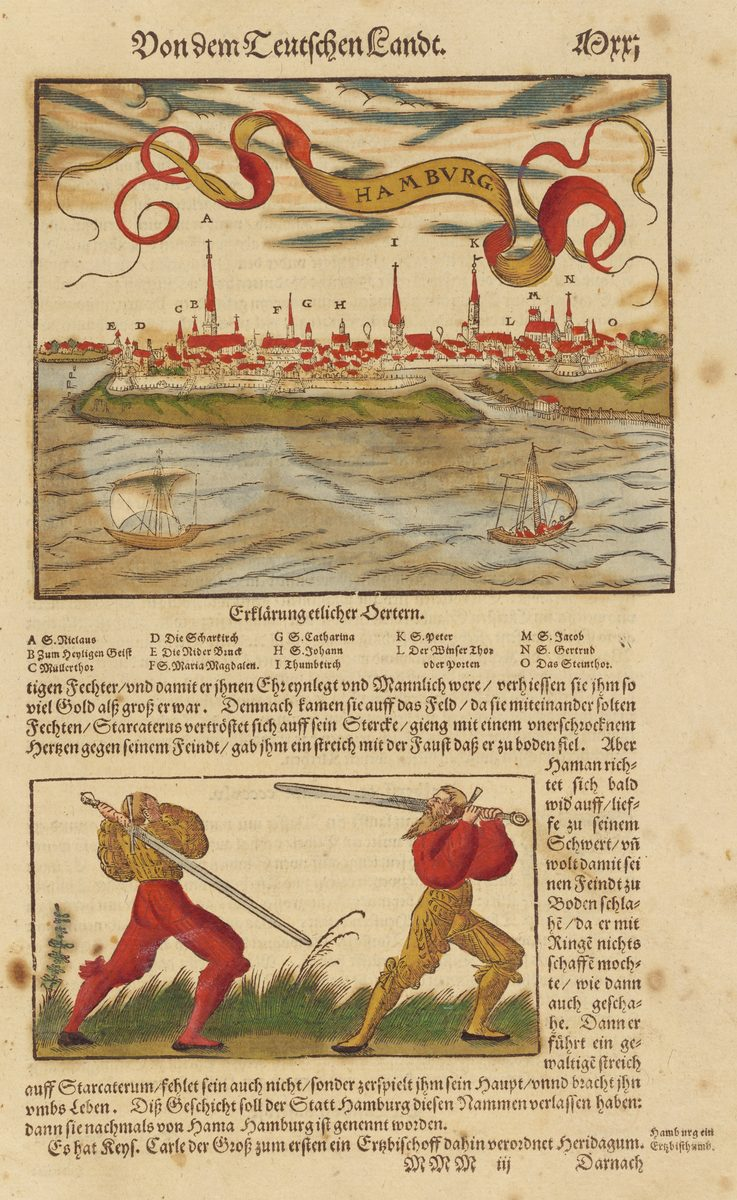
That same year, the sweat did something it had never done before: it left England. A ship carried it into Hamburg in July 1529, and from there it moved with startling speed along the Baltic coast and south through German-speaking Europe — Strasbourg, Frankfurt, Cologne, Marburg and Göttingen were all affected by September. Antwerp and Amsterdam reported outbreaks on the same morning, 27 September. Nowhere on the Continent did it linger more than about two weeks, and by the end of 1529 it had disappeared everywhere except one corner of Switzerland, which it never revisited. German printers issued several tracts on the outbreak that autumn, including one by the physician and botanist Euricius Cordus, whose woodcut of a patient surrounded by helpless attendants is the only contemporary image of the disease in progress to survive.
The last outbreak, in 1551, produced the account everything since has relied on
The fifth and final epidemic began in Shrewsbury in April 1551 and killed roughly a thousand people in that town alone before spreading to London that July. The London merchant Henry Machyn, whose diary survives from these years, recorded that the sweat began in the city on 7 July, that the king’s court removed from Westminster to Hampton Court three days later because people were dying near it, and that 872 Londoners died of all causes in the twelve days that followed. On 16 July, Machyn noted, the two young Dukes of Suffolk — Henry and Charles Brandon, aged sixteen and thirteen — died of it within hours of each other in Cambridgeshire, reportedly in the same bed.
John Caius was practicing in Shrewsbury when this final outbreak began, which is why his account is as detailed as it is. By October 1551 the epidemic had burned out, and it never returned — not in England, and not, in its original form, anywhere else. Caius died in 1573, the last physician alive who had examined patients with the disease firsthand.
The likeliest culprits, and why none of them close the case
Modern attempts at diagnosis have ruled out several obvious candidates. Relapsing fever, spread by ticks and lice, fits the sweat’s summer timing, but it produces a dark scab at the site of the bite and a rash during recovery, and neither appears in any surviving account. Ergotism, a poisoning caused by a fungus that grows on rye, was proposed and largely dismissed because England of this period grew comparatively little rye next to wheat and barley, unlike the continental regions where ergotism is well documented.
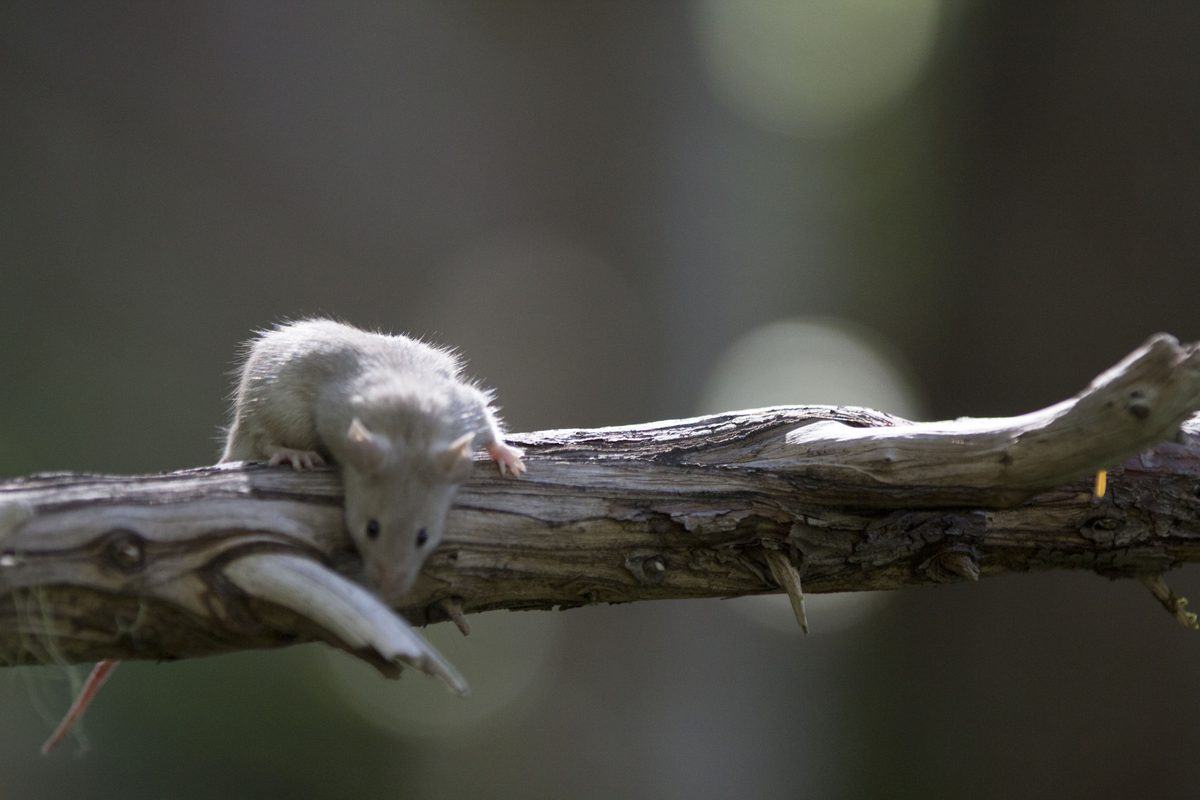
The strongest modern case, made by the physicians Guy Thwaites, Mark Taviner and Vanya Gant in 1997, points to a hantavirus. Hantaviruses are carried by rodents, transmitted mainly through contact with their urine and droppings, and had never been connected to a European epidemic until a cluster of previously healthy young adults in the American Southwest died of a fast, unexplained respiratory illness in the spring of 1993. Investigators traced that outbreak to a new virus, later named Sin Nombre, carried by deer mice whose population had exploded after an unusually wet winter. Hantavirus infections are seasonal, they flare and subside abruptly, and — like the sweat — they are unusually hard on healthy adults while largely sparing children and the elderly. The parallel was close enough that it sent researchers directly back to Caius’s sixteenth-century case notes.
The hypothesis has two serious problems. Modern hantaviruses do not vanish after a single outbreak; they recur in isolated cases almost every year in the regions where their rodent hosts live. And they very rarely spread directly between people, while the English sweat behaved, to contemporary observers, exactly like a contagious disease passed person to person. Neither objection is fully resolved, though the second has a partial answer: a 1998 outbreak of Andes hantavirus in Argentina was the first confirmed case of person-to-person transmission in a hantavirus, showing the objection is not absolute.
A separate line of research connects the sweat to the Picardy sweat, a related but much less lethal illness that broke out roughly two hundred times in rural France between 1718 and the 1860s. The Picardy sweat came with a rash the English disease never had, which argues against treating them as identical, but a 2014 review by Paul Heyman, Leopold Simons and Christel Cochez concluded that a hantavirus remains the most likely shared cause of both, noting that the Picardy sweat disproportionately struck people who worked and slept close to farmland — exactly where rodent exposure would be highest. A French government commission investigating a wave of six thousand Picardy sweat cases in 1906 reached, independently, almost the same conclusion, blaming fleas carried by field mice.
The other candidate on record is anthrax. In 2004, the microbiologist Edward McSweegan — writing in the aftermath of the 2001 anthrax letter attacks in the United States, which produced a small cluster of unusually documented inhalational anthrax cases — proposed that sixteenth-century victims may have inhaled anthrax spores from contaminated raw wool or animal carcasses, since England’s economy at the time ran heavily on the wool trade. He suggested exhuming victims to test the hypothesis directly.
Nobody has been able to run that test, or any molecular test at all. Every serious attempt to recover DNA or RNA from the period has failed, because no confirmed physical sample of the disease survives in any archive, tomb or specimen jar. Every hypothesis — hantavirus, anthrax, an unidentified strain of influenza, something with no modern descendant at all — remains exactly that: a hypothesis, argued from five hundred-year-old case notes and a single Argentine outbreak that happened four and a half centuries later.
Watch the full history
The video traces the five outbreaks and the modern search for a cause in about nine minutes.

Related reading
- The 24 Years Wampum Was Legal Tender in Massachusetts
- The 2,600-Year History of the Chamber Pot, From Athens to the Sewer
- The Full History of the German Beer Stein
- How the Sedan Chair Actually Worked, and Why It Started as a Scandal
Works cited
- Caius, John. A Boke or Counseill Against the Disease Commonly Called the Sweate, or Sweatyng Sicknesse. London, 1552. Link.
- Thwaites, Guy, Mark Taviner, and Vanya Gant. “The English Sweating Sickness, 1485 to 1551.” New England Journal of Medicine 336, no. 8 (1997): 580–582.
- Taviner, M., G. Thwaites, and V. Gant. “The English sweating sickness, 1485–1551: a viral pulmonary disease?” Medical History 42, no. 1 (1998): 96–98. Link.
- Dyer, Alan. “The English Sweating Sickness of 1551: An Epidemic Anatomized.” Medical History 41, no. 3 (1997): 362–384.
- McSweegan, Edward. “Anthrax and the etiology of the English sweating sickness.” Medical Hypotheses 62, no. 2 (2004): 155–157.
- Heyman, Paul, Leopold Simons, and Christel Cochez. “Were the English Sweating Sickness and the Picardy Sweat Caused by Hantaviruses?” Viruses 6, no. 1 (2014): 151–171. Link.
- Machyn, Henry. The Diary of Henry Machyn, Citizen and Merchant-Taylor of London, 1550–1563. Edited by J. G. Nichols. Camden Society, 1848. Link.
- Annals of Ulster, s.a. 1492. CELT: Corpus of Electronic Texts, University College Cork. Link.
- Centers for Disease Control and Prevention. “Hantavirus Pulmonary Syndrome — The 25th Anniversary of the Four Corners Outbreak.” Emerging Infectious Diseases 24, no. 11 (2018). Link.