
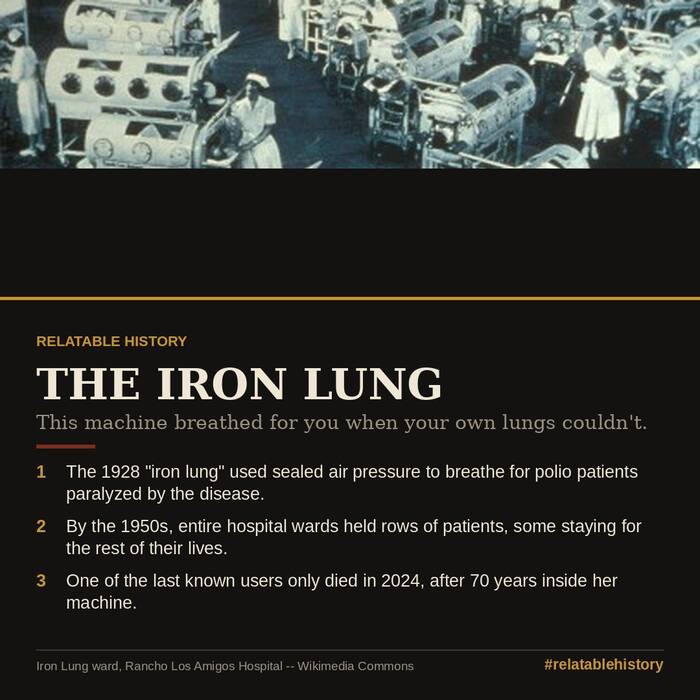
On June 26, 2026, a 78-year-old woman named Martha Lillard died in Shawnee, Oklahoma, of complications from a long-haul COVID-19 infection. Her death made international news for an unusual reason: for 73 of her 78 years, she had slept every single night sealed into a steel cylinder built in the early 1930s, a machine that did her breathing for her because her own chest muscles never recovered from a childhood case of polio. She was, by the time she died, the last person in the United States known to still need one.
It is tempting to file the iron lung away as a black-and-white photograph — rows of steel tanks in a 1950s hospital ward, a disease America solved decades ago. That filing is premature. The last patient who depended on one left this world only months before this article was written, which makes it worth asking, properly, how the thing actually worked, who built it and why, who got sued over it, and why a piece of Depression-era industrial equipment stayed irreplaceable for one specific group of people for nearly a century.
The short answer to how it worked has nothing to do with blowing air into anybody. The iron lung’s entire trick was to leave a person’s own lungs alone and manipulate the air pressure around their body instead — and that distinction is the key to almost everything else about the object, including why it looked the way it did and why it was so hard to improve on.
How the iron lung worked: it never pushed air in
Normal breathing is a pressure trick your body performs on itself. The diaphragm drops, the chest cavity expands, the pressure inside your chest falls below the air pressure outside it, and air rushes in through your nose and mouth to equalize the difference. Nothing pushes air into healthy lungs; the body simply makes room and the atmosphere fills it. Polio’s worst cases destroy the nerves that run the diaphragm and chest-wall muscles, so that pressure trick stops happening, even though the lungs themselves are undamaged.
Philip Drinker and Louis Agassiz Shaw, both at Harvard, built a machine to perform that trick from outside the body. A patient lay full-length inside an airtight metal tank, sealed at the neck by a rubber collar so only the head stuck out. A motor-driven bellows, fixed to the far end, cyclically dropped and raised the air pressure inside the tank. When the pressure inside dropped, the patient’s chest wall expanded along with the lowering pressure around it, and air was drawn into the lungs through the patient’s own nose and throat, exactly as in normal breathing. When the pressure rose again, the chest was gently compressed and air flowed back out. The apparatus Drinker and Shaw described in a 1929 paper could swing to roughly negative 60 centimeters of water and cycle at 10 to 40 breaths a minute, numbers a clinician could dial in for a given patient’s size and condition.
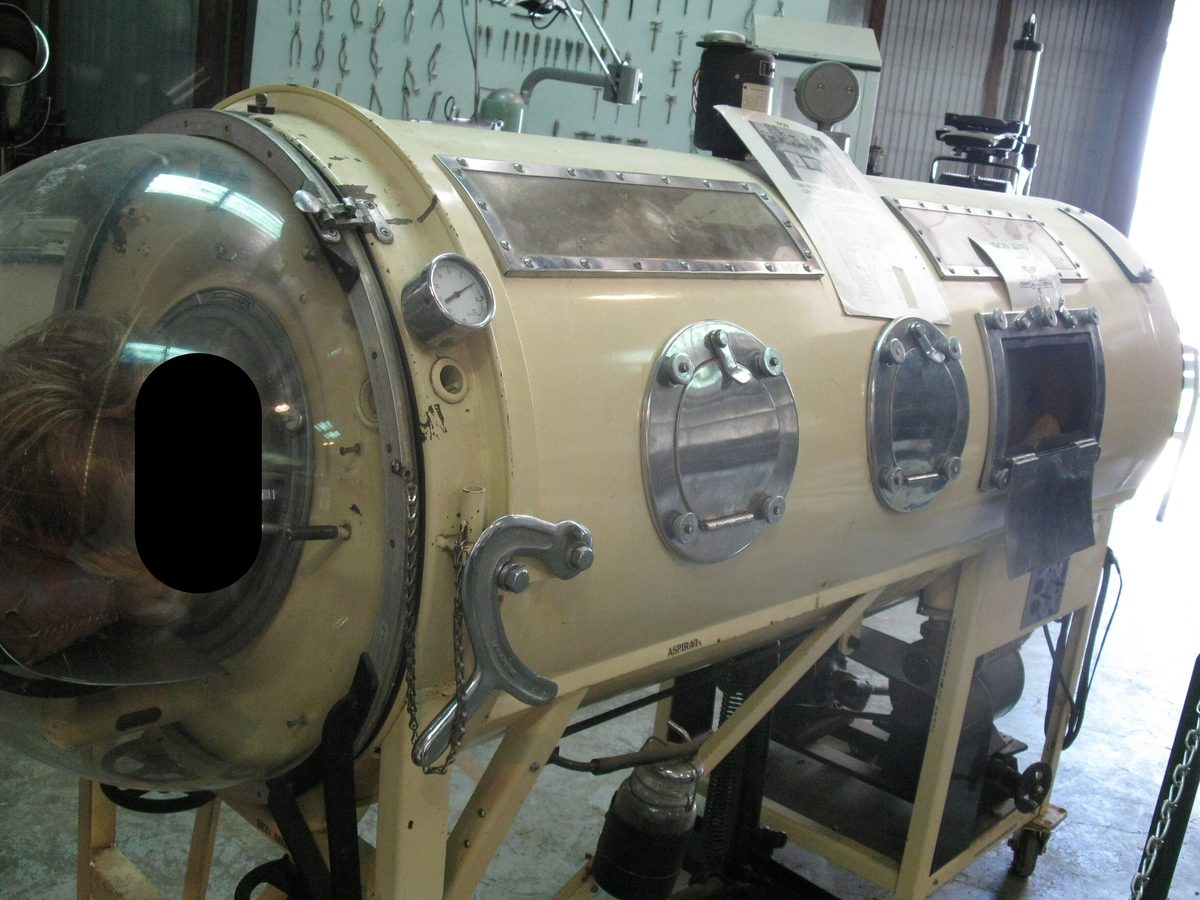
That is also why the object had to be shaped like a tank rather than a mask. A ventilator that forces air in under positive pressure — the kind now standard in intensive care — only needs to seal the airway. A device that works by changing ambient pressure has to seal the entire body except the airway, which means building a pressure vessel around a person and finding a way to still feed, bathe, and examine them without breaking that seal. Every later refinement to the iron lung — sliding beds, portholes for nurses’ hands, hinged domes — was an attempt to solve that one problem without compromising the seal.
A gas utility’s safety program paid to build it
The iron lung was not conceived as a polio treatment. In 1926, the Consolidated Gas Company of New York set up a research committee, funded through its liability insurance reserves, to study how to revive workers who had been overcome by coal-gas fumes on the job. Harvard physiologist Cecil Drinker, who studied industrial hazards, recommended backing his younger brother Philip’s work on artificial respiration. The committee agreed, putting up $5,000 in the fall of 1927 and a further $2,000 once the early results looked promising.
Philip Drinker and Shaw tested their theory on anaesthetized cats, paralyzing the animals’ breathing muscles with curare and then using a sealed, pressure-cycling chamber to keep them alive, confirming that the pressure trick worked on a living, paralyzed subject before anyone tried it on a person. A full-size version, built for a human body, followed directly from that funding — aimed, on paper, at gas-poisoning victims and accidental-asphyxiation cases in industrial settings, not at polio at all.
Polio got there first anyway. On October 12, 1928, Drinker was called to Boston Children’s Hospital, where an eight-year-old girl was dying of polio-induced respiratory paralysis. Within roughly a minute of being sealed into the prototype tank, her breathing steadied. A separate, fully built unit purchased with Consolidated Gas funding went to Bellevue Hospital in New York around the same period, intended for exactly the industrial emergencies the research had been funded to address, and it was put to use on a patient who had stopped breathing after an accidental overdose. The machine’s original brief, in other words, was reviving anyone who had simply stopped breathing for mechanical reasons — polio turned out to be the emergency it is remembered for.
A cheaper copy beat Harvard’s patent in court
Drinker and Shaw’s device worked, but it was expensive: a finished unit, manufactured under license by the firm Warren E. Collins, Inc., ran well over $2,000, out of reach for most hospitals during the Depression. In July 1931, an engineer named John Haven Emerson, who had dropped out of high school, finished his own version. It replaced the noisy motor-driven bellows with a quieter leather diaphragm, added side portholes and a sliding bed so nurses could reach a patient without breaking the seal, and sold for about $1,000 — roughly half Drinker’s price.
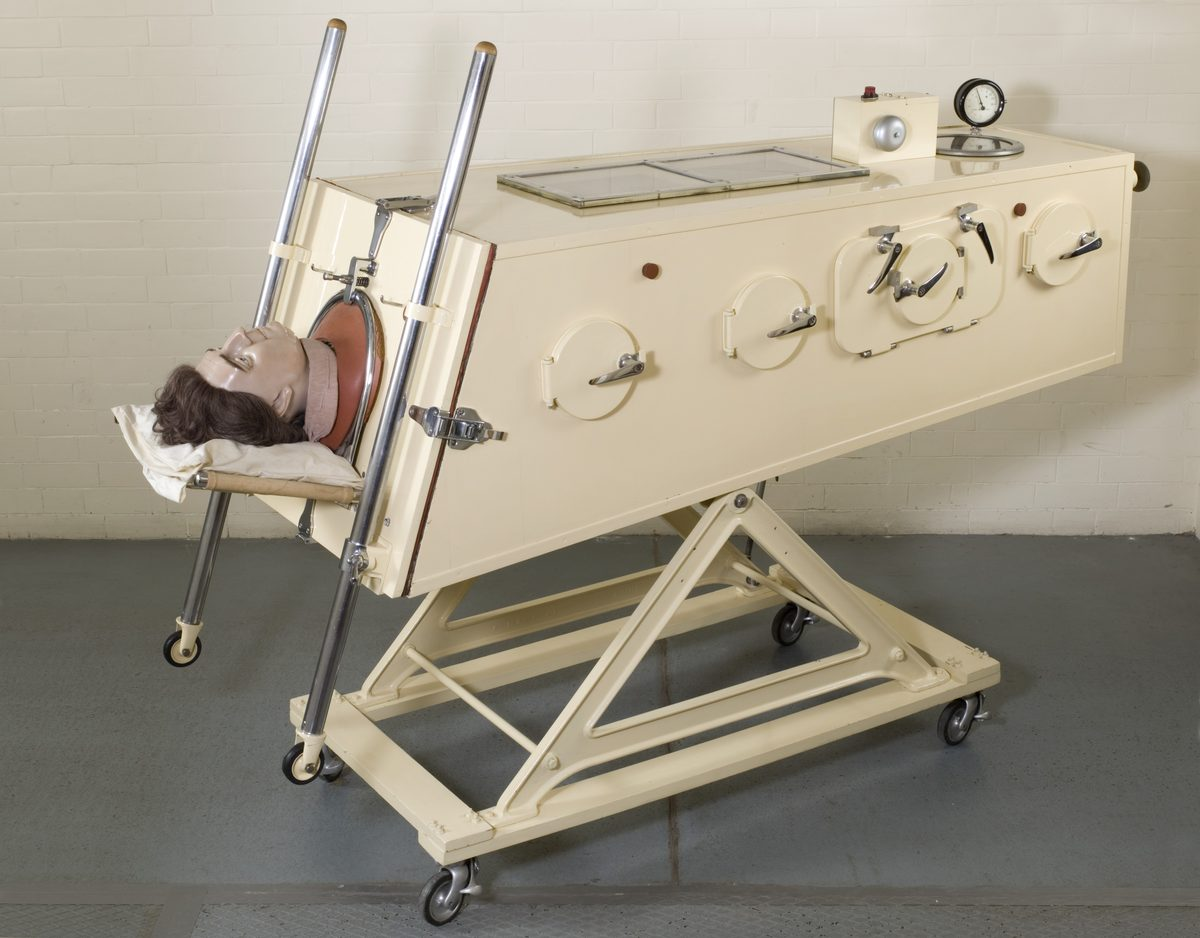
Drinker warned Emerson that he would be put out of business and then sued him for patent infringement. Emerson’s defence was to show that sealed, pressure-cycling respirators were not new at all: a Swedish physiologist, Torsten Thunberg, had built and described a comparable device decades earlier, among other prior examples stretching back into the nineteenth century. With that evidence in front of it, the court invalidated Drinker’s patent outright. Emerson kept manufacturing his cheaper version, which became the standard machine in American hospitals through the worst years of the polio epidemics. His original unit, nicknamed “Old Number One,” is preserved today in the Smithsonian Institution. Asked about winning against a Harvard patent, Emerson’s own summary was that it was “not bad for a high school drop out.”
1952 alone produced an estimated 58,000 cases
Polio outbreaks worsened through the 1930s and 1940s and peaked in the early 1950s. The National Archives’ own tally of the 1952 season — the worst on record — puts the count at roughly 58,000 reported cases in the United States in that year alone, with several thousand deaths. A meaningful share of the paralytic cases needed ventilatory support, and hospitals responded by building entire wards that were essentially rooms full of tanks: dozens of iron lungs in rows, a patient’s head poking out of each one, a small mirror angled above so they could see the room behind them, since most could not turn to look.
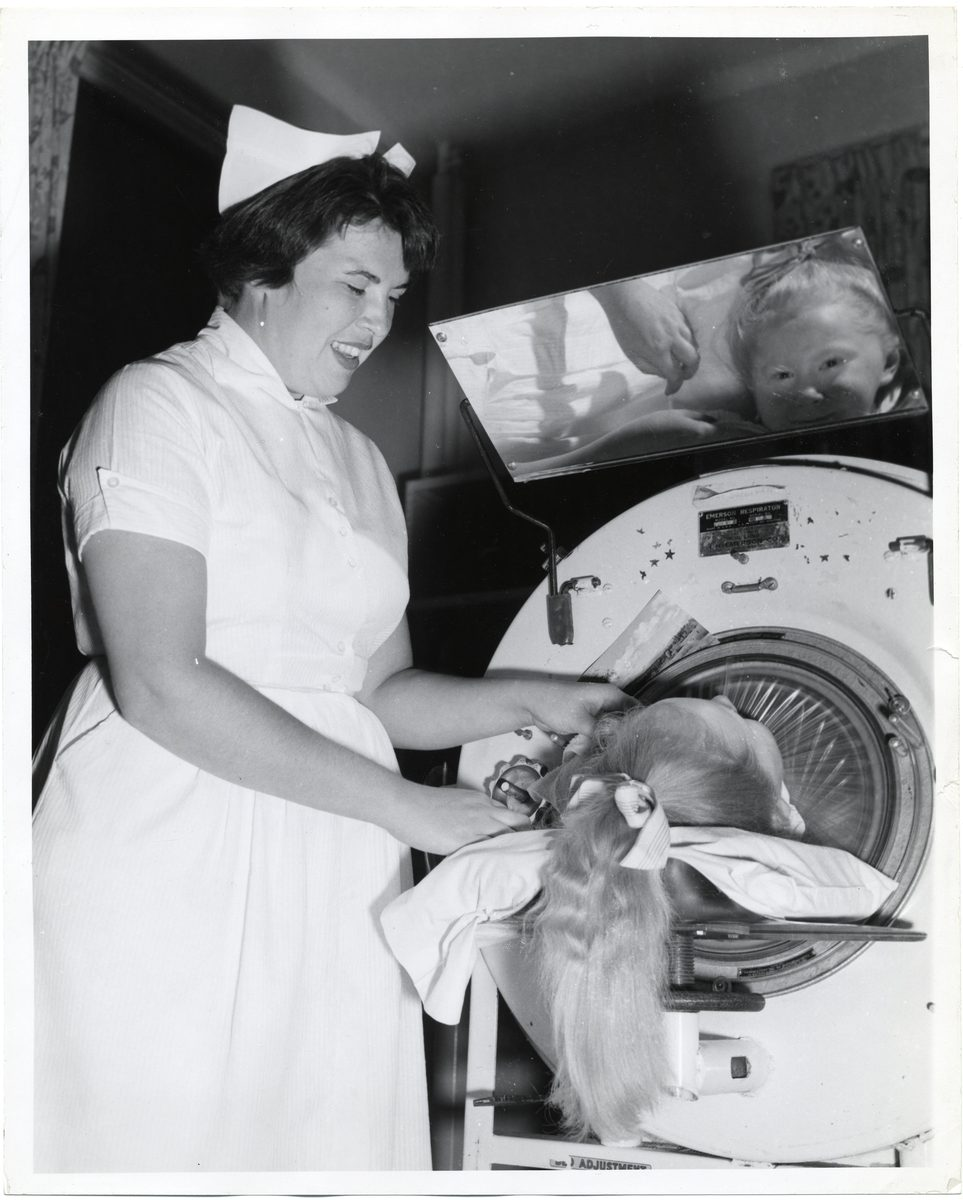
Patients described a constant mechanical whoosh, total immobility, and a specific, well-documented hallucination of motion — a sense of being in a moving car, train, or airplane rather than a stationary hospital ward. Reading required a mirror and a mechanical page-turner, or a person paid to sit and turn pages by hand; eating meant timing bites to the machine’s cycle. Patients ranged from small children to adults — the standard adult tank was built to fit someone as tall as 6 feet 4 inches and as heavy as 225 pounds. Some needed the machine for two or three weeks while damaged nerves slowly recovered. A smaller number never recovered that function at all.
The National Foundation for Infantile Paralysis, known publicly as the March of Dimes, ran the fundraising campaign that paid for both patient care and, eventually, vaccine research, using poster-child photographs of affected children in theaters and newspapers to keep donations flowing. That money helped fund the research that would end the epidemic the iron lung had been built to manage.
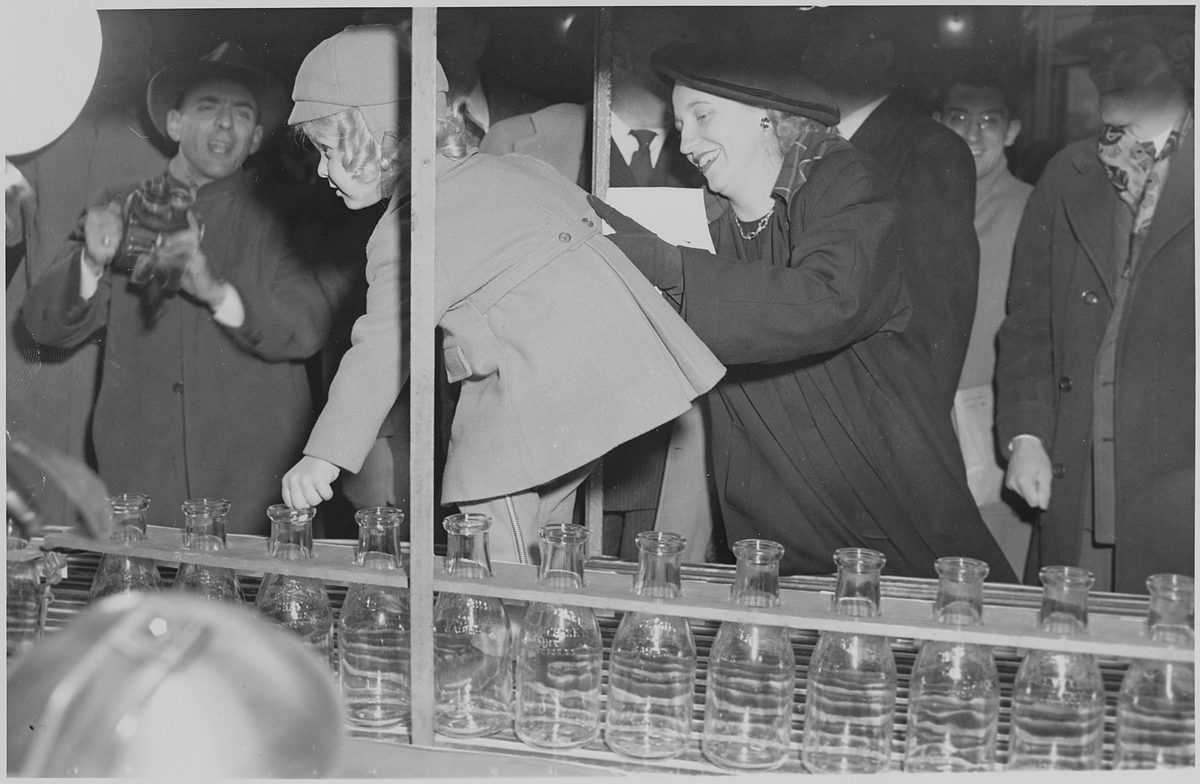
The vaccine emptied the wards almost as fast as the epidemic had filled them
Jonas Salk’s injected polio vaccine was declared safe and effective in 1955, and new paralytic cases in the United States fell sharply within just a few years. Albert Sabin’s oral vaccine, licensed in 1961, was cheaper and easier to distribute still further, and it finished the job the injected vaccine had started. Hospitals that had run full wards of iron lungs for two decades began scrapping or donating the tanks they no longer needed, machine by machine, through the 1960s.
Almost all of them, anyway. A small number of patients had nerve damage too extensive ever to recover independent breathing on their own, and for them the iron lung was not a stopgap during recovery — it was permanent, lifelong equipment, kept running for decades on spare parts scavenged from other retired units once manufacturers stopped making them at all.
The last two people the machine was built for
Paul Alexander, of Dallas, contracted polio in 1952 at age six and spent most of the next seventy years inside an iron lung, teaching himself to hold his breath using throat and neck muscles for short stretches outside the tank, earning a law degree, writing a memoir, and becoming widely known online in his final years. He died on March 11, 2024, at 78.
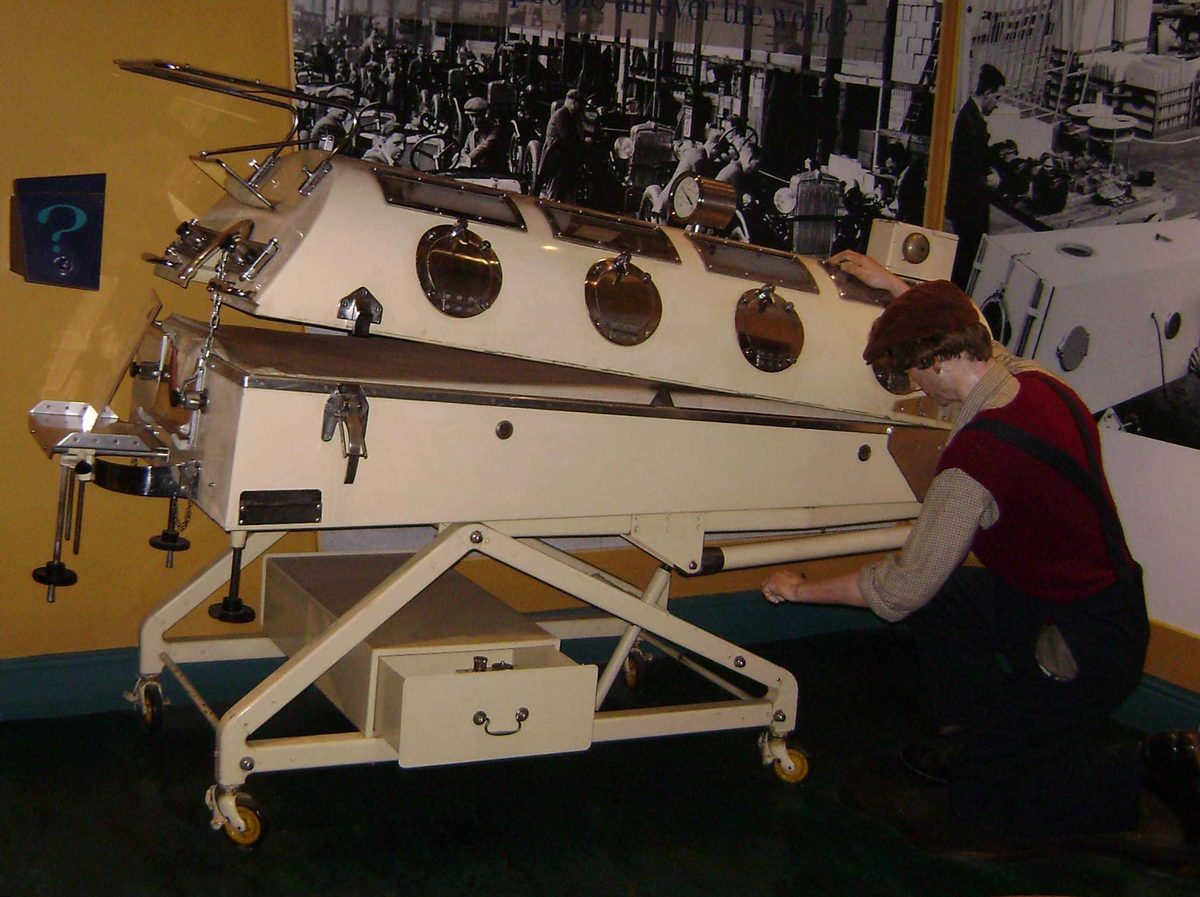
That left Martha Lillard as the last known American still depending on one. She had contracted polio on June 17, 1953, at age five, shortly after a birthday trip to an amusement park in Kansas, and chose, after six months in the hospital, to keep using the iron lung permanently rather than risk another method of support. She spent her life homeschooled, painting, watching classic films, caring for her dogs, and — earlier in 2026, only months before her death — getting married. Her death that June was officially attributed to chronic pulmonary failure and post-polio syndrome, complicated by a long-haul COVID-19 infection she had contracted twice during the pandemic. With her death, no one in the United States is known to still depend on the machine Consolidated Gas paid for and a Harvard lab built to revive gas-poisoning victims.
Watch the full history
The short video below covers the mechanism and the first polio patient in about ninety seconds; the long-form companion video for this object has been produced but was not yet live when this article was published.

Related reading
- How Many Lobotomies Did Walter Freeman Actually Perform?
- Nobody Knows Exactly When the Straitjacket Was Invented
- Who Discovered Ether Anesthesia? The Feud That Ruined Three of the Four Men Who Claimed It
- How the Violet Ray Machine Worked, and Why It Took Decades to Debunk
Shop the styles/items featured in this video
- Book: “Polio: An American Story” by David M. Oshinsky
- Book: “Three Minutes for a Dog: My Life in an Iron Lung” by Paul Alexander
- Anatomical human lung model (educational replica)
- Book: “Vaccinated: One Man’s Quest to Defeat the World’s Deadliest Diseases” by Paul Offit
Works cited
- Oshinsky, David M. Polio: An American Story. Oxford University Press, 2005.
- Drinker, Philip, and Louis A. Shaw. “An Apparatus for the Prolonged Administration of Artificial Respiration: I. A Design for Adults and Children.” Journal of Clinical Investigation 7, no. 2 (1929): 229–247. Link.
- National Archives. “Polio Cases Reported from Selected States by Age, 1952.” DocsTeach. (National Archives educational resource; live but returns 403 to automated fetches, cited as print.)
- Smithsonian National Museum of American History. “Iron Lung (Respirator),” object record, Warren E. Collins, Inc., early 1930s. (Live but returns 403 to automated fetches, cited as print.)
- “Philip Drinker, Polio, and That ‘Damn Machine.’” Harvard T.H. Chan School of Public Health, centennial retrospective. Link.
- “Negative Pressure Ventilation.” American Association for Respiratory Care Virtual Museum. Link.
- University of Virginia Claude Moore Health Sciences Library. “The Iron Lung,” historical exhibit, “Mechanical Development” section.
- Meier, Ciselle, and Mike Cadogan. “John Haven Emerson.” Life in the Fast Lane (LITFL), updated 2026. Link.
- “Boston Doctors Use the First Iron Lung.” Mass Moments, Massachusetts Historical Society, October 12 entry. Link.
- Sinco Kelleher, Jennifer. Associated Press. “Martha Lillard, Last US Polio Patient Using Iron Lung, Dies at 78 in Oklahoma.” July 11, 2026. Link.
- Associated Press. “‘Polio Paul,’ Texas Man Who Spent Most of the Past 70 Years in an Iron Lung, Dies at 78.” March 2024. Link.