
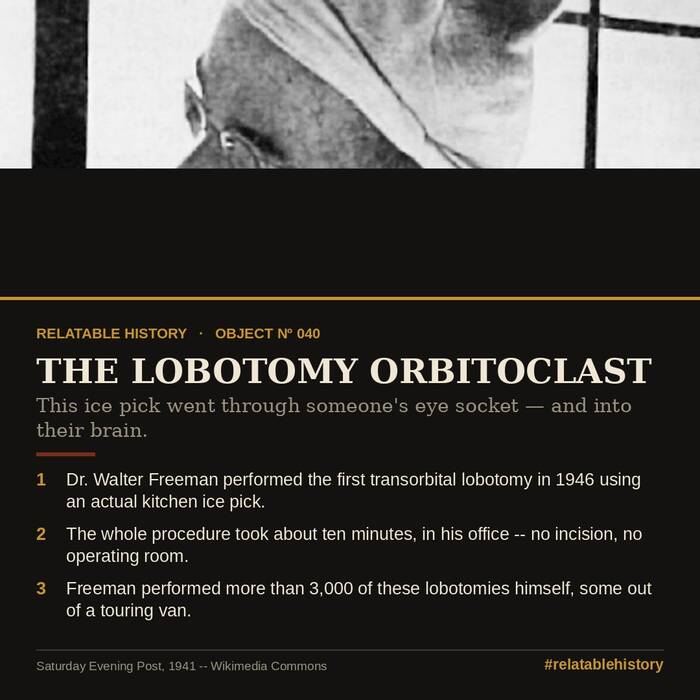
In 1949 alone, doctors across the United States performed more than five thousand lobotomies. That single-year count is one of the stranger statistics in American medical history, and it gets stranger once you learn that the man who did more than anyone to popularize the operation, Walter Freeman, was not a surgeon. He had no neurosurgical training and, for the version of the procedure he eventually settled on, no operating room, no anesthesia, and no assistant required. It raises an obvious question: how many lobotomies did Walter Freeman actually perform, and what happened to the people who had them?
Freeman kept records of his own work for his entire career, and historians have since gone back through them. The number that comes out is 3,439 operations performed personally, the last one in 1967. That is a precise figure for a procedure that is usually remembered only in the vague, horrified shorthand of “ice pick to the brain.” The real numbers — his own tally, the national count, the reported success rates, the mortality rate — are more specific and, in their way, more unsettling than the legend.
This is the accounting: how many procedures, performed by whom, with what documented outcomes, and what finally made the number stop climbing.
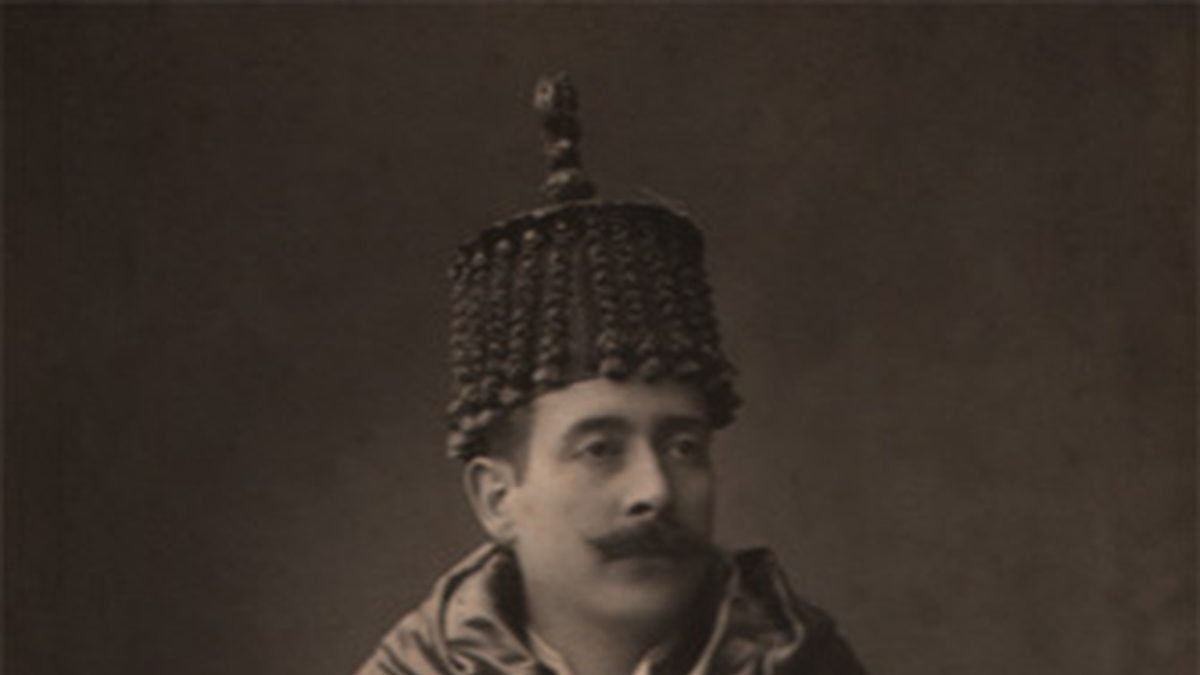
How many lobotomies Walter Freeman performed survives in his own paperwork
The operation Freeman is remembered for was not the one he started with. Prefrontal leucotomy, introduced in Lisbon in 1935 by the neurologist Antonio Egas Moniz, required a neurosurgeon, a drilled skull, and a hospital operating room. Freeman performed the first American version of it in 1936 with the neurosurgeon James Watts doing the actual cutting. He resented the dependence. Over the following decade he worked toward a version that needed none of that.
By 1946 he had it: a procedure he could perform alone, in an office, using a tool borrowed from his kitchen. State hospitals at the time were badly overcrowded, understaffed, and underfunded, which is part of why a cheap, fast alternative to long-term institutional care found so many takers. Freeman began driving between state hospitals himself, in the car that earned him tabloid coverage as the operator of the “lobotomobile,” working through dozens of patients on each visit and training other doctors to keep going after he moved on. By 1942, before the ice pick replaced the drill, Freeman and Watts had already operated on more than two hundred patients using the original surgical version. The 3,439 figure is only his own hands-on count across his full career; it does not include the thousands more performed nationally by physicians he had trained, which is most of the gap between his personal total and the 1949 national figure.
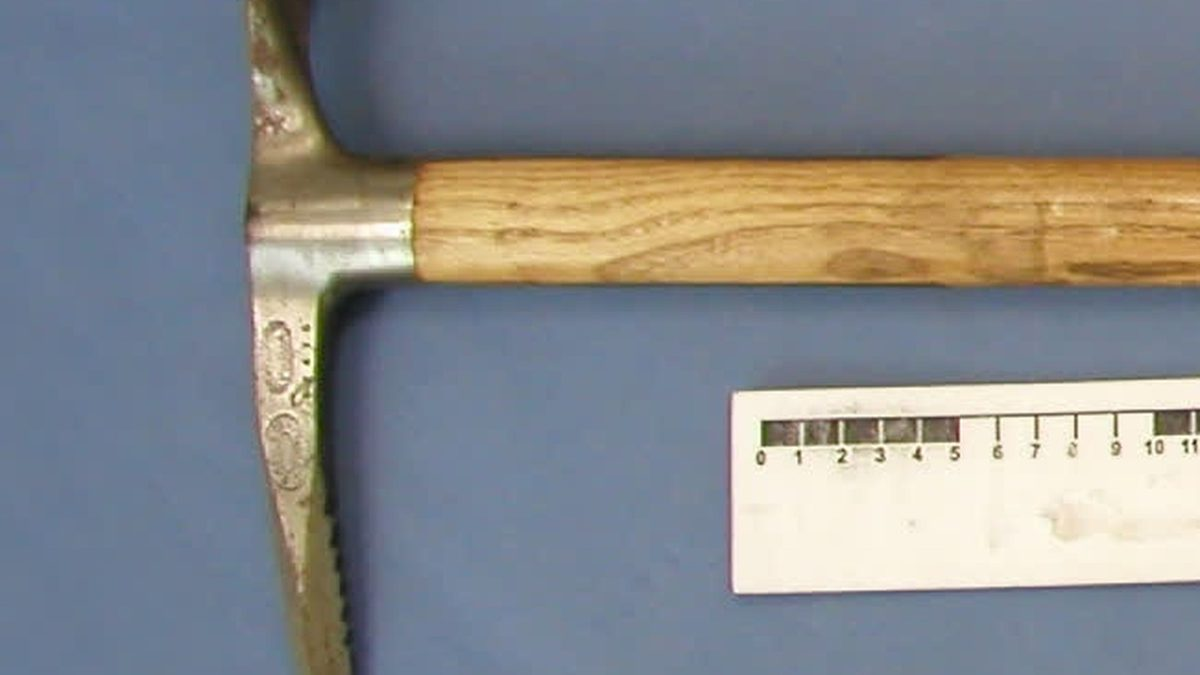
The orbitoclast was a machinist’s refinement of a kitchen tool
Freeman’s first transorbital operation, in 1946, used an actual ice pick. The technique was to lift the patient’s eyelid, set the point against the thin bone at the top of the eye socket, and drive it through with a few taps of a small mallet. A sweep of the wrist — typically through an arc of thirty to forty degrees in each direction — severed the connections behind it. Both sides together took only a few minutes, and patients were frequently left with visibly blackened eyes afterward, a side effect Freeman treated as a minor cosmetic cost.
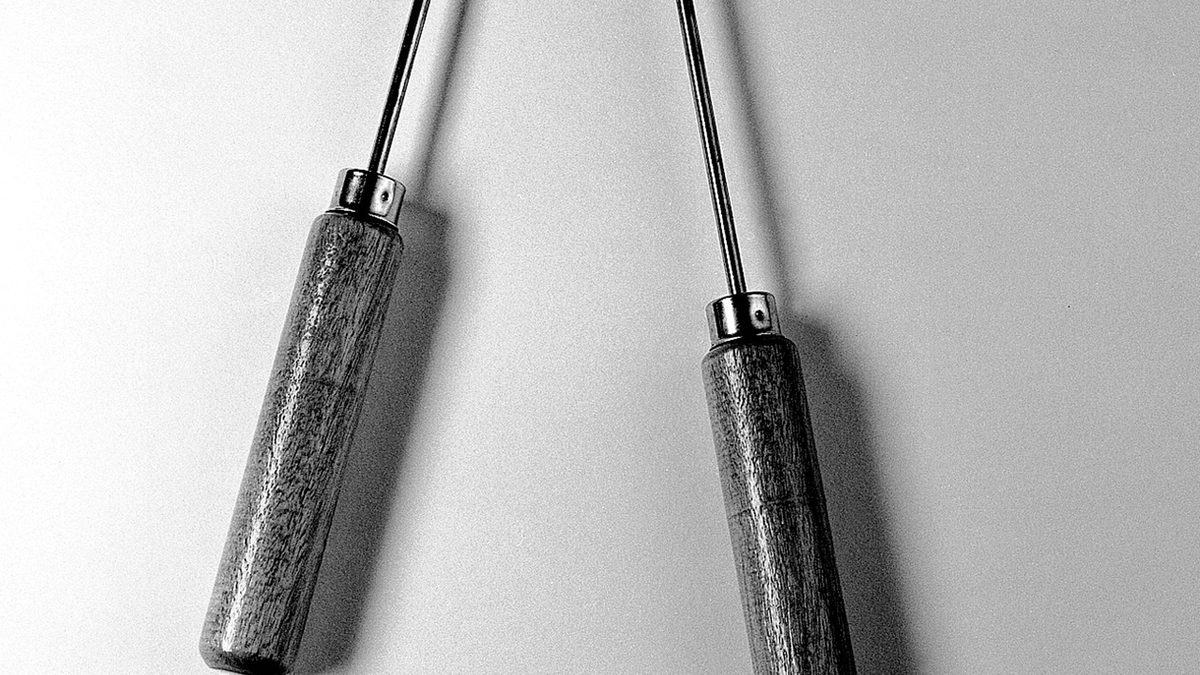
In 1948 he had a purpose-built version made by Henry Ator, a machinist who had previously worked at the Washington Navy Yard and the Bureau of Printing and Engraving. The result, the orbitoclast, was still built to mimic the ice pick almost exactly — a slender stainless-steel spike with depth markings, sold in a black leatherette case. It did not change the procedure’s logic at all. It only made the ice pick repeatable, standardized, and easier to distribute to the other doctors Freeman was training. Freeman replaced general anesthesia with electroshock, which left patients unconscious or too dazed to resist without the delay or expense of a surgical team.
The reported outcomes depend on whose numbers you read
Freeman and Watts published their own results from their early caseload: of their first patients, they reported that 63 percent had improved, 24 percent were unchanged, and 14 percent were worse off than before surgery. That same 14 percent figure also describes something darker in their records — a documented mortality rate of roughly that size among patients who did not survive the operation at all, a number that did not stop Freeman from continuing.
A separate, larger accounting complicates the picture further. A survey of lobotomy outcomes across England and Wales between 1942 and 1954, covering 10,365 operations of the Moniz-derived type, found that 41 percent of patients had recovered or improved substantially, 28 percent improved only slightly, and 25 percent showed no change at all. The two data sets are not directly comparable — different countries, different surgical variants, different follow-up periods — and historians have never reconciled them into one agreed figure. What both sets agree on is that a meaningful share of patients, measured by the standards of the doctors performing the operation, were left no better and often measurably worse.
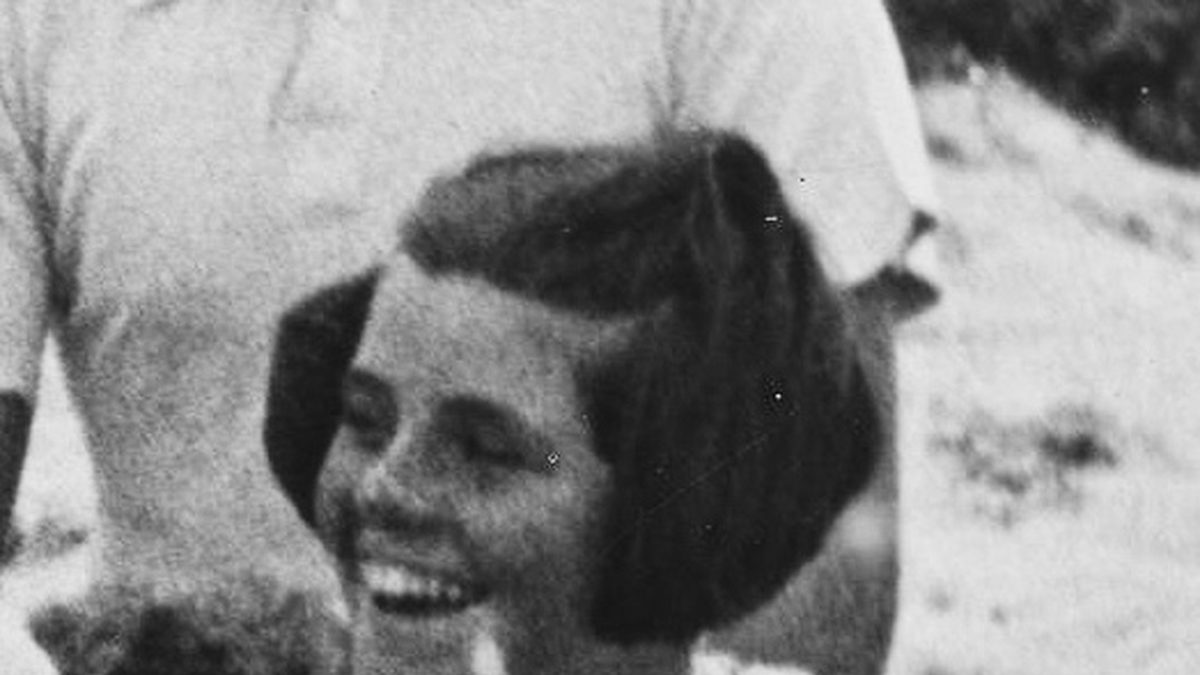
Rosemary Kennedy’s case shows exactly where the numbers could go wrong
In 1941, Freeman and Watts operated on a 23-year-old woman named Rosemary Kennedy, whose family hoped surgery would settle mood swings and occasional outbursts that worried them. At the time the two doctors had performed the operation on fewer than a hundred patients, and the American Medical Association had already cautioned that the procedure remained too experimental, with side effects that could be severe. The operating team kept her lightly sedated rather than fully unconscious, asking her to recite the Lord’s Prayer and count backward so they could judge, by her responses, how far to cut. When her words dissolved into incoherence, the surgeons stopped. The damage was already done.
Rosemary never walked or spoke clearly again. She spent roughly two years at a New York psychiatric hospital that could not meet her needs before moving, on the recommendation of Archbishop Richard Cushing, to St. Coletta’s School in Jefferson, Wisconsin, where she lived for the remaining five decades of her life. Care there eventually restored some of what the surgery had taken — she relearned to walk, lived in her own cottage, and kept a dog and a pet bird — but the operation itself did exactly what the percentages above describe in the abstract: it made one specific person permanently unable to care for herself.
The Nobel Prize for the underlying idea is still argued over
None of this began as American medicine. Egas Moniz attended a 1935 neurology conference in London where researchers described chimpanzees that became calmer and less prone to frustration after their frontal lobes were surgically removed. Moniz, who had a hand tremor that kept him from operating himself, had a neurosurgical colleague, Almeida Lima, perform the actual cutting on human patients while he directed. His first series covered twenty patients; some seemed calmer, others were left apathetic and diminished. He published the results as a success regardless, and the idea spread quickly to Freeman and Watts in the United States the following year.
Moniz was not a surgical novice chasing a new idea. He had already made his name a decade earlier by developing cerebral angiography — injecting a contrast agent to make brain tumors and vascular malformations visible on X-ray, a technique still foundational to neurological diagnosis today. That earlier, genuinely durable achievement is part of why colleagues took his leucotomy claims seriously enough to adopt them so quickly.
In 1949, Moniz shared the Nobel Prize in Physiology or Medicine for developing the technique — a decision that remains one of the most contested in the prize’s history, with later physicians and historians arguing the supporting evidence was thin even by the standards of the time. Moniz did not get to enjoy much of the recognition. One of his own patients shot him in the spine years earlier, in an attack that left him partially paralyzed and forced his retirement in 1945; he died a decade later, in 1955.
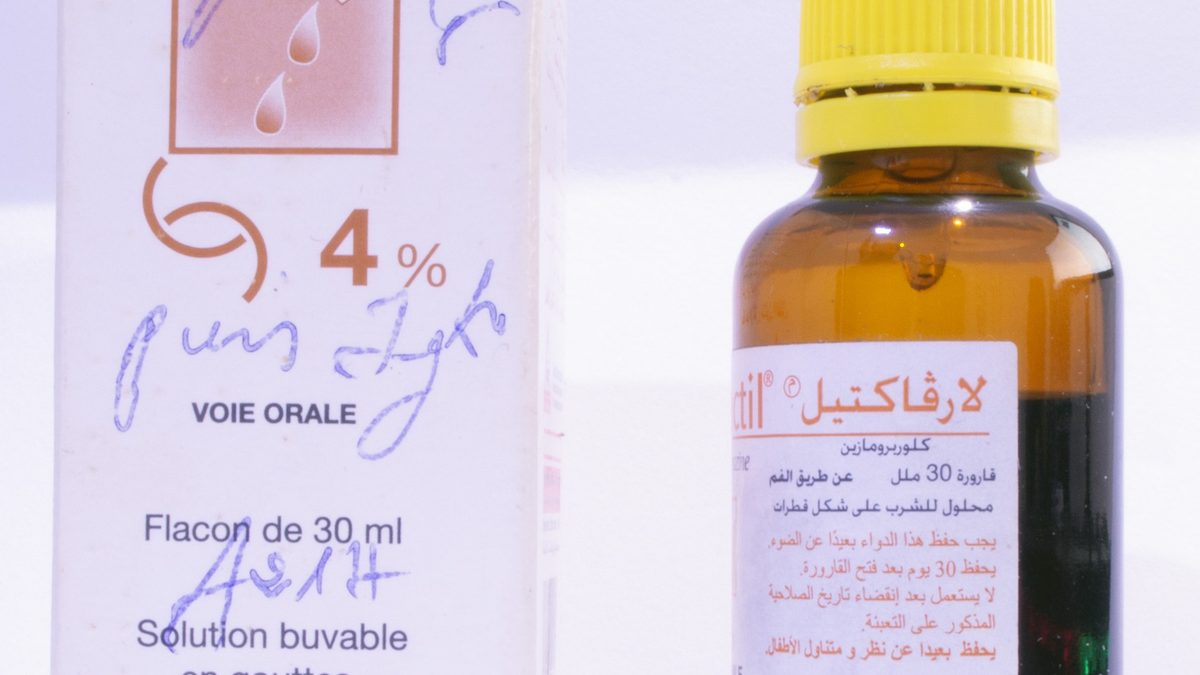
A pill, not a protest, is what actually stopped the climb
Organized medical opposition to lobotomy built slowly and had little practical effect while it was building. The most decisive early action came from outside American psychiatry altogether: in 1950, the Soviet Union banned the procedure outright, calling it “theoretically unjustified” and incompatible with Pavlovian medical theory, right as the operation was approaching its peak popularity in the United States, Britain, and Scandinavia.
What actually ended it in the West was chlorpromazine, a drug discovered almost by accident by the French military surgeon Henri Laborit while he was testing it as an anesthetic in the early 1950s. Sold under trade names including Thorazine and Largactil, it could calm psychiatric symptoms chemically, without a single irreversible cut, and could simply be stopped if it did not work. By the late 1960s an estimated fifty million patients worldwide had been prescribed it. Lobotomy rates collapsed within a few years almost everywhere the drug became available, part of the same wave of confident mid-century medicine that also produced the violet ray machine and, a few decades earlier, treatments as dubious as the centuries-old mercury cure for syphilis.
Freeman kept operating into the 1960s regardless, performing his last lobotomy in 1967, by which point most of his own profession viewed the procedure as a discredited relic rather than a frontier treatment. He died in 1972. His instruments outlived his reputation by decades: a set of his orbitoclasts now sits in the closed stores of London’s Wellcome Collection, and another — donated to the Smithsonian by Ator himself in 1986 — sits uncatalogued in Washington, neither currently on public display. Psychiatric neurosurgery itself did not disappear. Its modern form, deep brain stimulation, operates on a fundamentally different premise — modulating neural activity with electrodes rather than destroying tissue with a spike — under research-ethics oversight and informed-consent rules that exist largely because of what Freeman’s record made undeniable. The overcrowded wards that first justified the operation, and the restraint methods like the straitjacket that had been standard there for a century, were being phased out for the same reason the lobotomy was: a pill had made the old answer to institutional overcrowding look as crude as it actually was.
Watch the full history
The short video traces the same ice pick, from Freeman’s kitchen drawer to the touring station wagon.

Related reading
- Nobody Knows Exactly When the Straitjacket Was Invented
- Who Discovered Ether Anesthesia? The Feud That Ruined Three of the Four Men Who Claimed It
- Why Ancient Trepanation Survival Rates Were So High
- How Phrenology Hiring Practices Took Over Victorian Workplaces
- How the Violet Ray Machine Worked, and Why It Took Decades to Debunk
Shop the sources behind this history
- “The Lobotomist” by Jack El-Hai (book)
- “Great and Desperate Cures” by Elliot S. Valenstein (book)
- “Rosemary: The Hidden Kennedy Daughter” by Kate Clifford Larson (book)
Works cited
- Fusar-Poli, Paolo, Paul Allen, and Philip McGuire. “Egas Moniz (1875–1955): The Father of Psychosurgery.” The British Journal of Psychiatry 193, no. 1 (2008): 50. Link.
- “Egas Moniz — Biographical.” The Nobel Prize in Physiology or Medicine 1949. Nobel Prize Outreach. Link.
- Torkildsen, Øivind. “Lessons to Be Learnt from the History of Lobotomy.” Tidsskrift for Den norske legeforening, December 12, 2022.
- Smithsonian National Museum of American History. “Freeman Transorbital Leucotome.” Object record nmah_738841.
- Wellcome Collection. “Set of ‘Watts Freeman Lobotomy Instruments’; Box Inscribed by Walter Freeman.” Reference PP/WWS/F/7/3, Sargant (William Walters) Collection.
- Savelli, Mat. “Mind and Matter.” Distillations Magazine, Science History Institute, June 3, 2013. Link.
- John F. Kennedy Presidential Library and Museum. “Rosemary Kennedy.”
- Indiana Medical History Museum. “Lobotomy: Intentions, Procedures, Effects.” Link.
- “Psychosurgery: History’s Trash Heap or Tomorrow’s Promise?” AANS Neurosurgeon, American Association of Neurological Surgeons, July 10, 2019. Link.