
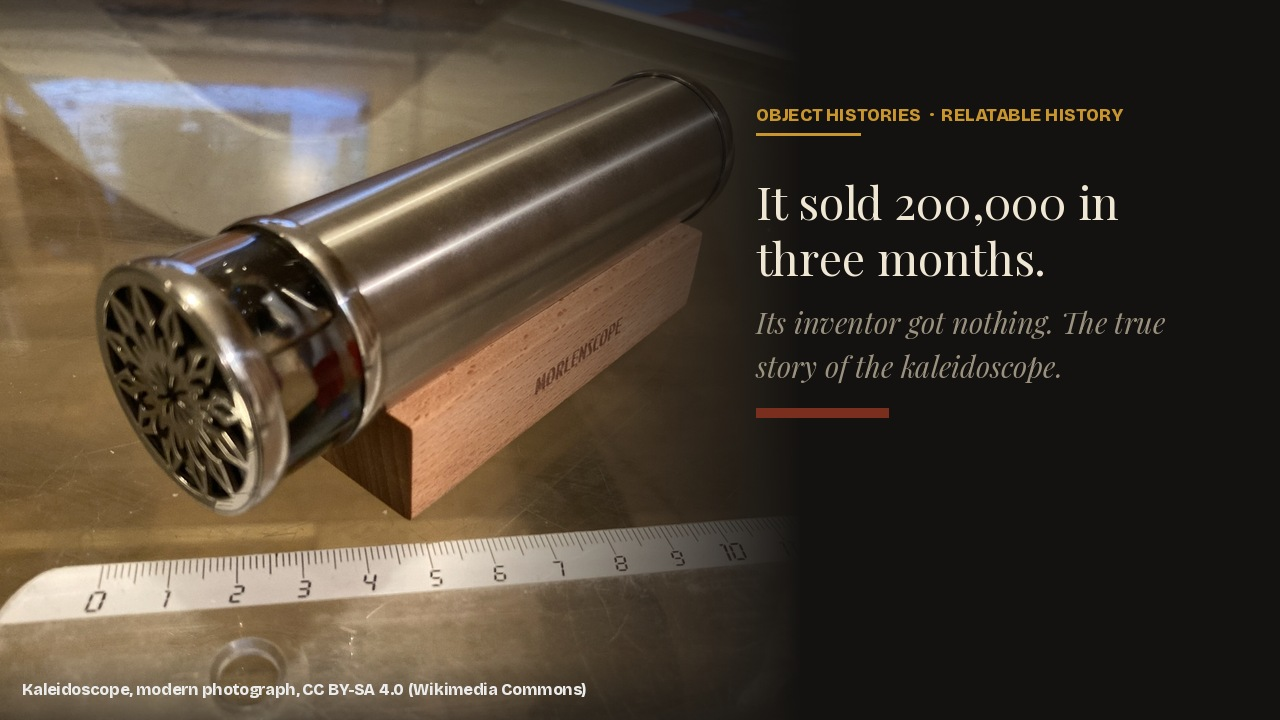
The kaleidoscope patent that failed its own inventor is one of the stranger stories in the history of invention: a toy that sold an estimated 200,000 units across London and Paris in about three months, and left the man who worked out its exact optics with essentially nothing to show for it. He got the science right the first time. He just never managed to protect it fast enough.
A Trough of Broken Glass
In 1814, the Scottish physicist David Brewster was deep in research that had nothing to do with toys, studying how light behaves when it reflects between angled plates of glass, work that would later contribute to his Royal Society Copley Medal. Along the way he noticed something odd: images of a candle, arranged in a perfect circle, multiplying as they bounced between the plates. The real breakthrough came in February 1815. Looking through a narrow triangular trough of glass at some loose bits of cement, Brewster watched the fragments resolve into a symmetrical pattern far more striking than anything he’d seen before, and realized the effect depended on something very specific: the exact angle between the mirrors, and the precise position of the eye relative to them. He named the device the kaleidoscope, from the Greek for beautiful form, to watch.
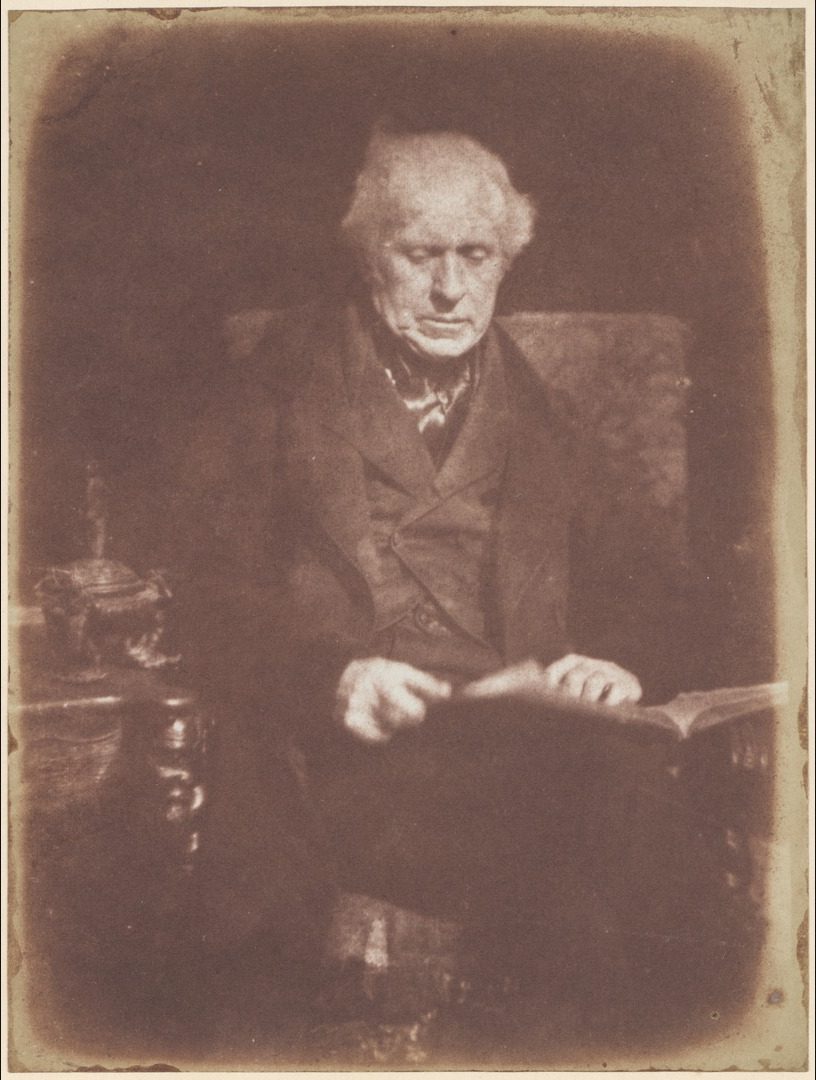
Brewster was no amateur tinkerer stumbling into a lucky toy. By 1815 he was already one of Britain’s leading experimental physicists, a man whose work on the polarization of light would eventually earn him the Royal Society’s Copley Medal and a knighthood, and whose name is still attached to Brewster’s angle, a fundamental optics principle discovered in 1811. The kaleidoscope wasn’t the product of years of deliberate toy design; it fell directly out of serious research into how reflected light behaves, which is part of why Brewster himself was so frustrated to watch it get treated, and mass-produced, as disposable junk.
The Kaleidoscope Patent That Failed
On July 10, 1817, Brewster was granted British patent number 4136, covering, in the patent office’s own language, a new optical instrument for exhibiting and creating beautiful forms and patterns. It should have made him rich. Instead, before he had manufacturing fully arranged, the instrument’s details reached opticians who built their own copies and started showing them around to drum up orders, and word spread faster than any patent lawyer could chase it down. Exactly what went wrong with the patent itself is genuinely unclear even among specialists: some accounts describe its wording as too loose to hold up, while one historian, Dr. Peter Reid, has suggested in a separate interview that the application was simply filed about a week later than it needed to be. Either way, the result was the same. Through the spring and summer of 1818, kaleidoscopes became the toy of the age, hawked from carts on street corners for a single penny, and Brewster estimated that out of the roughly 200,000 that flooded the market in about three months, perhaps one thousand were properly built on sound optical principles at all.
What the Invention Actually Cost Him
Brewster fought the patent in court, arguing the invention’s real novelty lay in the specific relationship between the object being viewed and the position of the eye, not in mirrors generally, which nobody could patent. Scientists of real standing, including the steam-engine pioneer James Watt, backed him publicly. The legal fight dragged on regardless, and the financial damage is usually described in large, round terms rather than a documented contemporary figure: Dr. Peter Reid has estimated Brewster could have earned on the order of £100,000 from the invention, noting that £700 a year counted as real money at the time, and that the lost sum would translate to something like £10 to £20 million today. By that same account, Brewster wasn’t financially secure until he became principal of the University of St Andrews at age fifty-five, decades after the kaleidoscope craze had already come and gone.
The Instrument Maker Who Didn’t Betray Him
One detail that’s often garbled in retellings concerns Philip Carpenter, the Birmingham instrument maker most closely associated with the original kaleidoscope. He’s sometimes described as a pirate who later switched sides and became Brewster’s authorized manufacturer, but the Science Museum Group’s own published research on Carpenter tells a more direct story: he was Brewster’s manufacturing partner from essentially the start, in what amounted to a joint venture, and was the original “sole maker” stamped on the earliest patent-era kaleidoscopes. The actual piracy Brewster complained about came from tinsmiths and glaziers producing unauthorized parts and copies to dodge the patent entirely, not from Carpenter. By 1818, with demand far outstripping what one firm could supply, Brewster licensed additional manufacturers; a period advertisement from that year lists seventeen makers, Carpenter among them. After Carpenter’s death in 1833, his sister Mary and his foreman William Westley carried the business on, renaming it Carpenter & Westley in 1837, and kaleidoscopes stamped with that name were still being sold decades later — roughly sixty years of continuous production from the original authorized maker’s firm.
More Than a Toy
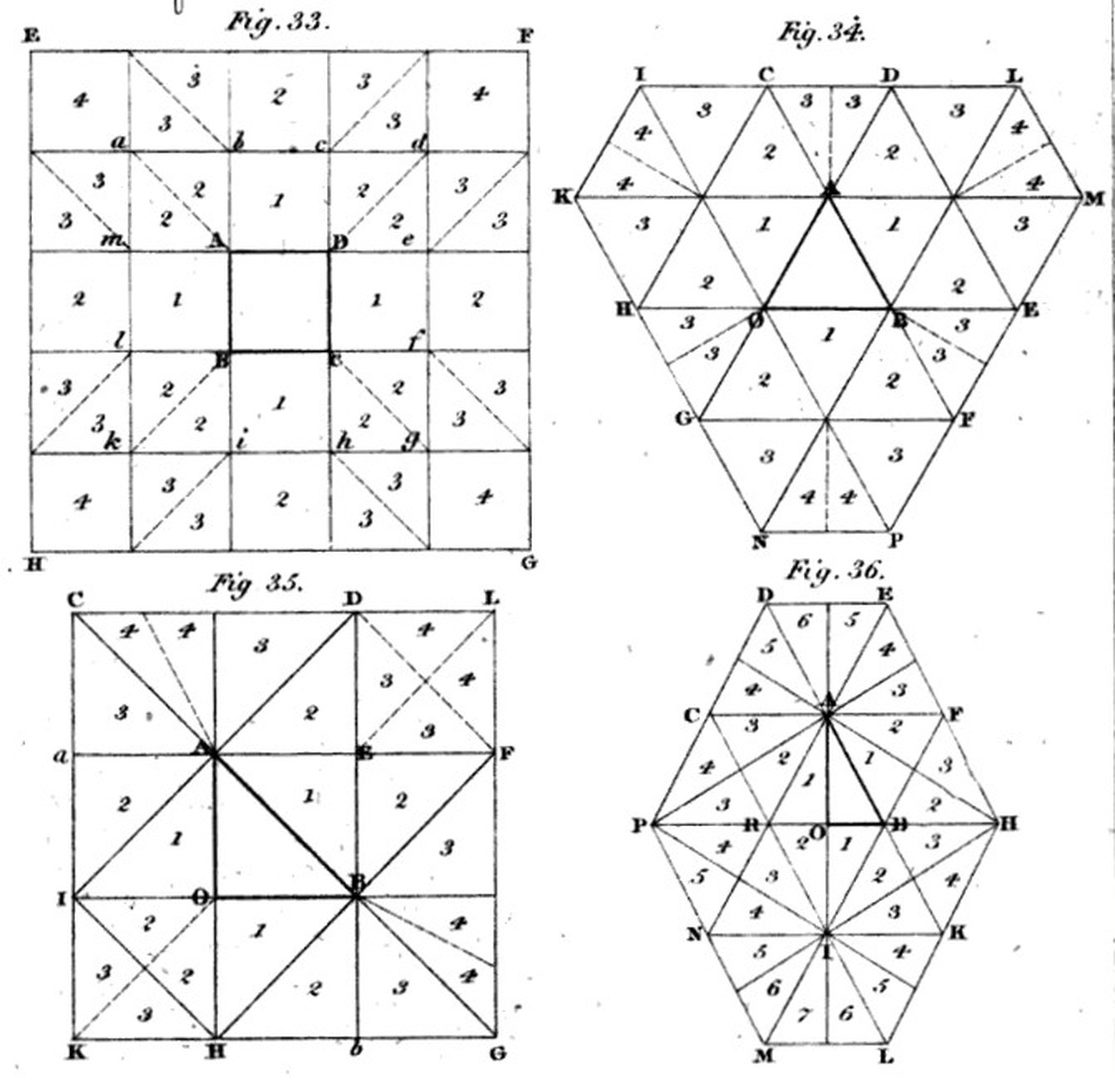
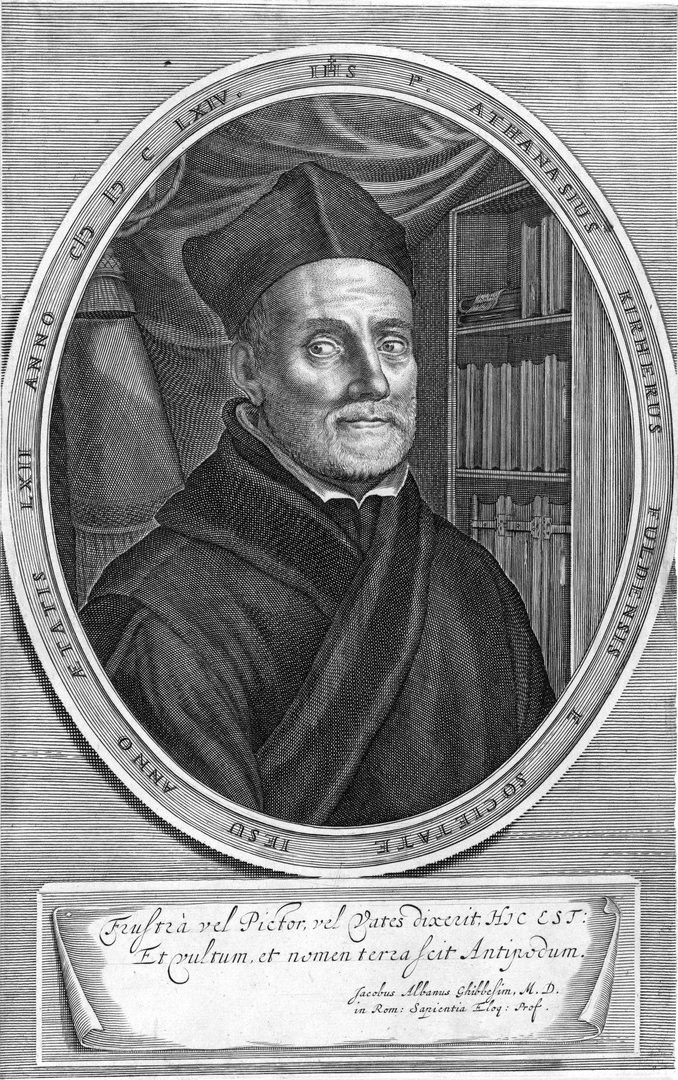
In 1819, still trying to separate his invention from the flood of cheap imitators, Brewster published A Treatise on the Kaleidoscope, a detailed manual explaining how to build one correctly and listing the manufacturers he’d actually authorized. The treatise described far more variety than the simple toy most people picture: a compound, or telescopic, version with a sliding tube and convex lenses that turned ordinary distant scenery into shifting patterns instead of just loose beads; polycentral versions with three or four reflectors set at different angles for more complex symmetry; projection kaleidoscopes designed to throw the patterns onto a wall using a magic lantern, an 1800s precursor to a light show; and microscopic versions barely an inch long, small enough to be worn as jewelry. Brewster was also careful to credit what came before him. The basic idea that angled mirrors could multiply an image into symmetrical patterns had been known since antiquity and was described by the Italian scholar Giambattista della Porta in the 1500s, and more specifically by the Jesuit polymath Athanasius Kircher, who in 1646 described two mirrors hinged like a book producing regular polygon figures. What Brewster actually contributed was the specific geometry that made the effect genuinely beautiful rather than just a curious mirror trick — the first documented configuration recognized as optically optimal.
The toy’s commercial life didn’t end with the 1818 craze, either; it just settled into a long, quieter run as a standard piece of Victorian parlor equipment. Manufacturers kept refining and patenting their own variations for decades afterward — an American maker named Bush patented an improved parlor-style kaleidoscope in 1873 that became one of the most common designs of the entire 19th century, and by the 1890s a basic Brewster-type model could be bought from an optical catalogue for as little as two or three dollars, a world away from the chaos and cheap junk of 1818’s street-cart sales. French and American instrument makers were still selling their own simple Brewster-type versions well into the final decades of the century, proof the underlying idea had real staying power long after the original frenzy had burned itself out completely.
A Craze That Faded, and Then Came Back
As a mass craze, the kaleidoscope burned out almost as fast as it had exploded, but it never fully disappeared, surviving for two centuries as a nursery toy, a classroom demonstration of symmetry, and eventually an artist’s medium in its own right. Its most visible modern revival traces to one woman: Cozy Baker, who discovered kaleidoscopes while grieving the 1981 death of her son and went on to assemble what’s believed to be the largest kaleidoscope collection in the world, more than a thousand instruments ranging from cardboard toys to a piece roughly two meters tall. She founded the Brewster Kaleidoscope Society, named for the original inventor, and her books and conferences helped connect a new generation of artists and collectors from the 1970s onward. In 1990, WildeWood Creative Products worked with Baker to introduce the wand kaleidoscope, a sleek handheld design using liquid-filled cells that let loose fragments drift and bloom slowly instead of just rattling into a new pattern. The revival reached museums too: a 1987 National-Science-Foundation-backed touring exhibition, Kaleidoscopes: Reflections of Science and Art, filled 1,000 square feet and circulated to fifteen science museums across the United States and Canada over three years, reaching an estimated one million visitors.
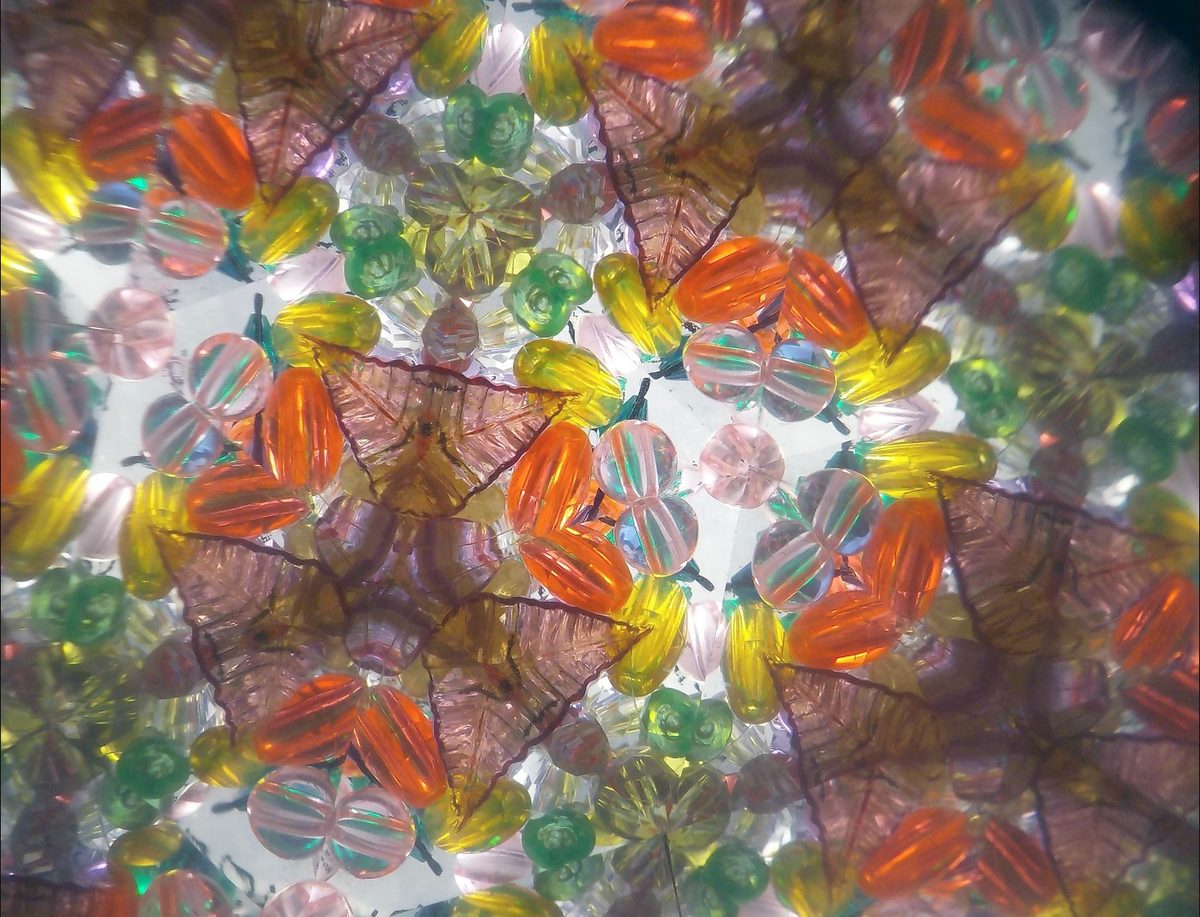
Two centuries after a trough of loose cement, you can still buy a kaleidoscope for a few dollars at a museum gift shop, and it’s built on exactly the geometry Brewster worked out in February 1815. He solved the actual science on his first real attempt. He just never worked out how to defend the patent fast enough to keep anyone else from collecting the profit first.
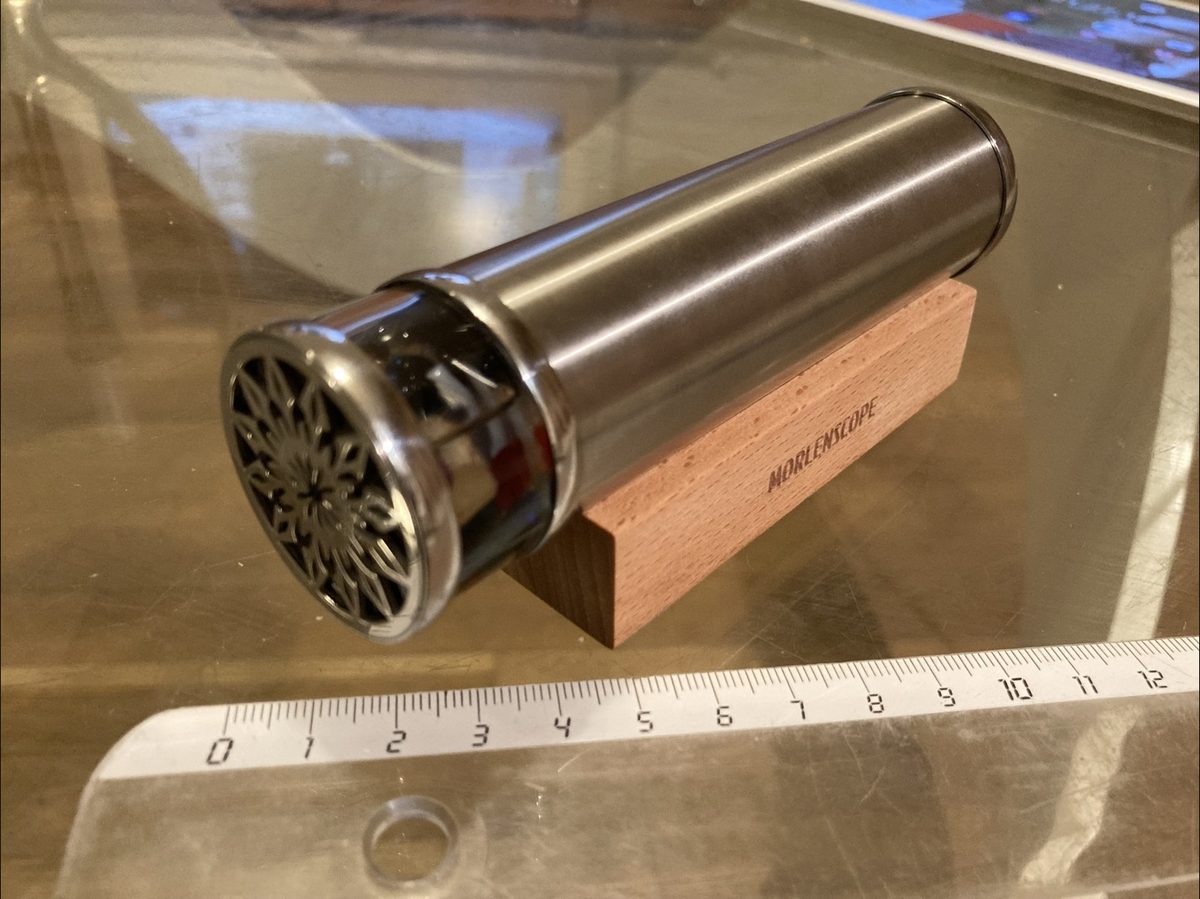
Watch the full history
The video below covers the full arc in more visual detail: the 1815 trough experiment, the 1817 patent, and the variants almost nobody remembers.

Related reading
- Why Player Pianos Outsold Real Pianos in 1924
- Why Music Boxes Disappeared: Rise and Fall of an Industry
Works cited
- “Inventor of the Kaleidoscope.” The Brewster Kaleidoscope Society (brewstersociety.com). Link.
- Pumfrey, Alex. “Philip Carpenter.” Science Museum Group Journal. Link.
- “Scot Who Invented Kaleidoscope, Then ‘Vanished From History,’ Celebrated.” STV News. Link.
- Ball, Philip. “Meet the Kaleidoholics.” Physics World, Institute of Physics. Link.
- “Kaleidoscopes: Reflections of Science and Art.” National Science Foundation project record, Association of Science-Technology Centers Informal Science archive.
- “Kaleidoscope.” Early Scientific Apparatus, Kenyon College Department of Physics. Link.