
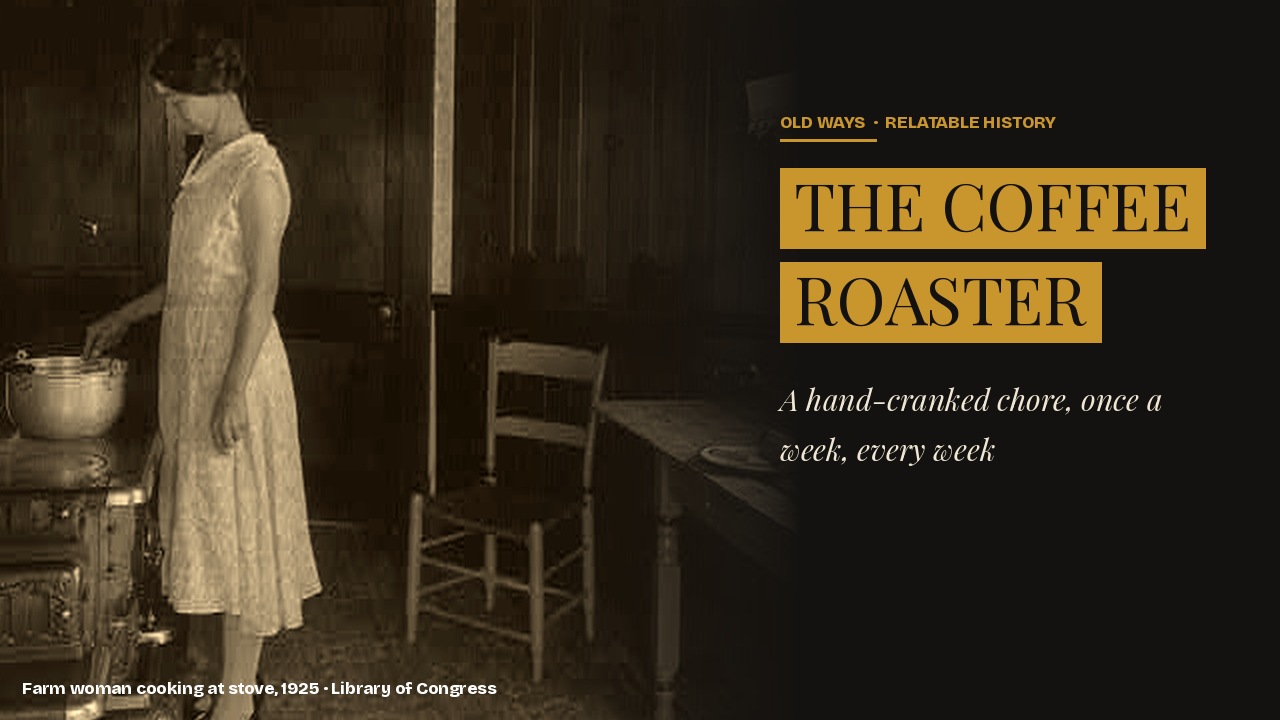
By February 1865, a pound of coffee in parts of the Confederacy sold for roughly $196 — up from about $1.20 a pound when the war began four years earlier. One Union soldier, reading a captured Confederate newspaper, recorded a report of $250 a pound in one state. A Confederate soldier on furlough in Savannah once paid $30 for what he was told were two pounds of coffee; when he got around to brewing it, the sack turned out to be peas. None of that scarcity changed how coffee was actually prepared, on either side of the line. Whether the beans in the drum were real or not, turning them into something drinkable was still a task performed personally, in the kitchen, with a small hand-cranked machine that has almost entirely vanished from memory along with the chore it existed to do.
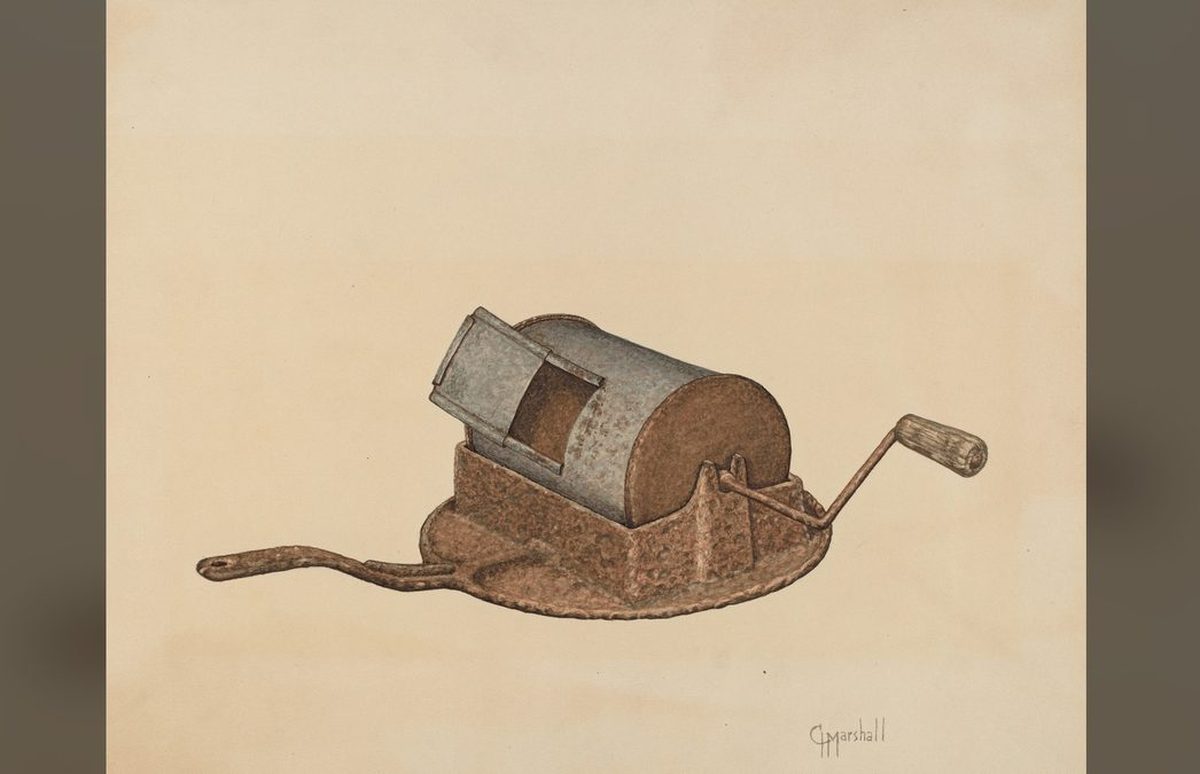
That machine, the home coffee roaster, is covered on its own mechanical terms elsewhere on this site — the drum, the crank, the sound a bean makes when it finally cracks. This article is about what surrounded the device rather than the device itself: the company that spent a decade turning the weekly chore into something optional, the war that briefly made real coffee cost more than most people earned in a week, and a 1906 federal law whose fine print coffee sellers spent years quietly stretching on their own labels.
Start with the war, because it is the clearest demonstration of just how far people were willing to go to keep something hot and bitter on the table every morning.
Confederate households roasted almost anything that wasn’t coffee
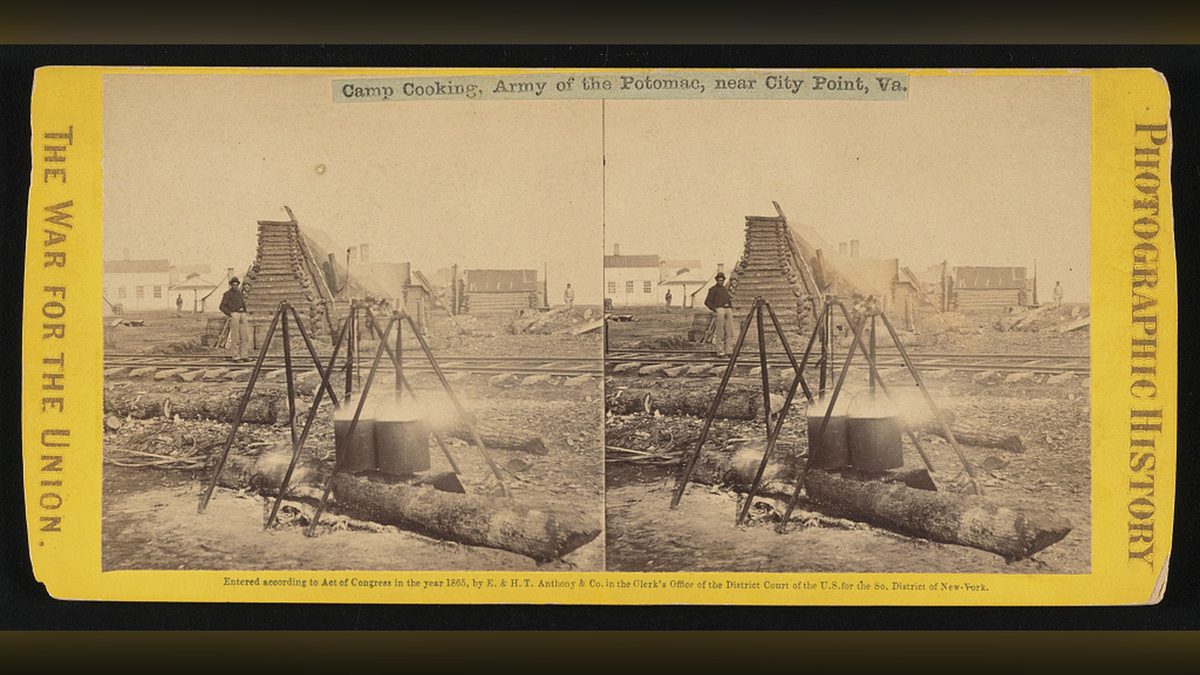
The Union naval blockade, tightened through 1861 and 1862, cut off the ports that had supplied the South with coffee from Brazil and the Caribbean, and prices climbed in something close to a straight line for the rest of the war. What coffee did slip past blockade-runners went first to the Confederate army and then to whoever could pay the going rate. Civilians improvised block by block. In New Orleans, cooks stretched what real coffee they had with roasted chicory root, a blend the city still drinks today. In Botetourt County, Virginia, Julia Breckinridge wrote to her husband that she had come to prefer rye coffee to anything else on the table. A Charleston housekeeper mixed cottonseed two parts to coffee one. Parched cornmeal, toasted okra seed, dried sweet potato chips, roasted acorns, peanuts, sassafras pits, and even burnt molasses all did duty as coffee somewhere in the Confederacy, tumbled and cracked in the same roasters that had always handled real beans, because the technique never actually cared what was inside the drum — much the way farm households further from a railroad leaned on home-pressed cider rather than a store-bought drink, out of the same mix of cost and distance. Not everyone found the results bearable: Ida Baker, recalling her South Carolina childhood decades later in 1937, remembered parched wheat and sweet-potato-chip coffee as common substitutes and was blunt that none of it was any good. A British officer touring the Confederacy in 1863 observed that losing coffee seemed to trouble Southerners more than losing hard liquor. Some Confederate newspapers turned the shortage into satire aimed at Union readers: a Macon, Georgia paper printed a mock recipe calling for persimmon seeds and a cockroach, and the Arkansas True Democrat ran one built from tan bark and cigar stumps. When the war ended, prices fell back to something ordinary almost as fast as they had risen, and the improvising stopped just as suddenly.
A Pittsburgh grocery clerk built the first national coffee brand
John Arbuckle was a college student in 1860 when he joined the Pittsburgh wholesale grocery his older brother Charles had organized the previous year with their uncle, Duncan McDonald, and a partner named William Roseburg, trading as McDonald & Arbuckle. By 1865 the firm was selling individually packaged, carefully roasted coffee under its own name rather than the usual loose green beans by the scoop — already a departure from how nearly every grocer in the country still sold it. The real breakthrough came three years later: in 1868, John Arbuckle patented a coating of beaten egg white and sugar that could be brushed onto roasted beans before packaging, sealing each bean against the air and letting roasted coffee travel and sit on a shelf without going stale the way open-roasted coffee normally did within days. The operation moved to New York City in 1871, where a filling-weighing-sealing-and-labeling machine Arbuckle helped design raised output roughly tenfold. By 1873, the resulting brand, Ariosa, had become the first successful nationally distributed packaged coffee in the country — sold already roasted, already glazed, and ready to grind straight out of the bag, at a scale no single farm kitchen could match. Arbuckle kept inventing afterward: a coffee cleaning-and-grading machine followed in 1874, and he later built a second fortune in cane sugar refining, breaking into direct competition with Henry Havemeyer’s American Sugar Refining trust at an estimated cost to himself of twenty-five million dollars before the trust was broken up in 1901. He died in 1912, at seventy-four, having spent roughly half a century making sure fewer and fewer Americans ever needed to own a coffee roaster at all.
Why a bag of Arbuckle’s came with a peppermint stick
Being first to a national brand wasn’t only about the glaze; Arbuckle sold the brand itself as hard as he sold what was inside it. Every one-pound package, wrapped in distinctive orange, yellow, and black paper and shipped a hundred to a crate, held a single peppermint candy stick tucked in with the beans. On a cattle drive, where the morning coffee still had to be ground by hand before anyone saw breakfast, trail cooks turned that peppermint into currency: whichever hand volunteered to turn the grinder got to keep the candy, a small bribe that made an unpopular chore slightly less unpopular. The company backed the candy with a second hook aimed at collectors rather than children — illustrated trading cards packed into the bags or handed out at the counter, covering subjects from geography and birds to American history and sport, plus coupons redeemable for small premiums like razors and scissors. On the trail specifically, the appeal went beyond marketing: a cook was partly judged by his crew on the coffee he served, and once Ariosa meant nobody had to carry a roaster or tend an open fire in the dark before a drive, the brand became standard chuck-wagon stock on the cattle trails running north out of Texas. The name outgrew the company: for a stretch of the late nineteenth century, “Arbuckles” worked in everyday speech as a stand-in for coffee itself, the way a small number of branded products have occasionally become the generic word for their whole category.
The hardware side of the business had its own century-long history
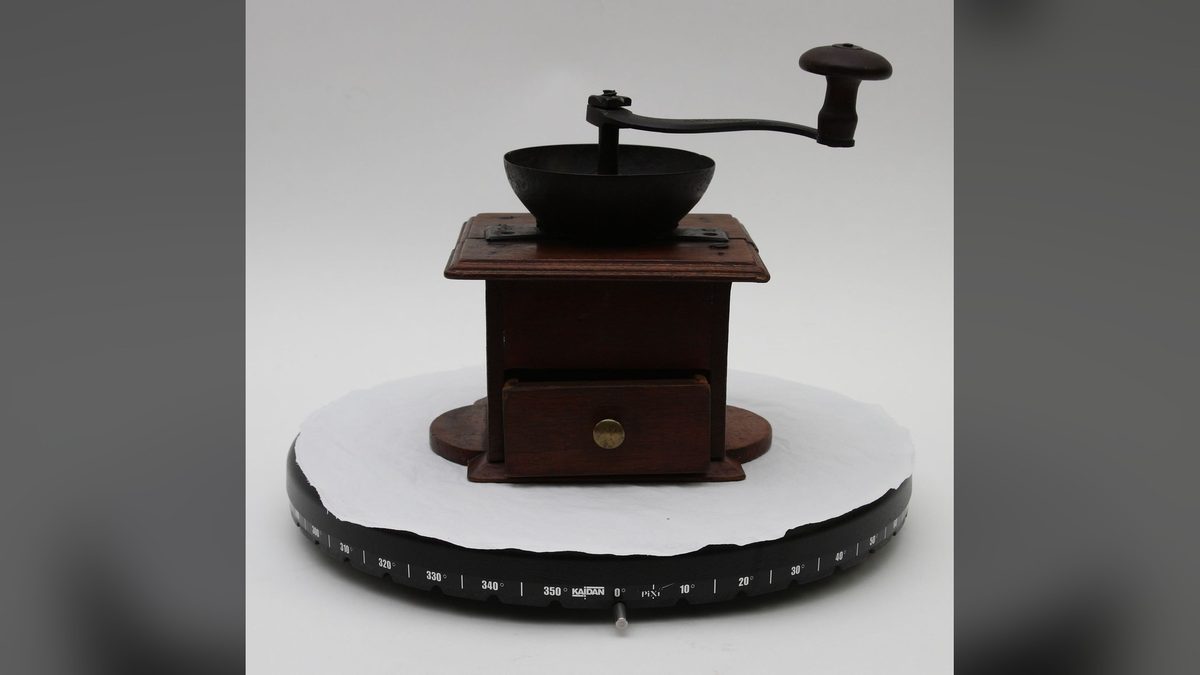
Even after Arbuckle’s took over the national market, the equipment that had always handled coffee — mills for grinding, roasters for the farms still roasting at home — kept being made by firms with long histories of their own. Charles Parker moved to Meriden, Connecticut, in 1828, at nineteen, to manufacture coffee mills for an established maker named Patrick Lewis. In 1832 a patent for an improved coffee grinder was issued to his brother Edmund Parker and a partner, Herman White — one of many ordinary household objects, like the wooden clothespin, whose patent history turns out to be more contested than it looks — and the Charles Parker Company was founded that same year around that grinder. The partnership broke up in 1845; Charles kept the firm and ran it alone, eventually expanding well past coffee mills into waffle irons, lamps, clocks, and sporting guns, while continuing to turn out the mounted wall grinders and handheld coffee mills that still show up today in surviving chuck-wagon collections right alongside Arbuckle’s own tins. The Parker name stayed on coffee hardware for roughly a hundred and forty years, into the 1970s. A rival firm, the Enterprise Manufacturing Company of Philadelphia, patented its own coffee-mill improvements on October 21 and December 9, 1873 — the same year Ariosa went national — and its cast-iron mills, finished with painted decals, a steel grinder, a porcelain knob, and a beechwood handle on an oak base, were common enough that one now sits in the Smithsonian’s National Museum of American History. Firms like these, not Arbuckle’s, were who actually profited from every household that kept roasting its own coffee rather than buying it ready-made.
What “guaranteed under the Food and Drugs Act” actually promised
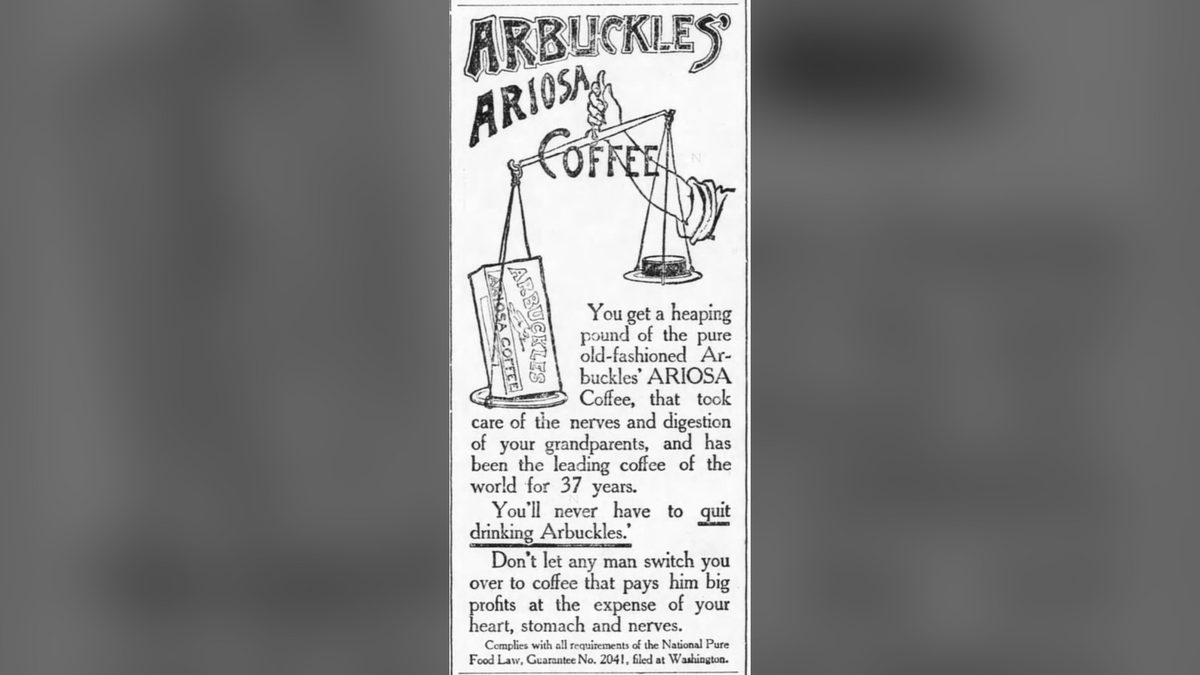
By the early twentieth century, Arbuckle’s advertising had taken to printing a line that sounded like a government endorsement: “Complies with all requirements of the National Pure Food Law, Guarantee No. 2041, filed at Washington.” The law behind that claim, the federal Food and Drugs Act, took effect June 30, 1906, aimed squarely at the kind of adulteration that had long made whole, visibly green coffee beans the safer choice over a ready-ground tin of unknown origin. But the Act’s actual guaranty provision, Section 9, did something narrower than the advertising implied: it let a dealer avoid prosecution for selling adulterated or misbranded goods by producing a signed guaranty from the wholesaler or manufacturer who supplied them — a document naming the guarantor and shifting legal liability onto that party instead. It was a shield for shopkeepers, not a certification of purity handed down by the government. Manufacturers across the food industry seized on the word “guaranteed” anyway, printing serial numbers that made the claim sound official: Coca-Cola’s own bottles carried “Guaranteed under the Food and Drugs Act… Serial No. 33324” in a 1907 magazine advertisement. Regulators eventually caught up with the practice and moved to stop companies from implying that the government was personally vouching for their product, which it had never agreed to do. Arbuckle’s own “Guarantee No. 2041” belongs to that same era and that same marketing instinct: a real law, a genuine filing, and a claim stretched well past what the filing actually meant.
What’s left of it
Most of what this article covers survived in pieces rather than whole. Arbuckle Brothers was eventually absorbed into larger coffee interests through the twentieth century, though the Ariosa name has since been revived and is sold again today, peppermint stick included, by a small roaster trading on the original brand. Charles Parker’s coffee mills and Enterprise’s cast-iron roasters mostly ended up exactly where Arbuckle’s glazed beans were designed to make them unnecessary: on a shelf, in a barn, or in a museum drawer, kept as evidence of a chore rather than tools still doing the job. The Smithsonian, the Sharlot Hall Museum in Prescott, and a handful of ranching-history collections in the old cattle-trail states now hold the clearest physical record of a business that, in roughly fifty years, took a weekly kitchen task performed in nearly every household in the country and made it something only enthusiasts and the farms still counting their income in butter and eggs continued to do by hand.
Watch the full history
The video version walks through how a roaster was actually used — the sound, the smell, and the fifteen minutes that stood between green beans and a drinkable cup.

Related reading
- How Farms Rendered Lard to Last a Whole Winter
- Who Invented the Ice Cream Freezer? The 1843 Patent, and the Man Who Profited Without One
- How Cider, Not Beer, Became Colonial America’s Everyday Drink
- The Clothespin Patent History Behind America’s Favorite Free Dryer
- Butter and Egg Money: How Farm Wives Financed the Household
Shop
For the fuller history of coffee’s transformation into a global industry, including the Arbuckle years in more depth: Uncommon Grounds: The History of Coffee and How It Transformed Our World by Mark Pendergrast — available on Amazon.
Works cited
- “Coffee Mill.” National Museum of American History, Smithsonian Institution. Object no. 312114 (Enterprise Manufacturing Company, Philadelphia; patented October 21 and December 9, 1873).
- Cornett, Bob. “John Arbuckle: Entrepreneur, Trust-Buster, Inventor, Humanitarian.” Days Past, Sharlot Hall Museum. Link.
- Nipper, Pat Decker. “Coffee Kings of the Old West: Folger Was First, Then Arbuckle.” HistoryNet, May 9, 2018. Link.
- “Coffee on the Home Front During the Civil War.” American Battlefield Trust. Link.
- “Pure Food and Drug Act, 1906.” U.S. National Archives, DocsTeach.
- Federal Food and Drugs Act of 1906, full text (Section 9, “Guaranty”).
- Munsey, Cecil. “Coca-Cola Guaranteed Under What?” Bottles and Extras, Summer 2004. Link.
- Sneed, David E. “Charles Parker & John Arbuckle.” Wheels That Won the West. Link.