
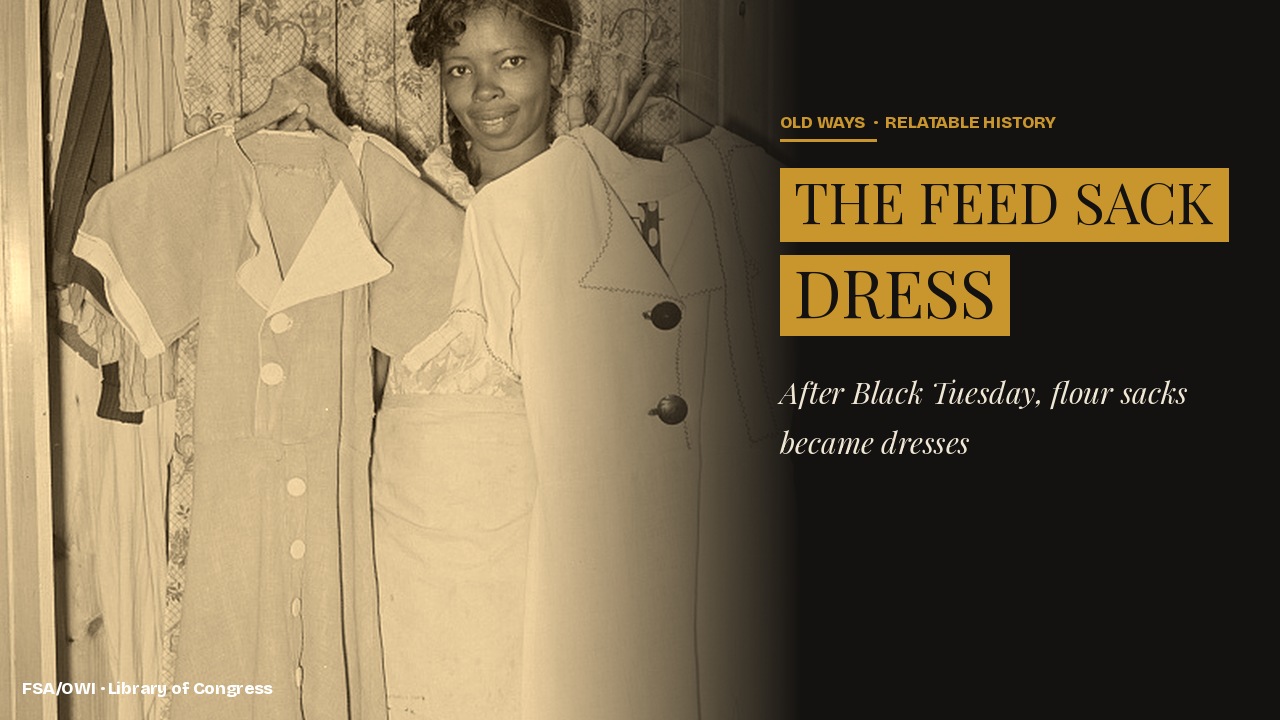
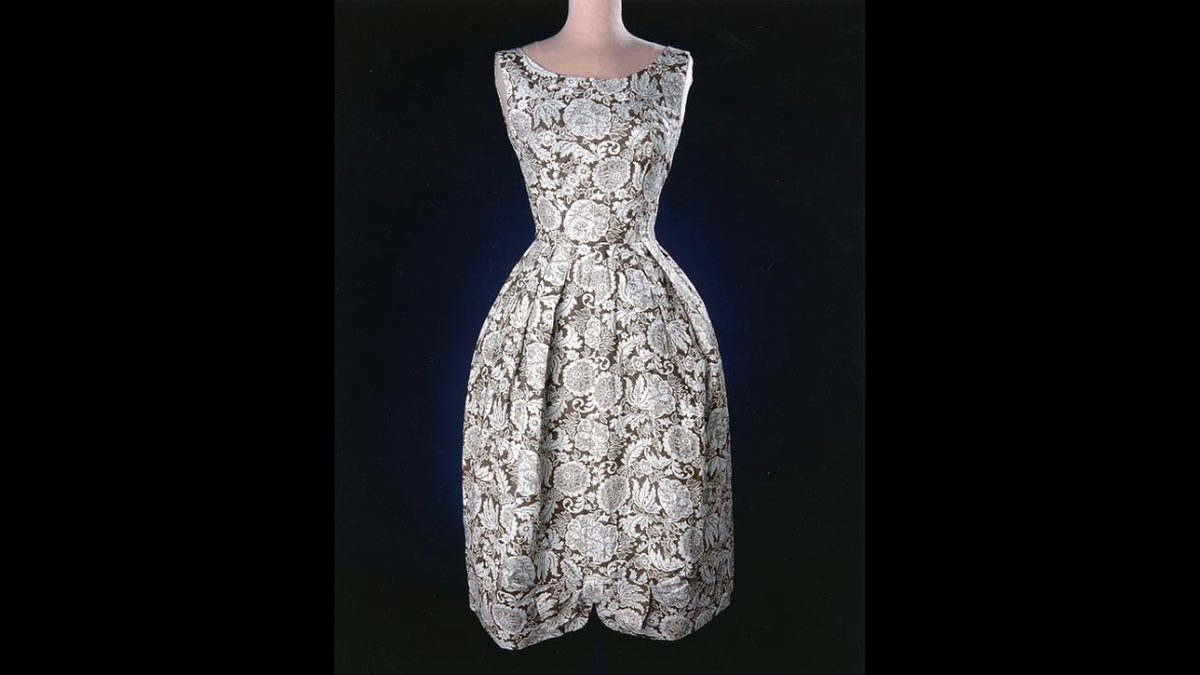
In 1959, a Kansas woman named Dorothy Overall sewed an outfit for a competition that had nothing to do with hard times. The Great Depression that made feed-sack sewing a necessity had been over for nearly two decades. Rationing was a memory. Overall won second prize anyway, in a national cotton bag sewing contest that the bag-making industry itself organized, funded, and judged — and kept running, year after year, at state fairs across the country, for one plain commercial reason: paper bags were getting cheaper, and the cotton-sack business needed women to go on choosing cloth.
That contest, and the trade-promotion machine behind it, is the part of the feed-sack story that rarely gets told alongside the Depression-era frugality narrative. Mills did not simply tolerate women cutting up their packaging. By the late 1920s they were designing that packaging specifically to be cut up, competing with each other over whose prints a farm wife would want on her kitchen table. What began as a sales pitch to sell more flour turned, over four decades, into a full marketing apparatus — design departments, trade associations, and a sewing contest with prize money and press coverage — built to keep a packaging byproduct fashionable long after anyone strictly needed it to be.
Some of what that apparatus produced survived. Overall’s contest garments, her winning certificate, and the contest’s own publicity material now sit in the Smithsonian’s textile collection — not because a curator thought a Depression relic deserved preserving, but because a curator recognized a documented 1959 commercial design competition worth keeping intact.
Printed sacks were a sales pitch years before they were a pattern book
The idea of printing a sack so the cloth could be reused did not start as charity. It started as a patent fight nearly as tangled as the one that delayed the washing machine itself. Asa Bales, of the Southwest Milling Company in Missouri, patented a gingham-printed sack meant to be sewn into dresses — but his patent covered only that specific gingham check, leaving every competing mill free to print whatever design it liked, so long as it wasn’t that one pattern. The result was a packaging arms race that had everything to do with shelf appeal and nothing to do with generosity.
The George P. Plant Milling Company of St. Louis moved first and loudest. In April 1925, general manager E. L. Stancliff announced a new trademark sack called Gingham Girl, printed with a patented process using soluble vegetable inks so the brand stamp would rinse out with ordinary laundry soap and water — solving the one real flaw in early printed sacking, which was ink that didn’t always wash out of a finished dress. Gingham Girl sold well enough that the company followed it with Gingham Mother, Gingham Baby, and Gingham Queen sacks in other colors, and competitors followed within a few years: Bemis Brothers in Tennessee, Fulton Bag & Cotton Mills in Georgia, and Percy Kent in Buffalo, New York, all running their own sack-design departments by the late 1920s, each trying to be the brand a farm wife would pick for the print rather than the flour inside it.
It did not go smoothly at first. The earliest attempts to market printed flour sacks in the mid-1920s were, by the industry’s own later account, “not-too-successful” — farm families were still getting used to the idea, and mills were still learning which prints actually moved product. Printed sacking didn’t become a fixture until a dedicated publicity campaign relaunched it in 1936, nearly a decade after Gingham Girl’s debut, aimed squarely at a Depression-poor rural market that a trusted brand’s printed cloth could reach in a way loose, unbranded cotton never had.
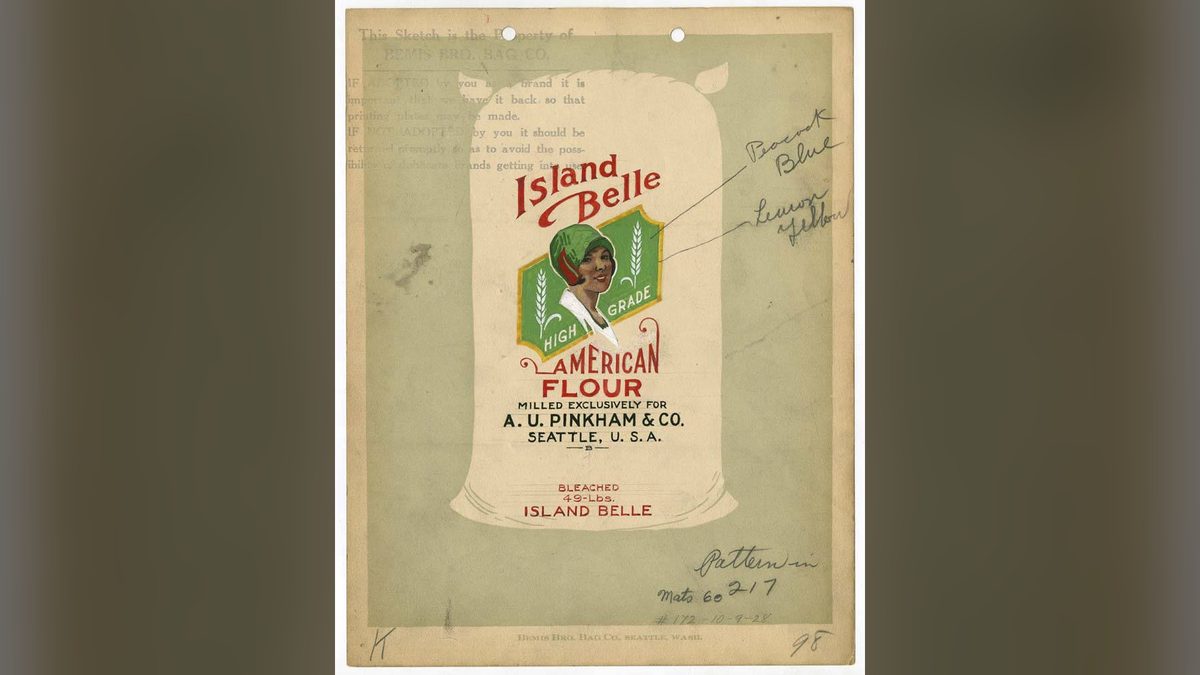
A trade-funded institute taught women exactly what to do with the cloth
Mills did not leave the reuse of their own packaging to word of mouth. The Household Science Institute, with offices in New York and Chicago, existed specifically to teach women and girls household skills, and by the late 1920s a large part of what it taught was what to do with an empty sack. Its monthly newsletter, Out of the Bag, ran practical features — the April 1929 issue covered using sacking for spring cleaning — and around the same time the Institute issued a dedicated booklet, Sewing with Cotton Bags, built entirely around one piece of free yardage.
That instruction reached directly into rural kitchens through the home demonstration agents of the agricultural extension service, government employees whose job was bringing practical skills — canning, nutrition, sewing — to farm households with no other access to formal instruction. An agent helping a woman cut and piece sack cloth at her own kitchen table wasn’t an isolated kindness; it was one spoke of a publicity and education effort that mills, trade publications, and extension offices all had a stake in keeping turning, since every dress sewn from a branded sack was a quiet advertisement for the mill that printed it.
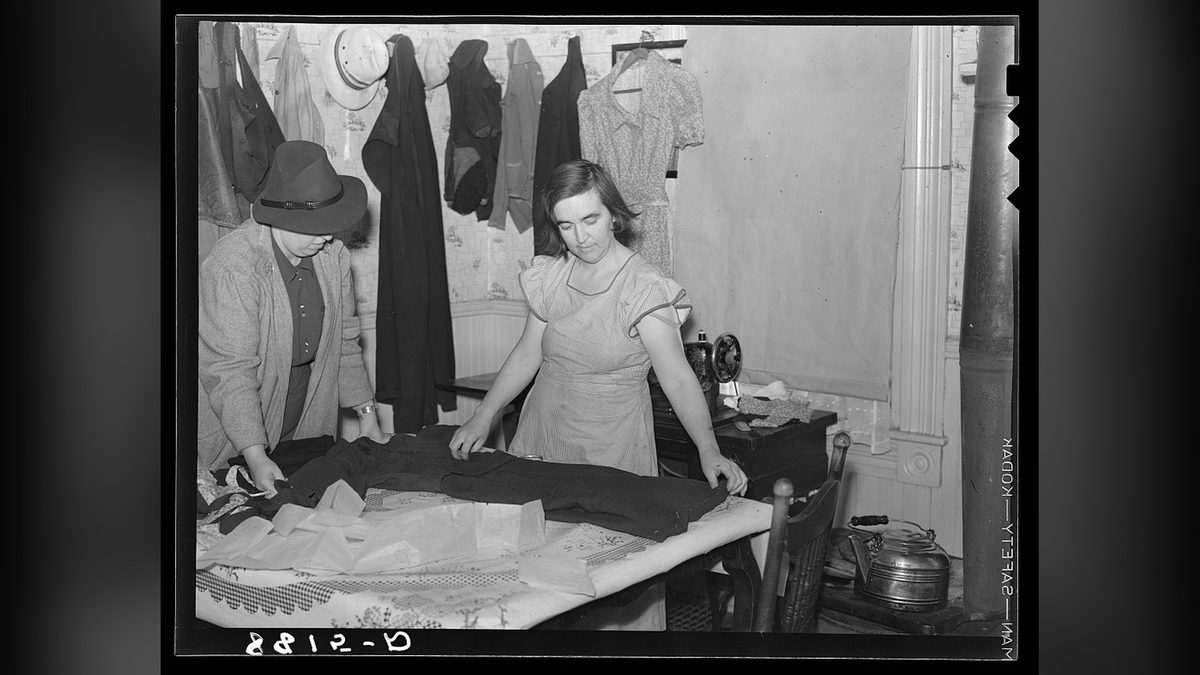
The war made the cloth patriotic, and the government made it uniform
When the United States entered the Second World War, feed and flour sacks got an exemption most fabric did not: the War Production Board kept lightweight cotton bagging out of the restrictions aimed at freeing up sturdier sacking for military use, on the logic that a cotton bag used less material per container than the burlap the war effort needed. In May 1943 the Board went further and standardized sack and bag sizes outright — fixed capacities of one, five, ten, fifteen, fifty, and one hundred pounds — a rule that held for decades afterward and turned a somewhat informal cottage reuse into something close to an engineered supply chain: a five-pound sugar bag yielded a reliable third of a yard, a hundred-pound sack slightly more than a yard, and four hundred-pound sacks made one adult woman’s dress, by design rather than luck.
Mills leaned into the wartime mood rather than downplaying it. Percy Kent’s “Cloth of the United Nations” print, released around 1944, named the Allied nations and depicted war scenes on a sack meant to end up as a child’s dress or a kitchen curtain. Frank L. Walton, who oversaw the wartime cotton trade, wrote afterward in his 1945 account Thread of Victory that “millions of yards are required each year for these purposes,” and noted that sacking shipped abroad to supply troops and civilians in war zones never came back for reuse the way domestic bags did, which only tightened the stateside cloth supply further. One period estimate put the number of American women and children wearing garments made from feed-sack material at three million — not a niche thrift practice by that point, but something close to a wartime uniform stitched at home.
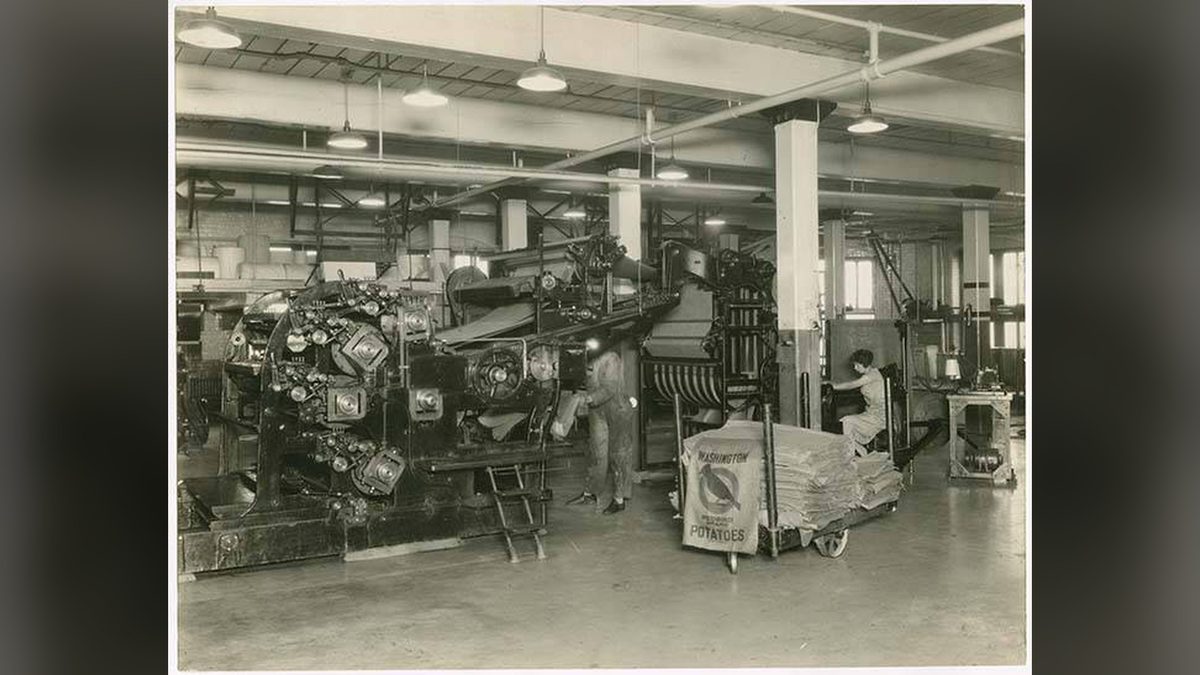
By 1947 the industry was moving three-quarters of a billion yards of cloth a year
The business did not shrink once the war ended; it professionalized. By 1947, bagging for meal, feed, fertilizer, flour, and sugar accounted for roughly eight percent of all American cotton textile production — on the order of seven hundred fifty million yards of cloth moving through mills each year in sack form alone. That was real enough money that companies built consumer-research operations around it. Bemis Bag Company convened panels of farm women in 1948 specifically to vote on favorite patterns, then put the winners into production as its “Bemiline Dress Print Bags.” Percy Kent marketed its own line as “Ken-Print” sacking under the frank nickname “glamour sacks,” with a named design director, A. Charles Barton, running the pattern program the way any other textile company ran a product line. Pacific Mills claimed a catalog of a thousand distinct designs by 1942, and Erwin Manufacturing Company ran cartoon ads built around a battle-of-the-sexes joke: husbands baffled by which sack their wives wanted, wives who knew exactly which print they were shopping for.
This was advertised the way any other consumer good was advertised, in the trade press the farm households’ own feed dealers read: full campaigns ran in Feedstuffs and Flour and Feed, the two journals that reached the feed-store owners actually stocking the bags, with slogans like “Glad Sacks” aimed at the shopper rather than the farmer buying the feed. A woman picking a sack off a feed-store shelf by 1947 was not foraging for scraps. She was a courted customer in a seven-hundred-fifty-million-yard industry that had built an entire consumer-goods playbook around her.
The industry invented a national cotton bag sewing contest to slow the move to paper
Paper and plastic packaging were cheaper to produce than cloth by the 1950s, and the National Cotton Council and the Textile Bag Manufacturers’ Association both knew it. Their answer wasn’t a better price; it was a better show. The two trade groups ran traveling fashion shows, distributed pattern booklets, and organized an annual national cotton bag sewing contest that moved through state fairs nationwide, explicitly meant, in historian Margaret Powell’s words, to “slow this crossover to paper.” It worked, in the narrow sense that the contest ran for roughly a decade and a half after most of the industry’s own executives would happily have switched every bag to paper if customers had let them.
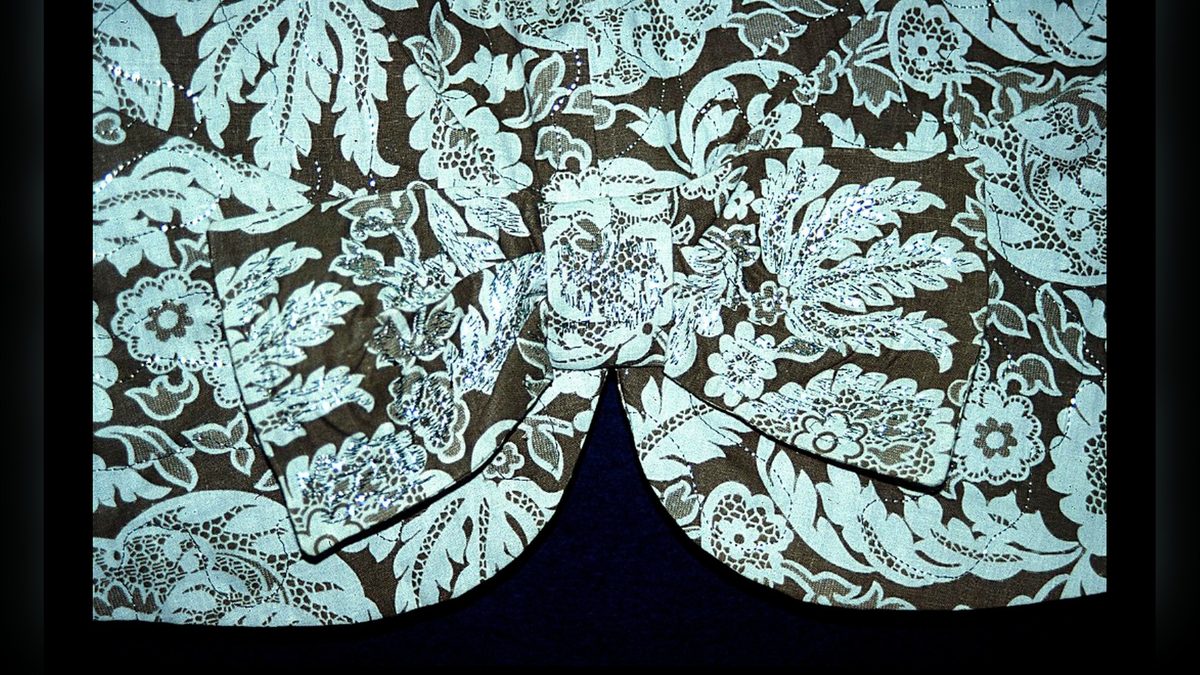
Dorothy Overall, of Caldwell, Kansas, is the contestant whose story survived best, because she donated the evidence. She took second prize in the 1959 national cotton bag sewing contest, sewing her entries — by her own account made entirely from flour sacks, which she considered the best-quality cloth available — on a sewing machine she had won as a prize in an earlier year’s contest. She kept her winning certificate and the contest’s publicity material along with her entries, and eventually gave all of it to the Smithsonian’s Division of Textiles, where a curator recognized a complete, documented record of a commercial sewing competition rather than just an attractive dress. Four years later, in 1963, her daughter Roberta Overall won first prize in the contest’s special teen division, carrying the family’s entry into a second generation.
The contest sat alongside traveling fashion shows and pattern booklets as one of several direct-to-consumer appeals the two trade groups ran at once — not a single event but a sustained, decade-plus campaign, paid for by an industry trying to keep a packaging material fashionable past the point where it made economic sense for anyone but the mills to keep choosing it.
What finally beat the pattern, and why some of it is in a museum now
The contest could slow the shift to paper, but it couldn’t stop it. By the early 1960s, paper and plastic packaging had become cheap and reliable enough that mills themselves wanted the switch — the artificial demand the contest had been propping up collapsed within a few years, and the last state-fair sewing queens were crowned for a product already being phased out from the supply side. The contest didn’t end because women stopped wanting the fabric; it ended because the people paying for the contest stopped needing it to work — a patent-era irony not far from what happened to the zipper, another garment technology whose inventors spent decades fighting over a market that eventually settled itself.
What outlasted the promotion was the sewing itself. A dress like Dorothy Overall’s contest entry survives today as documented, object-level evidence of a specific, dated commercial competition — stitched, pattern-matched, and finished to a standard good enough to win a prize judged by people whose job was telling good sewing from average sewing. That is a different kind of archive than a photograph or an advertisement: it is the material record of what an industry’s marketing campaign asked ordinary women to be capable of, and what thousands of them turned out to be capable of, for decades, on a kitchen table.
Watch the full history
The video traces the Depression-era origins of feed-sack sewing and the patent that got mills printing patterns on purpose; this article picks up where the industry’s own marketing campaign went from there.

Related reading
- How the Sewing Machine Installment Plan Put One in Every Farmhouse — Dorothy Overall sewed her contest entries on a machine she’d won — this is how farmhouses got one in the first place.
- Wash Day Before Washing Machines Started With a Patent Fight — Another household-technology story that turns on who could patent what, and how little that actually locked out competitors.
- How the Washboard Became a Musical Instrument — A companion Old Ways object with the same arc: a necessity that outlived the need for it.
- Who Invented the Zipper? It Took Three Men and Sixty-Six Years — A patent dispute over garment technology that, like Asa Bales’s gingham patent, didn’t settle the market the way the patent holder hoped.
- What Washing Before Indoor Plumbing Really Looked Like — The rest of the unpaid textile labor a farm wife’s week was built around.
Shop the styles/items featured in this video
Feed Sack Fashions by Jim S. Powell goes deep on the mills, the contests, and the patterns behind this whole industry.
Works cited
- Adrosko, Rita J. “The Fashion’s in the Bag: Recycling Feed, Flour, and Sugar Sacks During the Middle Decades of the Twentieth Century.” Textile Society of America Proceedings, 1992. Smithsonian National Museum of American History (author was Curator, Division of Textiles). Hosted via DigitalCommons@University of Nebraska-Lincoln, which intermittently bot-walls automated fetches.
- Powell, Margaret. “From Feed Sack to Clothes Rack: The Use of Commodity Textile Bags in American Households from 1890–1960.” Textiles and Politics: Textile Society of America 13th Biennial Symposium Proceedings, 2012. Link.
- Vogelsang-Eastwood, Gillian. “For a Few Sacks More,” part 2: The Early History of Decorative Feedsacks. TRC Digital Exhibition, Textile Research Centre, Leiden, 2018. Link.
- Vogelsang-Eastwood, Gillian. “For a Few Sacks More,” part 4: Feedsacks During the Second World War. TRC Digital Exhibition, Textile Research Centre, Leiden, 2018. Link.
- Walton, Frank L. Thread of Victory. New York: Fairchild Publishing Co., 1945.
- “The Surprising Uses for Flour Sacks!” Mills Archive Trust, 29 September 2017.
- Hoffman, Catherine. “How Midwestern Women Pioneered Feed Sack Fashion.” Flatland (Kansas City PBS), 23 March 2021. Link.