
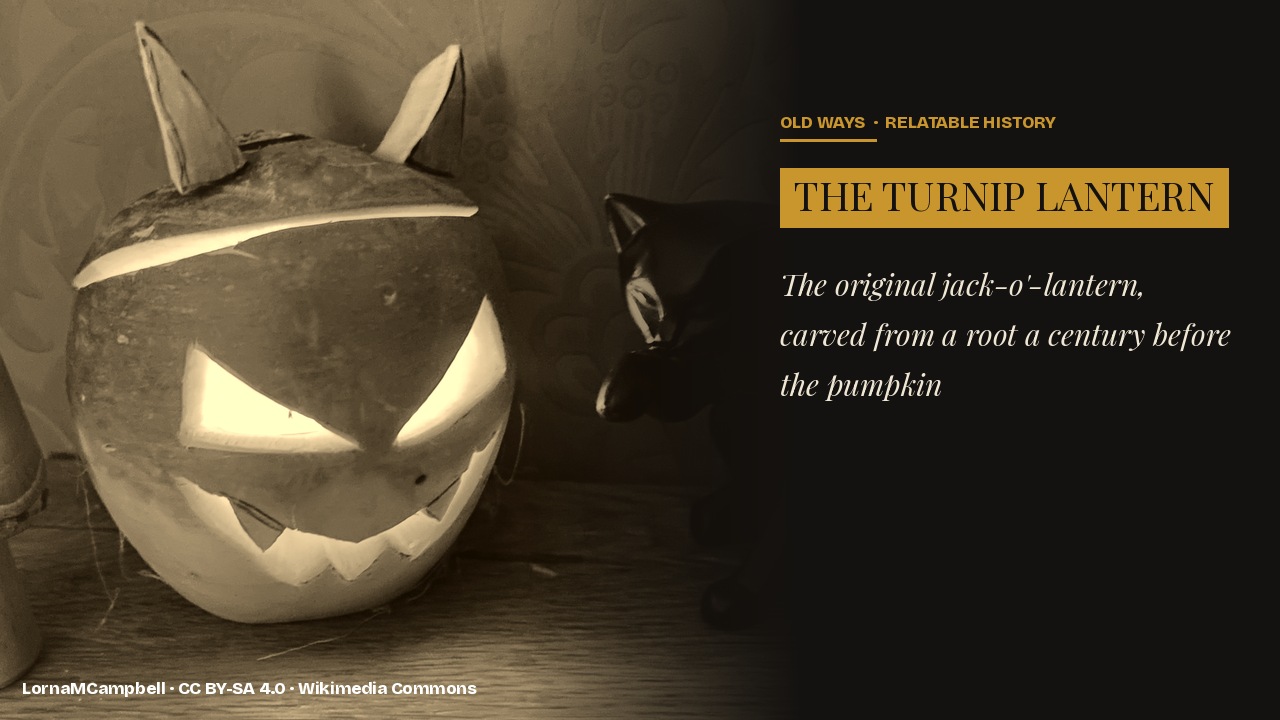
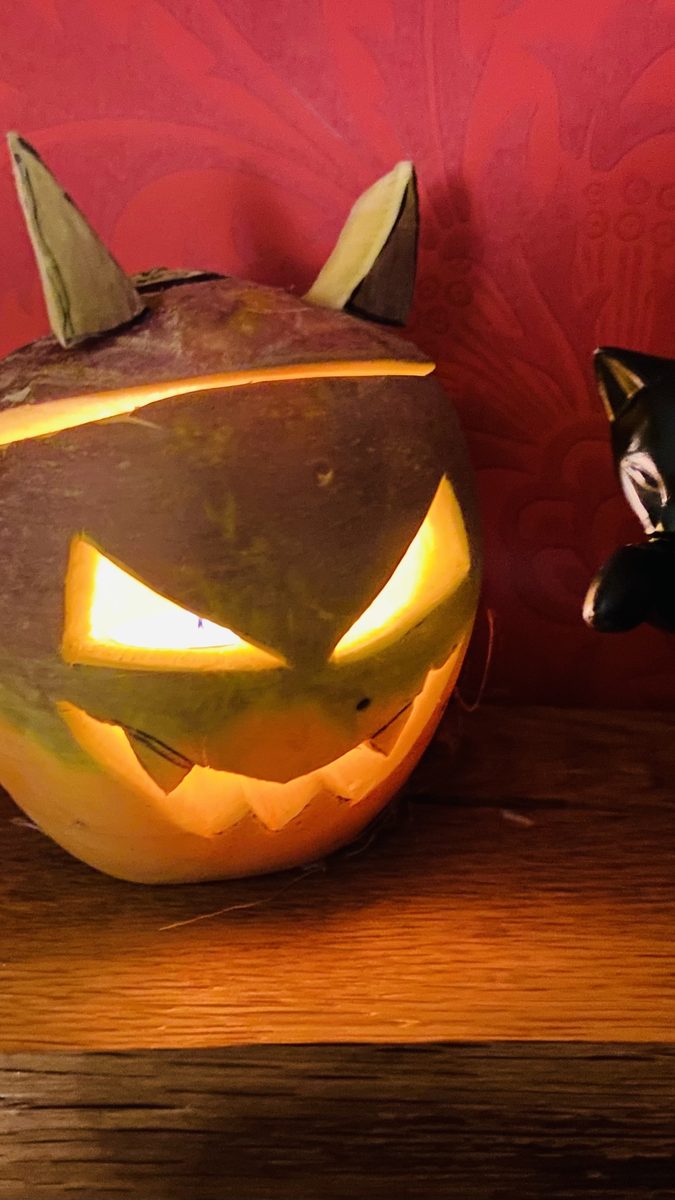
In a glass case at the National Museum of Ireland’s Country Life branch in County Mayo sits a plaster cast of a turnip, carved into a snarling face and fitted for a candle. It is a replica, made by a museum artist — but the original it copies was a real, working example of one of the original jack-o’-lanterns, donated to the museum in 1943 by a schoolteacher working near Fintown, County Donegal. She told the museum it was “the type that was always made in that locality around 1900.”
That one sentence, recorded in a museum accession file, is about as solid as the evidence for the turnip jack-o’-lantern gets. Most of what circulates about the custom — the Stingy Jack legend, the hour of carving, the famine ships — is true, but it rarely comes with a source attached. This is what the documented record actually supports, where it runs out, and what two professional folklorists on two sides of the Atlantic are willing to say on the record and where they stop. None of it needs inflating — the real, sourced version is stranger and more specific than the one that gets repeated every October.
A 1943 Museum Donation Is the Best Hard Evidence for the Original Jack-o’-Lanterns
Clodagh Doyle, keeper of the Irish Folklife Division at the National Museum of Ireland, has pointed to the University College Dublin folklore archive as the firmer ground beneath the turnip-lantern story: its records document a nineteenth-century custom of carving Halloween lanterns, usually from a turnip but sometimes from a large potato. That gives the practice a documented floor — the 1800s — even though the custom itself is generally assumed to be older.
The Donegal lantern is the clearest single artefact tied to that record. It survived precisely because, by 1943, it already needed explaining: the schoolteacher who sent it in was documenting something local people remembered rather than something they still did every year. A plaster cast is not a perishable turnip, which is exactly why no nineteenth-century original survives for a museum to display at all — a carved vegetable rots within days, so the entire physical record of the custom is reconstructions, photographs, and testimony collected after the fact.
The Word “Jack-o’-Lantern” Is Older Than the Vegetable It Now Names
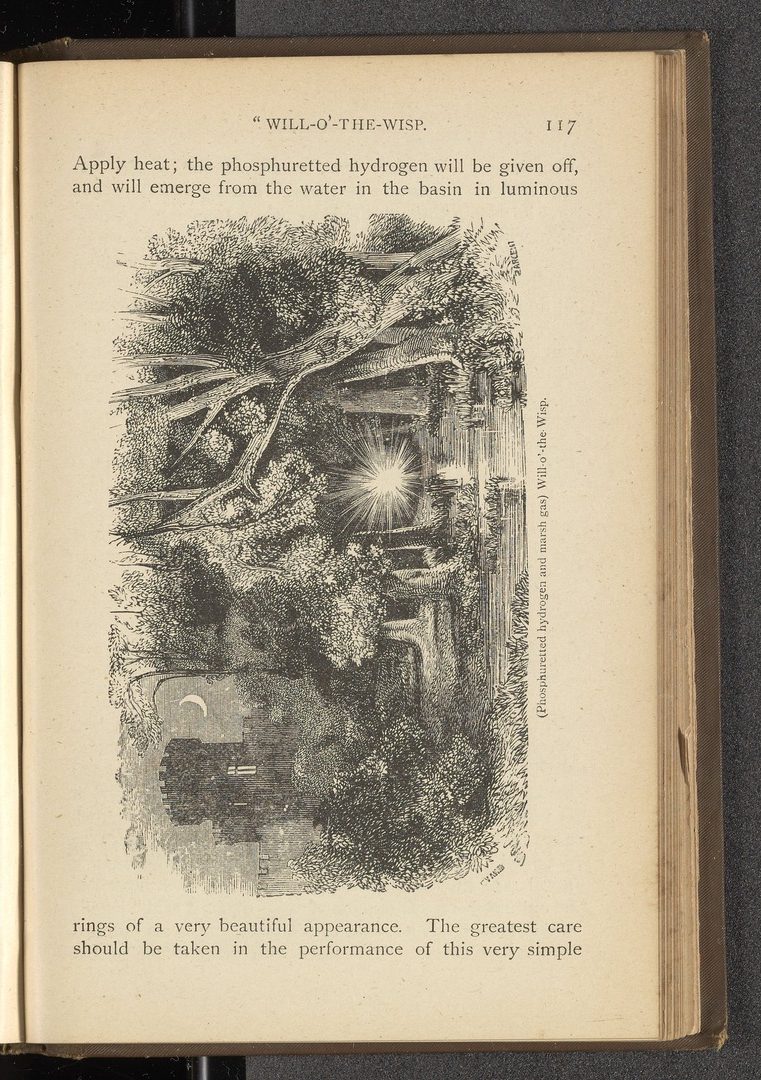
Long before anyone fitted the phrase to a carved turnip, it named something else: the flickering light that appears over marshes and bogs at night, caused by gases released from decaying plant matter. English speakers called that light a will-o’-the-wisp from the 1590s, and by the 1650s an alternate name had caught on — “Jack with the lanthorn,” using “Jack” the way English had long used it for an anonymous, generic man. By around 1750 the phrase had worn down to jack-o’-lantern, jack-a-lantern, or jackolantern, still meaning the marsh light and nothing else.
The carved-vegetable sense is a later, specifically American graft onto an older British phrase, first attested in print in 1828 as “Jack-o-lanthorn.” The Saturday Evening Post has its own small piece of that record: in February 1832 the magazine ran an item titled “Ignes Fatui,” the Latin name for the same marsh-gas phenomenon, meaning “foolish fires.” So for roughly a century, a reader encountering “jack-o’-lantern” in print would have pictured a swamp at night, not a vegetable on a porch — the carved sense didn’t fully displace the older one in everyday use until well into the 1800s.
“Jack” was not even the only name the marsh light went by. English speakers also called it “Will,” as in will-o’-the-wisp, from the 1590s, and briefly “Meg” around the 1650s, before Jack settled into the role for good. Wisp itself meant a bundle of hay or straw twisted into a makeshift torch, so will-o’-the-wisp originally pictured something specific: a figure out at night carrying a burning handful of straw across the fen. By the 1660s the phrase had drifted into something more abstract, used figuratively for any person or hope that leads someone astray — a sense that outlives the original image of the light itself.
Why a Vegetable, and Why Carved Like That
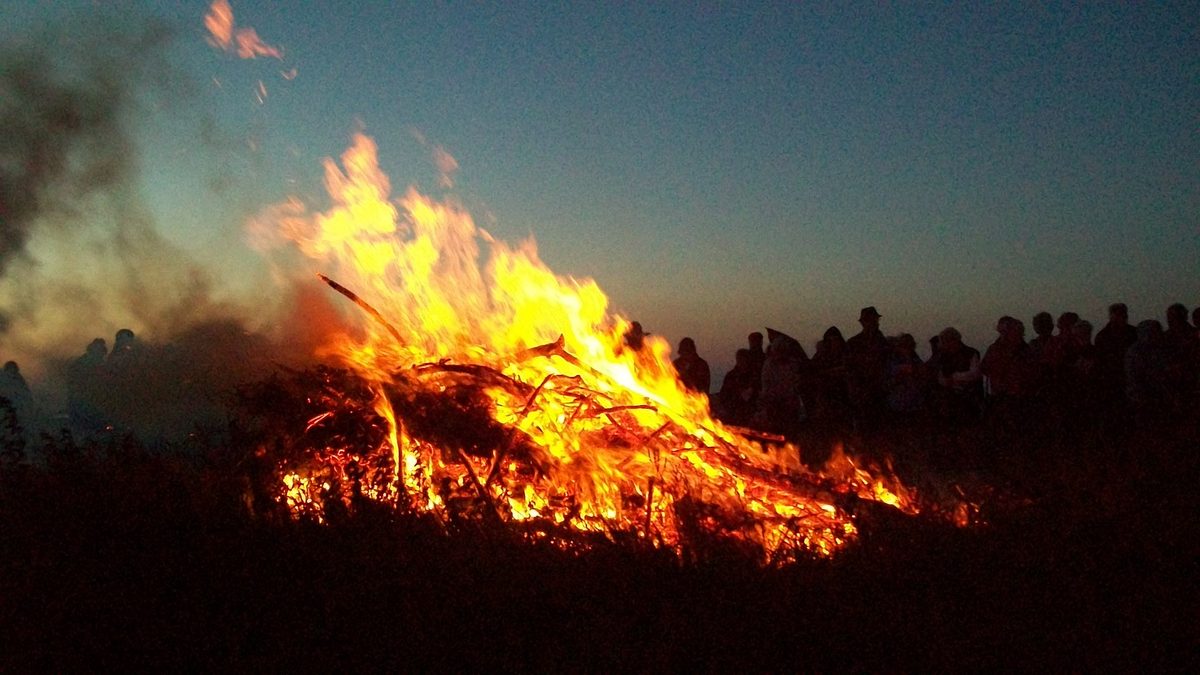
Doyle traces the practice to Samhain, the Celtic festival that fell at the point in the calendar when the harvest ended and the darker half of the year began. She describes it as fundamentally a festival about death and protection: a night for remembering the dead and for safeguarding the home, the family, and the livestock, including customs like sprinkling holy water around a house. The lantern’s job and the household’s wider precautions that night were the same job — keeping something unwelcome out.
That protective logic also explains a detail that often gets dropped from the story: carving a lantern was not the only defence people used. Disguise was the other one. Wearing a mask or a costume on Samhain let a person move through the dark countryside looking like one more spirit among the crowd rather than a target, which is the same impulse, pointed outward instead of inward, as a scowling light left to guard a doorway. The lantern and the mask weren’t two separate customs that happened to share a date; they were two answers to the identical problem.
Doyle draws a line between two beliefs that popular retellings usually collapse into one. Halloween night itself was when the dead were thought to actually walk, returning to homes they once knew — call it ghost night. All Souls’ Day two days later, on the second of November, was the separate, more formal occasion for praying for those same dead. A turnip lantern answers the first belief, an immediate worry about who or what might be outside the door that one specific night. What happened on the second of November was a different kind of observance, and it came with its own specific food.
Soul Cakes, Not Candy, Came First
Centuries before anyone said “trick or treat,” English and Irish households were already answering a knock at the door around Hallowtide. The custom was called souling: callers, often poorer parishioners and later mostly children, went house to house offering prayers for the dead of that household in exchange for food. Michael Carter, English Heritage’s senior properties historian, has dated the practice at least to 1511, citing an early account that reads, “we read in old time good people would on All Halloween Day bake bread and deal it for all Christian souls.”
The food at stake was a specific thing: a soul cake, sometimes called a soulmass-cake, a small round biscuit-like cake usually made with oats and often spiced with nutmeg, cinnamon, or ginger, sometimes studded with currants or raisins. The exchange ran through All Souls’ Day on the second of November, the point on the calendar when formal prayer for the dead was expected of everyone, not just the household that lit a lantern. Souling survived, in patches, into the twentieth century before it was folded into the version of the custom that travelled to America and came back costumed as candy collection.
The Famine Emptied Entire Counties Into These Ships
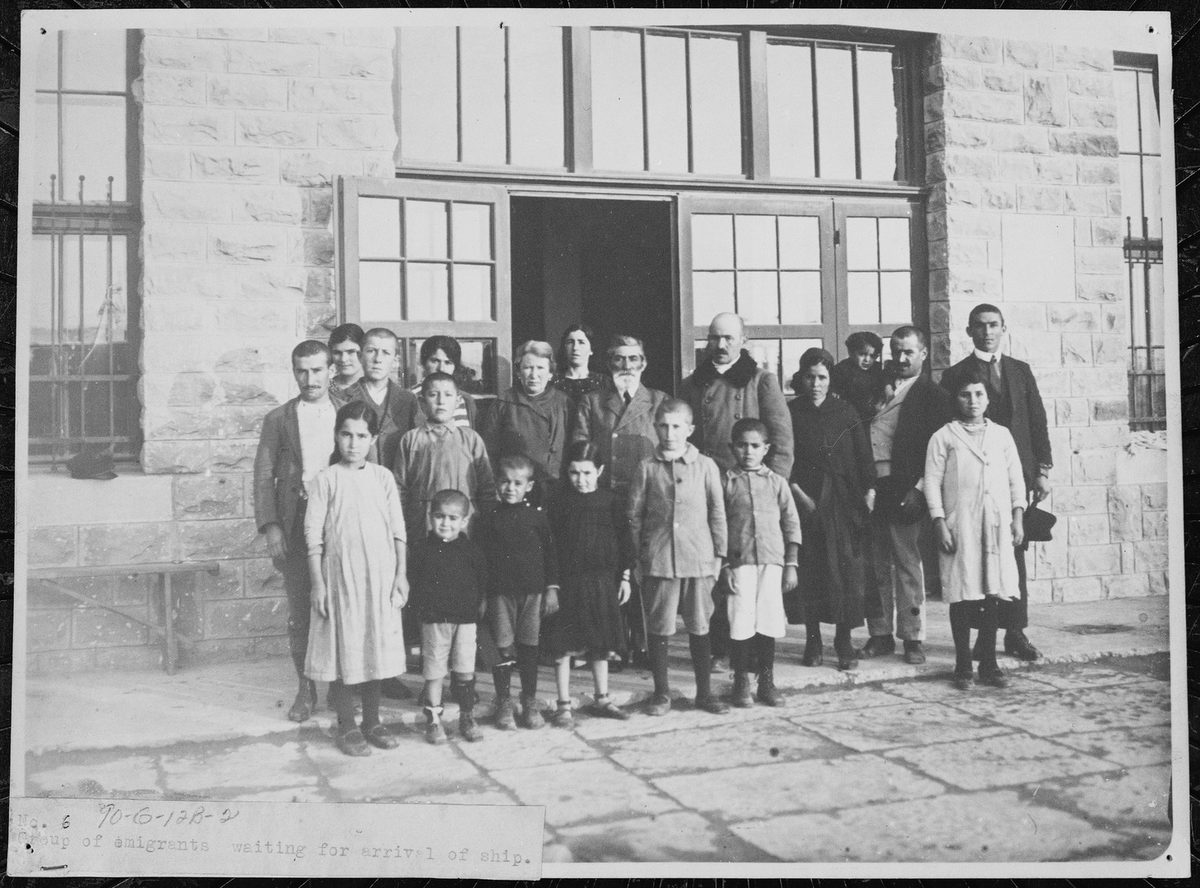
The number usually attached to this story — Irish emigration during the Great Famine of 1845 to 1852 — undersells the scale of what actually happened. In the decade surrounding the Famine, the National Museum of Ireland puts the toll at nearly two million people, roughly a quarter of the island’s entire population, emigrating to the United States. County Mayo alone fell from 388,887 people in 1841 to 274,830 by 1851. The potato harvest that triggered the crisis did not recover to even half its pre-blight 1844 level until 1855, three years after the worst of the Famine is usually said to have ended.
The emigration didn’t stop once the blight passed, either. Across the following decade, from 1851 to 1860, the museum’s figures show that Irish emigrants made up roughly eighty-one percent of all immigration to the United States, close to 990,000 people. Whatever household customs those travellers carried with them, they arrived in numbers large enough, and over a long enough stretch of years, to reshape an American calendar custom rather than simply add a footnote to it.
The flow did not stop at 1860, either. Irish emigration to the United States continued for generations afterward, and by the museum’s account roughly half of all Irish emigrants between 1856 and 1921 were young women travelling on their own, not families uprooted by a single crisis. The turnip lantern, in other words, had the better part of a century of continuous Irish and Scottish arrival in which to make the crossing — not one dramatic famine voyage but a long, ordinary current of people who kept bringing their Octobers with them.
No One Can Prove Who Carried the First Lantern Across
Here is where the honest version of this story gets less tidy than the popular one. Doyle, asked directly whether a specific emigrant or ship could be credited with bringing the turnip lantern to America, was blunt about the limit of the evidence: “I don’t think we are going to find the direct connection, but we can definitely say they were being made in Ireland.” That is a folklorist declining to claim more certainty than the archive supports, and it is worth taking seriously rather than papering over with a tidier story.
What can be said is simpler and still striking. The custom existed in Ireland and Scotland, documented into the nineteenth century. Emigrants from both countries arrived in the United States by the hundreds of thousands across that same century. And American soil offered a replacement vegetable — native, larger, and far easier to hollow — that the old country never had. No single surviving letter or diary spells out the moment a family swapped one for the other. The pumpkin won by proving more convenient to the same ritual, not by displacing a tradition anyone fought to keep.
None of this makes the lantern less real as a piece of material history; if anything, the gaps are the most honest part of it. A custom this ordinary — a vegetable, a knife, an hour of someone’s evening — was never going to leave the kind of paper trail that a war or a law does. What survives is a plaster cast in a Mayo museum case, a line in a 1943 accession record, and the folklore archive entries that back it up. That is a thinner record than the legend implies, and a far sturdier one than most Halloween stories can actually produce.
Watch the full history
The video version covers the carving itself, the Stingy Jack legend, and the turnip’s replacement by the pumpkin in about seven and a half minutes.

Related reading
- Who Really Invented the Ouija Board? — spiritualism built around the same belief that the dead can cross over
- The Real History of the Fortune Teller Machine — another piece of carnival-era folk magic sold as fortune-telling
- How Tarot Became Fortune Telling, 300 Years Later — how a folk-magic practice got reinvented for a new audience
- The Strange, Three-Thousand-Year History of the Ship’s Figurehead — a different protective folk object meant to ward off harm
- The Furcula: The Science and Superstition Behind the Wishbone — everyday-object superstition that outlived the belief behind it
Shop
Shop the styles/items featured in this video:
- Jack-O’-Lantern: The Strange History of the Halloween Pumpkin, by David Acord
- Turnip-carving Halloween lanterns
Works cited
- Harper, Douglas. “Jack-o’-lantern.” Online Etymology Dictionary.
- Hollandbeck, Andy. “In a Word: The Histories of the Jack-o’-Lantern.” The Saturday Evening Post, October 31, 2019.
- National Museum of Ireland. “Ghost Turnip” (NMI Collections F1943.350). Irish Folklife Collection. Link.
- Mac Donald, Sarah (Catholic News Service). “Irish Folklife Expert Says Halloween Traditions Began in Ireland.” America Magazine, October 19, 2017.
- Carter, Michael (English Heritage, Senior Properties Historian). Cited in “No Tricks, Just Treats: Try a Medieval Soul Cake.” English Heritage. Link.
- National Museum of Ireland. “Irish Emigration to America.” Folklife Collections. Link.
- Nangia, Tamanna. “Jack-o’-Lantern.” Encyclopaedia Britannica.
Would you have spent that hour, hollowing a turnip by hand, to keep one spirit out for a single autumn night?