
On the night of 2 July 1834, during a thunderstorm, a 28-year-old Boston sea captain named Samuel Dewey rowed out to the frigate USS Constitution, climbed her side by the mooring ropes, lay on his back in the bow, and sawed the head off a carved wooden statue of President Andrew Jackson. An iron bolt through the figure’s neck blocked a clean cut, so he had to saw through just below the nose. He got away with the head in his boat, which was taking on water the whole way back to shore. No charges were ever filed.
That is not a folk tale. It is recorded history, down to the bolt in the neck, and it is the single clearest sign of how seriously the carved figure at a ship’s bow was once taken. For roughly three thousand years, a figurehead was never just decoration. It was protection, propaganda, a national insult, a smuggled act of defiance, and, every so often, a crime scene.
Here is the actual mechanism behind that tradition: who started it, what it was supposed to do, what it really cost to carve one, and why the single most famous figurehead disaster in maritime history came up out of the water without the hull it had gone down with.
Egyptian warships carried a war goddess at the bow — their enemies carried birds
The oldest surviving depiction of a figurehead doing a figurehead’s actual job is a relief at Medinet Habu, on the west bank at Luxor, showing Ramesses III’s navy fighting the Sea Peoples in the Nile Delta. The two fleets are drawn with deliberately different prows. The Egyptian ships end in a lioness shown devouring an enemy soldier, standing in for Sekhmet, the war goddess, and for the pharaoh’s own ferocity in battle. The Sea Peoples’ ships, by contrast, carry the head of a bird at the prow — the carving that identified them as foreign even before their armor did.
That contrast is the whole design brief in miniature. A figurehead did not have to be beautiful. It had to say, instantly and from a distance, whose side a ship was on and what it was prepared to do. Greek and Phoenician sailors used a simpler version of the same logic: a single painted eye on each side of the bow, which the National Park Service’s maritime history program describes as the single most important piece of bow decoration across the ancient Mediterranean, there less to look fierce than to let the ship itself see danger before the crew did.
A Viking law demanded the dragon come down before it reached home
Viking shipwrights replaced the painted eye with a carved, snarling dragon or serpent head, meant to frighten off both enemies and evil spirits at sea. The Oseberg ship’s surviving serpent head was built to be removable, and that detail turns out to matter. A law attributed to the 10th-century Icelandic lawspeaker Úlfjótr, recorded generations later in the Landnámabók, held that a ship could carry a carved head at sea, but the head had to come off before land came into sight. The stated reason was not superstition about the ship itself — it was courtesy to the landvættir, the unseen spirits guarding the land, who might take a snarling dragon’s approach as a threat rather than a greeting. Historians are honest that the law survives only in a later manuscript and its real age can’t be confirmed, but the custom it describes — threatening face at sea, bare prow at home — shows up again and again in how figureheads were actually used.
The best-documented figurehead disaster in history came up without its own body
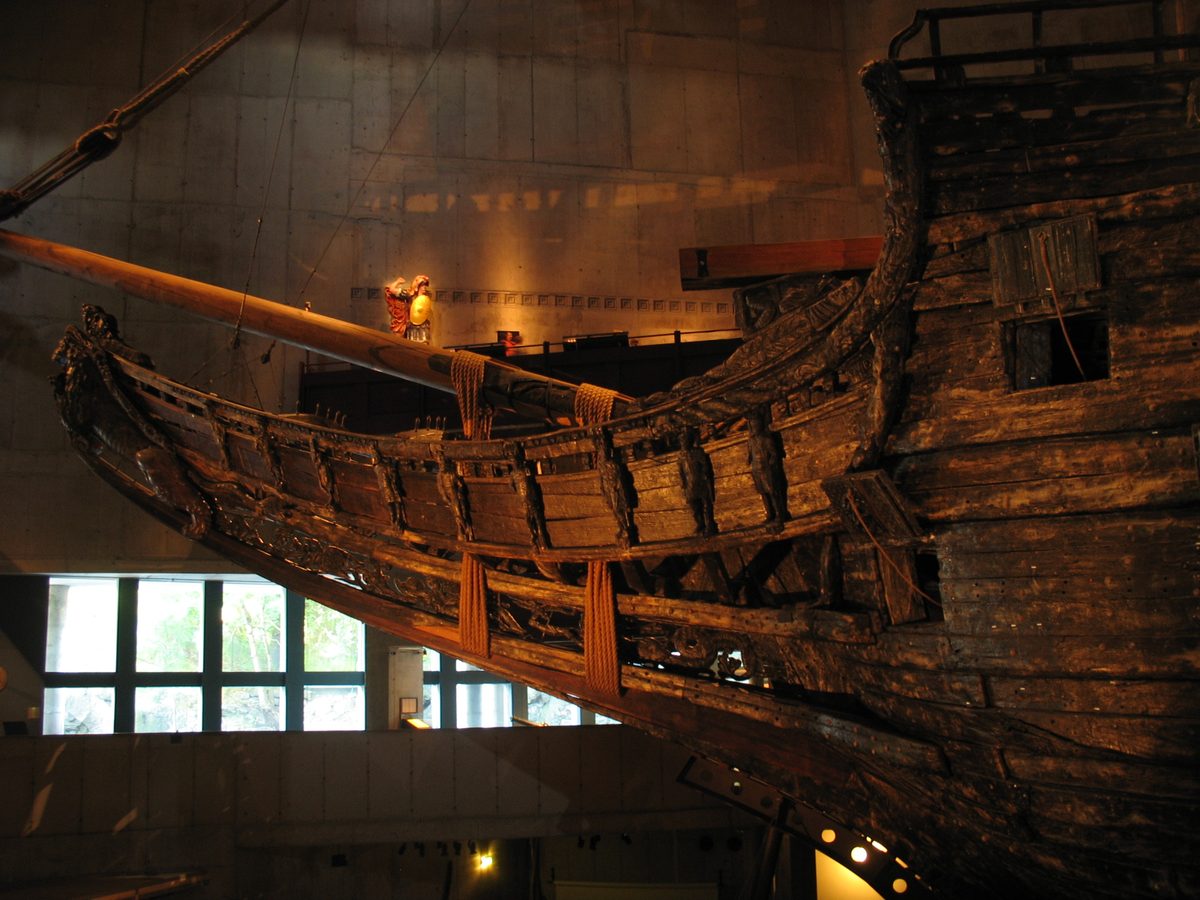
No figurehead is more thoroughly recorded than the three-metre oak-and-pine lion carved by Mårten Redtmer for the Swedish warship Vasa. On 10 August 1628, about 1,300 metres into her maiden voyage out of Stockholm harbor, a gust of wind heeled her over, water poured through her open gunports, and she sank in full view of the crowd that had gathered to watch her leave. She settled roughly 32 metres down, barely 120 metres from shore.
The popular version of the story has the lion coming up still bolted to the bow when divers finally raised the hull in 1961, 333 years later. The museum’s own catalog record for the figurehead says otherwise: it was recovered lying face-down in the mud, two to three metres ahead of where the bow had come to rest, which means it had torn loose from the ship at some point during or after the sinking. It survives missing its lower back, one hind leg, and part of both tails. What makes the Vasa‘s figurehead the most studied in the world isn’t that it came through intact. It’s that nearly everything else on the ship did, which makes the one obvious thing that didn’t survive whole worth noticing.
The era’s most common figurehead broke its own culture’s biggest taboo
By the height of the age of sail, European and American sailors held two beliefs about women and ships that flatly contradicted each other. A woman aboard was bad luck, full stop — she would anger the sea and doom the voyage. And yet the single most common figurehead afloat, on ship after ship, was a carved woman, usually bare-breasted, her eyes wide open. Sailors explained the contradiction rather than ignoring it: her open eyes could find a path through a storm no living lookout could see, and baring her body to the waves could shame an angry sea into going calm. The contradiction wasn’t an oversight in the belief system. Forcing the unluckiest thing on a ship to also be its guardian was the point.
Carving one was routine dockyard work, not extravagance
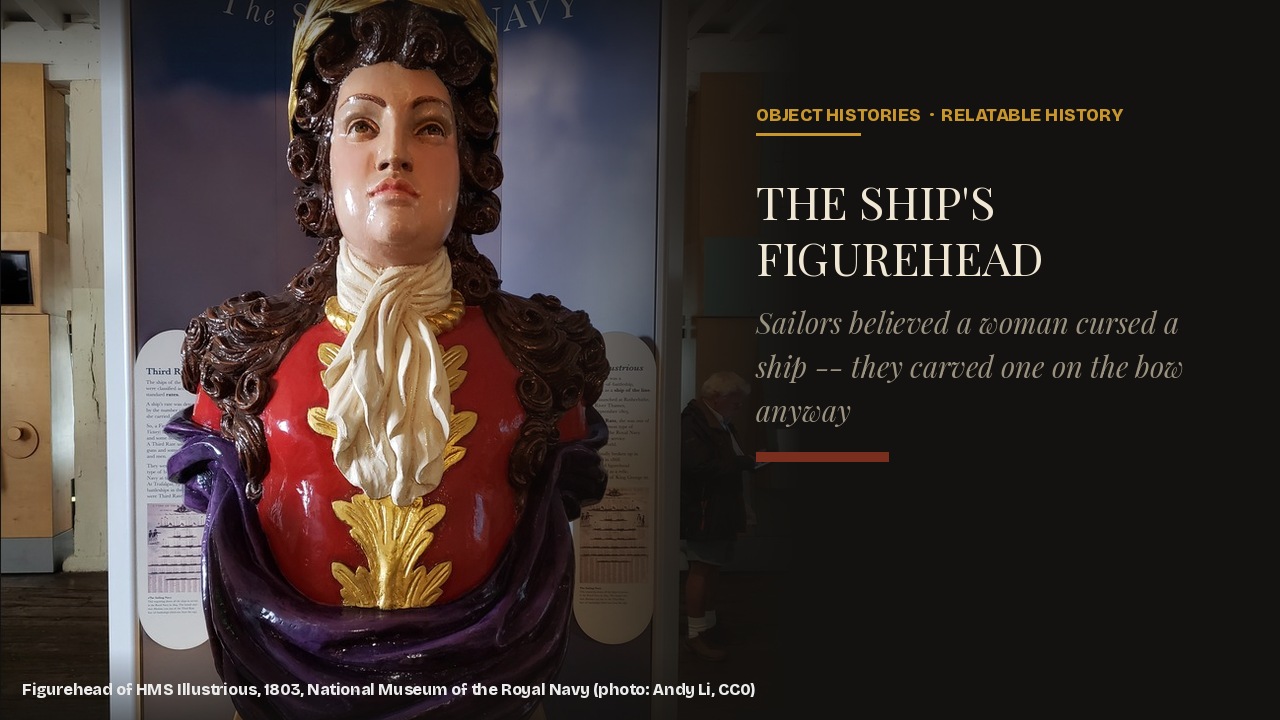
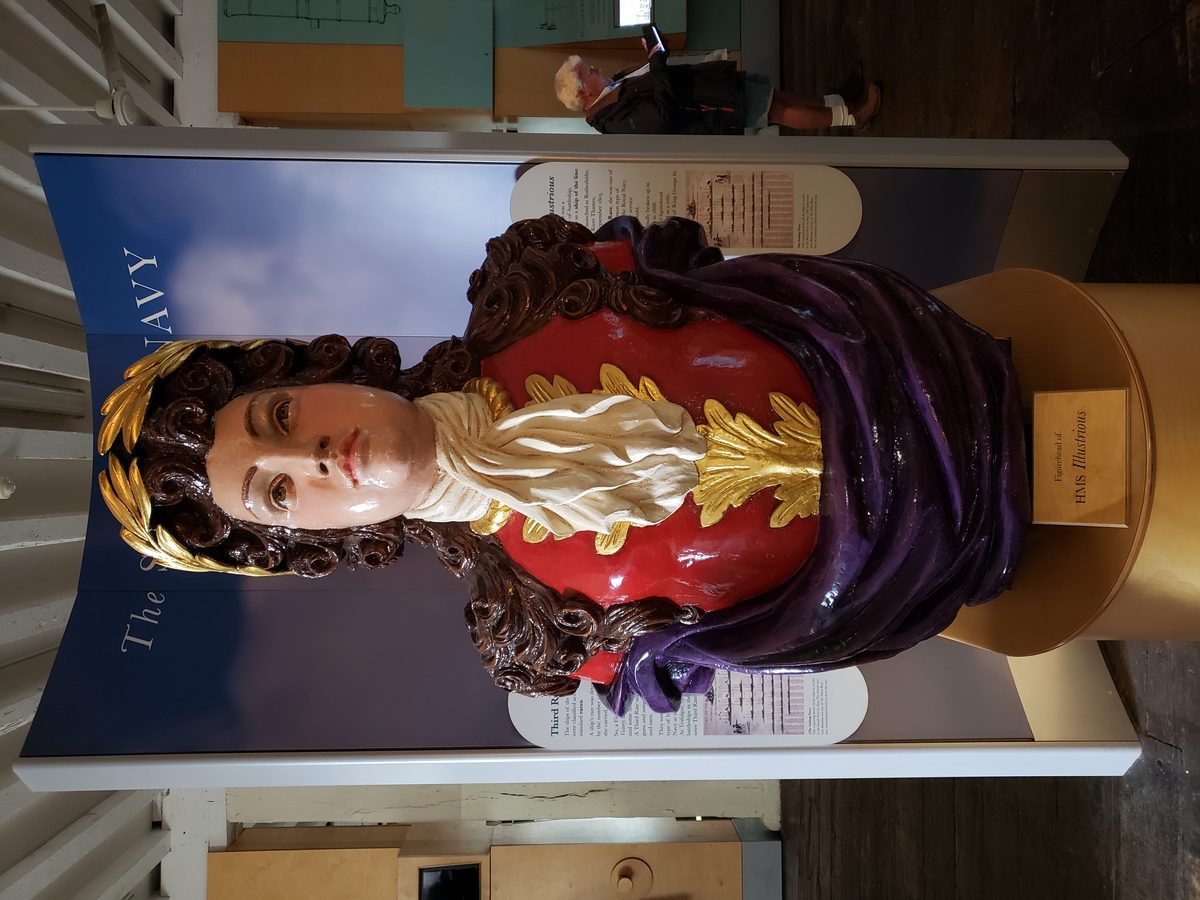
Figureheads are often pictured as lavish commissions, and a few were. Most weren’t. Until 1727, Royal Navy regulations restricted larger warships to a carved lion’s head at the bow; after that date the Admiralty allowed full human and animal figures, and the price stayed modest. A turbaned bust for the sloop HMS Sphinx, carved by Hellyer of Portsmouth in 1845, cost nine pounds. A full carved female figure for the frigate HMS Topaz, carved at Devonport in 1856, cost twenty-eight pounds and ten shillings — a routine dockyard line item, done by ordinary naval carvers like Hellyer, the Dickersons, and Cuthbert Mattingly, as part of building the ship rather than decorating it afterward.
A Boston sea captain stole a president’s head in a thunderstorm
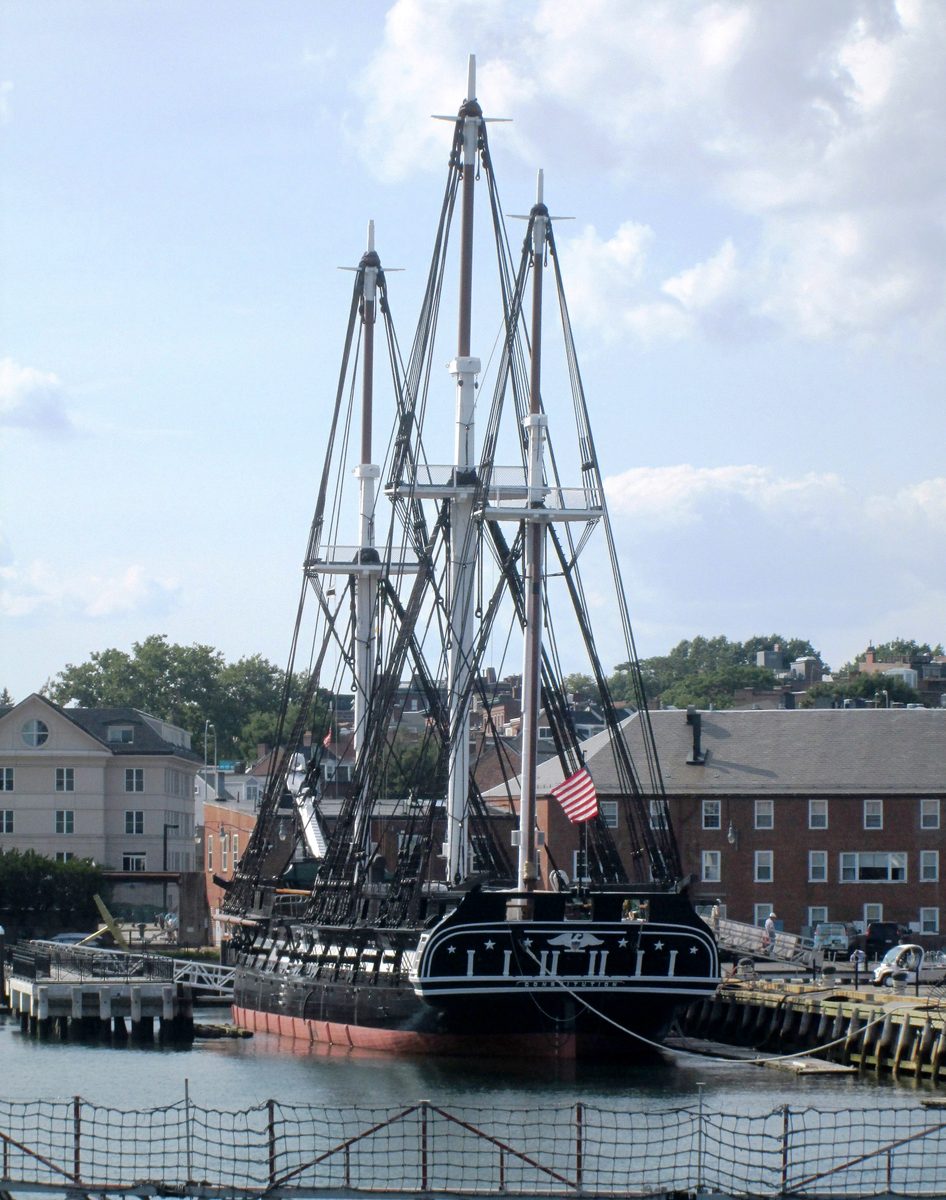
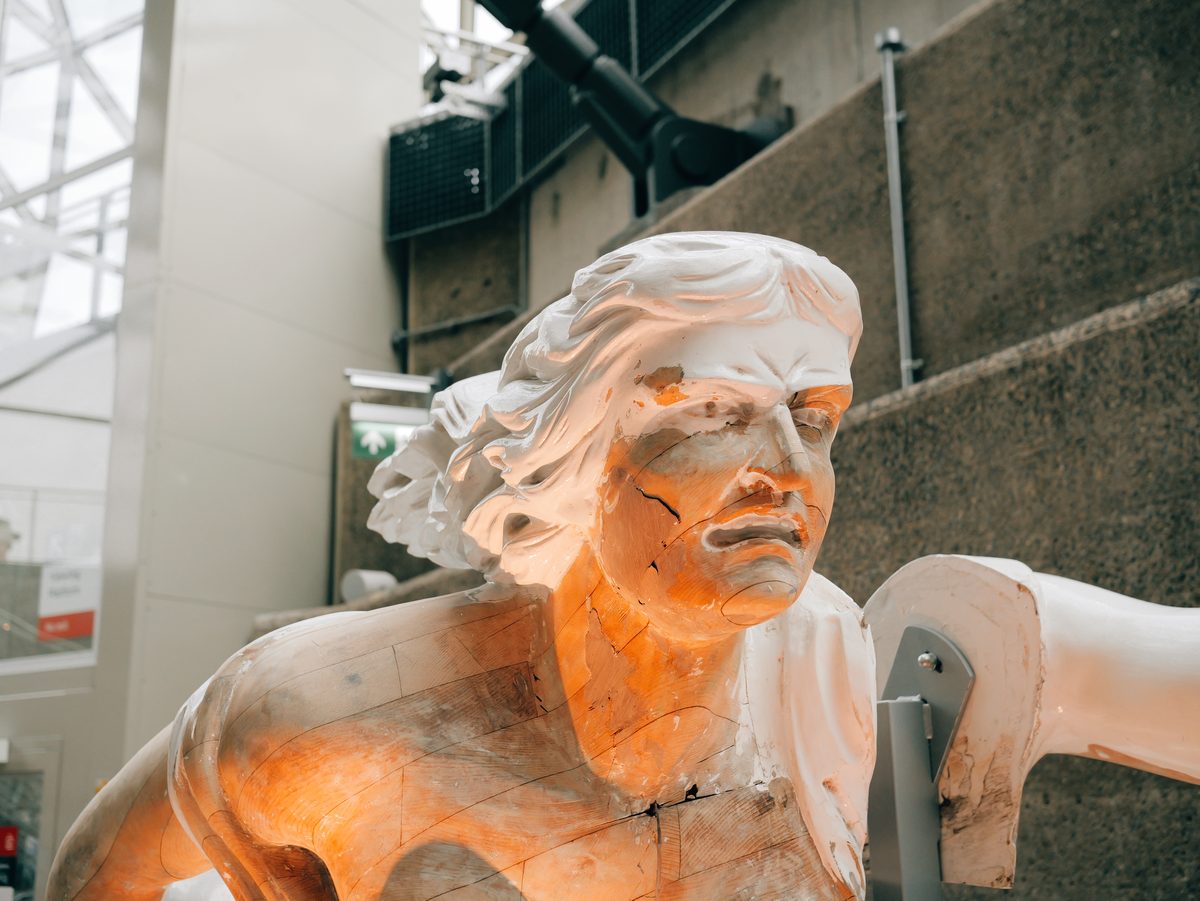
Not every figurehead stayed a matter of craft and superstition. In 1834, Commodore Jesse Duncan Elliott, in charge of the Charlestown Navy Yard, commissioned carver Laban S. Beecher to put a full likeness of President Andrew Jackson on USS Constitution‘s bow. Jacksonian politics were deeply unpopular in Boston at the time, and the figurehead was publicly called a disgrace before it ever went up. After Samuel Dewey removed its head that July night, he tried to deliver it to Jackson himself; the president was too ill to receive visitors, so Dewey handed it instead to a startled Vice President Martin Van Buren. The head went to Secretary of the Navy Mahlon Dickerson, passed down through his family, and ended up with a relative in France, where a curator from the Museum of the City of New York tracked it down in 1998. The museum now holds both the restored original figurehead and the head Dewey sawed off it. A second head was carved within weeks so the ship could keep sailing, and no one was ever prosecuted for the theft.
Cutty Sark’s witch isn’t the one carved in 1869
The clipper Cutty Sark still carries a figurehead named Nannie, a witch reaching forward with one arm outstretched, lifted straight from Robert Burns’s poem Tam o’ Shanter — in which Nannie tears the tail clean off the farmer’s horse, Meg, inches before it crosses a bridge to safety. The poem is also where the ship’s own name comes from: a cutty sark is the short nightdress Nannie wears in the verse. Sailors used to tie real horsehair into the figurehead’s outstretched hand, re-enacting the poem’s ending every voyage.
What usually goes unmentioned is that the figure on the ship today is not the one carved when Cutty Sark launched in 1869. The original, carved by the ship’s own carver Frederick Hellyer, was damaged in a storm late in the 19th century. A replica took its place in 1957, and the current figurehead is a newer commission by carver Andy Peters, based on drawings by the ship’s original designer, Hercules Linton, according to Royal Museums Greenwich, which now curates the ship at dry dock in Greenwich. The witch has been rebuilt at least twice. The joke sailors played with her hand is three-quarters of a century older than the hand itself.
Steel ended the custom in under thirty years
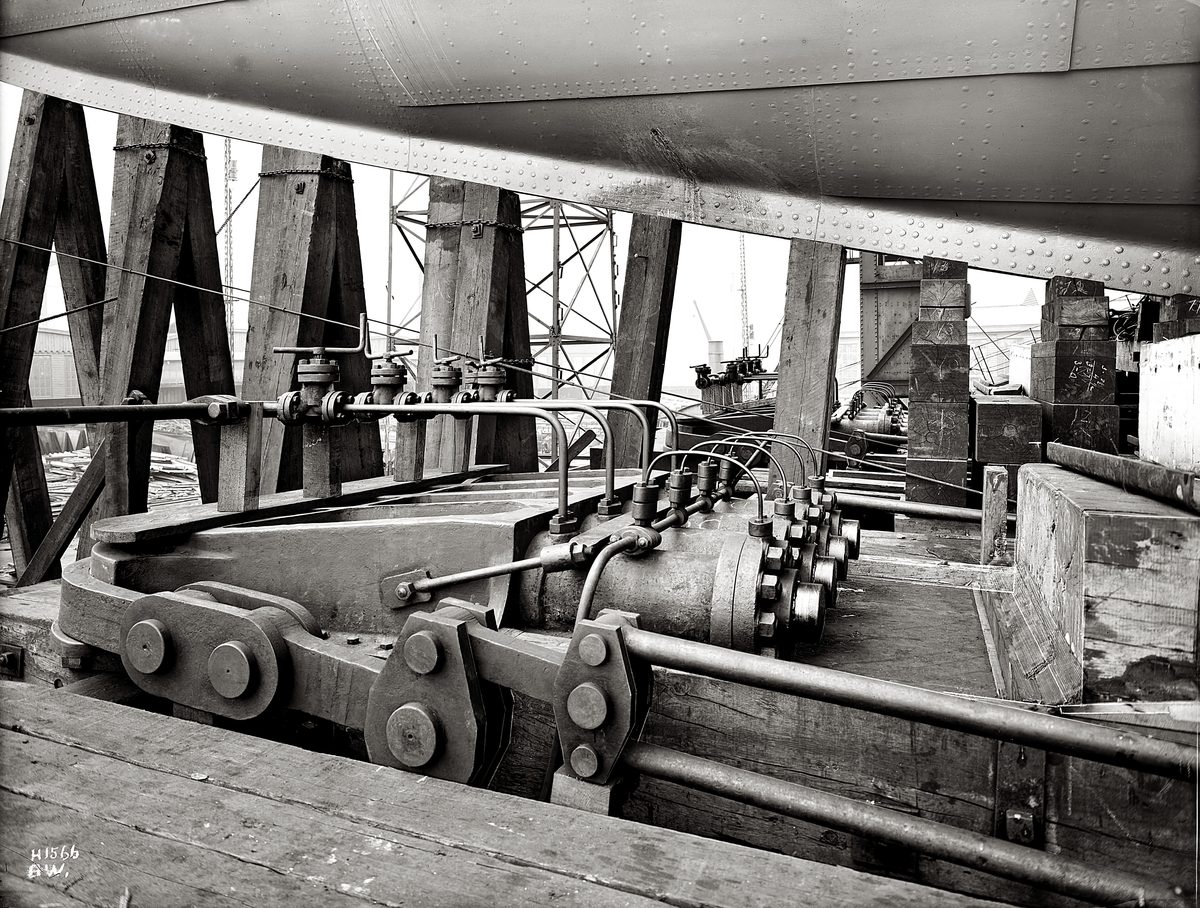
Figureheads didn’t fade out gradually so much as lose the surface they needed. Wooden hulls curved forward into a bow with somewhere to mount a carved face; iron and steel hulls, especially once ram bows became standard, ended in a blunt, vertical plate with nowhere to put one. The Admiralty formally ended the practice on its larger warships in 1894. Smaller vessels held on longer: HMS Espiegle, broken up in 1923, was the last Royal Navy ship ever to carry one, and her figurehead now stands in the National Museum of the Royal Navy in Portsmouth, one of roughly two hundred surviving warship figureheads, almost all of them 19th century.
Commercial shipping gave up the custom at almost the same moment, for the same structural reason. When Titanic was built at Harland & Wolff, she went down the slipway with a bare, riveted steel prow — standard for an ocean liner of 1912, not an oversight. A rival outfitter went the other way just as the custom was ending: the Hamburg America Line fitted its new flagship, the Imperator, with a massive bronze eagle at the bow, gripping a globe inscribed with the line’s motto, Mein Feld ist die Welt — “my field is the world.” An Atlantic storm in March 1914 tore both wings off the eagle; what was left of it was removed days after the ship limped home and was never put back.
Naval ships never fully dropped the idea. A modern warship still carries a small cast or carved crest in roughly the same place a figurehead used to sit — a shrunken, bloodless descendant of the same three-thousand-year instinct: that a vessel with no face at all felt like a vessel with no name.
Watch the full history
The video version covers the same arc in just over five minutes — the lioness goddess, the Viking dragon law, the Vasa, and the night Andrew Jackson lost his head.

Related reading
- What Really Made the Crew Abandon the Mary Celeste — another maritime mystery from the same age of sail
- How Scrimshaw Was Made, From Whale’s Tooth to Keepsake — the sailor’s own craft, carved on voyages rather than at the dock
- How Semaphore Flags Actually Worked at Sea — how ships signaled at sea before radio, the figurehead’s functional opposite
- What Happened to the Lost Colony of Roanoke? — an early voyage of empire from the same exploration era
Shop the look
Shop the styles/items featured in this story:
Works cited
- Yadin, Yigael. The Art of Warfare in Biblical Lands, vol. 2. McGraw-Hill, 1963, on the Medinet Habu relief of Ramesses III’s naval battle.
- “The Battle of the Delta.” The South African Military History Society Journal, describing the Egyptian ships’ lioness-headed prows (a stand-in for the goddess Sekhmet) against the Sea Peoples’ bird-headed prows. Link.
- Cooper, Diane. “The Eyes Have It: Figureheads Through History.” National Park Service, San Francisco Maritime National Historical Park, 28 January 2022. Link.
- “Dragon Heads.” Cornell University, History 3200 course materials, on the figurehead law attributed to the lawspeaker Úlfjótr in the Landnámabók. Link.
- “A Long Naval Tradition: Naval Figureheads — A Short History.” University of Plymouth, BA History. Link.
- “Vasa — Wrecked on 10 August 1628.” Vasamuseet (Swedish National Maritime and Transport Museums). Link.
- Vasamuseet collection record for the Vasa’s lion figurehead (“Lejon”), noting its recovery position roughly 2–3 metres ahead of the bow. Link.
- “Off With His Head.” USS Constitution Museum, 2 July 2015. Link.
- “Cutty Sark’s Figurehead, Nannie.” Royal Museums Greenwich. Link.
- Edwards, John. “HAPAG’s Imperator — Mein Feld Ist Die Welt.” Ocean Liners Magazine, 22 May 2020. Link.