
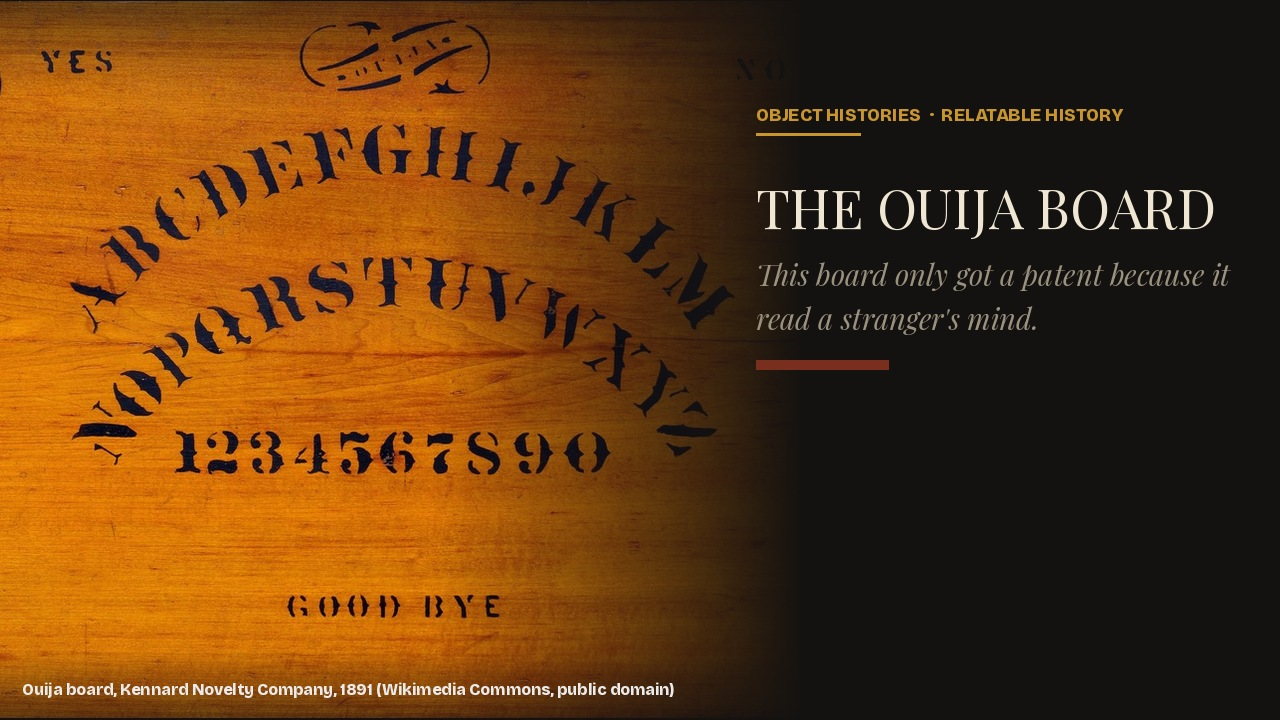
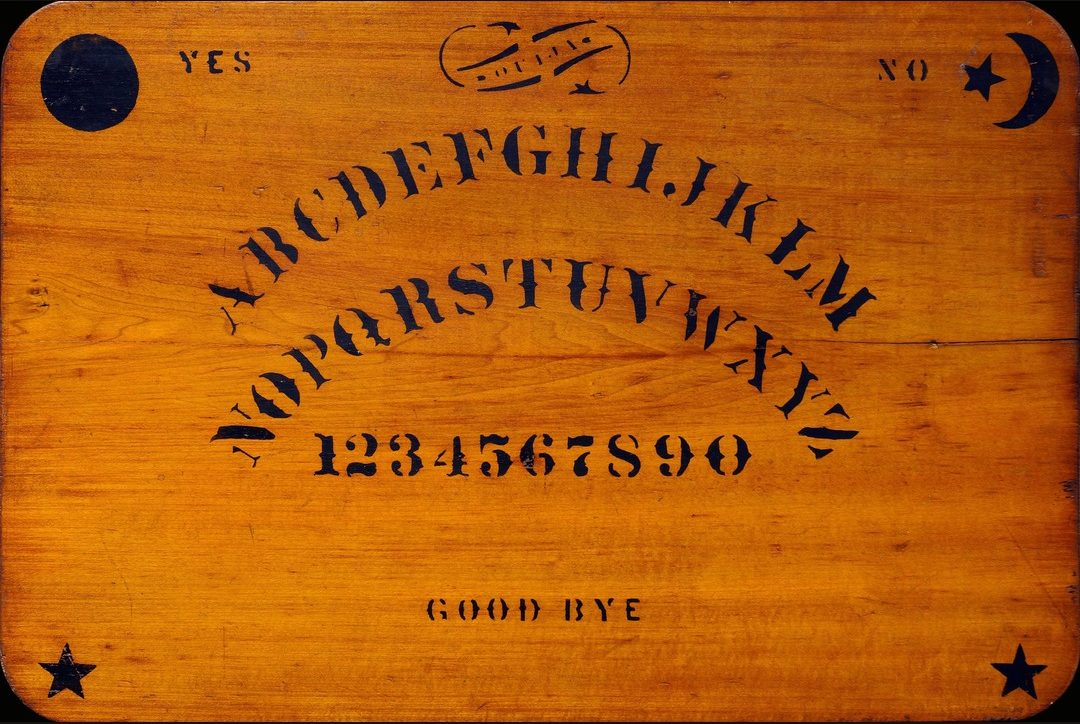
The U.S. patent office granted a patent for the Ouija board on February 10, 1891, and it names three men: Elijah Bond, Charles Kennard and William Maupin, all of Baltimore. It does not name the person several historians now believe made the application possible in the first place — a woman named Helen Peters, who never signed the paperwork and who spent more than a century afterward almost entirely written out of the story she helped create.
That is only the first of the board’s credit disputes. Between 1890 and 1927, at least five people built the Ouija board into a business, and by the time the last of the original partners had died, three separate men had each been publicly credited, in print, as its sole inventor. The dispute never really got settled. It just moved from the newspapers into a company lawsuit that stayed open for eighteen years.
This is the business history behind the board on your closet shelf: who actually built it, who got the credit and who didn’t, what happened to the man who ran the company for three decades, and the modern researchers who tried to explain, with a motion sensor rather than a séance, why the pointer moves at all.
The patent application was tested like a lie detector, and it left one woman off the paperwork
The idea was not new in 1890. Newspapers in Ohio had already described similar talking boards circulating in Spiritualist camps as early as 1886. What Charles Kennard did that year was recruit investors to commercialize the idea: Elijah Bond, a patent attorney; the surveyor Washington Bowie; and two others, forming the Kennard Novelty Company on October 30, 1890, specifically to manufacture and sell the boards.
Patent law required proof the device did something — an invention has to function as claimed. Bond brought his sister-in-law, Helen Peters, to the Patent Office in Washington along with the paperwork; his own letters describe her as “a strong medium.” By the account the founders told afterward, the examiner asked the board to spell a name he had told no one, and the planchette, under Peters’s hands, spelled it correctly. The patent for “Toy or Game” explains how to build and operate the device. It does not explain, or claim to explain, why it works — an ambiguity that Robert Murch, the board’s leading historian, has called a deliberate choice: the company didn’t care why people thought it worked, only that they did.
Peters’s name is not on that patent, and in Bond’s own account of the Patent Office visit he referred to her only as “a lady friend.” Murch’s research, drawn from a 1919 newspaper interview with Kennard himself, credits her with more than the demonstration: the session at a Baltimore boarding house, on April 25, 1890, where the board was asked what to call itself and spelled out O-U-I-J-A. Kennard believed the word meant “good luck” in some other language; no such word exists in French or German, the two most commonly guessed. The more likely explanation, per Murch, is a locket Peters wore, engraved with the name of the woman pictured inside it — probably the British novelist Ouida, whose pen name Kennard likely misread.
Within a decade the partners who built it were suing each other
The Kennard Novelty Company grew fast. By 1892 it operated six factories — two in Baltimore, two in New York, two in Chicago — plus one in London, selling a product whose own patent declined to explain itself. That growth did not hold the partnership together; internal pressure, never fully described in print by either side, pushed both Kennard and Bond out of the company within a few years of the patent being granted. It would not be the last time an invented object outran the men who built it — a near-identical pattern played out decades later with the men who each claimed to have discovered ether anesthesia.
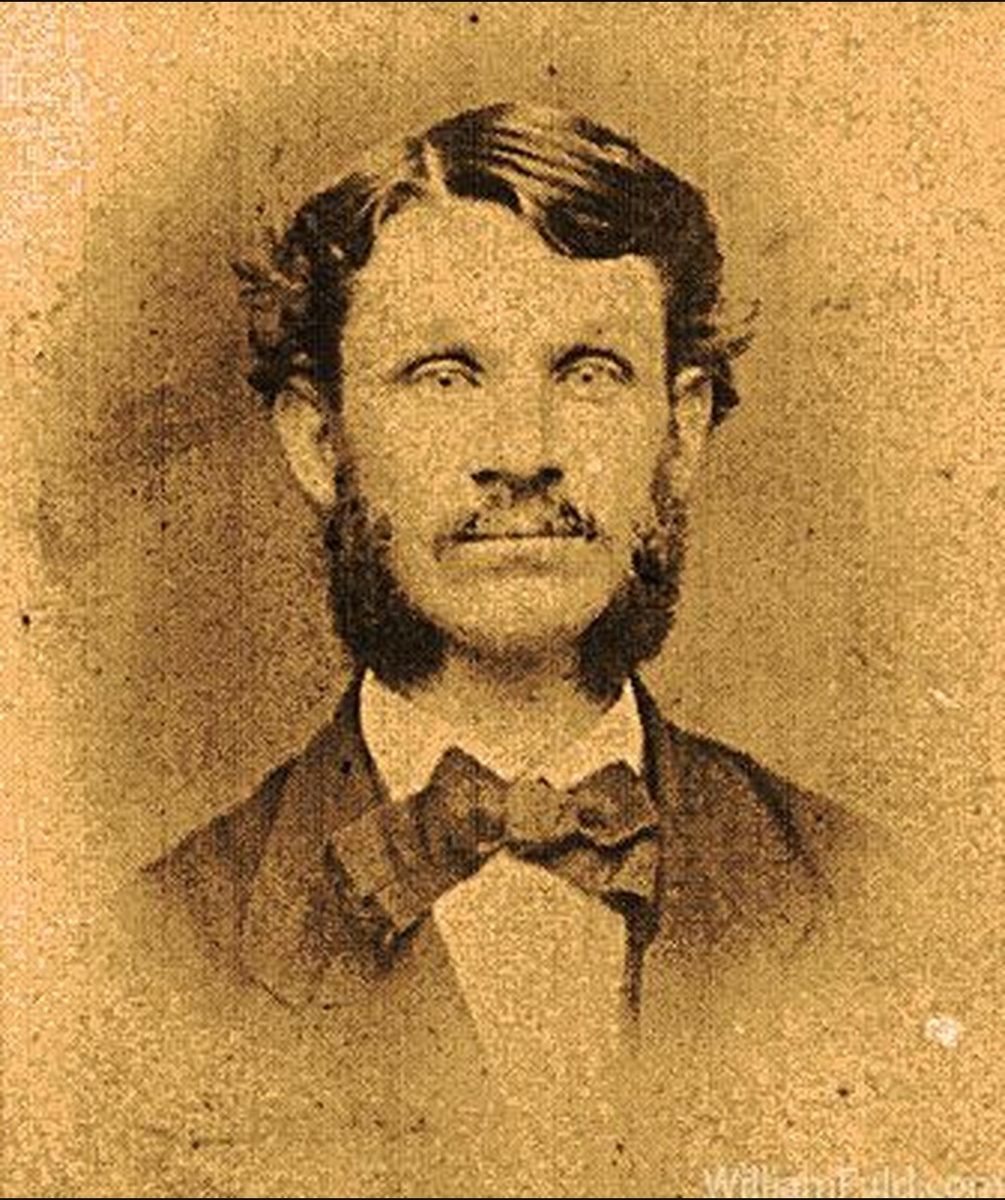
That left William Fuld, who had joined as a foreman and stockholder, running the business. By 1892 he was supervisor and the company was renamed the Ouija Novelty Company; that same year he filed his own talking-board patent. In 1898 he brought his brother Isaac into a new partnership, Isaac Fuld & Brother, licensing the Ouija name from the parent firm. The arrangement collapsed into a feud around 1901. William renamed his own operation the William Fuld Manufacturing Company, and the legal dispute between the brothers stayed open, unresolved, until 1919 — eighteen years after it began.
None of this slowed the business. Fuld filed an “Oracle” trademark in 1902 and, in 1919, introduced a cheaper version called the Mystifying Oracle for buyers who couldn’t afford the full board. He is remembered today as the man who built the Ouija board into a national product, though he never personally claimed to have invented it. His own boards were stamped “Original Ouija Board” and “Inventor” anyway — vague enough to imply authorship without quite asserting it, and specific enough that his 1927 obituary in the New York Times credited him with inventing the thing outright. Founders on both sides of the original partnership spent years afterward disputing that claim in the pages of the Baltimore Sun. The argument was never resolved in court. It was resolved by whoever still controlled the factory.
Fuld said the board told him to build the factory where he died
Fuld had told a Baltimore Sun reporter in 1919 that the board had instructed him, during a session, to build a new factory on Harford Avenue — a story that seems to have become part of the company’s own marketing, whether or not he meant it literally. He built the building. On February 24, 1927, while supervising the installation of a flagpole on its roof, an iron rail he was leaning against gave way. He fell three stories. The coroner’s report found that a fractured rib had pierced his heart; he died at the hospital shortly after.
His children ran the company afterward — Catherine and William A. Fuld first, then Hubert, the youngest son, who became president of William Fuld, Inc. in 1942. By his father’s death, the family’s holdings included more than 33 patents, trademarks and copyrights built up over three decades in a business that had started as a side investment for a Baltimore novelty-goods man. Parker Brothers bought the company and its full catalogue of assets in 1966.
A woman in Missouri used one to publish seven novels under someone else’s name
While the Fuld family built a manufacturing business around the board, a woman in St. Louis was using one to build a literary career that still puzzles researchers. In July 1913, Pearl Curran, a homemaker with no particular literary background, sat down at a Ouija board with a friend, Emily Grant Hutchings. The planchette spelled out a message: “Many moons ago I lived. Again I come — Patience Worth my name.”
What followed ran for twenty-four years. Curran became the sole medium, progressing from spelling out letters to speaking the words aloud while her husband transcribed them in shorthand. A visitor to one 1918 session estimated Patience was dictating at roughly 1,500 words an hour. By Curran’s death in 1937, the sessions had produced an estimated four million words, including seven novels — among them The Sorry Tale, a 1917 book about one of the thieves crucified alongside Jesus, which drew serious literary reviews, and poems anthologized by the critic William Stanley Braithwaite.
Nobody has ever settled what was actually happening. Casper Yost’s 1916 book on the case called it inexplicable by ordinary means. The psychical researcher Walter Franklin Prince spent years investigating and, in a 509-page report, found no evidence Curran had produced the material through any process he recognized — without concluding anything supernatural had, either. Most modern researchers treat Patience Worth as a product of Curran’s own suppressed talent, expressed through a process she didn’t consciously control. What isn’t disputed is the output: seven publishable novels from a woman with no prior writing career, channeled through the same object being sold, at the same moment, as a parlor toy.
It became the best-selling game in America the same year Parker Brothers bought it
The board’s commercial peak had nothing to do with Spiritualism. In 1967, the year after Parker Brothers acquired the Fuld company, roughly two million Ouija boards sold in the United States — more than the company’s own Monopoly sold that year. Hasbro acquired Parker Brothers in 1991 and has owned the Ouija trademark since.
The board’s hold on popular culture had been building for decades before that sales spike. Norman Rockwell put it on the cover of The Saturday Evening Post on May 1, 1920, under the plain title “Ouija Board,” after watching couples use the boards at a dance hall near his wife’s old college in Potsdam, New York, the previous summer. He joked to his brother-in-law that maybe the board could predict what the new decade would bring. The image shows two fully dressed models in good light at a party, not a darkened séance — a fair summary of how most Americans actually encountered the object across the century that followed, the same pattern of ordinary-object-meets-parlor-fad that also explains why Victorian employers briefly hired by skull shape.
A university lab put the planchette under a motion sensor to find out what actually moves it
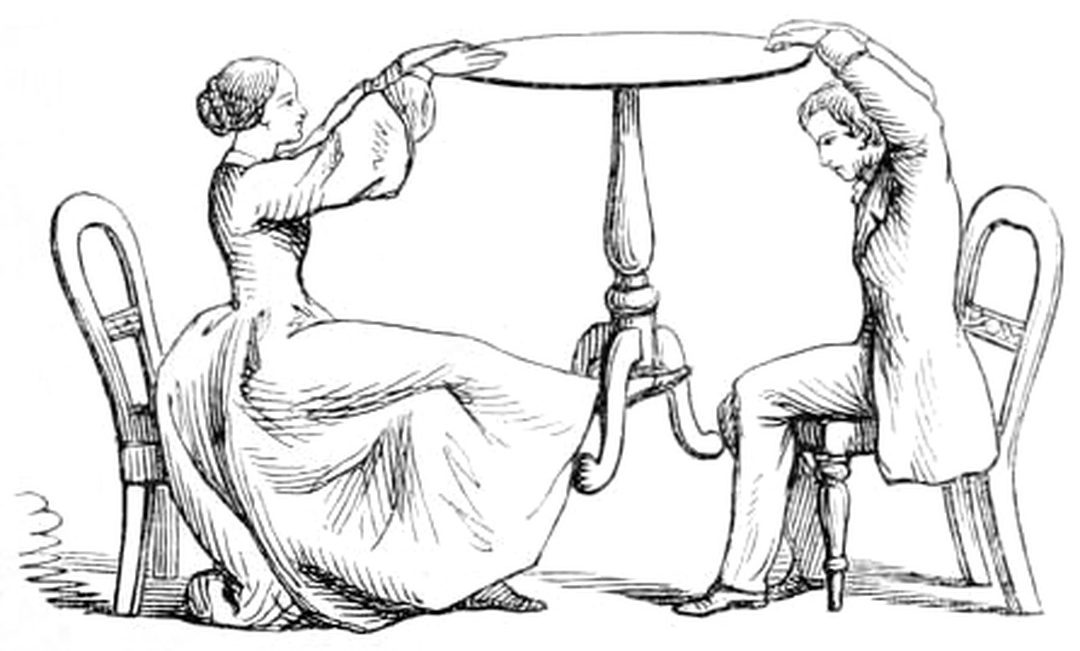
The scientific explanation for the movement predates the patent. The physiologist William Benjamin Carpenter described the “ideomotor effect” in the 1850s: the idea that a person can make small, unconscious muscular movements driven by a thought or expectation, without feeling as though they are moving anything at all. Table-turning, dowsing and Ouija boards are the three most commonly cited examples, and this is the same mechanism, dressed up in a different century’s technology, that kept quack medical devices like the violet ray machine in American homes long after any plausible physical explanation for them held up.
A 2012 study at the University of British Columbia, by Hélène Gauchou, Ronald Rensink and Sidney Fels, tested something more specific than whether the ideomotor effect is real: whether it can express knowledge a person holds but cannot consciously recall. Participants answered factual yes-or-no questions — the kind where someone might have a vague, nonconscious sense of the right answer without being able to state it confidently — while believing they were playing the board with a partner, when in fact the second “player” was not actively steering. The planchette’s answers, produced by the ideomotor movement of a single participant who believed they weren’t in control, were measurably more accurate on average than that same participant’s own conscious guesses on identical questions asked without the board.
The finding that gets quoted is blunt: the board didn’t access the dead; it accessed something the player already half-knew and couldn’t otherwise retrieve. That reframes the object’s entire run less as a fraud and more as an accidental interface — a crude tool for surfacing information people hold but cannot consciously access, built, patented and sold by a group of Baltimore businessmen who had no idea that was what they’d made and no reason to ask.
Watch the full history
The short version of this story — the patent examiner, the board naming itself, and the sales boom that followed World War One — runs under a minute.

None of the men who signed the 1891 patent believed, as far as the record shows, that they had invented a psychology experiment. They believed they had invented a toy that performed a trick nobody could fully explain, and they built a company — one that split, sued itself, changed hands twice and survived a death on its own roof — on the strength of leaving that trick unexplained. A century later, a cognitive science lab found there actually was something to explain, just not the something anyone selling the board had ever claimed.
What the patent got right, more by accident than by design, was the ambiguity. “Toy or Game” is all the 1891 application promises, and that turned out to be exactly true. What it leaves out is most of the actual story: the woman whose name isn’t on it, the brothers who spent eighteen years suing each other over a licensing deal, and the St. Louis medium who spent twenty-four years insisting the novels weren’t hers. Would you have trusted a board that named itself, split a family into a generation-long lawsuit, and made a cognitive scientist rewrite a page of his field — all without ever once explaining how it worked?
Related reading
- How the Magic Lantern Became Europe’s First Horror Show
- How Phrenology Hiring Practices Took Over Victorian Workplaces
- How the Violet Ray Machine Worked, and Why It Took Decades to Debunk
- The Battle of Los Angeles UFO Theory Comes From a 1980s Forgery
- The Radium Water That Dissolved Eben Byers’ Jaw
Works cited
- U.S. Patent 446,054, “Toy or Game,” filed by Elijah J. Bond, assigned to Charles W. Kennard and William H. A. Maupin, issued February 10, 1891. Link.
- Gauchou, Hélène L., Ronald A. Rensink, and Sidney Fels. “Expression of Nonconscious Knowledge via Ideomotor Actions.” Consciousness and Cognition 21, no. 2 (2012): 976–982. Link.
- McRobbie, Linda Rodriguez. “The Strange and Mysterious History of the Ouija Board.” Smithsonian Magazine, October 27, 2013.
- Lovejoy, Bess. “How the Ouija Board Got Its Name.” Atlas Obscura, February 28, 2014.
- Cassie, Ron. “Not Dead Yet.” Baltimore magazine, October 20, 2015. Link.
- Diliberto, Gioia. “Patience Worth: Author From the Great Beyond.” Smithsonian Magazine, September 2010.
- “Ouija Does It.” The Saturday Evening Post, February 2012, on the Norman Rockwell cover of May 1, 1920.