
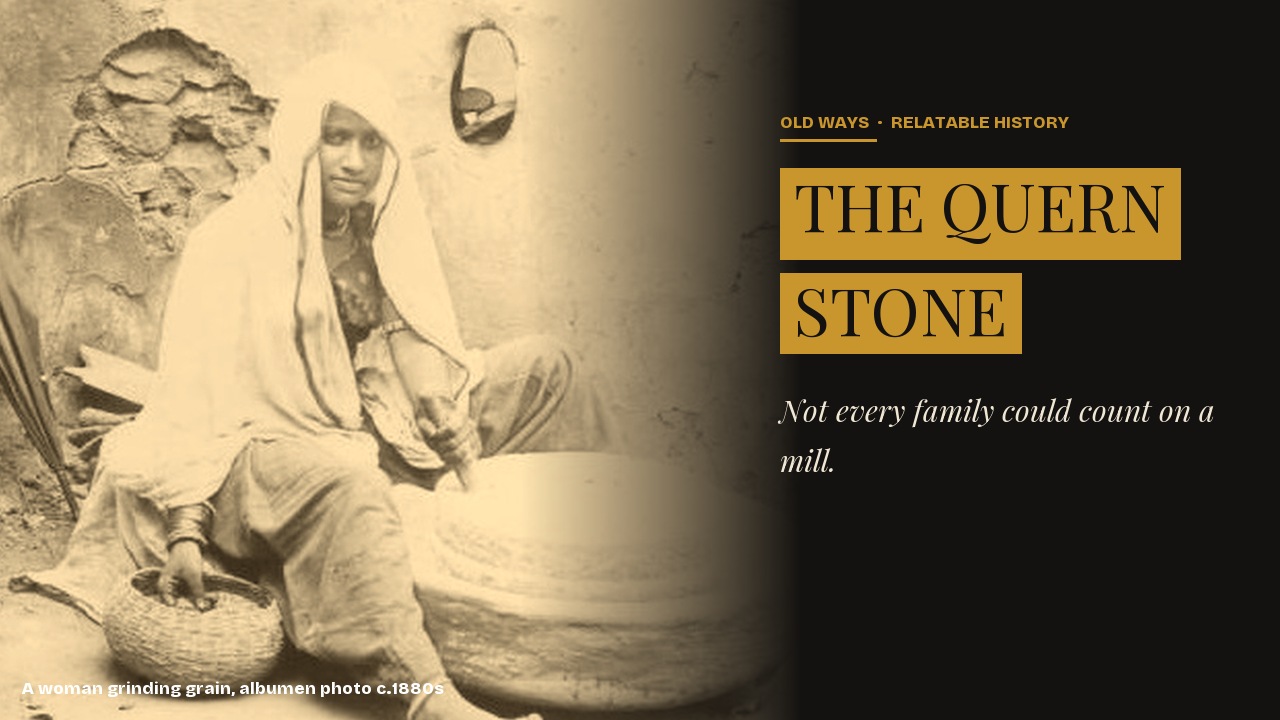
In parts of medieval England, owning a quern stone — the simple two-stone hand mill households used to grind their own grain — could get you fined. Not for anything you’d baked or brewed with it; simply for turning the stone at all. Lords who owned a manorial watermill could claim what was called “suit of mill”: every tenant on their land was legally required to bring grain to the lord’s mill and pay a toll for the privilege, and a household caught grinding its own flour on a quern at home was cutting the lord out of that income. The stones themselves could be confiscated.
That a simple pair of grinding stones was worth legislating against says something about how useful they were. A quern needed no stream, no dam, no miller, and no permission. It was two shaped rocks and a pair of arms, and for roughly two thousand years — on equal terms in Iron Age Britain, Roman Gaul, medieval Yorkshire and the American frontier — it was the one piece of milling equipment an ordinary household could own outright, law or no law.
What follows is the longer version of that story: how the design actually works, where the stone itself had to come from, who tried to stop people from using it, and what it took to finally put it out of a job. The device under discussion is about as plain as machines get — no gears, no moving parts beyond the stone itself — which is exactly why it is so hard to improve on and so easy to underestimate.
What a quern stone actually was
Before the rotary quern, grain was ground on a saddle quern — a flattish slab with a smaller handstone rubbed back and forth across it, the same rocking motion used for millennia across much of the ancient world. The rotary quern replaced that rocking action with a continuous circular one: a lower stone, called the bedstone, stays fixed, while an upper runner stone sits on top of it and spins, turned by a wooden peg set near its rim. Grain is fed through a hole bored in the runner stone’s centre, called the eye, and works its way outward between the two roughened stone faces until it falls off the edge as meal.
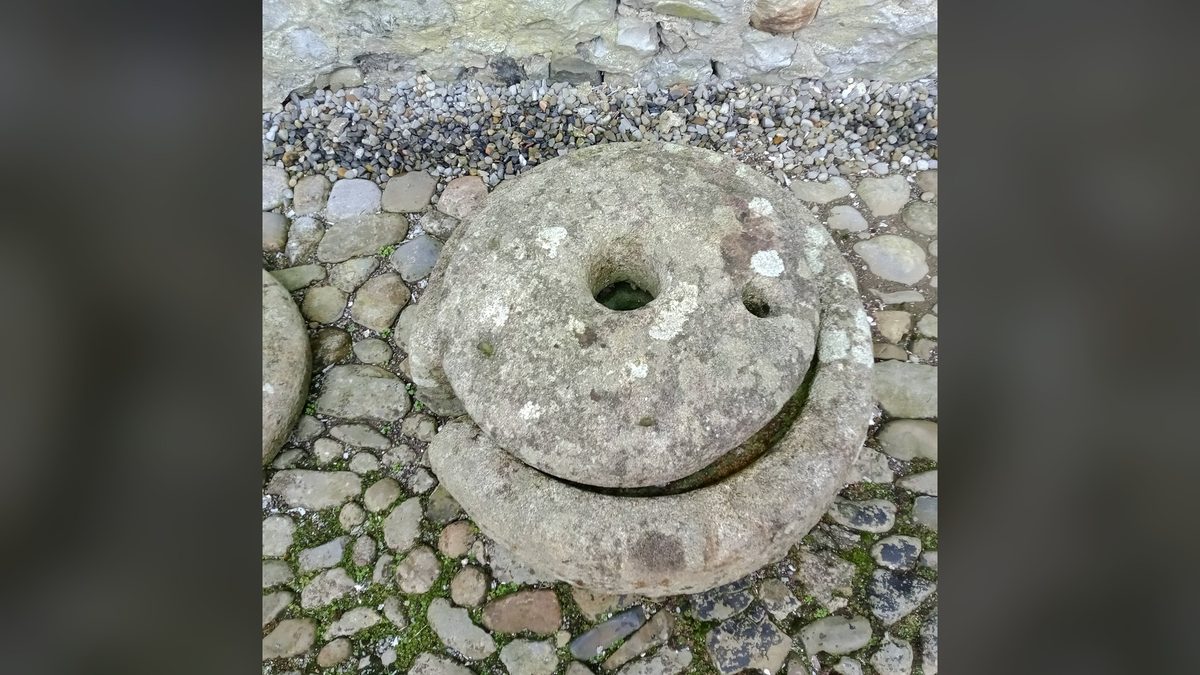
Archaeologists generally place the rotary quern’s arrival in Britain in the Iron Age, roughly the fourth or third century BC, where it displaced the saddle quern in most households within a few centuries. The shift is usually credited to the spread of iron tools, since cutting the eye, dressing the grinding faces and fitting the handle socket all go far more easily with an iron chisel than a stone one. Exactly where the design was first worked out is still unsettled; rotary mills were already turning around the western Mediterranean by the sixth or fifth century BC, a century or two before Britain adopted them, and different regions appear to have arrived at a very similar machine on something close to their own timetables rather than all at once from a single source.
The word travelled with the object. Old English speakers called it a cweorn, a term with close cousins across every branch of the old Germanic languages — Gothic qairnus in the fourth century, Old Icelandic kvern, Old Frisian quern — all apparently descended from a single prehistoric root, which some linguists reconstruct as meaning roughly “to crush.” A word that old, shared that widely, is itself a kind of evidence: people across a huge swath of Europe needed a name for this specific object long before any of them wrote anything down.
The clearest evidence that the design didn’t depend on iron tools at all comes from the Canary Islands, settled from North Africa around the turn of the first millennium AD. Once contact with the mainland broke off, the islanders had no metal and no way to get any — yet they still quarried and shaped rotary querns out of basalt and volcanic tuff, using nothing but stone picks and wooden mallets. Recent experimental work reconstructing that process found it took several hours of indirect-percussion work, pick struck by mallet, just to rough a single stone out of the quarry face. People wanted a rotary quern badly enough to make one the slow way when the fast way wasn’t available.
However it started, the design spread fast and stuck for a long time. The most complete survey of the quern’s first several centuries in Europe traces the object across the continent, from Iberia to the Baltic, turning up in ordinary households centuries before Rome fell and centuries more before any watermill existed to compete with it. Almost nothing else a household owned in that period had that kind of geographic and chronological reach.
Not every rock would do the job
A quern’s two faces spend their whole working life grinding against each other and against a stream of hard grain, so soft stone simply wore away too fast and left grit in the flour. The best material was coarse, gritty and durable: certain sandstones, granite, and — prized above nearly everything else in the Roman world — volcanic lava from quarries around Mayen and Niedermendig in Germany’s Eifel region. That lava’s natural bubbles, left by trapped gas as it cooled, gave it a grinding bite that other rock had to have artificially cut into it.
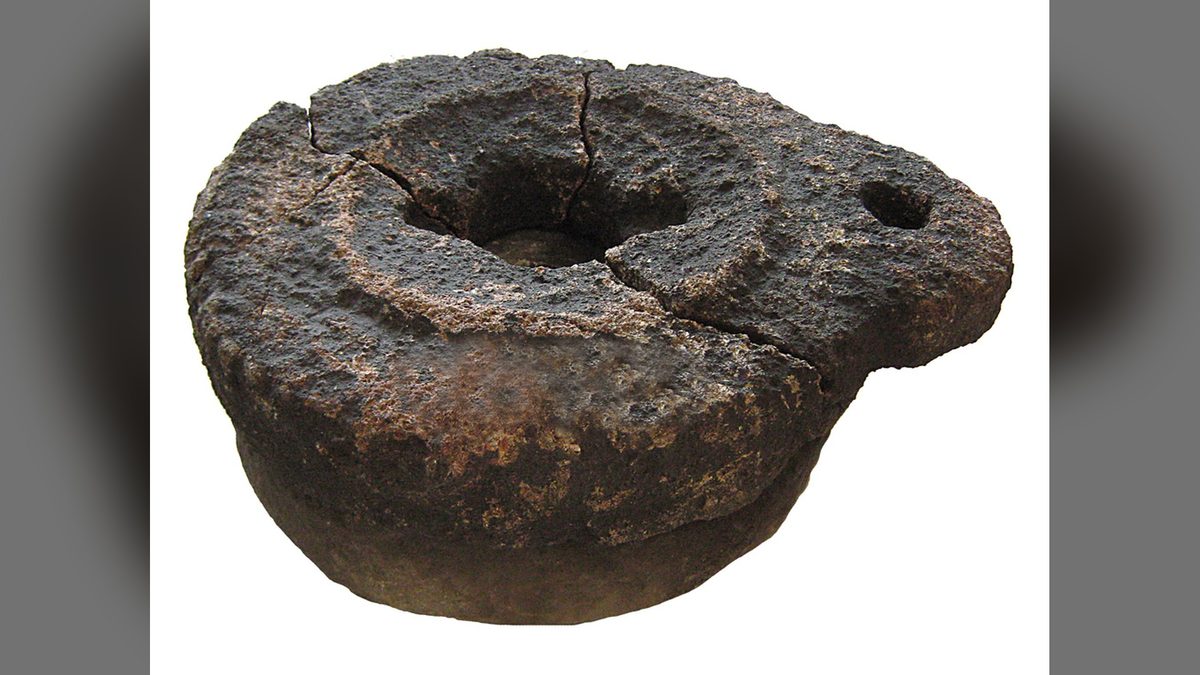
Lava querns from the Eifel were traded astonishing distances under Roman rule. One survey of imported German lava querns and millstones found remains of roughly three thousand of them spread across some 550 sites in Roman Britain alone, from southern towns like Verulamium and Silchester to the military forts strung along Hadrian’s Wall, each stone having crossed the English Channel from a quarry hundreds of miles inland in Germany. A people with no difficulty quarrying their own local sandstone was still paying to ship a specific volcanic rock across an empire, because the local stuff wore out faster and ground more slowly. Where good stone wasn’t available at all, households made do: on the American frontier centuries later, settlers without access to a proper quarry sometimes shaped whatever hard local rock they could find into a working pair of stones, a much cruder trade-off for the same basic need.
Grinding your own flour could get you fined
By the time rotary querns reached medieval England, a watermill represented a serious capital investment, and the lords who built them wanted their money back. “Suit of mill” obliged a lord’s tenants to bring their grain to his mill and pay multure, a toll taken as a cut of the flour itself. Grinding at home on a quern was, in effect, tax evasion, and in places where the custom was enforced it carried real consequences. Archaeologists working the abandoned village of Wharram Percy in Yorkshire, where two manorial mills both claimed suit of mill over the same tenants, have still found quern fragments scattered across the site — evidence that households kept grinding at home anyway, whether out of simple thrift or quieter defiance of a lord’s monopoly.
How strictly any of this was enforced varied enormously from manor to manor, and recent research into medieval Kent found suit of mill was barely enforced there at all, letting home milling continue as an ordinary part of the local economy rather than an act of resistance. One estimate puts domestic hand-milling at roughly a fifth of all the grain ground in fourteenth-century England, even with well over 350 watermills recorded in Kent alone by the Domesday survey of 1086. Querns themselves were not cheap: an English county’s escheators valued confiscated querns at twelve to forty-four pence apiece in 1381, a sum high enough that one historian has suggested a single millstone could cost more than a working mill’s entire annual profit.
When the nearest mill was twenty miles away, or gone
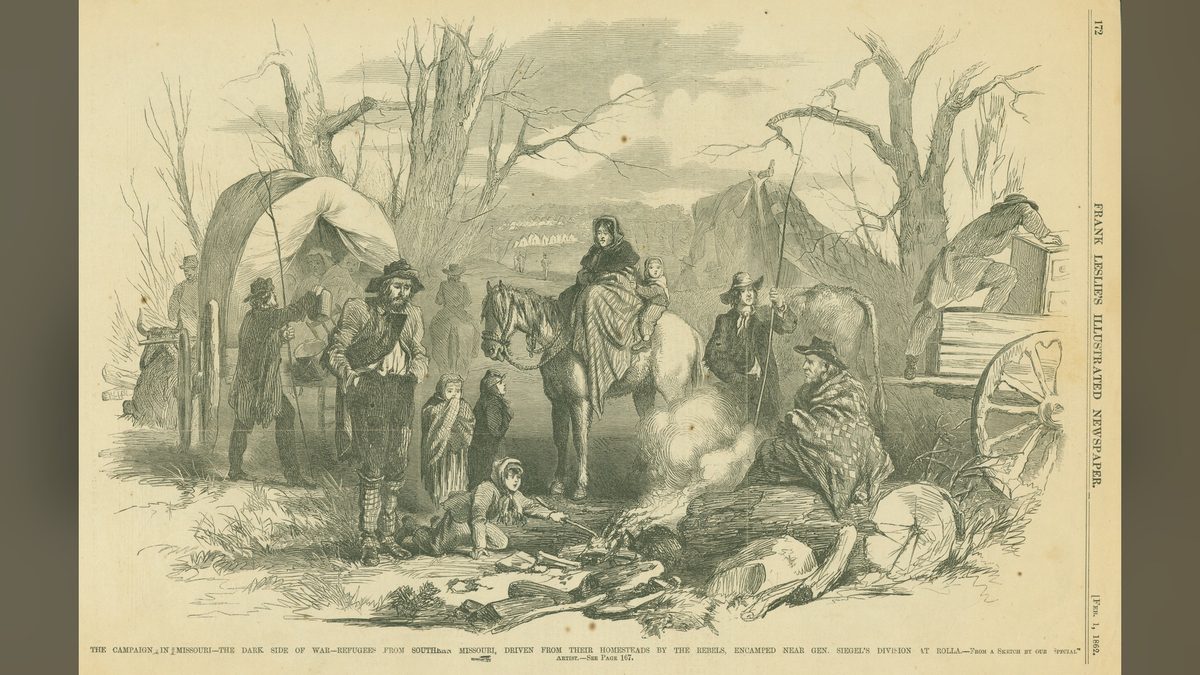
The American frontier never had a feudal lord to forbid the practice, but it produced its own reasons to keep a quern by the hearth. A family on a new claim might be a day’s wagon ride from the nearest working gristmill; a hard winter could freeze the millpond solid for weeks; and across the Confederacy during the Civil War, with mills burned, blockaded or commandeered for the army, grinding corn on whatever stone a household could shape became, for long stretches, simply how people ate. A photograph held in Georgia State University’s special collections, dated 8 June 1867 and titled plainly “Hand Mill for Grinding Corn in Use in Georgia and Other Southern States,” documents the practice at exactly the moment the war had ended but the South’s mill infrastructure had not yet recovered.
The same two-stone technology was still being made new, far from any battlefield, well into the same period. The Science Museum in London holds a hand-turned rotary quern made on Barra, in Scotland’s Outer Hebrides, sometime between 1867 and 1900 — essentially identical in principle to a stone an Iron Age farmer would have recognised, built new in the same decades steam-powered roller mills were starting to supply the rest of Britain with cheap white flour. Isolated communities on both sides of the Atlantic reached for the same answer when a commercial mill wasn’t close enough, or couldn’t be trusted to stay running.
What finally retired a two-thousand-year-old machine
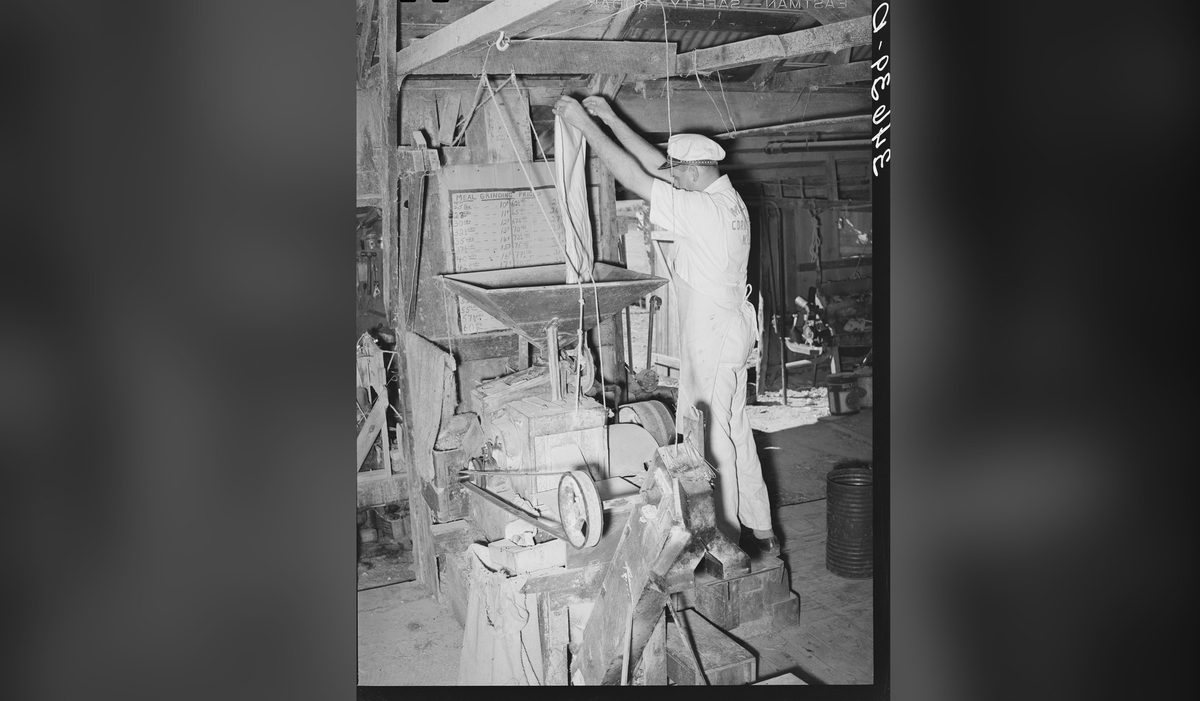
The quern’s working life wasn’t ended by a better design — the stones themselves had barely changed in two millennia — it was ended by infrastructure. As railroads, improved roads and cheap steam- and later electric-powered roller mills put finely milled, affordable flour within reach of nearly every American town by the late nineteenth century, the hour of aching work it took to grind a single loaf’s worth of flour by hand stopped being worth doing except as a last resort. The quern didn’t disappear so much as get demoted: first to a backup for emergencies, then to something kept around out of habit, then to a doorstop or a garden ornament whose original purpose the people walking past it had forgotten.
Archaeologists who specialise in tracing querns through what they call their use-contexts — not just how a stone was made, but where and how it ended up after it stopped grinding — read those final find-spots almost like a household record. A quern filled into an abandoned well, broken up for rubble in a new wall, or left standing in a yard until the ground grew up around it each tells a slightly different story about when, and how reluctantly, a family decided the stone wasn’t worth the effort any more. One detailed study of quern deposition in south-western England treats that final placement as data in its own right, worth as much attention as the grinding itself.
Today the stones mostly survive in museum cases and archaeology storerooms, catalogued by the quarry their rock came from and the centuries of wear on their grinding faces, each one a record of how many hours someone spent turning a wooden peg so their family could eat. It is one of the longest-serving pieces of technology human households have ever owned, and for most of that run, it worked exactly the way it looks like it should: two stones, one fixed and one turning, doing a job no engineer ever found a reason to meaningfully redesign. The lords who tried to outlaw it, and the families who kept turning it anyway, understood something about it that’s easy to miss looking at a worn stone in a glass case: for most of human history, owning the means to grind your own food was not a hobby. It was independence, measured out one aching hour at a time.
Watch the full history
The video version covers the stones, the grinding and the frontier households who depended on them in just under eight minutes.

Related reading
- Why Flax Never Became an American Industry
- Inside the 19th-Century Ice Harvesting Industry’s Boom and Bust
- Threshing Grain by Hand: The Flail, the Floor, and the Riot That Tried to Stop the Machine — the other half of turning a harvest into bread, by hand, before any machine did it for you.
- How Soapstone Foot Warmers Worked, and What They Replaced
Shop
- The Stone of Life, by David Peacock — the fullest archaeological survey of querns and mills across Europe, for anyone who wants the scholarly version of this story.
Works cited
- Peacock, David. The Stone of Life: The Archaeology of Querns, Mills and Flour Production in Europe up to c. AD 500. Southampton Monographs in Archaeology, New Series 1. The Highfield Press, 2013. Link.
- Watts, Susan R. The Life and Death of Querns: The Deposition and Use-Contexts of Querns in South-Western England from the Neolithic to the Iron Age. Southampton Monographs in Archaeology, New Series 2. The Highfield Press, 2013. Link.
- Banfield, Lindsay. Making Flour the German Way in Roman Britain: Distribution, Use and Deposition of Imported Lava Quernstones and Millstones. BAR Publishing. Link.
- Jervis, Ben. “Becoming through Milling: Challenging Linear Economic Narratives in Medieval England.” Cambridge Archaeological Journal 32, no. 2 (2022): 281–294. Link.
- Lacave Hernández, A., Rodríguez Rodríguez, A., Naranjo Mayor, Y., et al. “Islands without Iron: Strategies for Manufacturing Prehistoric Rotary Querns without Metal Tools in the Canary Islands.” Journal of Archaeological Method and Theory 31 (2024): 414–447. Link.
- “An Ancient Milling Revolution.” Mills Archive Trust, 16 January 2023.
- Liberman, Anatoly. “On Querns and Millstones.” OUP Blog (Oxford Etymologist), August 2024.
- Science Museum Group. “Hand Operated ‘Quern’ or Corn Mill.” Collection object no. 1912-68, made in Barra, Outer Hebrides, 1867–1900. Link.
- Special Collections and Archives, Georgia State University Library. “Hand Mill for Grinding Corn in Use in Georgia and Other Southern States.” L1987-24_01, 8 June 1867.