
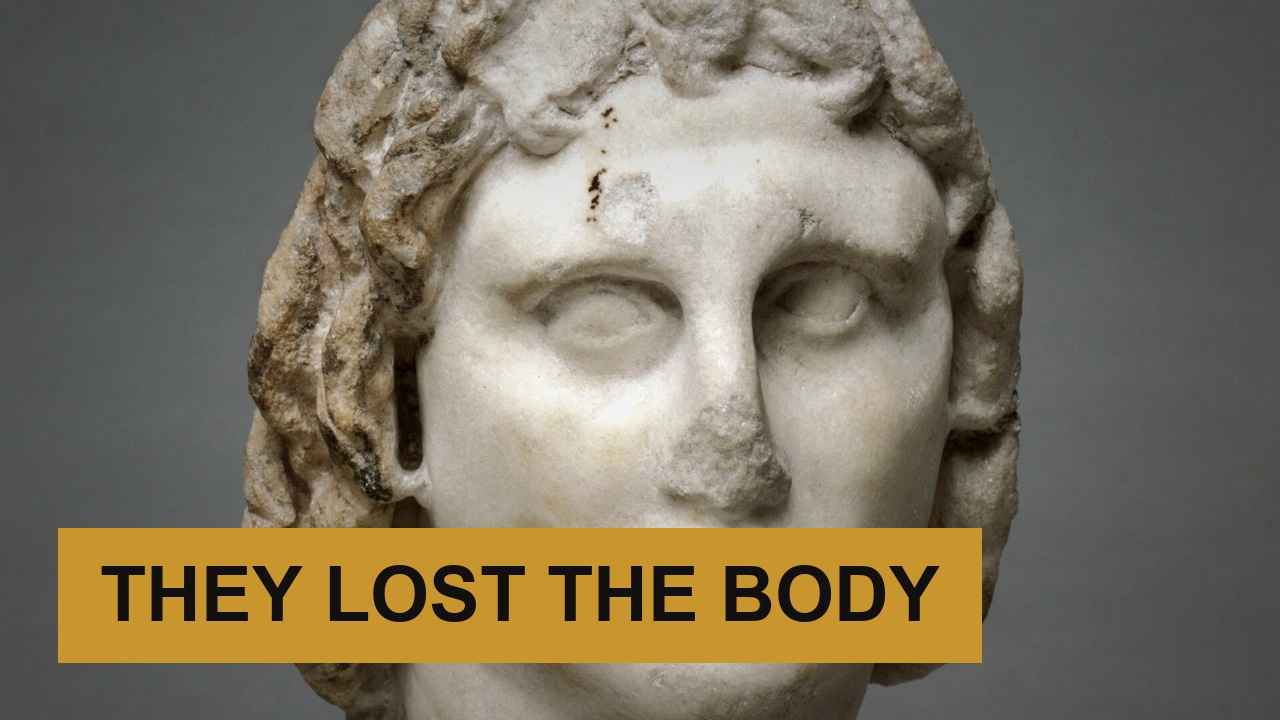
For roughly three centuries, Alexander the Great’s embalmed body was one of the most reliably visitable attractions in the ancient Mediterranean world. Roman emperors made detours to Alexandria specifically to see it, housed behind sealed doors in the city’s royal quarter. Augustus laid a golden crown on it and scattered flowers. Caligula, according to Suetonius, stole the dead king’s breastplate from the tomb and wore it in his own staged military processions. Then, sometime in late antiquity, every reliable mention of the tomb simply stops. Egypt’s antiquities authorities have logged more than 140 official excavations in Alexandria that have gone looking for it since, and not one has turned up a structure that can be confidently identified as Alexander’s grave.
That is the real puzzle, and it is stranger than “an old grave went missing.” The ancient world did not usually misplace things this well documented. Alexander’s body was fought over, embalmed, rehoused twice, and visited by name for roughly five hundred years by writers whose work survives. Then the record goes quiet, and nobody since — not the Byzantines, not the medieval Arab geographers who described Alexandria street by street, not the nineteenth-century Europeans who combed the city for relics — has been able to say with confidence what happened to it.
What follows is what the surviving sources actually support, where the record has a gap nobody can close, and why professional archaeologists are still digging for it in modern Alexandria.
Ptolemy diverted the funeral cortege
Alexander died in Babylon in June 323 BCE without naming an heir, and his empire immediately began fracturing among his generals. His body, embalmed and placed in an elaborate gold-and-gem funeral carriage, set out roughly two years later on the long overland journey to Macedon, where the regent Perdiccas intended it to be buried among earlier Argead kings. It never arrived. Ptolemy, a former general who had claimed Egypt as his own territory in the chaos after Alexander’s death, intercepted the cortege in Syria and diverted it south.
This was not sentiment. In the political logic of the time, possessing a king’s body carried real legitimacy, and Ptolemy used it accordingly. The body went first to Memphis, Egypt’s ancient pharaonic capital, where it stayed for roughly two decades. Historians working from the surviving accounts — all written well after the fact, and not always in agreement on details — broadly accept this sequence even where they disagree on specifics. The final move, to the city Alexander had founded and where a city’s founder was traditionally buried, came later: Alexandria.
The Soma: a tomb built into the palace itself
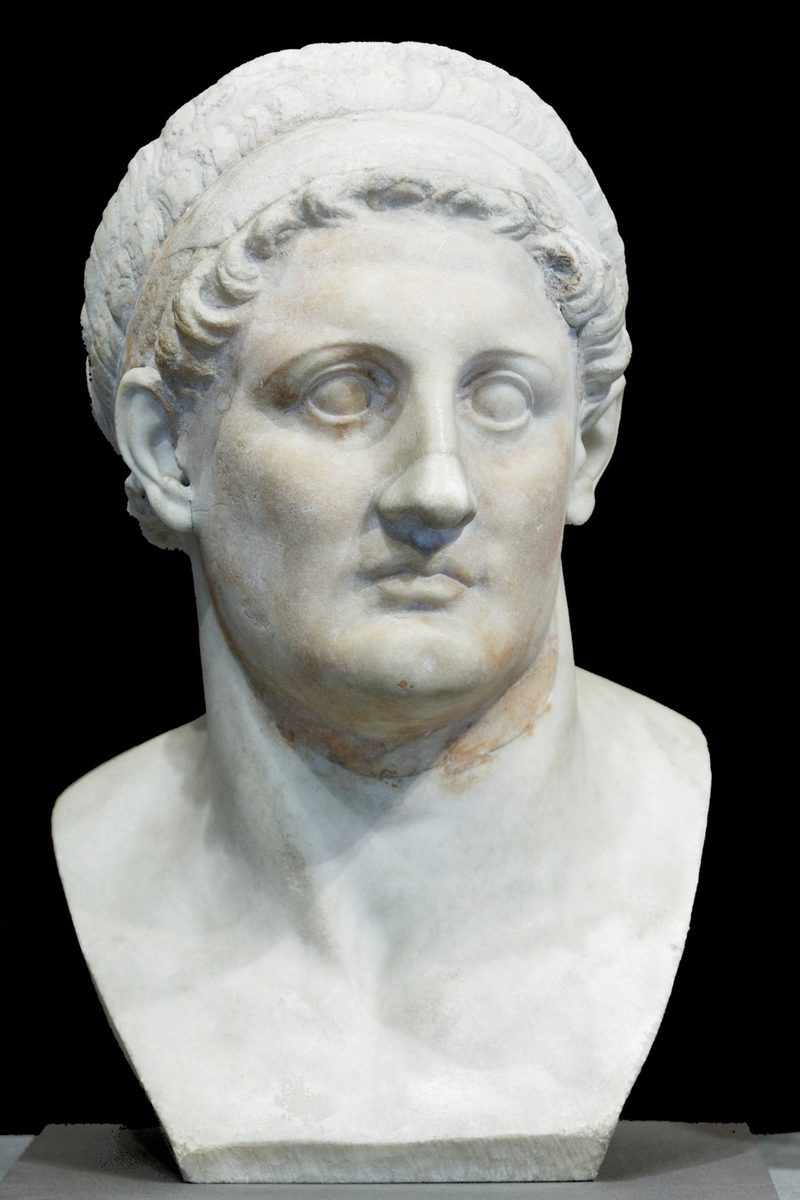
The geographer Strabo, writing around 20 BCE after visiting Alexandria in person, describes the enclosure that held the royal remains as part of the palace complex itself — not a separate necropolis, but a walled precinct inside the seat of government, holding the burials of the Ptolemaic kings alongside Alexander’s. Strabo and later writers call it the Soma, meaning “body,” and a tradition recorded by the grammarian Zenobius credits Ptolemy IV Philopator, who ruled from 221 to 204 BCE, with building the monument that later visitors actually saw and consolidating the royal dead there in one place.
Strabo adds one detail that is easy to miss and worth pausing on: the original sarcophagus, he says, was gold, and a later Ptolemy — remembered only by the nickname “Cocces” — had it melted down and replaced with a plainer container, reportedly of glass or alabaster. If that detail is accurate, one of Alexander’s own descendants stripped his coffin for its metal value generations before any outside invader laid a hand on the tomb.
Three centuries of imperial visitors, and not every story checks out
Julius Caesar is recorded visiting during his time in Alexandria in 48 BCE. Augustus came in 30 BCE, immediately after annexing Egypt as a Roman province, and here the sources genuinely disagree. Suetonius has him paying reverent tribute, laying a golden crown on the body and scattering flowers, and declining an offer to also view the mummified Ptolemaic kings with the line that he had come “to see a king, not corpses.” Cassius Dio’s version is considerably less flattering: no crown, no flowers, and Augustus handling the body clumsily enough to break part of its nose. Modern historians who have worked through both accounts, including the classicist Andrew Erskine, note that Dio’s harsher telling may reflect a different, possibly Alexandrian, tradition about the visit rather than a straightforwardly more accurate one. Neither version can simply be taken as settled fact.
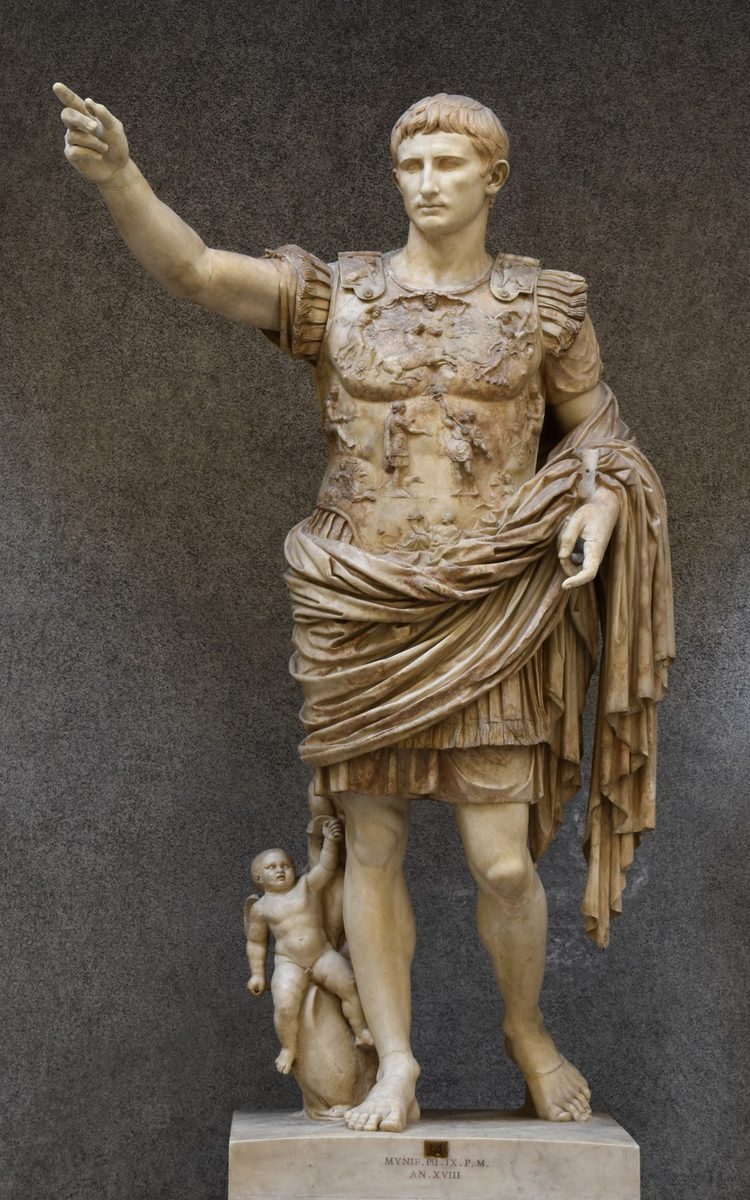
The emperor Caligula is linked to the tomb through Suetonius, who records that he wore a breastplate “which he had stolen from Alexander the Great’s tomb at Alexandria” during his own staged military displays. It is a vivid detail, but it comes with a real problem: there is no good evidence Caligula ever set foot in Egypt at all, which leaves the breastplate’s actual journey out of the tomb unexplained. The story may well be true in its broad outline and garbled in its particulars, which is a common fate for anecdotes about an emperor as widely mocked as Caligula.
The last Roman visit any source dates with real confidence belongs to Caracalla, around 211 to 215 CE. Ancient writers describe him as thoroughly fixated on Alexander, and the historian Herodian records that Caracalla removed his own cloak and some personal jewelry and left them at the tomb because he found it cold — a detail that says as much about Caracalla’s self-dramatizing devotion as about the tomb itself.
Why Septimius Severus shut the doors
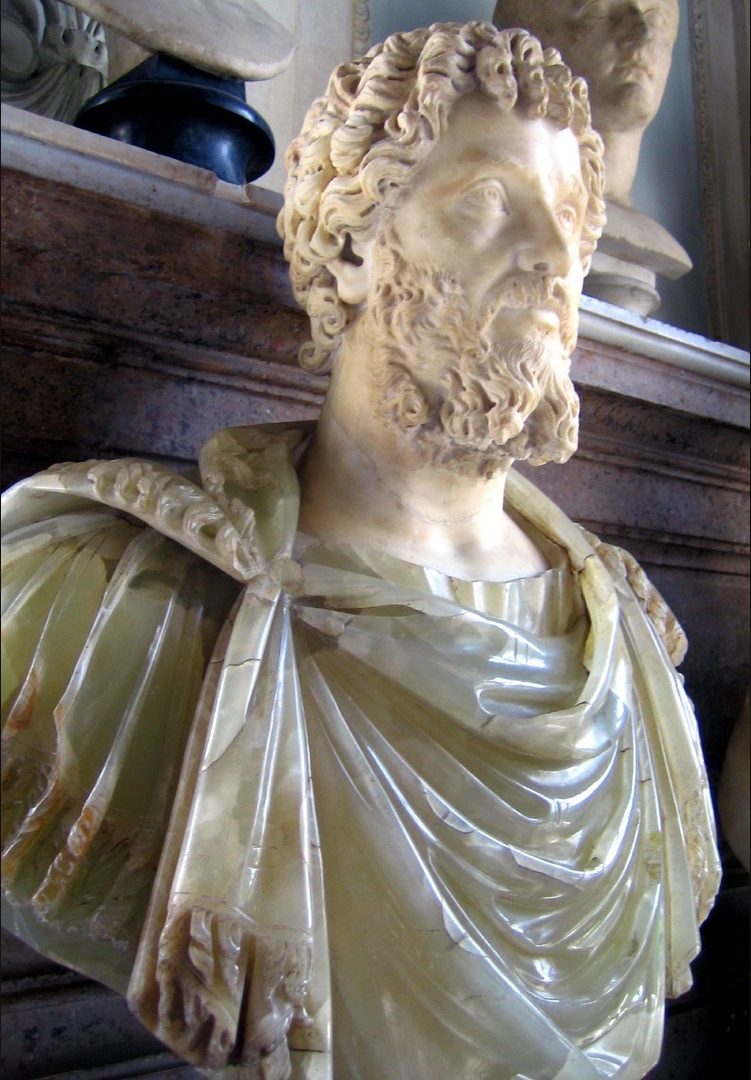
In 199 CE, the emperor Septimius Severus had the tomb sealed from public view. The timing is suggestive. Alexandria had backed Severus’s rival Pescennius Niger during the Roman civil war of 193 and 194 CE, to the point that residents had inscribed their city gates with the phrase “the city of the lord Niger.” Severus went on to punish the city in several ways after his victory, and historians commonly connect the sealing of Alexander’s tomb to this same punitive mood, even though no surviving source states his exact reasoning outright. Whatever the motive, public access effectively ends here — Caracalla’s visit a few years later suggests the doors could still be opened for an emperor, just not for everyone else.
The record goes silent
After Caracalla, references thin out fast. The latest plausible mention comes from a rhetorical exercise attributed to Ps.-Libanius, written around the end of the fourth century, which describes a now-lost equestrian statue of Alexander near the city’s seafront — a passing literary reference, not a visitor’s report. Christian writers of the late fourth and early fifth centuries, including Theodoret and John Chrysostom, mention Alexander in passing too, but scholars caution that these texts cannot be used as reliable evidence either for the tomb’s physical fate or for what ordinary Alexandrians still knew about its location by then.
What destroyed or buried it is genuinely contested, and the honest answer is that no single theory is confirmed. The historians Peter Fraser and Peter Green have argued the tomb was lost in the civil unrest of 272 CE, during the suppression of a revolt against Roman rule. A catastrophic earthquake and tsunami that struck Alexandria in 365 CE is sometimes blamed instead, though no source directly ties that disaster to the Soma specifically. Others point to Emperor Theodosius’s edicts against pagan sites in 391 CE, which triggered the destruction of Alexandria’s famous Serapeum temple complex nearby — again, without any text that names the tomb as a casualty. And a slower, less dramatic possibility sits alongside all of them: coastal subsidence has swallowed large sections of ancient Alexandria’s shoreline and former royal quarter over the centuries, so an intact tomb could simply be underwater rather than destroyed at all.
Still digging
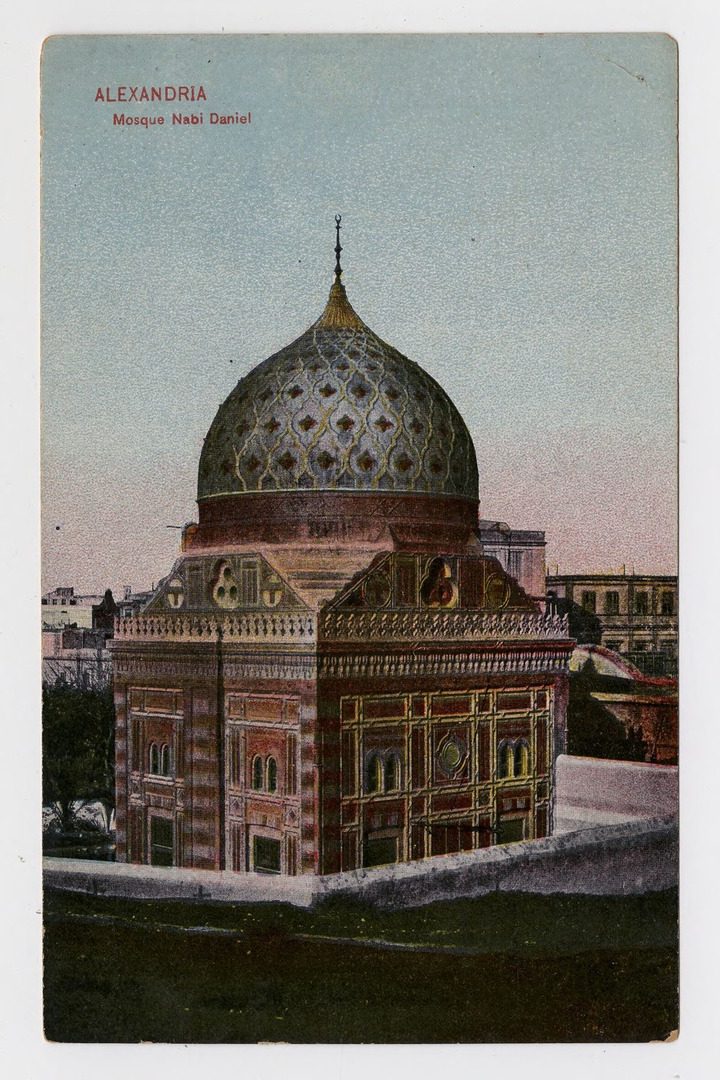
The search has never really stopped. Local tradition in nineteenth-century Alexandria pointed persistently to the ground beneath the Nabi Daniel Mosque, and in 1850 the archaeologist Heinrich Schliemann — decades before his famous work at Troy — sought permission to excavate there and settle the question. He was refused.
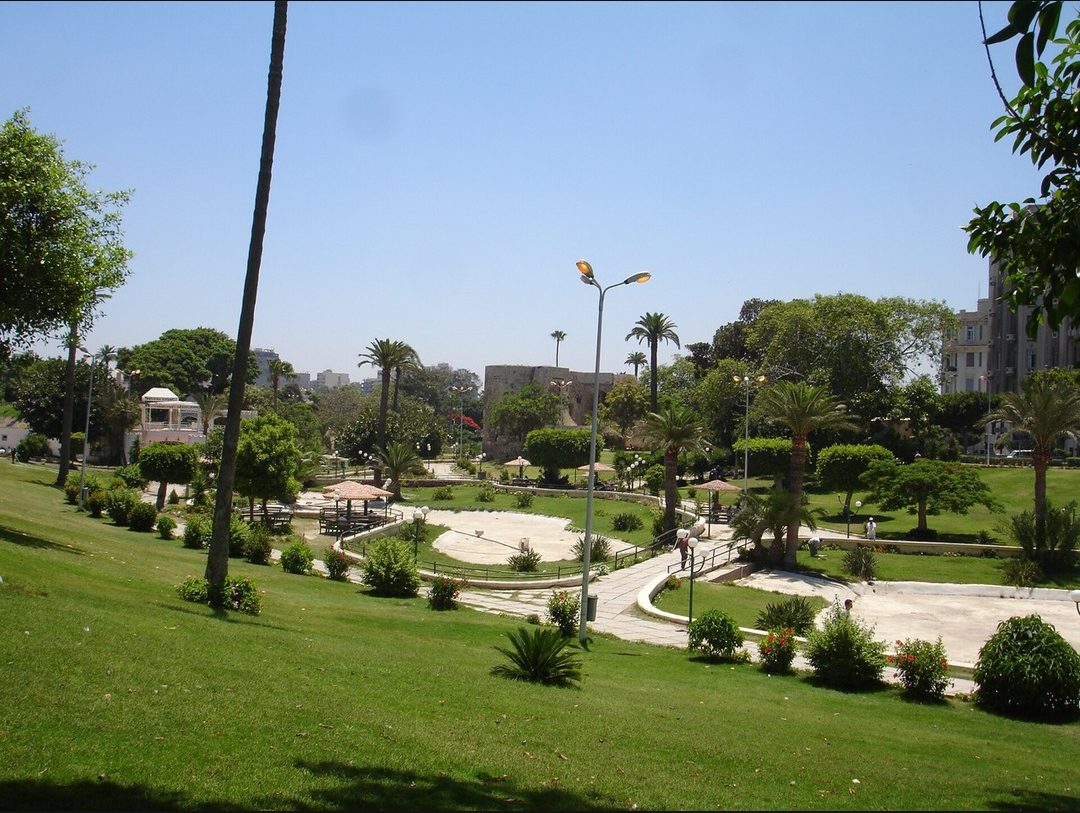
The search since has only gotten more organized. Egypt’s antiquities authorities count well over 140 officially sanctioned excavations in Alexandria aimed at the tomb, and the most sustained of them is still active: the Greek archaeologist Calliope Limneos-Papakosta has been digging since 2000 near the Shallalat Gardens, in the area she believes marks the ancient crossroads of the royal quarter, and her team uncovered an early Hellenistic marble statue of Alexander there in 2009. Other specialists back different patches of ground entirely. The archaeologist Nicholas Saunders has argued the remains are more likely under the modern Mazarita district; the classicist Paul Cartledge thinks rising sea levels and coastal subsidence put the old royal quarter underwater, joking that Alexander’s body “could’ve been eaten by a shark” in the two thousand years since; and the Egyptologist Zahi Hawass has said plainly that nobody will find the tomb by deliberately searching for it — if it turns up at all, he expects it will be by accident, during ordinary construction work.
That so many credentialed archaeologists keep returning to this particular question, rather than treating it as either solved or unanswerable, is itself a kind of answer. The site has not given up its evidence, but nobody working on it believes the evidence is gone for good.
Watch the full history
The video traces the same five centuries in under nine minutes, from Ptolemy’s interception of the funeral cortege to the modern dig at the Shallalat Gardens.

Related reading
- The Theories Behind Cambyses’ Lost Army
- What Happened to Rome’s Lost Ninth Legion?
- What Actually Happened to the Ark of the Covenant?
- The Copper Scroll Treasure Map: What Sixty-Four Lost Hoards Say
Shop
Two books specifically about the search for Alexander’s tomb, for anyone who wants to go deeper than a single article can:
- Nicholas J. Saunders, Alexander’s Tomb: The Two-Thousand-Year Obsession to Find the Lost Conqueror
- Andrew Chugg, The Lost Tomb of Alexander the Great
Works cited
- Erskine, Andrew. “Life after Death: Alexandria and the Body of Alexander.” Greece & Rome, 2nd ser., 49, no. 2 (2002): 163–179. Link.
- Strabo. Geography 17.1.8, on the Soma and the royal tombs of Alexandria. Link.
- Suetonius. The Twelve Caesars, “Life of Caligula,” ch. 52, on the emperor and Alexander’s breastplate.
- Tep, Ratha. “What Happened to Alexander the Great’s Body?” History.com, April 21, 2026. Link.
- Nalewicki, Jennifer. “Was Alexander the Great Eaten by Sharks? Inside the Wild Theories for What Happened to the Iconic Ruler’s Body.” Live Science, January 31, 2025. Link.
- Blakemore, Erin. “New Clues to the Lost Tomb of Alexander the Great Discovered in Egypt.” National Geographic, February 28, 2019. Link.
- Limneos-Papakosta, Calliope, as told to Shane Croucher. “I’m an Archaeologist Excavating Alexander the Great’s Buried City.” Newsweek, March 17, 2024. Link.
- Hewitt, Nathan. “Where Is the Tomb of Alexander the Great?” TheCollector, August 31, 2025. Link.