
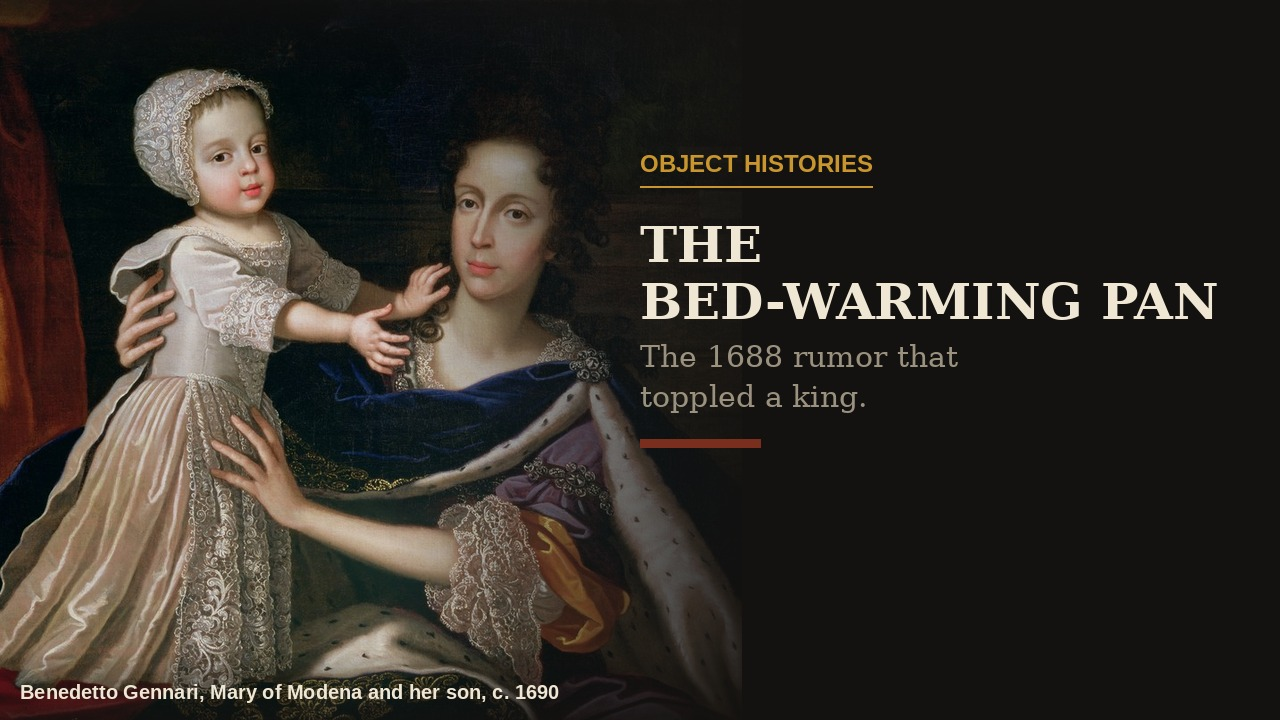
In October 1688, the king of England summoned forty-two people to Whitehall and had them swear, one after another, to something that should never have needed swearing to: that his own son was really his son. The doubt hanging over the birth had a specific shape, and it was an ordinary household object. Somewhere in the birth chamber, the story went, a brass pan used to warm cold sheets had also been used to smuggle in someone else’s baby.
The pan was real. Nearly every well-off household in England owned one. What made this particular rumor take hold, and what it did next, is a story about how an unremarkable object can get pulled into the middle of a succession crisis and come out the other side as political shorthand for a whole reign.
Within six months of that Whitehall meeting, the king had fled the country. The warming pan had nothing to do with his failures of government, his religion, or his army’s loyalty — and it ended up attached to all three anyway.
A pan built to solve one specific problem
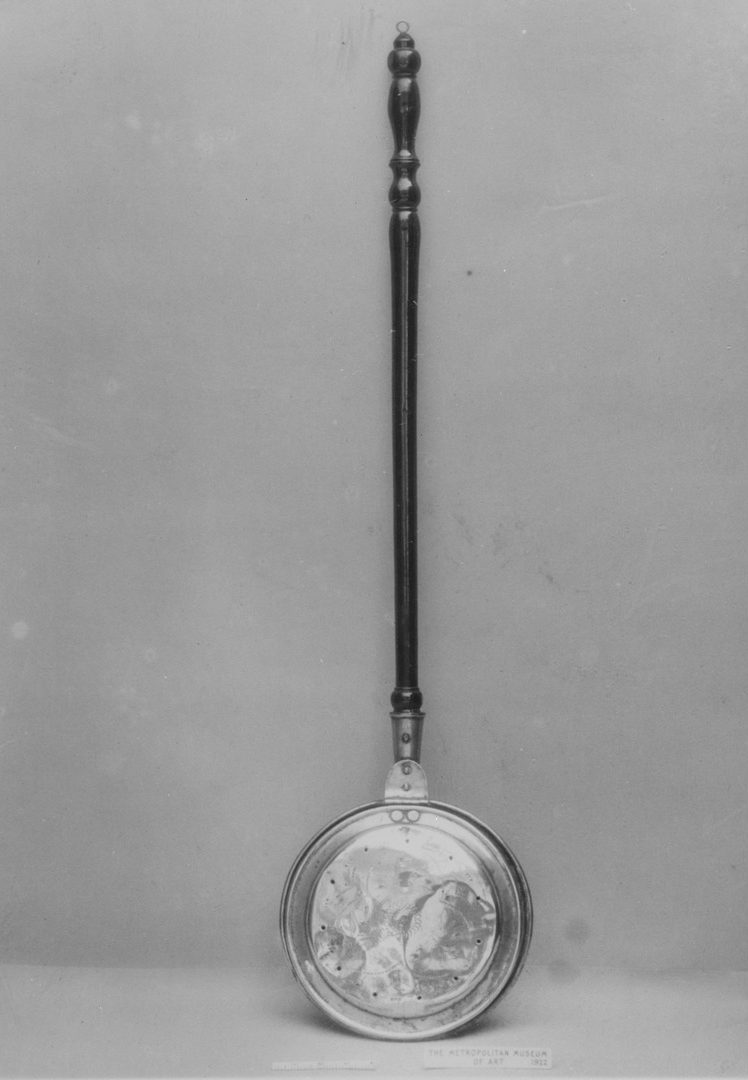
Before central heating, an English bedroom in January was barely warmer than the yard outside. Warming pans mentioned in French records as early as the fourteenth century, and by the fifteen hundreds metalworkers in England and the Low Countries were making a refined version: a shallow, lidded pan, a foot or so across, of brass or copper on a long iron or turned-wood handle. A servant scooped embers from the hearth into the pan, closed the pierced lid, and ran it swiftly between the sheets just before anyone got into bed.
Speed mattered. Left in one place, live coals scorched linen in seconds, and a scorched sheet in a curtained wooden bed was a fire risk nobody wanted to explain in the morning. The lids were pierced in decorative patterns partly so the coals kept breathing rather than smothering, though that let more smoke through too — a bed warmed with a smoky pan smelled like a chimney by morning. Housekeeping manuals sometimes recommended hot sand instead of coals for exactly that reason.
They were not purely utilitarian. Surviving English and Dutch pans carry engraved tulips, birds, and courting couples on their lids; one in the Victoria and Albert Museum’s collection, decorated with a cavalier and his lady, was probably made as a wedding gift. Polished and hung by the hearth when not in use, a good pan was as much a piece of household ornament as a tool, which is part of why almost every family, not just the wealthy, owned one.
The design crossed the Atlantic with English colonists and stayed in ordinary use in America well into the eighteen hundreds. One surviving copper example, held today by the Rosenberg Library Museum in Galveston, Texas, reportedly belonged to John Proctor of Salem, Massachusetts — the first man hanged for witchcraft in the 1692 Salem witch trials. A household object as mundane as a warming pan outlasted the man who owned it by more than three centuries, which is a fairly good demonstration of how these things survive when almost everything else about a life does not.
A queen who would not be examined
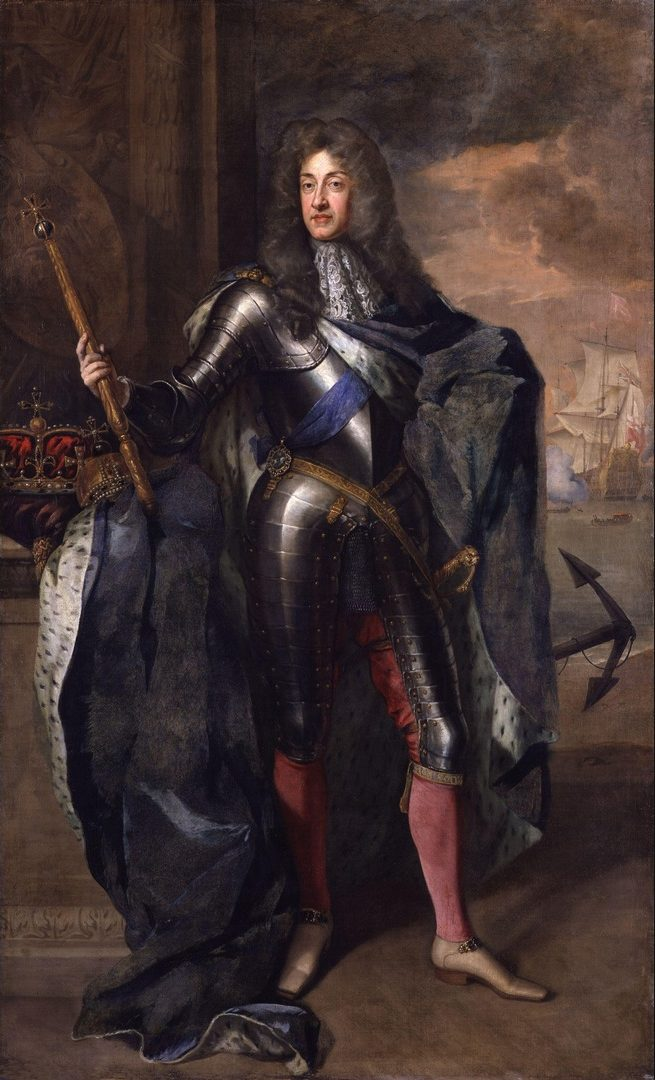
James II became king in 1685. He was a Catholic ruling an emphatically Protestant country, and Parliament had tolerated that arrangement for one reason: James was in his fifties, and his heirs were his two grown daughters from his first marriage, Mary and Anne, both raised Protestant. A Catholic king with Protestant heiresses was a problem that would solve itself.
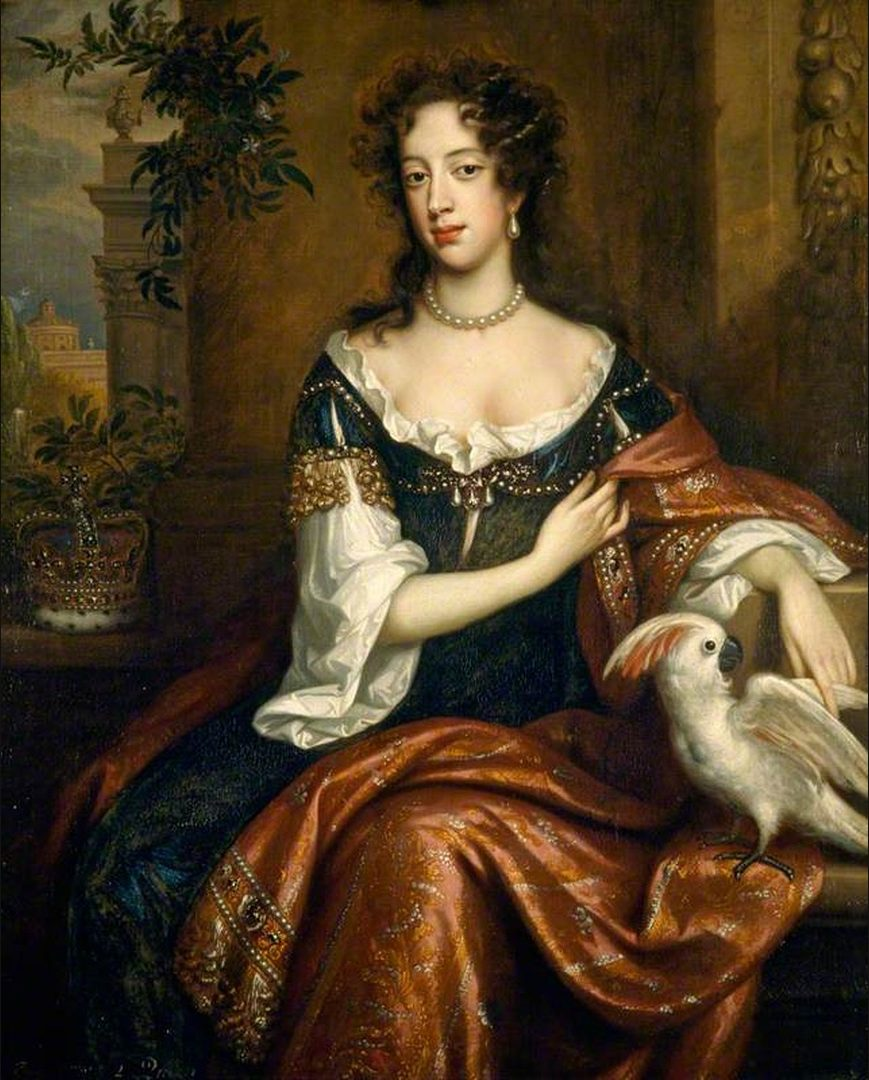
Then James’s second wife, Mary of Modena, announced in late 1687 that she was pregnant again. She had already lost several children to miscarriage or early death, and as a devout Catholic she declined many of the customs by which a pregnancy was publicly confirmed at court — she would not, for instance, have her body examined by witnesses in the way that was expected. That reticence, meant as modesty, read to a suspicious court as concealment. Even James’s own Protestant daughter Anne wrote to her sister questioning whether the queen was truly pregnant at all.
The birth, the rumor, and the pan
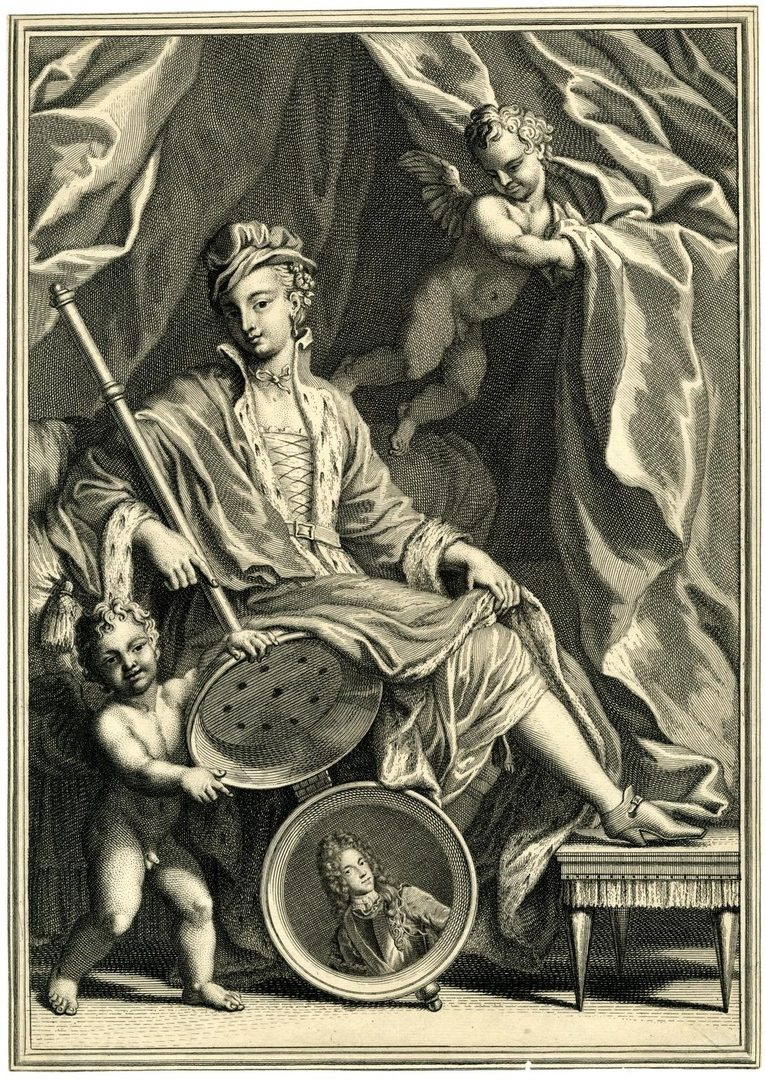
On the morning of 10 June 1688, at St James’s Palace, Mary of Modena gave birth to a healthy boy, James Francis Edward Stuart. Princess Anne, who might have served as an unimpeachable witness, was away at Bath. Almost immediately, a rumor filled the gap she left: that the queen’s real child had been stillborn or never existed, and that a substitute infant had been carried into the crowded, curtained birth chamber concealed inside a warming pan, then produced as the new Prince of Wales.
The claim was physically implausible on its face — the birth chamber was, by design, packed with courtiers precisely so that no substitution could happen unseen. But a rumor does not need to survive scrutiny to spread; it needs to say something people already suspect. A Catholic son who bumped James’s Protestant daughters down the line of succession was exactly the outcome opponents of the king feared most, and the warming pan gave that fear a vivid, tellable image. Ballads, medals, and pamphlets carried it across the country within weeks. One widely circulated Dutch print went further, adding a figure who was not even present at the birth: Father Edward Petre, the Jesuit priest who served as James’s confessor and privy councillor, shown hovering over the royal cradle as if he had engineered the whole affair. The same print tucked a toy windmill into the crib, a jab at a separate, cruder rumor that the infant was really a miller’s son smuggled in some other way. The specific claims did not agree with each other. That never seemed to matter.
Forty-two witnesses, and a council that persuaded no one
James took the accusation seriously enough to fight it with evidence. On 22 October 1688 he convened an extraordinary council at Whitehall and had forty-two people who had been present at the birth — physicians, courtiers, officials, several of them women whose testimony about childbirth carried particular weight — swear in detail to what they had witnessed. One peeress present, Lady Belasyse, testified that she had seen the infant lifted from the bed with the umbilical cord still attached.
It did not work. The scandal had already reframed the terms of the argument: the burden of proof had shifted onto those defending the birth as genuine, rather than onto those alleging fraud, so no quantity of testimony could fully clear it. Whether or not William of Orange — James’s Protestant son-in-law, married to his elder daughter Mary — believed the rumor himself, his agents in England were quietly encouraging pamphlets that kept it alive, because it gave his coming invasion a ready-made justification: he was coming to protect his wife’s rightful inheritance from a supposititious prince.
Invasion, flight, and a seal in the river
On 5 November 1688, William landed at Torbay on the Devon coast with an invasion fleet of several hundred ships and upward of fourteen thousand soldiers. James, despite commanding the larger army, watched his support dissolve within weeks; senior officers, including John Churchill, later Duke of Marlborough, deserted to William’s side. On 11 December, James attempted to flee London, reportedly throwing the Great Seal of England into the River Thames on his way out so that no legitimate document could be sealed in his absence. He was briefly intercepted, allowed to try again, and finally reached France before the end of the month.
Parliament declared the throne vacant and, in 1689, offered the crown jointly to William and Mary. The episode became known as the Glorious Revolution, and the warming pan — an object that had played no actual role in any of it — sat at the exact center of the story the winning side told about why it had happened.
The nickname that outlived the reign
The infant prince grew up in exile in France, and the nickname stuck to him for life: the warming-pan baby. To his own supporters he was James III; to nearly everyone else, and to history, he became the Old Pretender. Jacobite risings in 1715 and again in 1745, the second led by his son Charles Edward Stuart — Bonnie Prince Charlie — tried and failed to put the family back on the throne. Satirical prints kept the joke alive for decades after, drawing the Pretender’s face peering out from an open warming pan.
The joke outlasted the politics entirely. By 1837, when Charles Dickens published The Pickwick Papers, a warming pan had become such a stock double entendre that an entire courtroom scene turns on one: in the breach-of-promise trial of Bardell v. Pickwick, the prosecuting counsel reads out a note in which Mr. Pickwick tells his landlady, “don’t trouble yourself about the warming-pan,” and builds an absurd case that no innocent man writes to a woman about warming pans. The jury convicts him. The scene still reads as funny; it only worked in 1837 because the reference was a hundred and fifty years old and everyone still owned one.
What finally retired the pan
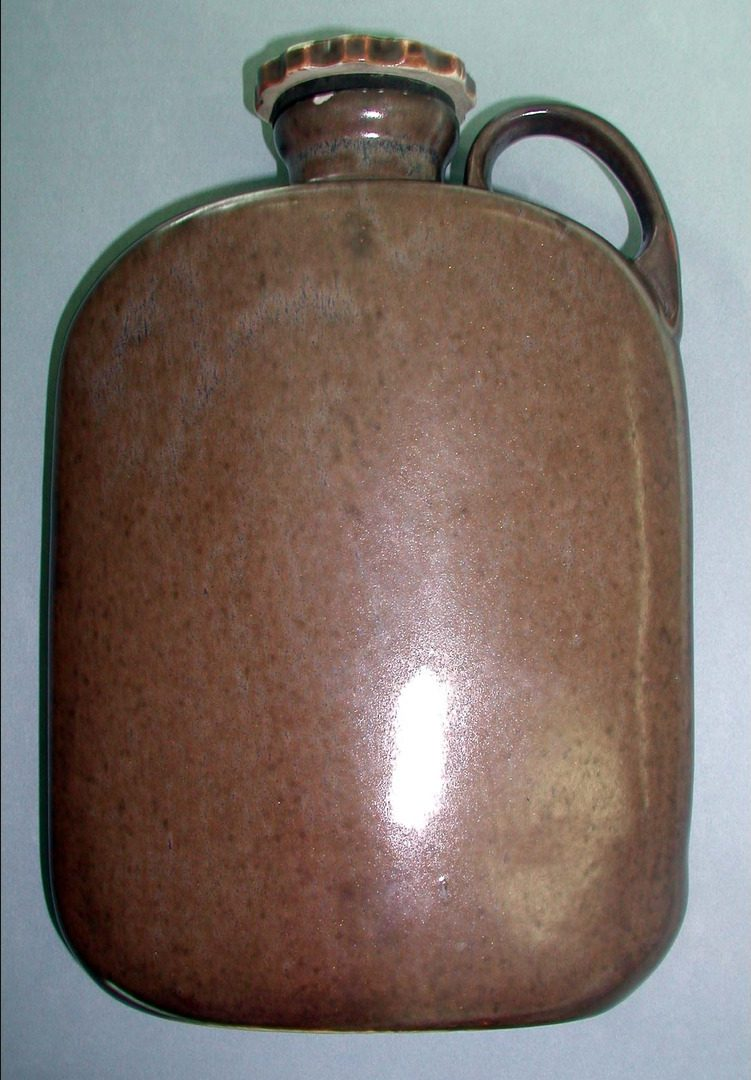
What ended the warming pan’s three-century run in ordinary bedrooms was not politics but plumbing. Stoneware hot-water bottles — filled with hot water rather than live coals, and called “pigs” in Scotland for their rounded shape — were cheaper, safer, and produced no smoke. Then, in 1903, a Croatian engineer named Slavoljub Eduard Penkala, working in Budapest, patented a rubber version under the name Termofor: flexible, reusable, and the direct ancestor of the hot-water bottle sold today. Penkala went on to patent more than seventy inventions, including an early solid-ink fountain pen and improvements to the mechanical pencil, but the rubber hot-water bottle was arguably his most widely used.
Electric blankets followed decades later and finished the job. The old brass pans mostly ended up exactly where their decorative lids had always half-suggested they belonged: hanging on a wall beside a fireplace, polished, empty, and purely ornamental — which is where most of the survivors are today.
The scandal outlived the object by a wide margin. Historians who have gone back through the pamphlets and depositions — John McTague’s research on the affair is the fullest modern account — argue that what made the warming-pan story so durable was not that anyone seriously believed a live infant could be smuggled past a room full of courtiers inside a pan meant for hot coals. It was that the story gave a diffuse, hard-to-argue political anxiety — a Catholic dynasty entrenching itself against the country’s wishes — a single, concrete, mockable image. Once that image existed, no amount of sworn testimony was ever going to dislodge it.
Watch the full history
The video version covers how the pan itself was made and used before getting to the scandal that made it famous, in about six minutes.

Related reading
- The Coal Scuttle Helmet: Why British Troops Named It That
- How the Dog-Powered Butter Churn Actually Worked
- The Nimitz Tic Tac Encounter: What the Official Record Actually Says
- Water Bath vs Pressure Canning: Why the 240-Degree Difference Exists
Works cited
- McTague, John. “Incorrigibility: The Warming Pan Scandal of 1688–89.” In Things That Didn’t Happen: Feigning, Falsehood and Fiction in the 1690s, 25–54. Boydell & Brewer, 2019. Link.
- McTague, John. “Anti-Catholicism, Incorrigibility and Credulity in the Warming-Pan Scandal of 1688-9.” Journal for Eighteenth-Century Studies 36, no. 3 (2013): 433–48. Link.
- Weil, Rachel Judith. “The Politics of Legitimacy: Women and the Warming-Pan Scandal.” In Political Passions: Gender, the Family, and Political Argument in England, 1680–1714, 86–104. Manchester University Press, 1999. Link.
- Harol, Corrinne. “Misconceiving the Heir: Mind and Matter in the Warming Pan Propaganda.” In Vital Matters: Eighteenth-Century Views of Conception, Life, and Death, edited by Helen Deutsch and Mary Terrall, 130–147. University of Toronto Press, 2012. Link.
- “Warming Pan.” Victoria and Albert Museum collection record, object no. 1462-1870. Link.
- “Stoneware Hot Water Bottle.” Science Museum Group Collection. Link.
- “Penkala, Eduard Slavoljub.” Hrvatska tehnička enciklopedija [Croatian Technical Encyclopedia]. Leksikografski zavod Miroslav Krleža. Link.
- Dickens, Charles. The Posthumous Papers of the Pickwick Club. London: Chapman & Hall, 1837. Chapter 34, the trial of Bardell v. Pickwick. Link.
- “The ‘Glorious Revolution.’” National Army Museum. Link.
- “17th Century Warming Pan.” Rosenberg Library Museum, Treasure of the Month, October 2022. Object no. 67.148. Link.