
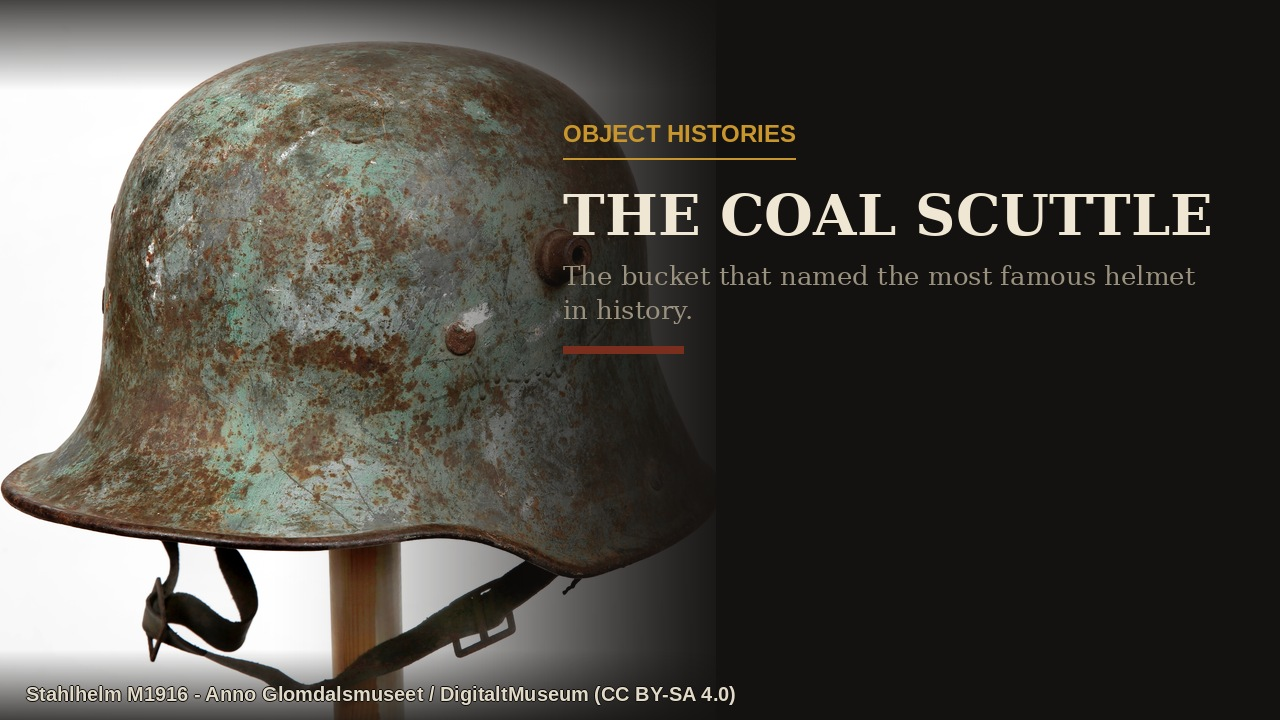
In February 1916, at Verdun, British soldiers got their first close look at the German army’s new steel helmet, and the name they gave it had nothing to do with combat. They called it the coal scuttle helmet. Not a pot, not a bowl, not a bucket in general — specifically the curved metal container that sat beside the fireplace back home, the one a housemaid filled from the cellar every morning. The comparison was so exact and so widely repeated that the coal scuttle helmet name followed the German army through two world wars and into practically every film made about either of them since.
What makes the joke interesting is not the helmet. It’s the word. “Scuttle” had already lived several lives before 1916, and none of the earlier ones had anything to do with fuel. It started as a dish. It became a Victorian status symbol with a mock-classical name that critics mocked on arrival. It named a woman’s bonnet in a Dickens novel. And in its most ordinary, least remarked-upon job — hauling coal up from a cellar — it quietly helped kill thousands of Londoners in one week in 1952, in a disaster that ended up finishing off the coal fire altogether.
This is the fuller version of that word’s journey: from a Roman dinner table, to a hole in a London pavement, to a brass box a Victorian family kept in the drawing room, to a battlefield, to a week of poisoned fog that changed how Britain heated its homes.
A Roman Serving Dish Gave English the Word, Long Before Anyone Burned Coal In It
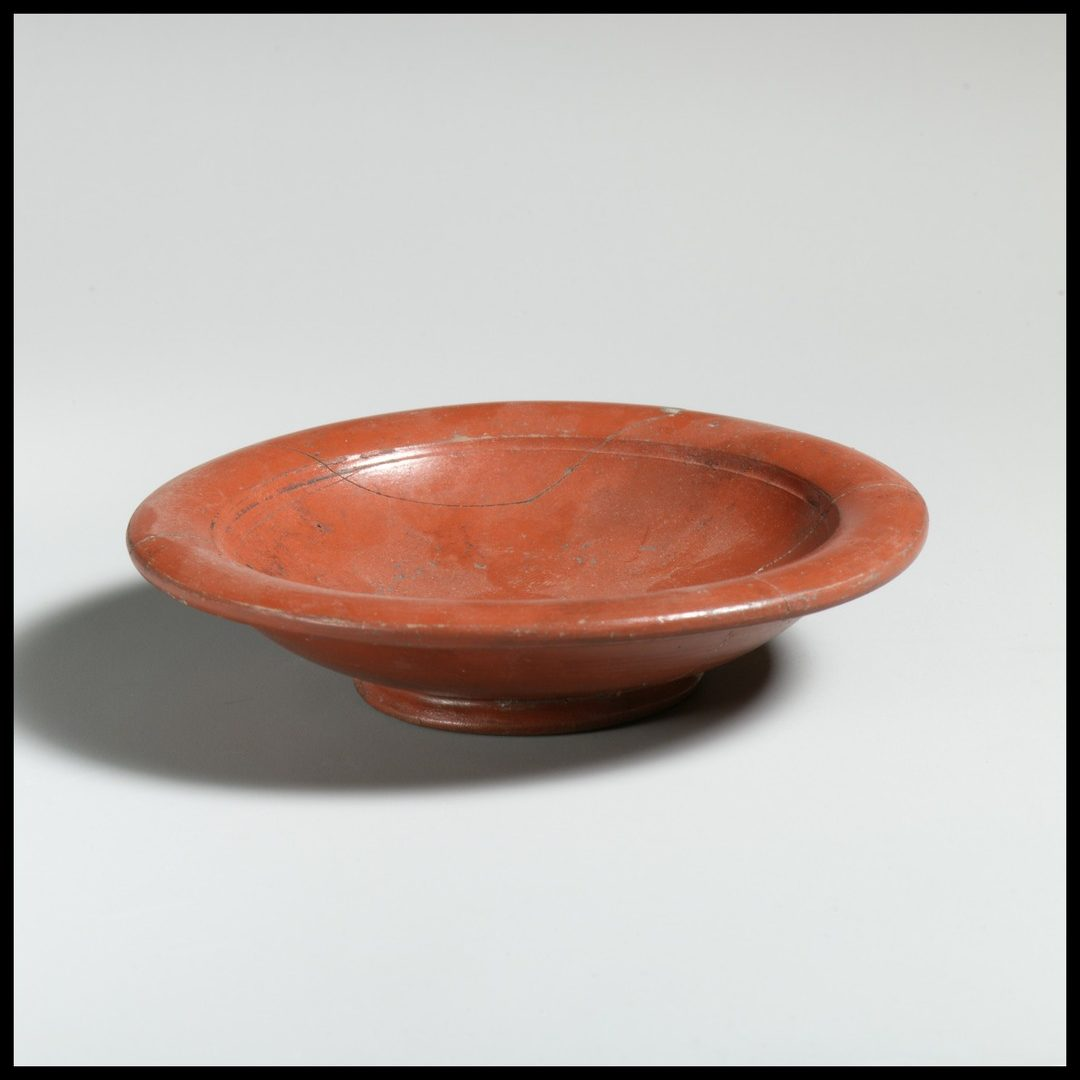
“Scuttle” enters English as scutel, an Old English word for a dish or platter. It is a direct borrowing from Latin scutella, a small, shallow serving dish — possibly related in turn to scutra, a flat tray, and further back to scutum, a shield. The same root travelled into several other Germanic languages carrying the same basic meaning: Old Norse skutill, Middle Dutch schotel, Old High German scuzzila, modern German Schüssel. All of them mean, simply, a dish.
The Latin root left a second, quieter mark on English. The scullery — the room where dishes were washed — comes from the same word family, by way of Old French. So a word for a shallow serving dish produced both the room where you cleaned one and, eventually, the bucket you filled with fuel. For centuries “scuttle” kept its original sense: a shallow dish, then a wide, open basket for carrying almost anything. The narrowing to coal specifically is a comparatively recent development, arriving as coal itself moved from an occasional fuel to the thing burning in every room of a Victorian house.
It is worth pausing on how ordinary this kind of drift is, and how rarely anyone notices it happening to the objects around them. Nobody setting a coal scuttle by the hearth in 1850 was thinking about Roman tableware. The word had simply worn down to fit the job at hand, the way old words tend to.
London Buried the Delivery Problem Under the Pavement
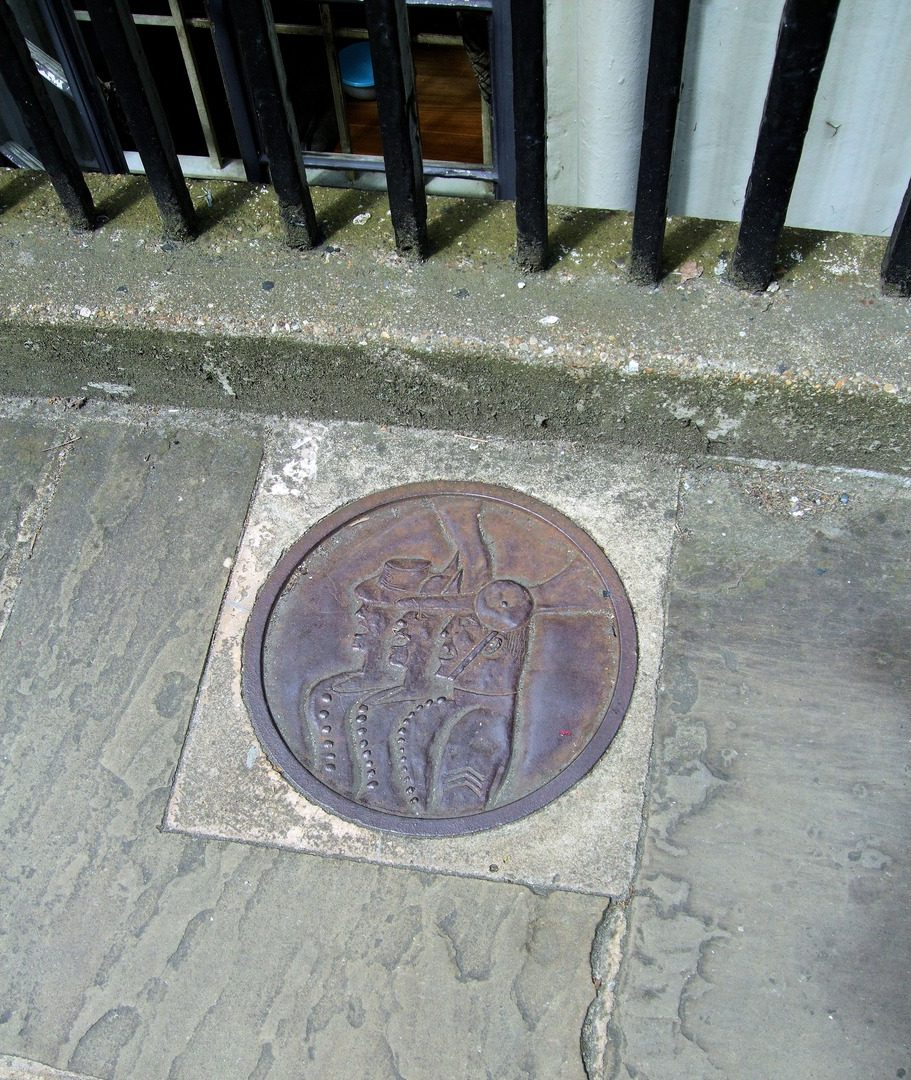
Coal heating at true household scale is a nineteenth-century British phenomenon, and it created a logistics problem nobody had needed to solve before: a filthy, heavy, dust-shedding fuel now had to reach the inside of respectable townhouses, every day, without wrecking the front hall. The solution is still visible if you know where to look. Walk certain streets in London today and you will see round cast-iron discs set into the pavement, roughly twelve to fourteen inches across, many still stamped with the name of a foundry that closed a century ago.
Those are coal hole covers. Beneath each one is a cellar or coal-store that extends out under the pavement itself, and a coalman with a horse-drawn cart could lift the plate at kerbside and tip sacks straight down the chute. The design was deliberately circular, in part because a round cover cannot fall through its own hole the way a square one could, and in part because a heavy disc is easier to roll aside than to lift clear. One enthusiast, a medical student named Shephard Taylor, spent 1863 sketching around a hundred and fifty different cover patterns from the streets near King’s College Hospital; he was in his nineties before he finally published the collection, in 1929, under the title Opercula.
The scuttle’s job began exactly where the coal hole’s job ended: at the bottom of the chute. Coal could be dropped straight from a cart into a cellar without a single sack crossing the threshold, but someone still had to carry it the last stretch, cellar to grate, in something. That something was the shallow dish-turned-basket that had been waiting in the language for exactly this job.
A Man Named Purdon Turned the Bucket Into Furniture, and the Critics Hated the Name
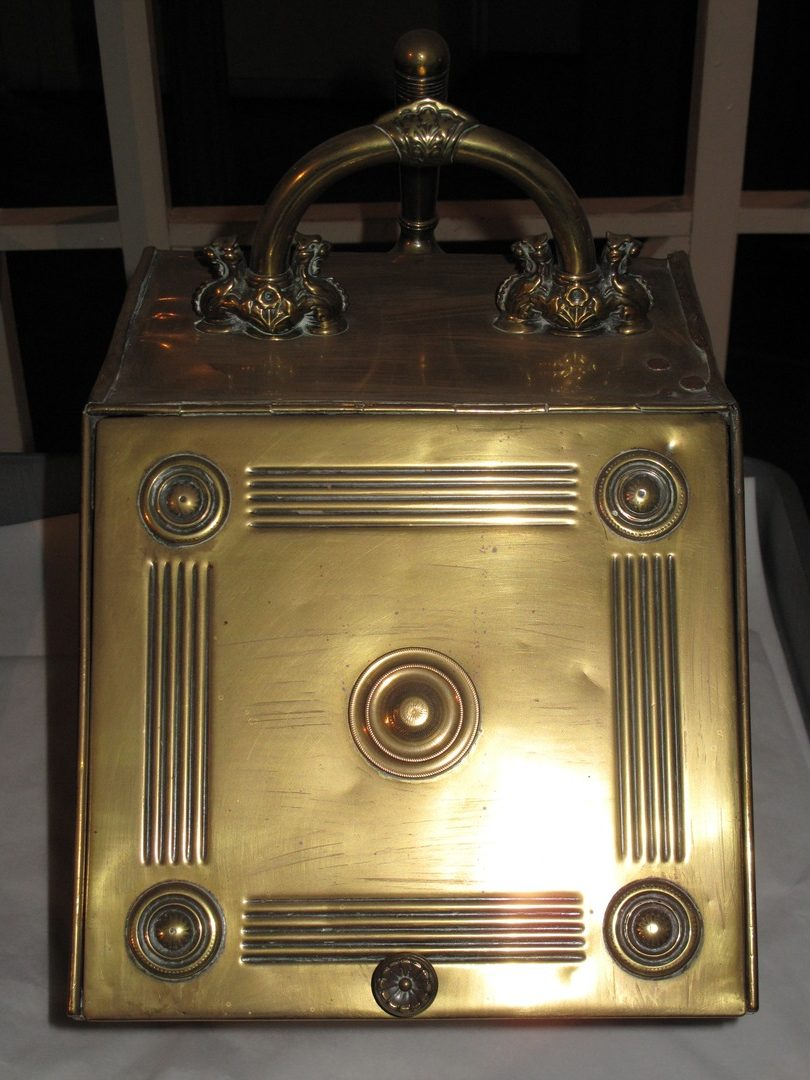
By the middle of the nineteenth century, the coal scuttle had stopped being something to hide. The familiar curved, swing-handled form — brass or copper, hand-beaten, often polished to a shine — sat on the hearth in the drawing room, not in a cupboard, because by then what stood next to your fire said something about the household. It had gone from utility bucket to furniture.
Then, in 1847, someone went a step further. A maker known to history mostly by his surname, Purdon, began selling an enclosed version: a wooden box, often mahogany, with a slanted lid lifted from the front, a shovel stored inside, and a removable metal liner so the mess of refilling could happen well away from the fireside. Grander versions added shelves, small galleries, even a mirror set into the underside of the lid. The type took Purdon’s name and kept it: a purdonium.
The name did not land well. Victorian commentators heard it as yet another example of the era’s fondness for manufacturing pseudo-classical labels for ordinary household goods — some assumed, wrongly, that it must derive from the Greek pur, fire, rather than from an actual Mr. Purdon. The mockery did not stop it selling. A word invented to dress up a coal box in 1847 is still in general dictionaries today, sitting alphabetically between “purdah” and “pure.”
Somebody Else Carried It Up From the Cellar
The polished purdonium in the drawing room had a counterpart nobody photographed: the person who filled it. Household guides from the period are blunt about the order of operations. One widely circulated manual for housemaids, from around 1870, instructs that the dirtiest job in a room should always be done first, which meant the grate came before anything else — ash cleared from the previous day, coal hauled up, the fire relit before the family had so much as rung for breakfast. In winter this happened in every room that had a fireplace, every single morning.
None of that labour appears in the design of the scuttle itself. If anything, the purdonium’s enclosed liner and hidden shovel existed specifically so the family in the room never had to see or hear the part of the job that was actually difficult. The polished brass or the mahogany box was the visible half of the object. The other half was a person, awake before dawn, doing the same circuit of grates again and again through an entire winter.
A German Engineer’s Study of Head Wounds Created the Coal Scuttle Helmet
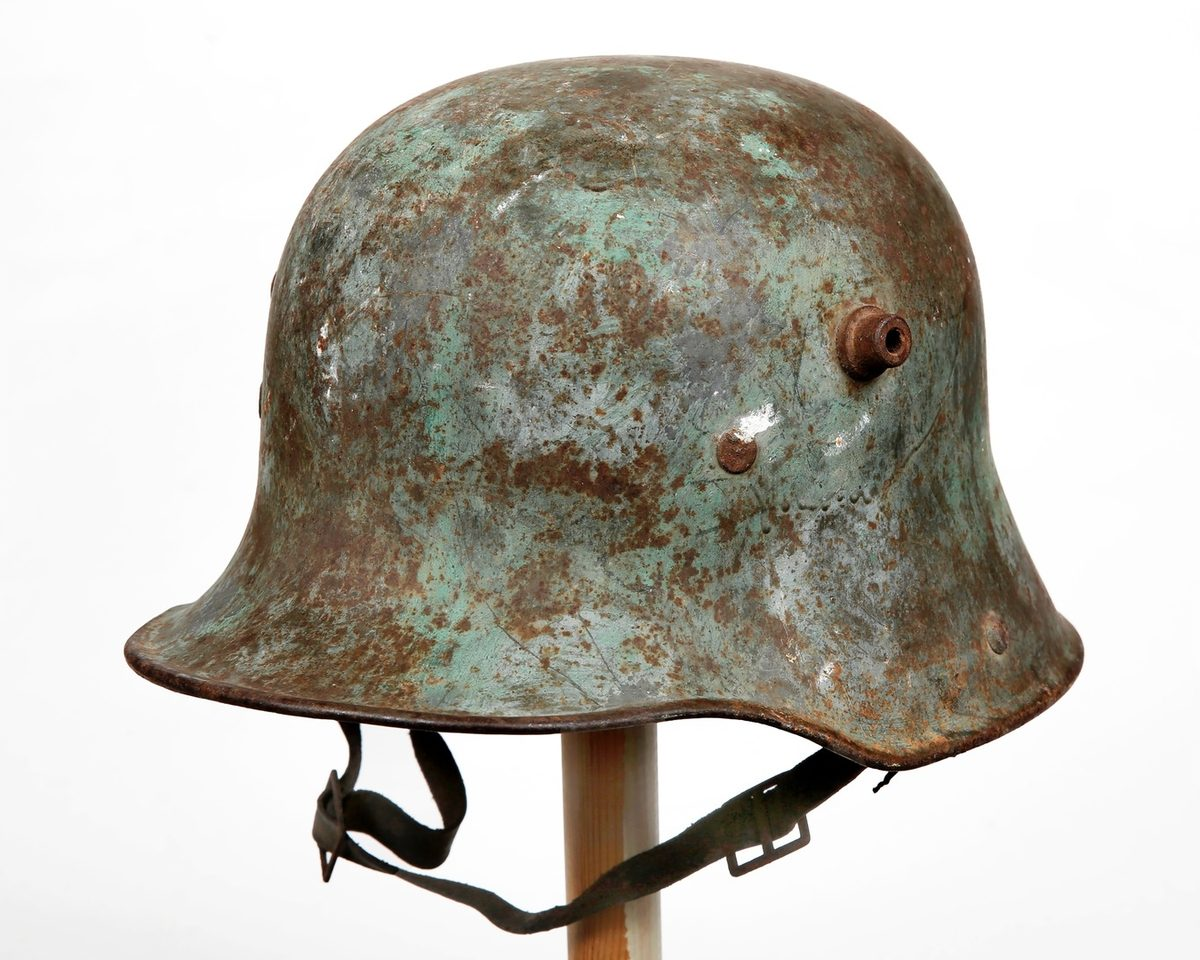
The scuttle’s most famous borrowing happened a continent away and for reasons that had nothing to do with fireplaces. In 1915, Friedrich Schwerd, an engineer at the Technical Institute of Hanover, was set to work studying the head wounds coming back from the front. The German army was still issuing the Pickelhaube, a boiled-leather helmet with a decorative spike that offered its wearer essentially no protection against shrapnel. Schwerd’s design, developed through 1915 and tested that November, drew loosely on the medieval sallet: a deep steel bowl, a short brim, and flared skirts that extended down over the ears and the back of the neck to protect against blast fragments falling from above.
Thirty thousand of the new helmets were ordered, and they reached front-line troops from the first days of 1916 — which is why the design is known as the Model 1916. They saw their first sustained combat use at Verdun that February, and reports from the front described a marked drop in serious head wounds soon after. British and French troops facing the new helmet across no-man’s-land had no reason to know about Schwerd’s research or the medieval sallet it borrowed from. What they saw was a deep curved bowl with a flared lip, and the resemblance to the household object was immediate and obvious enough that the nickname needed no explaining. It stuck for the rest of that war, resurfaced when Germany re-issued an updated version in the 1930s, and is still the reflexive visual shorthand for “German soldier” in film and television made today.
The Smoke the Scuttle Carried Helped Kill Thousands, and Then the Fires Went Out
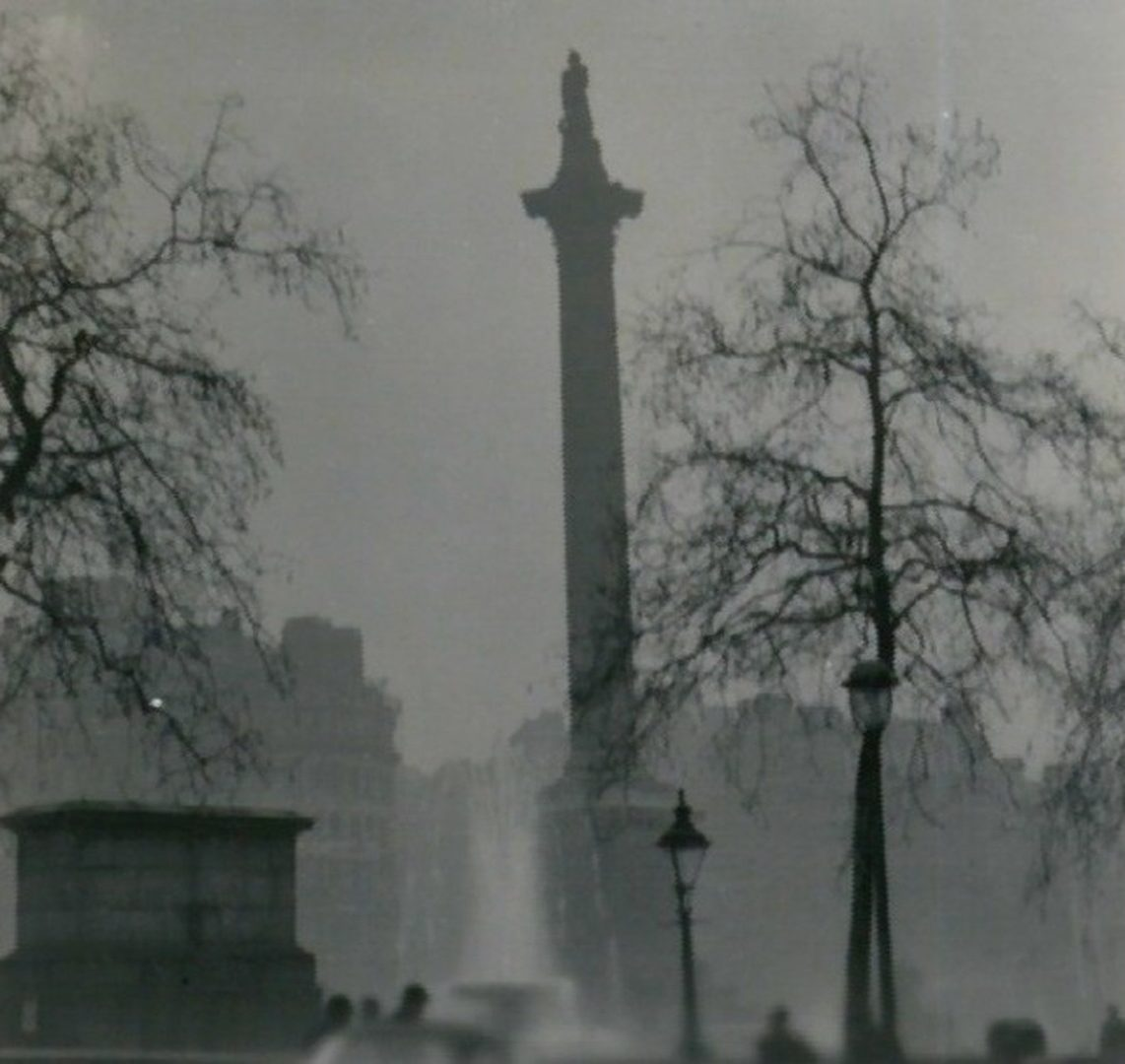
The object that gave a helmet its nickname did not survive much longer than the joke did. What ended it was the smoke it had been hauling indoors for over a century. In early December 1952, a cold snap and a stagnant high-pressure system trapped London’s coal smoke at street level for four days, thickening it into a fog so dense that buses needed a walker with a lantern ahead of them and indoor cinema screens reportedly went invisible from the back rows. Contemporary estimates put the dead at around four thousand. A 2001 reassessment by researchers Michelle Bell and Devra Davis, using mortality data through the following winter rather than just the four days of visible fog, put the true figure closer to twelve thousand.
Parliament responded with the Clean Air Act 1956, which gave local authorities the power to declare smoke control areas and effectively banned the burning of untreated coal within them. Households were offered grants to convert to gas and electricity, and over the following years the coalman’s daily round through British cities wound down. Central heating did the rest of the work more slowly. The cellars that had once taken a coalman’s delivery through a pavement hatch were bricked up or repurposed, and the scuttle that had made the last leg of that delivery — cellar to grate — had, within a generation, nothing left to carry.
What the Word Carried That the Object Never Did
None of this was inevitable in the object itself. A shallow Roman serving dish had no reason to end up naming a twentieth-century steel helmet, and a twentieth-century steel helmet had no reason to still be recognisable in a film today because of that name. What connects a scutella, a scullery, a Dickens bonnet joke, a Purdonium and a Stahlhelm is nothing about coal, dishes or war. It is simply that English speakers kept reaching for the same familiar shape — wide, shallow, curved — and reusing the same word for whatever new thing happened to have it.
The coal scuttle itself is now mostly a decorative antique, sitting empty in shops that sell it as an object nobody needs for its original purpose. The word it lent out, though, is still doing work — on film sets, in military histories, in the reflexive shorthand for a certain kind of steel helmet — long after the coal fires it was actually built for went cold.
Watch the full history
The video version covers the coal scuttle’s Victorian heyday and the Purdonium in about seven minutes.

Related reading
- Water Bath vs Pressure Canning: Why the 240-Degree Difference Exists
- The Real Reason the Dumbwaiter Was Invented
- How the Wood Cookstove Ran the American Kitchen for a Century
- The Public Health Panic That Made Baby Cages Seem Safe
Works cited
- Harper, Douglas. “Scuttle (n.).” Online Etymology Dictionary. Link.
- Quinion, Michael. “Purdonium.” World Wide Words. Link.
- Dickens, Charles. Nicholas Nickleby. Chapman & Hall, 1839, ch. 23, on Miss Snevellicci’s “coal-scuttle straw bonnet.” Link.
- “The Housemaid and Her Duties and How to Perform Them” (c. 1870). Link.
- “The Coal Holes of Old London.” Spitalfields Life, 18 July 2019. Link.
- “Stahlhelm Model 1916: The Signature German ‘Coal Scuttle.’” HistoryNet. Link.
- Bell, Michelle L., and Devra L. Davis. “Reassessment of the Lethal London Fog of 1952: Novel Indicators of Acute and Chronic Consequences of Acute Exposure to Air Pollution.” Environmental Health Perspectives 109, suppl. 3 (2001): 389–394.
- Clean Air Act 1956, 4 & 5 Eliz. 2 c. 52 (UK). Link.