
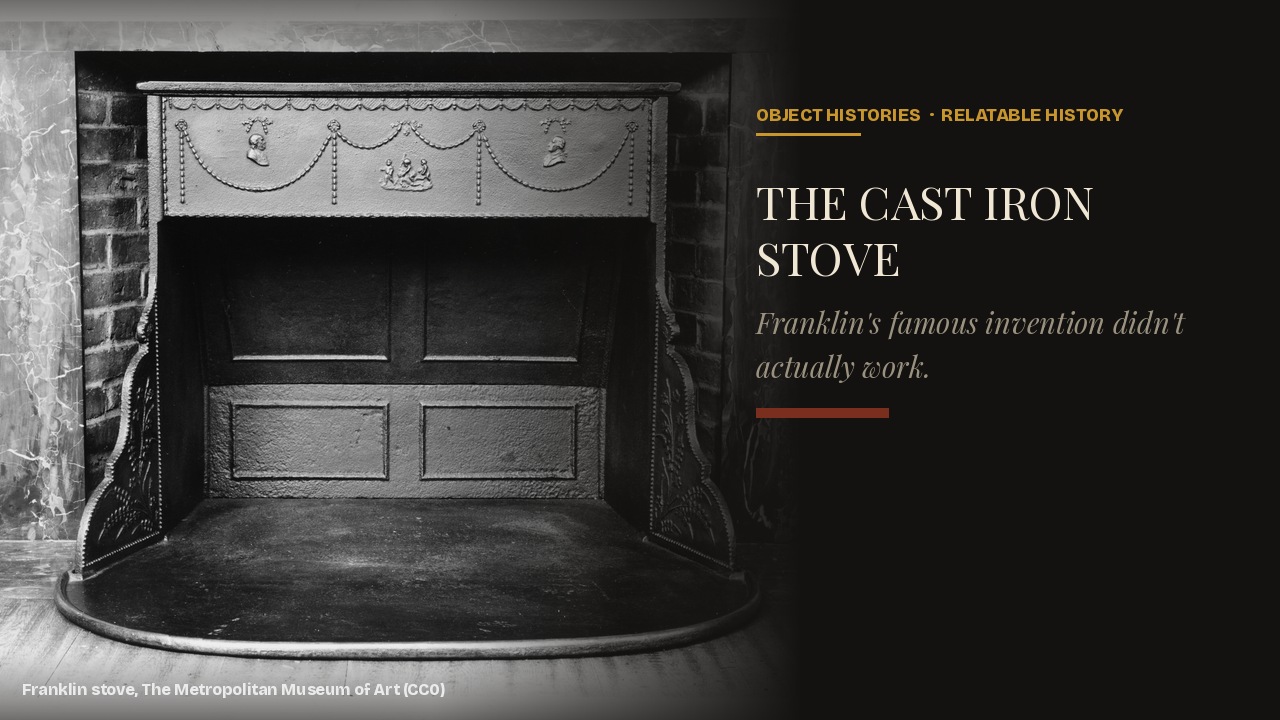
Did Franklin invent the Franklin stove? Not in any straightforward sense. The box he actually built and sold was, by his own later admission, a commercial disappointment — and he still ended up with his name on a stove he never actually built.
The object itself, an iron box meant to throw more heat into a room than an open hearth ever could, came out of a genuinely bad winter. Franklin devised his prototype during the severe winter of 1740 to 1741, when firewood near colonial towns was already getting scarcer and more expensive. He would later complain in his own writing that wood, “our common fewel,” had to be “fetch’d near 100 miles to some towns.” An iron box that burned a fraction of the wood of an open fireplace was not a luxury item. It was a response to a fuel crisis.
What follows is the part most retellings skip: the box Franklin actually sold did not work especially well, he refused to patent the fix that mattered, and the person who did fix it is not the name on the stove today.
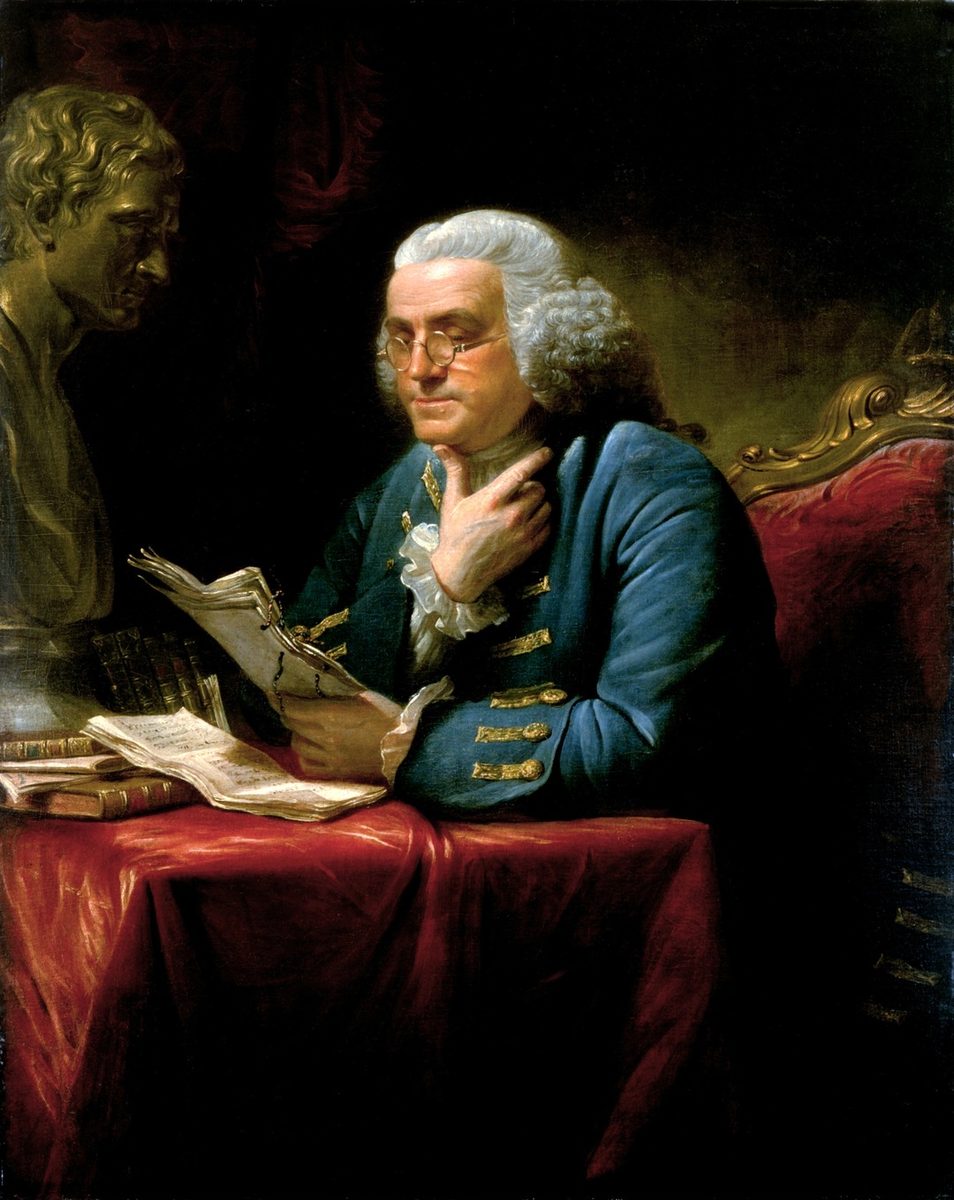
The forests around colonial cities were already thinning
By the early 1740s, open hearths were the default way to heat an American home, and an open hearth is a genuinely inefficient machine: most of its warmth rises straight up the flue along with the smoke, rather than radiating into the room. Colonists had been worrying about wood supply since well before Franklin’s time — Boston residents were seriously short of heating fuel as early as 1637, decades before Franklin was born. By the time he was turning his attention to the problem, the same pressure was building around Philadelphia.
The economics eventually bore this out in hard numbers, if not in Franklin’s own decade. Around 1800, a Pennsylvania Hospital almshouse tested one of the new enclosed heating stoves against a traditional open fireplace and found the stove burned roughly a third of the wood. That is the scale of saving an iron box could offer once the design actually worked — and it is also, not coincidentally, about how much of an open fire’s heat simply escapes rather than reaching the room.
Franklin’s own name for his device was the “Pennsylvania Fireplace,” and it was explicitly framed as fuel policy as much as home comfort: an iron box, set into the fireplace opening, that radiated heat into the room instead of losing it up the chimney. He would go on to design at least five different versions of a stove over the following half-century, gradually shifting from wood to coal as the fuel of choice, and his last three designs tried to re-burn smoke by routing it back into the fire — Franklin thought of smoke as unburned fuel being wasted, not just as a nuisance.
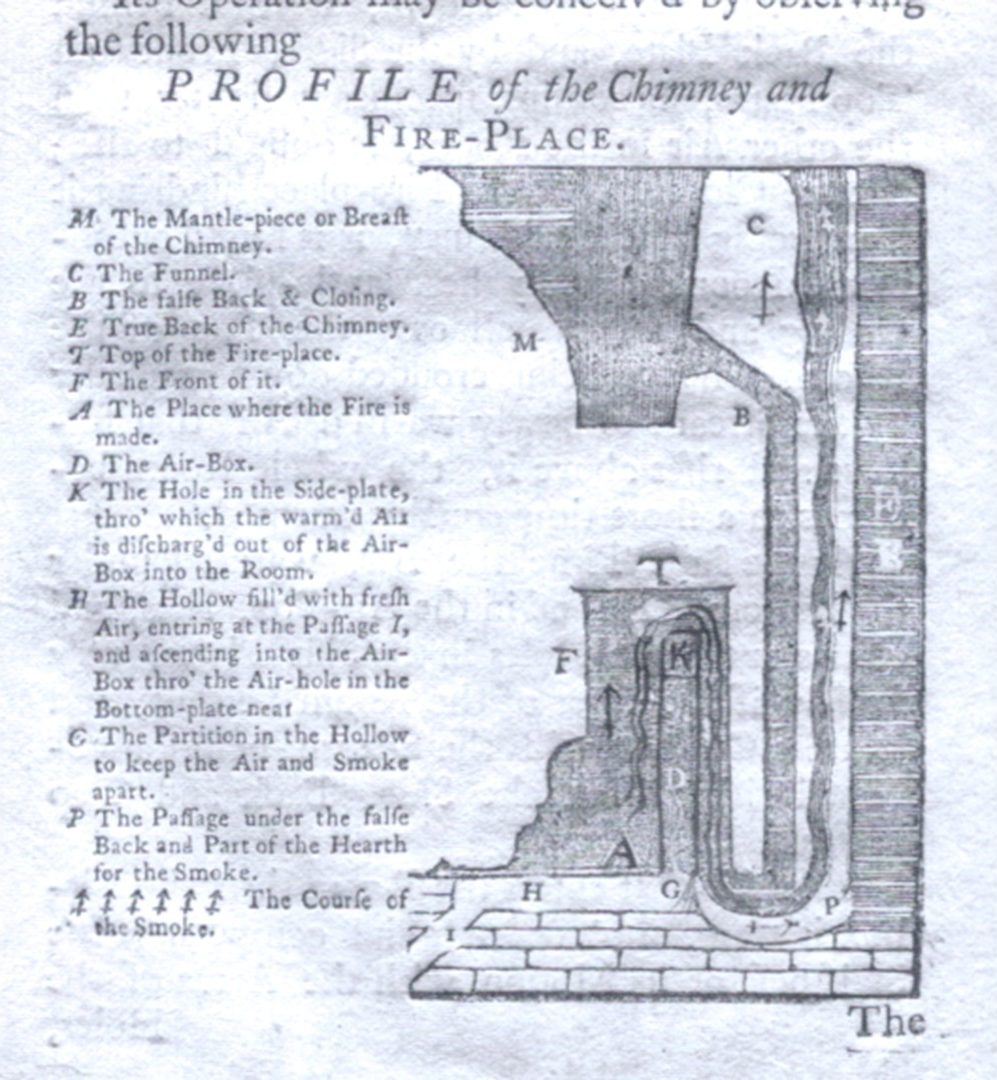
An “aerial siphon” that needed a fire that never died down
The 1742 design Franklin is most remembered for used what he called an “aerial syphon,” or a “syphon revers’d” — a flue set into the cold floor that routed the fire’s exhaust down and back before finally venting up the chimney. The idea was to wring more heat out of the departing smoke before it escaped, so the iron box stayed hot and kept radiating warmth even as the fire’s fumes left the room.
It was a clever idea on paper, and a genuine problem in practice. Routing the exhaust through a cold duct cooled it more than a normal straight flue would, and that extra cooling meant the stove did not draw well. Unless the fire inside was kept burning constantly, the draft would weaken and the room would fill with smoke rather than heat. Franklin wrote and sold a 1744 pamphlet, An Account of the New-Invented Pennsylvania Fire-Places, to explain the design and talk buyers through installing one correctly — the kind of owner’s manual a product generally does not need if it works the way its inventor intended.
The pamphlet survives today in only a handful of copies — one sits in the Morgan Library in New York, a slim stitched booklet with its own printer’s error in the page order and a folded plate of diagrams probably engraved in Boston. That a buyer needed thirty-odd pages of instruction to run an iron box safely says plenty on its own about how forgiving the design was not.
Franklin turned down the patent on principle — and someone else took it anyway
Pennsylvania’s deputy governor, George Thomas, liked the design well enough to offer Franklin an exclusive patent on it, which would have let Franklin control who could legally manufacture and sell Pennsylvania Fireplaces. Franklin said no. In his autobiography he explained the refusal as a matter of principle he held to consistently throughout his life: “as we enjoy great advantages from the inventions of others, we should be glad of an opportunity to serve others by any invention of ours; and this we should do freely and generously.”
It did not take long for that generosity to be tested. By Franklin’s own account, “an ironmonger in London” lifted a good deal of his pamphlet, reworked it as his own, made changes that Franklin says actually hurt the stove’s performance, and then patented the result in England under his own name — profiting, as Franklin put it, to the tune of “a little fortune.” Franklin never contested the patent. He had given the idea away on purpose and seems to have meant it, even when someone else cashed in on the version he had deliberately left unprotected.
There is a harder-edged footnote to the fuel-saving story that rarely makes it into the popular version. Research by historian Joyce Chaplin, drawing on records at the Historical Society of Pennsylvania, has traced two enslaved men, Cesar and Streaphon, working inside the iron-making operation that cast most of the early Pennsylvania Fireplaces. Streaphon later purchased his own freedom. The invention’s afterlife as a folksy symbol of Franklin’s do-it-yourself ingenuity leaves out who actually did the casting.
Did Franklin Invent the Franklin Stove? Not Exactly
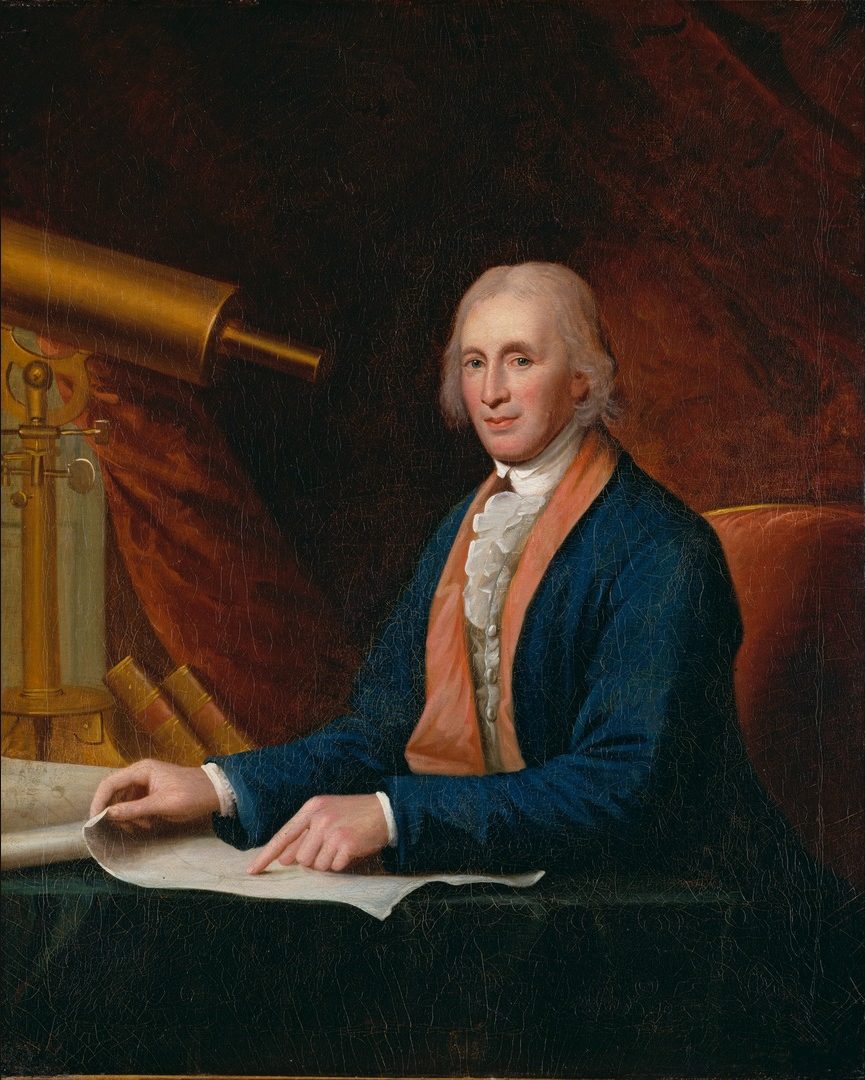
The flawed draft eventually got solved, but not by Franklin. David Rittenhouse — astronomer, instrument maker, and a fellow member of the American Philosophical Society that Franklin had founded — produced a later version of the stove that corrected much of what had gone wrong with the original aerial-siphon flue. Historians crediting Rittenhouse’s fix generally agree on the outcome more than the engineering specifics: whatever he changed, the result finally drew properly without demanding a fire that never let up.
And yet the stove that resulted from Rittenhouse’s correction is the one later generations started calling a “Franklin stove,” not a Rittenhouse stove. Franklin’s fame simply outweighed the credit, in exactly the kind of quiet erasure that tends to happen to the person who fixes an invention rather than the person who gets to name it.
Long before any of this, German Pennsylvania already had stoves with scripture cast into them
While Franklin was still troubleshooting his aerial siphon, German immigrant communities across Pennsylvania had already been heating their homes a completely different way for generations: with cast-iron “five-plate” or jamb stoves, a style carried over from northern European homes since at least the mid-1500s. These were boxy heaters assembled from five flat iron panels set into an opening in the wall, fed by live coals passed through from the kitchen fireplace next door — heat delivered to a second room “without the discomfort of smoke,” as one period account put it.
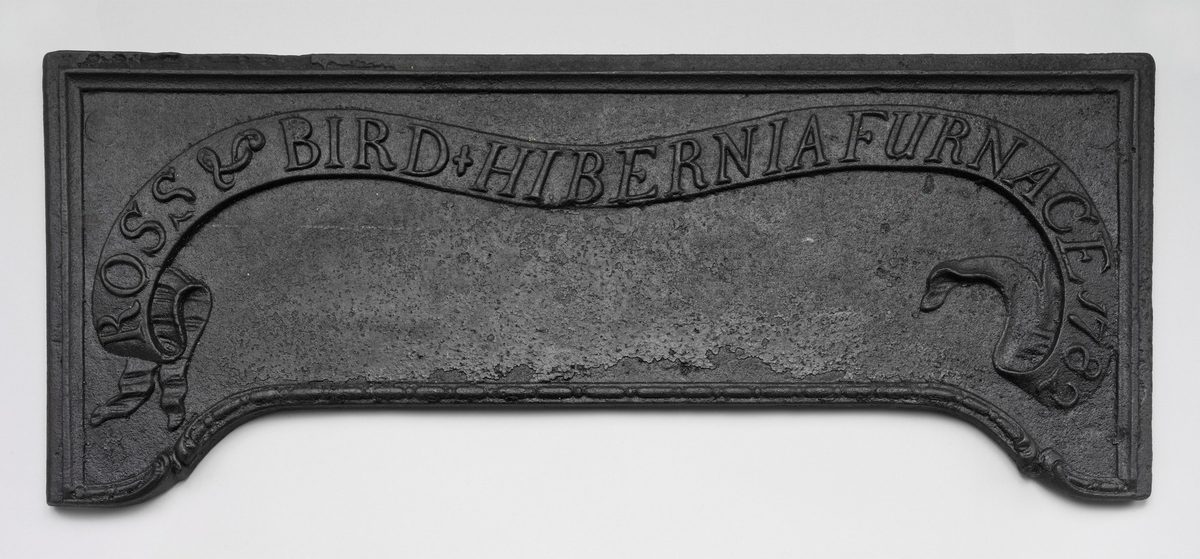
What makes the surviving examples remarkable is what foundries cast directly into the plates. Before roughly 1750, Pennsylvania German stove plates commonly carried full biblical scenes and scripture quotations — one surviving plate, cast in 1769 at a furnace on Cordorus Creek in Hellam, Pennsylvania, bears the opening line of Psalm 24 in German: “the earth is the Lord’s.” In a household where books were scarce and literacy wasn’t universal, the family stove doubled as a kind of fireside picture book, glowing warm with religious instruction every winter night. By the 1760s, pictorial scenes at some Pennsylvania furnaces had given way to stylized floral motifs of lozenges, hearts and tulips — the scripture captions stayed, even once the pictures didn’t.
Nobody has fully explained why the imagery changed when it did. What is clear is that this entire tradition existed independently of Franklin’s invention, solved a version of the same problem, and predates his pamphlet by at least two centuries.
From a farmhouse curiosity to the default way America stayed warm
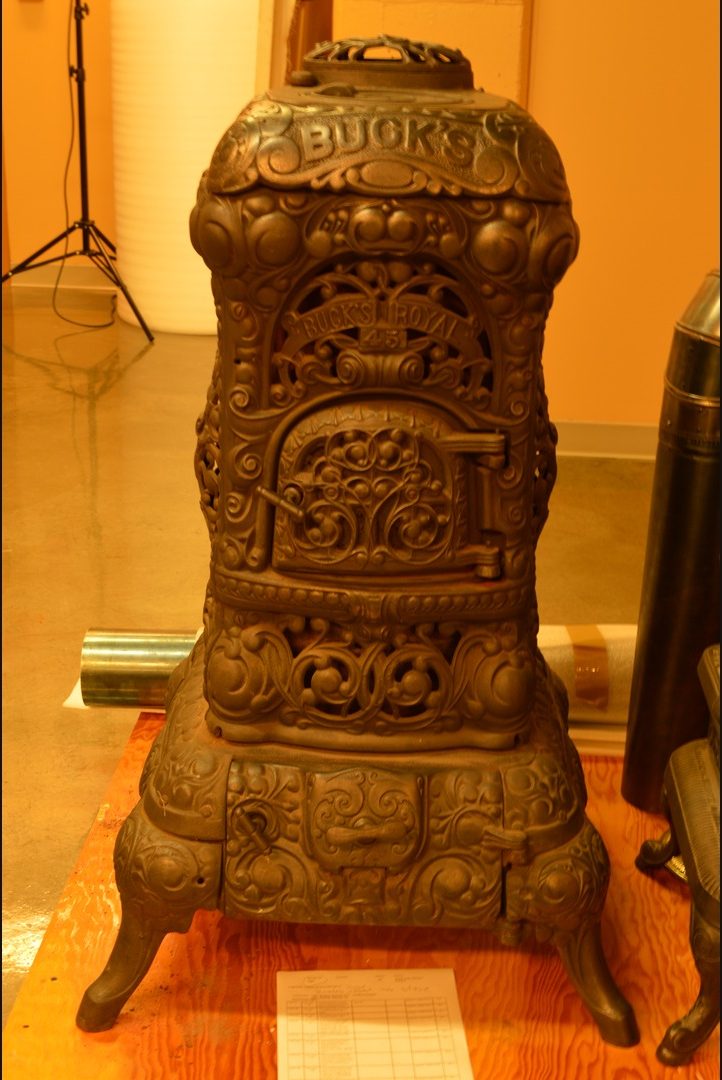
Whichever design got there first, cast iron heating eventually won out everywhere. It burned a fraction of the wood an open hearth needed, which mattered more every decade as nearby forests thinned further. By the early 1800s, iron stoves had spread out of farmhouse parlors and kitchens into the broader built environment, evolving into increasingly ornate cookstoves and decorative parlor stoves — iron cookstoves that did the work of cooking and heating a whole home at once, cast with scrollwork and nickel trim that had nothing to do with function.
Coal eventually displaced the firewood that had started the whole chain of invention, easing some of the exact fuel-scarcity pressure that had pushed Franklin toward his aerial siphon in the first place. By the mid-1800s, a cast iron stove of one design or another was the default way most American homes stayed warm through the winter — a complete reversal from the open-hearth world Franklin had been trying to improve a century before, and a far cry from the fireplace tools that open hearth had relied on.
“Thousands have died of slow poison”
The new sealed, “airtight” stoves had vocal critics, and two of the loudest were sisters. Catharine Beecher and Harriet Beecher Stowe, in their widely read 1869 household manual The American Woman’s Home, argued that an open fire ventilated a room simply by existing — foul air left through the chimney while fresh air crept in around doors and windows — while a sealed stove offered “no such supply.” Quoting Stowe’s own earlier essays, the book went further still, warning that “since the invention of air-tight stoves, thousands have died of slow poison,” and that overheated, sealed rooms were “starving and poisoning more than one half of this nation.”
Some of what the sisters were describing had a real mechanism behind it: a badly maintained stove in a poorly ventilated room can genuinely produce dangerous carbon monoxide, and stale, overheated air is at minimum unpleasant. But the sweeping body count in their prose was rhetoric, not epidemiology, and the broader nineteenth-century panic over “stove heat” became a fixture of domestic advice all its own — cast iron heating treated as both miracle and menace within the very decades it was winning the argument on efficiency.
The stoves kept winning anyway. They were simply too fuel-efficient to give up over an unproven health scare, however colorfully that scare was written.
Watch the full history
The video version covers the pamphlet, the patent refusal, and the German stove tradition Franklin never knew he was competing with, in about five and a half minutes.

The modern “Franklin stove” sold today — an open-fronted, freestanding fireplace insert — bears almost no resemblance to the sealed iron box Franklin actually built. It is a much later nineteenth-century design that simply borrowed his famous name. Franklin gave away an invention that didn’t quite work, lost the credit for the fix that made it work, and still ended up with his name permanently attached to a third, entirely different stove.
Would you have trusted an iron box over an open flame — even once you knew how many tries, and how many other people’s work, it took to get right?
Related reading
- How a Fireplace Trammel Worked in a Colonial Kitchen — the fireside tool that shared Franklin’s original open hearth
- How the Wood Cookstove Ran the American Kitchen for a Century — the ornate iron cookstove the plain heating stove eventually grew into
- The Coal Scuttle Helmet: Why British Troops Named It That — the fuel that eventually displaced the firewood Franklin was trying to save
- How Kerosene Lamps Actually Worked (And Sometimes Exploded) — another household technology sold on efficiency over an open flame
- How Icehouses Worked Before Refrigeration: The Physics, the Industry, and the People Who Cut the Ice — a different household climate problem solved by borrowing from nature instead of iron
Shop
Shop the books referenced in this article:
– The Franklin Stove: An Unintended American Revolution, by Joyce E. Chaplin
Works cited
- Franklin, Benjamin. The Autobiography of Benjamin Franklin, on declining a patent and the London ironmonger who copied the design. Link.
- Franklin, Benjamin. An Account of the New-Invented Pennsylvania Fire-Places. Philadelphia, 1744. The Pierpont Morgan Library, PML 64766.
- Edgerton, Robert. “Supplement: The Franklin Stove.” In I. Bernard Cohen, Benjamin Franklin’s Science. Harvard University Press, 1990.
- DeSmith, Christy. “When a Stove’s Virtues Amount to More Than Just Hot Air.” Harvard Gazette, March 31, 2025. Link.
- Chaplin, Joyce E. The Franklin Stove: An Unintended American Revolution. Farrar, Straus and Giroux, 2025.
- Maryland Archaeological Conservation Laboratory. “Scripture in Iron: Pennsylvania German Stove Plates from Antietam Furnace.” Curator’s Choice, Jefferson Patterson Park & Museum, April 2016. Link.
- The Metropolitan Museum of Art. Stove plate, Hellam, Pennsylvania, 1769, William Bennet furnace. Object record.
- Beecher, Catharine E., and Harriet Beecher Stowe. The American Woman’s Home. 1869. Project Gutenberg edition. Link.
- “Colonial Warming.” Wilson Quarterly, Fall 2008. Link.