
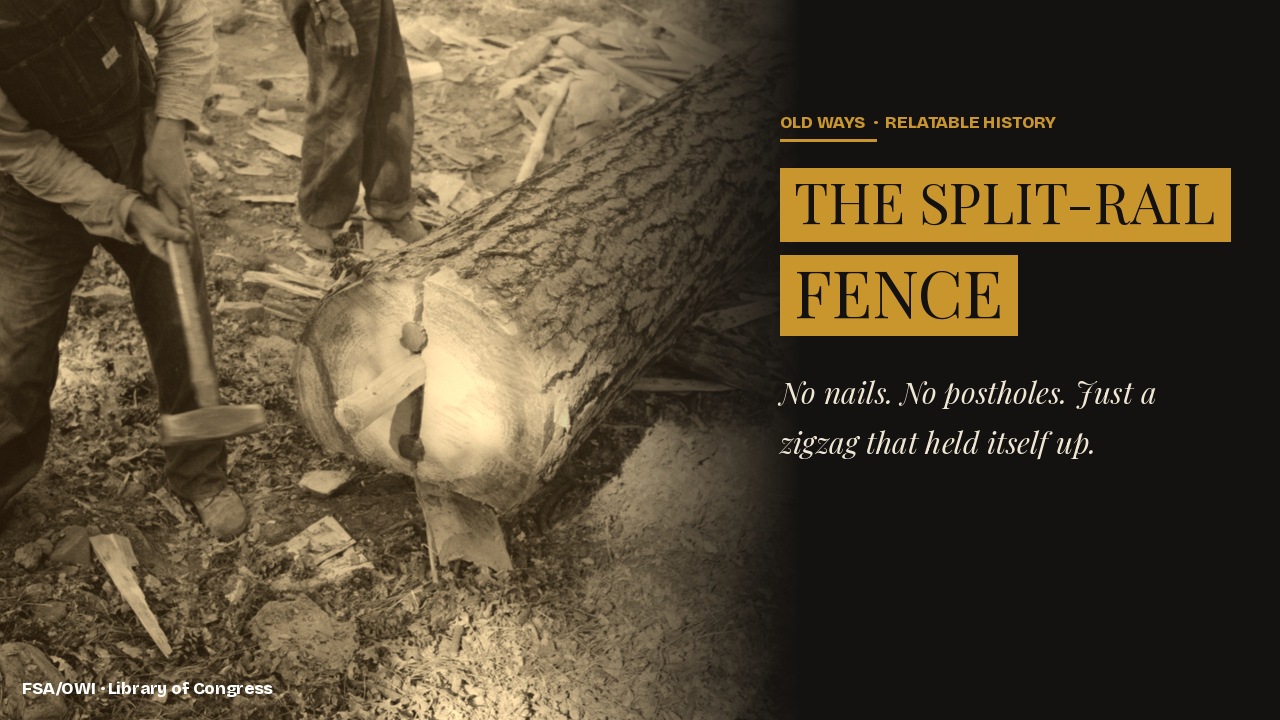
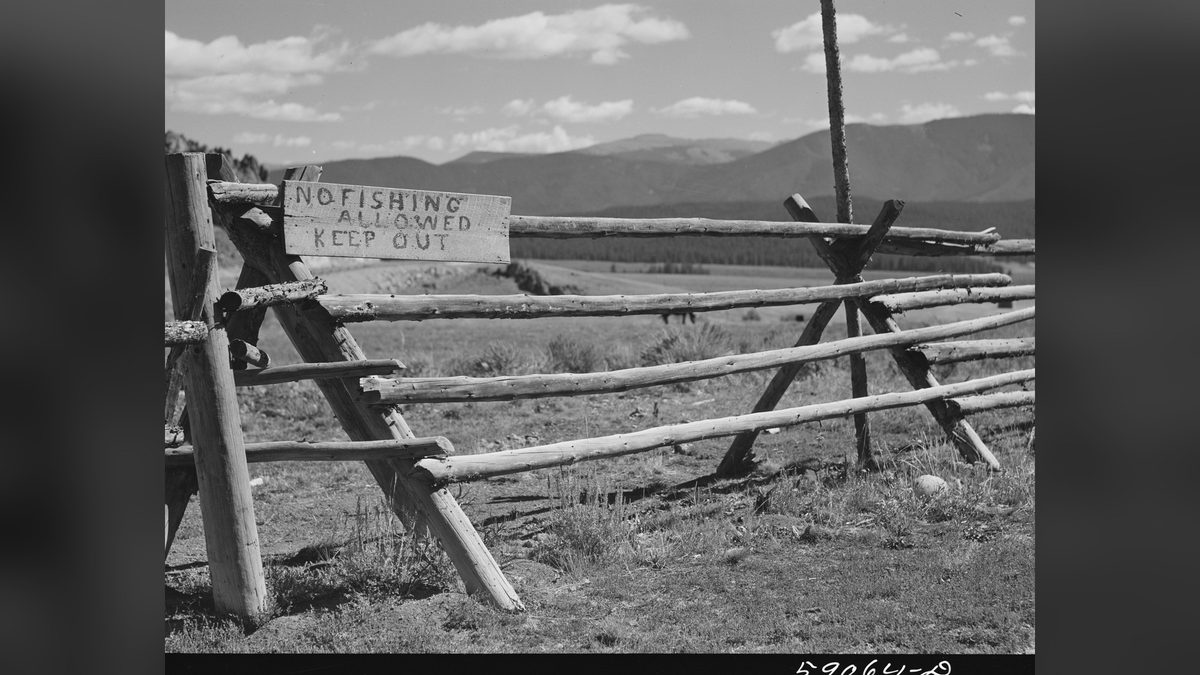
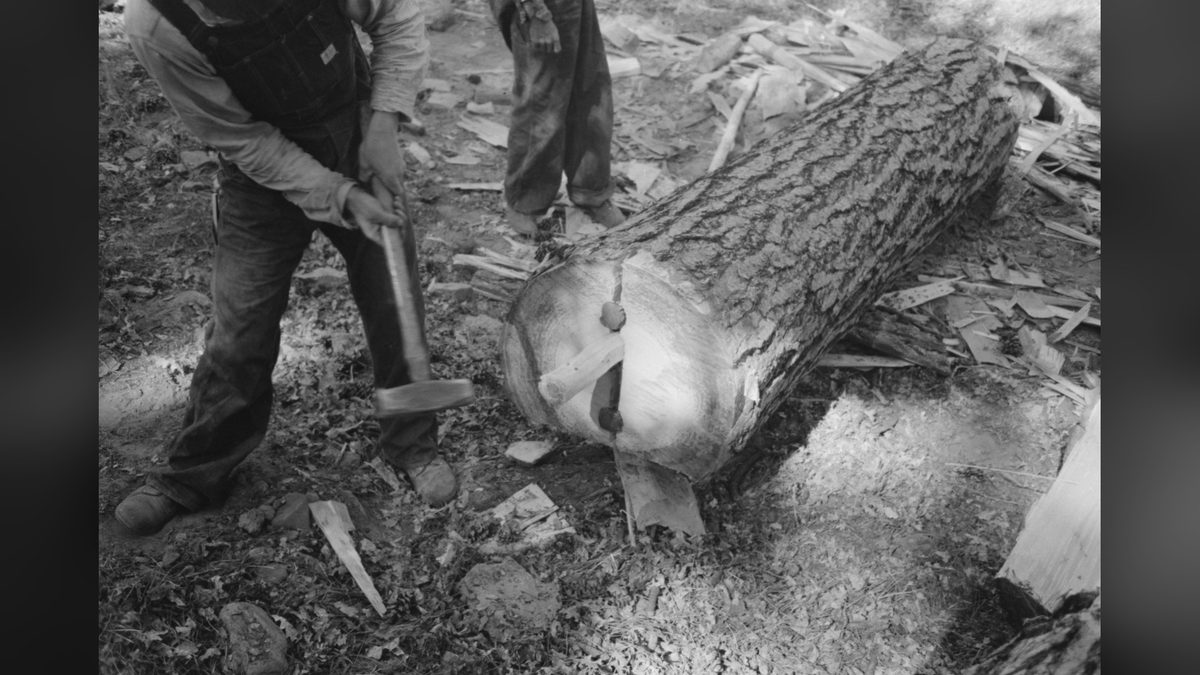
Put a two-hundred-year-old zigzag fence in front of most Americans and they’ll place its story without blinking: frontier ingenuity, an axe, a maul, and whatever timber grew nearest the clearing. The real history of the worm fence is a good deal stranger than that, and a good deal better documented — starting with the fact that its earliest paper trail in North America doesn’t lead to English settlers at all.
It leads to a short-lived colony on the Delaware River, and to a set of farmers the popular story usually leaves out entirely. Working through land records, church rolls, and surveys of surviving fence lines across the Mid-Atlantic and Appalachians, two historical geographers built a case in the late 1980s that the worm fence — the same zigzag structure every Civil War photograph and every Lincoln biography takes for granted — was not a pioneer improvisation at all. It was an import.
What follows is the documented record behind that zigzag: where it actually came from, what it cost the man who complained loudest about it, the rails that turned a backwoods lawyer into a national symbol (and the real doubt over whether he ever split them), the war that burned the fences down field by field, and the single contested patent that finally ended the worm fence’s long run.
The Real History of the Worm Fence Starts in a Finnish River Colony, Not New England
In The American Backwoods Frontier, a 1989 study of how northern European settlement patterns shaped the colonial frontier, geographers Terry G. Jordan and Matti Kaups went looking for the worm fence’s origin and found something more specific than “colonists improvised.” The earliest documented reference to a worm fence anywhere in North America, they found, describes a fence built in 1685 at Alloway’s Creek, near Salem, New Jersey — part of the old Delaware Valley, not Massachusetts or Virginia, where the fence is usually assumed to have started.
That location mattered to their argument, because Alloway’s Creek sits only a few miles from Finns Point, a documented concentration of Savo-Karelian Finnish settlers who had come to the area as part of the Swedish crown’s short-lived colony of New Sweden, planted on the lower Delaware in 1638 and absorbed by the Dutch in 1655. “We propose,” Jordan and Kaups wrote, “that the worm fence, in both its zigzag and polygon configurations, was implanted in America by the Finns” — not invented on the spot by English or Scots-Irish pioneers, as the folklore around it usually has it.
Their case goes back further still. The ultimate design, they argued, descends from the portable corral-building traditions of Sámi reindeer herders in Scandinavia, carried south into Finnish forest culture before it ever crossed the Atlantic; a related variant, the stake-and-rider fence, they trace specifically to Savo-Karelian builders rather than to the zigzag worm fence itself. Not every historian treats the Finnish-origin theory as settled — the simpler explanation, that farmers facing the same trees and the same lack of hardware everywhere on the frontier simply arrived at the same solution independently, still has defenders. But a documentary trail that points this precisely at one small ethnic settlement, with a specific date and a specific creek, is not easy to wave off as coincidence either.
What a Fence With No Post or Nail Actually Cost
The fence’s whole appeal was that it needed nothing bought: no iron nails, no hinges, no postholes dug into ground that might be frozen solid or full of rock. What it needed instead was wood — a good deal more of it than a straight fence of the same length, because every panel had to overlap its neighbor at an angle rather than run in a single line. For a continent still mostly forest, in the fence’s first century, that trade looked like no trade at all.
George Washington, who by the 1790s was managing several thousand fenced acres across his Mount Vernon farms, saw the other side of the ledger. Writing to his farm manager William Pearce in November 1795, after fifteen years of pushing his overseers toward planted hedges instead of rebuilt wooden fences, Washington warned that continuing to replace “dead” rail fences at the scale his farms required would, in his own words, “exhaust all my timber.” A man who owned one of the largest private forests in Virginia was doing the arithmetic on a zigzag fence, and he did not like the answer.
The Rails That Made Lincoln the ‘Rail-Splitter’ Probably Weren’t His
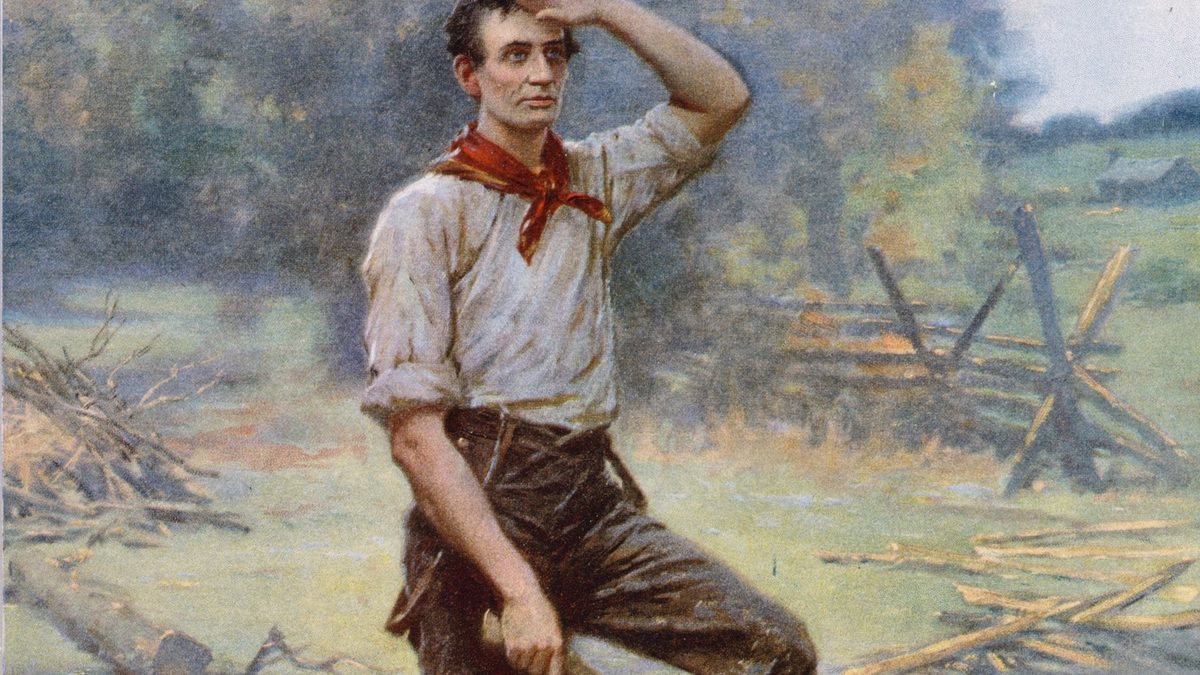
On May 9, 1860, at the Illinois Republican state convention in Decatur, a delegate named Richard J. Oglesby interrupted the proceedings to announce that an old Macon County Democrat wished to contribute something. John Hanks and Isaac D. Jennings then carried two weathered fence rails into the hall under a placard reading “The Rail Candidate for President in 1860” — a sign that got Hanks’s own name wrong and overstated how early Lincoln’s father had settled the area. The crowd of roughly three thousand delegates pulled Lincoln onto the platform, and the nickname that would carry him to the White House was born that afternoon.
Whether Lincoln had actually split those two specific rails is the part the legend skips over. According to accounts gathered by the Lincoln historian Michael Burlingame, Lincoln himself allowed only that he “may have split” the rails Hanks and Jennings carried in, adding that he had split a great many better ones since. It’s also unclear how surprised Lincoln really was by the whole production: Oglesby had reportedly had him help tie the rails together beforehand, and a local newspaper had announced the stunt a day in advance. The journalist Noah Brooks later wrote that Lincoln disliked “stage tricks” of exactly this kind, even while he stayed genuinely proud of his skill with an axe — in 1863, with the country at war, he told a Union officer he trusted his own judgment on felling trees in camp over almost anything else he knew.
Soldiers Burned the Fences Before They Fought Over the Ground
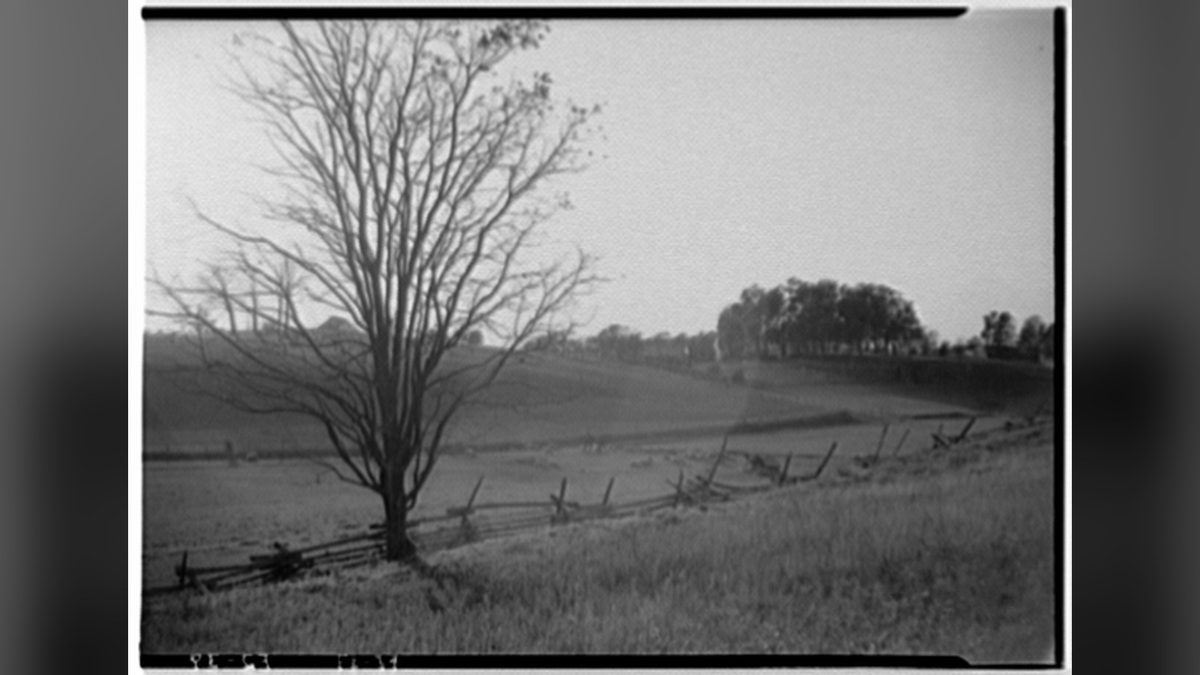
A worm fence was, among other things, a few hundred feet of pre-split, pre-seasoned firewood standing in a field, and Civil War armies on both sides treated it exactly that way. In October 1862, a Sharpsburg, Maryland resident named Jacob Miller wrote home describing a regiment that had camped in a nearby field after the fighting at Antietam that September and stayed there until it had “burnd nearly all the rails within their reach.” Miller’s letter, preserved in the Crossroads of War digital archive, doesn’t dress the loss up: an army that needed cook-fires and warmth took the nearest fuel, and a worm fence, built from nothing but stacked wood, was the nearest fuel for miles around most Civil War camps and battlefields.
Multiply that scene by every winter camp and every battlefield between 1861 and 1865, on farmland that was still mostly fenced this way, and the war didn’t just get fought across the worm fence — in a very literal sense, it ate it.
One Patent Ended the Debate That Two Centuries of Rail-Splitting Couldn’t
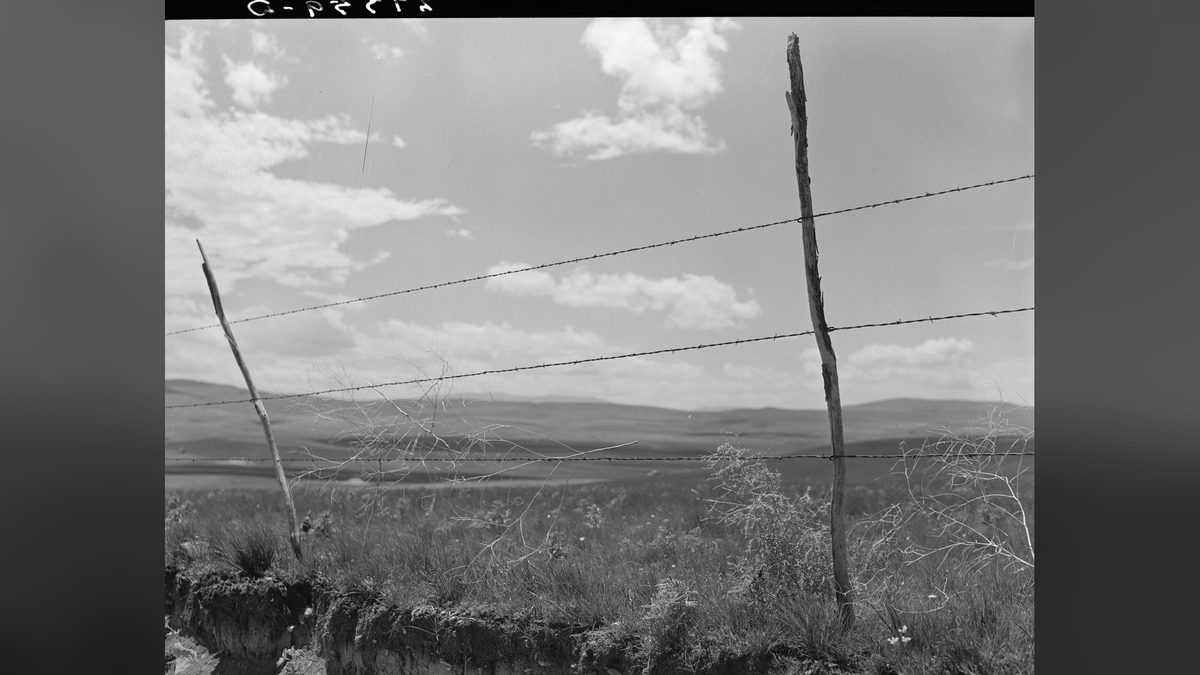
On November 24, 1874, the U.S. Patent Office issued patent No. 157,124, “Improvement in Wire-Fences,” to Joseph F. Glidden, a sixty-year-old farmer who had worked roughly six hundred acres in De Kalb County, Illinois, since 1842. His design — a short barb twisted onto a wire and locked in place by a second wire wound around it — did with a couple of strands of fencing what a worm fence needed a whole stacked wall of split timber to do.
Acceptance wasn’t instant. Plenty of farmers and ranchers distrusted the new wire enough to call it “the devil’s rope,” afraid it would tear up livestock the way a wooden rail never had. The doubts broke in 1875, when a wire salesman named John Gates penned a herd of Texas longhorns inside a barbed-wire corral in the middle of San Antonio’s main plaza to prove the wire would hold cattle without maiming them. Mass production by the firm Washburn & Moen made the wire cheap enough to ship by the trainload, and on the treeless prairies and plains — where there had never been enough standing timber to split a worm fence out of in the first place — it spread fast enough to help close the open range within a generation.
Glidden’s own claim to the invention didn’t go unchallenged, either. Rival manufacturers fought the patent’s validity for years, arguing that unpatented designs like the so-called Morley Fence had used the same barbed-wire principle before Glidden ever filed, and that earlier court rulings upholding his patent had been obtained collusively. The dispute reached the U.S. Supreme Court, which ruled in The Barbed Wire Patent (1892) that Glidden’s patent was valid — not because no one else had experimented with barbs first, the Court conceded, but because Glidden was the one who had actually published and commercialized a working design, and the law resolved its doubts in the patentee’s favor. Justice Stephen Field dissented, arguing the idea lacked the novelty a patent required. A fence that had never needed a single legal argument in two hundred and fifty years of use was replaced by one that needed an eighteen-year court fight to settle who owned it.
The Timber Itself Didn’t Survive Much Longer, Either
By the time the worm fence’s working life was essentially over, the wood most prized for building one was running out too. A fungal blight, carried into the United States on imported nursery stock sometime before 1900, was first identified in New York City in 1904 and spread outward from there almost unopposed. In the southern Appalachians, where chestnut rail fences had lasted longest, the blight had killed or infected an estimated 85 percent of American chestnuts by 1940 and more than 95 percent by 1950, according to National Park Service records for the Great Smoky Mountains. No cure was ever found; only stump sprouts, doomed to be reinfected before they mature, remain of what was once one of the dominant trees of the eastern forest.
That’s part of why a “historic” rail fence rebuilt today at a battlefield or a living-history farm is rarely built from the wood a nineteenth-century farmer would have reached for first. Chestnut suitable for splitting into ten-foot rails barely exists anymore at any scale; preservation projects reach instead for black locust, a wood nearly as rot-resistant that, unlike chestnut, still grows in enough quantity to split a fence line out of. The worm fence survives in replica. The species that built most of it does not.
A Fence That Turns Out to Have Always Been Argued Over
Line all of this up and the worm fence stops looking like an anonymous folk object and starts looking like a chain of specific, documented, and often contested human decisions: a colony’s settlers whose ethnic identity shaped a continent’s fencing style, a plantation owner doing unhappy arithmetic on his own timber, a presidential candidate who may or may not have split the rails credited to him, a war that treated fences as fuel, and a patent fight that went all the way to the Supreme Court before the fence’s long run finally ended. Very little about it, on closer inspection, was ever as simple as “pioneers built fences out of what they had.”
So which part of that chain would you have guessed, before reading it — the Finnish colonists, the disputed rails, or the Supreme Court case?
Watch the full history
The video version covers how a worm fence was actually built and used, in about eight minutes.

Related reading
- What Finding a Red Ear of Corn Actually Meant at a Husking Bee — another ordinary piece of nineteenth-century farm culture with a backstory most people never hear
- The Spinning Wheel’s Economics Were Worse Than You Think — a parallel case of a home-built farm technology whose economics quietly turned against it
- The Kaleidoscope Patent That Failed Its Own Inventor — another nineteenth-century patent fight over an invention everyone assumes was simple
- The Truth Behind the Mrs. O’Leary Cow Myth — another convenient origin story that the documented record doesn’t actually support
If you want to build one yourself
- Fences for Pasture & Garden by Gail Damerow — a modern guide to building and maintaining exactly this kind of fence, rail by rail.
Works cited
- Jordan, Terry G., and Matti Kaups. The American Backwoods Frontier: An Ethnic and Ecological Interpretation. Johns Hopkins University Press, 1989.
- “George Washington to William Pearce, 22 November 1795.” Founders Online, National Archives.
- Burlingame, Michael. “Railsplitter.” House Divided: The Civil War Research Engine at Dickinson College. Link.
- Miller, Jacob. Letter, October 1862, Sharpsburg, Maryland. Transcribed by Paul Chiles, Antietam National Battlefield. Crossroads of War digital archive, document 159. Link.
- U.S. Patent No. 157,124, “Improvement in Wire-Fences,” issued to Joseph F. Glidden, November 24, 1874. Link.
- The Barbed Wire Patent, 143 U.S. 275 (1892).
- “Glidden Patents Barbed Wire.” EBSCO Research Starters. Link.
- National Park Service. Great Smoky Mountains, Natural History Handbook No. 5, chapter on the American chestnut blight.
- Virginia Outdoors Foundation. “New Split Rail Fences from Historic Use of Locust Wood.” Link.