
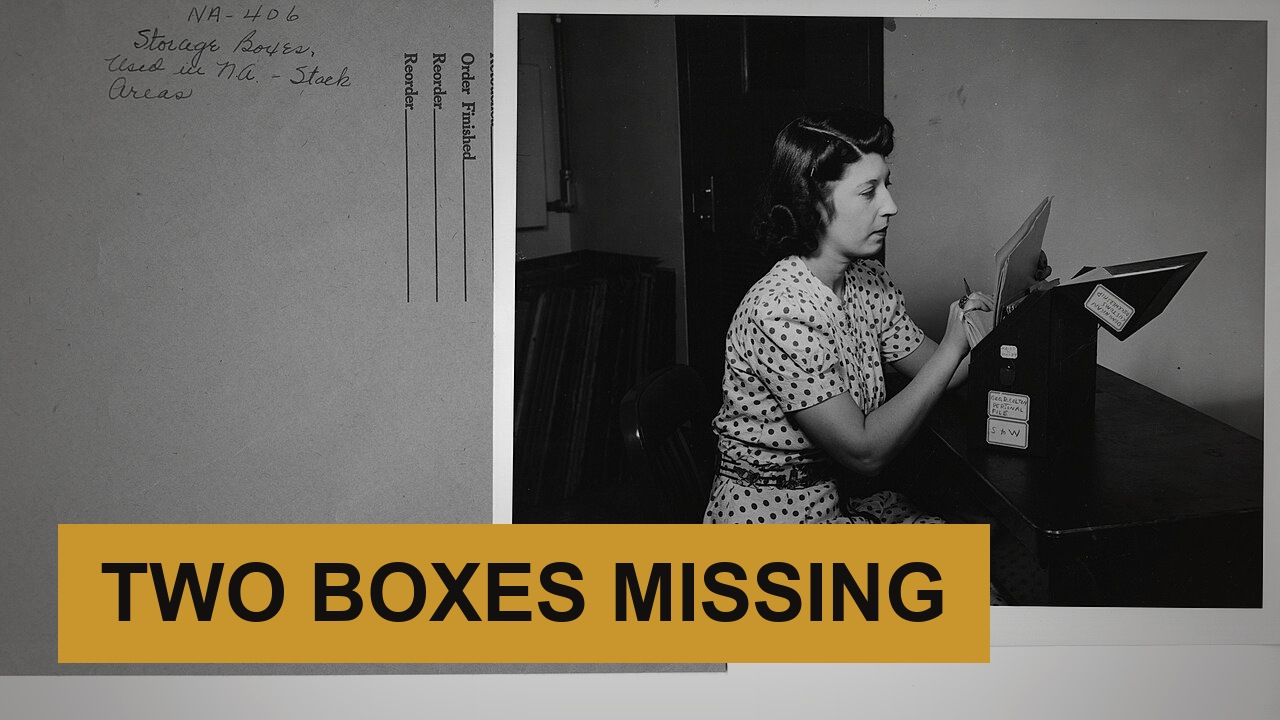
In 2007, a federal judge told NASA, in writing, that it had not proven it searched its own files properly. The files in question were not about a rocket program or a budget line. They were about a single evening in December 1965, when something came down over western Pennsylvania and a fireball that had nothing to do with it ended up measured, published and filed away two hundred miles to the northwest. Sixty-one years later, the Kecksburg NASA files that the agency says explain the case still cannot be produced, and the National Archives says it has no record they ever arrived at all.
That is the part of this story that is actually documented: court filings, a published 1967 astronomical paper, a Project Blue Book case log, and a 2021 FOIA release with thirteen pages withheld in full. None of it proves a recovered object. All of it proves that the federal government’s own paperwork about this case is a mess, and that the mess has never been cleaned up.
The fireball itself is the least disputed part of this story
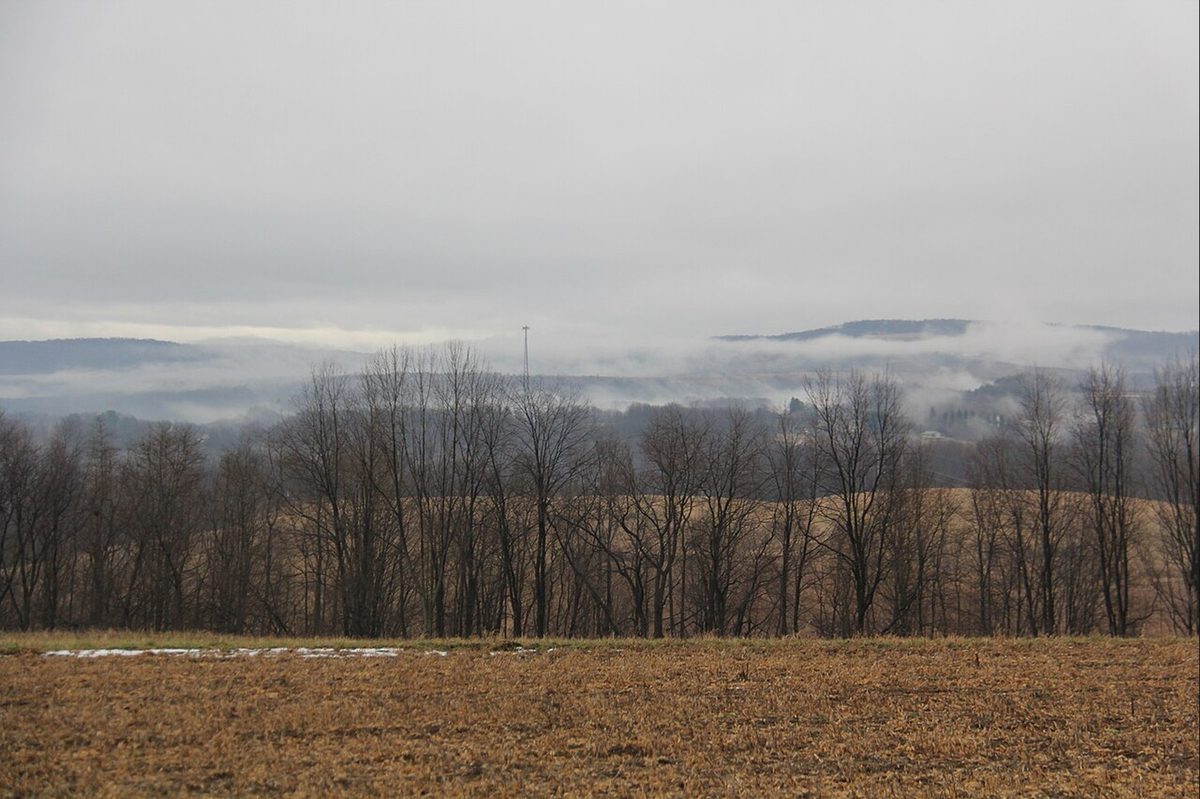
At about 4:43 p.m. Eastern time on December 9, 1965, a bright fireball crossed the sky over the Detroit–Windsor area and was seen from at least six states and parts of Canada. The Federal Aviation Administration logged twenty-three separate pilot reports beginning a minute later. A seismograph roughly twenty-five miles southwest of Detroit recorded the shock waves. Hot debris came down across Michigan and northern Ohio — around Livonia, Jackson, Battle Creek and Elyria — starting small grass fires, and people near Pittsburgh reported hearing sonic booms.
Astronomers did not wait for government confirmation. Dr. William Bidelman, an astronomer at the University of Michigan, called it “undoubtedly a fireball” within a day. A geophysicist ruled out satellite debris. Within two years, the Michigan State University astronomers Von Del Chamberlain and David Krause had collected more than one hundred fifty witness accounts, used photographs of the smoke trail taken from two locations, and published a formal trajectory analysis in the Journal of the Royal Astronomical Society of Canada. Their reconstruction and an earlier one in Sky and Telescope do not agree with each other on the direction of travel — one has the object moving northwest to southeast, the other southwest to northeast — but both put its end point over or near western Lake Erie. That is roughly two hundred miles from Kecksburg.
Kecksburg had an evening entirely its own
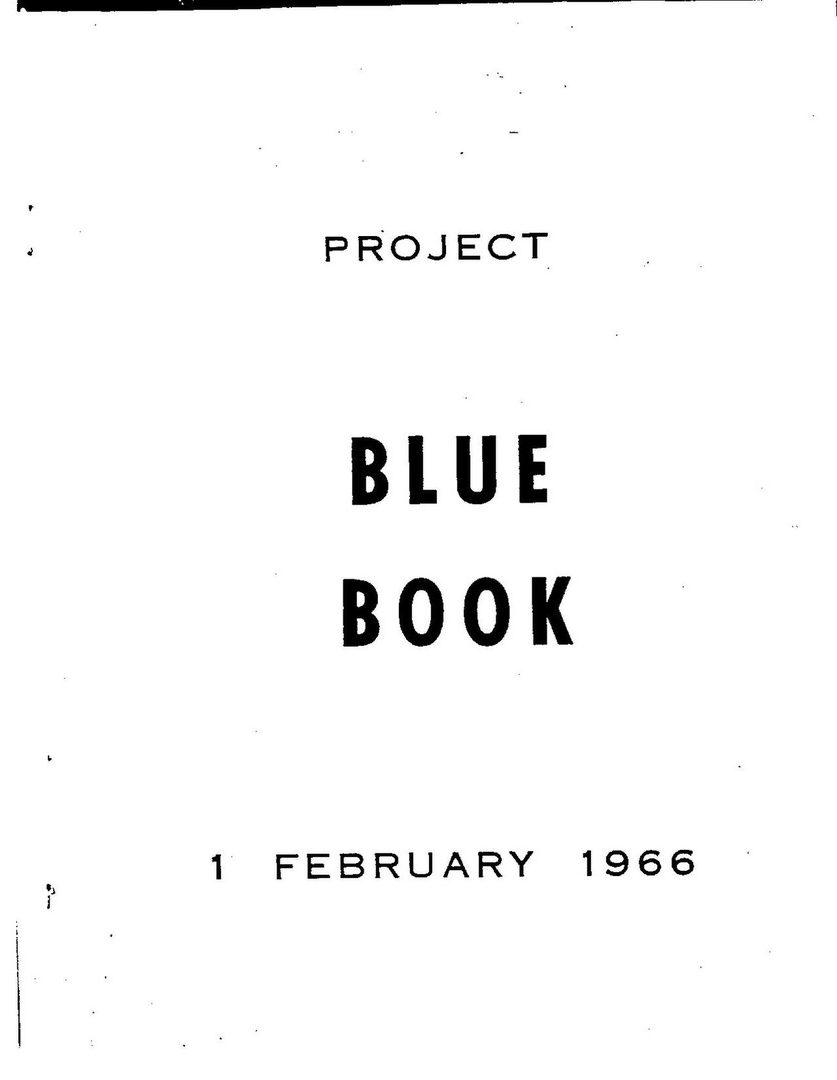
Residents of the small Westmoreland County village reported blue smoke over the trees, a vibration, and a thud, and the local volunteer fire department went to look. What happened next is where the sources stop agreeing on specifics even as they agree on the outcome. The Uniontown Morning Herald reported that Kecksburg “became a hub of activity” that night. Some later accounts describe about twenty-five Army soldiers and a few Air Force personnel searching a seventy-five-acre wooded tract; other retellings put it at Pennsylvania State Police and members of the Army’s 662nd Radar Unit covering a fifteen-square-mile area over seven hours. Both cannot be precisely right, and no official report settling the discrepancy has surfaced.
What every contemporaneous source agrees on is the result. Captain Joseph Dussin of the Pennsylvania State Police’s Greensburg post told reporters, “We found no fire and no marks,” adding, “We definitely believe it was a meteor.” Geiger counters carried into the woods detected no radiation. The Greensburg Tribune-Review‘s early edition reported the site being roped off for inspection by Army engineers and “possibly civilian scientists”; its later edition ran the flatter headline “Searchers Fail to Find Object.” A wire report that went out the same week used the phrase “absolutely nothing” to describe what the search turned up.
Project Blue Book closed the file as a meteor and never reopened it
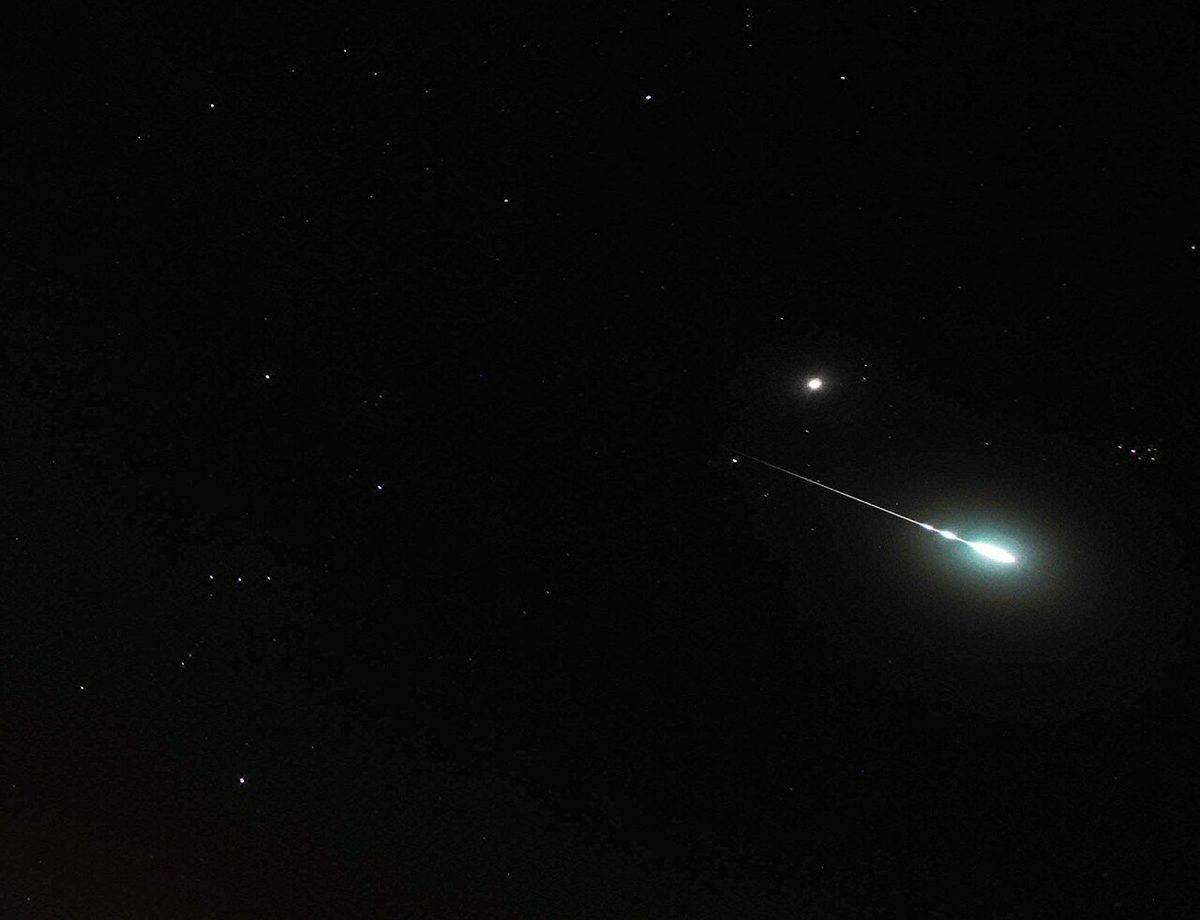
Project Blue Book was the U.S. Air Force’s standing program for collecting and evaluating reports of unidentified flying objects, running from 1952 until it was shut down in 1969. Its files are public today, and anyone can pull the Kecksburg entry: the conclusion is logged as astronomical — a meteor — case closed. An Air Force spokesman at the time said the only personnel on the ground were technical intelligence specialists assisting state police, and that they had nothing to report. A Blue Book memo dated the day after the incident, later surfaced by journalist Leslie Kean, records an officer named Major Hector Quintanilla saying it was acceptable to call the event a meteor, and separately states that no space debris had entered the atmosphere that day — two lines that, read together, show the meteor explanation being settled on before any outside analysis had been done, not after.
That timing gap is worth sitting with. The astronomers’ own published trajectory work did not appear until more than a year later. The Air Force’s conclusion and the astronomers’ conclusion ended up agreeing, but the Air Force got there first, on much thinner evidence, which is exactly the kind of sequence that invites suspicion even when the underlying call turns out to be the defensible one.
A Soviet satellite theory that the tracking data rules out
In 1991, researchers proposed a specific identity for the fireball: Kosmos 96, a Soviet probe intended for Venus that had failed to leave Earth orbit and was due to re-enter around that date. It is a reasonable theory in one respect — a real spacecraft really was coming down close to that time. It does not survive the numbers. U.S. Air Force tracking data showed Kosmos 96’s orbit had already decayed, hours before the Pennsylvania reports and nowhere near the state. Separate orbital analyses reached the same conclusion, and the fireball’s descent angle was too steep to match a body falling out of a low Earth orbit; it fits an object arriving from interplanetary space instead. NASA’s own later comments on the case rejected the Kosmos identification and described the object as more likely a meteor on a prograde orbit, originating somewhere out near the asteroid belt. The mundane astronomical explanation, in other words, is solid. It explains the fireball. It says nothing at all about the woods.
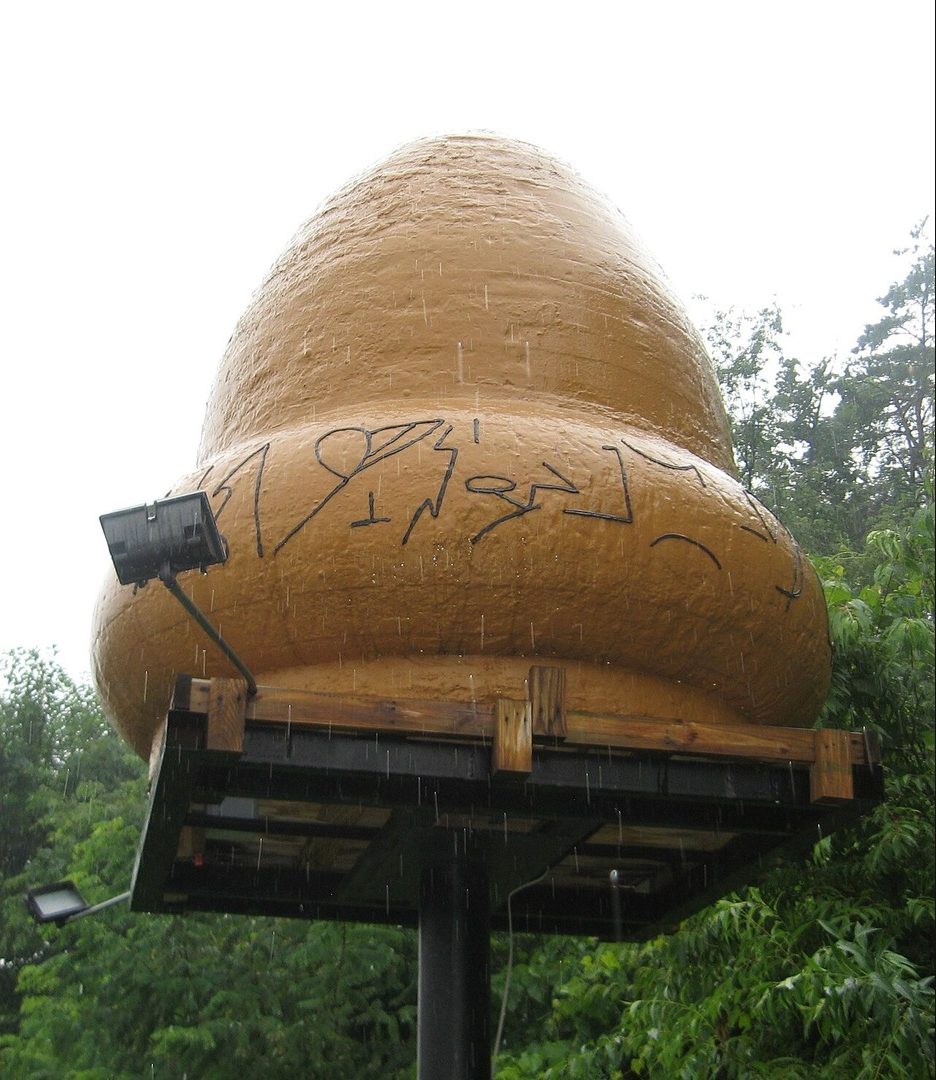
The acorn everyone pictures is a 1990 television prop
The version of this story most people know — an acorn-shaped object the size of a Volkswagen Beetle, marked with symbols compared to Egyptian hieroglyphics, hauled away on a flatbed truck — is younger than the event by twenty-five years. It entered the record on December 31, 1990, when the NBC series Unsolved Mysteries devoted an episode to Kecksburg and interviewed residents, some of whom had been children in 1965, describing the object that way for the first time on camera. More than fifty Kecksburg residents signed a petition objecting to the broadcast, and the local fire chief who was named as having coordinated the cordon denied any involvement. No account from 1965 itself describes a recovered object or a truck.
None of that makes every later witness account false. A volunteer firefighter who was eighteen in 1965 has said publicly, decades afterward, that he saw a large object in the woods with no crater and no doors, and waited twenty years before telling anyone. Whether that memory describes something real or a half-century of retelling folding itself around a dramatic night is not something this record can settle either way. What can be said plainly is that the object on display today near the Kecksburg Volunteer Fire Department is a replica, built for the 1990 broadcast. It is real in the sense that you can drive up and photograph it. It is not, and has never been presented by the village as, a recovered artifact.
A reporter’s lawsuit forced NASA to search its own files
The thread that is genuinely unresolved runs through NASA, not the Air Force. In December 2005, close to the fortieth anniversary, NASA said its experts had examined metallic fragments in the 1960s and judged them to be debris from a re-entered Soviet satellite — and that the documents supporting that conclusion had been misplaced. Journalist Leslie Kean, who had filed a Freedom of Information Act request with NASA in January 2003 backed by the Sci Fi Channel, sued the agency in federal court in Washington, D.C., later that year.
On March 27, 2007, Judge Emmet G. Sullivan of the U.S. District Court for the District of Columbia ruled that NASA “has not met its burden of proving that its search was adequate.” The court’s opinion lays out a specific, checkable sequence: NASA had requested nineteen boxes of relevant records from the Washington National Records Center, and three of those boxes were reported as having been missing for some time. NASA’s own re-examination of the other sixteen boxes, in what the court calls the fourth search, turned up responsive documents that an earlier, third search had missed entirely — which the judge treated as evidence that the third search’s procedures were themselves inadequate, not just unlucky. Late that same year, NASA settled, agreeing to pay roughly fifty thousand dollars in Kean’s attorney’s fees and to conduct a further, better-documented search.
That search ran through 2008, when NASA produced several hundred pages and a NASA public liaison officer testified at a hearing that two boxes of 1960s-era papers were missing and presumed destroyed — a figure that does not quite square with the court record’s three boxes out of nineteen, a discrepancy that has never been reconciled in any public document. Kean’s own account of the finished search, posted in November 2009, says the final pass turned up nothing specifically about Kecksburg; several boxes were never located, and at least one was reportedly destroyed under NASA’s standard records-retention schedule. She has said publicly that she blames ordinary bad filing rather than any search team’s bad faith.
The file has a name and a number, and still no address
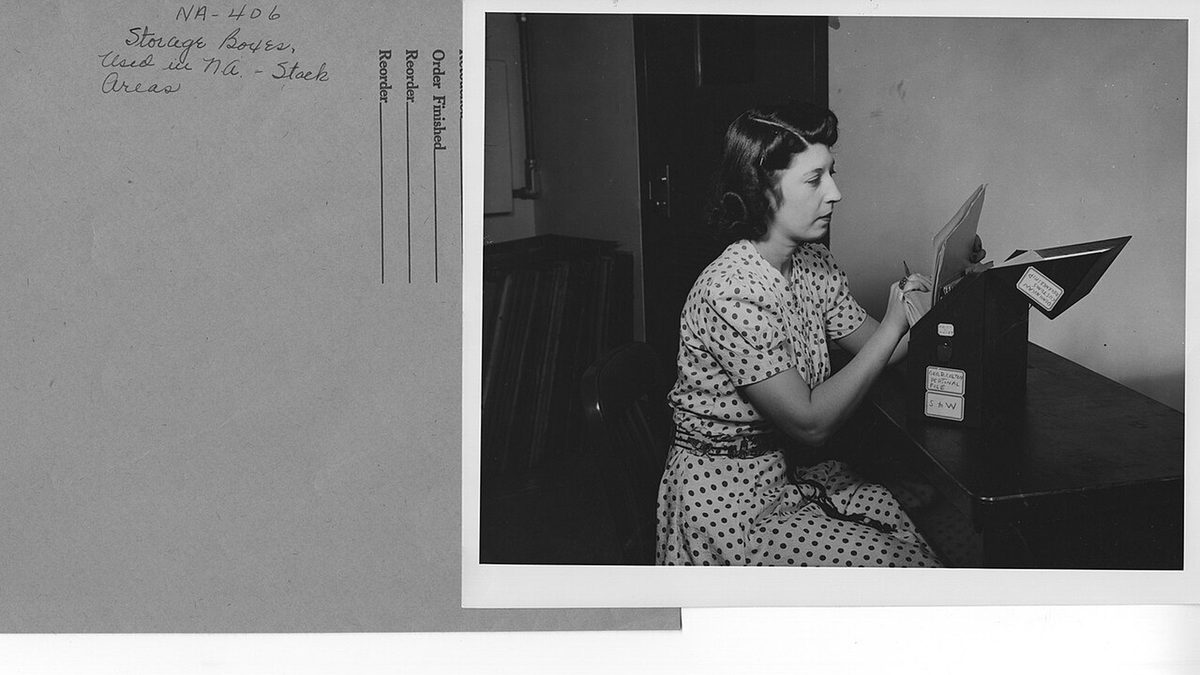
The records at the center of all this are not vaguely described. An internal NASA index lists them as “reports of space objects recovery: analysis of recovered fragments to determine which nation they belonged to,” transferred to the National Archives and Records Administration in late 1967 or early 1968 under accession number 255-68A-2062. By 1987, the National Archives had listed that accession as missing. A 1996 letter from the Archives told NASA the boxes could not be located. A further FOIA release in July 2021, totaling more than two hundred twenty pages, included internal NASA correspondence, State Department cables describing the same recovery program’s work on debris incidents in the Congo in 1965 and Zambia in 1966, and an internal NASA email from 2006 stating plainly that the files had not been located since 1987. Thirteen pages from that release were referred to the Executive Office for United States Attorneys and withheld from the public in full.
Asked directly in 2021 whether it had ever received accession 255-68A-2062, the National Archives said it had no record of doing so at all — a more unsettling answer than “lost,” since it leaves open the possibility that the boxes never completed the transfer from NASA in the first place. The State Department cables about the Congo and Zambia recoveries matter here, because they show this kind of record was routine: identifying and claiming foreign space debris was a funded, inter-agency job throughout the 1960s, and the paperwork for it survives in plenty of other cases. An entire accession going missing in transit between two federal buildings is not how that process is supposed to work, which is what makes the gap worth noticing even without any claim about what filled it.
Watch the full history
The video companion walks through the same evening and the same paper trail in order, from the FAA’s first pilot report to the thirteen pages still withheld today.

Related reading
- Who Invented the Electric Toaster, Really?
- Why Waffles Have a Grid Pattern (It’s Not About the Syrup)
- The Quilting Bee Was Already a Punchline by the 1860s
- What Was a War Garden? Inside America’s WWI Food Front
Works cited
- Chamberlain, Von Del, and David J. Krause. “The Fireball of December 9, 1965 — Part I.” Journal of the Royal Astronomical Society of Canada, vol. 61, 1967, p. 184.
- Kean v. National Aeronautics and Space Administration, 480 F. Supp. 2d 150 (D.D.C. 2007). Memorandum Opinion, Civil Action No. 03-2509 (EGS), 27 March 2007. Link.
- National Aeronautics and Space Administration records, released under FOIA and archived by The Black Vault. “NASA’s ‘Fragology’ Files: Space Object Recovery and Analysis Records (Accession 255-68A-2062).” Link.
- U.S. Air Force, Project Blue Book. Case file and status reports, 1965–66, as archived by The Black Vault. “The Vault Files: The 1965 Kecksburg, Pennsylvania Crash.” Link.
- Reporters Committee for Freedom of the Press. “Judge Forces NASA to Take a ‘Giant Leap’ in FOIA Suit.” 10 December 2007. Link.
- The Associated Press. “Is Case Finally Closed on 1965 Pennsylvania ‘UFO Mystery’?” via Space.com, November 2009. Link.
- Hundt, Brad. “Kecksburg UFO Incident 60 Years Ago Put Westmoreland County Community on the Map.” Herald-Standard, 20 December 2025. Link.
- Dunning, Brian. “Alien Visitation and Kecksburg.” Skeptoid podcast, episode 681. Link.
- Historic Mysteries. “1965 Air Force Memo Says Searchers Found Nothing in the Kecksburg Woods.” 29 October 2026. Link.