
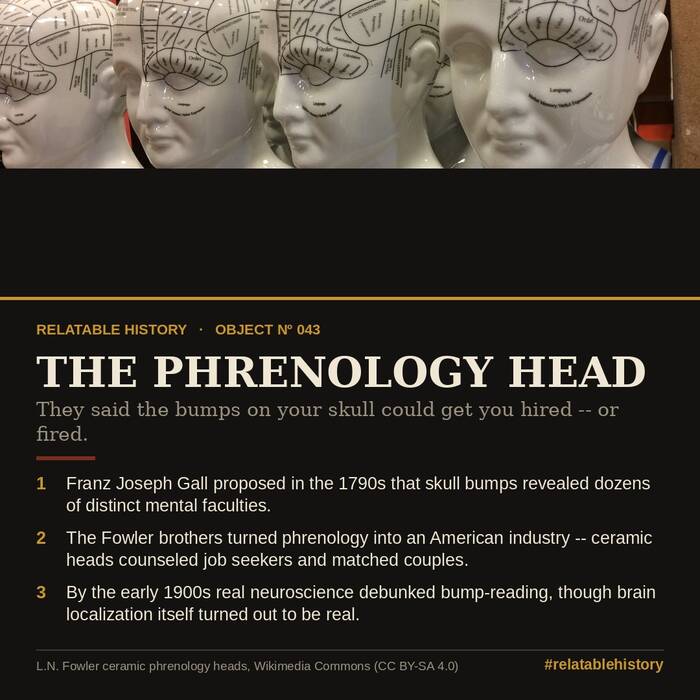
For a stretch of the nineteenth century, getting hired by a serious American firm could depend on a stranger running his fingertips over your scalp. The practice had a name, a published price list, and its own trade journal, and it was called phrenology hiring practices by exactly nobody at the time — they just called it common sense. Employers who used it were not cranks on the margins. They were following a theory that, for about half a century, passed as credible applied science.
The theory began with a Viennese doctor convinced that character left physical marks on the skull, and it ended, eventually, with a 2018 brain-imaging study that tested the claim directly and found nothing there. In between, it built an industry that screened job applicants, vetted marriage prospects, briefly entered an American courtroom, and got as far as the nursery of the future King Edward VII.
This is the story of how reading bumps became reading résumés — and of the one place the theory was actually put on trial, where it lost.
Franz Joseph Gall decided your skull had something to say
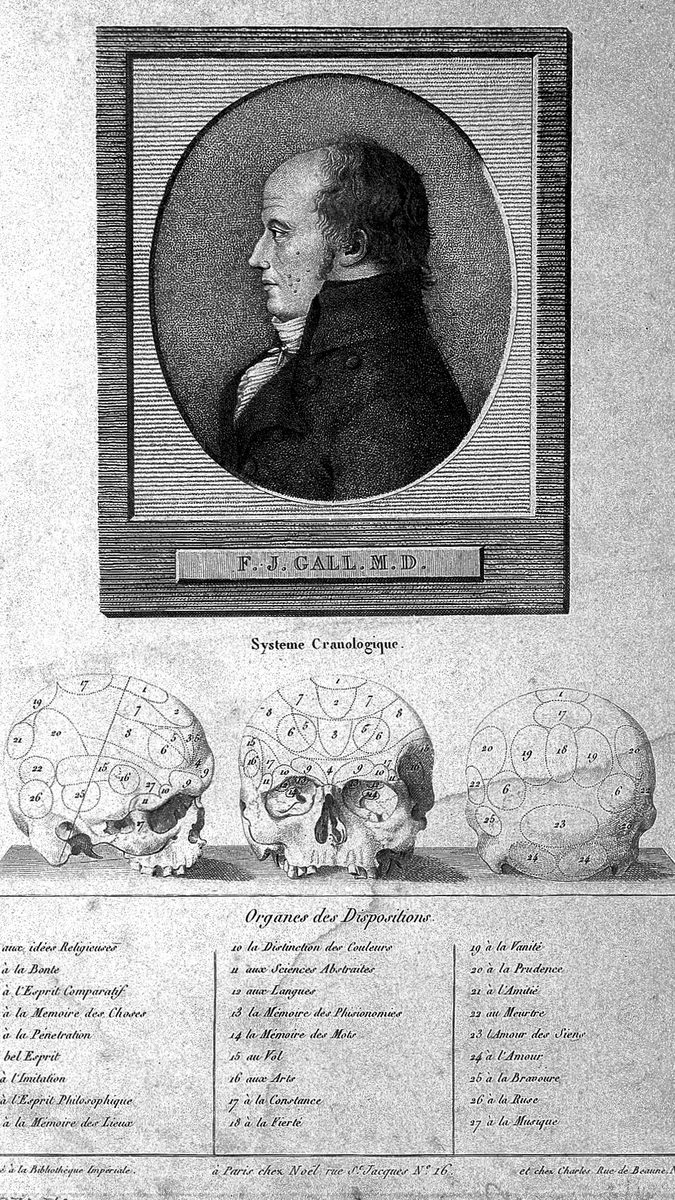
Franz Joseph Gall (1758–1828) was a working Viennese physician, not a showman, when he began developing his ideas in the 1790s. His premise was anatomical: the brain was not one organ but many, each handling a distinct mental faculty, and a well-used faculty’s underlying brain tissue would grow, pressing outward and leaving a detectable contour on the skull above it. Gall ultimately catalogued twenty-seven such faculties, covering traits from the love of one’s children to a sense of place to simple destructiveness.
Gall was not guessing at a desk. Beginning around 1805 he toured Europe with a collaborator, Johann Gaspar Spurzheim, visiting prisons and asylums specifically to compare skulls against known temperaments, and he settled in Paris in 1807 to continue the work. Modern neuroscience later credited him with one real insight almost by accident: he placed language and memory in roughly the right regions of the brain, which is more than can be said for the other twenty-five organs on his list.
Spurzheim renamed it, and the organ count kept climbing
Spurzheim coined the word “phrenology” and took the theory further than Gall ever intended, both in reach and in precision. He toured Britain in 1814 and 1815 and crossed to the United States in 1832 for a lecture tour that was cut short by his death just six months in — a death the movement treated less as a setback than as a martyrdom, which did the publicity no harm at all.
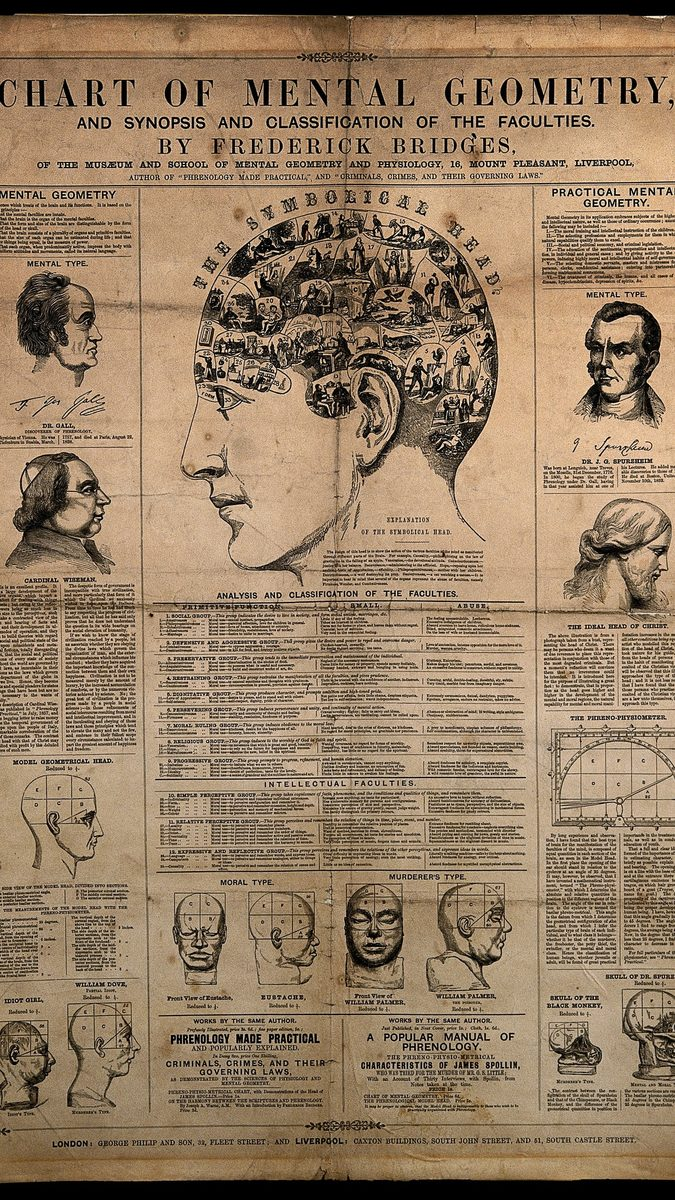
What Spurzheim left behind was not one tidy chart but several competing ones. Different phrenologists carved the skull into different numbers of zones, and the count crept upward over the following decades, with no agreed method for settling a dispute between two practitioners who felt different bumps on the same head. That inconsistency should have been fatal to the theory’s claim to be a science. For a striking length of time, it was not.
The Fowler brothers turned a medical theory into a retail chain
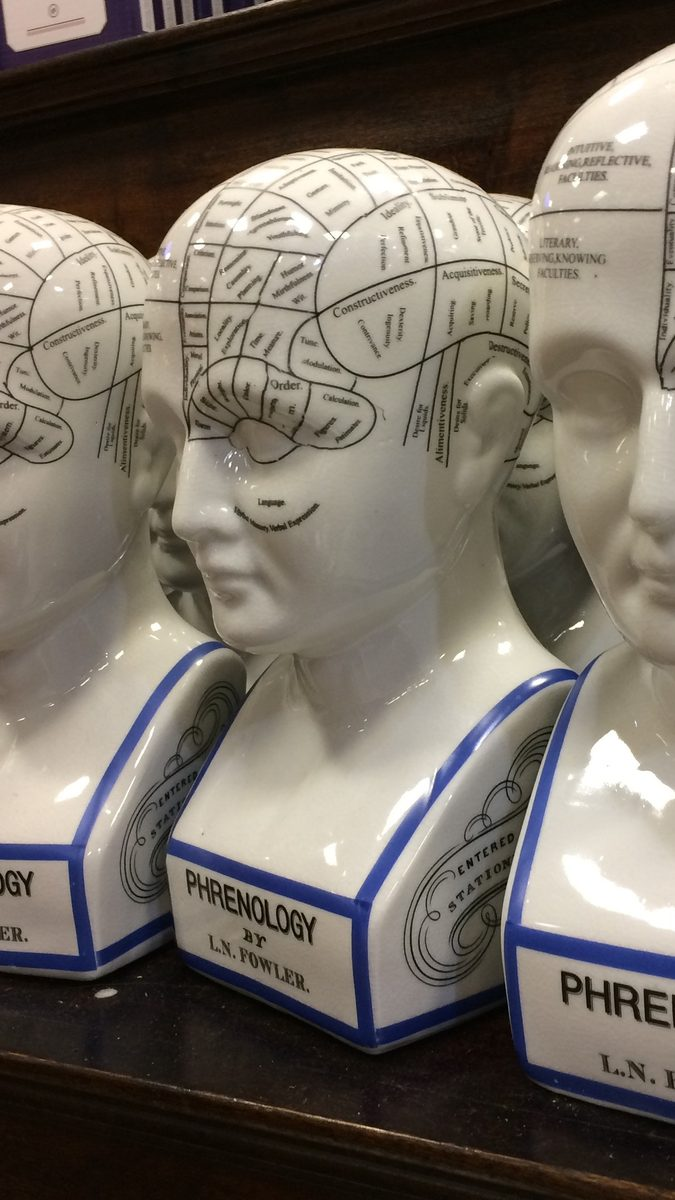
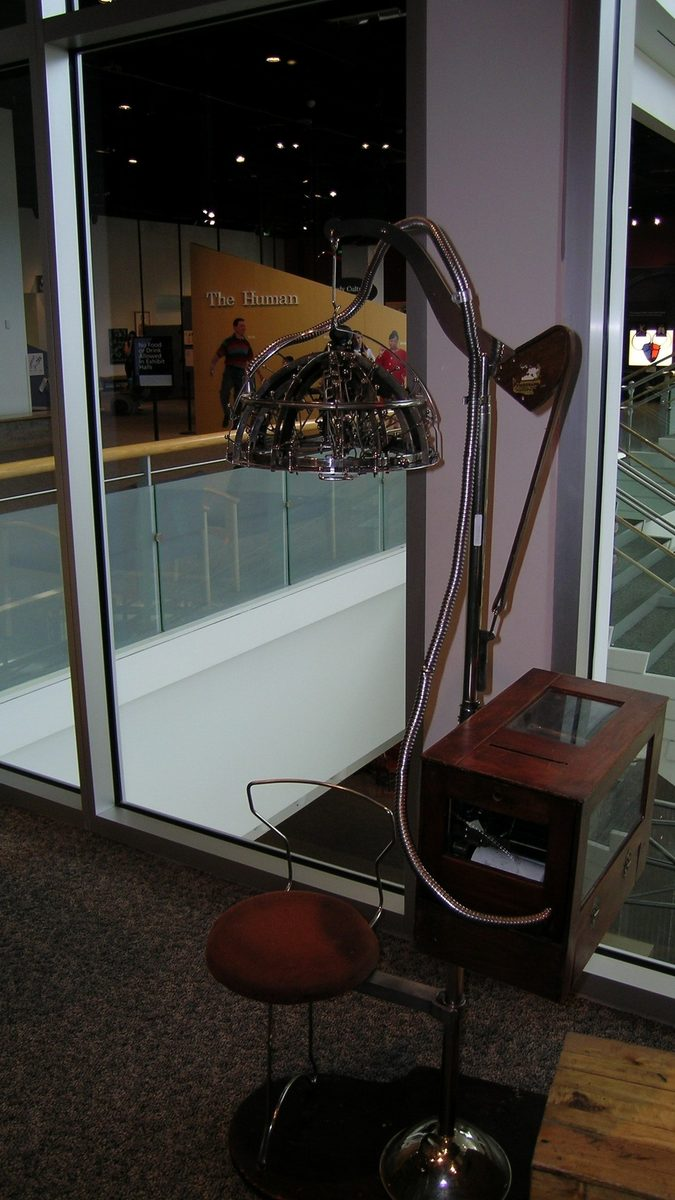
If Gall supplied the theory, Orson and Lorenzo Fowler supplied the business plan. Orson began giving phrenological readings for two cents apiece while he was a student at Amherst College, and the brothers soon moved the operation to New York, where their Phrenological Cabinet became, by the 1840s, one of the most visited attractions in the city. Visitors did not just get a reading; they could buy the apparatus for giving one — a ceramic head, glazed white, its scalp divided into dozens of numbered, named regions such as Amativeness, Combativeness, and Benevolence.
The Fowlers’ publishing house, Fowler & Wells, put out the American Phrenological Journal and Miscellany, which ran for roughly seventy years, into 1911, long after the theory’s scientific credibility had collapsed everywhere else. The same house printed the first edition of Walt Whitman’s Leaves of Grass in 1855, which is a strange but real line on the firm’s résumé. Clients who sat for a Fowler reading included P. T. Barnum, Horace Greeley, Brigham Young, and a fifteen-year-old Clara Barton, whom Lorenzo Fowler assessed as someone who “will never assert herself for herself…but for others she will be perfectly fearless.” The line followed Barton for the rest of her life, quoted back at her in magazine profiles and in her own memoir, which says something about how durable a confident-sounding reading could be regardless of whether the underlying theory held up.
Getting hired — or tutoring a prince — could mean passing a head exam
Here is where phrenology hiring practices stopped being a parlor amusement and became an actual filter in people’s working lives. Nineteenth-century employers did not merely tolerate phrenology; some built it into recruitment. Help-wanted notices specified the phrenological profile a candidate should have, and firms asked applicants to bring a reading from a recognized practitioner, with a letter from the Fowlers functioning much like a modern reference check — a document meant to settle, before a single interview question was asked, whether the person across the counter was honest, industrious, and even-tempered enough to be trusted with the job.
Phrenologists were also consulted on matchmaking, pairing prospective spouses by comparing their charted faculties for compatibility, on the theory that a marriage was itself a kind of long-term hire, with its own risk of a bad one. None of this required a license, a board, or any standard beyond the practitioner’s own confidence, which is precisely what let it scale as fast as it did: a Fowler reading was cheaper and faster than a genuine character reference, and it came with numbers attached, which made it feel like measurement rather than guesswork.
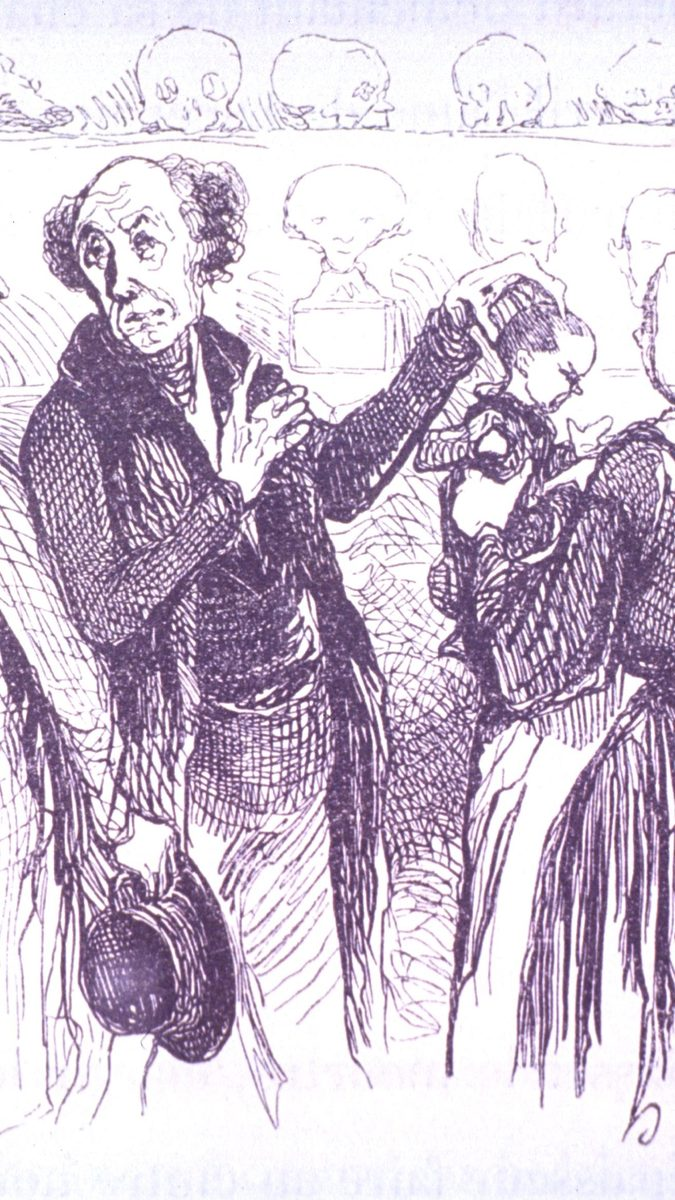
The practice reached well above the shop floor. In 1850 the Scottish phrenologist George Combe was invited into Buckingham Palace to examine the skulls of the royal children, including the nine-year-old Prince of Wales — the future Edward VII — who was then struggling at his lessons. The vetting did not stop at diagnosis: a phrenologist was separately appointed as tutor to Victoria’s second son, Prince Alfred, on the strength of his readings. A family that could summon any physician in Europe chose, for a time, to let skull-reading inform how its own children were educated and overseen.
The one time an American court actually tested the theory, it lost
Phrenology’s reach into hiring and child-rearing rested on social confidence rather than legal authority, and the single clearest test of whether a court would treat it as real evidence came in 1834, in Durham, Maine. A nine-year-old boy named Major Mitchell stood accused of a brutal assault on another child. His attorney, John Neal, built part of the defense on phrenology directly: he introduced head measurements and a cast of the boy’s skull, pointing to the swelling at the spot where phrenological charts placed the “Organ of Destructiveness” as an explanation, even a mitigation, for the violence.
The presiding judge, Emery, was not persuaded. He ruled that phrenological evidence could only be admitted once it was “demonstrated by proof” that the cranial features in question actually affected the mind — a standard the theory, as presented, did not meet. Isaac Ray, the physician who had examined the boy and whose later career made him one of America’s leading authorities on the insanity defense, had declined to testify at all, telling colleagues the phrenological case rested on inference rather than demonstrated fact. It is a genuinely useful data point that the expert most qualified to vouch for the theory in court chose not to.
The Mitchell case did not end phrenology’s cultural influence on ideas about crime. The historian Courtney Thompson has traced how phrenological language and imagery kept shaping American theories of the “criminal type” well after courts stopped admitting skull measurements directly, with prisons and asylums rather than courtrooms becoming the venues where the theory kept doing cultural work. But as a matter of formal evidence law, the 1834 ruling is about as clean a rejection as the theory ever received, and it came remarkably early.
The science that finally broke it took longer than you’d expect
Phrenology’s scientific collapse did not arrive all at once either. Physiologists working through the 1820s and 1830s, destroying small sections of animal brains and observing what function actually disappeared, kept finding that the damaged regions did not match what Gall’s chart predicted. Combined with the practitioners’ own inability to agree on how many organs existed or exactly where they sat, phrenology was largely discredited as a serious science by the 1840s — which, notably, is decades before the Fowlers’ journal folded and more than a century before the last ceramic head left a factory.
The most thorough modern test came in 2018, when researchers used structural brain scans from the UK Biobank — a dataset of 5,724 people — to measure the actual curvature of each person’s skull and check it against lifestyle measures standing in for twenty-three of Gall’s original faculties. They found no statistically meaningful relationship between skull shape and any of it. It took brain imaging nobody in the nineteenth century could have imagined to finally close a question Judge Emery had already answered, in his own courtroom, a hundred and eighty-four years earlier.
What the Fowlers were really selling was never the bumps themselves. It was the promise of a shortcut past the uncertainty of judging another person — a fast, confident-sounding answer to “should I hire this one, marry this one, trust this one.” That particular promise did not go away when the ceramic heads did; it just stopped asking to touch your scalp first.
So it is worth asking honestly: if a job offer genuinely hinged on it, would you have sat still for the reading, trusting a stranger’s fingers over your own interview?
Watch the full history
The original short covers the Fowlers’ parlor, the hiring angle, and the theory’s collapse in about ninety seconds.

Related reading
- Were Tapeworm Diet Pills Real?
- The Mercury Cure for Syphilis Lasted Four Hundred Years
- How the Violet Ray Machine Worked, and Why It Took Decades to Debunk
- Did Plague Doctors Really Wear Those Beak Masks?
Shop the styles/items featured in this video:
- Ceramic phrenology head replica (decor/collectible)
- The Skull Beneath the Skin: A History of Phrenology (book)
- Antique-style anatomical print set
Works cited
- Weiss, Kenneth J. “Isaac Ray at 200: Phrenology and Expert Testimony.” Journal of the American Academy of Psychiatry and the Law 35, no. 3 (2007): 339–345. Link.
- Parker Jones, Oiwi, Fidel Alfaro-Almagro, and Saad Jbabdi. “An Empirical, 21st Century Evaluation of Phrenology.” Cortex 106 (2018): 26–35.
- Thompson, Courtney E. An Organ of Murder: Crime, Violence, and Phrenology in Nineteenth-Century America. Rutgers University Press, 2021. Link.
- Center for the History of Medicine, Harvard Countway Library. “Franz Joseph Gall.” Talking Heads online exhibition. Link.
- Morse, Minna Scherlinder. “Facing a Bumpy History.” Smithsonian Magazine, October 1997.
- Singh, Akanksha. “What Skulls Told Us.” JSTOR Daily, November 7, 2023. Link.
- Goldhill, Olivia. “Centuries Before Myers-Briggs, Workplace Personalities Were Assessed Using Phrenology.” Quartz, December 29, 2017.