
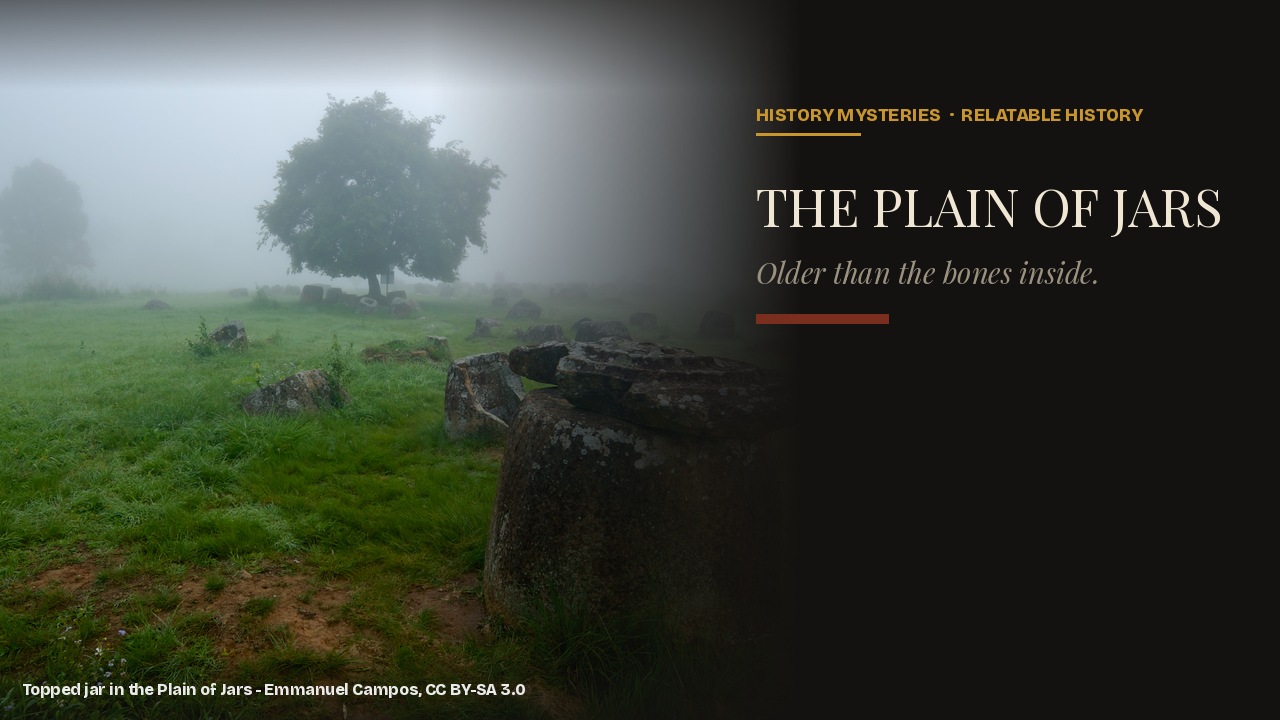
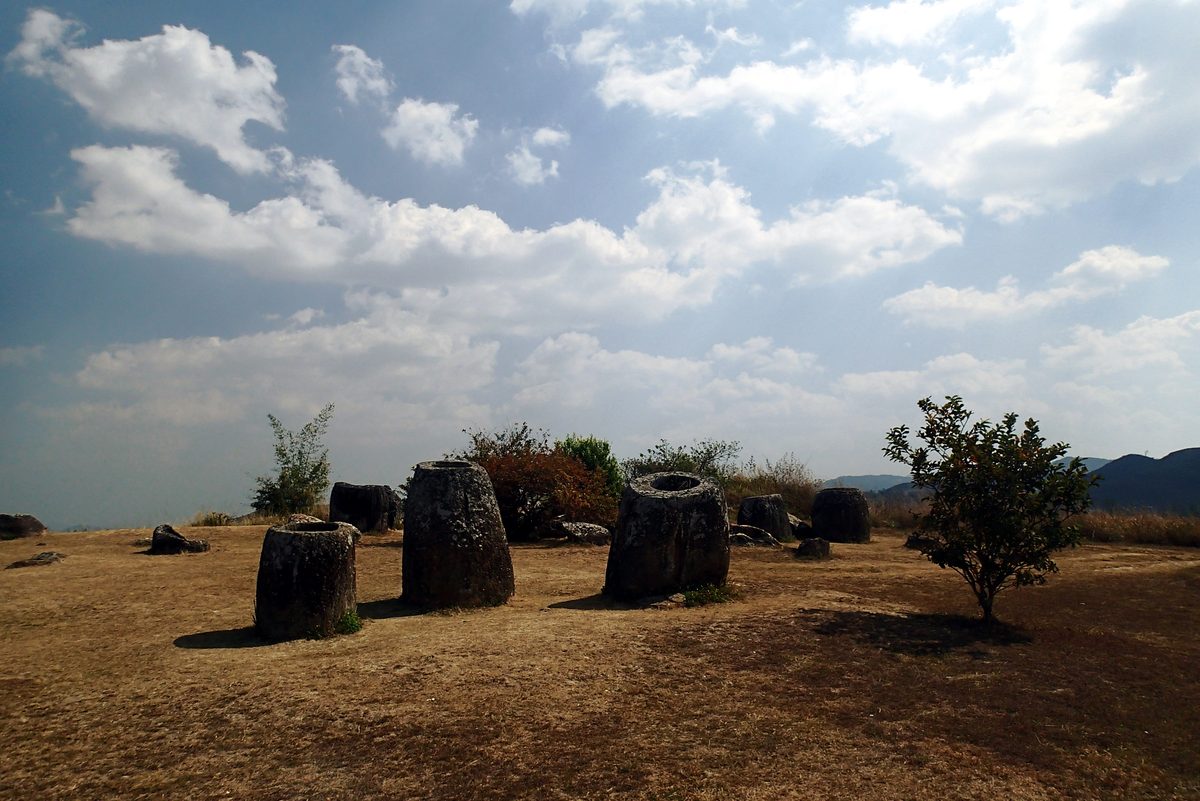
The Plain of Jars is older than the burials inside them by nearly two thousand years, and that single fact turns what sounds like a straightforward archaeological puzzle into something much stranger. On the Xiangkhouang Plateau in northern Laos, more than 2,100 stone jars — some weighing many tons, cut from solid rock — sit scattered across open ground at more than fifty recorded sites. The people found buried around and inside them almost certainly didn’t carve them. They inherited an already-ancient landscape and kept using it anyway, for a very long time.
A Legend, and the Archaeologist Who Replaced It
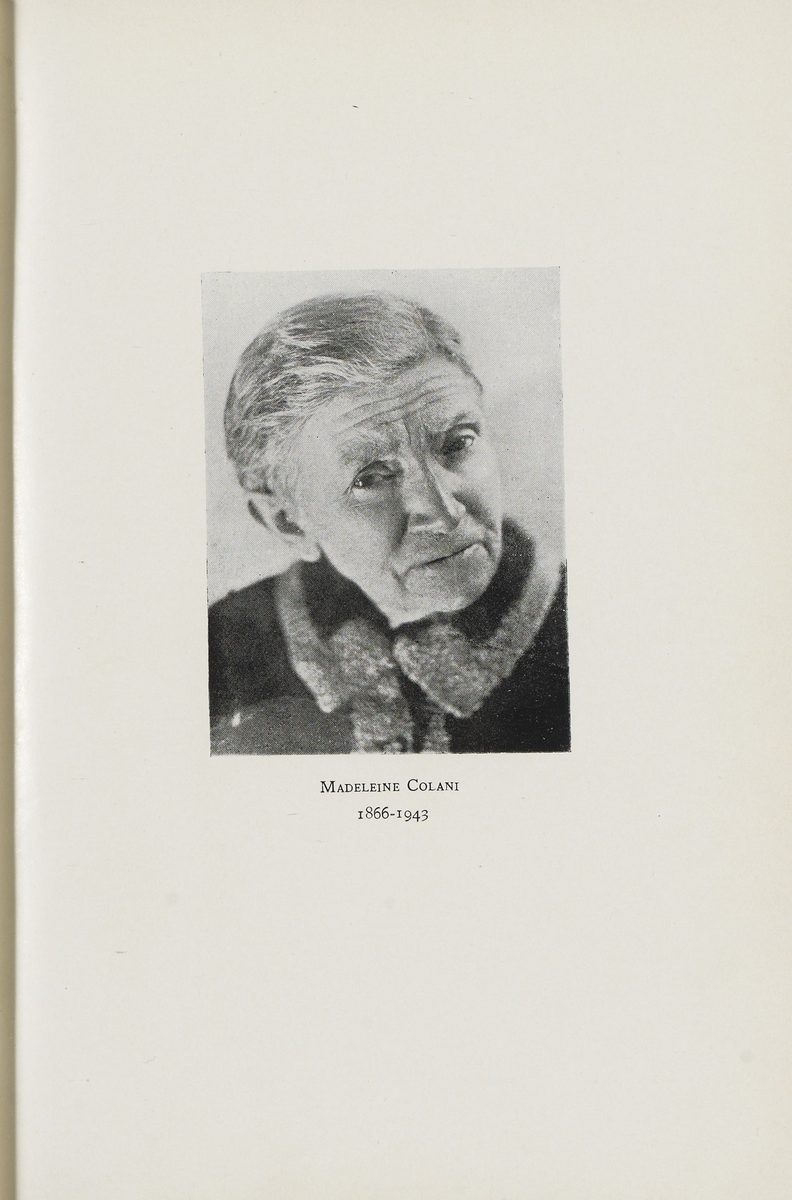
Local tradition explains the jars as the work of a king, Khun Cheung (also called Khun Jeuam), who defeated a tyrant and had the jars carved to brew and store rice wine for the victory celebration. It’s a specific, memorable story, and there’s no document or archaeology behind any part of it. The first real study came from Madeleine Colani, a French archaeologist who had spent years working on prehistoric stone tools in Vietnam before turning to the jars, bringing an archaeologist’s eye rather than a traveler’s curiosity. She published two volumes on the site in 1935, recording twenty-one sites under a numbering system still used today.
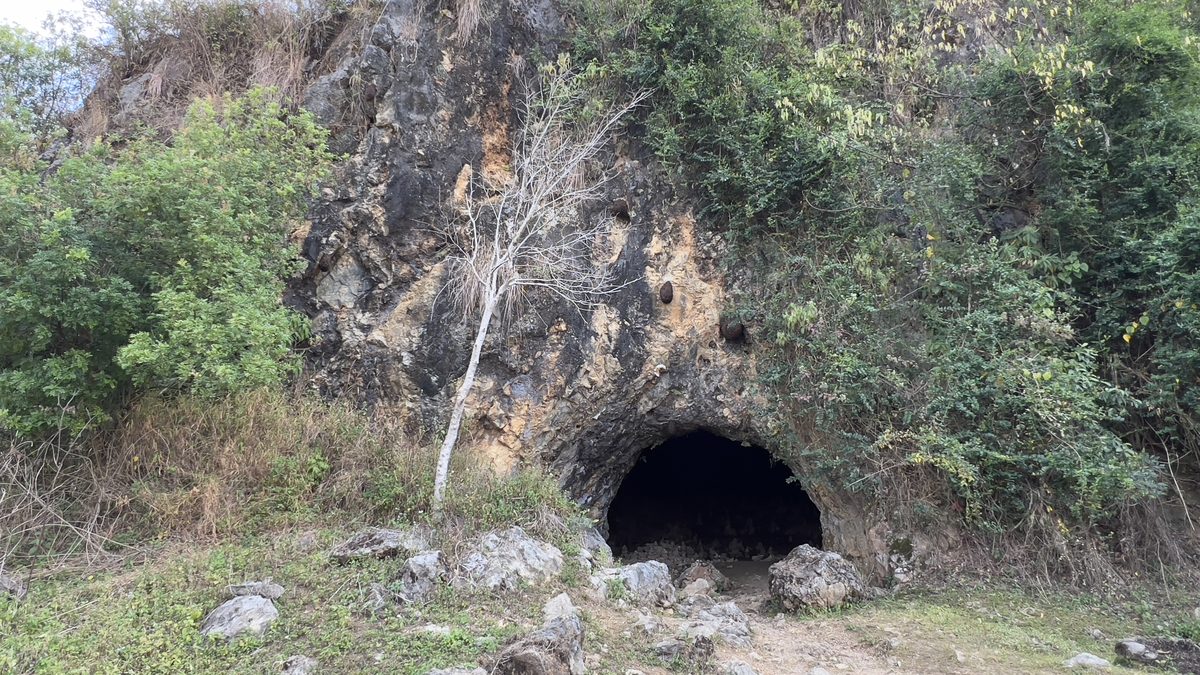
Around the jars at Site 1, near the village of Ban Ang, Colani recovered spindle whorls, ear discs, glass beads, and bronze and iron tools and jewelry, along with human remains inside some jars — in others, burnt teeth and bone fragments, sometimes from more than one person. A limestone cave sits at the edge of Site 1, and Colani proposed it may have functioned as a crematorium tied to the burial process, based on what she recovered there. That reading has never been independently confirmed; it remains her interpretation of the cave rather than an established fact, though it held as the working theory for decades largely because so little further excavation happened at all. Laos became difficult, then impossible, to work in for a long stretch of the 20th century, and Colani’s two volumes stayed the primary source on one of the largest megalithic landscapes on earth.
What the Stone Itself Can Prove
Some questions have real answers. Quarries sit near several jar clusters, and at Sites 2 and 3 jars remain half-cut, still embedded in the bedrock where the work simply stopped. Geochemical analysis — uranium-lead dating of zircon grains in the stone — matched the jars at Site 1 to an outcrop at Phu Keng, about eight kilometres away; one quarry that may have supplied jars elsewhere on the plateau sits almost a hundred kilometres off. What isn’t answered is everything that comes next. Moving a multi-ton block of cut sandstone across broken hill country, with no river running the convenient direction and no surviving record of method, required organized labor, planning, and real specialists — and nothing else those people built has ever turned up. Even the cutting itself is unresolved: whether the hollows were worked with iron chisels or stone tools is still argued, because no toolkit belonging to an actual jar-maker has ever been excavated. Reported weights for the largest jars vary by source — “something in the order of fourteen tons” by one account, “over 30 tonnes” by another — and the honest answer is that a precise figure for the very largest examples isn’t settled in what’s publicly available.
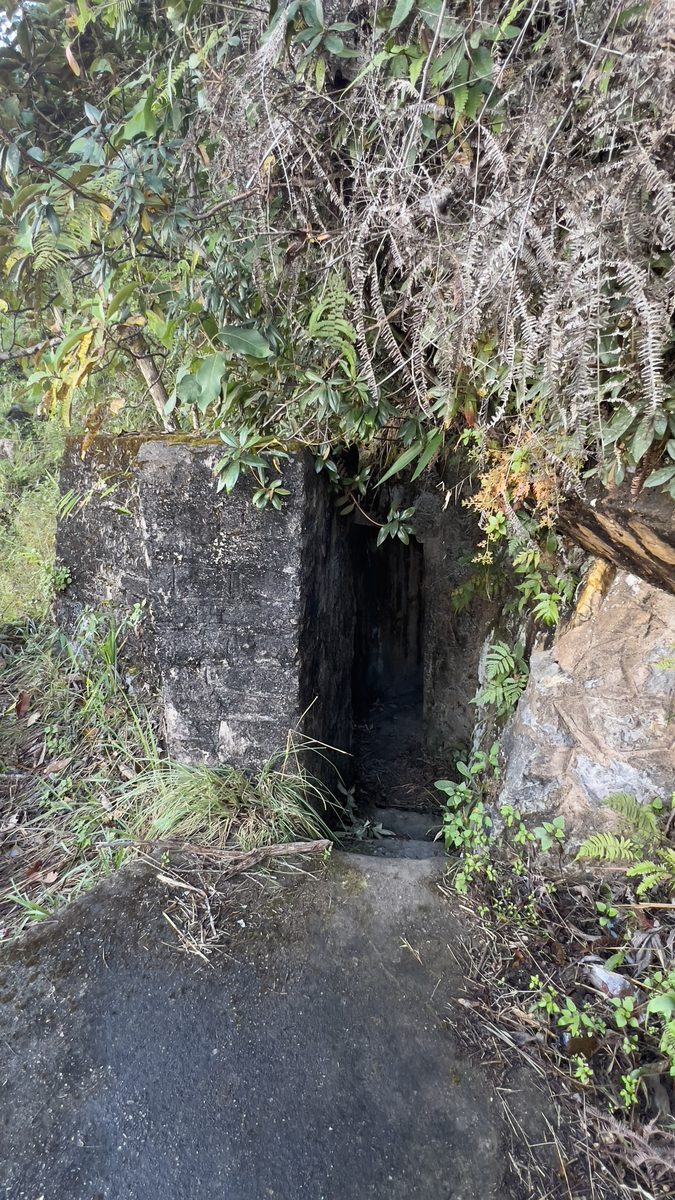
Around two hundred stone discs are also scattered across the plateau, often called lids, though the description doesn’t really hold up: there are far more jars than discs, each disc has only one flat face, none fits a jar’s mouth, and not one has ever been found actually sitting on a jar. Instead they turn up on the ground beside jars, which suggests they marked burial locations rather than sealing anything. Many carry carved human and animal figures that nobody has fully explained, and the sheer variation in jar size, placement care, and accompanying goods across the plateau reads less like a uniform population and more like a society with real internal rank.
What Changed in 2021
The modern excavation effort began in 2016: the Plain of Jars Archaeological Project, a joint Lao-Australian program run through 2020 under Dr. Louise Shewan of the University of Melbourne, Associate Professor Dougald O’Reilly of the Australian National University, and Dr. Thonglith Luangkoth of the Lao Department of Heritage. Their results, published in PLOS One in March 2021, used optically stimulated luminescence — a technique that measures how long buried sediment has been shielded from sunlight — on the ground directly beneath the jars. The jars, the dating showed, were likely placed as early as 1240 to 660 BCE: the late Bronze Age, not the Iron Age the site had conventionally been assigned to. (UNESCO’s own current listing for the site still describes “Iron Age funerary practices” — a real gap between the official description and the most recent peer-reviewed dating, not a contradiction this article is going to quietly paper over.)
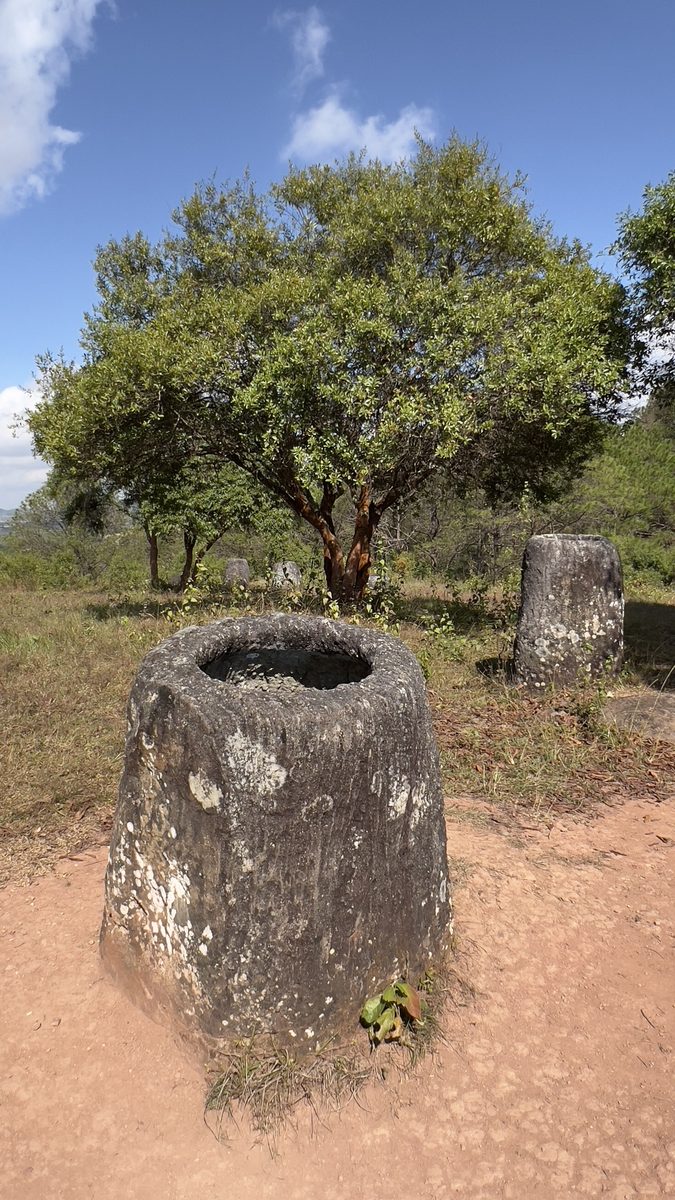
The second finding was the stranger one. Human burials at the same sites, dated by radiocarbon on bone and charcoal, cluster in the eighth to thirteenth centuries AD — separated from the jars’ placement by something close to two thousand years. The people buried on the Plain of Jars did not carve them. They arrived at a landscape that was already ancient, full of monuments whose builders were long gone, and buried their own dead there anyway. Shewan’s own summary was that the sites “maintained enduring ritual significance” from the jars’ original placement straight through into historic times — a gap longer than the distance between the Norman Conquest and today.
Site 75: Thirty-Seven People, One Jar
A 2026 excavation sharpened the picture further. Dr. Nicholas Skopal of James Cook University and Souilya Bounxayhip of the Lao Department of Heritage reported on an exceptional jar at a site roughly seventy kilometres northeast of Phonsavan: 1.3 metres tall and more than two metres across. “The big jar we have found is unique,” Skopal said, “and I have seen a lot of jars.” Inside were the remains of at least thirty-seven people, adults and children, bones disarticulated and parts of each skeleton missing — the signature of secondary burial, where a body decomposes somewhere else first and selected bones are later carried to their final resting place. Radiocarbon dates spread across roughly the ninth to twelfth centuries AD, showing the jar was opened and added to across around two hundred and seventy years. Skopal suggested the number of individuals points to ownership by a family or extended family group rather than a single person.
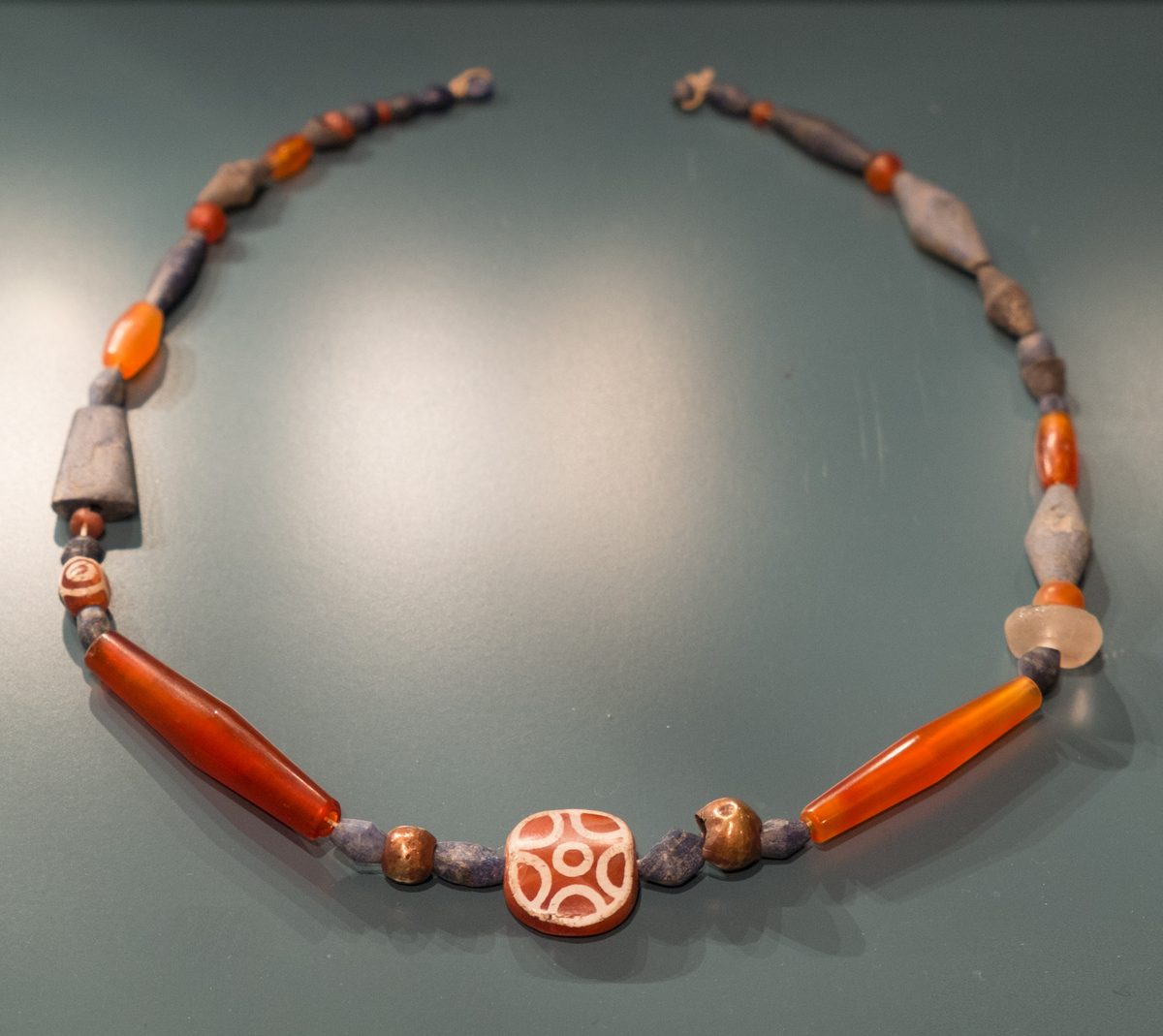
Grave goods found with the remains included glass beads, chemically traced to sources in South India and Mesopotamia — proof that a remote upland plateau in northern Laos, in the centuries of the Khmer Empire and Song China, was connected to exchange networks reaching across the Indian Ocean. Site 75 also offered a plausible answer to a question that has nagged at the plateau for a century: why so many jars turn up empty. If a jar was where a body was first placed and bones were later lifted out for burial elsewhere, an empty jar isn’t necessarily one that was robbed or never used — it may simply be one that did its job and moved on.
Still Missing: Almost Everything About the People Themselves
No ethnic identification of the jar-builders or the jar-users has been established. No settlement — no village, no houses, nothing that marks where anyone actually lived — has ever been found anywhere near any jar site. Part of the reason is straightforward and grim: between 1964 and 1969, the plateau was among the most heavily bombed places on earth, part of an estimated 270 million cluster submunitions dropped across Laos, roughly 80 million of which failed to detonate. Mines Advisory Group, UNESCO, and the New Zealand government cleared three major sites in 2004 and 2005 and four more in 2007, but fewer than one in ten of the plateau’s megaliths has been properly investigated — not from lack of interest, but because the ground itself is still dangerous. At Site 1 alone, excavated burials from Group 2 found that more than sixty percent of the dead were infants or children, and extrapolating that density across the full site suggests the ground around Site 1’s megaliths alone could hold more than eight thousand individuals — a population estimate, not an excavated count, but a striking one either way.
Not Entirely Alone in the World
The Plain of Jars isn’t a completely isolated tradition, though the parallels are more suggestive than explanatory. Broadly similar stone burial jars occur in the Khorat Plateau in Thailand and in the North Cachar Hills of Assam, in northeast India, hinting at some kind of shared or connected tradition along what may have been an old trade corridor. Further afield still, central Sulawesi in Indonesia has its own very different megalithic stone vessels, known locally as kalamba, which resemble the Lao jars in general concept without being part of the same documented tradition. None of these comparisons answers who specifically carved the Lao jars or where they lived; they mostly confirm that carving enormous stone containers for the dead was an idea more than one Southeast Asian society arrived at independently.
The Plain of Jars: Older Than the Burials Inside Them
The site was inscribed as a UNESCO World Heritage property in 2019, as the Megalithic Jar Sites in Xiengkhuang, covering a serial property with more than 2,100 jars across fifteen component sites. The jars stood on this plateau for the better part of two thousand years before anyone buried a body in or around them. Four explanations for their original purpose remain on the table and aren’t mutually exclusive: burial vessels, which Site 75 makes hard to argue against; possible crematoria, per Colani’s original and still-unconfirmed reading of the Site 1 cave; decomposition vessels in a multi-stage funerary process, following Rogers, Engelhardt, and colleagues’ 2003 proposal modeled on royal mortuary practice elsewhere in Southeast Asia; and territorial or status markers, given how often the jars sit on high ground with a commanding view. Nobody has found where the jar-carvers lived. Nobody has found how they moved stone blocks weighing many tons across broken terrain. The jars were there first, by a margin of roughly two thousand years, and that’s the one fact every theory has to answer to.
Watch the full story

Related reading
- The Theories Behind Cambyses’ Lost Army
- Why No One Has Ever Deciphered the Indus Valley Script
- What Happened to Rome’s Lost Ninth Legion?
- Why Ancient Trepanation Survival Rates Were So High
Works cited
- “Researchers Solve More of the Mystery of Laos’ Megalithic Jars.” University of Melbourne Newsroom. Link.
- “Ancient Burial Practices Emerge From Laos’ Mysterious Plain of Jars.” Antiquity journal news. Link.
- “Ancient Burial Practices Emerge From Laos’ Mysterious Plain of Jars.” James Cook University. Link.
- “Researching a Newly Inscribed World Heritage Site.” Current World Archaeology. Link.
- “Megalithic Jar Sites in Xiengkhuang – Plain of Jars.” UNESCO World Heritage Centre. Link.