
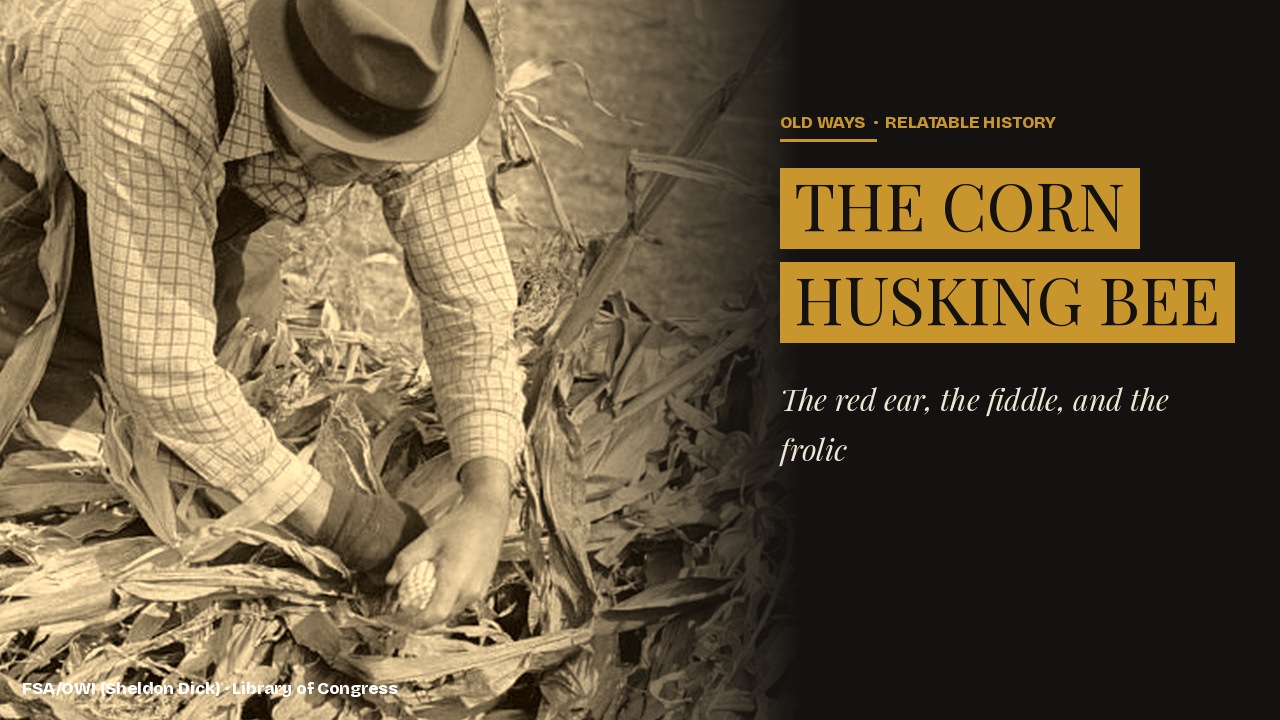
A red ear of corn, turned up in an otherwise ordinary pile of yellow dent corn, was supposed to be worth a kiss — that was the promise behind a husking bee everywhere the custom was held. Francis Fedric had been enslaved in Kentucky before he escaped to Canada and eventually published an account of what he had lived through, including one corn-shucking where the reward for finishing the pile looked very different depending on who you were. One scene he recorded in careful detail was an annual corn-shucking at a plantation run by a man he called Mr. Taylor. The corn pile on the barn floor ran 180 yards long. Taylor split it with a fence rail and told off 300 to 400 men to each of two captains, who led their sides in competing husking songs until the pile was gone. The winning captain marched his men to Taylor’s house after midnight singing verses that mocked the losers. Within two weeks, Fedric wrote, at least thirty of that “happy” crew — including the captain who had led the winning song — had been sold.
That is the same custom, down to the captains and the red ear, that shows up in cheerful New England engravings and nostalgic farm-club newsletters. A husking bee could be a neighborhood’s biggest party of the year, run for a neighbor’s favor and repaid in kind the following week. It could also be a tool of forced labor, run for one owner’s profit, where even the singing was a performance under duress. Both versions are documented. Neither cancels the other out.
What follows is the fuller shape of the custom: how the work itself was organized, the policing that grew up around its most famous reward, the communities that wanted no part of it, and the machine that eventually made the whole argument moot.
The Husking Peg Did the Real Work, Not the Fingers
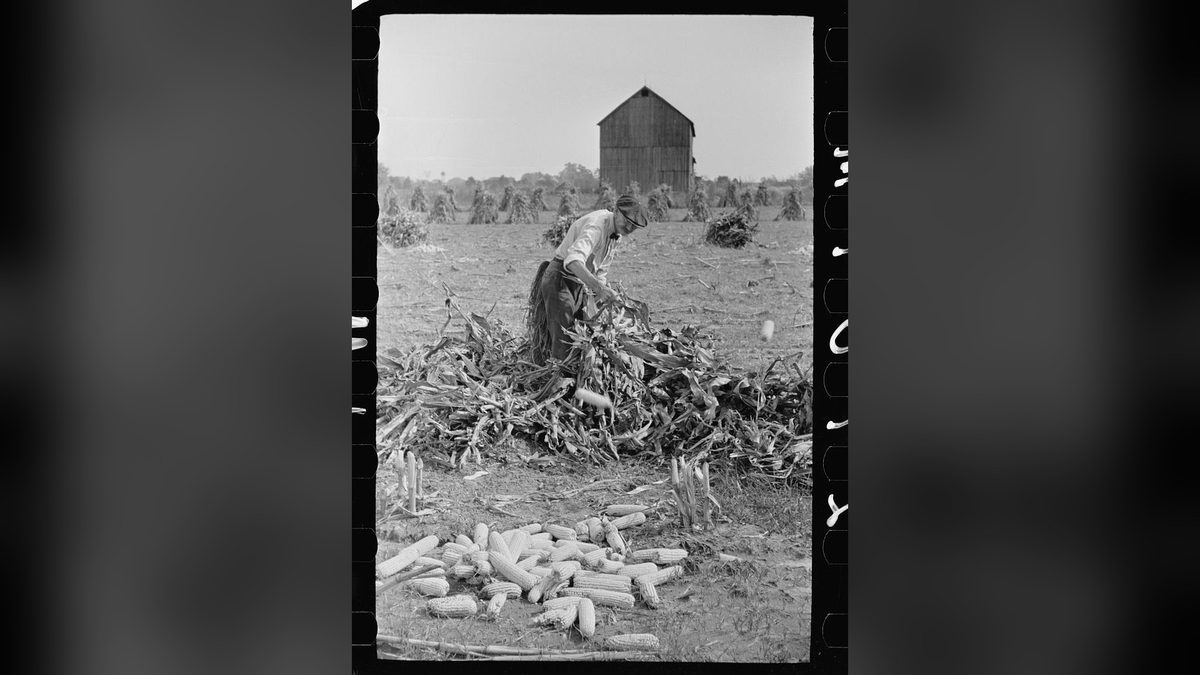
Stripping a husk by hand, over and over for an entire night, wears a thumbnail down fast, so most huskers didn’t rely on bare fingers at all. They brought a husking peg: a tool roughly three inches long, drilled with two holes near one end so a cord or leather thong could loop over two fingers, with a short hook or point at the other end to catch and tear the husk open in one motion. Pegs turn up made from wood, from animal bone, from the tips of deer antlers, and from iron forged by a local blacksmith — whatever a farm had on hand. A metal hook strapped flat across the palm did the same job for huskers who preferred it. None of these required skill to make, and that was the point: a bee needed forty tools working at once, not one good one.
The deadline behind all of it was biological, not social. Husks left on too long in a damp crib bred mold and rot before the corn had fed a single animal through winter, so an entire season’s crop had to come off in the weeks right after harvest, whether or not the farm had the hands to do it. A host farm sent word, and whoever could spare an evening showed up expecting a return invitation when their own corn came due.
Not Every Community Wanted the Frolic
The sociable, competitive version of the bee had critics almost as old as the custom itself. In North Carolina’s Piedmont, Moravian settlers in what is now Forsyth County reportedly refused to hold cornshuckings at all, convinced the gatherings were morally harmful to their young people. In Concord, Massachusetts, a farmer named John Neil described the ritual of inviting neighbors to a husking in the town’s Yeoman’s Gazette in November 1828 — and in that same piece noted that women had stopped taking part in huskings altogether, though they once had. Other Concord accounts describe the post-husking hours sliding into storytelling and fortune-telling games — roasting nuts, peering into wells — and at least one contemporary critic, the Loyalist poet Jacob Bailey, described scenes he considered outright indecent.
None of this stopped the custom from spreading. It simply meant that for every farm family that saw a husking bee as the social event of the autumn, there was another household, often for religious reasons, that saw forty strangers in a dark barn with cider and no chaperone and wanted nothing to do with it.
Where the Red Ear Game Actually Came From
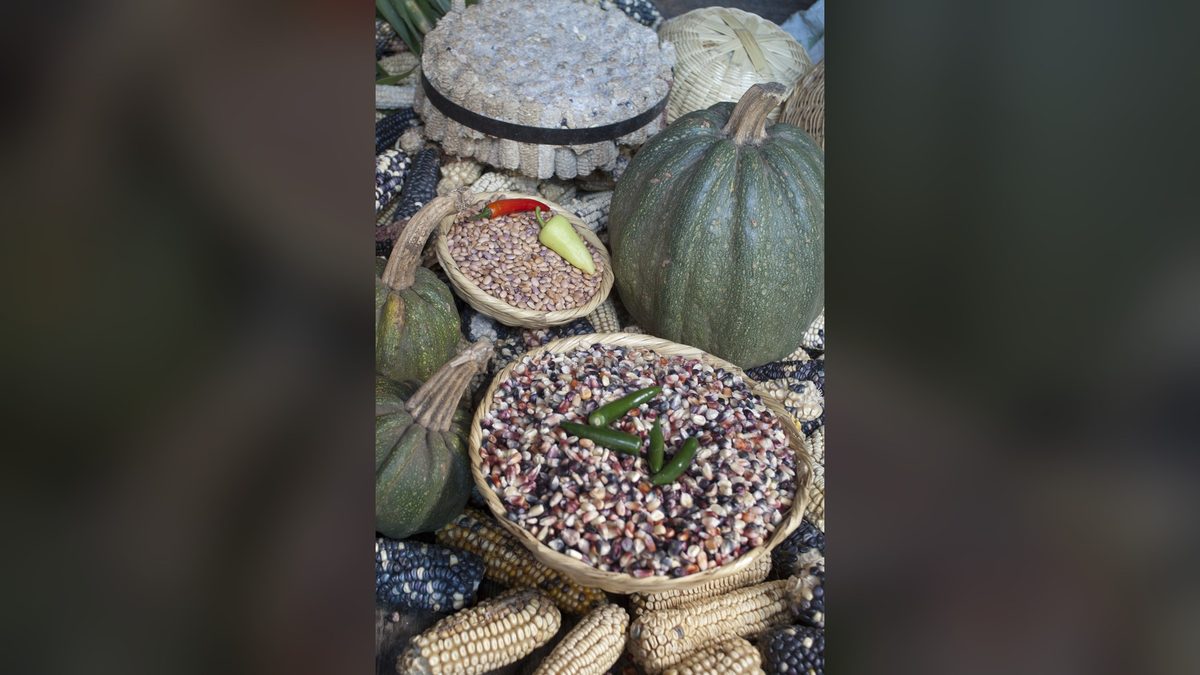
The reward everyone remembers is the simplest part of the custom and the least settled. Most of the corn piled on a barn floor was ordinary yellow dent corn headed for the livestock crib, but multicolored ears were common enough that a husker’s hand closed around a fully red one often enough to matter. Finding one supposedly entitled you to a kiss from anyone in the barn of your choosing; at a men-only shucking, it earned a drink of cider or whiskey instead.
Where the rule came from is genuinely disputed, and sources on both the North Carolina and New England ends of the custom disagree openly rather than converging on one story. North Carolina’s state historic sites office traces the red ear, and the husking peg itself, directly to Native American practice, adopted by European settlers along with corn-growing itself. A separate telling holds that the custom is a distorted version of an Iroquois tradition in which finding a red ear meant you had a secret, admiring suitor — a private signal reshaped by settlers into a public kissing game. Neither claim can be checked against a primary Iroquois source, and the two popular histories that repeat them don’t agree with each other on the mechanism, only on the Native origin.
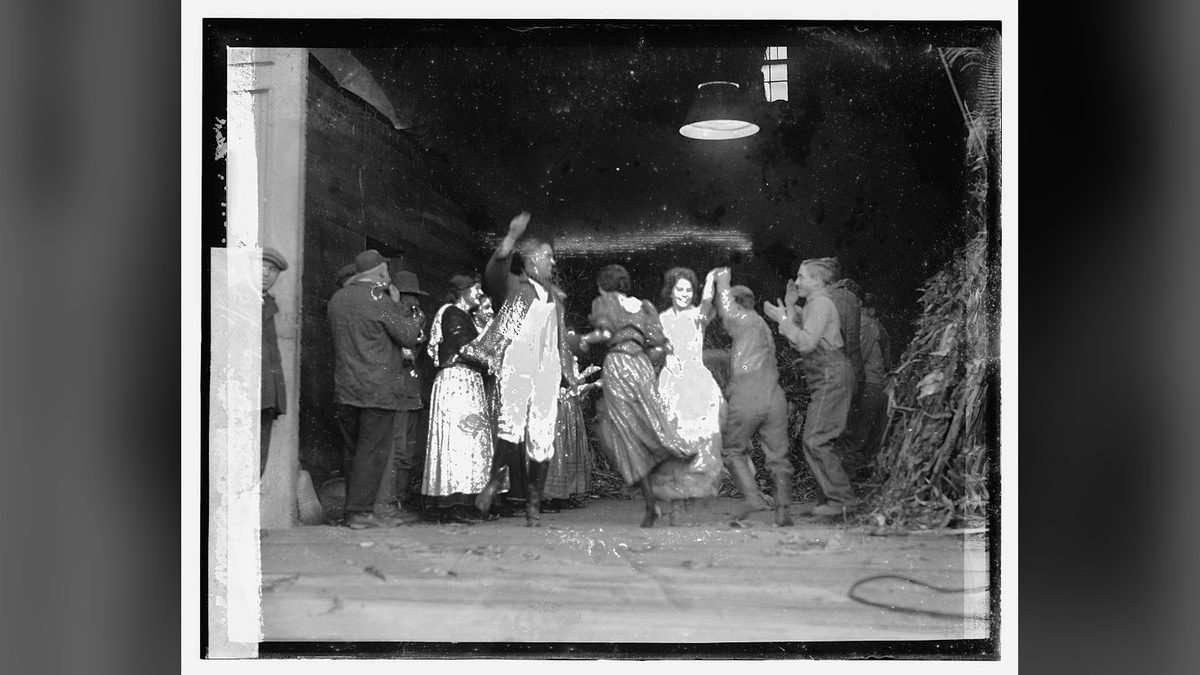
The reward was valuable enough to cheat for. Newspapers of the era joked about young men who painted an ordinary yellow ear red before the pile was even dumped, hiding it in a pocket for later. The counter-measure was social rather than technical: the married women at a bee, deferred to as the gathering’s informal authority, were known to inspect a conveniently red ear before any kiss was allowed to go through, checking for paint under the kernels’ natural sheen.
The Machine That Ended the Argument
Hand husking survived as long as it did because, for most of the 19th century, nothing else could do the job at a price a family farm could justify. That calculation flipped slowly and then all at once. In Gage County, Nebraska, a farmer named William F. Lillie patented a hand-worn corn husker in the early 1890s that sped up individual work without replacing the gathering itself; it reportedly stayed in use into the 1920s even as true mechanical pickers arrived.
Those pickers took another generation to make economic sense on a small farm. The American Thresherman ran the numbers in October 1926: husking 100 acres by hand cost about $567 in hired labor, against roughly $333 to run a horse-drawn picker over the same ground — a saving the magazine said would pay for the machine itself within two years. A follow-up survey of 100 Dakota farmers the next year put the break-even point at around 63 acres; a picker cost $400 to $425 before a roughly $100 power-takeoff attachment, money a 20- or 25-acre farm with cooperative neighbors and no one to hire simply had no reason to spend. The economic historian Allan Bogue, writing in 1983, counted the viable mechanical picker-husker as one of three defining technological shifts in Corn Belt farming between 1910 and 1940 — a slower, patchier transition than the familiar story of instant mechanization suggests, with some farms still husking partly by hand into the late 1940s even after pickers had been available for decades.
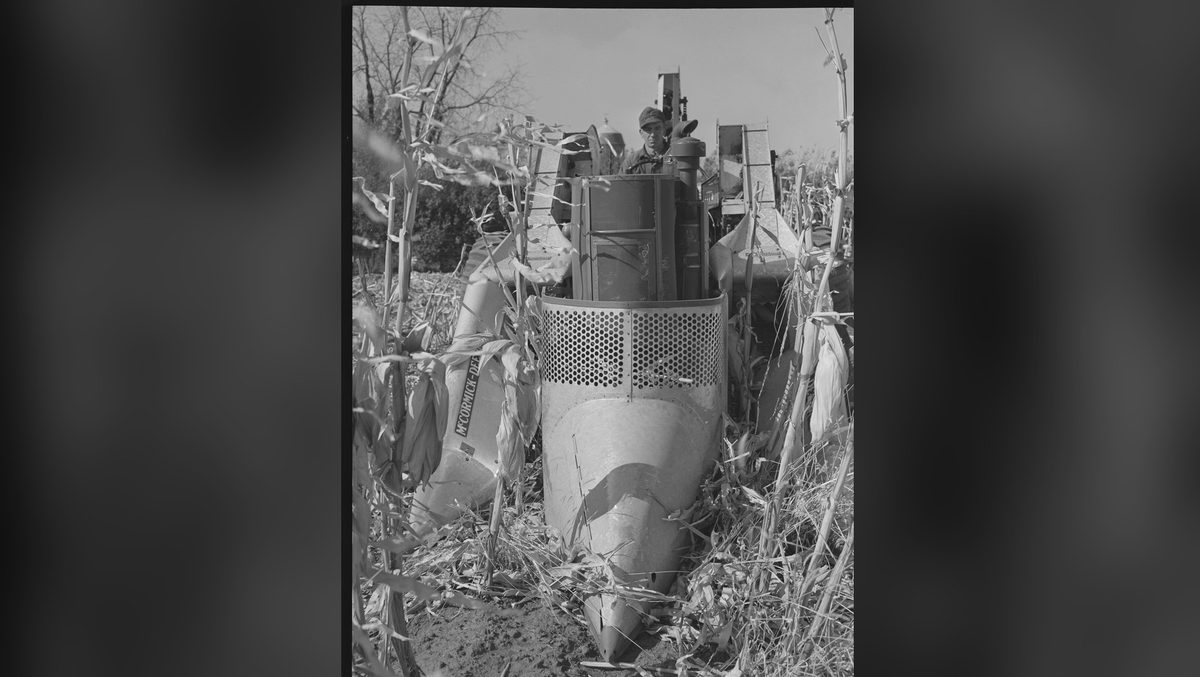
What the picker removed wasn’t just labor. It removed the reason forty neighbors needed to be in the same barn on the same night at all. By the early 20th century, most of the country no longer had that excuse, and a social institution that had run for well over a century on a genuine shared deadline quietly lost its reason to exist.
What Survived: A Sport, and One Deliberate Revival
The custom didn’t disappear everywhere on the same schedule. In North Dakota’s Red River Valley, where corn farming had arrived later than in New England, the husking bee was still new enough in 1900 to be revived on purpose as a community event rather than kept alive by necessity — the Grand Forks Herald covered what it called “the first husking bee ever held in the Red River Valley” that October, and the custom spread to towns like Jamestown within the decade.
Elsewhere, the labor had nothing left to do, so the competition detached from it entirely and became a sport. Agricultural editor Henry A. Wallace proposed a national corn husking contest in 1922 to boost rural morale; the first one ran in 1924, and his magazine, Wallaces’ Farmer, went on to sponsor many of the ones that followed. Spectators treated it as genuine entertainment: roughly 30,000 people attended the national contest in 1930, and by 1936 a single contest, hosted that year in Licking County, Ohio, drew a reported 160,000 — said to be the second-largest crowd of any sporting event that year in the United States, behind only an Indianapolis auto race. Elmer J. Williams won the first national title in 1925. Carl Seiler, husking left-handed against a field of 18 competitors from nine states near Galva, Illinois, in 1932, remains the only left-handed national champion on record; he won $100 for it. The contests stopped in 1941, when the war that would soon put most of that spectator labor into uniform made the spectacle pointless, and never returned at that scale — though smaller revivals, with age brackets and categories for women and children, still run today, and the Kewanee Historical Society in Illinois keeps a National Cornhuskers’ Hall of Fame cataloguing the champions of 1924 through 1941.
Watch the full history
The video companion covers the frolic side of the custom in full — the pile, the supper, the dancing that followed — in just over seven minutes.

A husking bee answered a real agricultural problem and then, almost as a side effect, became the biggest matchmaking event most rural communities had. It also, on at least one well-documented occasion, ran as a system of coerced labor dressed in the same red ear and the same songs. Both of those things are the custom’s actual history, not a sanitized version and a cynical correction of it. The same red ear meant a kiss to one husker and nothing at all — or something far worse waiting two weeks later — to another, depending entirely on whose barn the pile was in.
Would you want to find the red ear — or dread it?
Related reading
- How Corn Shellers Worked, and Why American Farms Needed One — the machine that took over the step right after husking.
- Why a Corn Crib’s Walls Lean Outward, and Why It Never Fell Over — where the night’s husked corn actually went.
- How Farmers Harvested Wheat With a Grain Cradle — another harvest deadline that depended on borrowed hands.
- How a Water-Powered Grist Mill Turned Wheat Into Flour, No Cash Involved — the barter economy a husking bee’s borrowed labor also ran on.
Works cited
- Fedric, Francis. Slave Life in Virginia and Kentucky; or, Fifty Years of Slavery in the Southern States of America. London: Wertheim, Macintosh, and Hunt, 1863, pp. 47–51. Excerpted as “Corn Songs in Harvest-time,” National Humanities Center Resource Toolbox. Link.
- Bogue, Allan G. “Changes in Mechanical and Plant Technology: The Corn Belt, 1910–1940.” The Journal of Economic History 43, no. 1 (1983): 1–25.
- “Cornshucking History.” North Carolina Historic Sites, North Carolina Department of Natural and Cultural Resources. Link.
- “Husking Parties in Concord, Massachusetts.” National Park Service. Link.
- Winslow Homer. Husking the Corn in New England. Wood engraving, Harper’s Weekly, November 13, 1858. Museum of Fine Arts, Houston, the Mavis P. and Mary Wilson Kelsey Collection of Winslow Homer Graphics.
- “William F. Lillie’s Help for Picking Corn by Hand.” History Nebraska.
- “Mechanical Corn Pickers Were Off to a Slow Start.” Farm and Dairy. Link.
- “Corn Husking Bees Brought Neighbors Together for Work, Socializing.” Farm and Dairy. Link.
- “Corn Husking Bees.” Dakota Datebook Archive, Prairie Public Broadcasting, citing the Grand Forks Herald, October 11, 1900. Link.
- “Thousands of Spectators Once Thronged Corn Husking Contests.” Wisconsin Public Radio. Link.
- “National Cornhuskers’ Hall of Fame.” Farm Collector. Link.