
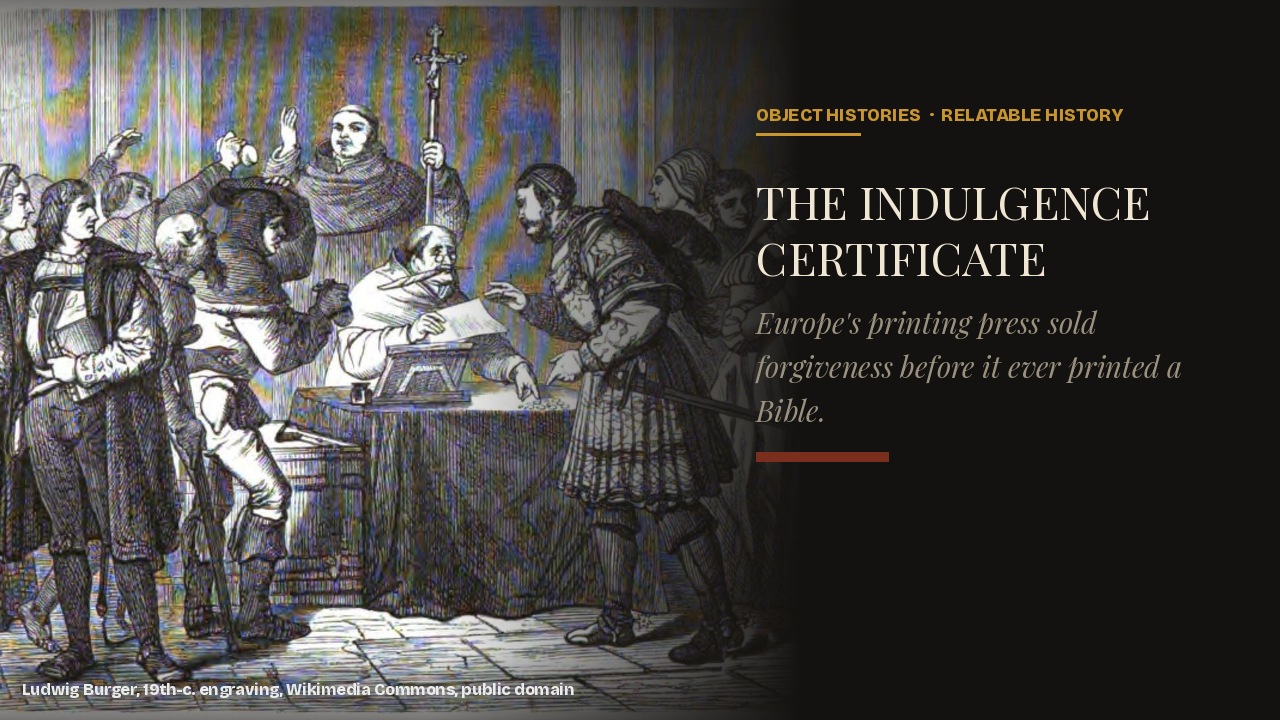
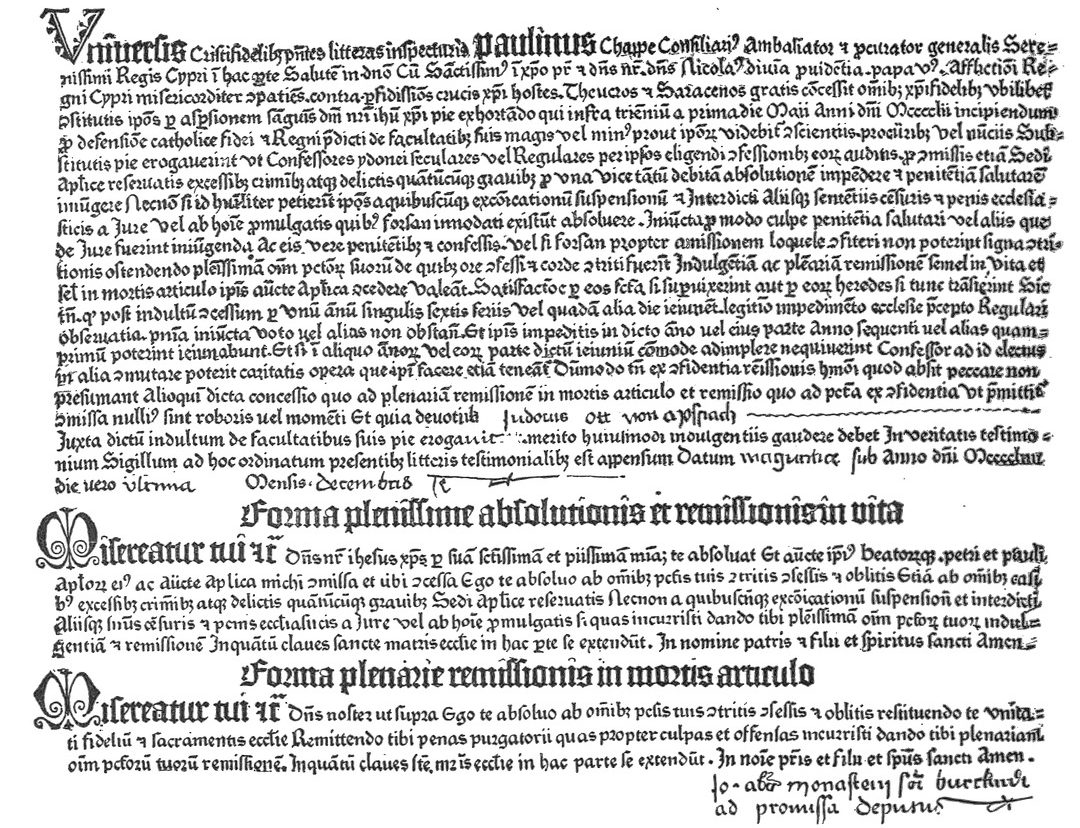
The oldest printed document in Europe that carries a firm, fixed date is not a Bible, a poem, or a royal decree. It is a receipt. On 22 October 1454, a Mainz print shop pulled a one-page form granting the bearer relief from part of the punishment owed for their sins — with four lines left blank in the middle, to be filled in by hand once somebody actually paid for it. Movable type had existed for only a few years. Its first securely dated use on the European continent was paperwork for a sale — which is how indulgence certificates worked from the very start.
That form, now called the 31-line indulgence, had nothing to do with Martin Luther, who was not yet born. It funded the defense of Cyprus against an Ottoman fleet, and almost nobody at the time objected to selling it. Sixty-three years later, the same kind of object — a printed certificate promising time off a sinner’s account, with a buyer’s name filled in by hand — became the single item that split the Western Church. Same paper, same basic idea. Completely different stakes.
This is how indulgence certificates worked, start to finish: how the document was made, what it theologically claimed to do, who ended up with the money, and exactly what happened to the whole practice once the argument forced the Church’s hand.
How Indulgence Certificates Worked, Step by Step
In April 1451, Pope Nicholas V granted the income from a plenary indulgence to John II, King of Cyprus, to help pay for defending the island against the Ottomans. His commissary, a Cypriot nobleman named Paulinus Chappe, presented the papal bull to the Archbishop of Mainz in the summer of 1453 and, in late summer 1454, contracted with Johann Gutenberg’s workshop to print the forms rather than write them out by hand. It was a practical decision, not a symbolic one — Chappe needed a lot of certificates quickly, and a press could turn them out faster than any scribe.
Forty-six copies of the 31-line indulgence survive today, most of them recovered as waste paper later used to reinforce the bindings of other books. Nearly all were sold within the Mainz archdiocese. The document itself is printed on vellum in Gutenberg’s large gothic titling type, with three initials cast in metal, and lines 18 through 21 are left empty for the purchaser’s name, the place, and the date — filled in afterward, one certificate at a time, as each sale happened.
None of this made the 1454 indulgence controversial. Pope and buyer agreed on what the money was for, the need was real, and the mechanism — a printed form standing in for a hand-written letter — was simply the fastest way to process a fundraising campaign. The scandal, when it came, was never really about the paper. It was about what the paper was eventually asked to cover for.
What the Certificate Actually Claimed to Do
An indulgence was never supposed to forgive sin outright. Church doctrine held that only confession and absolution did that. What an indulgence remitted was the temporal punishment still owed after sin was forgiven — time that, left unresolved, a soul would serve in purgatory. The theological basis for this was spelled out formally in Pope Clement VI’s 1343 bull Unigenitus, which described an infinite “treasury” of merit built up by Christ’s Passion and the good works of Mary and the saints, administered by the Church through the authority handed to Peter. Draw on that treasury, properly and penitently, and a portion of someone’s temporal debt could be cancelled.
By the early 1500s, sellers in the field routinely compressed that whole argument into something closer to a straight financial transaction: pay the fee, receive the remission, no confession required. This was not a surprise to Church authorities, and it was not new in 1517. Pope Boniface IX condemned religious who falsely claimed papal authority to forgive sins for money as early as 1392. In 1450, the theologian and cardinal Nicholas of Cusa publicly attacked preachers who taught that indulgences released a soul from guilt as well as punishment. Sixtus IV restricted the cases eligible for indulgence in 1478, specifically to reduce the financial incentive to sin and seek pardon. The abuse Luther would attack in 1517 was, by the Church’s own internal record, already over a century old — and indulgences were not the only devotional object with a price tag; the medieval market for pilgrim badges ran on a similar mix of genuine piety and brisk commerce.
An Archbishop’s Debt Turned One Diocese Into a Sales Floor
Albrecht of Brandenburg already held two church offices that canon law was not supposed to let him combine, and in 1514 he wanted a third: the archbishopric of Mainz. He had spent most of his liquid assets acquiring the posts he already had, and Mainz, nearly bankrupt after four archbishops in ten years, could not absorb the cost either. Pope Leo X set a steep price for confirming the appointment, so Albrecht borrowed the difference from Jakob Fugger, the Augsburg banker whose firm effectively functioned as Europe’s central financier at the time.
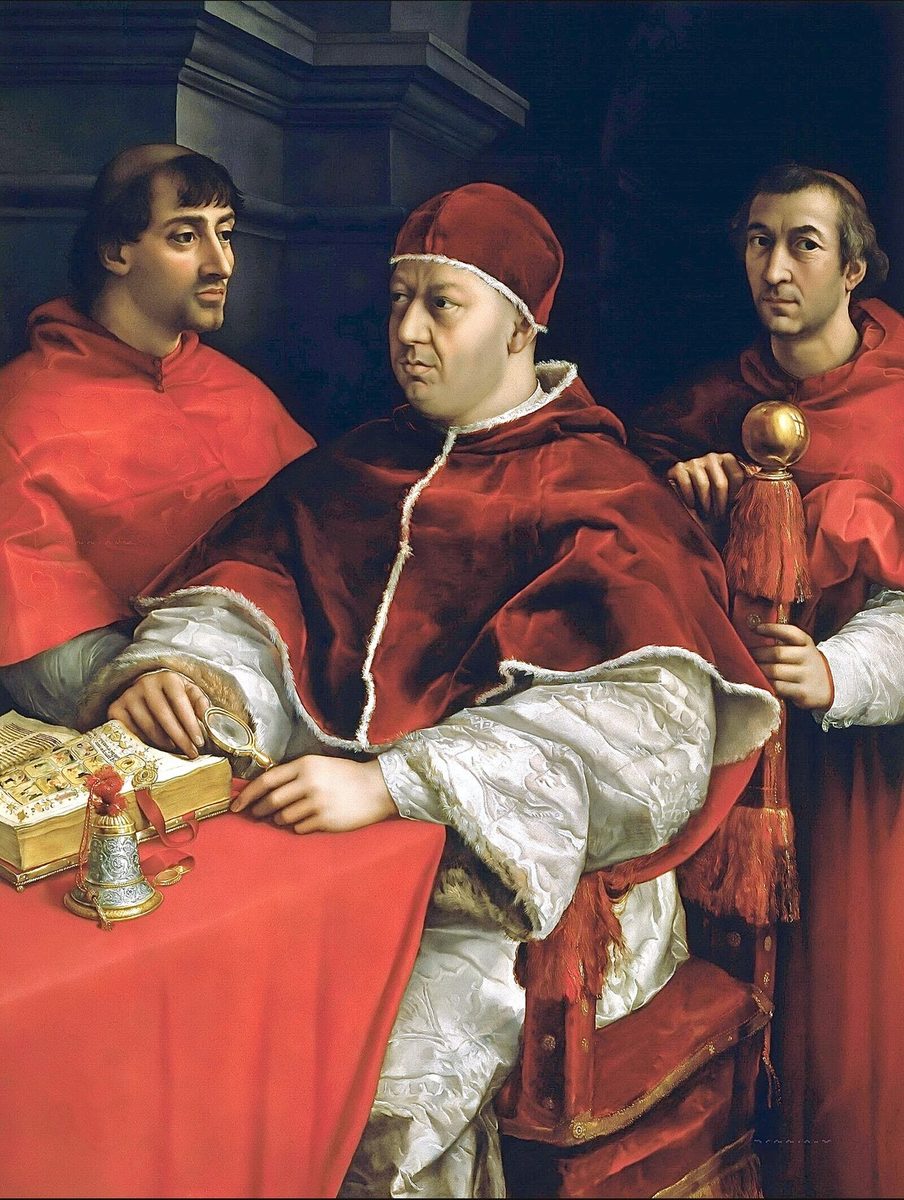
To let Albrecht repay that loan, Leo X authorized the preaching of a special plenary indulgence across Albrecht’s territory, with the proceeds split: half to Fugger, clearing Albrecht’s personal debt, and half to Rome, nominally for the reconstruction of St. Peter’s Basilica — itself not the first time a church project had been funded by monetizing belief; medieval relic trafficking had run on much the same logic for centuries. In January 1517, Albrecht named the Dominican friar Johann Tetzel general commissioner of the sale for the dioceses of Magdeburg and Halberstadt. Frederick III of Saxony, Luther’s own prince, would not let Tetzel preach inside electoral Saxony at all — which meant Tetzel worked the towns just across the border, close enough that people from Wittenberg crossed over to buy from him anyway.
Tetzel’s Sales Tour, and What He Probably Didn’t Pocket
Tetzel was no newcomer to the work. Born around 1465 in Pirna, he studied theology at Leipzig, joined the Dominicans, served as an inquisitor in Poland and Saxony, and had been preaching indulgences since at least 1503. His arrival in a town was a production: bells, a formal procession, the papal bull carried in on cloth of gold. His sermons leaned hard on the suffering of souls already in purgatory and the small cost, to the living, of shortening it. He is remembered chiefly for a rhyming pitch — coin struck in the collection chest, soul springing free — that historians agree overstated official doctrine badly enough that even a sympathetic biographer, Ludwig von Pastor, concluded Tetzel taught correctly on indulgences for the living but exaggerated what they could do for the dead.
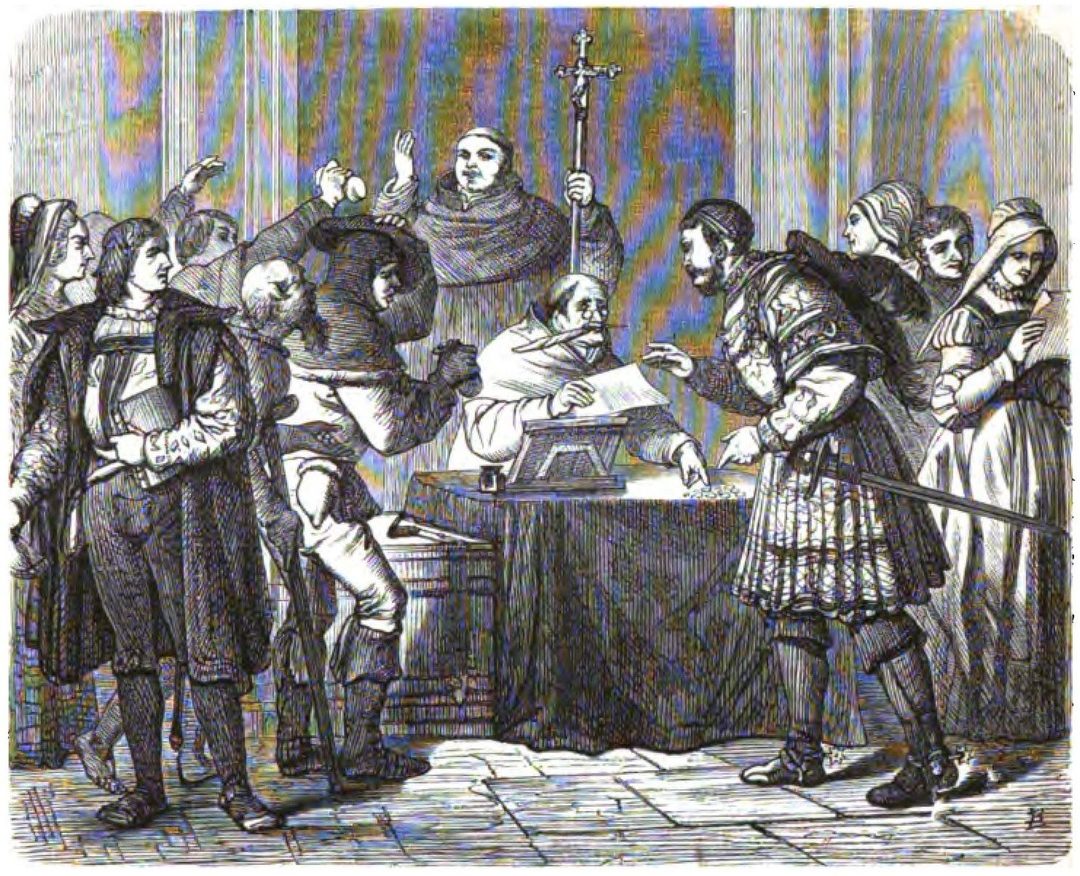
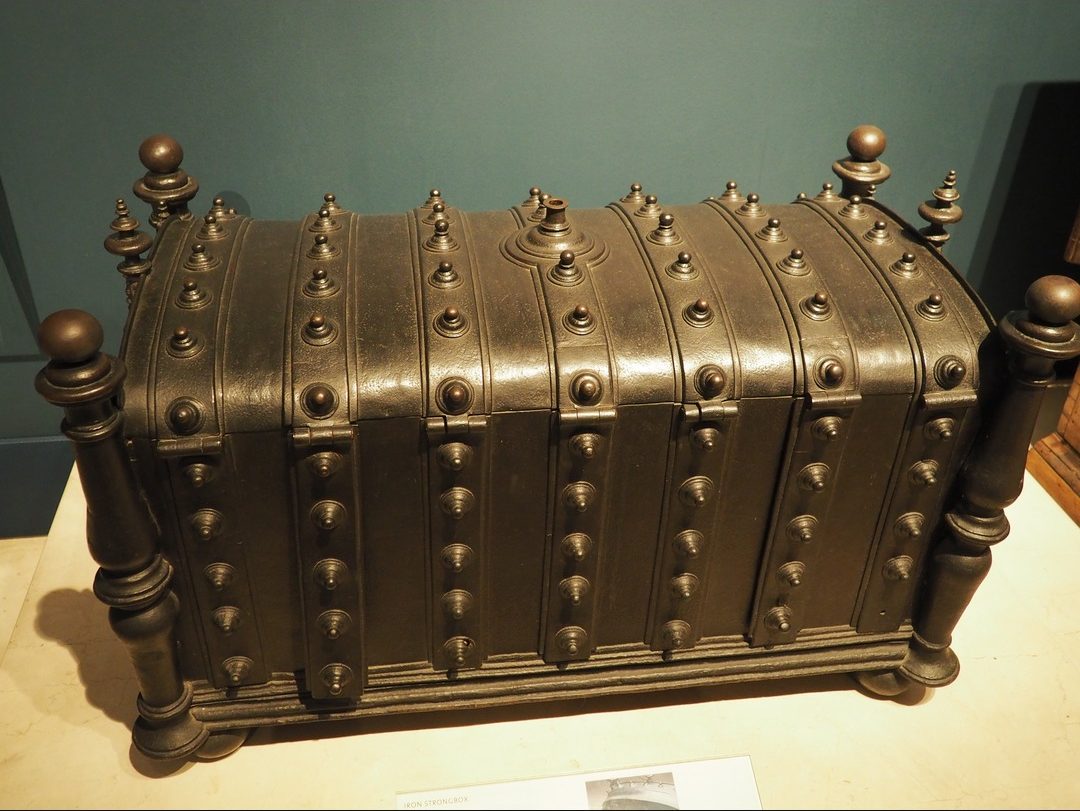
The money itself moved through a system built to resist a single crooked hand: three-lock collection chests, each key held by a different official, so no one person could open one alone. No surviving record shows Tetzel personally keeping any of the proceeds. Sources disagree sharply on how disgraced he really was by the end — Karl von Miltitz accused him of fraud and embezzlement in 1518, and he withdrew to the Dominican monastery in Leipzig under that cloud, yet Miltitz’s own credibility was later undermined, and when Tetzel died there in August 1519 he was given an honorable burial before the high altar. Luther, hearing Tetzel was dying, wrote him a letter of comfort rather than triumph.
One Monk, Ninety-Five Objections, and a Door That May Never Have Been Nailed
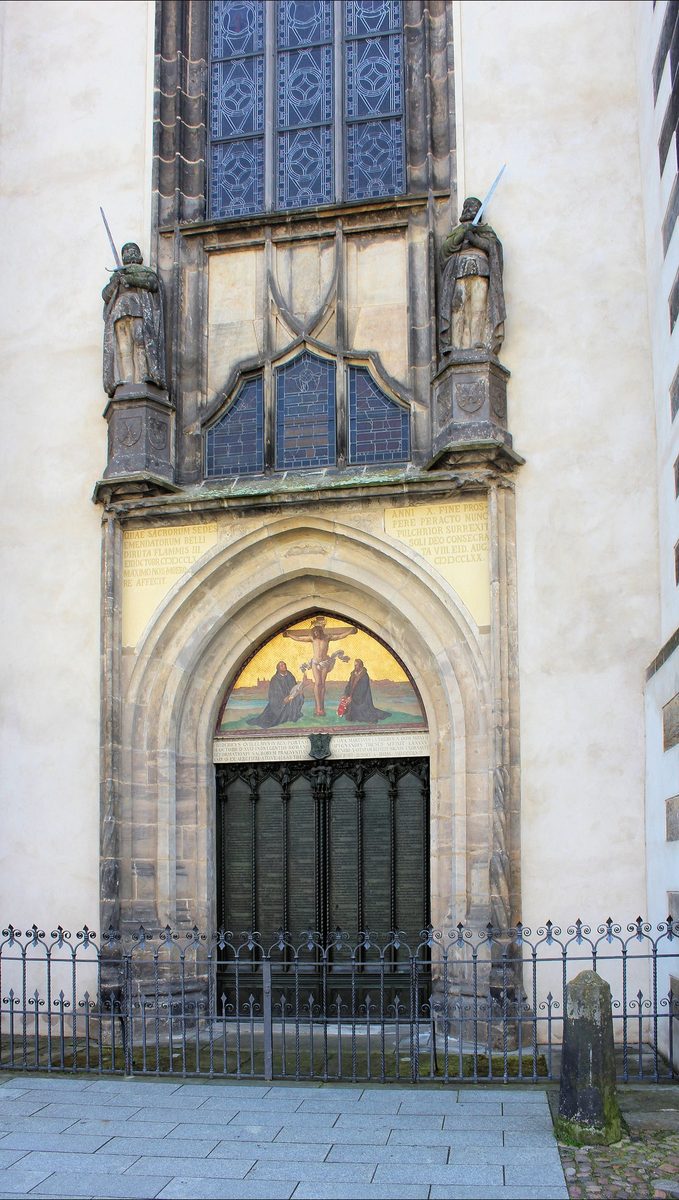
Luther had preached against indulgence abuses before 1517, but Tetzel’s spring campaign at Jüterbog, just across the Saxon border, pushed him to write it down formally. The traditional date for the Ninety-Five Theses is 31 October 1517, and the traditional image — Luther hammering the document to the door of Wittenberg’s Castle Church — has been seriously questioned by recent scholarship. There were no eyewitnesses, and Luther’s own later recollections were vague about exactly what he did with the document; historians including Peter Marshall now argue the more likely act was simply mailing the theses to the Archbishop of Mainz — Albrecht himself, the man whose debt the whole campaign was quietly retiring.
Whichever way the document first moved, its content was pointed. Theses 27 and 28 mock Tetzel’s coin-and-coffer pitch directly. Theses 56 through 58 go after the doctrine underneath it, arguing that the treasury the pope draws on is not simply the merits of Christ and the saints as Unigenitus claimed. Early in 1518, supporters translated the Theses into German and had them printed, turning an academic disputation into a public argument almost overnight. Tetzel answered with a rebuttal published under his own name but largely written by the theologian Konrad Wimpina; by the end of that year, Tetzel’s own indulgences were being publicly burned in Wittenberg — the same year that saw a very different kind of German religious upheaval take hold in Strasbourg, the dancing plague of 1518. At the 1518 Diet of Augsburg, Cardinal Cajetan invoked Unigenitus itself against Luther, who replied flatly that he did not regard the bull as binding. The dispute had stopped being about sales technique and become a dispute about papal authority.
The Certificate Outlived the Controversy by Exactly Fifty Years
Rome did not ignore the argument, even if it took decades to act on the practice at the center of it. The Council of Trent, meeting in its final sessions of 1562 and 1563, ordered an end to the criminal profiteering attached to indulgences and abolished the office of the quaestores, the professional indulgence traders whose entire livelihood was what Tetzel had been doing. In 1567, Pope Pius V went further and cancelled every indulgence grant that involved a fee or any other financial transaction, full stop. The specific product — pay money, receive a printed remission — stopped being legitimate Church practice fifty years after Luther’s Theses, and a hundred and thirteen years after a Cypriot nobleman first paid Gutenberg’s workshop to print one.
The object survived the ban in a stripped-down form. Indulgences remained part of Catholic practice, but the transaction that made Tetzel’s tour possible — a fixed price, a locked chest, a printed certificate with your name on it — was specifically what Pius V’s decree targeted and ended. What had started as an efficient way to fund a crusade against the Ottomans, in a form a Mainz printer could run off by the dozen, finished its public life as the thing an entire reform council felt it had to name and abolish by name.
The real story here isn’t a simple morality tale about a greedy friar. It’s what happens when a genuinely sophisticated piece of financial machinery — a papal authorization, an archbishop’s personal debt, a bank in Augsburg, a travelling commissioner, and Europe’s newest printing technology — runs into a question it cannot paper over with a faster print run. Nobody in 1454 thought twice about a printed form funding the defense of Cyprus. In 1517, enough people noticed exactly whose debt their money was quietly paying off. Would you have handed over coin for a printed promise about the next world, and would you have asked, the way Luther did, where that coin was really going?
Watch the full history
The video version covers Tetzel’s sales pitch and Luther’s break with Rome in about five minutes.

Related reading
- Inside the Medieval Pilgrim Badge Industry
- Furta Sacra: The Strange History of Medieval Relic Theft
- How Snuff Boxes Became the Currency of 18th-Century Courts
- What Caused the Dancing Plague of 1518?
Shop
Shop the sources behind this article:
- The Ninety-Five Theses and Other Writings (Penguin Classics)
- Here I Stand: A Life of Martin Luther, by Roland H. Bainton
Works cited
- Princeton University Library, Scheide Library. 31-Line Indulgence (the Cyprus Indulgence), Mainz, 1454/55. Catalog record.
- Norman, Jeremy M. “The 31-Line Indulgence Provides the Earliest Precise Date for European Typography.” HistoryofInformation.com. Link.
- “Johann Tetzel.” World History Encyclopedia. Link.
- “Johann Tetzel.” Encyclopædia Britannica.
- “Selling Forgiveness: How Money Sparked the Protestant Reformation.” Christian History Institute. Link.
- Little, Becky. “Martin Luther Might Not Have Nailed His 95 Theses to the Church Door.” History.com, A&E Television Networks. Link.
- Kent, William. “Indulgences.” The Catholic Encyclopedia, vol. 7. New York: Robert Appleton Company, 1910. Link.