
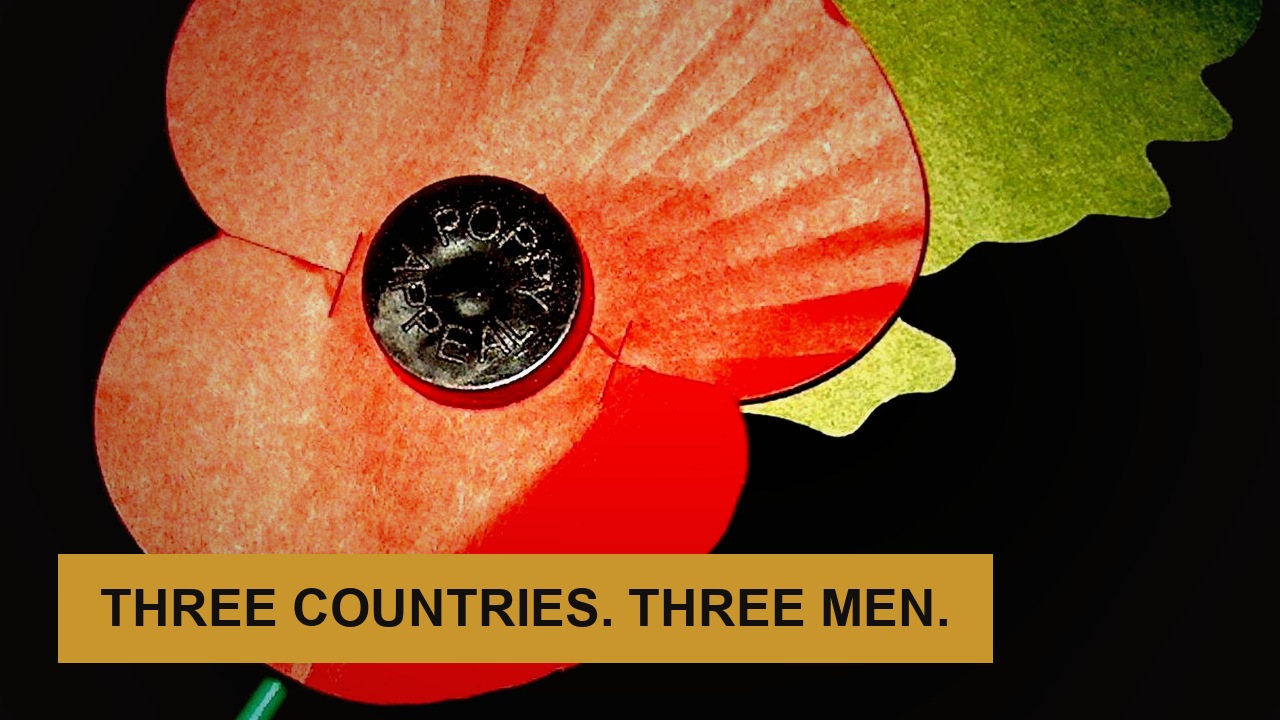
In October 1919, King George V’s private secretary, Lord Stamfordham, wrote to a South African lawyer named Percy FitzPatrick to say that the King personally credited him with inventing the two minutes of silence the entire British Empire was about to observe for the first time. That letter survives. So does a letter printed five months earlier in a London newspaper, under a false name, making almost exactly the same proposal — written by a struggling Australian journalist named Edward Honey, who would be dead within three years and buried in an unmarked grave outside London. And a full year before either man put pen to paper, a trumpeter was already playing the Last Post from a city hall balcony in Cape Town, over a street that had gone completely silent at the sound of a gun fired at noon.
Three claims, three countries, one ritual that close to two billion people now observe every November without thinking much about where it came from. The documents that survive don’t point to a single inventor. They point to three different men solving variations of the same problem, in the same eighteen months, for the same reason — and to an empire that needed the idea badly enough that it mostly stopped asking whose it actually was. Ask who invented the two-minute silence, and the honest answer is that at least three people have a real claim to it.
Cape Town Was Burying Its Grief in Silence a Year Early
By the spring of 1918, the casualty lists reaching Cape Town from the Western Front had stopped reading like news and started reading like a roll call. A local businessman, J. A. Eagar, had already asked his own congregation to pause in silence for the dead; Sir Percy FitzPatrick, a lawyer and author who worshipped at the same church, was in the room. Then, in April 1918, Germany’s spring offensive broke through the British line near Amiens, and two Cape Town families were hit within days of each other: Major Walter Brydon, son of city councillor R. R. Brydon, was killed on 12 April; Captain Reginald Hands, son of the sitting mayor, Harry Hands, was gassed in the same fighting and died of his wounds on 20 April, eight days later. (Several later accounts give the mayor’s son’s first name as “Richard” rather than Reginald — the record isn’t perfectly tidy on this point, which is itself a useful warning about how fast detail erodes even in an episode this well documented.)
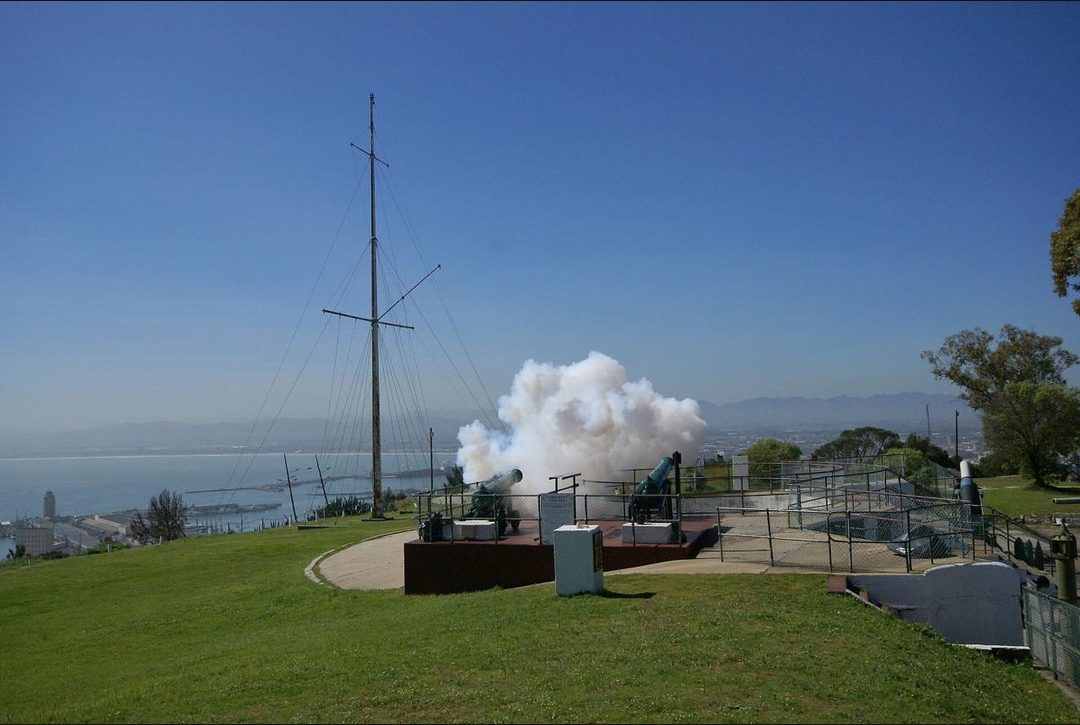
Councillor Brydon wrote to the Cape Times proposing a period of public silence for the fallen. Mayor Hands, newly bereaved himself, backed it immediately and proposed tying the pause to Cape Town’s noon gun on Signal Hill — already the loudest, most reliable public signal in the city, the one residents set their watches by. At noon on Tuesday 14 May 1918, the gun fired, a trumpeter on the balcony of the Fletcher and Cartwright Building at Adderley and Darling Streets played the Last Post, and for three minutes the city stopped. Newspapers the next morning reported trams, taxis and private cars halting in the street, pedestrians standing still, and men baring their heads. Within days, Hands shortened the pause from three minutes to two, reasoning that the shorter length would “better retain its hold on the people.” Cape Town kept the daily noon silence going until 17 January 1919, and revived it during the Second World War.
A Grieving Father Takes the Idea to the King
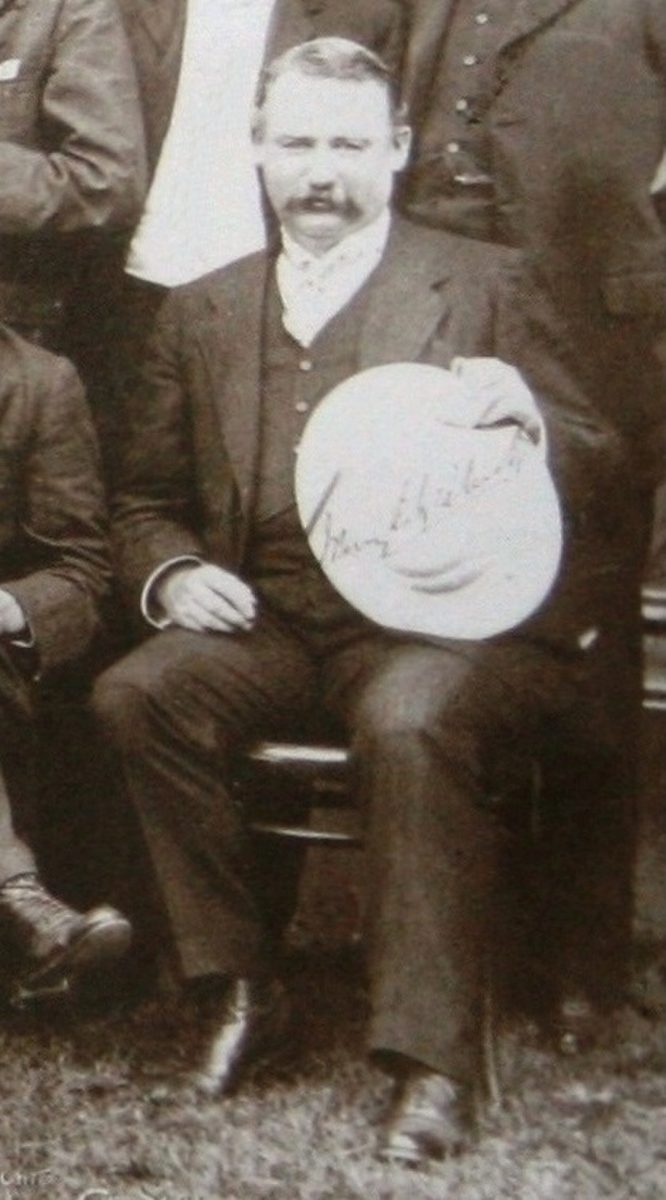
FitzPatrick had his own loss to carry. His eldest son, Major Percy Nugent FitzPatrick, had enlisted as a trooper in the Imperial Light Horse on 4 August 1914 — the day Britain declared war — and was killed by a long-range German shell on 14 December 1917 while serving with the South African Heavy Artillery. FitzPatrick, already a well-known public figure as the author of Jock of the Bushveld, had watched Cape Town’s daily pause from the inside. In October 1919, with the first anniversary of the Armistice approaching, he proposed something bigger: an annual two-minute silence observed across the entire British Empire, at the eleventh hour of the eleventh day of the eleventh month. He pitched it first to the press baron Lord Northcliffe, who did nothing with it. He then wrote to Lord Milner, the Colonial Secretary, who passed the idea to Lord Stamfordham, the King’s private secretary.
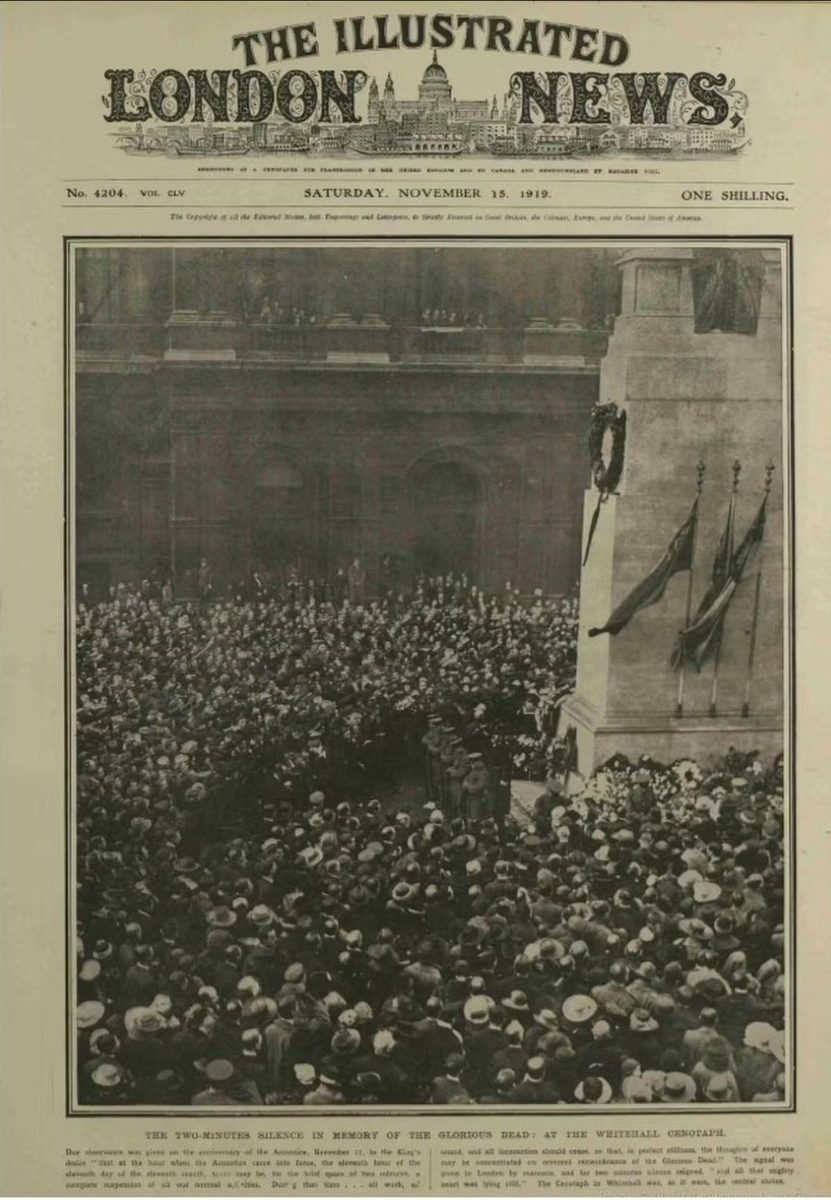
The proposal moved fast from there. Milner’s office had it in early November 1919; the idea reached George V within days. On 7 November, four days before the anniversary, The Times published the King’s own message, asking that at the appointed hour there be “for the brief space of two minutes, a complete suspension of all our normal activities,” so that “in perfect stillness the thoughts of everyone may be concentrated on reverent remembrance of the Glorious Dead.” On 11 November 1919, Britain fell silent for the first time as one country, synchronised by factory whistles, church bells and stopped trams. FitzPatrick himself was travelling in America and only read about it afterwards; by his own account he was moved enough to sit alone in his hotel room for the better part of an hour. Two months later, on 30 January 1920, Stamfordham wrote to him again, to say that the King “ever gratefully remembers” that the idea “was due to your initiation.”
A Rival Claim Was Already Sitting in a London Newspaper
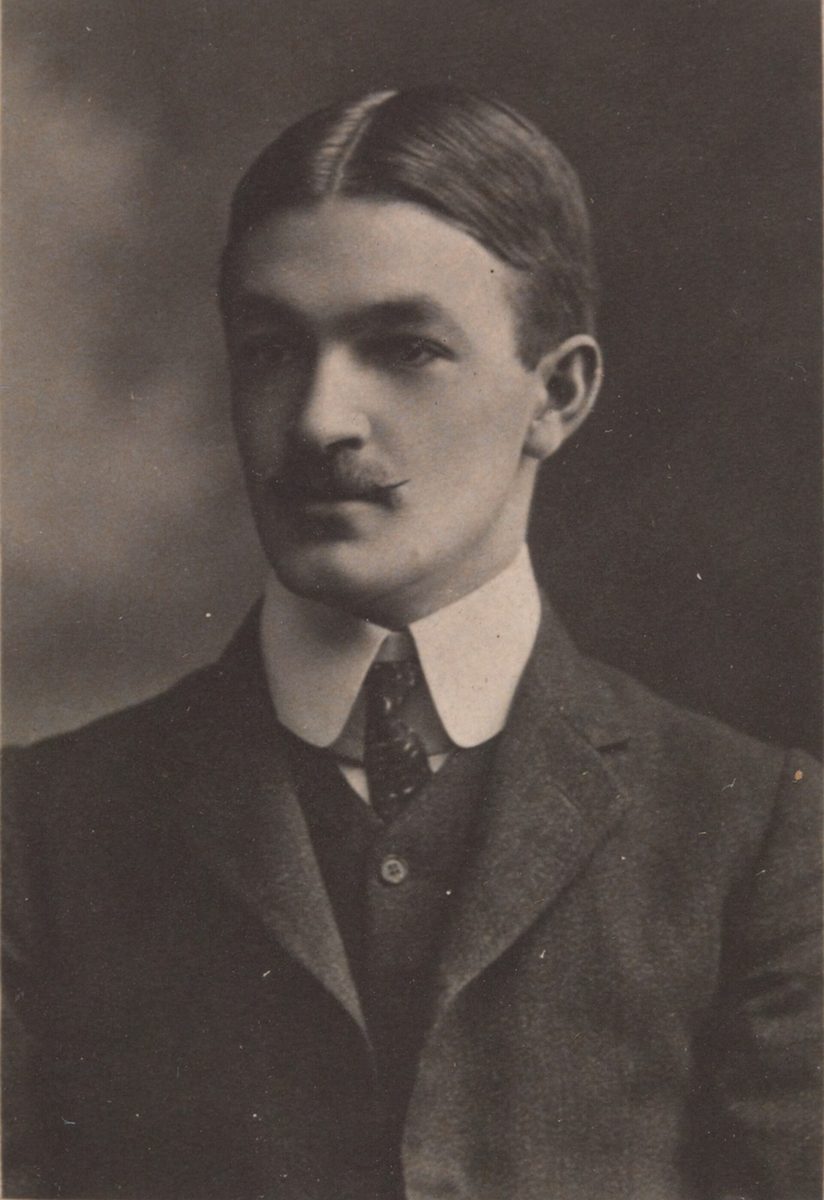
FitzPatrick’s letter to Milner wasn’t the first public version of the idea, though. Five months earlier, on 8 May 1919, a letter signed “Warren Foster” appeared in the London Evening News under the headline “A Peace Day Essential,” asking for “five minutes, five little minutes only” of national silence to mark the dead. The pseudonym belonged to Edward George Honey, a 33-year-old Australian journalist from Elsternwick, Melbourne, who had enlisted in the Middlesex Regiment in 1915, been discharged as medically unfit without ever leaving Britain, and scraped together a living in Fleet Street under half a dozen pen names. His letter drew almost no response at the time.
The claim that connects Honey to what actually happened a year later rests on a single detail: that before the first Armistice anniversary, he and FitzPatrick were both — in the careful word several accounts use — reportedly called to a rehearsal at Buckingham Palace, where the Grenadier Guards tried the silence at different lengths and settled on two minutes as the right one. The Australian War Memorial, which officially credits Honey with originating the idea, is unusually candid about how thin this is: its own account states plainly that “it is unclear whether Honey and Fitzpatrick ever met or discussed ideas about the silence,” and no primary document describing the rehearsal itself has ever surfaced.
The Case For Honey, and the Case Against Him
Honey’s strongest advocate was Eric Harding, a Melbourne researcher who spent years trying to document the claim, publishing on it in the Canberra Times in 1964, a booklet titled Remembrance Day Silence in 1965, and a further piece in 1969. Harding was sympathetic to Honey, but his own digging turned up no record of Honey ever attending a Palace rehearsal, and no official acknowledgment of his 1919 letter at the time it was written. What Harding did establish, convincingly, is the timeline: Honey’s proposal was in print on 8 May 1919, a clear five months before FitzPatrick is recorded approaching Milner. Whatever happened behind Palace walls, Honey’s is the earliest dated written proposal either man left behind.
Working from the other direction, M. F. Orford interviewed Honey’s widow, Amelia “Millie” Honey, for a 1961 article in the Victorian Historical Magazine, and came away with a more deflating picture. Millie told Orford that Fleet Street colleagues believed her husband had started the whole thing — but she also said, by Orford’s account, that Honey never went out into the street for any of the actual observances, and that the couple first learned of the 1919 silence the same way everyone else did, from the Palace’s own public announcement. By 1937 she described herself as left penniless. Honey died in 1922, at 36, and was buried in an unmarked grave at Northwood Cemetery outside London — not the biography of a man who had recently been thanked by a king. Even so, Australia’s government formally credits him today, and a plaque stands opposite Melbourne’s Shrine of Remembrance in his name; a Shrine curator told a reporter in 2005 that the real credit belonged with FitzPatrick’s Cape Town-inspired idea instead, and the dispute hasn’t moved much since.
Why “Who Invented the Two-Minute Silence” Might Be the Wrong Question
Laid out like this, the three claims stop looking like a contradiction and start looking like three different kinds of “first.” Cape Town has priority of practice: a working daily ritual, a full year ahead of anyone writing to a newspaper or a palace. Honey, if his May 1919 letter is what counts, has priority of public proposal, a clear five months ahead of FitzPatrick’s approach to Milner. And FitzPatrick has priority of procurement — his name is the one on the letter that actually reached the Crown, the one Stamfordham thanked in writing, the one that the historical record, such as it is, ended up crediting.
None of that requires anyone to have lied. It only requires that an idea whose moment had plainly arrived — a continent’s worth of people needing somewhere to put years of grief they hadn’t had much occasion to show in public — occurred to more than one person, in more than one country, within about eighteen months of each other. The one document that would settle it outright, a dated staff note from inside the Palace describing who was actually in the room for that rehearsal, appears not to survive, if it was ever written down at all. Even the Australian War Memorial, which has the most to gain from a clean answer, declines to pretend it has one.
It’s the same gap that shows up whenever an event is enormous enough that everyone involved assumes someone else is keeping the paperwork. Sorting real pieces of the Berlin Wall from the fakes runs into exactly this problem decades later, and the disappearance of Japan’s most famous sword, the Honjo Masamune, went cold for the same reason: the bigger and more public the moment, the more confidently everyone assumes it’s already been written down somewhere.
The Silence Has Had Its Own History Since 1919
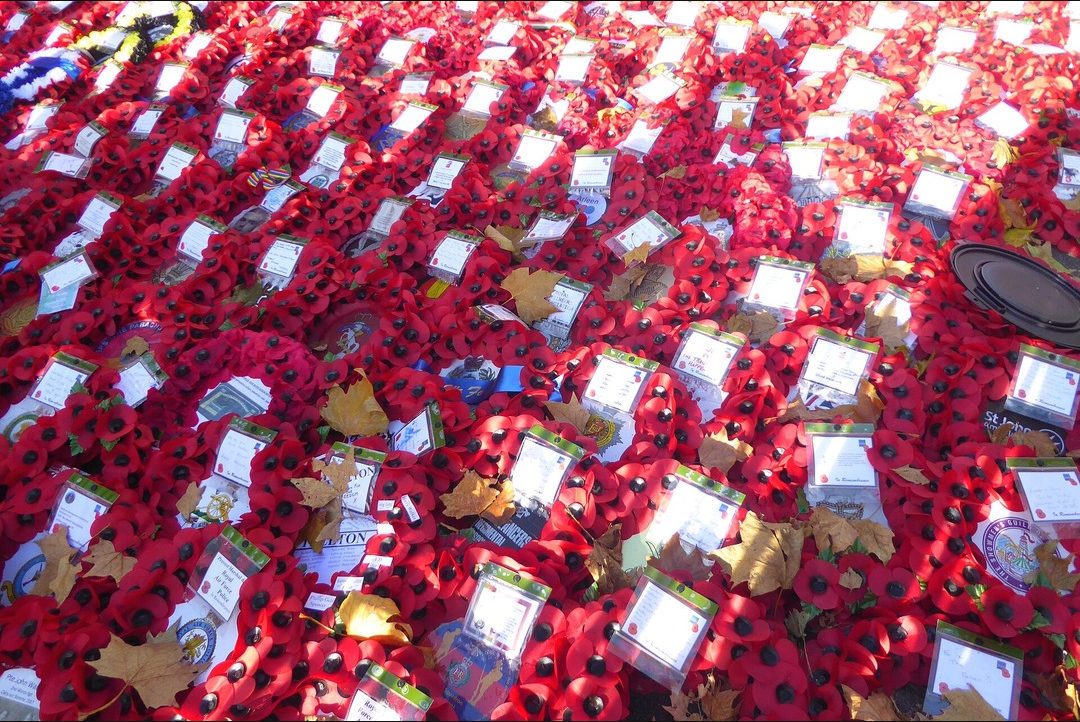
Official origin stories rarely survive contact with the documents either — the Statue of Liberty’s own dedication tells a similarly tangled story — and the ritual of the silence itself didn’t stay fixed once it started. During the Second World War, Britain moved the national silence off 11 November entirely and onto the nearest Sunday, so it wouldn’t interrupt wartime factory production; after the war, that Sunday observance stuck, rebranded as Remembrance Sunday, partly so it could honour a new generation of war dead without being tied to one specific conflict. It took the fiftieth anniversaries of D-Day and VE and VJ Day, in 1994 and 1995, to renew enough interest that the Royal British Legion successfully lobbied to bring the silence back to 11 November itself; since then, Britain has observed it twice — once on the date, once on the nearest Sunday.
The United States never adopted the Armistice Day silence, but it eventually built its own version of the same instinct: in May 2000, President Clinton directed federal agencies to promote what became the National Moment of Remembrance, a single minute of silence at 3 p.m. local time on Memorial Day. Different war dead, different calendar date, same underlying idea that a nation occasionally needs to be told, by someone with the standing to say so, to stop and be quiet together.
Watch the full history
The documentary version covers the same three rival claims in about eight and a half minutes — useful if you’d rather watch Cape Town’s noon gun and Buckingham Palace’s rehearsal laid out side by side than read them.

Related reading
- The Honjo Masamune Disappearance: What Happened to Japan’s Lost Sword — another twentieth-century mystery where the paper trail runs out right at the moment it matters most.
- Is the Day of the Dead Really a Pre-Hispanic Tradition? — a different culture’s ritual for the dead, and a similar fight over how much of its “ancient” origin is actually modern invention.
- How to Tell Real Berlin Wall Pieces From the Fakes — another case of a twentieth-century event generating its own disputed relics almost immediately.
- The Statue of Liberty Was Built to Honor the End of Slavery — a public monument whose official origin story and its messier documented history don’t quite match either.
- The 4,000-Year History of the Parasol, From Royal Throne to Street Weapon — for how a single everyday object can end up carrying a nation’s worth of competing stories.
Works cited
- Australian War Memorial. “A period of silence.” Link.
- Australian War Memorial. “Origins of Remembrance Day.” Link.
- Gregory, Adrian. “Remembrance Day: the enduring nature of the first two-minute silence.” The Conversation, 2019. Link.
- Gregory, Adrian. “The Complicated History of Remembrance.” History & Policy. Link.
- Mombauer, Annika, and Vincent Trott. “Why do we have two minutes’ silence on 11th November?” OpenLearn, The Open University, 2018 (updated 2023). Print/paywalled on retrieval; cited without live link.
- “The traditional ‘two minutes silence in remembrance’ was first observed in Cape Town.” The Heritage Portal. Link.
- Dickens, Peter. “‘2 Minutes Silence’ Is a South African Gift to the Act of Remembrance.” SA People, 7 November 2018. Link.
- Jokiranta, Miyuki. “The little-known origin of the minute’s silence.” ABC News, 9 November 2018. Link.
- Harding, Eric. Remembrance Day Silence. Melbourne, 1965. Print.
- Orford, M. F. “Lest We Forget: A Tribute to the Late Edward George Honey.” Victorian Historical Magazine, 1961. Print.
- Carson, James. “The History of Armistice Day and Remembrance Sunday.” History Hit, 11 November 2017. Link.
- The White House, Office of the Press Secretary. “Memorandum on National Moment of Remembrance.” 2 May 2000. Link.