
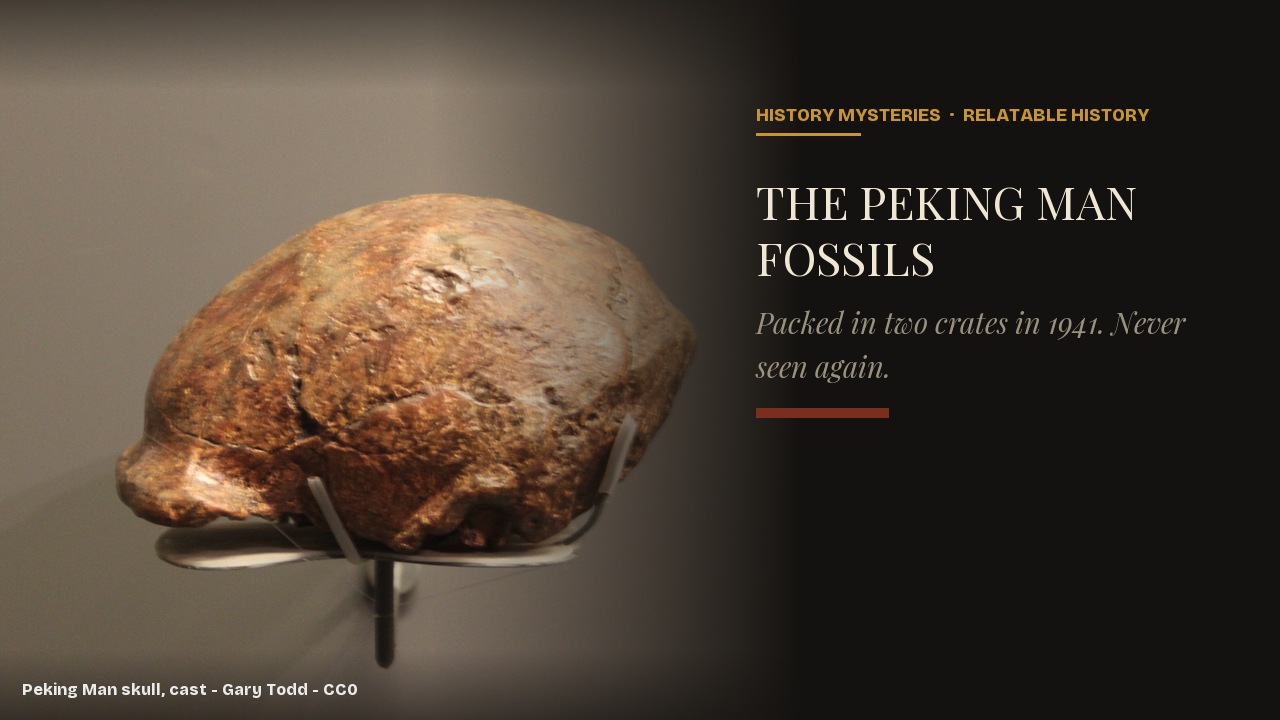
The best-documented collection of early human fossils ever assembled survives today only as plaster. Scientists spent sixteen years pulling six skullcaps, fifteen jawbones and a hundred and fifty-seven teeth—parts of roughly forty individuals—out of a limestone hill southwest of Beijing, and another six years writing up every measurement in print. Then, in a single chaotic week in December 1941, the actual bones were packed into two wooden crates, handed to a detachment of United States Marines, and lost. No receipt was ever signed. No photograph shows the crates leaving the building they were packed in.
That loss turned the Peking Man fossils into one of the most searched-for objects in the history of science. A Chicago businessman’s reward produced a hoax. A government commission logged a hundred tips and closed without one confirmed lead. A retired Marine’s seventy-year-old memory of a foxhole is, at this writing, the closest anyone has come to a location. This article follows the collection from the apothecary shops where it started, through the institution that was built to study it, into the week it vanished, and on to the handful of real fragments—teeth, mostly, one of them found by accident in a Swedish storeroom in 2011—that are all that remain to hold.
A tooth bought from a pharmacy built an eighty-thousand-dollar laboratory
For centuries, Chinese apothecaries sold fossilized bone and teeth as longgu, or dragon bones, ground into powder as a folk remedy for fever and bleeding. In 1899 a German physician working in Peking bought a tooth from one of those shops that didn’t match any animal he recognized. It traveled to a European collection and sat there for roughly twenty-five years before anyone studied it seriously.
In 1921 the Swedish geologist Johan Gunnar Andersson followed a villager’s directions to a fossil-rich limestone ridge near the market town of Zhoukoudian, which local residents already called Dragon Bone Hill. His Austrian colleague Otto Zdansky excavated there in 1923 and pulled out a human-looking tooth, then said nothing publicly about it for three years. When it was finally announced in 1926, it drew enough attention—and enough money—to fund a real excavation.
The pivotal find came on the last day of the 1927 digging season, when the Swedish palaeontologist Birger Bohlin turned up a single lower molar. Davidson Black, a Canadian anatomist at Peking Union Medical College, used that one tooth to name an entirely new genus and species, Sinanthropus pekinensis, and had it mounted in a locket on his own watch chain. On the strength of it he secured roughly eighty thousand dollars from the Rockefeller Foundation, and in 1928 the Cenozoic Research Laboratory opened inside the medical college—a serious, well-funded institution built around a single molar.
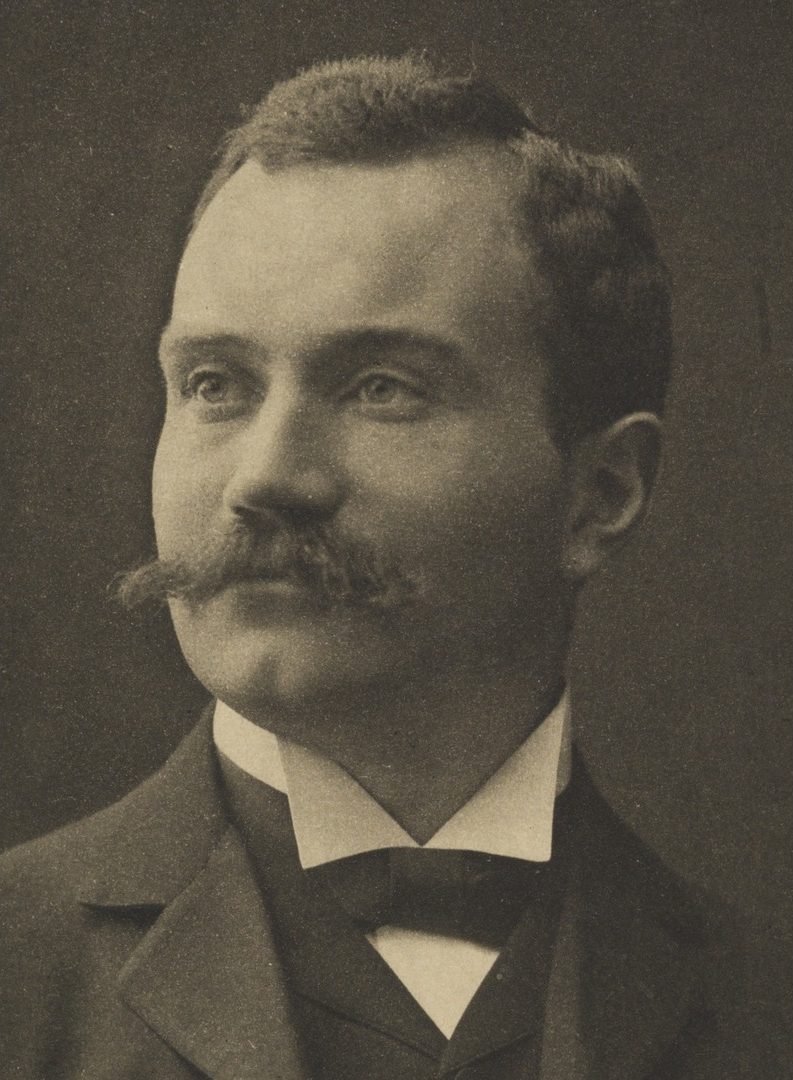
Pei Wenzhong worked by candlelight to free the first skull
The gamble paid off. On 2 December 1929, a young Chinese palaeontologist named Pei Wenzhong was lowered into the narrowing bottom of the cave and worked by candlelight to prise an almost complete skullcap out of the surrounding rock. He carried it back to Peking wrapped in his own clothing.
Over the following eight years, a team led by Pei, Jia Lanpo and Yang Zhongjian, with Pierre Teilhard de Chardin handling the geology, turned Zhoukoudian into the richest known early-human site on Earth. The hill yielded six near-complete braincases, fourteen skull fragments, six pieces of face, fifteen jawbones, a hundred and fifty-seven teeth, and a scatter of limb bones representing men, women and children—around forty people in total. Tens of thousands of stone tools came out alongside them, along with ash deposits that were read for most of the twentieth century as the oldest evidence of controlled fire anywhere in the world.
The discovery mattered well beyond one hillside. Eugene Dubois had found the similar “Java Man” fossils in 1891 and been widely disbelieved by his peers. Zhoukoudian corroborated him: upright, large-brained, tool-making humans had lived across East Asia hundreds of thousands of years earlier than most scientists had been willing to accept. Davidson Black died at his desk in 1934, forty-nine years old, reportedly with a fossil still in his hand.
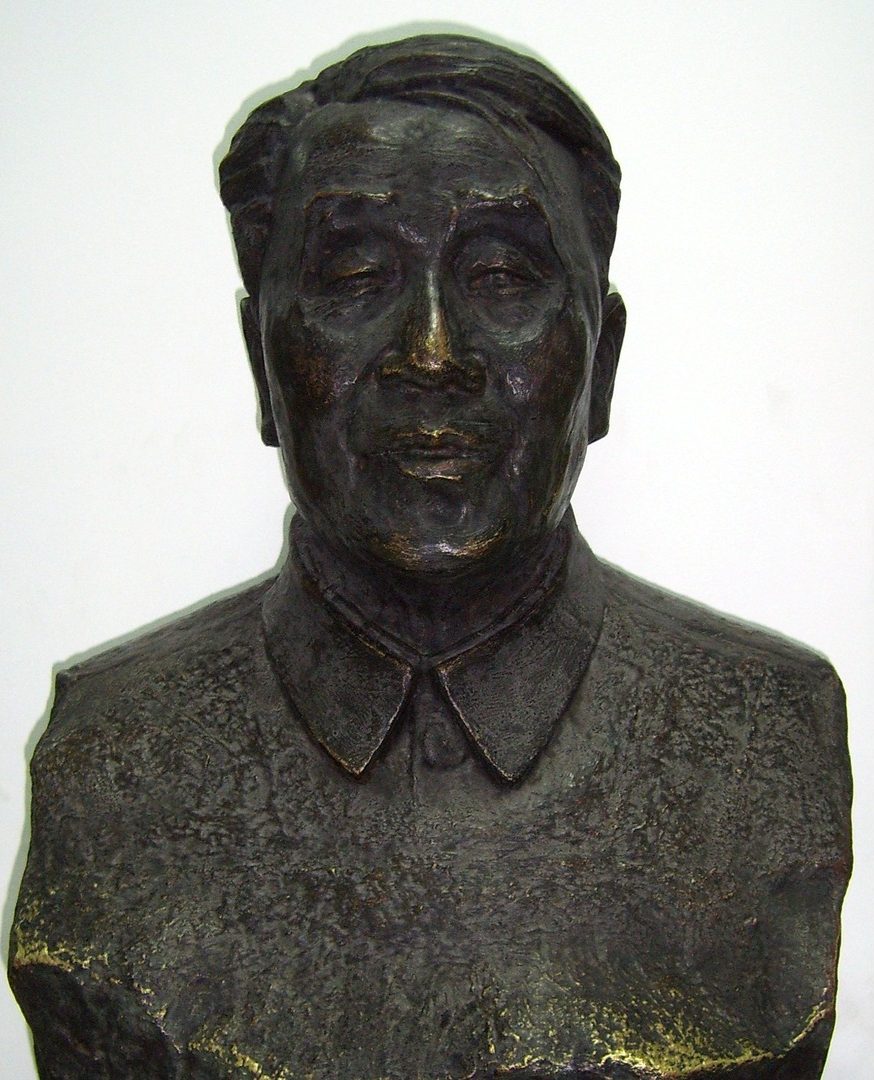
The site’s famous hearths have spent decades on trial
Few pieces of evidence from Zhoukoudian illustrate how the field has had to re-examine its own certainties as clearly as the fire. The reddish, ash-like deposits found alongside stone tools and burnt bone were taught through most of the twentieth century as proof that Homo erectus at this site controlled fire earlier than anywhere else on record.
Starting in the 1980s, researchers began questioning that reading, arguing the deposits lacked the chemical signature of genuine wood ash and may have simply washed into the cave from outside. A detailed paper made that sceptical case directly. The dispute could only be settled by going back to the sediment itself, because the bones that might otherwise have resolved it were long gone—a problem that investigators chasing the Tunguska explosion would recognize immediately.
Excavations beginning around 2013 reopened the question with new techniques, reporting siliceous aggregates and bone burned above six hundred degrees Celsius in apparently undisturbed positions—evidence that points back toward genuine, controlled burning at the site. The argument remains active today, and it is being conducted entirely through soil chemistry and micro-stratigraphy, because the physical fossils that first drew attention to the cave cannot be re-examined at all.
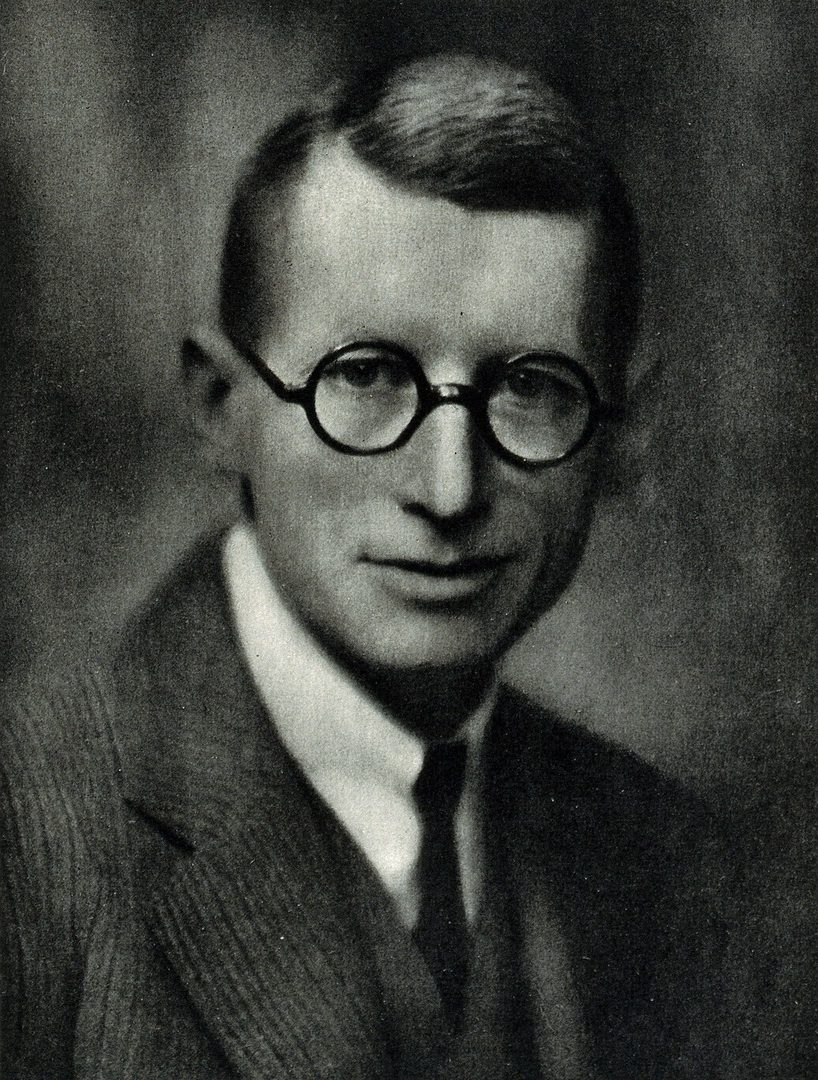
Franz Weidenreich spent six years making the bones survivable
Franz Weidenreich, a German anatomist driven from his own university post, took charge of the collection in 1935. He spent the next six years producing exhaustive written descriptions of every specimen—measurements, photographs, detailed plates—and, critically, ordering plaster casts made of the entire collection as the political situation in China deteriorated. That decision is the only reason the Peking Man fossils still exist in any studiable form today.
In the summer of 1941, with Japanese forces already occupying Peking and American entry into the war looking all but certain, Weidenreich packed his casts and his notes and left for New York. The original bones stayed behind in a safe at the medical college, on the reasoning that an American-administered hospital was the safest building left in the city. That reasoning had roughly four months to prove itself wrong.
Two footlockers, no manifest, and a war that arrived a day early
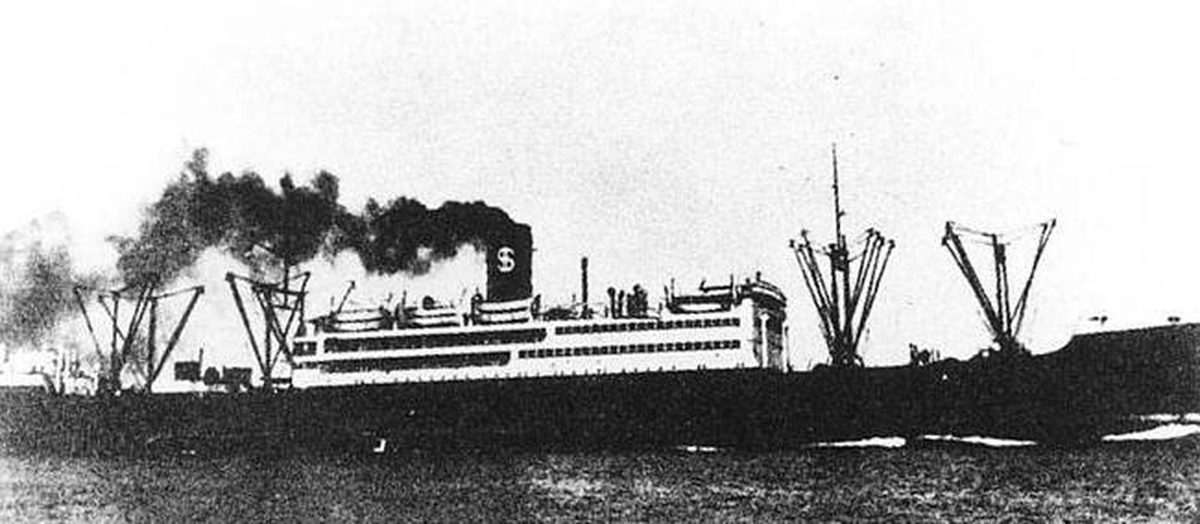
By November 1941 that reasoning had expired. A laboratory secretary named Hu Chengzhi personally packed the fossils—each specimen wrapped in lens paper, then cotton, then medical gauze—into small boxes, and the boxes into two wooden footlockers. They were handed to the medical college’s American administrator for a detachment of US Marines to carry out of the country, bound for the liner President Harrison, which was collecting the last Marines out of North China at the coal port of Qinhuangdao.
Nothing about the movement was organized around the fossils specifically. It was a routine troop withdrawal, planned weeks earlier, and two footlockers of science happened to be riding along with the Marines’ own baggage. On 7 December, Japanese aircraft struck Pearl Harbor; because of the International Date Line, the same attack fell on 8 December in North China. Japanese troops surrounded the Marine barracks at the port that morning and took the garrison prisoner. The President Harrison never arrived at Qinhuangdao at all—her crew ran her aground off the Chinese coast rather than let her be captured intact. Somewhere between the medical college’s safe and the Marines’ baggage at the port, the two footlockers stop appearing in any surviving record—a gap in the paper trail not unlike the one that still surrounds why the crew of the Mary Celeste went over the side.
Eighty-five years of searching has produced a hoax and a parking lot
What followed is less a single investigation than eight decades of scattered leads. American officials initially suspected Japanese looting; Japanese authorities, who conducted their own search after occupying the city, found nothing either. Post-war investigators checked the American Museum of Natural History, sites in Tokyo, warehouses in Tianjin, and a reported storage facility in Switzerland, without result.
In 1972 a Chicago businessman named Christopher Janus offered a five-thousand-dollar reward for information. A woman contacted him claiming her late husband, a Marine, had shown her a photograph of what looked like fossils packed in a crate; she asked for far more money than the reward, and then vanished. The photograph was never authenticated by anyone with the expertise to judge it. Other leads followed the same pattern over the decades: a contract worker’s claim that American personnel sealed the bones into a Tianjin basement; a Taiwan veteran’s account of a flight to Kaohsiung; a Henan villager’s story about a buried military truck. In 2005 the Chinese government formed a dedicated search committee and requested cooperation from Japan, South Korea and the United States. Within a year it had logged close to a hundred tips, in a volume of unverified reports not unlike what Project Blue Book processed on a different subject entirely. None produced a fossil.
The most substantive lead came from a different direction entirely. A Marine named Richard Bowen, digging a foxhole at the old barracks site in 1947, struck a box of bones in the dark, reburied it, and moved on with his unit. Decades later he wrote to the palaeoanthropologist Lee Berger, who worked with colleagues in Beijing to reconstruct exactly where the vanished barracks had stood. The resulting published analysis narrowed the search to a handful of candidate sites within a small area—one now under a warehouse, others under a roadway and a parking lot—and put the odds of recovery as slim at best.
Even the version of events repeated above—fossils packed by the medical college, handed to Marines, lost en route to the President Harrison—has not gone unchallenged. A 2021 archival study reopened the case files and flagged factual and chronological inconsistencies across the personal accounts the “standard” story rests on, few of which were ever independently verified. The same study ran a forensic analysis of the 1972 photograph behind the Janus reward and concluded it was very likely staged. It went further still, surfacing a previously unpublished State Department document that it says makes it unlikely the fossils were ever actually delivered into American hands at all. The authors reach no new answer of their own; they argue only that the old one deserves far less confidence than eighty years of retelling have given it.
What’s left of forty people
What the documentary record does not contain is worth stating plainly: there is no manifest listing the crates, no signed receipt from the dock, no photograph of them leaving the medical college, and no single account of anyone having seen both footlockers after they left the safe. Every version of those final days is a recollection, most of it written down years after the fact.
What survives instead is Weidenreich’s casts and monographs—the source for essentially every textbook illustration of Peking Man ever published—plus a handful of genuine fragments recovered from later excavations at the same site in the 1950s and 60s, and four teeth that ended up in Sweden through the original research partnership. Three of those teeth had been known for decades. The fourth, a canine, turned up only in 2011, inside one of forty cartons of old Chinese expedition material that had sat unopened in a university storeroom since the professor who received them had died. It is the only Peking Man canine known to exist anywhere.
The hill at Zhoukoudian is now a UNESCO World Heritage Site, and its sediments have since been redated to roughly seven hundred and fifty thousand years old—more than double the figure first proposed when the excavation began. The site, and the science built on it, endured. The forty people whose remains made that science possible did not.
Watch the full history
The video version walks through the same sixteen years of excavation and the single week it took to lose it all, in just over eight minutes.

What makes this disappearance different from most lost-treasure stories is that almost nothing scientific actually rode on recovering the bones. Weidenreich’s decision to cast and publish everything meant Sinanthropus pekinensis—later folded into Homo erectus—kept its place in the human family tree with or without the originals. The loss cost the field something else: the chance to run any test invented after 1941 on bone that no longer exists. Every argument about Zhoukoudian’s hearths, its dating, or its people has had to be fought with casts, notes and sediment instead of the material that actually settles an argument.
That is also why the hunt has never really stopped. A parking lot and a roadway in a Chinese port town are, right now, the best-supported guess anyone has produced in eighty-five years, resting on one man’s memory of a cold night in 1947. It is a strange kind of monument: not a plaque, not a museum case, but a patch of asphalt that might be sitting on top of forty people.
If you had Richard Bowen’s old war stories and a shovel, would you trust a seventy-year-old memory enough to start digging there—or wait for the next storeroom carton to turn up?
Related reading
- Why the Tunguska Explosion Left No Crater — another case where the physical evidence that would settle a scientific argument was never recovered.
- How Project Blue Book Investigated UFO Reports — a Cold War-era government search effort that, like the hunt for the fossils, logged hundreds of reports and closed most of them unresolved.
- What Really Made the Crew Abandon the Mary Celeste — another vanishing with no surviving manifest, no witnesses, and decades of competing explanations.
- The Nebra Sky Disc Dating Dispute, Explained — a different archaeological find whose scientific value has been argued over almost as fiercely as its authenticity.
Keep reading
Noel Boaz and Russell Ciochon’s Dragon Bone Hill: An Ice-Age Saga of Homo erectus is the fullest single account of the excavation, the institution built around it, and the disappearance covered in this article. Find it on Amazon .
Works cited
- Boaz, Noel T., and Russell L. Ciochon. Dragon Bone Hill: An Ice-Age Saga of Homo erectus. Oxford University Press, 2004.
- “Peking Man: The New Skulls and the Evolutionary Problem.” Nature 139 (1937): 261–262. Link.
- Weiner, S., Q. Xu, P. Goldberg, J. Liu, and O. Bar-Yosef. “Evidence for the Use of Fire at Zhoukoudian, China.” Science 281, no. 5374 (1998): 251–253.
- Zhong, M., C. Shi, X. Gao, X. Wu, F. Chen, S. Zhang, X. Zhang, and J. W. Olsen. “On the Possible Use of Fire by Homo erectus at Zhoukoudian, China.” Chinese Science Bulletin 59, no. 3 (2014): 335–343. Link.
- Berger, Lee R., Wu Liu, and Xiujie Wu. “Investigation of a Credible Report by a US Marine on the Location of the Missing Peking Man Fossils.” South African Journal of Science 108, no. 3/4 (2012). Link.
- Roberts, Michael F., Elizabeth M. DeVisser, and Joel P. Marrant. “Treacherous Evidence: Archival Documents and the Search for Peking Man.” PaleoAnthropology 2021, no. 1 (2021). Link.
- “Report from Former U.S. Marine Hints at Whereabouts of Long-Lost Peking Man Fossils.” Scientific American, 2012. Link.
- “Unique Canine Tooth from Peking Man Found.” Uppsala University press release, May 11, 2011. Link.
- “Peking Man Site at Zhoukoudian.” UNESCO World Heritage List, No. 449.