
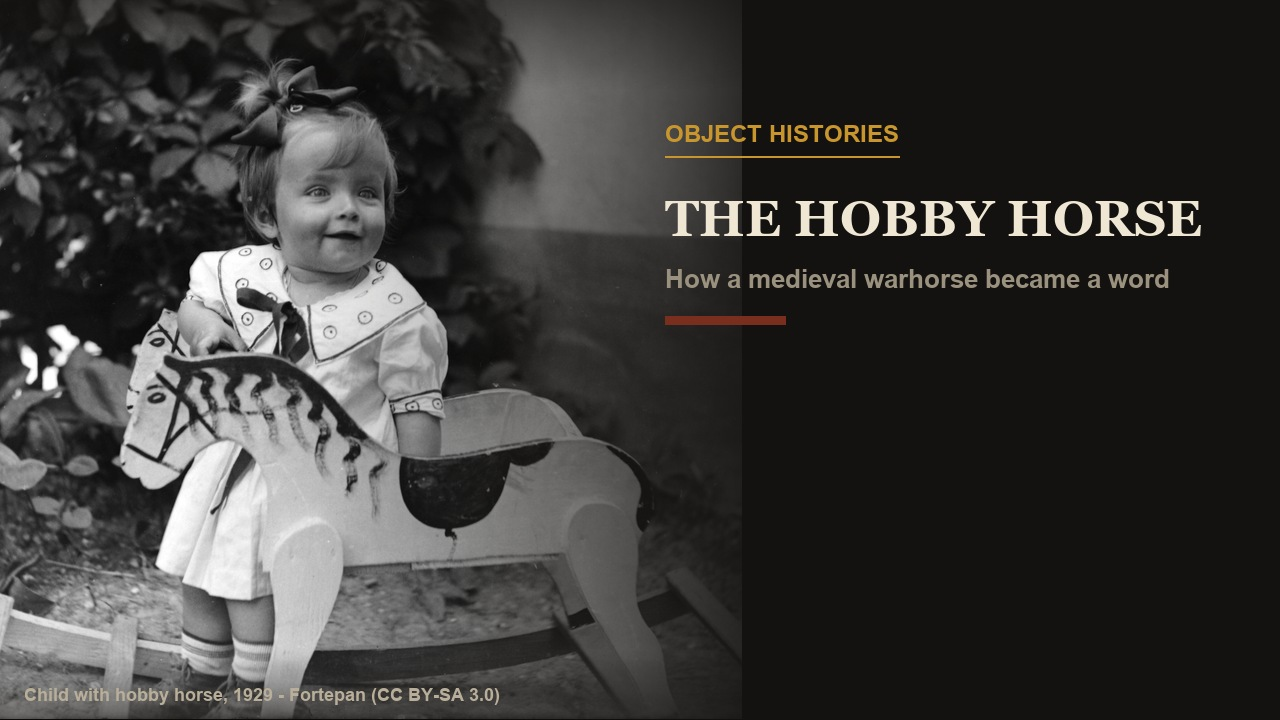
In 1296, a force of light horsemen rode north out of Ireland to join Edward I’s war in Scotland. They were not knights. They wore no plate, carried no lance for a mounted charge, and would have been useless in one. What they had was a small, tireless, ambling horse called a hobby, and the ability to be somewhere and gone again before a heavier army noticed. Six hundred years later, the horse is extinct, the war is forgotten by everyone but specialists, and the word survives attached to something almost comically smaller: whatever you do on a Saturday afternoon for no reason but pleasure.
Getting from one to the other took a costume, a banned dance, a child’s toy, a Georgian novel, and a two-wheeled contraption that briefly terrified English pedestrians. Every stage left a paper trail, and together they explain something odd about the English language: why an entire category of harmless private enthusiasm is named after an animal that hasn’t existed since the Tudor period.
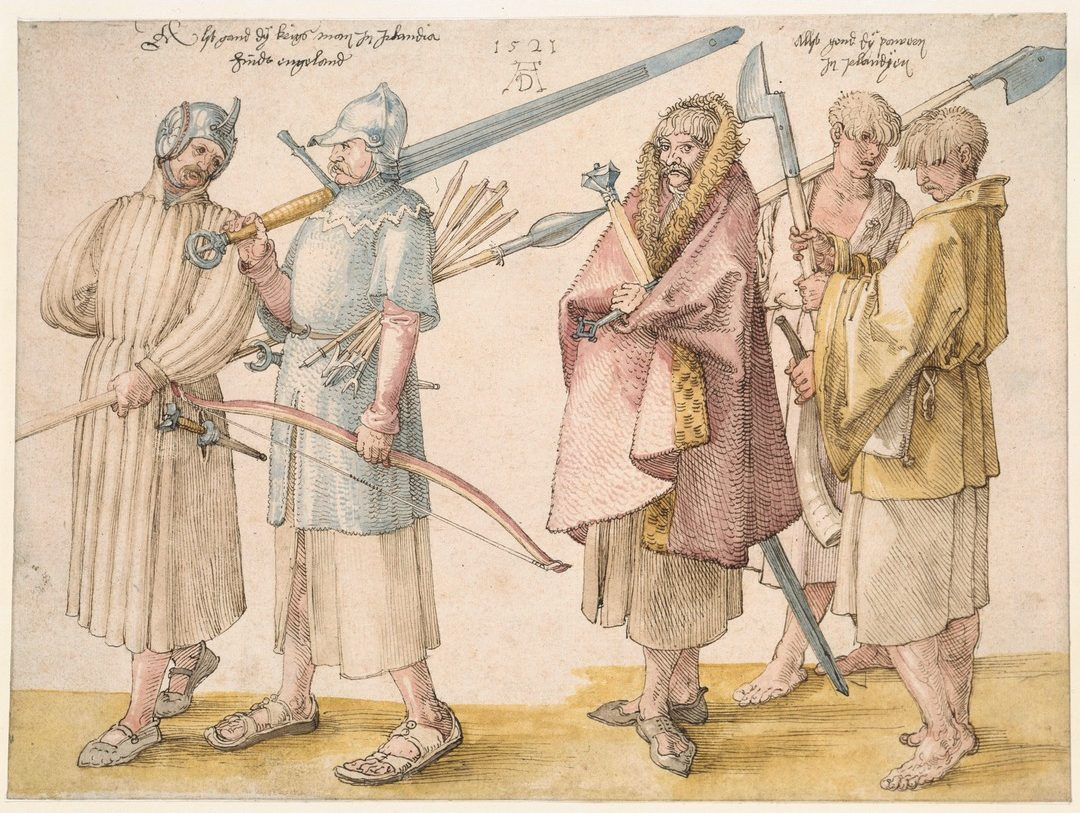
A hobelar was named after his horse, and historians still argue about where the horse came from
The soldiers who rode hobbies were called hobelars, and the first solid documentary sighting of the term is exactly that 1296 muster under John de Wogan, the justiciar of Ireland, raised for Edward I’s Scottish campaign. Within a generation the crown wanted more of them: hobelars were cheap to arm, fast enough to outrun trouble, and ideal for the scouting, screening and raiding that Scotland’s terrain rewarded far more than a heavy cavalry charge did. Robert the Bruce used them on the Scottish side for exactly the same reason, and both armies valued them enough that Edward tried to choke off Scotland’s supply by banning the export of Irish hobbies northward — a strange kind of compliment to pay a pony.
Where the hobby itself came from is a live argument. The older view derives it straight from Gaelic Ireland. The historian Robert W. Jones has made the case that the lineage actually runs through the muntator, a second-tier cavalryman used by Anglo-Norman marcher lords against the Welsh in the twelfth century, whose equipment and tactics travelled to Ireland with Cambro-Norman settlers and then came back to England relabelled. Either way, what emerges by the fourteenth century is a distinct, valuable, specifically Irish type of horse and horseman, known well enough that its name needed no explanation in English military records.
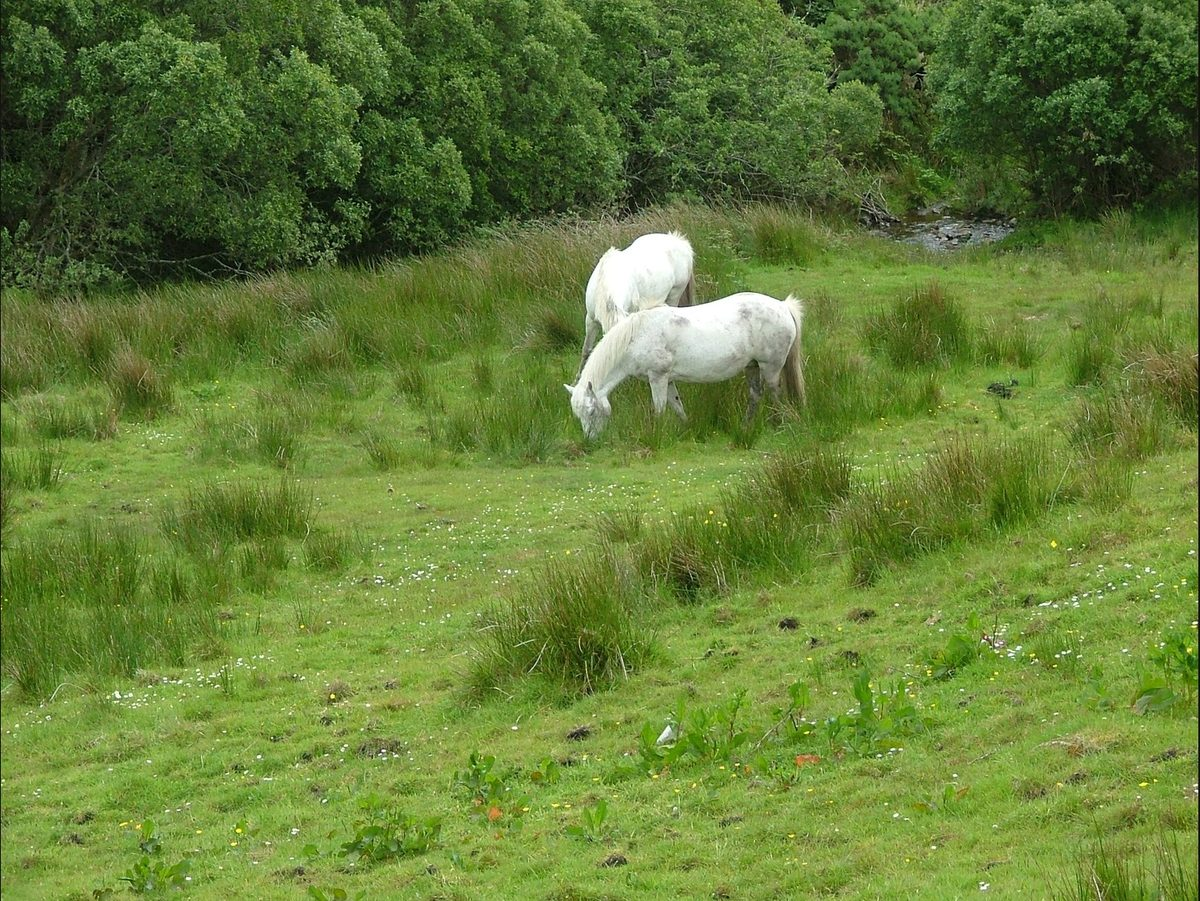
The breed itself did not survive, though its blood plausibly did
No pedigree Irish hobby exists today to measure against the records, because the type was absorbed rather than preserved. There is no surviving breed standard, no skeleton in a museum drawer labelled with confidence, and no continuous stud book reaching back to the fourteenth century — only descriptions in military and travel accounts of a horse valued for stamina and a smooth ambling gait over raw size. Ireland’s west-coast ponies were reshaped again in 1588, when ships of the wrecked Spanish Armada ran aground on the Galway and Clare coast and their horses got loose and bred with the local stock, and again over the following centuries by crossing with Arabians, Hackneys and thoroughbreds brought in to add height and refinement. What breeders now call the Connemara pony — a breed formalised only in 1923, when the Connemara Pony Breeders’ Society was founded specifically to stop further dilution of the type — is usually described as descending in part from the hobby, though sources are careful to call this theorised rather than proven, since nothing written down at the time actually traces the line. The hobby’s most durable legacy may simply be genetic and untraceable: gone as a named thing, present, maybe, as an ingredient in a pony bred for an entirely different purpose six hundred years later.
By the 1550s, a hobby-horse was worn, not ridden
The word’s second life has nothing to do with cavalry. Sometime around the middle of the sixteenth century, an English performer began strapping on a light frame — a carved wooden or basketwork horse’s head at the front, a false tail behind, the wearer’s own legs hidden under a skirt so the whole effect read as a rider mounted on a horse — and calling the resulting figure a hobby-horse. It turned up at May games, at midsummer ales, and above all attached to teams of morris dancers, where it was never compulsory but was reliably the character who broke from the set dance to chase children and collect coins from the crowd. Some versions carried a hinged jaw on a cord so the performer could snap it at onlookers.
The literary scholar Natália Pikli, whose 2022 study is the first book-length treatment of the figure, reads the early modern hobby-horse as a genuinely ambivalent character: half comic mascot, half faintly disreputable symbol of unruly appetite, which is precisely why it became useful shorthand for writers of the period wanting to gesture at licence and disorder without spelling either out.
Reformers attacked the costume, and its disappearance became a catchphrase
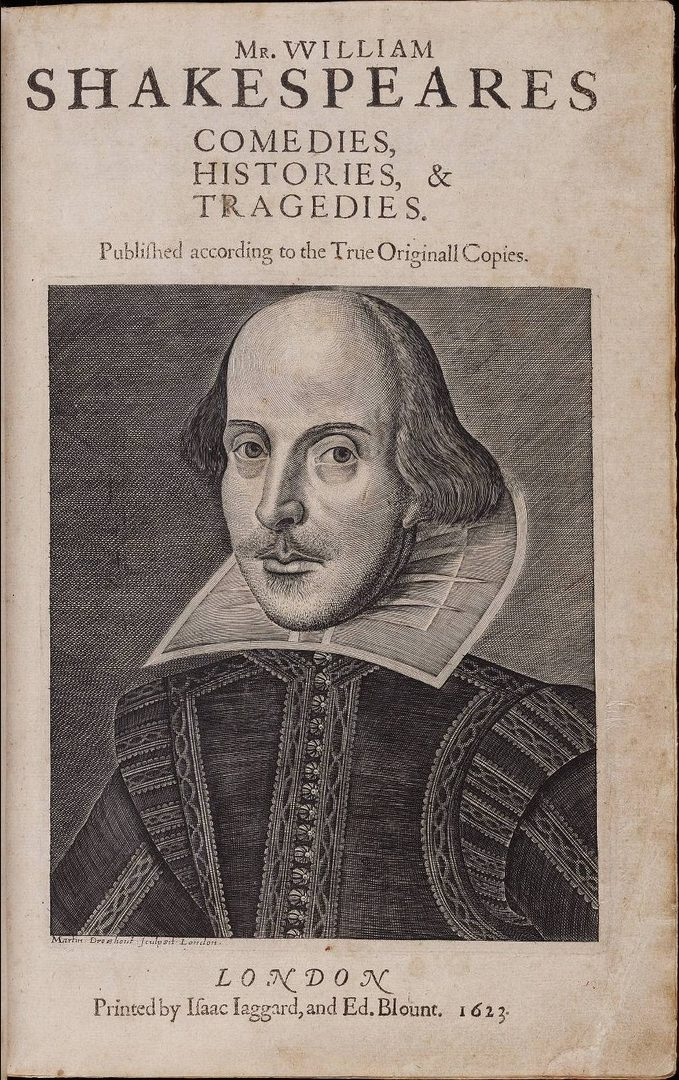
That ambivalence is also what made the hobby-horse an easy target once Elizabethan and Jacobean reformers turned on the May games and church-ales as disorderly, semi-pagan nonsense. Parish after parish dropped it from the calendar, and its absence generated its own bit of folk complaint: a ballad refrain, “for O, for O, the hobby-horse is forgot,” well-known enough by 1600 that a playwright could drop it in without explanation and expect the joke to land. Shakespeare used the line twice — in Love’s Labour’s Lost and, more famously, in Hamlet, where Hamlet quotes it to Ophelia as a dark little aside about things people stop mourning faster than they expect to. The clown Will Kemp referenced the same phrase in his own writing. A dance prop had become, within a generation, a stock figure of speech for anything fashionable that had quietly gone out of style.
Two English towns simply never let the horse go
The suppression was never total. At Padstow, on the north Cornish coast, a hobby-horse called the ‘Obby ‘Oss still processes through the town every May Day behind a masked, white-clad ‘Teaser’; the custom’s earliest firm documentary mention, per Ronald Hutton’s history of the British ritual year, dates only to 1803, though its style suggests it was already an old practice by then rather than a new one. Along the Somerset coast at Minehead, a separately built horse — more conical, more boat-shaped — performs a comparable circuit with its own retinue. Neither custom claims an unbroken line back to the medieval May games; both are simply proof that whatever reformers achieved elsewhere, it was local and incomplete, not national and final.
The nursery kept its own hobby-horse, and Laurence Sterne made it a personality type
Running alongside the costume the whole time was a much plainer object: a stick with a carved horse’s head, ridden by children at a gallop across whatever yard was available. Pieter Bruegel the Elder painted children on one in 1560, among dozens of other games, and the toy needed no reform movement to survive it because nobody found a child’s stick horse threatening. It picked up its own small vocabulary — a cock-horse, as in the nursery rhyme about riding one to Banbury Cross — and a costlier cousin, the rocking horse, arrived in the following century without displacing it.
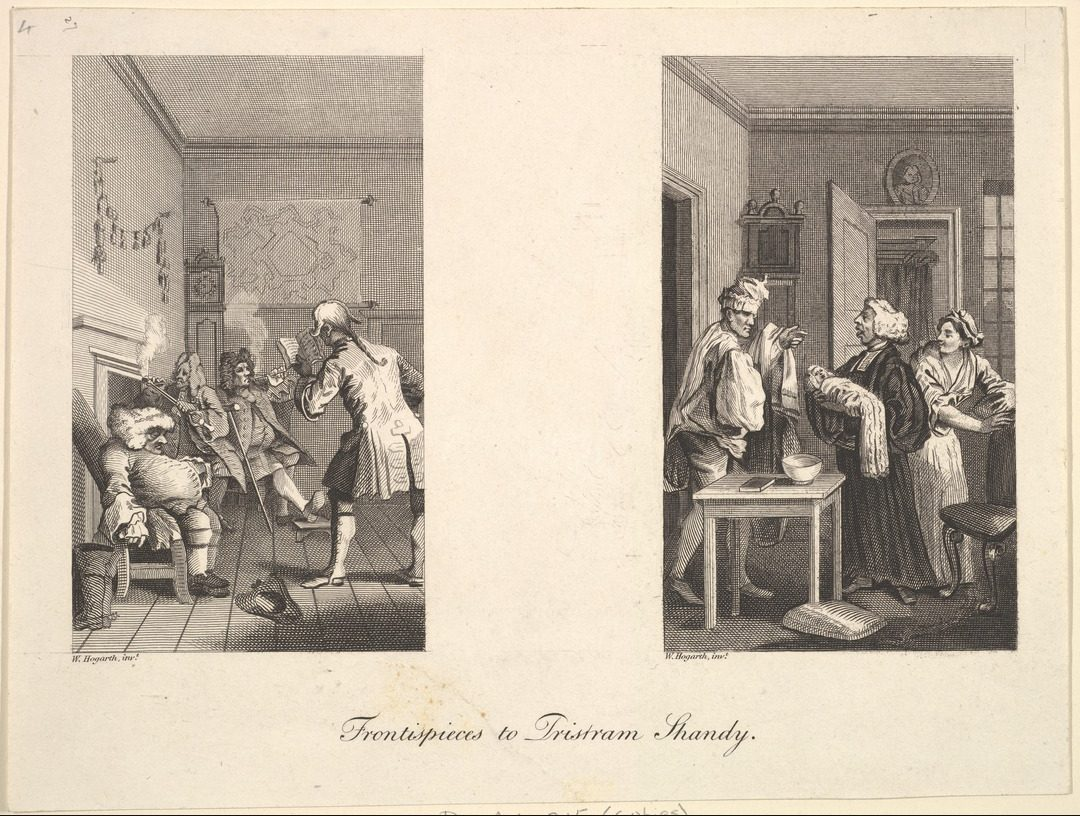
The idiom shifted meaning again around the 1670s: to be “on your hobby-horse” came to mean dwelling, at length, on your one favourite subject — the image being a grown man energetically going nowhere. Laurence Sterne turned that image into a whole theory of character in Tristram Shandy, serialised from 1759. Every figure in the novel gets a hobby-horse, a private fixation that explains him better than his stated opinions do; Uncle Toby’s is refighting the sieges of his old campaigns in miniature in the garden, and he cannot hold a conversation for long before circling back to it. Readers recognised the type, the word stuck to it, and by around 1816 the phrase had shed its horse altogether: a hobby was simply a pastime.
The name got borrowed twice more, once for a bicycle
In 1817 the German civil servant Karl von Drais built a two-wheeled, foot-propelled Laufmaschine — a running machine, steerable, with no pedals, ridden by pushing off the ground. When it reached England the following year it acquired a pair of nicknames, dandy-horse and hobby-horse, the second borrowed directly from the already two-and-a-half-centuries-old toy because the riding posture looked so similar. The historian David Herlihy’s account of the machine’s brief English and French vogue in 1818 and 1819 describes a genuine fad among young men of means, followed by an equally fast collapse in fashion once the machines proved impractical on rutted roads and unwelcome on smooth pavements shared with pedestrians. The word had nothing left to do with cavalry by then; it was simply the obvious label for anything you rode for no practical purpose.
In Finland, the toy became a competitive sport with its own governing body
The stick horse’s most recent turn is also its strangest. Hobbyhorsing — riders, overwhelmingly girls and young women, competing in dressage and show-jumping on horses they have made themselves, clearing real fences on foot while judged on form — has run as an organised Finnish sport since 2010, with national championships now drawing riders from well beyond Finland. The design researcher Katriina Heljakka’s 2023 study of the scene, drawn from interviews and social media analysis, treats it as something genuinely new: a contemporary plaything renegotiated simultaneously as toy, hobby and competitive sport, built almost entirely by a youth subculture the sporting establishment had no hand in creating. Riders sew and paint their own horses’ heads, name them, give them personalities, and then take them into an arena to jump courses meant for actual horses, on their own two feet, judged on the same criteria a dressage judge would use. It is, among other things, the first time in six hundred years that anyone has organised a hobby-horse around explicit rules and a scoreboard, and it did not come from a folklore revival or a marketing department. It came from exactly the same impulse Bruegel painted in 1560: a stick, a carved head, and a child convinced it is a real horse.
Watch the full history
The video version walks through the hobelars’ Scottish campaigns, the morris-dance costume, and the Puritan backlash in just under seven minutes.

Related reading
- The Warming-Pan Baby: The Bed-Warmer Behind a Royal Scandal
- How the Dog-Powered Butter Churn Actually Worked
- Why Blowing a Shofar at the Western Wall Was a Crime
- The Coal Scuttle Helmet: Why British Troops Named It That
Works cited
- Jones, Robert W. “Re-thinking the Origins of the ‘Irish’ Hobelar.” Cardiff Historical Papers 2008/1. Cardiff University, 2008.
- Hutton, Ronald. The Stations of the Sun: A History of the Ritual Year in Britain. Oxford University Press, 1996.
- Pikli, Natália. Shakespeare’s Hobby-Horse and Early Modern Popular Culture. Routledge, 2022. Link.
- Shakespeare, William. Hamlet, Act 3, Scene 2. Folger Shakespeare Library edition. Link.
- Shakespeare, William. Love’s Labour’s Lost, Act 3, Scene 1. Folger Shakespeare Library edition. Link.
- Sterne, Laurence. The Life and Opinions of Tristram Shandy, Gentleman. 1759–1767.
- Herlihy, David V. Bicycle: The History. Yale University Press, 2004. Link.
- Heljakka, Katriina. “Hobby Horses: A Hobby, Sport or Pure Play? A Contemporary Plaything as Part of Girlhood Leisure Activities in Finland.” In Childhoods & Leisure, 113–135. Springer, 2023. Link.
- Oklahoma State University Department of Animal and Food Sciences. “Connemara Pony.” Breeds of Livestock.