
Only a handful of events in antiquity are attested, independently, on three continents, by people who had no way of comparing notes. The year 536 is one of them. A government secretary in Ravenna, a war correspondent in Constantinople, court chroniclers in China and annalists in Ireland all wrote down variations of the same complaint within a year or two of each other: the sun had stopped working properly, and the crops had failed. None of them had any idea why, and for roughly fourteen hundred years, neither did anyone reading them.
That changed only because two entirely different kinds of evidence, neither of them historical, turned out to have been quietly keeping their own ledger of that year the whole time: wood, and ice. Between them they have pinned the climate event to the calendar year with more precision than almost any other event in the ancient world. What they have not done, after a solid half-century of searching, is identify the single thing that caused it — and the 2020s have added more candidates to the suspect list rather than fewer.
The complaint shows up in a war history and a civil servant’s mail
The earliest surviving account comes from Procopius of Caesarea, who was not a monk or an astronomer but a serving legal secretary to the general Belisarius during Justinian’s wars of reconquest. Writing up the Vandalic campaign, he records, almost as an aside, that for the entire year the sun gave out light without heat, resembling an eclipse that never ended, and that it coincided with a period when, in his words, people were short of nothing “leading to death.” He is not writing a natural-history treatise. He is noting that the weather had been strange during an already bad stretch of the war, in the same tone he might use to note a bad harvest.
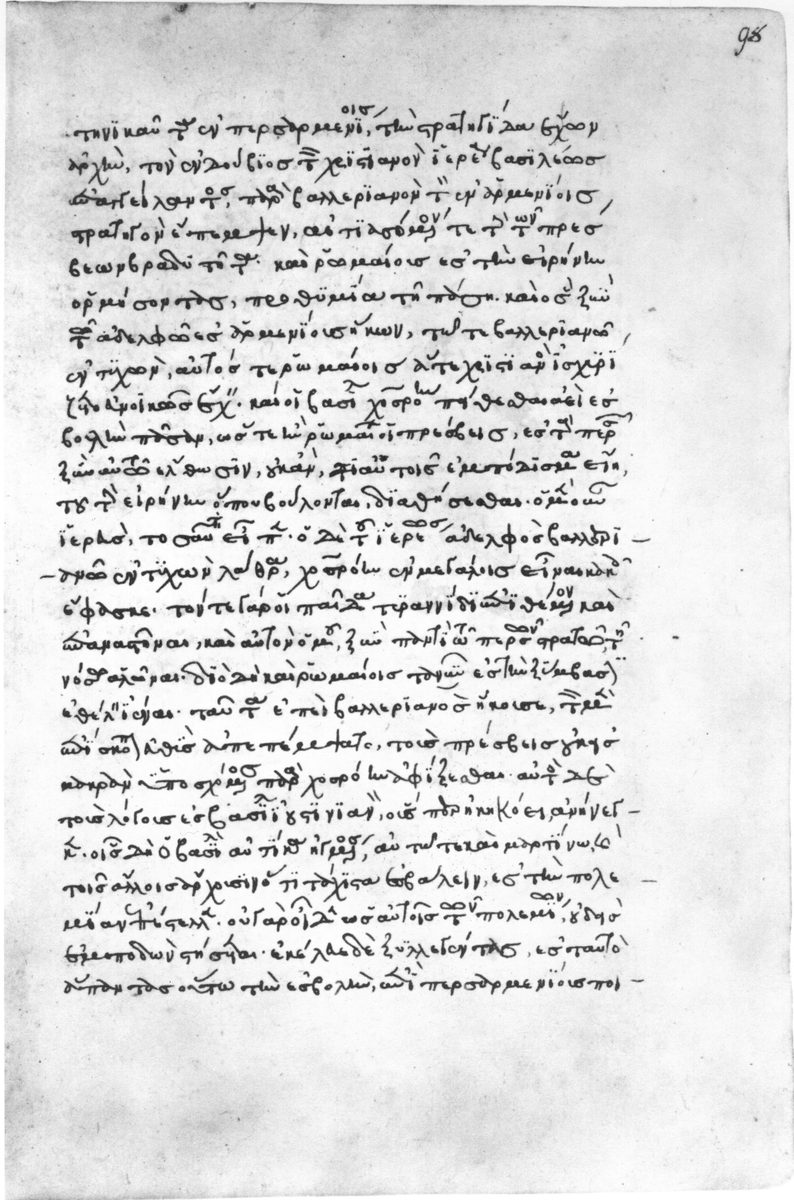
A far more detailed account survives by accident, in the outgoing mail of a mid-level Ostrogothic bureaucrat. Cassiodorus was praetorian prefect in Italy, and two years into the anomaly he wrote to his deputy Ambrosius describing what everyone around him had been watching happen to the sky. He calls it a sea-blue sun, with heat reduced to what he calls the faintest possible warmth. The moon, he writes, was full in its orbit yet emptied of its usual brilliance, and people had started to remark that their bodies cast no shadow at midday. He sums up the whole stretch in one line that has survived far better than anything else he wrote: a winter without storms, a spring without mild weather, a summer without heat. The letters that follow immediately after, in the same collection, are about organizing emergency grain relief — he was not describing a curiosity, he was managing a crisis.
Thousands of miles away, Chinese court annals logged frost and hail across multiple provinces that same autumn and recorded a fall of yellow, ash-like material that observers compared to snow. Irish monastic annals, kept at the opposite edge of the known world, simply record a failure of bread. None of these record-keepers were in contact with each other, had any theory of a shared cause, or had any reason to coordinate a story. That is precisely what makes the correspondence between them, once modern researchers started collecting it, so hard to dismiss as local bad luck.
A pine stump in a Belfast lab turned folklore into a measurement
For most of the twentieth century, that was where the case sat: a pile of odd complaints in old books, interesting to classicists and invisible to scientists. It stopped being invisible in 1994, when the dendrochronologist Mike Baillie, working from Queen’s University Belfast, published a paper flagging something strange in the ring sequence of Irish bog oak. Dendrochronology works because a tree lays down one growth ring a year, wider in a good growing season and narrower in a cold or dry one, and because overlapping sequences from living and long-dead trees can be spliced into a single unbroken, year-by-year timeline stretching back millennia. In Baillie’s Irish sequence, the ring for 536 is one of the narrowest in the entire record, and it is not alone: the same signature shows up, independently measured, in oak and pine chronologies from Germany, Scandinavia and Siberia. A single bad year in one forest is weather. The same bad year, simultaneously, on three sides of a continent, is something that affected the whole hemisphere’s growing season at once.
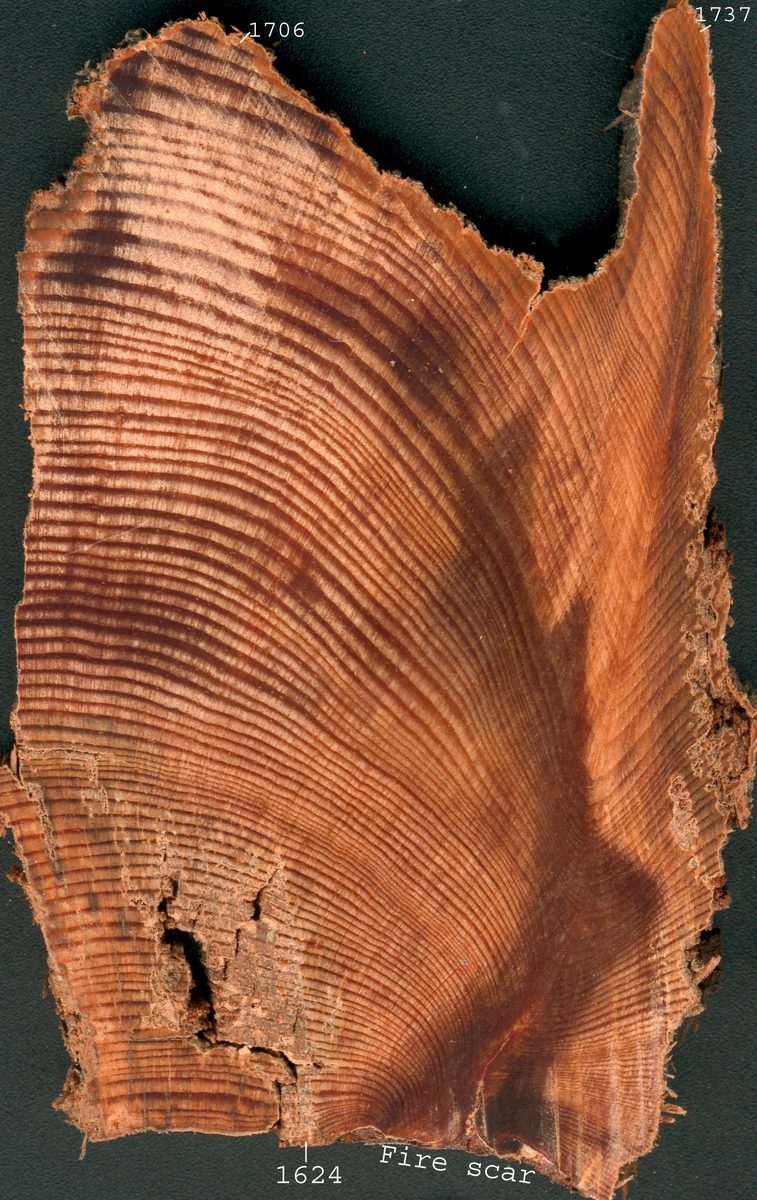
Baillie’s own suspicion, laid out in that 1994 paper, was that something had put enough fine material into the upper atmosphere to cut the sunlight reaching the ground — in plain terms, a volcano, or more than one. He could not prove it from wood alone. Tree rings record that a cooling happened and roughly how severe it was; they are silent on what caused it. Proving the volcanic case needed a second, independent archive, and it existed at the opposite ends of the earth, already in storage.
Ice came with a receipt the trees couldn’t produce
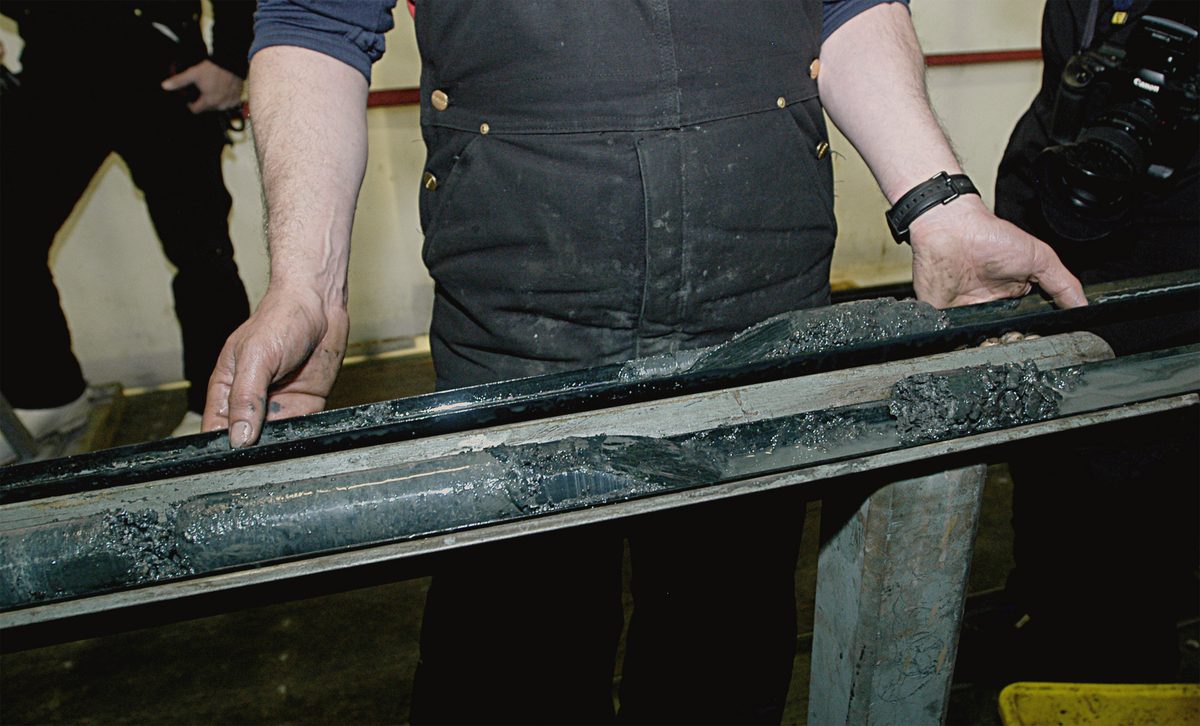
Snow falling on the Greenland and Antarctic ice sheets compacts, over centuries, into annual layers, and a large explosive eruption throws enough sulfur into the stratosphere that it falls out as a measurable sulfate spike in whichever year’s layer it lands in — one at each pole, if the eruption was large enough or there were two of them. A 2008 study by Lisa Larsen and colleagues confirmed a bipolar sulfate spike in the right range of years in both ice sheets, which was the first hard physical evidence that something had actually detonated, rather than the climate simply wobbling on its own.
Getting from “the right range of years” to a specific year took another seven years and a wholesale recount. In 2015 a team led by Michael Sigl re-walked the Greenland and Antarctic ice-core chronologies layer by layer and cross-checked the counts against eruptions whose dates are independently nailed down by other means. The recount moved the 536 layer by a couple of years from where it had previously been placed, and in doing so brought the ice date and the documentary date into agreement to the year rather than to the decade. That single recalibration is why historians can now say “536” instead of “the mid-530s.”
The ice also showed the 536 event had company. A second sulfate spike, even larger than the first, turned up three or four years later, and a 2016 reconstruction of summer temperatures from more than six hundred living and dead larch trees in the Russian Altai mountains, led by Ulf Büntgen, found that the second eruption pushed an already-depressed growing season roughly another two and a half degrees Celsius below normal. Their paper gave the resulting cold interval a name, the Late Antique Little Ice Age, and it is now understood as a run of unusually cold decades rather than one bad summer. Michael McCormick, the Harvard historian who co-authored that paper, is also the researcher behind the now widely repeated line that 536 opened one of the worst stretches of the whole first millennium to have lived through, given that a plague pandemic reached Constantinople only five years later.
Every obvious culprit has been individually eliminated
Having a measured, dated climate event and having an eruption are two different problems, and the second one has consumed far more research than the first. The three volcanoes repeatedly proposed in popular accounts have each been checked against physical evidence and have each failed the check.
Krakatoa was the most widely repeated candidate, largely on the strength of a popular 1999 book, David Keys’s Catastrophe, which argued a colossal Javanese eruption in 535 touched off droughts, famines and the collapse of civilizations from Mexico to Arabia. The claim turned out to be checkable: in 2013 John Southon and colleagues dated marine sediment cores from the Sunda Strait against two eruptions whose ages are not in question, Krakatau’s own 1883 explosion and Tambora’s in 1815, and then searched the intervening layers for any comparable ash fall around 535. They titled their paper, pointedly, around “a mythical AD 535 eruption of Krakatau,” and reported finding nothing. Rabaul, a caldera in Papua New Guinea proposed as an alternative in the 1980s, fared no better: a 2015 radiocarbon wiggle-match of its most recent major eruption by Chris McKee, Mike Baillie and Paula Reimer placed that eruption between 667 and 699, more than a century too late to be responsible.
Ilopango, in El Salvador, is the case that came closest to holding up, and its story shows how much the dating technique itself has improved. Early radiocarbon work on the eruption, run in the 1980s, had put it around the third century; a 2001 follow-up using more precise AMS dating moved that estimate later but landed on a stretch of the radiocarbon calibration curve so flat that the true date could fall anywhere between about 420 and 540. In 2019 Robert Dull’s team ran a hundred new radiocarbon measurements across three whole tree trunks buried alive by the eruption, sampled from bark to core, and modeled the results with Bayesian statistics to narrow the window to 503–545, with the data favoring the back end of that range. That is a genuinely enormous eruption, correctly dated at last — to the second sulfate spike of 539 or 540, not the first one in 536. Dull’s own paper is explicit that the identity of the 536 eruption itself “remains unknown.”
The newest leads point at America, and none of them has a name yet
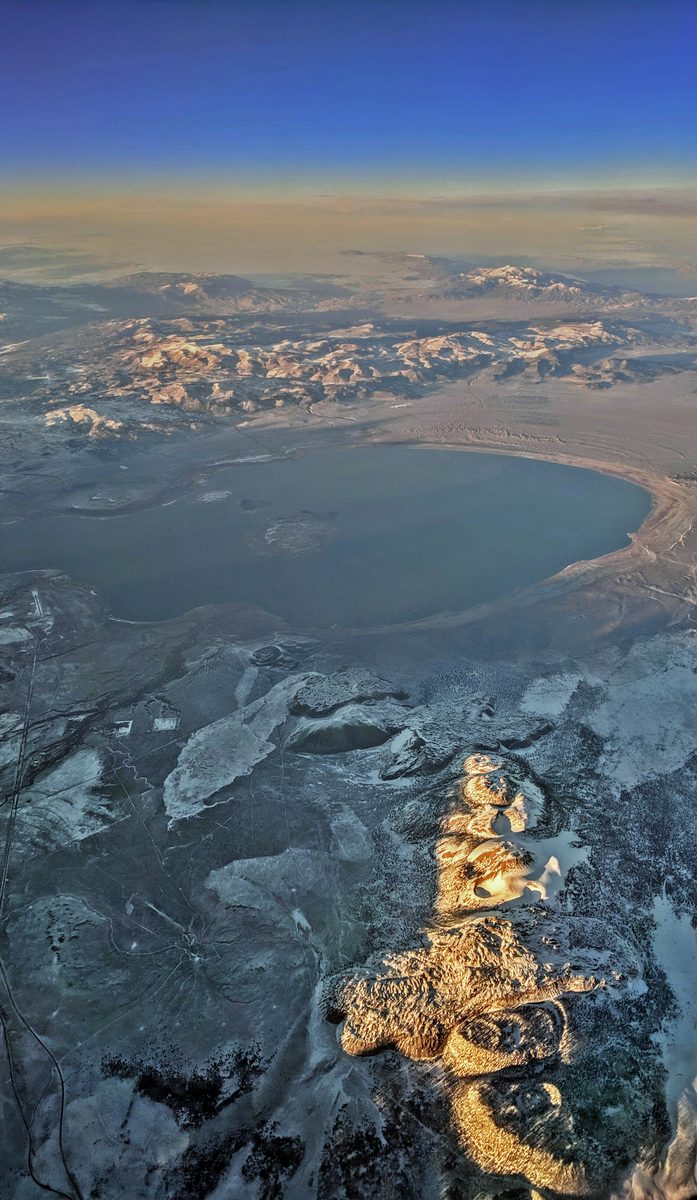
The most recent attempts to solve 536 have stopped looking for a single giant eruption and started looking for several smaller, simultaneous ones. Microscopic shards of volcanic glass preserved in the 536 ice layer can be fingerprinted by their chemistry and compared against known volcanic fields, and that fingerprinting has turned up matches on the wrong side of the planet from every candidate considered so far: not Indonesia, not Melanesia, not Central America, but western North America. One widely cited geochemical match ties part of the signal to the Mono Craters volcanic field in eastern California. A 2022 paper by Gill Plunkett and colleagues, built around re-examining a separate, older ash layer, confirmed shards from the 536 layer as well and found tentative, though explicitly inconclusive, matches to volcanoes in the eastern Aleutian arc. Plunkett’s team describes the 536 signal itself as the product of “three simultaneous eruptions of uncertain origin” — which is the most precise the published science currently gets. None of the three has a crater anyone has walked into, a date of its own, or a name.
It is worth being honest about what is solid here and what is not. The cooling itself is not in dispute: it is dated by two independent physical archives that agree with the written sources to the year. What is still genuinely open is the specific sequence of eruptions that produced it, and, further downstream, how much of the social history of the following century — a plague, a wave of Scandinavian gold hoards buried and never retrieved, population decline across northern Europe — can be laid at its door rather than simply coinciding with it. A 2012 paper by Bo Gräslund and Neil Price made the careful version of that case for Scandinavia specifically, arguing that the famine and die-off of the 530s and 540s left a trace in the Norse myth of Fimbulwinter, the three-year winter that precedes Ragnarök in later written sagas, while being explicit that scientific evidence for the climate shock and literary evidence for its memory are two different kinds of proof. Keys’s 1999 book made the much larger, and far less defensible, claim that the same single event toppled empires on four continents. The climate anomaly that inspired that book turned out to be real. Almost everything it was blamed for has had to be argued for separately, case by case, ever since.
Watch the full history
The video companion walks through the written accounts and the scientific detective work in just under nine minutes.

Related reading
- What Costa Rica’s Stone Spheres Were Actually For
- The Tomb of Genghis Khan: A Decision Not a Mystery
- The Nebra Sky Disc Dating Dispute, Explained
- What Really Happened to the Peking Man Fossils?
Shop
The Fate of Rome: Climate, Disease, and the End of an Empire, by Kyle Harper, is the fullest account of how climate shocks like 536 intersected with the rest of late Roman history.
Works cited
- Procopius. History of the Wars, Book IV (the Vandalic War, Book II), xiv.5–6. Translated by H. B. Dewing. Loeb Classical Library, 1916. Link.
- Cassiodorus. Variae, Book XII, Letter 25 (to Ambrosius). In The Variae of Magnus Aurelius Cassiodorus Senator, translated by S. J. B. Barnish. Liverpool University Press, 1992.
- Baillie, M. G. L. “Dendrochronology Raises Questions about the Nature of the AD 536 Dust-Veil Event.” The Holocene 4, no. 2 (1994): 212–217.
- Larsen, L. B., Vinther, B. M., Briffa, K. R., et al. “New Ice Core Evidence for a Volcanic Cause of the A.D. 536 Dust Veil.” Geophysical Research Letters 35, no. 4 (2008).
- Sigl, Michael, et al. “Timing and Climate Forcing of Volcanic Eruptions for the Past 2,500 Years.” Nature 523 (2015): 543–549. Link.
- Büntgen, Ulf, et al. “Cooling and Societal Change during the Late Antique Little Ice Age from 536 to around 660 AD.” Nature Geoscience 9 (2016): 231–236. Link.
- Southon, John, Mahyar Mohtadi, and Rodrigo De Pol-Holz. “Planktonic Foram Dates from the Indonesian Arc: Marine 14C Reservoir Ages and a Mythical AD 535 Eruption of Krakatau.” Radiocarbon 55, no. 3 (2013): 1164–1172. Link.
- Dull, Robert A., et al. “Radiocarbon and Geologic Evidence Reveal Ilopango Volcano as Source of the Colossal ‘Mystery’ Eruption of 539/40 CE.” Quaternary Science Reviews 222 (2019): 105855. Link.
- McKee, Chris O., Michael G. L. Baillie, and Paula J. Reimer. “A Revised Age of AD 667–699 for the Latest Major Eruption at Rabaul.” Bulletin of Volcanology 77, no. 7 (2015): article 65. Link.
- Plunkett, Gill, et al. “No Evidence for Tephra in Greenland from the Historic Eruption of Vesuvius in 79 CE: Implications for Geochronology and Paleoclimatology.” Climate of the Past 18 (2022): 45–65. Link.
- Gräslund, Bo, and Neil Price. “Twilight of the Gods? The ‘Dust Veil Event’ of AD 536 in Critical Perspective.” Antiquity 86, no. 332 (2012): 428–443. Link.
- Keys, David. Catastrophe: An Investigation into the Origins of the Modern World. London: Century, 1999.