
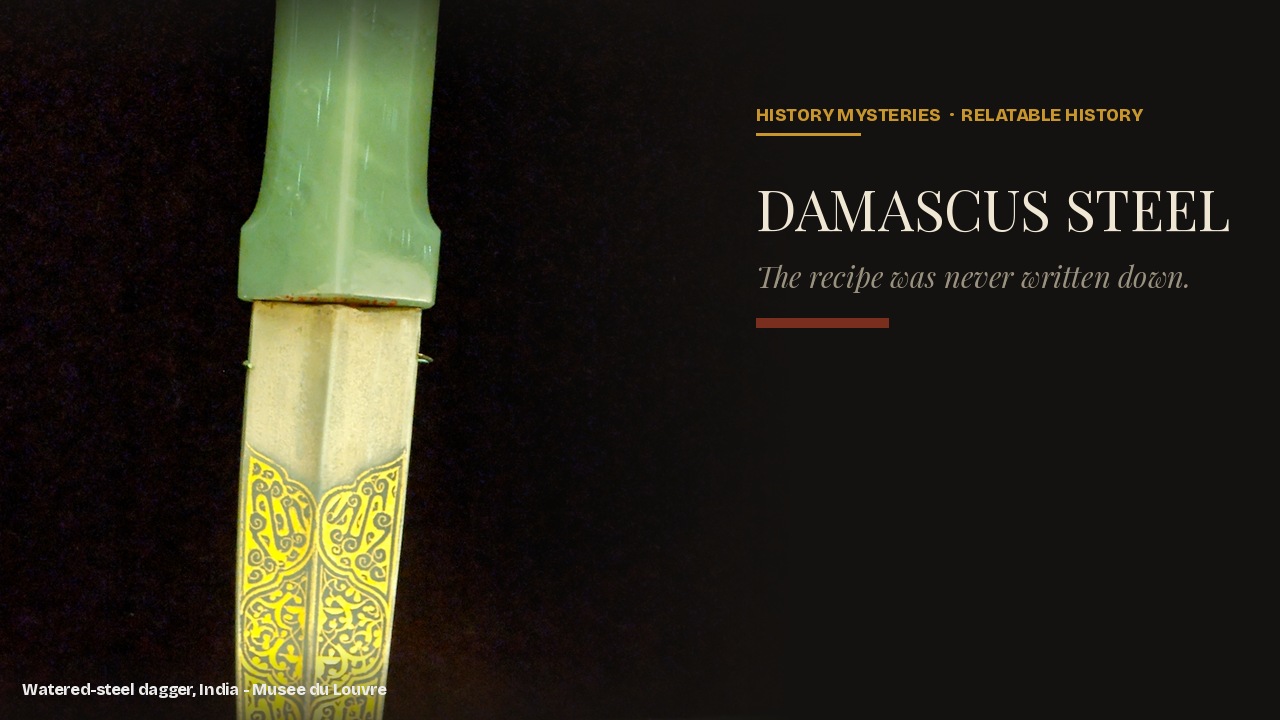
Where Damascus steel was made is not actually a mystery to historians, even though it still surprises most people the first time they hear it: a cluster of furnace villages in India, not a forge anywhere in Syria. Damascus was the market — the place where European and Ottoman buyers met merchants who had carried the metal in from much further east. Tracing where it actually came from means following a specific trade route through named towns, named buyers, and a documentary record considerably patchier than the popular version of this story usually lets on.
This is that trail: the furnace villages themselves, the two unrelated recipes that both ended up making the same banded steel, what a surviving ninth-century Arabic manual does and doesn’t actually say, why the trade collapsed in the nineteenth century, and how two very different investigations — a Florida horse farrier working by hand and a British neutron-physics facility working without touching the metal at all — each tried to recover a method nobody wrote down.
Where Damascus Steel Was Made: A Cluster of Furnace Villages
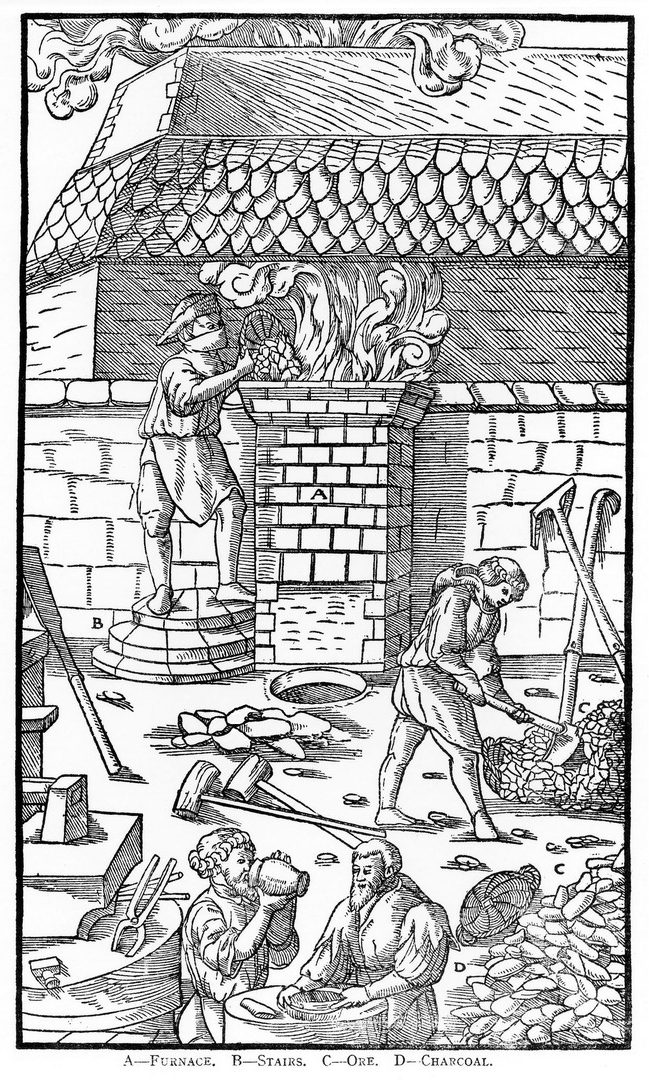
Konasamudram, in what is now the Indian state of Telangana, is what a 2021 study by the archaeologists S. Jaikishan, M. Desai and T. Rehren calls a dedicated crucible-steel production centre — not a general ironworking village that happened to also make steel, but a place organised around this one specialised output. It wasn’t alone. Furnaces also ran in Karnataka, around Salem and Trichinopoly in Tamil Nadu, at Ghattihosahalli, across the kingdom of Mysore, and in Sri Lanka. Not all of them lasted equally long: the nearby blade-making town of Indalwai had already stopped producing by the 1680s, according to the French traveller Jean de Thevenot, who passed through the region in 1687, six years after another Frenchman, Jean-Baptiste Tavernier, had already confirmed a running trade in finished ingots between the kingdom of Golconda and Persia.
The clearest window into how that trade actually worked comes from a British surveyor, Henry Voysey, who recorded first-hand observations at Konasamudram’s furnaces between 1819 and 1821. Voysey watched Persian buyers arrive in person. One of them, a merchant from Isfahan named Haji Hosyn, came back again and again through the 1820s to buy directly from the furnace rather than through any middleman — and he knew which village’s ingots were worth the trip. By Voysey’s account, a single furnace yielded roughly fifty seers of metal per firing, somewhere around forty-eight to fifty kilograms, worth about thirty-seven rupees. A later colonial survey, by Bilgrami and Willmott in 1883, found Konasamudram the last furnace site still working in northern Telangana; production further south, in Mysore, held on into the early twentieth century.
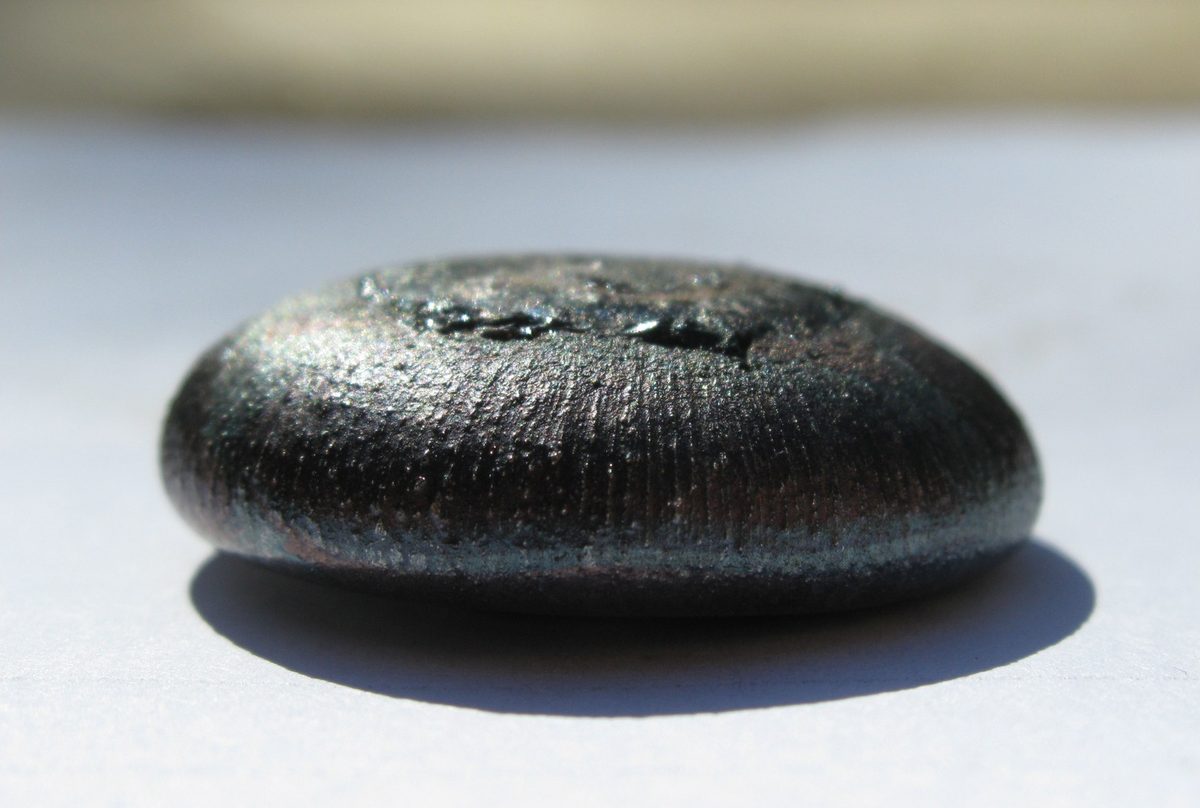
Archaeology has since put a number on what a single firing actually produced. A hoard of sixty wootz ingots turned up at a production site in 2016; researchers measured forty-five of them and found an average weight just over a kilogram, with diameters so consistent — varying by only about two and a half percent — that the team concluded the whole hoard came from one batch. Working from furnace capacity, the same researchers estimated a Konasamudram furnace could fire as many as sixty-one crucibles at once, which would make the entire find the yield of a single afternoon’s work — steel that moved west not as finished weapons but as unmarked raw material, the way the treasure described in the Copper Scroll moved as hoards rather than coinage.
Two Different Recipes, One Name
Even within this single trade, there wasn’t one recipe — there were at least two, reaching the same result by different means. The archaeologist Paul Craddock, in work published in 2007, described what’s now called the Hyderabad Process: a crucible charged with both cast iron, already saturated with carbon, and wrought iron, which has almost none, fused together until the carbon content equalised somewhere between the two. A separate method, the Mysore Process described earlier by the historian Bennet Bronson, started from wrought iron alone and added carbon directly — packing the crucible with plant matter and charcoal and letting the iron absorb carbon as it melted, with no cast iron required at all.
Run correctly, both processes land in roughly the same place: an ingot carrying somewhere near one and a half percent carbon, well past the point where the microstructure stops being uniform. That is the material a smith then had to forge without ruining — steel at that carbon level is loaded with brittle iron carbide, and heating it too far or cooling it wrong destroys the very structure that makes a pattern possible later. Nothing in the surviving record says which villages used which method, or whether individual smiths even knew there were two; the distinction is one archaeologists worked out afterward, from residue in broken crucibles and the chemistry of surviving ingots, not from anything a historical smith ever wrote down.
What a Ninth-Century Arabic Manual Actually Says
The written record from the period itself is thinner than the legend suggests. The main surviving text is a ninth-century treatise, On Swords and Their Kinds, by the philosopher al-Kindi, translated into English only in 2006 by the historian Robert Hoyland with a metallurgical commentary from Brian Gilmour. Al-Kindi never actually uses a phrase meaning “Damascus steel”; he sorts swords by where the iron came from and how it behaved, not by where it was sold. He describes Yemeni blades by the visible streaks of slag in the metal, which could make them split under stress. He describes Indian blades using a term that translates roughly as “clear” — almost certainly a reference to pale, light-grey nodules visible in the steel, which is as close as the text comes to naming crucible steel outright. He describes Frankish blades with a term translators disagree on, because the original manuscript hasn’t survived at all; everything that exists is a later copy, and Hoyland’s English version is his own reconstruction from several of those copies rather than a word-for-word rendering of any single one — a gap in the record not unlike the one around the Indus Valley script, where the writing itself survives but the key to reading it does not.
The connection between al-Kindi’s categories and the specific watered pattern later associated with Damascus comes not from al-Kindi himself but from Gilmour’s accompanying metallurgical notes, which argue that the pattern known regionally as “Sham” — the Arabic name for greater Syria, Damascus included — likely came from a different banding structure than the wootz pattern described above. Even the medieval Arabic sources, in other words, may be describing more than one kind of patterned steel under overlapping names, which is one more reason “Damascus” was never a reliable label for anything in particular.
A Trade That a Changing Empire Killed
Exactly what ended the trade is one more point where the sources don’t fully agree. A Chemistry World account lays the blame squarely on policy: the British East India Company halting production around 1858, compounded by new forest laws in 1862 that choked off the charcoal supply smiths needed. Jaikishan, Desai and Rehren’s more detailed economic reconstruction tells a slower, messier story — competition from cheap English iron and imported arms, colonial Forest Acts beginning in 1865 restricting charcoal access, and an 1869 land-revenue settlement changing who could even reach the forest land the furnaces depended on. Both point at British colonial administration as the cause; they differ on which law did the most damage, and by several years on when the pressure began.
What both agree on is the outcome. By the middle of the nineteenth century the industry was contracting fast, and by the 1880s only a handful of sites — Konasamudram chief among them — were still running at all. Nothing replaced the knowledge once the furnaces went cold. A method handed from smith to smith for generations, never written down because it didn’t need to be while someone who knew it was still alive, simply ran out of people left to ask.
A Farrier’s Ten-Year Experiment
Europe’s nineteenth-century chemists had already spent a century guessing at the wrong explanation by the time two very different Americans tried an entirely different approach, a hundred years later, from a direction none of those chemists ever worked from.
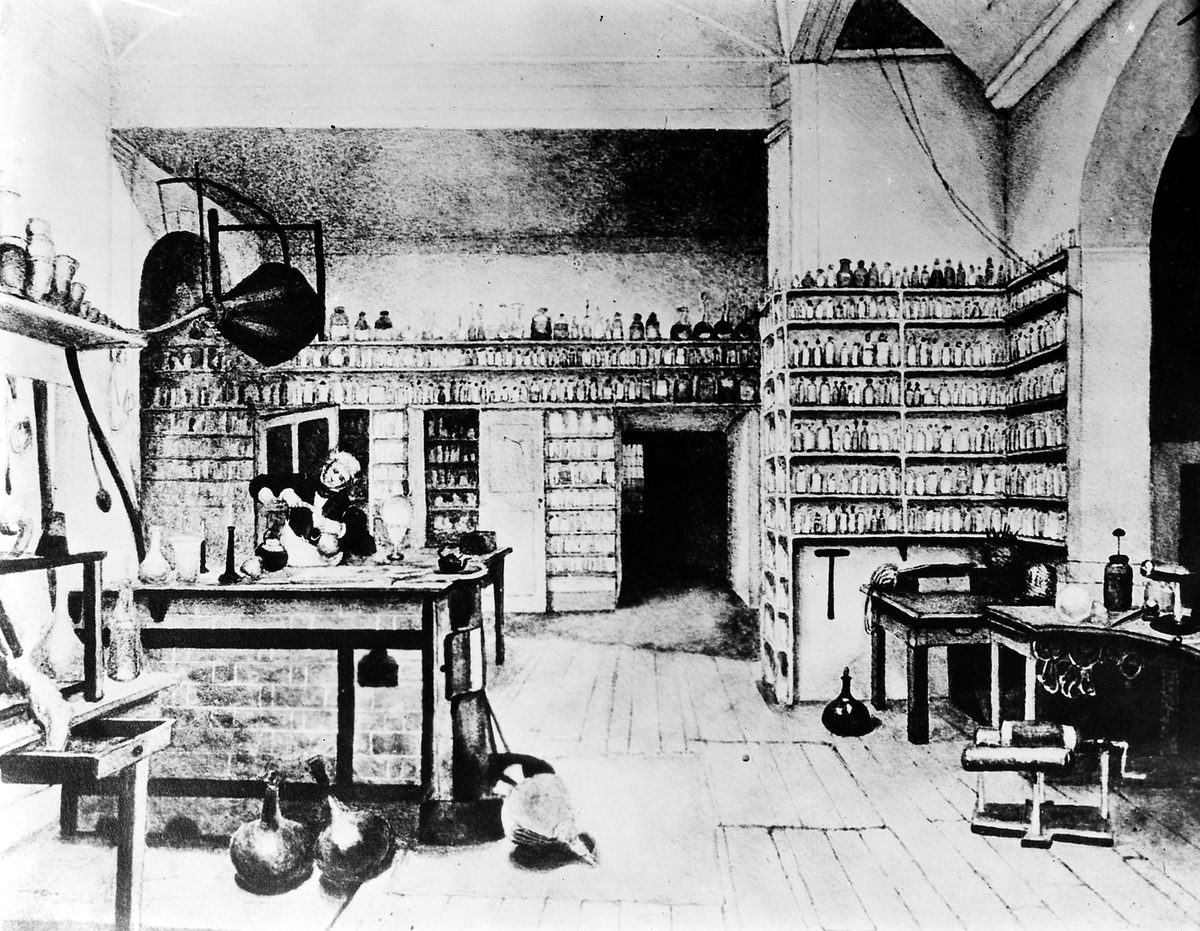
Al Pendray spent nearly fifty years as a working farrier in Williston, Florida, shoeing racehorses — including five Kentucky Derby winners — before he started trying to recreate wootz steel sometime in the 1980s, out of his own small blacksmithing shop. He kept at it for roughly a decade, trying almost anything that might supply the right trace chemistry: fresh tree leaves thrown into the crucible, broken glass, even oyster shells. He partnered with John Verhoeven, an Iowa State University metallurgist, and Bill Dauksch, a former executive at the steelmaker Nucor, who could run the lab analysis Pendray’s forge couldn’t.
Their published result, a 1998 paper in the journal JOM, rested on genuine historical material rather than guesswork: four swords from a set collected decades earlier by the Swiss scientist Zschokke, sampled at the Bernisches Historisches Museum, analysed by emission spectroscopy at Nucor’s own facility, with hardness and microstructure checked under magnification. The actual recipe, once they had it, reads almost anticlimactically: melt an iron-and-carbon ingot in a sealed crucible, add less than three hundredths of a percent of a carbide-forming element — vanadium works at levels as low as forty parts per million, manganese at roughly two hundred — then forge the billet through repeated heating cycles just under its melting threshold. The bands are invisible after the first cycle or two and distinct by the sixth to eighth; ladder and rose patterns, the kind the medieval sources named, are cut into the near-finished blade afterward, before the final polish reveals them.
Pendray went on to mentor the knifemaker Bob Kramer and earned the trade’s own title of Master Bladesmith. A documentary filmmaker, Todd Oppenheimer, was partway through filming Pendray’s story when Pendray suffered a major stroke; he died in 2017, not long after. The chemistry he and Verhoeven worked out is now public and repeatable by any smith willing to add vanadium on purpose. The actual ore deposit that gave medieval smiths that same trace element by accident has never been identified — not the mine, not the seam, not the valley.
Checking the Steel Without Cutting It Open
The most famous modern claim about this steel’s microstructure is also the most contested. In 2006, a team at Dresden University led by Peter Paufler dissolved a fragment from a seventeenth-century wootz sabre in hydrochloric acid and examined what was left under an electron microscope, reporting in Nature that they had found carbon nanotubes and cementite nanowires — a structure nobody expected seventeenth-century ironworkers to have produced, even by accident. Other metallurgists were not uniformly convinced. John Verhoeven, the same researcher behind the 1998 vanadium findings, argued that what Paufler’s team saw could simply be cementite existing as plain rods, no nanotubes required. Alex Zettl, a physicist at UC Berkeley, raised a more mundane problem: electron microscopes themselves sometimes carry stray nanotube contamination left behind by other samples, which Paufler acknowledged was hard to rule out completely, though he stood by the finding after checking with several instruments. Not every response was sceptical — Andrei Khlobystov at the University of Nottingham called it a legitimate sign that nanotube-like structures could form usefully long before anyone knew to look for them, a dispute not unlike the one still running over what actually makes the Lycurgus Cup change colour.
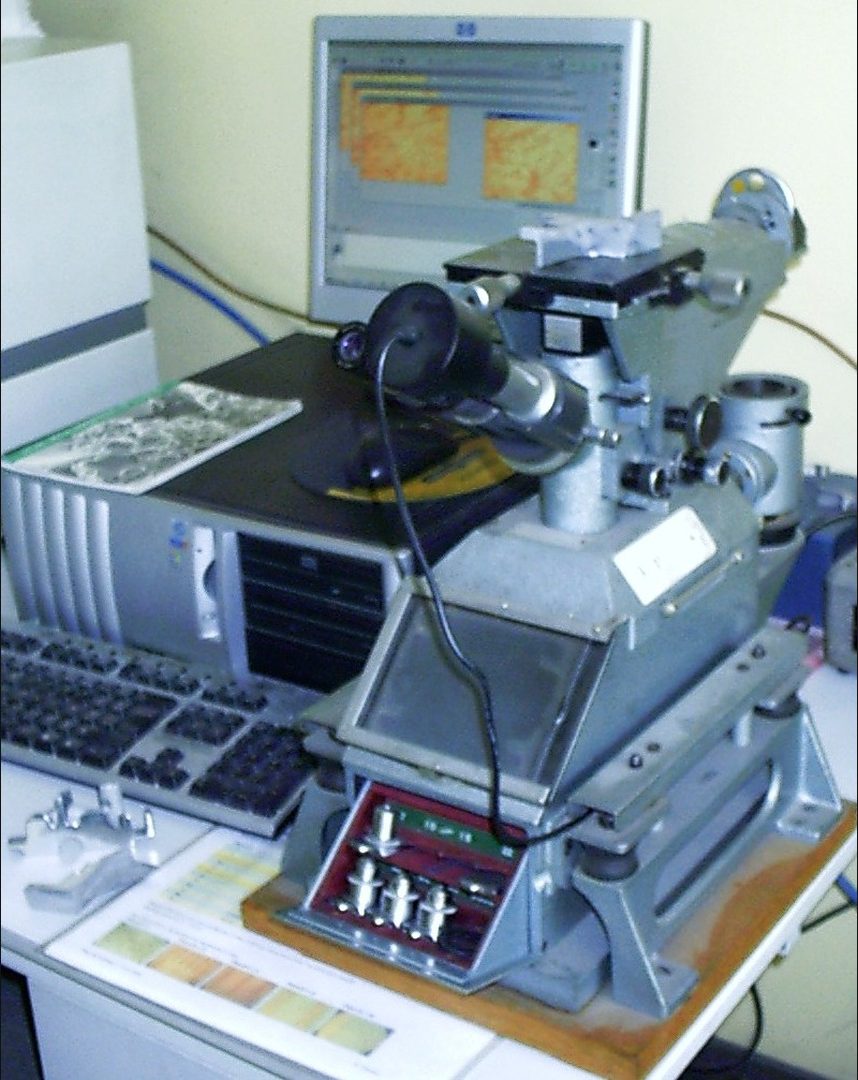
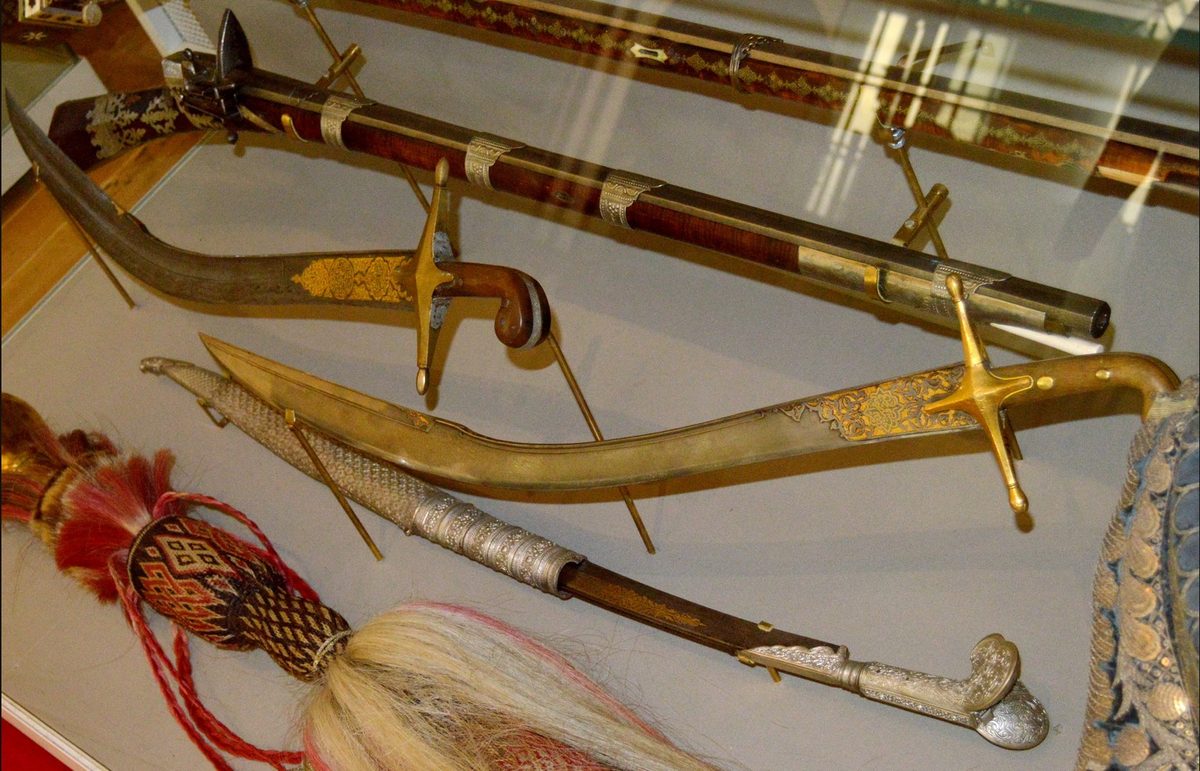
A newer line of research takes a different approach entirely: not analysing one destroyed sample, but checking real museum pieces without damaging them at all. Researchers working with London’s Wallace Collection have used time-of-flight neutron diffraction at the ISIS facility in the UK — a technique that passes neutrons through an object and reads how its different crystal structures respond, with no cutting required — to test pieces the museum’s own conservators couldn’t otherwise analyse. The results have been uncomfortable for anyone who assumes every old blade billed as Damascus steel really is one. Of sixteen Indo-Persian ceremonial axes examined this way, only one turned out to be genuine high-carbon crucible steel; most of the rest were essentially plain iron, and three appeared to carry nothing more than a thin veneer of real high-carbon steel laid over an iron core — close reproductions built, probably in period, specifically to pass for the real and far more expensive material. A jewelled dagger associated with the Mughal emperor Shah Jahan fared better: genuinely high-carbon crucible steel, consistent with the finest documented Indian and Iranian work. David Edge, the Wallace Collection’s head conservator for forty-five years before his 2020 retirement, helped lead the project that finally let the museum tell its real wootz pieces from its convincing fakes.
Watch the full history
The long-form video walks through the chemistry that finally explained the pattern itself — the 1998 vanadium findings, start to finish, in one sitting.

None of this was ever a trade secret in the dramatic sense — no guild oath, no poisoned rival. It was a method that depended on an ore nobody had named, worked by smiths who had no reason to write down what their hands already knew, sold through merchants who cared only that one village’s ingots were worth the trip and another’s usually weren’t. When the furnaces went cold, that knowledge wasn’t destroyed or suppressed. It just ran out of people left to ask.
What survives now splits between two kinds of evidence: a repeatable modern chemistry that lets any smith add vanadium on purpose, and a growing pile of museum pieces whose steel doesn’t match their reputation once someone actually checks. The smiths who could tell a genuine ingot from a disappointing one, standing at a furnace in Konasamudram two centuries ago, were relying on experience and metallurgical luck that nobody, including them, could have explained.
Would you trust a recipe nobody ever wrote down?
Related reading
- The Honjo Masamune Disappearance — another legendary blade, and another case where the metal itself is easier to trace than the paperwork around it.
- The Nebra Sky Disc Dating Dispute, Explained — a different ancient-metal object where scientists disagree on the evidence in strikingly similar terms.
- Is the Cascajal Block Really Writing? — a twenty-year scholarly argument over a single ambiguous ancient artefact, much like the argument over al-Kindi’s manuscript.
- Why No One Has Ever Deciphered the Indus Valley Script — another South Asian technical tradition that outran the written record meant to explain it.
Works cited
- Jaikishan, S., Desai, M., and Rehren, T. “A Journey of Over 200 Years: Early Studies on Wootz Ingots and New Evidence from Konasamudram, India.” Advances in Archaeomaterials 2, no. 1 (2021). Link.
- Verhoeven, J. D., Pendray, A. H., and Dauksch, W. E. “The Key Role of Impurities in Ancient Damascus Steel Blades.” JOM 50, no. 9 (1998): 58–64. Print.
- Reibold, M., Paufler, P., Levin, A. A., Kochmann, W., Pätzke, N., and Meyer, D. C. “Carbon Nanotubes in an Ancient Damascus Sabre.” Nature 444, no. 7117 (2006): 286. Link.
- Sanderson, Katharine. “Sharpest Cut from Nanotube Sword.” Nature News, November 15, 2006. Link.
- Hoyland, Robert G., and Brian Gilmour. Medieval Islamic Swords and Swordmaking: Kindi’s Treatise “On Swords and Their Kinds.” Oxford: Oxbow for the E. J. W. Gibb Memorial Trust, 2006. Print.
- Hassanali, Muhammed. Review of Medieval Islamic Swords and Swordmaking, by Robert G. Hoyland and Brian Gilmour. De Re Militari: The Society for Medieval Military History, 2007. Link.
- Extance, Andy. “Raiders of the Lost Steel.” Chemistry World. Link.
- Oppenheimer, Todd. “The Wootz Hunter.” Craftsmanship Magazine, May 14, 2021. Print.
- ISIS Neutron and Muon Source (STFC). “The Wallace Collection: Using Neutrons to Analyse Historic Arms and Armour.” Science highlight, June 9, 2022. Link.