The house and everything in it: heating, lighting, cleaning, sleeping, and the ordinary labour of keeping a household running.
64 articles so far, newest first. Browse the full archive.
- How Colonial Americans Dyed Cloth Before Store-Bought Dye Existed — Before synthetic dye came in a nickel packet, color for homespun cloth was grown, traded, or fermented at home — and one trick made plain yellow liquid turn sky blue in midair.
- The History of the Pie Funnel, From Plain Clay Tube to Ceramic Bird — Before it had feathers, the pie funnel was a patented plumbing fixture for a problem most bakers never notice: the vacuum that pulls juice out of a cooling pie.
- The Native American Craft Behind Every Farm Basket — Nearly every egg basket, feed basket, and market basket on a 19th-century American farm descends from one Native pounding technique, taught to settlers, then nearly erased…
- Why Christmas Nutcrackers Are Shaped Like Kings and Soldiers — The wooden king on your mantel was carved by people who’d lost their own livelihoods, to make him grind his jaw forever. Here’s the oddly tangled, three-named, two-Hoffmann…
- Drying Apples Before Refrigeration: How Farm Families Did It — For about a century, a Moravian sisterhood in colonial Pennsylvania ran a dedicated building whose only job was turning a fall apple harvest into food that would survive the…
- The Quilting Bee Was Already a Punchline by the 1860s — The quilting bee was real, but probably not the way you picture it. A 160-year-old joke photograph, a midwife’s diary, and a Depression-era square dance tell a stranger story.
- The History of the Sausage Stuffer: How Farms Wasted Nothing From a Hog — A hand-cranked grinder, a USDA recipe, and a neighborhood’s worth of cooperative labor turned a hog’s leftover scraps into a winter’s worth of sausage, until refrigeration made…
- How Much Firewood Heated a Farmhouse Through a 19th-Century Winter — A farmhouse with no coal or oil ran on wood that had to be cut, split, and dried for the better part of a year before anyone burned it — and what a single winter’s heat…
- Everything People Used to Hide Inside a Fur Muff — A fur muff could hide a loaded pistol, a hot-water bottle, or a protester’s cleaver, and nobody thought to check. Here is everything it carried over four centuries.
- The Diya: How a 5,000-Year-Old Lamp Became Diwali’s Icon — A shallow clay cup and a cotton wick have lit Diwali, Bandi Chhor Divas, and Mahavira’s nirvana night for thousands of years. Here is where each of those traditions actually…
- The 250-Year-Old Box That Kept Flies Off Dinner Without a Fridge — For two and a half centuries, a cabinet with holes for walls was the only thing standing between supper and a kitchen full of flies — no ice, no electricity, just tin, wire,…
- How Outdoor Bread Ovens Worked, and Where Owning One Was Against the Law — In parts of France, building your own bread oven was once against the law. In Pennsylvania and New England, families built theirs in the yard and ran a week’s cooking off one fire.
- How Hog Killing Day Worked on the American Farm — A frost-timed week of killing, scalding, and smoking that fed a farm family all winter — and the specific numbers behind why it stopped.
- The Dangerous History of Face Powder — From Roman Lead Paint to a Flapper’s Compact — Long before it was a flapper fashion statement, face powder was a genuine health hazard, and the law that finally regulated it took almost two thousand years to arrive.
- How Derinkuyu’s Underground City Actually Worked — Derinkuyu’s tunnels were not just hiding space. They had engineered airflow, rationed water, and stone doors built to be sealed off one floor at a time.
- Why Is It Called a Fob? The Pocket Before the Chain — Long before it clipped to a car key, “fob” named a small waist pocket — the one Charles II made fashionable in 1666, and the one that got crowded with watch keys, seals, and…
- How Soapstone Foot Warmers Worked, and What They Replaced — Long before the hot water bottle, New England families heated a flat stone and carried it into sleighs, pews, and beds, because it held heat almost twice as well as iron.
- How Rag Rug Making Worked, From Rags to Wages — Braiding, hooking and weaving solved the same problem three different ways. In one well-documented case, the craft also paid real wages — and sales nearly tripled in three years.
- How Carpet Beaters Worked Before the Vacuum Cleaner — The carpet beater’s shape was fixed by a single 1876 patent, and the household habit it built outlived the tool itself — it still shows up in German tenancy law about when…
- Did Franklin Invent the Franklin Stove? — Benjamin Franklin refused to patent his famous stove on principle — and lost the credit for the version that actually worked.
- How the Washboard Became a Musical Instrument — The corrugated board patented for scrubbing laundry in 1833 went obsolete within a lifetime — and was reinvented, separately, by a Louisiana welder and a generation of British…
- How Farms Rendered Lard to Last a Whole Winter — A patent from 1876 explains exactly how a cast-iron press squeezed the last of the fat out of hog-killing scraps — and why one crock of lard had to feed a family for a year.
- What Washing Before Indoor Plumbing Really Looked Like — Long before the bathroom tap, an ordinary pitcher and basin, refilled by hand trip after trip, was how entire households washed, shaved, and got through the morning.
- The Secret Code of Victorian Calling Card Etiquette — A folded corner, a silver tray, and a servant who decided whether you existed socially: Victorian calling cards turned politeness into a transaction, and the case that held…
- How a Fireplace Trammel Worked in a Colonial Kitchen — The crane got the swinging arm, but the trammel did the real work: a notched or ratcheted iron hook that let a cook dial in heat over open flame with no thermostat at all.
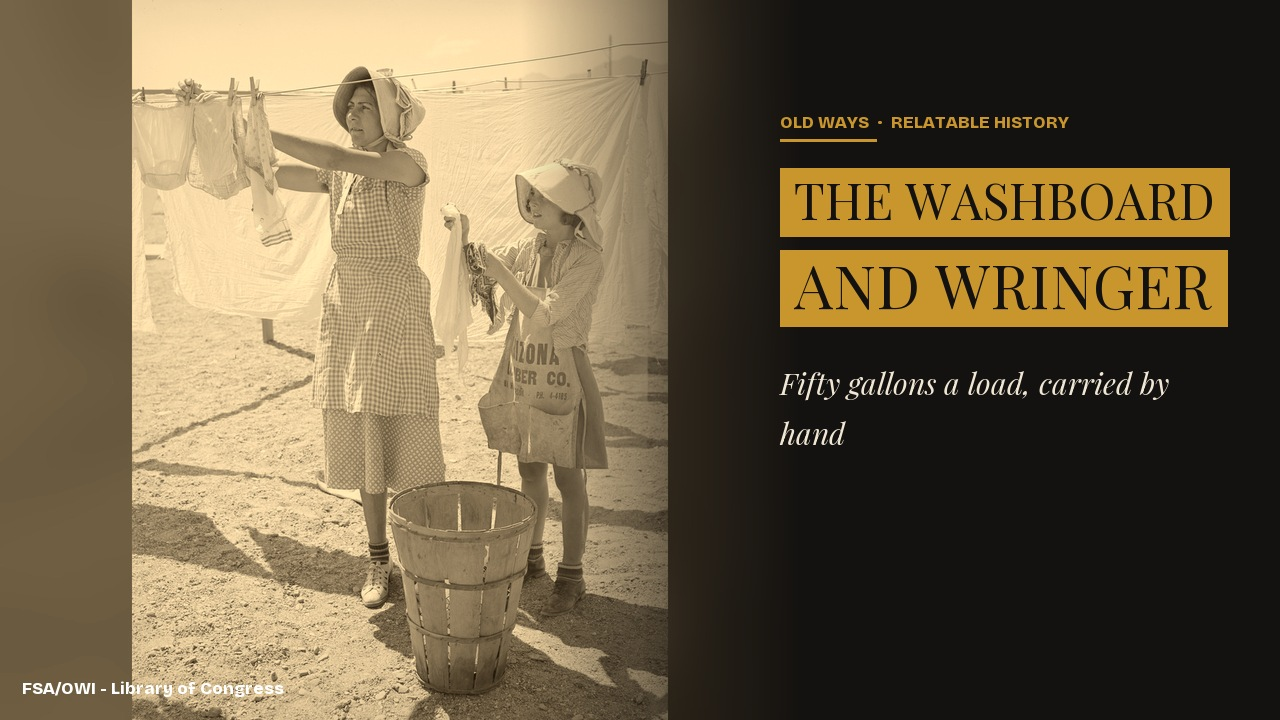
- Wash Day Before Washing Machines Started With a Patent Fight — Before the washing machine, clean clothes took a patented tub, a home soap recipe, and a blue dye bought to fool the eye. Here’s the paper trail wash day left behind.
- What Finding a Red Ear of Corn Actually Meant at a Husking Bee — The red ear everyone remembers from a husking bee came with its own policing, its own cheating scandals, and — on at least one recorded occasion — a very different ending.
- How Much a Feather Bed Was Worth, in Pounds and Shillings — A feather bed could be worth more than a family’s furniture, linens, and Sunday clothes combined — and, centuries later, turned out to carry a lung disease nobody had a name for.
- How Tallow Candles Were Made, and Why Candle Day Was Dreaded — A single afternoon of rendering fat and pouring tin molds gave a household an entire winter of light. A 1754 probate inventory shows exactly how the accounting worked.
- The Spinning Wheel’s Economics Were Worse Than You Think — A 2019 economic-history study found that hand-spinning, the very sector mechanized first, was already some of the worst-paid work in England — which undercuts a famous theory…
- The Pie Safe That Kept Flies Out With Nothing But Holes — A pie safe kept flies and mice off a family’s food using nothing but a sheet of tin punched full of tiny, sharp-edged holes. The popular story credits Pennsylvania German…
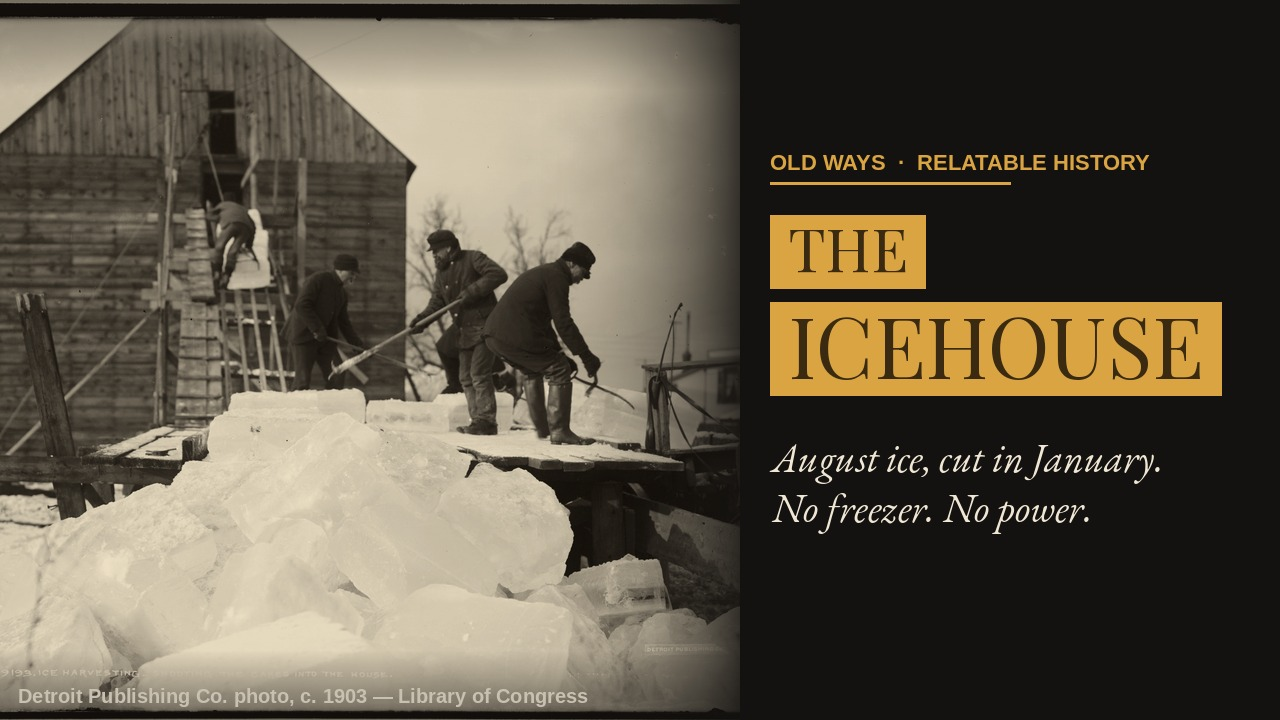
- How Iceboxes Worked Before the Electric Refrigerator — Before electricity, keeping food cold meant a block of ice, a drip pan, and a Boston trader bold enough to ship frozen ponds to the tropics. Here’s how iceboxes worked, and how…
- The Storm Cellar Existed Before Tornado Warnings Did — Until 1948, the United States had no functioning tornado warning system — forecasters were officially barred from using the word at all. The storm cellar is what families built…
- Who Really Worked in America’s Summer Kitchens — A detached kitchen looks like a convenience in an old photograph. For the people who worked in one — enslaved cooks, farm wives, hired girls — it was a full day’s labor in a…
- Why Venice Made Mirror-Making a State Secret — Venice turned a glassmaking trick into a monopoly guarded by statute for a century and a half. It took a king’s bribery, and two centuries later a chemist’s basic reaction, to…
- Why Umbrellas Were Once Considered Unmanly — An umbrella used to announce something humiliating about the man holding it. A Greek poet was mocking men for it twenty-five centuries before a London merchant finally made it…
- Why the Fork Was Once Considered Sinful — A medieval cardinal wrote a moral tract partly to condemn a woman for using a fork. Seven centuries later, Americans were still eating without one.
- The Egg Money History of the Farmhouse Henhouse — For a farm wife a century ago, the henhouse out back wasn’t incidental. It was one of the only incomes she controlled herself, built on sun angles, careful records, and eggs…
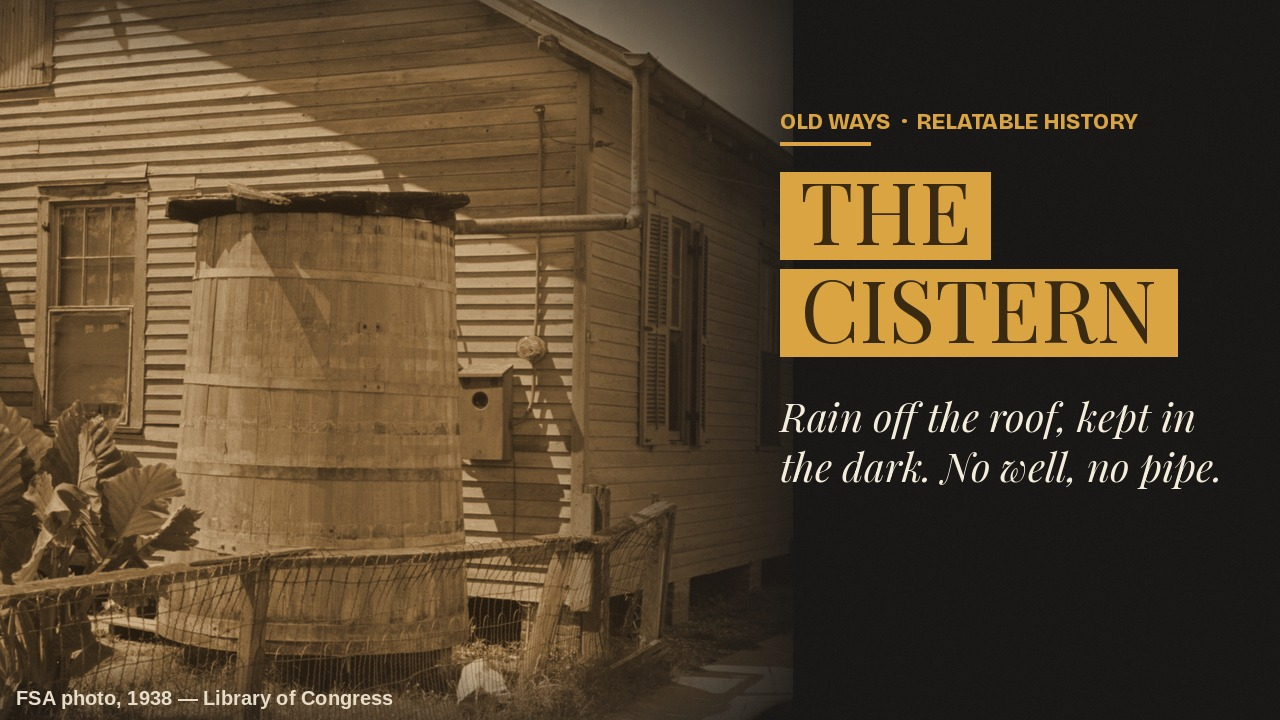
- Why Farms Caught Rainwater Instead of Using the Well — A well could run twenty grains of hardness to the gallon; a barrel under the eave ran close to zero. That difference built an entire piece of unpowered farm equipment around a…
- The 2,600-Year History of the Chamber Pot, From Athens to the Sewer — Long before the flush toilet, the humble pot created a real office of state, inspired satirical pottery, and outlasted several empires — until a disease nobody understood…
- How the Well Sweep Drew Water Before There Were Pumps — A counterweighted pole did most of the lifting at the farm well for four thousand years. Here is the mechanism, the daily labor behind it, and why it finally came down.
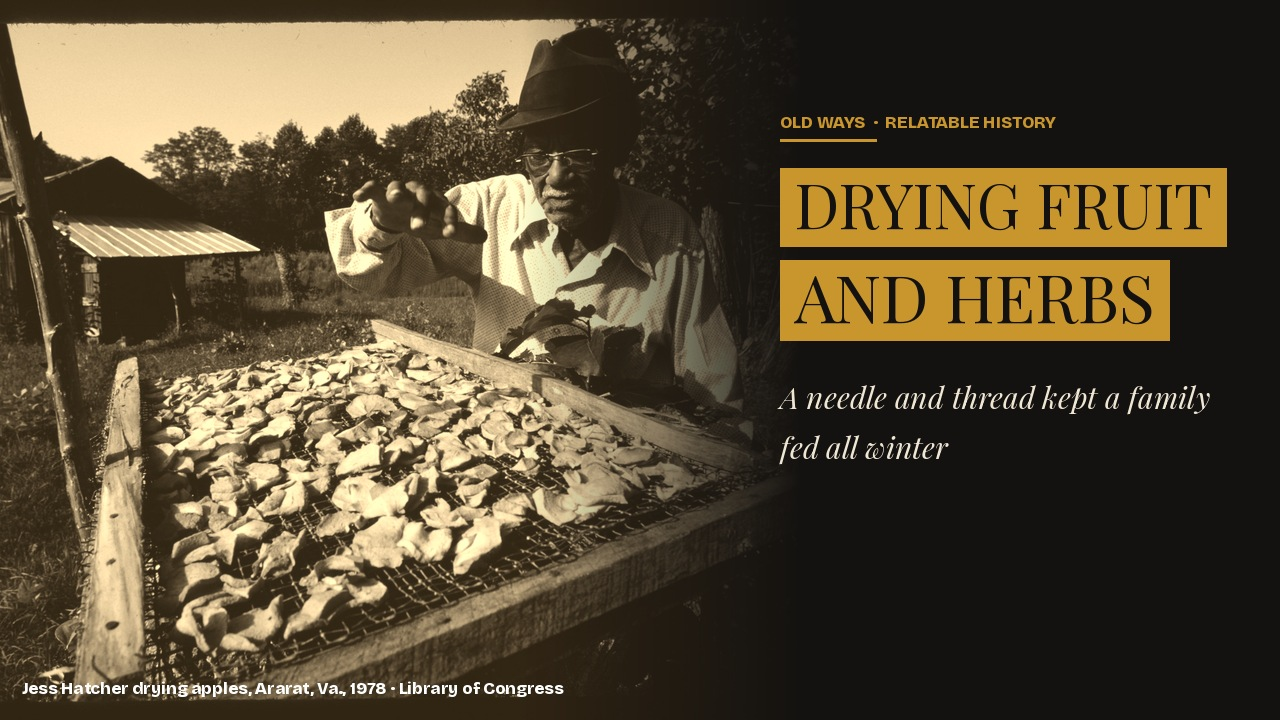
- How Home Food Drying Fed American Farms for 150 Years — Before refrigeration, drying was how a farm survived winter on its own harvest. It also became an export industry, a wartime program, and, twice, a subject of federal instruction.
- The Clothespin Patent History Behind America’s Favorite Free Dryer — A hundred and forty-six patents were filed for a stick with a spring. Inside the rivalry, the science and the law that grew up around the household’s original dryer.
- The WPA Sanitary Privy Program That Built Two Million Outhouses — Between 1933 and 1945, federal work crews built 2.3 million concrete outhouses across rural America on purpose, as a public health program. Here is how the sanitary privy…
- How the Sedan Chair Actually Worked, and Why It Started as a Scandal — A sedan chair needed no horse, no street and no permission to come indoors. It also needed two men to carry it, which is exactly what got the first one in England into trouble.
- The Chemistry Inside a Sauerkraut Crock, and Why It Actually Works — A crock, a sack of salt and a few weeks of patience turned raw cabbage into a food that would not spoil and would not make anyone sick. The reason it worked is stranger than…
- How Sod Houses Were Built on the Nebraska Prairie: The Construction, the Homestead Act, and the Life Inside — The Homestead Act gave settlers 160 free acres and required a house on them. With no timber for fifty miles, they built one out of the prairie itself. Here is how a sod house…
- Butter and Egg Money: How Farm Wives Financed the Household — Long before women could easily hold a bank account in their own name, a great many of them held a butter crock. Here is how butter and egg money worked, and what the dairy…
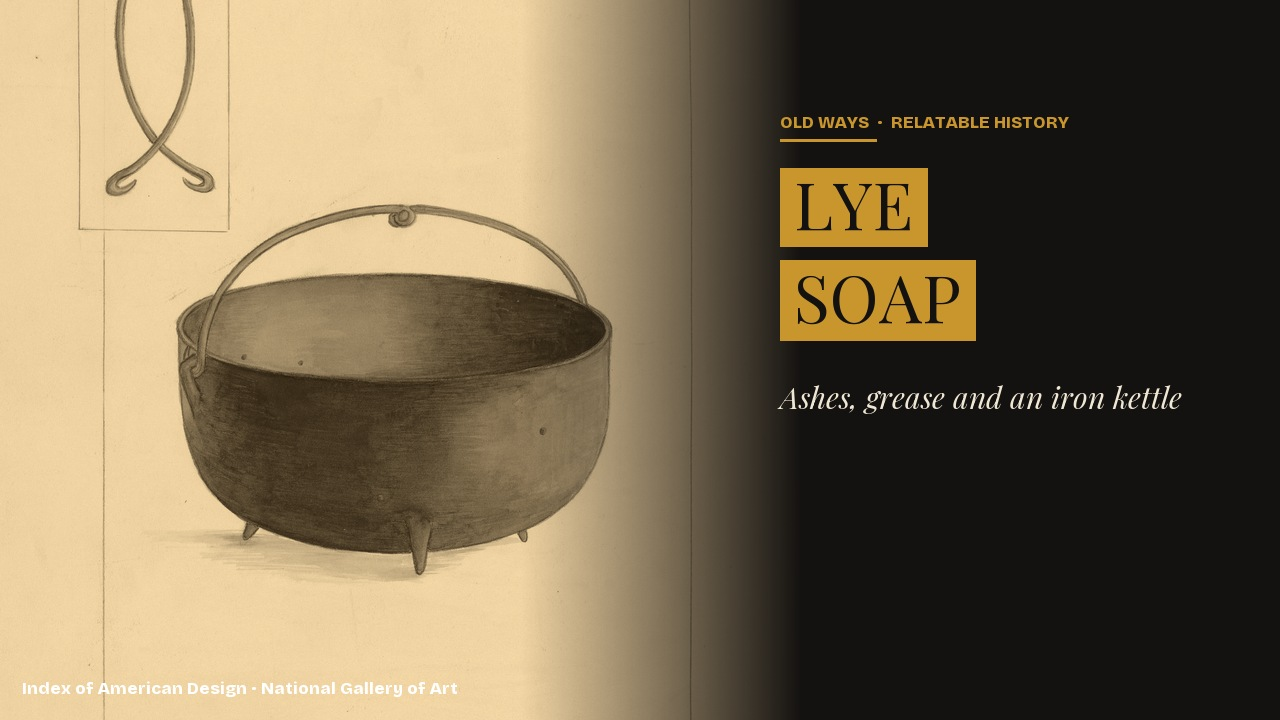
- The Farm Soap That Almost Never Hardened Into a Bar — Most homemade soap never hardened into a bar at all — it stayed a soft jelly in a crock. Here is the ash-hopper chemistry, the colonial trade, and the industries that twice…
- The Contested History Behind Blue Monday Washday — For close to a century, Monday had a color. The argument over why is more interesting than the folk explanation most people repeat.
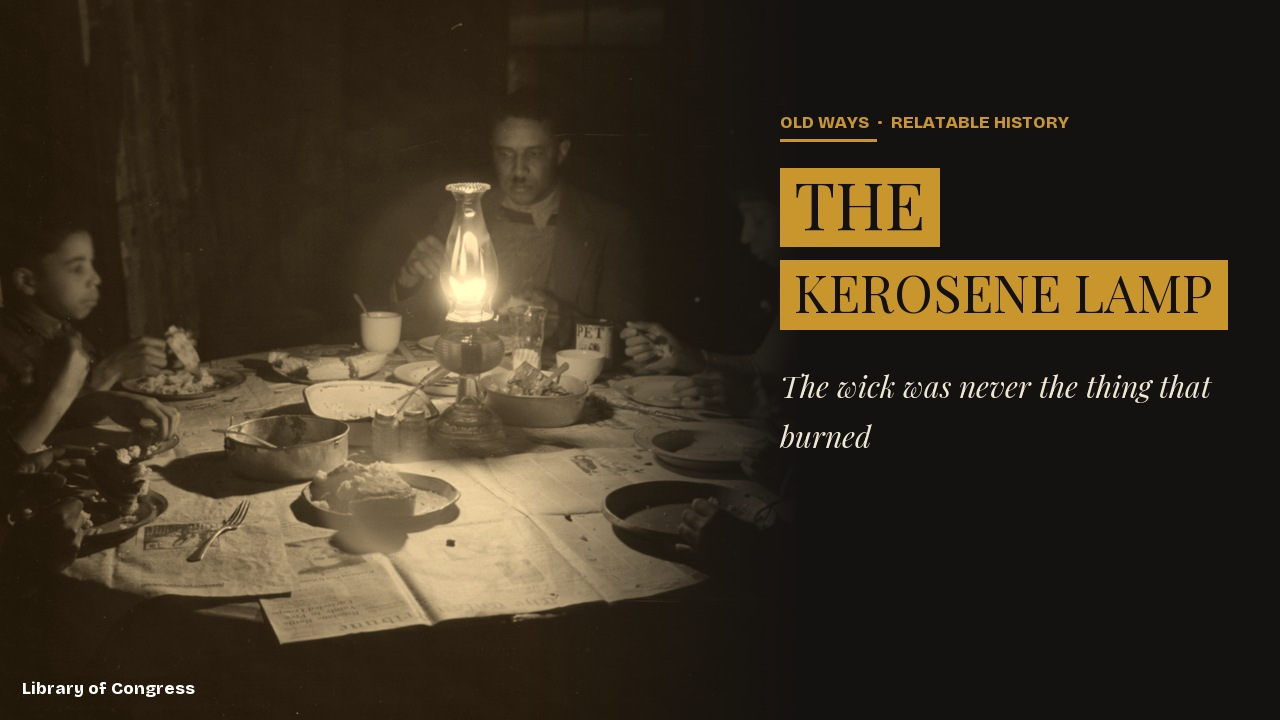
- How Kerosene Lamps Actually Worked (And Sometimes Exploded) — A kerosene lamp doesn’t burn its wick — it burns vapor drawn up through it. That chemistry lit rural America for ninety years, and for decades the fuel sold to power it was…
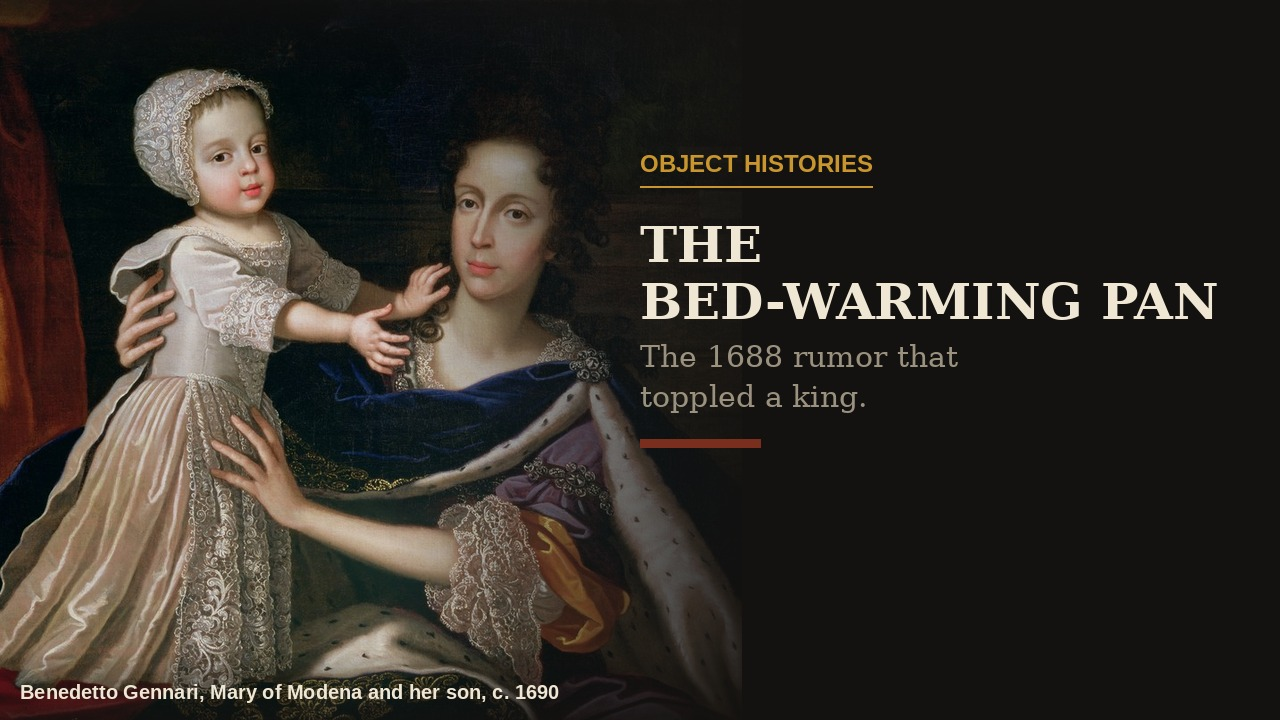
- The Warming-Pan Baby: The Bed-Warmer Behind a Royal Scandal — A rumor about an ordinary bed-warming pan helped convince a country its king had faked an heir — and helped bring him down within six months.
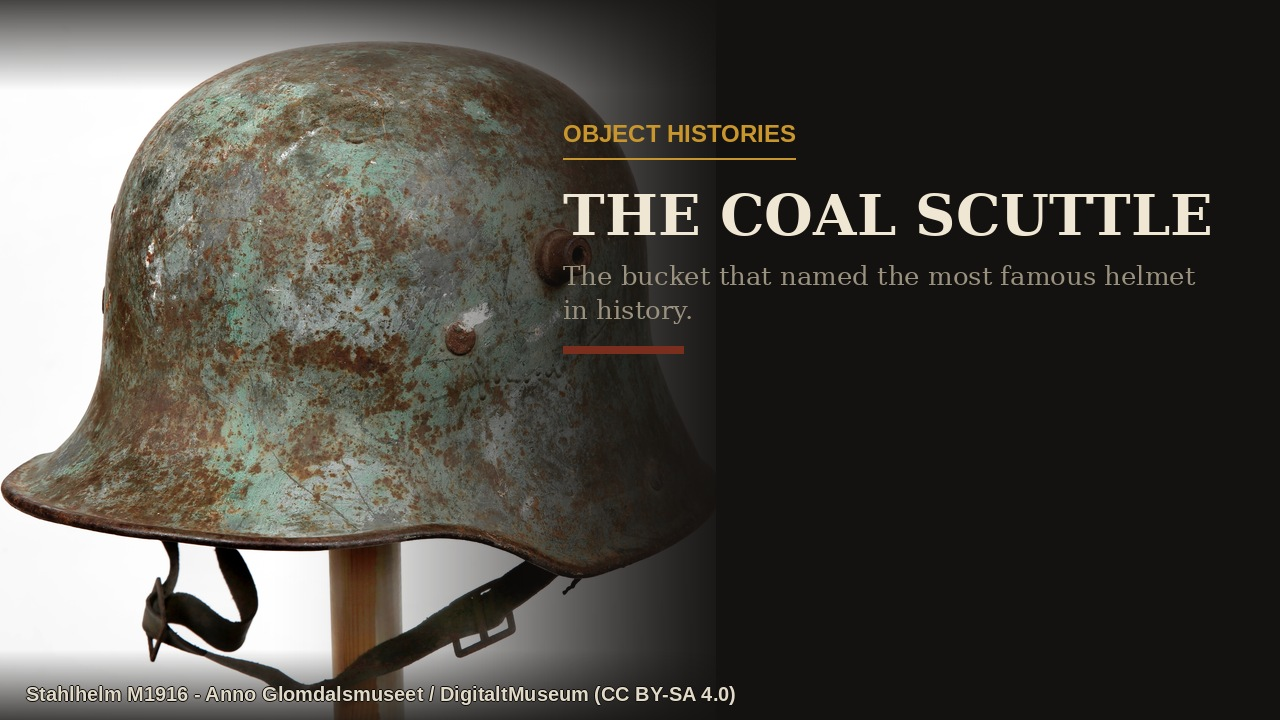
- The Coal Scuttle Helmet: Why British Troops Named It That — One word links a Roman serving dish, a brass Victorian fireplace bucket and the German army’s steel helmet of two world wars. Here is how it travelled between all three.
- Water Bath vs Pressure Canning: Why the 240-Degree Difference Exists — A sealed jar looks the same whether it is safe or not. Here is the science, and the history of learning it the hard way, behind which foods only need boiling water and which…
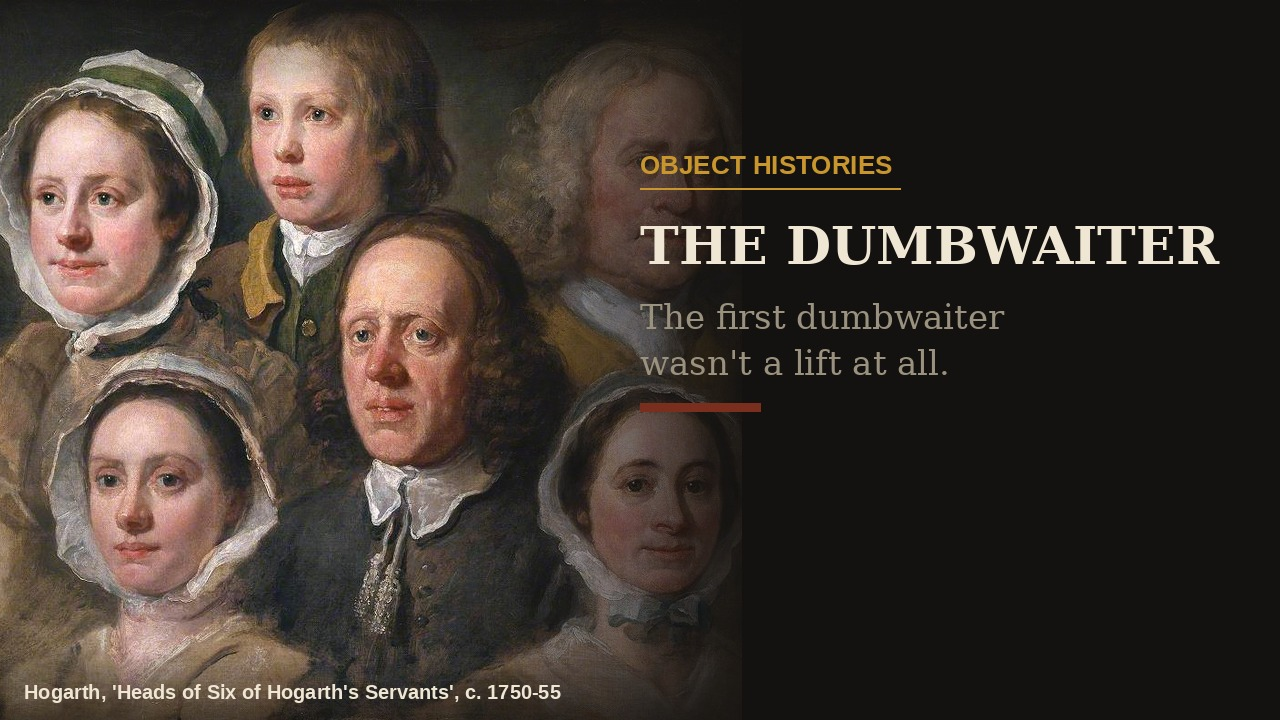
- The Real Reason the Dumbwaiter Was Invented — A dumbwaiter’s whole job was to make a person disappear. Thomas Jefferson used one to silence his enslaved servants; the CIA later used one to move classified files.
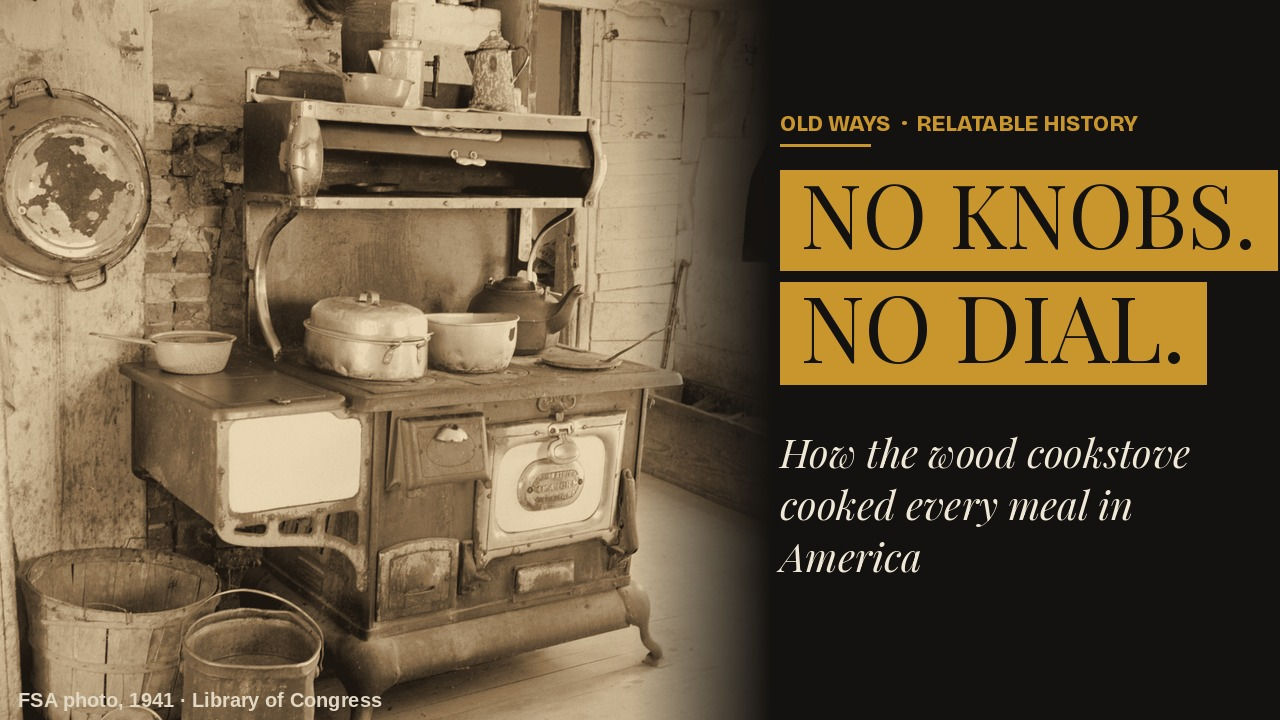
- How the Wood Cookstove Ran the American Kitchen for a Century — A cast-iron range with no dial ran nearly every American kitchen for a hundred years. Here is how a family actually cooked, heated water and stayed warm on nothing but split wood.
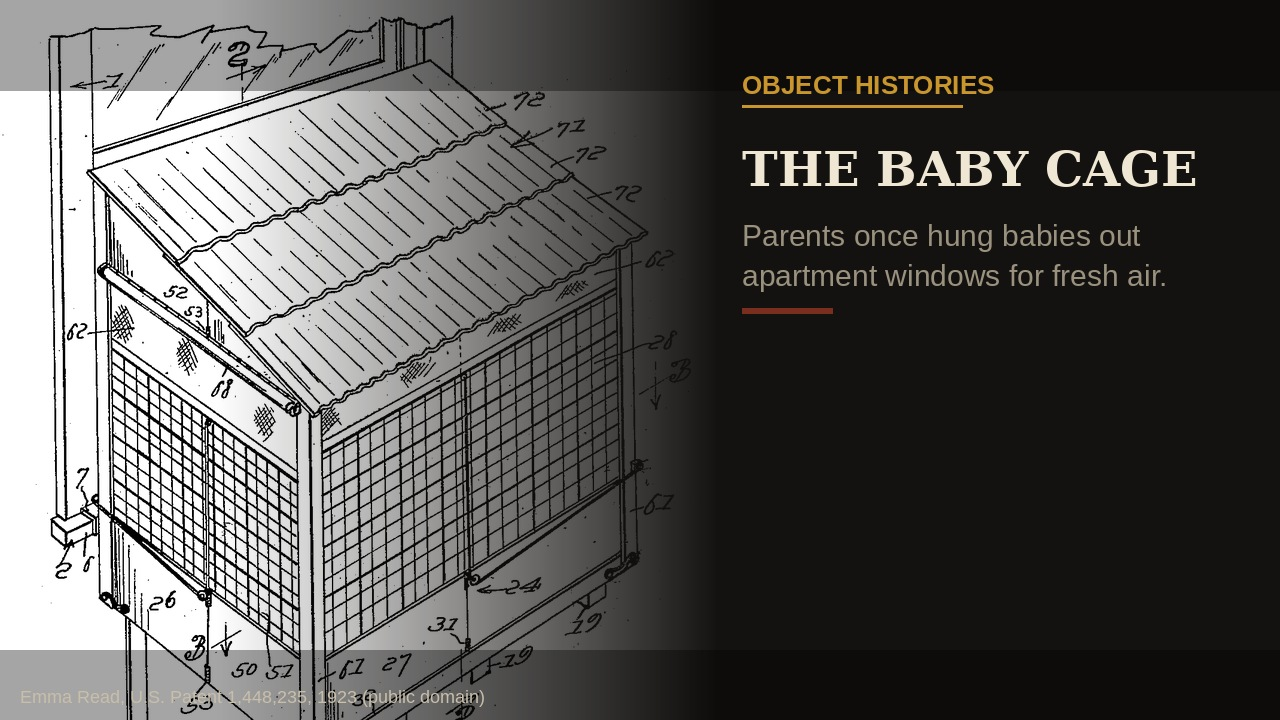
- The Public Health Panic That Made Baby Cages Seem Safe — A wire box bolted outside a window and a sleeping infant inside it was not reckless in 1930. It was doctor’s orders. Here is the public health crisis that made it look that way.
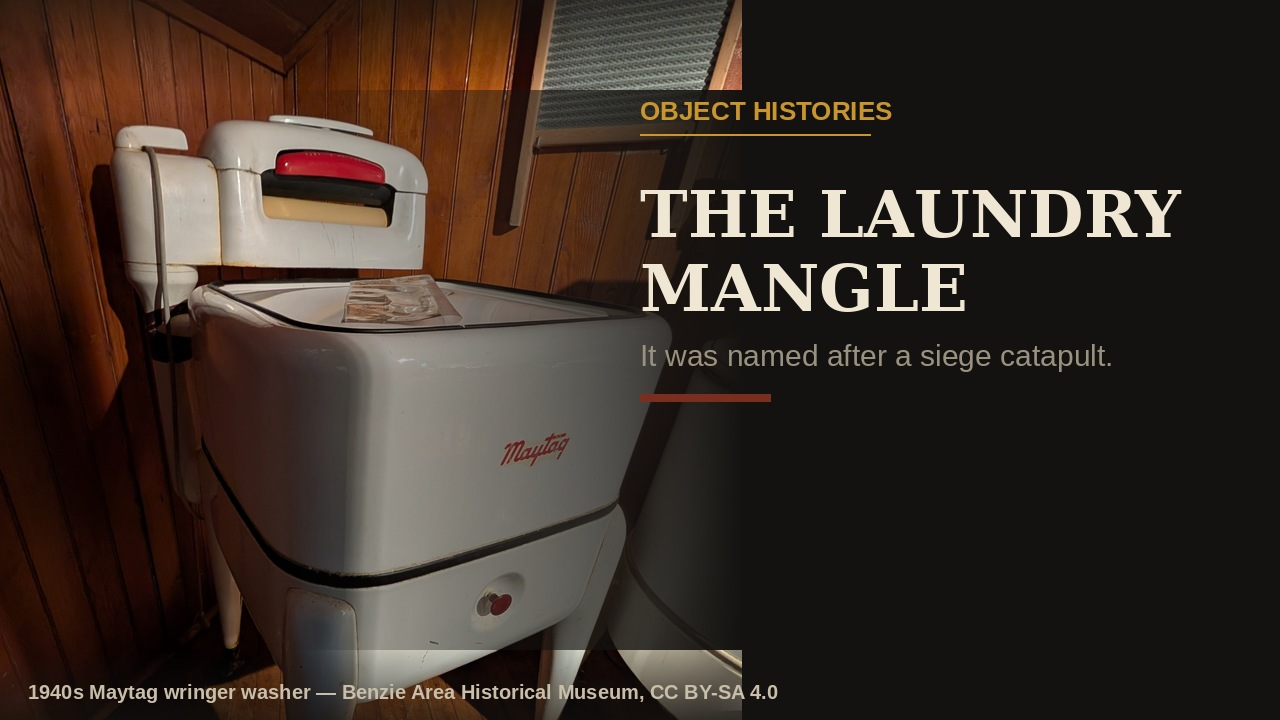
- Clothes Wringer History: From Courtship Gift to ‘Wringer Arm’ — Long before the electric wringer put a generation of children in hospital records, the same machine was a hand-carved proposal a man gave the woman he hoped to marry.
- The Real History of Rainwater Cisterns — A cistern is not just a farmhouse tank. It built a desert city, saved San Francisco from itself, and is still, by law, the only water supply an entire country has.
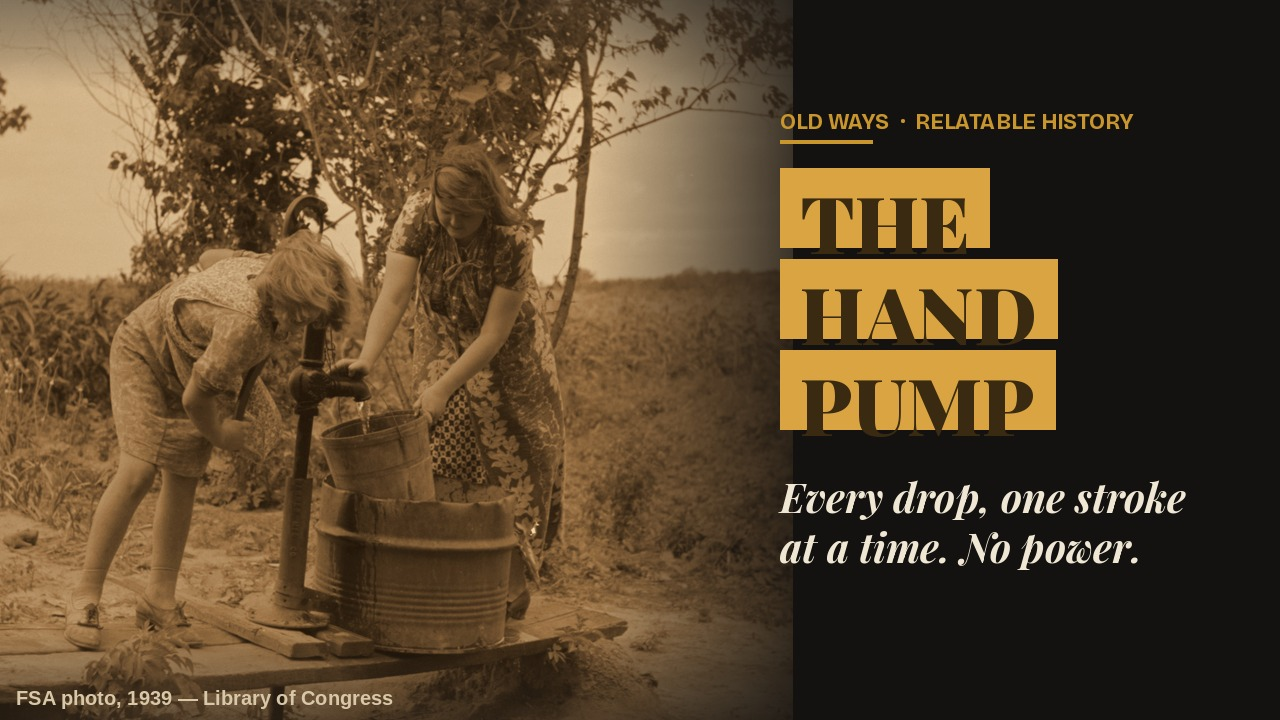
- How a Hand Pump Worked: Lifting Well Water With Nothing but Air Pressure — No pump ever pulled water out of the ground. The atmosphere pushed it, and that single fact set a hard limit on how deep a well could be worked by hand. Here is the mechanism,…
- Drying Fruit and Herbs: How a Farm Kept Food Without a Freezer | Old Ways — Before the freezer, a farm kitchen dried its way through the harvest: apple schnitz strung over the cookstove, leather britches beans, and a New York county shipping fifteen…
- How Icehouses Worked Before Refrigeration: The Physics, the Industry, and the People Who Cut the Ice — A farm icehouse and a Boston export firm ran on the same principle: pack ice tight, insulate it completely, and let physics do the rest. Here is the mechanism, the industry it…
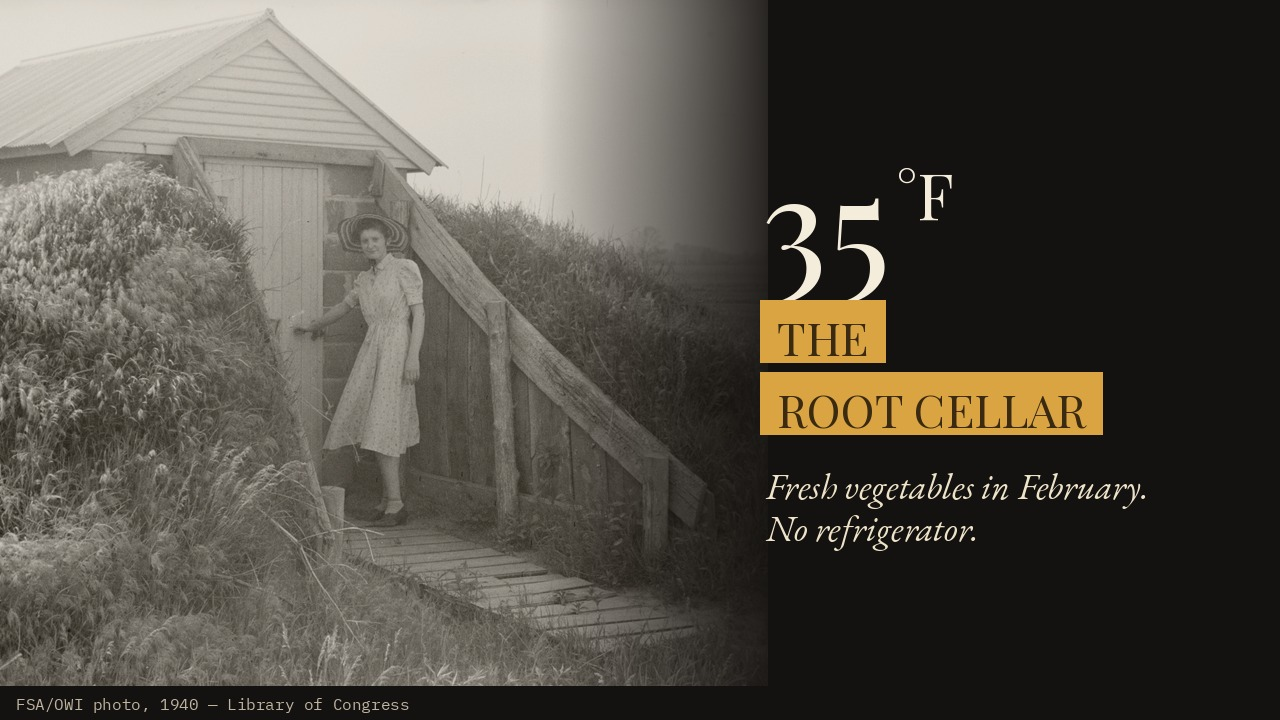
- How a Root Cellar Kept Vegetables All Winter: The Farm’s Biggest Refrigerator Was a Hole in the Ground — A room dug below the frost line, with no power at all, held potatoes crisp for five months. Here is the mechanism, the numbers, and the ethylene rule every farm wife knew by heart.
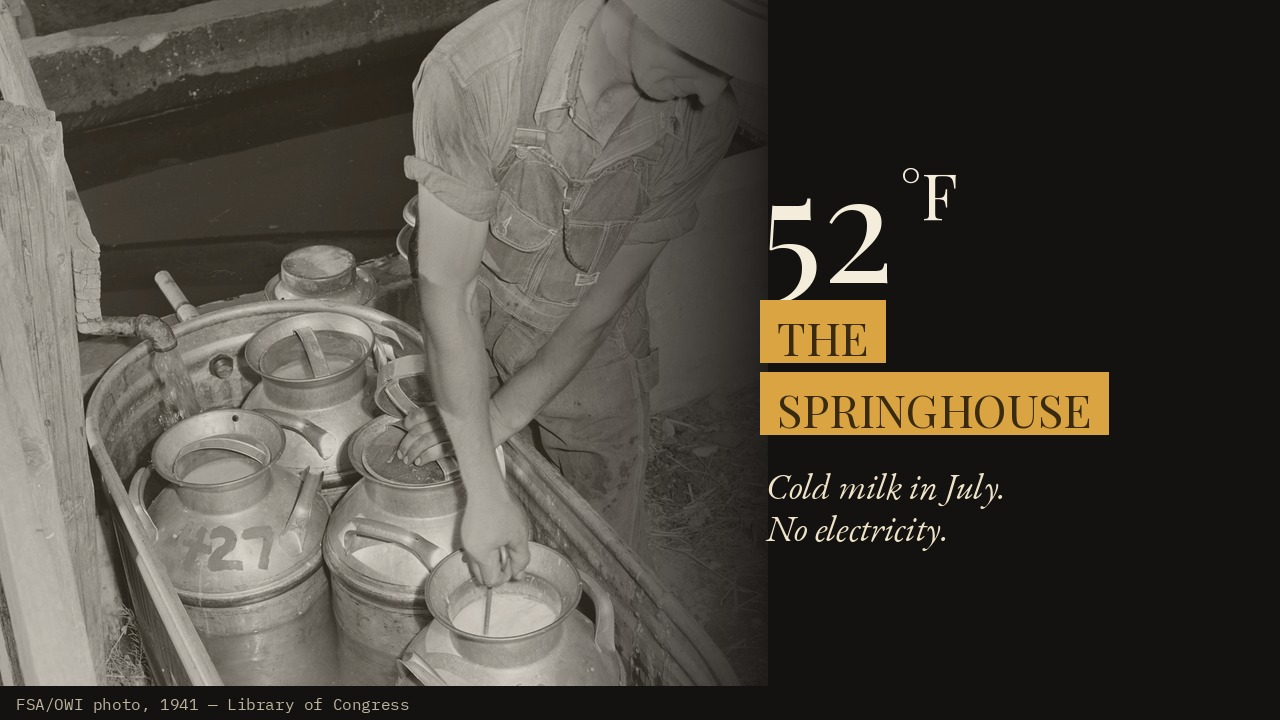
- How a Springhouse Worked: The Farm Refrigerator That Ran on a Spring — A stone room with a stream running through the floor kept butter firm in August and milk from freezing in January. Here is the mechanism, the numbers, and the wire that ended it.