Roughly 1750 to 1900. Mechanisation, mass production, the railway and the telegraph, and the wholesale remaking of ordinary daily life.
108 articles so far, newest first. Browse the full archive.
- The History of Maple Sugaring, From Stone-Boiled Sap to a Stolen Fortune — Thomas Jefferson once planted sixty maple trees in a bid to undercut slave-grown cane sugar. That is only one stop in the fuller, stranger history behind the bucket and spile.
- How Colonial Americans Dyed Cloth Before Store-Bought Dye Existed — Before synthetic dye came in a nickel packet, color for homespun cloth was grown, traded, or fermented at home — and one trick made plain yellow liquid turn sky blue in midair.
- The Native American Craft Behind Every Farm Basket — Nearly every egg basket, feed basket, and market basket on a 19th-century American farm descends from one Native pounding technique, taught to settlers, then nearly erased…
- Why Christmas Nutcrackers Are Shaped Like Kings and Soldiers — The wooden king on your mantel was carved by people who’d lost their own livelihoods, to make him grind his jaw forever. Here’s the oddly tangled, three-named, two-Hoffmann…
- Drying Apples Before Refrigeration: How Farm Families Did It — For about a century, a Moravian sisterhood in colonial Pennsylvania ran a dedicated building whose only job was turning a fall apple harvest into food that would survive the…
- Why the Dorabella Cipher Remains Unsolved — Eighty-seven symbols, three lines, one composer’s idea of a private joke. More than a century and a cash prize later, nobody has read a word of it.
- The History of the Sausage Stuffer: How Farms Wasted Nothing From a Hog — A hand-cranked grinder, a USDA recipe, and a neighborhood’s worth of cooperative labor turned a hog’s leftover scraps into a winter’s worth of sausage, until refrigeration made…
- The History of the Vinaigrette Box: A Georgian Cure for Bad Air — A vinaigrette box was carried by Georgian and Victorian women as genuine medicine against disease, until a London physician’s cholera map proved the whole theory behind it wrong.
- Climbing Boys: The Children Britain Sent Up Chimneys — Climbing boys were chimney sweeps apprenticed as young as four and sent inside flues nine inches wide. It took a surgeon’s cancer discovery, three failed laws, and one more…
- How Much Firewood Heated a Farmhouse Through a 19th-Century Winter — A farmhouse with no coal or oil ran on wood that had to be cut, split, and dried for the better part of a year before anyone burned it — and what a single winter’s heat…
- How Dry Stone Walls Stay Up Without a Drop of Mortar — A dry stone wall has no mortar, no cement and no engineer’s drawing behind it — just stacked rock, weight, and a deliberate lean. Some examples still standing are pushing four…
- The 250-Year-Old Box That Kept Flies Off Dinner Without a Fridge — For two and a half centuries, a cabinet with holes for walls was the only thing standing between supper and a kitchen full of flies — no ice, no electricity, just tin, wire,…
- How Outdoor Bread Ovens Worked, and Where Owning One Was Against the Law — In parts of France, building your own bread oven was once against the law. In Pennsylvania and New England, families built theirs in the yard and ran a week’s cooking off one fire.
- What Was a Quern Stone? The Hand Mill That Outlasted Empires — Two stones, a wooden peg, and an hour of aching work for one loaf of bread. The quern stone outlasted Rome, survived a medieval ban, and fed the American frontier through a war.
- Why Flax Never Became an American Industry — Cotton got the gin. Wool got the jenny and the water frame. Flax got almost nothing, in America at least — while across the Atlantic, the same fiber built an entire industrial…
- Inside the 19th-Century Ice Harvesting Industry’s Boom and Bust — Cutting and hauling pond ice once employed tens of thousands of workers every winter and built Maine river towns almost overnight, until a rival trade across the Atlantic and a…
- How an Inkwell Actually Worked, From Ancient Egypt to the Classroom — An inkwell wasn’t just a vessel. It was a daily argument with evaporation, frost, and a chemical reaction that quietly destroyed the page it was written on.
- How Soapstone Foot Warmers Worked, and What They Replaced — Long before the hot water bottle, New England families heated a flat stone and carried it into sleighs, pews, and beds, because it held heat almost twice as well as iron.
- The Print Trail That Turned a Pumpkin Into a Jack-o’-Lantern — Irving never describes a carved face. Hawthorne used the word twice, fifteen years apart, before a newspaper ever printed one. Here is the paper trail the popular version skips.
- The Original Jack-o’-Lanterns Were Turnips, Not Pumpkins — A real turnip lantern, donated to a Dublin museum in 1943, is the best physical evidence for a custom that predates the pumpkin by at least a century. Here is what the…
- Why the Singapore Stone Is Still Undeciphered — The oldest writing ever found in Singapore has never yielded a single translated sentence. Tracing two hundred years of failed attempts explains why.
- The Statue of Liberty Was Built to Honor the End of Slavery — A broken shackle lies at the Statue of Liberty’s feet, cast there on purpose. It has almost nothing to do with the story most visitors are told.
- How Arbuckle’s Ariosa Coffee Ended a Weekly Farm Kitchen Chore — A Pittsburgh grocer’s egg-and-sugar glaze patent, a Civil War coffee crisis, and a federal law’s fine print: the real story behind why most Americans stopped roasting their own…
- Why Keyboards Use QWERTY — And What the Jamming Story Gets Wrong — The keyboard layout under your fingers right now was devised for a machine that typed blind, sold reluctantly by a rifle maker, and patented three times before it actually worked.
- Did Franklin Invent the Franklin Stove? — Benjamin Franklin refused to patent his famous stove on principle — and lost the credit for the version that actually worked.
- How Farms Rendered Lard to Last a Whole Winter — A patent from 1876 explains exactly how a cast-iron press squeezed the last of the fat out of hog-killing scraps — and why one crock of lard had to feed a family for a year.
- What Washing Before Indoor Plumbing Really Looked Like — Long before the bathroom tap, an ordinary pitcher and basin, refilled by hand trip after trip, was how entire households washed, shaved, and got through the morning.
- Who Invented the Ice Cream Freezer? The 1843 Patent, and the Man Who Profited Without One — Two people shaped how America eats ice cream in the 1840s, and only one of them is widely remembered. Here’s the 1843 patent, the Baltimore rival who improved on it, and the…
- How the Jealousy Glass Let Theatergoers Spy Without Looking — An 18th-century optician drilled a hole and tilted a mirror inside an otherwise ordinary spyglass, and the result let a whole generation of theatergoers watch each other…
- How Oxen Were Trained to Plow Without Reins or a Bit — A yoke of oxen answered to two words and a stick, not a bridle. Here is how the training, the carving, and the hard economics of owning oxen actually worked on the American…
- The Secret Code of Victorian Calling Card Etiquette — A folded corner, a silver tray, and a servant who decided whether you existed socially: Victorian calling cards turned politeness into a transaction, and the case that held…
- How the Apple Parer Worked, and Who Actually Invented It — Moses Coates patented his apple-paring machine in 1803 and wrote to Thomas Jefferson about it. The reply that actually survives says something different from the legend.
- How a Fireplace Trammel Worked in a Colonial Kitchen — The crane got the swinging arm, but the trammel did the real work: a notched or ratcheted iron hook that let a cook dial in heat over open flame with no thermostat at all.
- What Actually Killed the Franklin Expedition’s Crew — A single page recovered in 1859 is the only written word the expedition left behind. Everything else — including what finally killed its last survivors — had to be dug up,…
- Threshing Grain by Hand: The Flail, the Floor, and the Riot That Tried to Stop the Machine — For most of agricultural history there was only one way to get grain out of its husk: beat it loose by hand with a flail. Then a machine arrived that could do the job in…
- The History of Cheese Pressing: From Roman Molds to Jefferson’s 1,235-Pound Wheel — A borrowed cider press, nine hundred cows, and a disputed inscription: how a simple screw turned surplus milk into a political stunt, a patentable machine, and a dying…
- Why New England’s Stone Walls Run 240,000 Miles — For two centuries, New England farmers pulled stone out of their fields by hand, ox, and sledge, and never once found a way to make it stop coming back.
- The Strange, Three-Thousand-Year History of the Ship’s Figurehead — A Boston sea captain once beheaded a carved president in a thunderstorm. A warship’s lion figurehead came up from the deep without her, 333 years later. This is the real…
- The Real History of the Worm Fence — Americans have told this fence’s story as frontier ingenuity for two centuries. The documented record says something stranger — and stranger still about the rails that made…
- What Finding a Red Ear of Corn Actually Meant at a Husking Bee — The red ear everyone remembers from a husking bee came with its own policing, its own cheating scandals, and — on at least one recorded occasion — a very different ending.
- How the Sewing Machine Installment Plan Put One in Every Farmhouse — A hand-sewn shirt took about fourteen hours; the same shirt on a machine took about one. Almost nobody could pay for the machine outright, though — so a lawyer named Edward…
- How Scrimshaw Was Made, From Whale’s Tooth to Keepsake — A whale’s tooth sat in Greta Garbo’s keeping for thirty-six years before anyone traced it back to the Oval Office — and tracing it is most of what there is to know about how…
- How Tallow Candles Were Made, and Why Candle Day Was Dreaded — A single afternoon of rendering fat and pouring tin molds gave a household an entire winter of light. A 1754 probate inventory shows exactly how the accounting worked.
- The Spinning Wheel’s Economics Were Worse Than You Think — A 2019 economic-history study found that hand-spinning, the very sector mechanized first, was already some of the worst-paid work in England — which undercuts a famous theory…
- How Fire Alarm Telegraph Boxes Worked — A fire alarm telegraph box never detected a fire. It announced the number a human believed was closest to one – a distinction that nearly cost Chicago everything.
- The Truth Behind the Mrs. O’Leary Cow Myth — Chicago’s official investigation into the 1871 fire took sworn testimony for nine days and never named a cause. The cow came from somewhere else entirely.
- The Pie Safe That Kept Flies Out With Nothing But Holes — A pie safe kept flies and mice off a family’s food using nothing but a sheet of tin punched full of tiny, sharp-edged holes. The popular story credits Pennsylvania German…
- The Kaleidoscope Patent That Failed Its Own Inventor — In February 1815, Scottish physicist David Brewster looked through a triangular trough of glass at some loose bits of cement and saw a perfect symmetrical pattern. Two years…
- Why Player Pianos Outsold Real Pianos in 1924 — In 1924, more player pianos were sold in America than pianos people actually sat down and learned to play. This is the real history: the Detroit inventor who built the first…
- Charles Babbage and the Organ Grinders He Hated — Charles Babbage designed the first mechanical computer, then spent over a decade convinced London’s street organs were destroying his career. This is the real, documented…
- Why Music Boxes Disappeared: Rise and Fall of an Industry — By 1896, the Regina Music Box Company was America’s recognized market leader, selling self-playing steel discs to saloons and parlors from a 300-worker New Jersey factory. By…
- How the Mechanical Turk Worked, and Who Was Hiding Inside — Napoleon lost to a machine in 1809. Benjamin Franklin was personally invited to see it play. For fifty-seven years, almost nobody could prove the Mechanical Turk was a hoax.…
- The Real History of the Fortune Teller Machine — A coin-operated fortune machine looks like harmless boardwalk fun. For decades, some of them were hiding a real crime: a working slot machine wearing a wizard’s costume to…
- How Tarot Became Fortune Telling, 300 Years Later — Tarot was a trick-taking card game for three centuries before anyone used it to predict anything. Here’s how a scholar’s fifteen-minute guess and an overlooked illustrator’s…
- How Iceboxes Worked Before the Electric Refrigerator — Before electricity, keeping food cold meant a block of ice, a drip pan, and a Boston trader bold enough to ship frozen ponds to the tropics. Here’s how iceboxes worked, and how…
- What Was in Victorian Smelling Salts — The active ingredient in a Georgian lady’s silver vinaigrette was burnt deer antler. Two centuries later, NFL sidelines were using the same chemical trick — until the league…
- What George Washington’s Dentures Were Made Of — Washington’s dentures were never carved from wood. They were hippopotamus ivory, lead, gold wire, and teeth with a far more complicated origin than the myth ever let on.
- How Cream Separators Worked, and Why Every Farm Wanted One — A hand-cranked machine could pull nearly all the cream out of a bucket of milk in the time it took to turn a crank up to speed. Here is the engineering, and the chore, behind it.
- How Corn Shellers Worked, and Why American Farms Needed One — A crank and two toothed wheels replaced a chore that used to take all winter. Here is how the hand-crank corn sheller actually worked, and why hand shelling never fully…
- Why Amputation Before Anesthesia Meant Racing the Clock — For centuries the only mercy a surgeon could offer was speed. Here is how the amputation saw, and the men who used it, actually worked.
- How the Dental Key Worked, and Why It Took a Century to Retire — For over a century, a bad tooth meant a stranger turning a steel key in your jaw until something gave way. Here is how the instrument actually worked, and what finally replaced it.
- The Bloodletting Craze That Nearly Wiped Out Europe’s Leeches — A parasite became a pharmaceutical commodity, one doctor turned bleeding into a cure for almost everything, and the demand it created nearly emptied Europe’s ponds of leeches.
- How Skep Beekeeping Worked Before the Movable-Frame Hive — A skep had no frames and nothing removable inside it, which is why, for roughly two hundred years, taking the honey usually meant killing the bees that made it.
- Nobody Knows Exactly When the Straitjacket Was Invented — The straitjacket’s famous 1790 origin story has an eighteen-year hole in it, and what fills the gap says more about asylums than about any single inventor.
- Who Discovered Ether Anesthesia? The Feud That Ruined Three of the Four Men Who Claimed It — Four men claimed credit for ending surgical pain with ether. One died broke after twenty years of litigation, one died in an asylum, one took his own life, and the one who…
- Why the 1787 Constitutional Convention Met Entirely in Secret — For four months in 1787, Philadelphia’s State House ran under an unbreakable gag order. Almost everything we know about what was said inside comes from one delegate’s personal…
- How Phrenology Hiring Practices Took Over Victorian Workplaces — Before resumes, some employers wanted a skull reading first. Here’s how a Viennese doctor’s theory of bumps became an American hiring filter, and why a judge eventually said no.
- Who Really Worked in America’s Summer Kitchens — A detached kitchen looks like a convenience in an old photograph. For the people who worked in one — enslaved cooks, farm wives, hired girls — it was a full day’s labor in a…
- Why Pencil Lead Isn’t Actually Lead — A storm in England’s Lake District uncovered the rock that would be mistaken for lead, guarded like treasure, and reinvented twice more — by Napoleon’s France and by a…
- What Really Made the Crew Abandon the Mary Celeste — She was fully provisioned, under partial sail, and completely empty. A century and a half later, two chemistry labs think they’ve worked out why the crew left.
- Why Umbrellas Were Once Considered Unmanly — An umbrella used to announce something humiliating about the man holding it. A Greek poet was mocking men for it twenty-five centuries before a London merchant finally made it…
- Why Farms Caught Rainwater Instead of Using the Well — A well could run twenty grains of hardness to the gallon; a barrel under the eave ran close to zero. That difference built an entire piece of unpowered farm equipment around a…
- The Maple Sugar Abolition Movement That Almost Worked — A Philadelphia doctor, a Founding Father, and a network of Quakers all believed maple trees could end American demand for sugar grown by enslaved labor. For about a decade, it…
- How Cider, Not Beer, Became Colonial America’s Everyday Drink — A bushel of bitter, inedible farm apples, a hand-cranked grinder and a wooden screw press were how a colonial household drank through an entire year without touching the well.
- How Wooden Tally Sticks Ran England’s Treasury for 600 Years — A tally was a notched stick split in half so the two pieces could never be faked. For six centuries it was England’s receipt, its currency, and eventually its downfall.
- How a Water-Powered Grist Mill Turned Wheat Into Flour, No Cash Involved — A grist mill never sent a bill. Farmers paid in grain, by a fixed fraction called the toll, and the arrangement held for roughly three centuries before steel rollers ended it…
- How Semaphore Flags Actually Worked at Sea — For over a century, two rival nations built optical telegraph networks neither enemy could read. The naval flag alphabet everyone pictures today wasn’t invented until the…
- How Farmers Harvested Wheat With a Grain Cradle — A cradler swinging a claw of wooden fingers could out-cut a sickle three to one and still lose the race to a horse. The forty-year run of the tool that came between them.
- How the Magic Lantern Became Europe’s First Horror Show — A Dutch scientist was too embarrassed to admit he’d built it. Two centuries later it was still terrifying audiences — while insisting, the whole time, that there was nothing to…
- How the Well Sweep Drew Water Before There Were Pumps — A counterweighted pole did most of the lifting at the farm well for four thousand years. Here is the mechanism, the daily labor behind it, and why it finally came down.
- The Clothespin Patent History Behind America’s Favorite Free Dryer — A hundred and forty-six patents were filed for a stick with a spring. Inside the rivalry, the science and the law that grew up around the household’s original dryer.
- The Stereoscope Craze That Swept Victorian Parlours — A wooden box that used mirrors and, later, lenses to fool the brain into seeing depth became a Victorian sensation, a Civil War reporting tool, and eventually a museum piece…
- The Chemistry Inside a Sauerkraut Crock, and Why It Actually Works — A crock, a sack of salt and a few weeks of patience turned raw cabbage into a food that would not spoil and would not make anyone sick. The reason it worked is stranger than…
- How Quill Pens Were Actually Made, and Why Steel Killed Them — A goose feather, a very sharp knife, and a pinch of hot sand. That is the entire recipe behind twelve centuries of handwritten history.
- How Sod Houses Were Built on the Nebraska Prairie: The Construction, the Homestead Act, and the Life Inside — The Homestead Act gave settlers 160 free acres and required a house on them. With no timber for fifty miles, they built one out of the prairie itself. Here is how a sod house…
- Why the Spittoon Disappeared: The Laws That Made Spitting a Crime — A women-led health campaign, a new criminal offense and a cigarette-rolling machine did what changing taste alone never could: they made the spittoon vanish in about two decades.
- How One Farmer’s Patent Rebuilt the American Barn — A single 1867 patent let American barns double their storage for free. It also could not solve the other problem: hay packed too damp will heat itself past the point of…
- Butter and Egg Money: How Farm Wives Financed the Household — Long before women could easily hold a bank account in their own name, a great many of them held a butter crock. Here is how butter and egg money worked, and what the dairy…
- Why the World’s First Bicycle Craze Collapsed in Eighteen Months — For about eighteen months, everyone wanted a velocipede. Riding academies opened by the dozen, races drew crowds, and then, almost as fast, the whole craze went bust.
- The Farm Soap That Almost Never Hardened Into a Bar — Most homemade soap never hardened into a bar at all — it stayed a soft jelly in a crock. Here is the ash-hopper chemistry, the colonial trade, and the industries that twice…
- The Contested History Behind Blue Monday Washday — For close to a century, Monday had a color. The argument over why is more interesting than the folk explanation most people repeat.
- How Kerosene Lamps Actually Worked (And Sometimes Exploded) — A kerosene lamp doesn’t burn its wick — it burns vapor drawn up through it. That chemistry lit rural America for ninety years, and for decades the fuel sold to power it was…
- The Coal Scuttle Helmet: Why British Troops Named It That — One word links a Roman serving dish, a brass Victorian fireplace bucket and the German army’s steel helmet of two world wars. Here is how it travelled between all three.
- Water Bath vs Pressure Canning: Why the 240-Degree Difference Exists — A sealed jar looks the same whether it is safe or not. Here is the science, and the history of learning it the hard way, behind which foods only need boiling water and which…
- How the Wood Cookstove Ran the American Kitchen for a Century — A cast-iron range with no dial ran nearly every American kitchen for a hundred years. Here is how a family actually cooked, heated water and stayed warm on nothing but split wood.
- Clothes Wringer History: From Courtship Gift to ‘Wringer Arm’ — Long before the electric wringer put a generation of children in hospital records, the same machine was a hand-carved proposal a man gave the woman he hoped to marry.
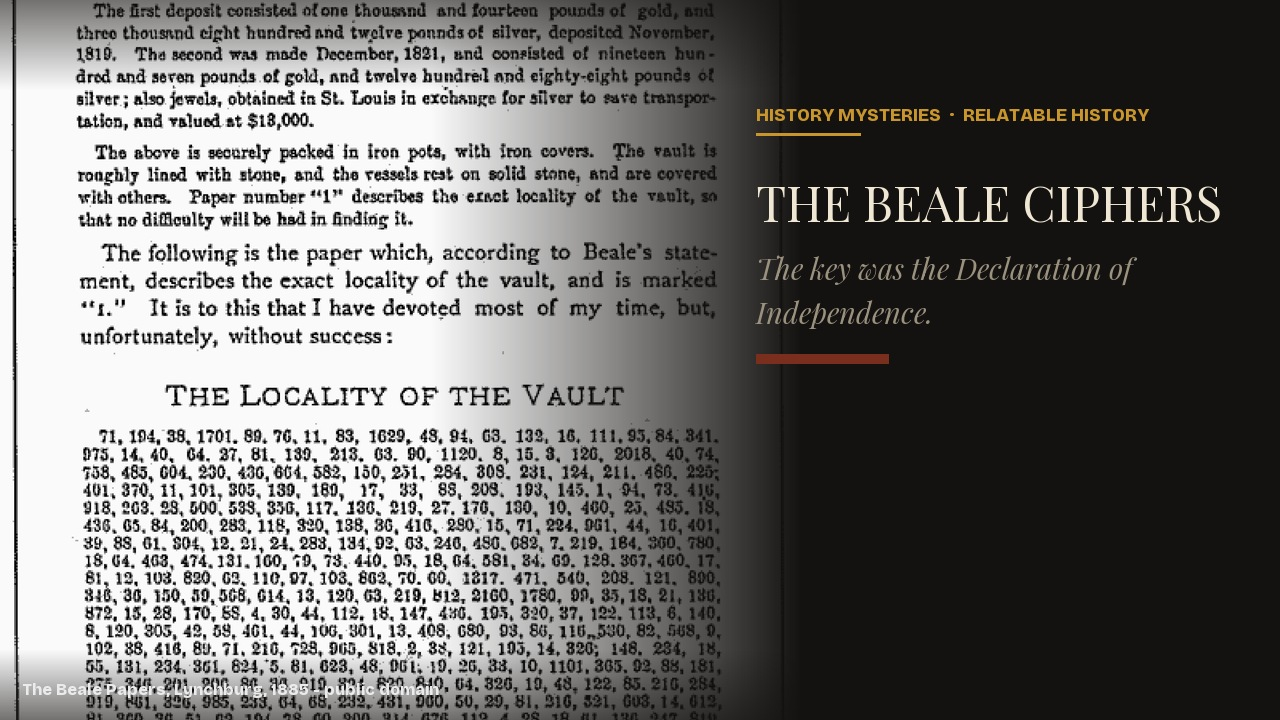
- The Mystery of the Beale Ciphers, Explained — One sheet of numbers unlocked with the Declaration of Independence. The other two, describing a fortune buried in the Virginia hills, have resisted every attempt since 1885.
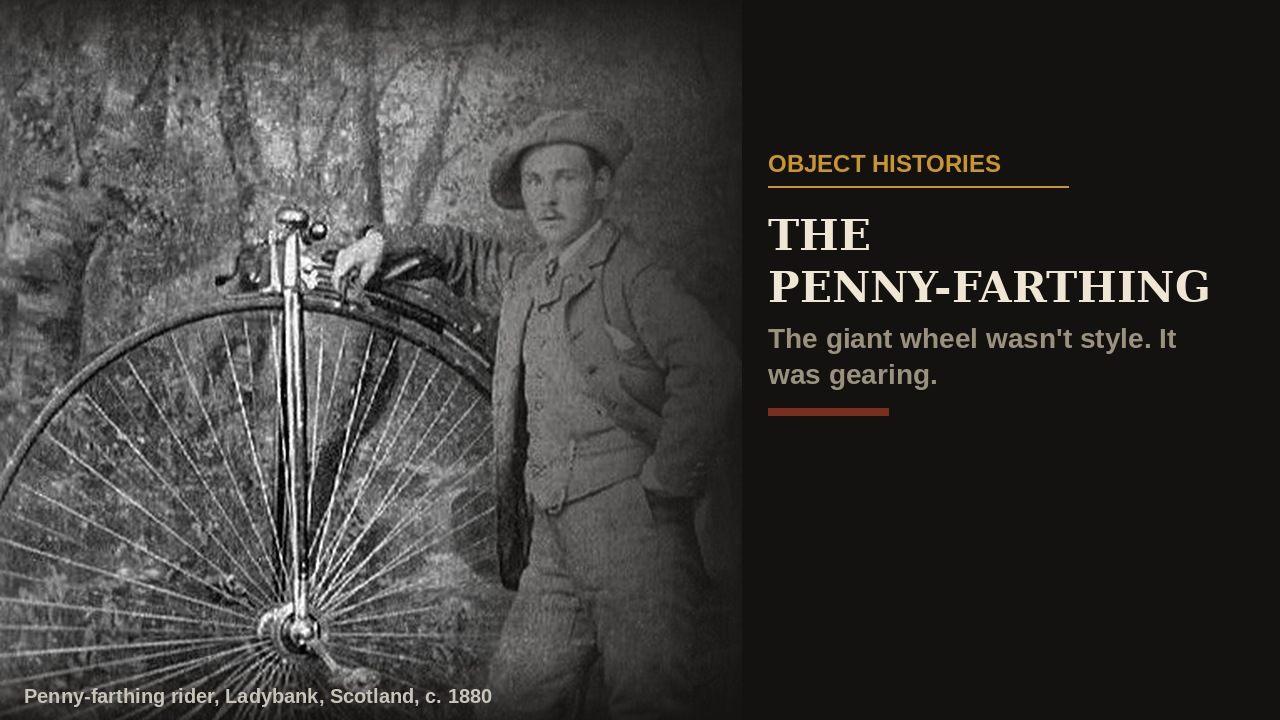
- Why the Penny-Farthing’s Wheel Had to Be So Big — Before the chain existed, a bicycle’s top speed was fixed by the size of its front wheel. That single constraint is the entire reason the penny-farthing grew as tall as a doorway.
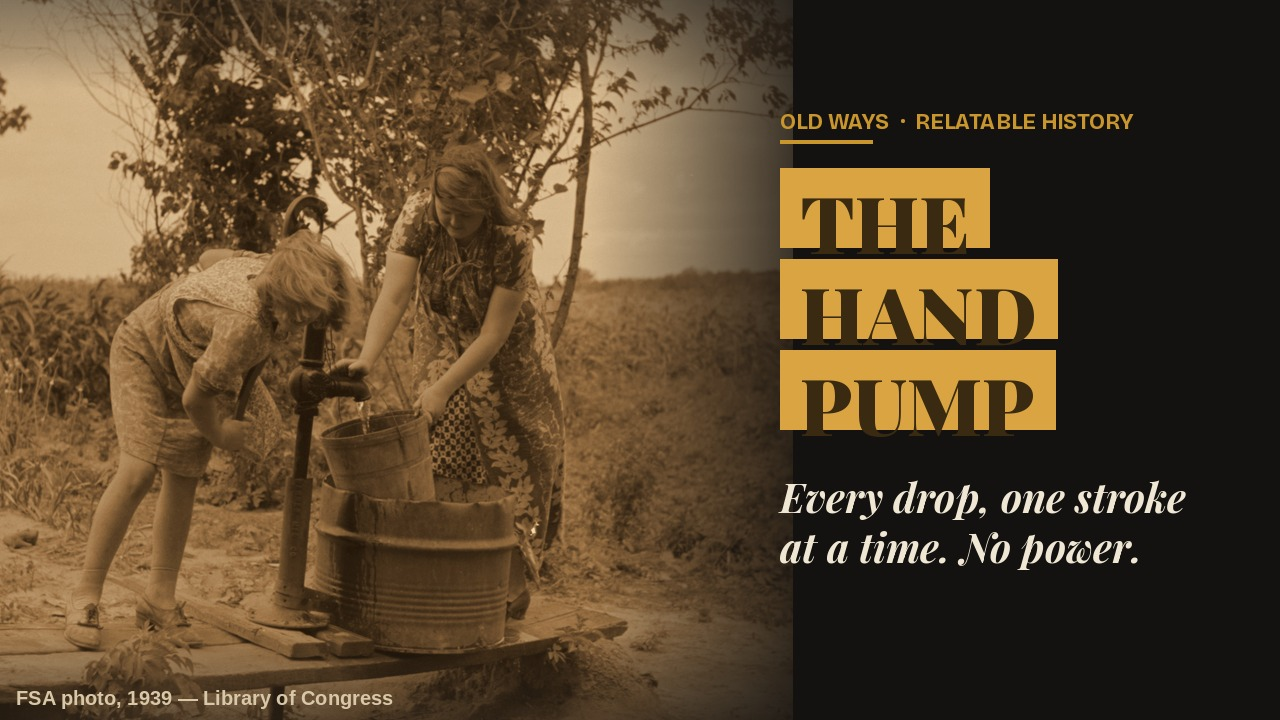
- How a Hand Pump Worked: Lifting Well Water With Nothing but Air Pressure — No pump ever pulled water out of the ground. The atmosphere pushed it, and that single fact set a hard limit on how deep a well could be worked by hand. Here is the mechanism,…
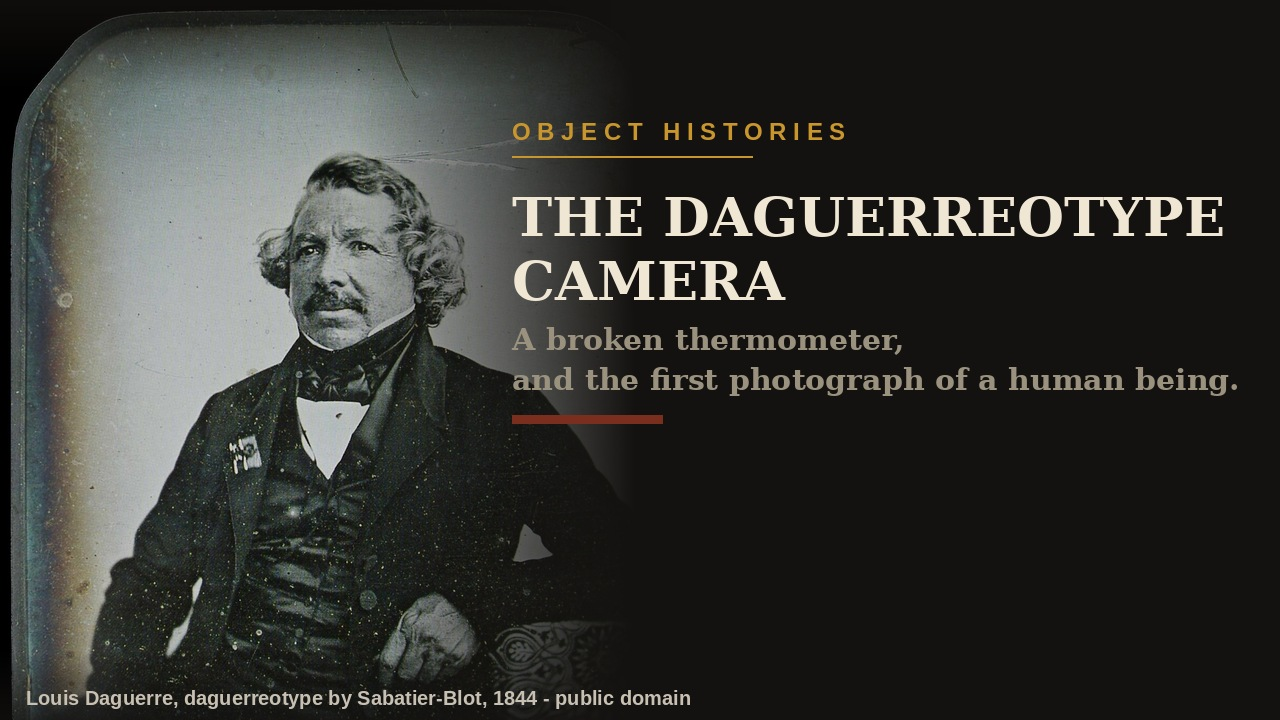
- How the Daguerreotype Actually Worked, and Why It Was Dangerous — Every daguerreotype is a one-of-a-kind object with no negative behind it, made by a process so toxic that ventilating your mercury was genuine period safety advice.
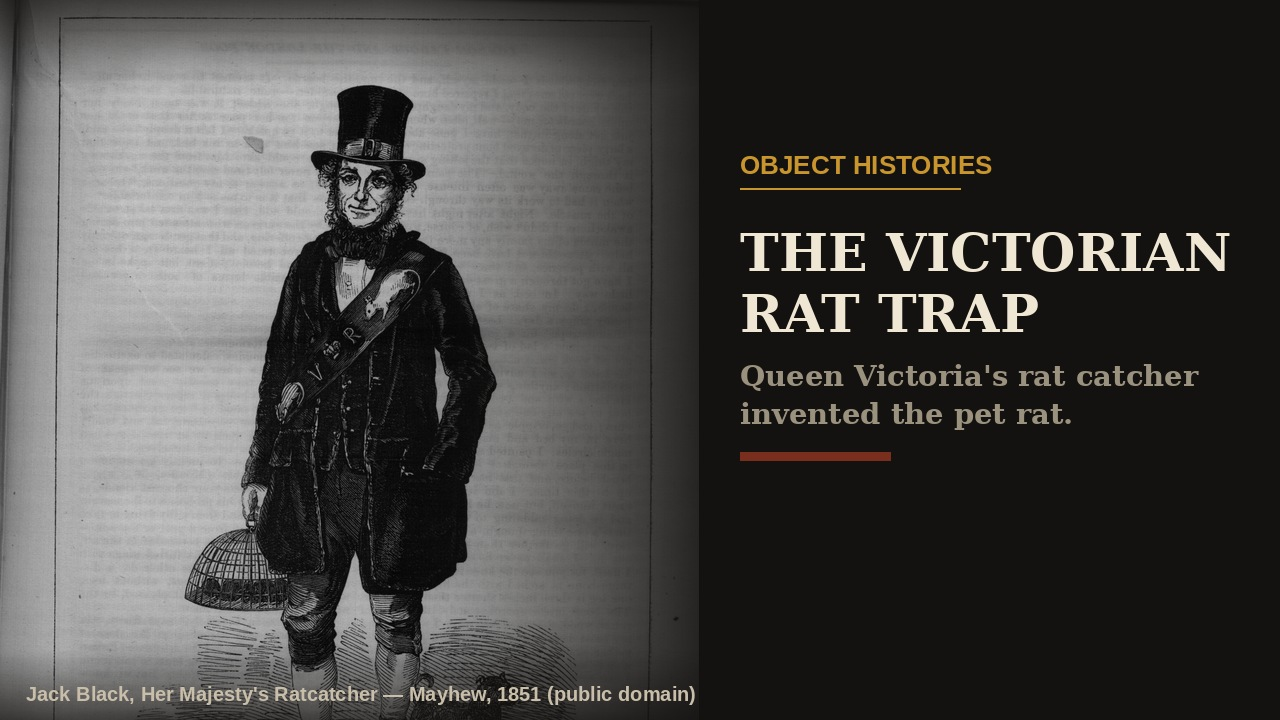
- Who Invented the Mousetrap? The Rat War That Made It Necessary — The spring-loaded mousetrap was patented in 1894 and has barely changed since. Getting there took a hundred and fifty years of rat catchers, gambling dens, and one very…
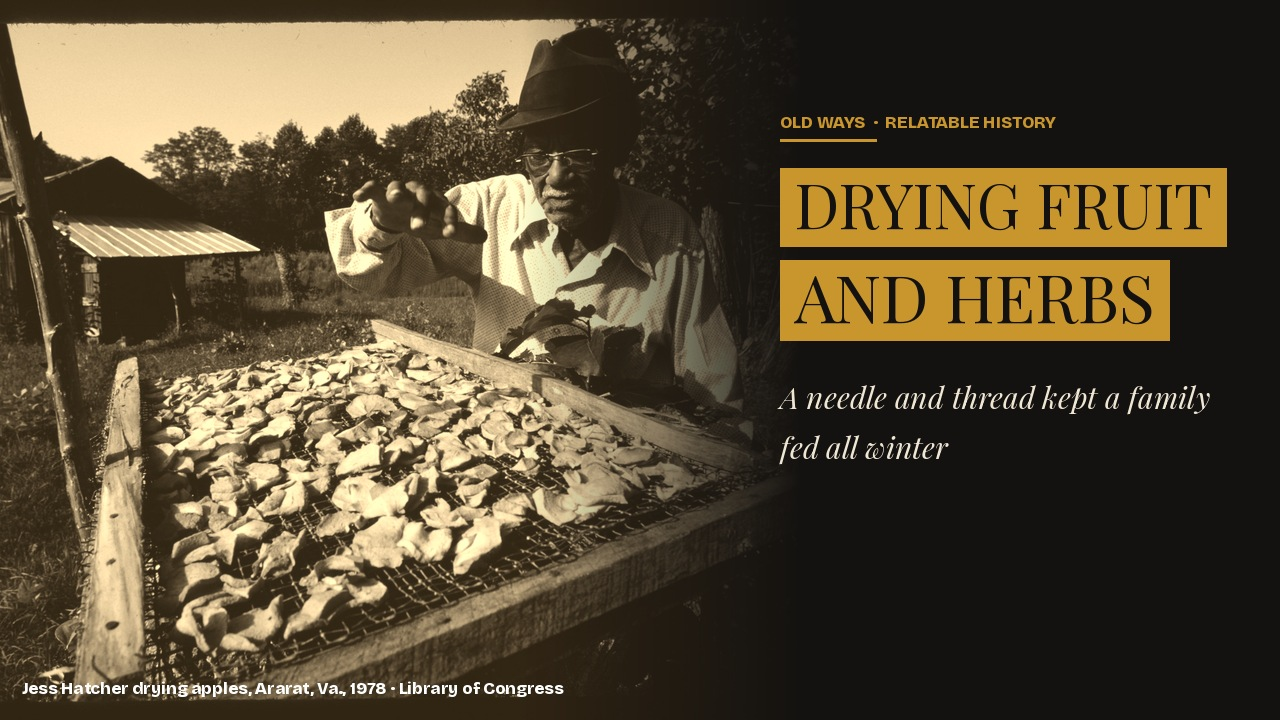
- Drying Fruit and Herbs: How a Farm Kept Food Without a Freezer | Old Ways — Before the freezer, a farm kitchen dried its way through the harvest: apple schnitz strung over the cookstove, leather britches beans, and a New York county shipping fifteen…
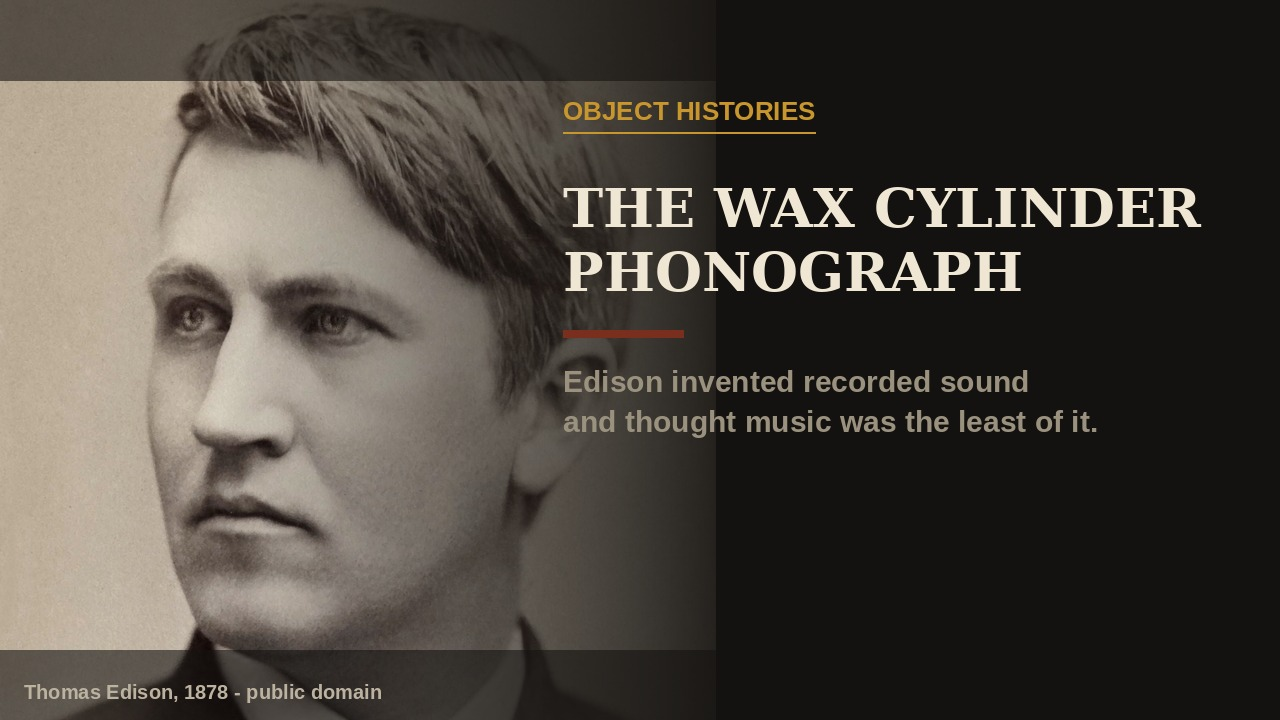
- Wax Cylinder Recordings: How an Office Machine Ended Up Saving Languages — Thomas Edison thought his invention’s future was office dictation. Instead it accidentally founded the recording industry, and preserved voices nothing else ever recorded.
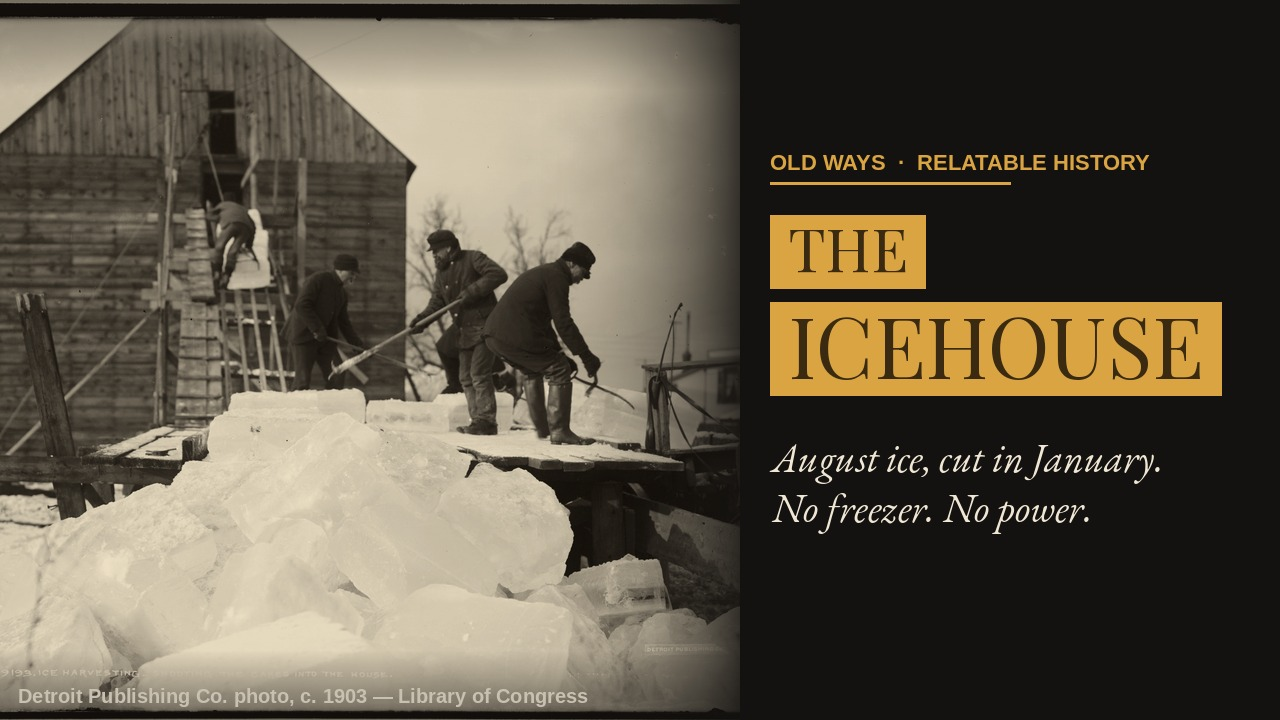
- How Icehouses Worked Before Refrigeration: The Physics, the Industry, and the People Who Cut the Ice — A farm icehouse and a Boston export firm ran on the same principle: pack ice tight, insulate it completely, and let physics do the rest. Here is the mechanism, the industry it…
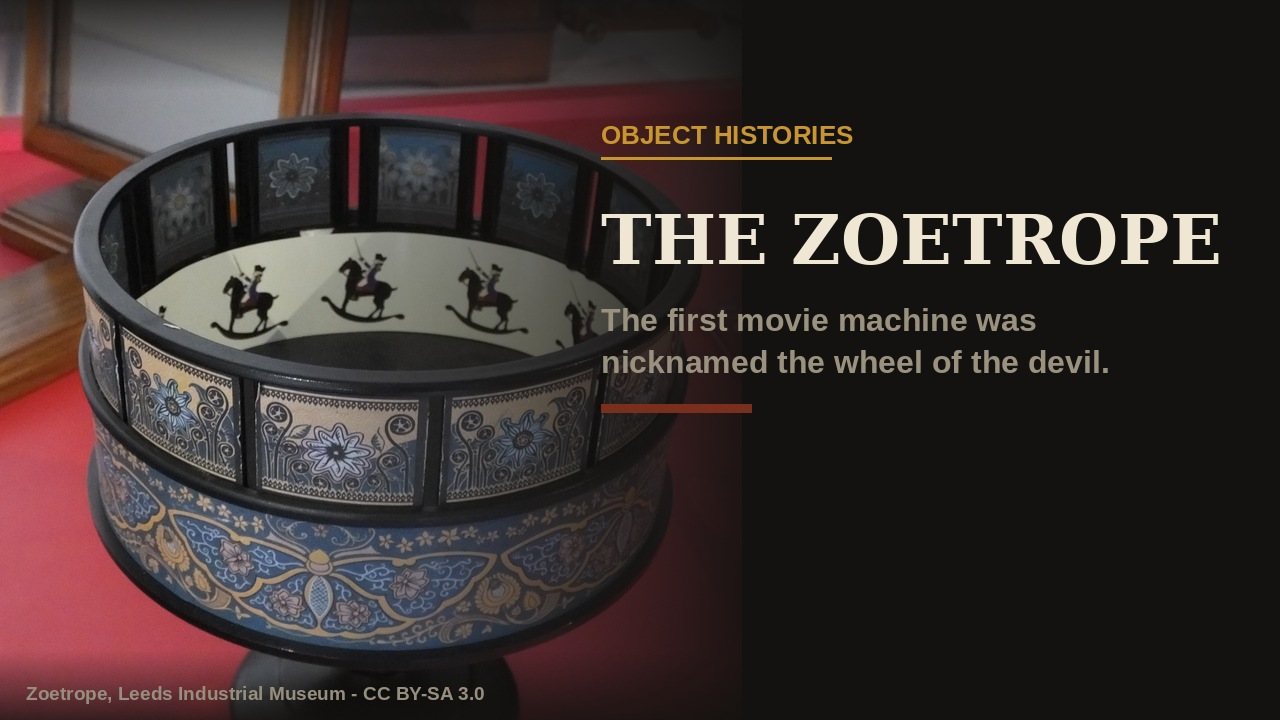
- Who Invented the Zoetrope? Three Men Have a Claim — The zoetrope has at least three inventors: one ancient and disputed, one who died having sold zero units, and two who filed competing patents seven weeks apart.
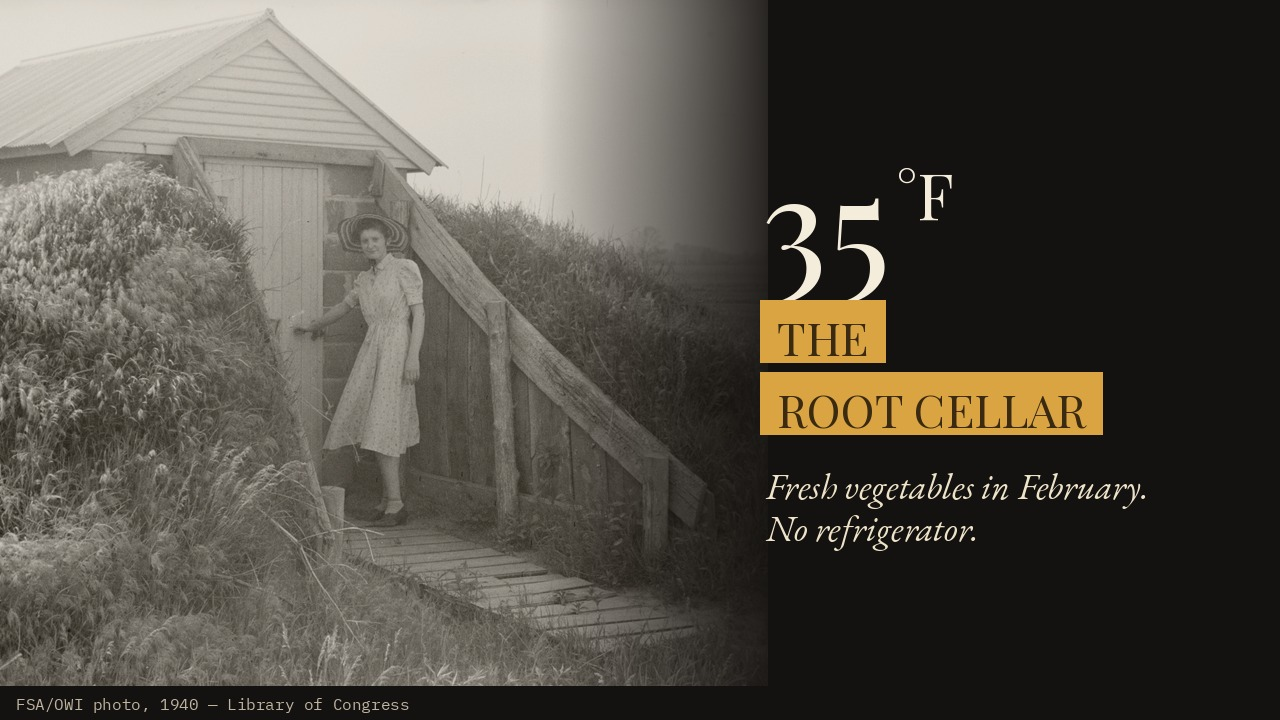
- How a Root Cellar Kept Vegetables All Winter: The Farm’s Biggest Refrigerator Was a Hole in the Ground — A room dug below the frost line, with no power at all, held potatoes crisp for five months. Here is the mechanism, the numbers, and the ethylene rule every farm wife knew by heart.
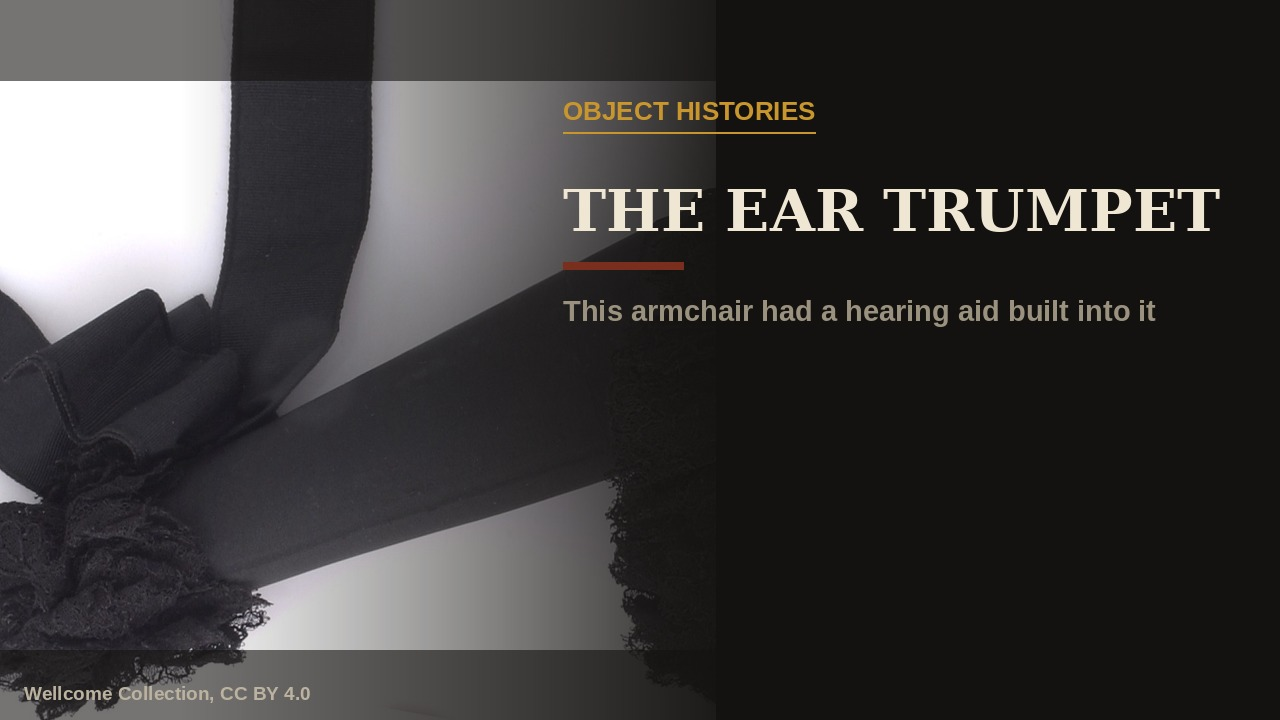
- How Ear Trumpets Worked: The Physics, the Disguises, and What a Brass Horn Really Did for Hearing — A three-hundred-year industry built on a cupped hand. The acoustics, the London trade, the trumpets hidden in hair and walking sticks, and the numbers that show how little some…
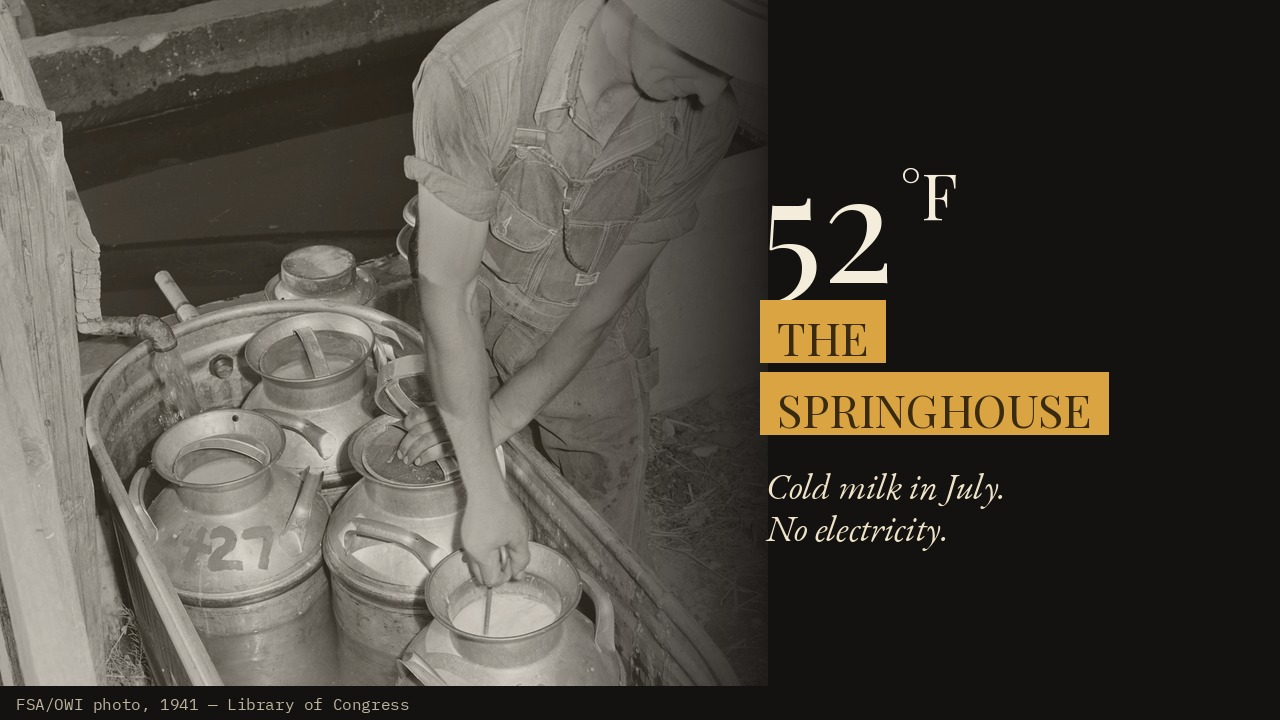
- How a Springhouse Worked: The Farm Refrigerator That Ran on a Spring — A stone room with a stream running through the floor kept butter firm in August and milk from freezing in January. Here is the mechanism, the numbers, and the wire that ended it.